talk-data.com talk-data.com

Topic

data-science

2091

tagged

Activity Trend

1 peak/qtr
2020-Q1 2026-Q1

Activities

Showing filtered results

Filtering by: O'Reilly Data Science Books ×
Good Charts

Dataviz—the new language of business A good visualization can communicate the nature and potential impact of information and ideas more powerfully than any other form of communication. For a long time “dataviz” was left to specialists—data scientists and professional designers. No longer. A new generation of tools and massive amounts of available data make it easy for anyone to create visualizations that communicate ideas far more effectively than generic spreadsheet charts ever could. What’s more, building good charts is quickly becoming a need-to-have skill for managers. If you’re not doing it, other managers are, and they’re getting noticed for it and getting credit for contributing to your company’s success. In Good Charts, dataviz maven Scott Berinato provides an essential guide to how visualization works and how to use this new language to impress and persuade. Dataviz today is where spreadsheets and word processors were in the early 1980s—on the cusp of changing how we work. Berinato lays out a system for thinking visually and building better charts through a process of talking, sketching, and prototyping. This book is much more than a set of static rules for making visualizations. It taps into both well-established and cutting-edge research in visual perception and neuroscience, as well as the emerging field of visualization science, to explore why good charts (and bad ones) create “feelings behind our eyes.” Along the way, Berinato also includes many engaging vignettes of dataviz pros, illustrating the ideas in practice. Good Charts will help you turn plain, uninspiring charts that merely present information into smart, effective visualizations that powerfully convey ideas.

Age-Period-Cohort Analysis

This book explores the ways in which statistical models, methods, and research designs can be used to open new possibilities for APC analysis. Within a single, consistent HAPC-GLMM statistical modeling framework, the authors synthesize APC models and methods for three research designs: age-by-time period tables of population rates or proportions, repeated cross-section sample surveys, and accelerated longitudinal panel studies. They show how the empirical application of the models to various problems leads to many fascinating findings on how outcome variables develop along the age, period, and cohort dimensions.

Big Data and Business Analytics

With the increasing barrage of big data, it becomes vital for organizations to make sense of this data in a timely and effective way to improve their decision making and competitive advantage. That's where business analytics come into play. This book explores case studies from industry leaders in big data domains such as cybersecurity, marketing, finance, emergency management, healthcare, and transportation. It offers a concise guide for CEOs and senior managers, as well as for business, management, and technology students interested in this emerging field.

Bio-Inspired Computing and Networking

From ant-inspired allocation to a swarm algorithm derived from honeybees, this book explains how the study of biological systems can significantly improve computing, networking, and robotics. Containing contributions from leading researchers from around the world, the book investigates the fundamental aspects and applications of bio-inspired computing and networking. Presenting the latest advances in bio-inspired communication, computing, networking, clustering, optimization, and robotics, the book considers state-of-the art approaches, novel technologies, and experimental studies.

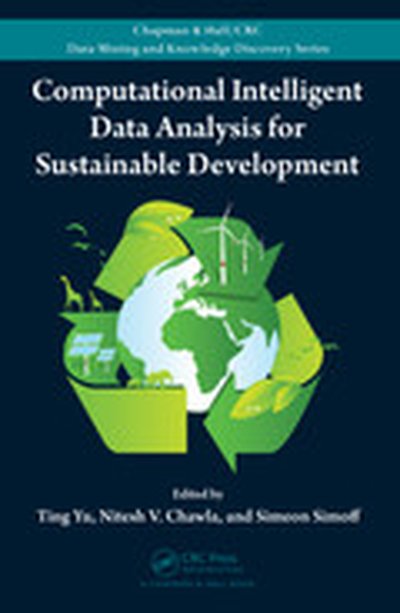
Computational Intelligent Data Analysis for Sustainable Development

Going beyond performing simple analyses, researchers involved in the highly dynamic field of computational intelligent data analysis design algorithms that solve increasingly complex data problems in changing environments, including economic, environmental, and social data. This volume presents novel methodologies for automatically processing these types of data to support rational decision making for sustainable development. Through numerous case studies and applications, it illustrates important data analysis methods, including mathematical optimization, machine learning, signal processing, and temporal and spatial analysis, for quantifying and describing sustainable development problems.

Constrained Principal Component Analysis and Related Techniques

This book shows how constrained principal component analysis (CPCA) offers a unified framework for regression techniques and PCA. Keeping the use of complicated iterative methods to a minimum, the book includes implementation details and many real application examples. It also offers material for methodologically oriented readers interested in developing statistical techniques of their own. MATLAB programs as well as data to create the book's examples are available on the author's website.

Contrast Data Mining

This work collects recent results from this specialized area of data mining that have previously been scattered in the literature, making them more accessible to researchers and developers in data mining and other fields. The book not only presents concepts and techniques for contrast data mining, but also explores the use of contrast mining to solve challenging problems in various scientific, medical, and business domains. It examines how contrast mining is used in discriminative gene transfer and microarray analysis, computational toxicology, spatial and image data classification, network security, and many more applications.

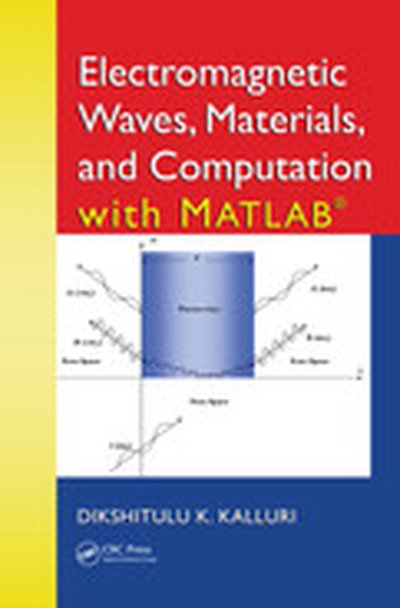
Electromagnetic Waves, Materials, and Computation with MATLAB®

This book is for senior undergraduate/first-year graduate students specializing in one or more of the technologies based on electromagnetics. Composed of three parts, it begins with the electromagnetics of bounded simple media, moves on to electromagnetic equations of complex media, and then covers electromagnetic computation. The author takes a modern approach by using commercial software such as MATLAB and FDTD methods and provides a strong base of conceptual mathematical aspects. The material strikes a balance between theory, intuitive approximate solutions, and the use of commercial software and interpretation of solutions. Case studies and practical examples are presented throughout the text.

Genome Annotation

This thorough overview explores automated genome analysis and annotation from its origins to the challenges of next-generation sequencing data analysis. It explains how current analysis strategies were developed, including sequencing strategies, statistical models, and early annotation systems. The authors then present visualization techniques f

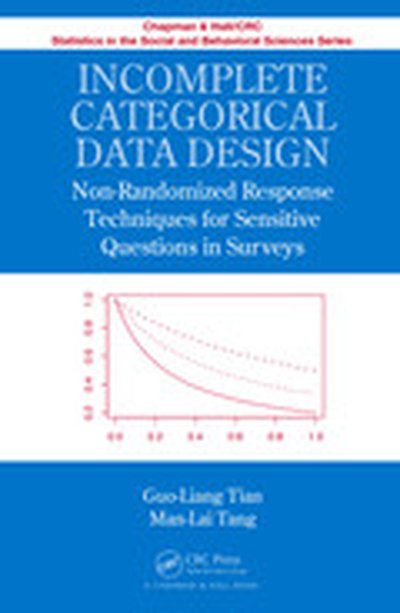
Incomplete Categorical Data Design

A self-contained, systematic introduction, this book shows you how to draw valid statistical inferences from survey data with sensitive characteristics. It guides you in applying the non-randomized response approach in surveys and new non-randomized response designs. The techniques covered integrate the strengths of existing approaches, including randomized response models, incomplete categorical data design, the EM algorithm, the bootstrap method, and the data augmentation algorithm. All R codes for the examples are available online.

Multi-Label Dimensionality Reduction

The data mining and machine learning literature currently lacks a unified treatment of multi-label dimensionality reduction that incorporates both algorithmic developments and applications. Addressing this shortfall, this book covers the methodological developments, theoretical properties, computational aspects, and applications of many multi-label dimensionality reduction algorithms, including existing dimensionality reduction algorithms and new developments of traditional algorithms. It illustrates how to apply the algorithms to solve real-world problems. A supplementary website provides a MATLAB package for implementing popular dimensionality reduction algorithms.

Radar Systems Analysis and Design Using MATLAB, 3rd Edition

Developed from the author's graduate-level courses, the first edition of this book filled the need for a comprehensive, self-contained, and hands-on treatment of radar systems analysis and design. It quickly became a bestseller and was widely adopted by many professors. The second edition built on this successful format by rearranging and updating

RapidMiner

Written by leaders in the data mining community, including the developers of the RapidMiner software, this book provides an in-depth introduction to the application of data mining and business analytics techniques and tools in scientific research, medicine, industry, commerce, and diverse other sectors. It presents the most powerful and flexible open source software solutions: RapidMiner and RapidAnalytics. The book and software tools cover all relevant steps of the data mining process. The software and their extensions can be freely downloaded at www.RapidMiner.com.

Signals and Systems

This text employs MATLAB both computationally and pedagogically to provide interactive visual reinforcement of the fundamentals, including the characteristics of signals, operations used on signals, time and frequency domain analyses of systems, continuous-time and discrete-time signals and systems, and more. The book includes hands-on MATLAB modules linked to specific segments of the text to ensure seamless integration between learning and doing. A solutions manual, MATLAB code, figures, presentation slides, and other ancillary materials are available on an author-supported website or with qualifying course adoption.

Simulation of Dynamic Systems with MATLAB and Simulink, 2nd Edition

"… a seminal text covering the simulation design and analysis of a broad variety of systems using two of the most modern software packages available today. … particularly adept [at] enabling students new to the field to gain a thorough understanding of the basics of continuous simulation in a single semester, and [also provides] a more advanced treatment of the subject for researchers and simulation professionals." —From the Foreword by Chris Bauer, PhD, PE, CMSP Continuous-system simulation is an increasingly important tool for optimizing the performance of real-world systems, and a massive transformation has occurred in the application of simulation in fields ranging from engineering and physical sciences to medicine, biology, economics, and applied mathematics. As with most things, simulation is best learned through practice—but explosive growth in the field requires a new learning approach. A response to changes in the field, Simulation of Dynamic Systems with MATLAB® and Simulink®, Second Edition has been extensively updated to help readers build an in-depth and intuitive understanding of basic concepts, mathematical tools, and the common principles of various simulation models for different phenomena. Includes an abundance of case studies, real-world examples, homework problems, and equations to develop a practical understanding of concepts Accomplished experts Harold Klee and Randal Allen take readers through a gradual and natural progression of important topics in simulation, introducing advanced concepts only after they construct complete examples using fundamental methods. Presented exercises incorporate MATLAB® and Simulink®—including access to downloadable M-files and model files—enabling both students and professionals to gain experience with these industry-standard tools and more easily design, implement, and adjust simulation models in their particular field of study. More universities are offering courses—as well as masters and Ph.D programs—in both continuous-time and discrete-time simulation, promoting a new interdisciplinary focus that appeals to undergraduates and beginning graduates from a wide range of fields. Ideal for such courses, this classroom-tested introductory text presents a flexible, multifaceted approach through which simulation can play a prominent role in validating system design and training personnel involved.

Statistical Methods for QTL Mapping

While numerous advanced statistical approaches have recently been developed for quantitative trait loci (QTL) mapping, the methods are scattered throughout the literature. This book brings together many recent statistical techniques that address the data complexity of QTL mapping. It emphasizes the modern statistical methodology for QTL mapping as well as the statistical issues that arise during this process. The book gives the necessary biological background for statisticians without training in genetics and, likewise, covers statistical thinking and principles for geneticists.

Statistics and Data Analysis for Microarrays Using R and Bioconductor, 2nd Edition

Richly illustrated in color, this bestselling text provides a clear and rigorous description of powerful analysis techniques and algorithms for mining and interpreting biological information. Omitting tedious details, heavy formalisms, and cryptic notations, the text takes a hands-on, example-based approach that explains the basics of R and micr

Stochastic Financial Models

Developed from the esteemed author's advanced undergraduate and graduate courses at the University of Cambridge, this text provides a hands-on, sound introduction to mathematical finance. Assuming no prior knowledge of stochastic calculus or measure-theoretic probability, the author includes the relevant mathematical background as well as many exercises with solutions. He first presents the classical topics of utility and the mean-variance approach to portfolio choice. Focusing on derivative pricing, the text then covers the binomial model, the general discrete-time model, Brownian motion, the Black-Scholes model, and various interest-rate models.

Transportation Statistics and Microsimulation

By discussing statistical concepts in the context of transportation planning and operations, this text provides the necessary background for making informed transportation-related decisions. It explains the why behind standard methods and uses real-world transportation examples and problems to illustrate key concepts. The book covers the statistical techniques most frequently employed by transportation and pavement professionals. To familiarize readers with the underlying theory and equations, it contains problems that can be solved using SAS's JMP package, which enables users to interactively explore and visualize data.

Getting Analytics Right

Ask vital questions before you dive into data Are your big data and analytics capabilities up to par? Nearly half of the global company executives in a recent Forbes Insight/Teradata survey certainly don’t think theirs are. This new book from O’Reilly examines how things typically go wrong in the data analytics process, and introduces a question-first, data-second strategy that can help your company close the gap between being analytics-invested and truly data-driven. Authors from Tamr, Inc. share insights into why analytics projects often fail, and offer solutions based on their combined experience in engineering, architecture, product strategizing, and marketing. You’ll learn how projects often start from the wrong place, take too long, and don’t go far enough—missteps that lead to incomplete, late, or useless answers to critical business questions. Find out how their question-first, data-second approach—fueled by vastly improved data preparation platforms and cataloging software—can help you create human-machine analytics solutions designed specifically to produce better answers, faster. Getting Analytics Right was written and presented by people at Tamr, Inc., including Nidhi Aggarwal, Product and Strategy Lead; Byron Berk, Customer Success Lead; Gideon Goldin, Senior UX Architect; Matt Holzapfel, Product Marketing; and Eliot Knudsen, Field Engineer. Tamr, a Cambridge, Massachusetts-based startup, helps companies understand and unify their disparate databases.