talk-data.com talk-data.com

Topic

data

5765

tagged

Activity Trend

3 peak/qtr
2020-Q1 2026-Q1

Activities

5765 activities · Newest first

IBM PowerVM Live Partition Mobility

Live Partition Mobility is the next step in the IBMs Power Systems™ virtualization continuum. It can be combined with other virtualization technologies, such as logical partitions, Live Workload Partitions, and the SAN Volume Controller, to provide a fully virtualized computing platform that offers the degree of system and infrastructure flexibility required by today's production data centers. This IBM® Redbooks® publication discusses how Live Partition Mobility can help technical professionals, enterprise architects, and system administrators: * Migrate entire running AIX® and Linux® partitions and hosted applications from one physical server to another without disrupting services and loads. * Meet stringent service-level agreements. * Rebalance loads across systems quickly, with support for multiple concurrent migrations. * Use a migration wizard for single partition migrations. This book can help you understand, plan, prepare, and perform partition migration on IBM Power Systems POWER6™ technology-based servers that are running AIX.

IBM Tivoli Netcool Service Quality Manager Data Mediation Gateway Development

This IBM® Redbooks® publication discusses IBM Tivoli® Netcool® Service Quality Manager V4.1.1 data mediation development. It is aimed at implementers and system integrators connecting new data sources that will be managed by Service Quality Manager. Data mediation in Service Quality Manager is performed by Perl gateways. Gateways extract data from vendor specific hardware monitors and prepare the data to be loaded into the Service Quality Manager application. The development aspect of data mediation for gateways uses Perl extensively. The control files or rules are written as Perl subroutines. We discuss the detailed specifications and processing of these mediation rules.

Microsoft® SQL Server® 2008 Internals

Delve inside the core SQL Server engine—and put that knowledge to work—with guidance from a team of well-known internals experts. Whether database developer, architect, or administrator, you’ll gain the deep knowledge you need to exploit key architectural changes—and capture the product’s full potential. Discover how SQL Server works behind the scenes, including: What happens internally when SQL Server builds, expands, shrinks, and moves databases How to use event tracking—from triggers to the Extended Events Engine Why the right indexes can drastically reduce your query execution time How to transcend normal row-size limits with new storage capabilities How the Query Optimizer operates Multiple techniques for troubleshooting problematic query plans When to force SQL Server to reuse a cached query plan—or create a new one What SQL Server checks internally when running DBCC How to choose among five isolation levels and two concurrency models when working with multiple concurrent users

OCP: Oracle Database 11g Administrator Certified Professional Study Guide

This updated study guide for the latest release of the most popular database software in the world—Oracle Database 11 g— reviews using the RMAN recovery catalog, handling Flashback technology, managing memory and resources, automating tasks, diagnosing the database, and much more. Plus, more than 100 pages of workbook exercises help prepare you to take the 1Z0-053 exam. Note: CD-ROM/DVD and other supplementary materials are not included as part of eBook file.

Release 2.0: Issue 11

Big Data: when the size and performance requirements for data management become significant design and decision factors for implementing a data management and analysis system. For some organizations, facing hundreds of gigabytes of data for the first time may trigger a need to reconsider data management options. For others, it may take tens or hundreds of terabytes before data size becomes a significant consideration.

Market Risk Analysis Volume IV: Value-at-Risk Models

Written by leading market risk academic, Professor Carol Alexander, Value-at-Risk Models forms part four of the Market Risk Analysis four volume set. Building on the three previous volumes this book provides by far the most comprehensive, rigorous and detailed treatment of market VaR models. It rests on the basic knowledge of financial mathematics and statistics gained from Volume I, of factor models, principal component analysis, statistical models of volatility and correlation and copulas from Volume II and, from Volume III, knowledge of pricing and hedging financial instruments and of mapping portfolios of similar instruments to risk factors. A unifying characteristic of the series is the pedagogical approach to practical examples that are relevant to market risk analysis in practice. All together, the Market Risk Analysis four volume set illustrates virtually every concept or formula with a practical, numerical example or a longer, empirical case study. Across all four volumes there are approximately 300 numerical and empirical examples, 400 graphs and figures and 30 case studies many of which are contained in interactive Excel spreadsheets available from the the accompanying CD-ROM . Empirical examples and case studies specific to this volume include: Parametric linear value at risk (VaR)models: normal, Student t and normal mixture and their expected tail loss (ETL); New formulae for VaR based on autocorrelated returns; Historical simulation VaR models: how to scale historical VaR and volatility adjusted historical VaR; Monte Carlo simulation VaR models based on multivariate normal and Student t distributions, and based on copulas; Examples and case studies of numerous applications to interest rate sensitive, equity, commodity and international portfolios; Decomposition of systematic VaR of large portfolios into standard alone and marginal VaR components; Backtesting and the assessment of risk model risk; Hypothetical factor push and historical stress tests, and stress testing based on VaR and ETL. "The ebook version does not provide access to the companion files".

Quantitative Corpus Linguistics with R

The first textbook of its kind, Quantitative Corpus Linguistics with R demonstrates how to use the open source programming language R for corpus linguistic analyses. Computational and corpus linguists doing corpus work will find that R provides an enormous range of functions that currently require several programs to achieve – searching and processing corpora, arranging and outputting the results of corpus searches, statistical evaluation, and graphing.

Data Warehousing For Dummies®, 2nd Edition

Data warehousing is one of the hottest business topics, and there’s more to understanding data warehousing technologies than you might think. Find out the basics of data warehousing and how it facilitates data mining and business intelligence with Data Warehousing For Dummies, 2nd Edition. Data is probably your company’s most important asset, so your data warehouse should serve your needs. The fully updated Second Edition of Data Warehousing For Dummies helps you understand, develop, implement, and use data warehouses, and offers a sneak peek into their future. You’ll learn to: Analyze top-down and bottom-up data warehouse designs Understand the structure and technologies of data warehouses, operational data stores, and data marts Choose your project team and apply best development practices to your data warehousing projects Implement a data warehouse, step by step, and involve end-users in the process Review and upgrade existing data storage to make it serve your needs Comprehend OLAP, column-wise databases, hardware assisted databases, and middleware Use data mining intelligently and find what you need Make informed choices about consultants and data warehousing products Data Warehousing For Dummies, 2nd Edition also shows you how to involve users in the testing process and gain valuable feedback, what it takes to successfully manage a data warehouse project, and how to tell if your project is on track. You’ll find it’s the most useful source of data on the topic!

Building Dashboards for Windows SharePoint Services 3.0 Using SharePoint Designer 2007

In this Wrox Blox, you'll learn how to create powerful Dashboards for Windows SharePoint Services 3.0. First, we introduce Web Part Pages and some of the out-of-the box Web Parts available in WSS. We then look at how to use Web Part Connections to add interactivity to our Dashboards. Later we create advanced Dashboard Views using the Data Form Web Part available with SharePoint Designer 2007. While the author focuses on Windows SharePoint Services, all of the topics discussed also apply to Microsoft Office SharePoint Server 2007 as it is a superset of WSS. This Wrox Blox will be valuable for anyone wishing to share data on their SharePoint site.

Microsoft® SQL Server® 2008 MDX Step by Step

Teach yourself the Multidimensional Expressions (MDX) query language—one step at a time. With this practical, learn-by-doing tutorial, you’ll build the core techniques for using MDX with Analysis Services to deliver high-performance business intelligence solutions. Discover how to: Construct and execute MDX queries Work with tuples, sets, and expressions Build complex sets to retrieve the exact data users need Perform aggregation functions and navigate data hierarchies Assemble time-based business metrics Customize an Analysis Services cube through the MDX script Implement dynamic security to control data access Develop MDX-driven reports in SQL Server Reporting Services CD features: Practice exercises Database and code samples Fully searchable eBook

Microsoft® SQL Server® 2008 Reporting Services Step by Step

Teach yourself how to build, manage, and access SQL Server 2008 reports one step at a time. Whether you re a report developer, IT administrator, or business user, this sequential, learn-by-doing tutorial shows you how to deliver the business intelligence information your organization needs. Discover how to: Install and configure Reporting Services Put Report Builder and Report Designer tools to work Create interactive, online reports that enable users to sort and filter data Add charts and gauges to present data visually Deploy reports to Microsoft Office SharePoint Server Monitor server performance and help secure content Use subscriptions to distribute reports via e-mail Build ad hoc reports and extend them with custom code CD features: Practice exercises and code samples Fully searchable eBook.

Data Leaks For Dummies®

Data leaks expose your customers to identity theft and your business to security risks. But how do you set up a data loss prevention plan? Start with Data Leaks For Dummies! Now more than ever, it’s critical to keep your company data locked up tighter than Fort Knox. Data Leaks For Dummies has the scoop on what’s at risk, how leaks happen, how to keep your data safe without being inflexible, and even what to do if the worst happens. It shows you how to: Identify risk by learning to see your data the way a criminal would Recognize how innocent mistakes, common carelessness, and malicious insiders also pose a threat Learn how to defend against phishing, e-mail threats, and wireless security breaches Be alert for social engineering attacks, suspicious contract workers, dumpster divers, and plain old eavesdroppers Plan for safe disposal of old hardware, use caution with SMS and e-mail archives, and be aware of how Webcasts and conference calls can be invaded Discover how crooks steal data in public places such as Internet cafes Develop a recovery plan, build a team, and even manage press coverage should data loss occur You’ll learn why free data storage devices could cost you a lot, how to protect mobile devices, why data corruption might be even worse than data loss, and how you can help software developers build safer applications. Data Leaks For Dummies will help you protect your customers, the reputation of your business, and your bottom line.

Pro RFID in BizTalk Server 2009

The market for Radio Frequency Identification (RFID) technology is expanding rapidly, constituting billions of dollars annually. As more organizations adopt RFID solutions and related equipment, the need to route, map, and execute workflows based on RFID data grows exponentially. Microsoft's solution to this demand is BizTalk RFID, an application built to distribute, track, analyze, and provide visibility into enterprise data collected using RFID technologies. To aid in the rapid understanding and adoption of BizTalk RFID, this book's authors have joined together to present Pro RFID in BizTalk Server 2009, the definitive resource for unlocking the potential of the application. With extensive code and configuration examples and multiple case studies illustrating how this application is being used in various industries, authors Ram Venkatesh, the lead developer of the BizTalk RFID platform, Mark Simms, a leading architect and developer of BizTalk RFID solutions, and Mark Beckner, a BizTalk Server and enterprise architecture specialist, ensure that you will gain the insight and master the tools necessary to be able to confidently and efficiently implement a BizTalk RFID solution. What you'll learn Understand RFID BizTalk application design and architecture. Build and develop an RFID BizTalk solution. Explore in-depth analysis and examples for event and command processing. Utilize and implement Mobile RFID solutions. Instantiate workflows with the core BizTalk engine's adapters and orchestrations. Validate and route data using the Business Rules Engine. Integrate with MSMQ, WCF, web services, and external applications to ensure enterprise adoption. Understand guidelines around testing, deploying, and managing RFID BizTalk solutions. Store and access RFID-related metrics. Learn how the technology is being applied across numerous industries through extensive real-world case studies. Who this book is for This book is for solution architects, application developers, and IT administrators involved in the development and deployment of Microsoft BizTalk RFID solutions. The essential reference for covering the vital aspects of building solutions with Microsoft BizTalk RFID, adding crucial real-world context and experience to the standard product documentation, this book will cover the end-to-end BizTalk RFID experience: learning, developing, deploying, and managing. Readers at any level of experience should expect to walk away with concrete, tangible actions that can be taken to achieve success with any BizTalk RFID implementation.

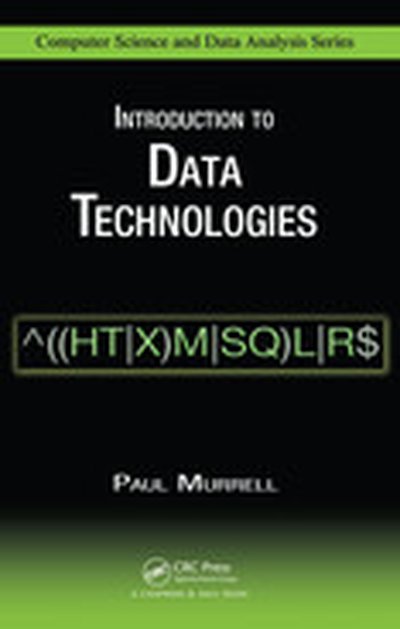
Introduction to Data Technologies

Written by a member of the R Development Core Team, this resource provides important information on how to work with research data. It contains a collection of diverse, computer-related topics, connecting them through numerous, real-world case studies. The author describes open source technologies and open standards and devotes separate chapters to each computer language, including HTML, XML, SQL, and R. Explanatory diagrams aid in understanding important concepts, helping readers perform research tasks with ease. In addition, the author's website includes a suite of exercises as well as the code and data sets used in the case studies.

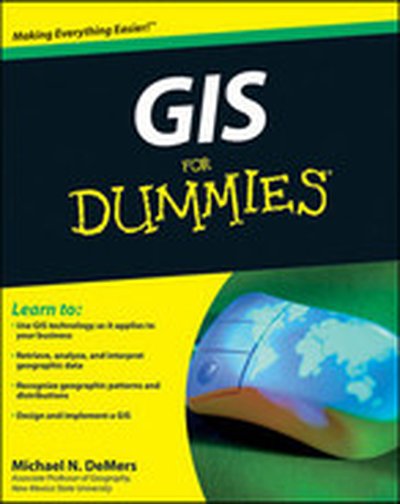
GIS For Dummies®

GIS (geographic information system) is a totally cool technology that has been called "geography on steroids." GIS is what lets you see the schools in your neighborhood or tells you where the nearest McDonald's is. GIS For Dummies tells you all about mapping terminology and digital mapping, how to locate geographic features and analyze patterns such as streets and waterways, and how to generate travel directions, customer location lists, and much more with GIS. Whether you're in charge of creating GIS applications for your business or you simply love maps, you'll find GIS For Dummies is packed with information. For example, you can: Learn all the hardware and software necessary to collect, analyze, and manipulate GIS data Explore the difference between 2D and 3D maps, create a map, or manage multiple maps Analyze patterns that appear in maps and interpret the results Measure distance in absolute, comparative, and functional ways Recognize how spatial factors relate to geographic data Discover how GIS is used in business, the military, city planning, emergency services, land management, and more Find out how GIS can help you find out where flooding may occur Determine what your organization needs, do appropriate analyses, and actually plan and design a GIS system You'll find dozens of applications for GIS queries and analyses, and even learn to create animated GIS output. Whether your goal is to implement a GIS or just have fun, GIS For Dummies will get you there! Note: CD-ROM/DVD and other supplementary materials are not included as part of eBook file.

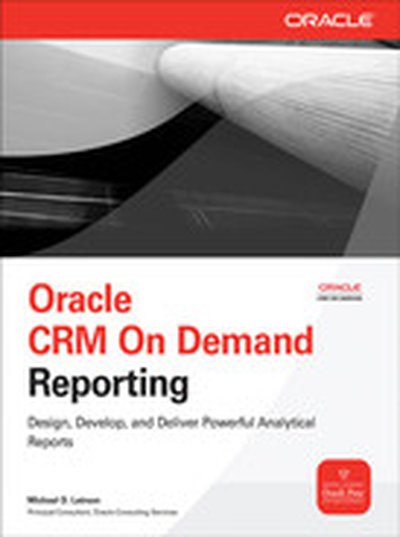
Oracle CRM On Demand Reporting

Your One-Stop Guide to Oracle CRM On Demand Reporting Plan, build, and distribute data-rich business intelligence reports with ease. Oracle CRM On Demand Reporting details the entire report-building process and explains how to use the powerful features available in Answers On Demand to create and share comprehensive, integrated reports. The book includes proven strategies for report design and development, real-world examples, formatting tips, advanced reporting techniques, and sample formulas. Convert disparate corporate data into actionable business intelligence with help from this detailed guide. Maximize the features of Answers On Demand Strategically plan your reports Format, sort, filter, and modify report data Use column formulas with numeric, date and time, and text data Apply logic and transform data with column formulas Format report title and table views Add charts, graphs, pivot tables, filter prompts, and interactivity to reports Configure advanced views and create custom dashboards Manage reports and control access

FileMaker Pro 10 In Depth

Advice and techniques that you need to get the job done. Looking for ways to streamline your work so that you can focus on maximizing your time? In Depth provides specific, tested, and proven solutions to the problems you run into every day–things other books ignore or oversimplify. This is the one book that you can rely on to answer all the questions you have now and will have in the future. In Depth offers: Comprehensive coverage, with detailed solutions Breakthrough techniques and shortcuts that are unavailable elsewhere Practical, real-world examples with nothing glossed over or left out Troubleshooting help for tough problems you can’t fix on your own Outstanding authors recognized worldwide for their expertise and teaching style Quick information via sidebars, tips, reminders, notes, and warnings In Depth is the only tool you need to get more done in less time! CATEGORY: Databases COVERS: FileMaker® Pro

Smart Business Intelligence Solutions with Microsoft® SQL Server® 2008

Get the end-to-end instruction you need to design, develop, and deploy more effective data integration, reporting, and analysis solutions using SQL Server 2008—whether you’re new to business intelligence (BI) programming or a seasoned pro. With real-world examples and insights from an expert team, you’ll master the concepts, tools, and techniques for building solutions that deliver intelligence—and business value—exactly where users want it. Discover how to: Manage the development life cycle and build a BI team Dig into SQL Server Analysis Services, Integration Services, and Reporting Services Navigate the Business Intelligence Development Studio (BIDS) Write queries that rank, sort, and drill down on sales data Develop extract, transform, and load (ETL) solutions Add a source code control system Help secure packages for deployment via encryption and credentials Use MDX and DMX Query Designers to build reports based on OLAP cubes and data mining models Create and implement custom objects using .NET code View reports in Microsoft Office Excel and Office SharePoint Serverook