talk-data.com talk-data.com

Topic

data

5765

tagged

Activity Trend

3 peak/qtr
2020-Q1 2026-Q1

Activities

5765 activities · Newest first

Mule in Action

Mule in Action covers Mule fundamentals and best practices. It is a comprehensive tutorial that starts with a quick ESB overview and then gets Mule to work. It dives into core concepts like sending, receiving, routing, and transforming data. Next, it gives you a close look at Mule's standard components and how to roll out custom ones. You'll pick up techniques for testing, performance tuning, BPM orchestration, and even a touch of Groovy scripting. About the Technology Mule is a widely used open source enterprise service bus. It is standards based, provides easy integration with Spring and JBoss, and fully supports the enterprise messaging patterns collected by Hohpe and Woolf. You can readily customize Mule without writing a lot of new code. About the Book Mule in Action covers Mule fundamentals and best practices. It is a comprehensive tutorial that starts with a quick ESB overview and then gets Mule to work. It dives into core concepts like sending, receiving, routing, and transforming data. Next, it gives you a close look at Mule's standard components and how to roll out custom ones. You'll pick up techniques for testing, performance tuning, BPM orchestration, and even a touch of Groovy scripting. What's Inside Mule deployment, logging, and monitoring Common transports, routers, and transformers Security, routing, orchestration, and transactions About the Reader Written for developers, architects, and IT managers, the book requires familiarity with Java but no previous exposure to Mule or other ESBs. About the Authors Both authors are Java EE architects. David Dossot is the project "despot" of the JCR Transport and has worked with Mule since 2005. John D'Emic is Chief Integration Architect at OpSource Inc., where he has used Mule since 2006. Quotes A deep, anatomical view of Mule ESB. - Ara Abrahamian, Arachitect, Coauthor of Java Open Source Programming A top-to-bottom example-driven guide I haven't found anywhere else. - Ben Hall, Technical Lead, IBBS Outstanding examples show how to use Mule. - Doug Warren, Software Architect, Java Web Services These guys know what they are talking about! - Fabrice Dewasmes, Java & Open Source Department Director, Pragma Consult Works better than a carrot to get the Mule going. Useful even for experts. - Jeroen Benckhuijsen, Software Architect, Atos Origin
Oracle Essbase 9 Implementation Guide

This book is a practical guide to implementing high-performance multidimensional OLAP solutions using Oracle Essbase 9. It takes you step by step through software installation to the creation of fully-functional Essbase database cubes, helping you develop a solid understanding of multidimensional database concepts and the tools to create analytical OLAP applications effectively. What this Book will help me do Understand the fundamentals of multidimensional database technology and how it applies to analytical OLAP solutions. Construct efficient database outlines including dimensions and members. Import data from various sources into Essbase cubes and process it for analysis. Develop effective calculation scripts to automate complex data processing tasks. Leverage tools like Excel Add-In to produce dynamic, interactive reports for comprehensive data insights. Author(s) The authors of this guide are seasoned professionals with extensive practical experience in Oracle Essbase and OLAP technology. They bring years of expertise in database design, analytics, and performance optimization, ensuring this book provides both foundational knowledge and advanced techniques. Their teaching approach focuses on clarity and step-by-step guidance to make complex topics accessible to practitioners at all levels. Who is it for? This book is ideal for IT professionals with a general understanding of information systems who want to learn OLAP and Oracle Essbase. Beginners will find the step-by-step approach accessible, while experienced OLAP users will benefit from advanced tips and practical examples. If you're looking to enhance your analytics skills or explore Essbase for career growth, this resource is for you.

Mastering Oracle Scheduler in Oracle 11g Databases

In "Mastering Oracle Scheduler in Oracle 11g Databases", you will unlock the full potential of Oracle Scheduler (DBMS_SCHEDULER), a powerful tool for automating and managing database tasks. This book provides a comprehensive guide with practical examples to help you optimize database performance and automate your workflows. What this Book will help me do Understand how to create and manage job schedules using Oracle Scheduler, catering to both simple and complex automation needs. Learn to integrate platform-independent execution of jobs into your Oracle database management strategies. Gain practical insights into debugging, monitoring, and optimizing jobs for enhanced database performance. Explore event-driven scheduling to develop intelligent automation solutions for your business processes. Master resource management techniques to handle large-scale job scheduling effectively. Author(s) Ronald Rood is a seasoned database administrator and developer specializing in Oracle technologies. With extensive experience in database performance tuning and automation, Ronald shares practical insights and expert guidance in his writing. His passion for teaching complex concepts in an engaging manner makes his books valuable resources for professionals. Who is it for? This book is ideal for Oracle Database administrators and developers who want to advance their automation and scheduler management skills. With a basic understanding of Oracle Database Management and proficiency in SQL and PL/SQL, readers aim to optimize jobs and improve overall performance. It's perfect for those transitioning from tools like cron or DBMS_JOB for more robust scheduling capabilities.

Complete Web Monitoring

Do you really understand your online presence? Are you confident that visitors can use your website? Do you know their motivations? How do online communities perceive your company? To innovate and adapt your business quickly, you must know the answers to these questions. Complete Web Monitoring demonstrates how to measure every aspect of your web presence -- including analytics, backend performance, usability, communities, customer feedback, and competitive analysis -- whether you're running an e-commerce site, a community, a media property, or a Software-as-a-Service company. This book's concrete examples, clear explanations, and practical recommendations make it essential for anyone who runs a website. With this book you will: Discover how visitors use and interact with your site through web analytics, segmentation, conversions, and user interaction analysis Find out your market's motivations with voice-of-the-customer research Measure the health and availability of your website with synthetic testing and real-user monitoring Track communities related to your online presence, including social networks, forums, blogs, microblogs, wikis, and social news aggregators Understand how to assemble this data into clear reports tailored to your organization and audience You can't fix what you don't measure. Complete Web Monitoring shows you how to transform missed opportunities, frustrated users, and spiraling costs into online success. "This is a very comprehensive view of just about everything one needs to know about how websites work and what one needs to know about them. I'd like to make this book required reading for every employee at Gomez."-- Imad Mouline, CTO of Gomez

Probabilistic Methods for Bioinformatics

The Bayesian network is one of the most important architectures for representing and reasoning with multivariate probability distributions. When used in conjunction with specialized informatics, possibilities of real-world applications are achieved. Probabilistic Methods for BioInformatics explains the application of probability and statistics, in particular Bayesian networks, to genetics. This book provides background material on probability, statistics, and genetics, and then moves on to discuss Bayesian networks and applications to bioinformatics. Rather than getting bogged down in proofs and algorithms, probabilistic methods used for biological information and Bayesian networks are explained in an accessible way using applications and case studies. The many useful applications of Bayesian networks that have been developed in the past 10 years are discussed. Forming a review of all the significant work in the field that will arguably become the most prevalent method in biological data analysis. Unique coverage of probabilistic reasoning methods applied to bioinformatics data--those methods that are likely to become the standard analysis tools for bioinformatics. Shares insights about when and why probabilistic methods can and cannot be used effectively; Complete review of Bayesian networks and probabilistic methods with a practical approach.

First Things Fast: A Handbook for Performance Analysis, Second Edition

The world of learning and performance has changed significantly since the first edition of First Things Fast was published more than a decade ago. This thoroughly revised and updated second edition of the best-selling classic recognizes a world chock-full of technology, economic strains, and opportunities. How do learning and performance professionals plan in this shifting context? How do they take advantage of new human and Internet-based resources? How do they bring their recommendations forward and add more value, no matter where they work? These questions are addressed throughout this new edition. This important resource is a practical guide that is filled with job aids, design templates, and examples offering step-by-step guidance to the basics of performance analysis. This new edition includes: New questions and templates that reflect the shift of learning and support from the classroom to the workplace, and the blends that provide learning and support in both environments Fresh approaches for using wikis, blogs, and online surveys to gather information Innovative ideas for tapping into the power of social networking and the possibilities presented for analysts Information on the critical link between analysis and evaluation and new guidelines for both activities A wealth of new illustrative case examples Insightful commentaries from successful leaders in the field who explain how they use analysis to advance individual and organizational strategy "Allison Rossett combines thought leadership for the profession with practical guidance. This book, the second edition of a classic in the field, is filled with proven practices and ready-to-use tools making this a resource you'll use frequently." -Dana Gaines Robinson, Coauthor, Performance Consulting ANDSTRATEGIC BUSINESS PARTNER "What I appreciate about this book is that it is a straightforward, practical guide to planning, and it embraces new technology and the convergence of learning and work." -Nancy J. Lewis, Vice President and Chief Learning Officer, ITT Corporation

SAS® Certification Prep Guide: Advanced Programming for SAS®9 Second Edition

The SAS Certification Prep Guide: Advanced Programming for SAS 9, Second Edition, prepares you to take the Advanced Programming for SAS 9 exam. Major topics include SQL processing with SAS, the SAS macro language, advanced SAS programming techniques, and optimizing SAS programs. You will also become familiar with the enhancements and new functionality that are available in SAS 9. Experienced SAS users who want to prepare for this exam will find this guide to be an invaluable, convenient, and comprehensive resource that covers all of the objectives tested on the exam. The text contains quizzes that enable you to test your understanding of material in each chapter. Additionally, solutions to all quizzes are included at the back of the book. Candidates must earn the SAS Certified Base Programmer Credential for SAS 9 before taking the SAS Advanced Programming for SAS 9 exam.

Data Mashups in R

This article demonstrates how the realworld data is imported, managed, visualized, and analyzed within the R statistical framework. Presented as a spatial mashup, this tutorial introduces the user to R packages, R syntax, and data structures. The user will learn how the R environment works with R packages as well as its own capabilities in statistical analysis. We will be accessing spatial data in several formats-html, xml, shapefiles, and text-locally and over the web to produce a map of home foreclosure auctions and perform statistical analysis on these events.

Hadoop: The Definitive Guide

Hadoop: The Definitive Guide helps you harness the power of your data. Ideal for processing large datasets, the Apache Hadoop framework is an open source implementation of the MapReduce algorithm on which Google built its empire. This comprehensive resource demonstrates how to use Hadoop to build reliable, scalable, distributed systems: programmers will find details for analyzing large datasets, and administrators will learn how to set up and run Hadoop clusters. Complete with case studies that illustrate how Hadoop solves specific problems, this book helps you: Use the Hadoop Distributed File System (HDFS) for storing large datasets, and run distributed computations over those datasets using MapReduce Become familiar with Hadoop's data and I/O building blocks for compression, data integrity, serialization, and persistence Discover common pitfalls and advanced features for writing real-world MapReduce programs Design, build, and administer a dedicated Hadoop cluster, or run Hadoop in the cloud Use Pig, a high-level query language for large-scale data processing Take advantage of HBase, Hadoop's database for structured and semi-structured data Learn ZooKeeper, a toolkit of coordination primitives for building distributed systems If you have lots of data -- whether it's gigabytes or petabytes -- Hadoop is the perfect solution. Hadoop: The Definitive Guide is the most thorough book available on the subject. "Now you have the opportunity to learn about Hadoop from a master-not only of the technology, but also of common sense and plain talk."-- Doug Cutting, Hadoop Founder, Yahoo!

Business Intelligence Success Factors: Tools for Aligning Your Business in the Global Economy

Praise for Business Intelligence Success Factors: Tools for Aligning your business in the Global Economy "Olivia Parr Rud does a remarkable job of weaving together many topics in a strategic way. As 'quants,' we're fascinated with data and fact-based decision-making. But success only comes when you consider the human factor, especially effective communications. Making topics like evolutionary biology, complexity science, and systems thinking relevant for business success is a unique and compelling view. As Max Frisch said, 'We hired workers and human beings came instead.'" —Anne Milley, Senior Director, Technology Product Marketing, SAS "Business Intelligence Success Factors is a must-read for anyone implementing BI on an organizational level. This book explains the business landscape and the underlying reasons for our current volatility, offering clear guidance on navigating our information rich global economy." —Ron Powell, Editorial Director, Business Intelligence Network Transform challenges into opportunities with emerging Business Intelligence technologies Written by an expert in data mining and statistical analysis, this valuable resource unveils the connection between the increased use of BI and the need for new, proven theories and models in BI, as well as the guidance to implement them successfully in your organization. Are you ready to become adaptable? Learn how to harness today's rapidly evolving global economy with Business Intelligence Success Factors.

Statistical Analysis with Excel® For Dummies®, 2nd Edition

You too can understand the statistics of life, even if you're math-challenged! What do you need to calculate? Manufacturing output? A curve for test scores? Sports stats? You and Excel can do it, and this non-intimidating guide shows you how. It demystifies the different types of statistics, how Excel functions and formulas work, the meaning of means and medians, how to interpret your figures, and more — in plain English. Getting there — learn how variables, samples, and probability are used to get the information you want Excel tricks — find out what's built into the program to help you work with Excel formulas Playing with worksheets — get acquainted with the worksheet functions for each step Graphic displays — present your data as pie graphs, bar graphs, line graphs, or scatter plots What's normal? — understand normal distribution and probability Hyping hypotheses — learn to use hypothesis testing with means and variables When regression is progress — discover when and how to use regression for forecasting What are the odds — work with probability, random variables, and binomial distribution Open the book and find: Ten statistical and graphical tips and traps The difference between descriptive and inferential statistics Why graphs are good How to measure variations What standard scores are and why they're used When to use two-sample hypothesis testing How to use correlations Different ways of working with probability

Databases A Beginner's Guide

Essential Database Skills--Made Easy! Learn standard database design and management techniques applicable to any type of database. Featuring clear examples using both Microsoft Access and Oracle, Databases: A Beginner's Guide begins by showing you how to use Structured Query Language (SQL) to create and access database objects. Then, you'll discover how to implement logical design using normalization, transform the logical design into a physical database, and handle data and process modeling. You'll also get details on database security, online analytical processing (OLAP), connecting databases to applications, and integrating XML and object content into databases. Designed for Easy Learning Key Skills & Concepts--Chapter-opening lists of specific skills covered in the chapter Ask the Expert--Q&A sections filled with bonus information and helpful tips Try This--Hands-on exercises that show you how to apply your skills Notes--Extra information related to the topic being covered Self Tests--Chapter-ending quizzes to test your knowledge

Oracle General Ledger Guide

Master Oracle E-Business Suite's Oracle General Ledger Maintain a centralized, highly automated processing platform across a fully integrated set of Oracle E-Business Suite applications using Oracle General Ledger. This Oracle Press guide explains how to utilize Oracle General Ledger to distribute timely and accurate financial information enterprise-wide. Learn efficient techniques for creating transactions and budgets, defining custom rules and flows, reconciling balances, and easing regulatory compliance. You will also discover how to consolidate financial data, process foreign currencies, and implement the brand-new Oracle Subledger Accounting. Plan, test, and carry out a new implementation or upgrade Work with ledgers, calendars, journals, budgets, and business flows Convert and load data from external systems and spreadsheets Perform company-wide consolidations Render reports using the Financial Statement Generator Handle foreign transactions, translations, and revaluations Centralize accounting rules using Oracle Subledger Accounting Understand implications of setup and implementation decisions

Oracle Procure-to-Pay Guide

Master Oracle E-Business Suite's Oracle Procure-to-Pay Drive better decision making and maximize asset usage with Oracle E-Business Suite's comprehensive end-to-end procurement solution. This Oracle Press guide details, step-by-step, how to streamline and optimize your enterprise acquisition cycle using Oracle Procure-to-Pay. Set up and configure each module, generate contracts and purchase orders (POs), perform automatic invoicing, process payments, and enforce fiscal policies. You will also learn how to use powerful new purchasing and payables features. Manage POs and strengthen policy compliance using Oracle Purchasing Track documents from the buyers work center and demand workbench Centralize requisition creation and approvals Create and use sourcing rules for supplier purchases Use Oracle Payables to process invoices and handle settlements Consolidate and disburse funds using Oracle Payments Understand key setups for Oracle Purchasing, Oracle Payables, and Oracle Payments

Sams Teach Yourself SQL in One Hour a Day, Fifth Edition

The Fifth Edition of Sams Teach Yourself SQL in 21 Days More than 48,000 sold! In just one hour a day, you’ll have all the skills you need to begin creating effective SQL queries, reports, and database applications. With this complete tutorial, you’ll quickly master the basics and then move on to more advanced features and concepts: Quickly apply essential SQL techniques in useful, real-world queries Design trustworthy, high-performance databases Manipulate your data with views and transactions Leverage powerful features including stored procedures, triggers, and cursors Work with new objects introduced with the latest SQL standards Get practical, expert tips on implementing SQL in your business environment Learn on your own time, at your own pace No previous SQL or database experience required Learn techniques that work with any current version of SQL Discover how to write faster, more efficient queries Secure your data using best practices from experienced database administrators Build more powerful databases with features exclusive to Oracle SQL*Plus, Oracle PL/SQL, and Microsoft Transact-SQL Write queries for the free, open source MySQL database Embed your SQL code in other applications Ryan Stephens and Ron Plew are President and VP of Perpetual Technologies, Inc. (PTI) in Indianapolis, IN, providing managed services and consulting for top database implementations running Oracle, SQL Server, and other leading technologies. They taught for 5+ years as adjunct professors at Indiana University-Purdue University. Their books include Sams Teach Yourself SQL in 24 Hours, First through Fourth Editions, Sams Teach Yourself SQL in 21 Days, Second through Fourth Editions, and Database Design. Table of Contents Introduction 1 PART I: Introducing SQL LESSON 1: Getting Started with SQL 5 A Brief History of SQL 5 A Brief History of Databases 6 Today’s Database Landscape 11 A Cross-Product Language 12 Early Implementations 12 SQL and Client/Server Application Development 13 An Overview of SQL 13 Popular SQL Implementations 14 MySQL 14 Oracle 14 Microsoft SQL Server and Sybase 15 IBM DB2 16 Open Database Connectivity 16 Embedding SQL in Application Programming 17 LESSON 2: Introducing the Query 21 Exploring SQL’s Background 21 Learning Basic Query Syntax 22 The Building Blocks of Data Retrieval: SELECT and FROM 23 Applying Query Concepts 25 Writing Your First Query 26 Terminating a SQL Statement 28 Selecting Individual Columns 28 Changing the Order of the Columns 29 Selecting Different Tables 31 Selecting Distinct Values 31 Exercises 37 LESSON 3: Expressions, Conditions, and Operators 39 Working with Query Expressions 40 Placing Conditions on Queries 40 Learning How to Use Operators 42 Arithmetic Operators 42 Comparison Operators 55 Character Operators 63 Logical Operators 70 Set Operators 75 Miscellaneous Operators: IN and BETWEEN 78 LESSON 4: Clauses in SQL Queries 85 Specifying Criteria with the WHERE Clause 87 Order from Chaos: The ORDER BY Clause 89 The GROUP BY Clause 98 The HAVING Clause 105 Combining Clauses 112 Example 4.1 112 Example 4.2 113 Example 4.3 113 Example 4.4 115 LESSON 5: Joining Tables 121 Joining Multiple Tables in a Single SELECT Statement 121 Cross Joining Tables &

A Manager's Guide to Data Warehousing

Aimed at helping business and IT managers clearly communicate with each other, this helpful book addresses concerns straight-on and provides practical methods to building a collaborative data warehouse. You’ll get clear explanations of the goals and objectives of each stage of the data warehouse lifecycle while learning the roles that both business managers and technicians play at each stage. Discussions of the most critical decision points for success at each phase of the data warehouse lifecycle help you understand ways in which both business and IT management can make decisions that best meet unified objectives.

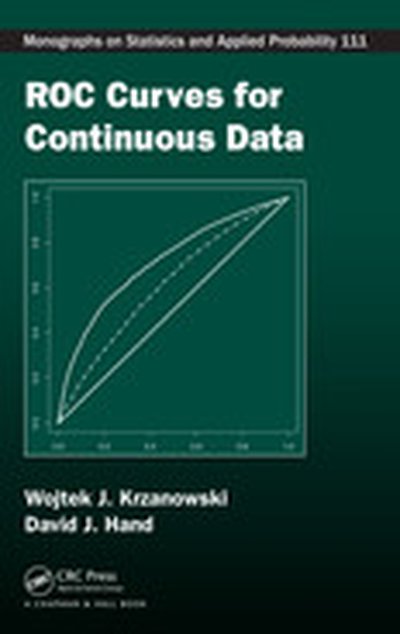
ROC Curves for Continuous Data

Bringing together all the relevant material to impart a clear understanding of how to analyze ROC curves, this book covers the fundamental theory as well as various special topics. It provides illustrative examples of the major methodological developments and includes as much of the mathematical theory as necessary without making the treatment too dense. The authors survey the uses made of the methodology across a range of different areas, from atmospheric science and geoscience to experimental psychology and sociology. They also list a number of websites from which software implementing the various techniques can be downloaded.

SAP Implementation Unleashed: A Business and Technical Roadmap to Deploying SAP

SAP Implementation Unleashed A Business and Technical Roadmap to Deploying SAP George W. Anderson Charles D. Nilson Tim Rhodes SAP can help you capture better information and deliver it more quickly, allowing you to make better decisions and maximize the business value of everything you do. However, SAP implementations require massive effort, total buy-in, and significant change throughout the organization. In SAP Implementation Unleashed, 10 expert SAP project managers, functional consultants, and technologists guide you through the entire journey, helping you avoid pain and pitfalls and gain all the benefits of SAP. The authors introduce start-to-finish business, technical, and project management roadmaps for successful SAP implementation. Then, drawing on their immense experience, they walk you through the entire process of planning and deployment—addressing make-or-break issues and hidden gaps that other guidebooks ignore. You’ll discover how to employ processes, models, and toolsets that help you achieve implementation excellence while systematically reducing cost and business risk. Along the way, you’ll find actionable advice and real-world insight into innovative project management, best-suited leadership, effective load testing, contemporary infrastructure implementation, and more. George W. Anderson is responsible for providing enterprise applications thought leadership for the EDS/HP office of the CTO. A long-time SAP consultant and PMI-certified project manager, George has authored several best-selling books and enjoys new challenges. Charles D. Nilson is a senior program manager for EDS/HP and has led many successful SAP implementation teams over the years. He is a PMI PMP and is SAP Partner Academy certified in MM and PP. Tim Rhodes is a senior SAP technical consultant for EDS/HP and a Basis/infrastructure veteran focused on implementing, migrating, and upgrading SAP Business Suite and NetWeaver solutions. Tim is also an SAP-certified technical consultant, OCP, MCSE, and HP Master ASE. Detailed Information on How To... Define the business vision driving your implementation, and use it to design your solution Use TCO techniques to fully understand SAP’s financial impact in your organization Structure your SAP project management office, business teams, technical support organization, and overall project team Size, plan, and test your SAP infrastructure to deliver the best performance and availability at the best cost Integrate SAP into an SOA environment Install and configure SAP Business Suite and NetWeaver components Perform basic functional configuration, testing, and change management activities Enable a smooth transition by successfully performing the critical tasks that immediately precede SAP Go-Live Choose the right mix of tools and applications to test, manage, and monitor SAP Prepare your SAP Operations team for its post-implementation responsibilities Category: Databases Covers: SAP User Level: Beginner–Intermediate–Advanced

Pro SQL Server 2008 Analytics: Delivering Sales and Marketing Dashboards

Pro SQL Server 2008 Analytics provides everything you need to know to develop sophisticated and visually appealing sales and marketing dashboards using SQL Server 2008 and to integrate those dashboards with SharePoint, PerformancePoint, and other key Microsoft technologies.