talk-data.com talk-data.com

Topic

database-architecture

13

tagged

Activity Trend

1 peak/qtr
2020-Q1 2026-Q1

Activities

13 activities · Newest first

Implementing Data Mesh

As data continues to grow and become more complex, organizations seek innovative solutions to manage their data effectively. Data mesh is one solution that provides a new approach to managing data in complex organizations. This practical guide offers step-by-step guidance on how to implement data mesh in your organization. In this book, Jean-Georges Perrin and Eric Broda focus on the key components of data mesh and provide practical advice supported by code. Data engineers, architects, and analysts will explore a simple and intuitive process for identifying key data mesh components and data products. You'll learn a consistent set of interfaces and access methods that make data products easy to consume. This approach ensures that your data products are easily accessible and the data mesh ecosystem is easy to navigate. This book helps you: Identify, define, and build data products that interoperate within an enterprise data mesh Build a data mesh fabric that binds data products together Build and deploy data products in a data mesh Establish the organizational structure to operate data products, data platforms, and data fabric Learn an innovative architecture that brings data products and data fabric together into the data mesh About the authors: Jean-Georges "JG" Perrin is a technology leader focusing on building innovative and modern data platforms. Eric Broda is a technology executive, practitioner, and founder of a boutique consulting firm that helps global enterprises realize value from data.
Engineering Data Mesh in Azure Cloud

Discover how to implement a modern data mesh architecture using Microsoft Azure's Cloud Adoption Framework. In this book, you'll learn the strategies to decentralize data while maintaining strong governance, turning your current analytics struggles into scalable and streamlined processes. Unlock the potential of data mesh to achieve advanced and democratized analytics platforms. What this Book will help me do Learn to decentralize data governance and integrate data domains effectively. Master strategies for building and implementing data contracts suited to your organization's needs. Explore how to design a landing zone for a data mesh using Azure's Cloud Adoption Framework. Understand how to apply key architecture patterns for analytics, including AI and machine learning. Gain the knowledge to scale analytics frameworks using modern cloud-based platforms. Author(s) None Deswandikar is a seasoned data architect with extensive experience in implementing cutting-edge data solutions in the cloud. With a passion for simplifying complex data strategies, None brings real-world customer experiences into practical guidance. This book reflects None's dedication to helping organizations achieve their data goals with clarity and effectiveness. Who is it for? This book is ideal for chief data officers, data architects, and engineers seeking to transform data analytics frameworks to accommodate advanced workloads. Especially useful for professionals aiming to implement cloud-based data mesh solutions, it assumes familiarity with centralized data systems, data lakes, and data integration techniques. If modernizing your organization's data strategy appeals to you, this book is for you.

Data Fabric Architectures

The immense increase on the size and type of real time data generated across various edge computing platform results in unstructured databases and data silos. This edited book gathers together an international set of researchers to investigate the possibilities offered by data-fabric solutions; the volume focuses in particular on data architectures and on semantic changes in future data landscapes.

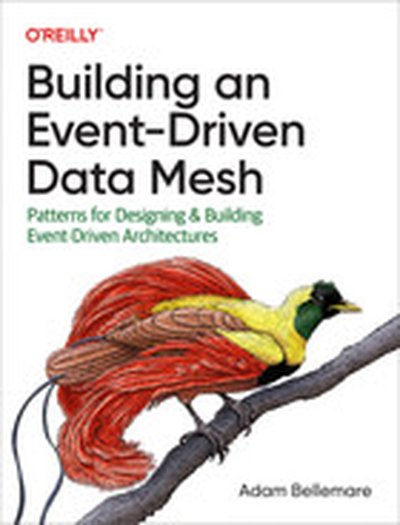
Building an Event-Driven Data Mesh

The exponential growth of data combined with the need to derive real-time business value is a critical issue today. An event-driven data mesh can power real-time operational and analytical workloads, all from a single set of data product streams. With practical real-world examples, this book shows you how to successfully design and build an event-driven data mesh. Building an Event-Driven Data Mesh provides: Practical tips for iteratively building your own event-driven data mesh, including hurdles you'll experience, possible solutions, and how to obtain real value as soon as possible Solutions to pitfalls you may encounter when moving your organization from monoliths to event-driven architectures A clear understanding of how events relate to systems and other events in the same stream and across streams A realistic look at event modeling options, such as fact, delta, and command type events, including how these choices will impact your data products Best practices for handling events at scale, privacy, and regulatory compliance Advice on asynchronous communication and handling eventual consistency

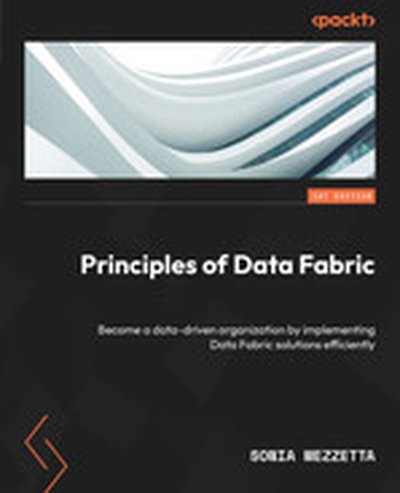
Principles of Data Fabric

In "Principles of Data Fabric," you will gain a comprehensive understanding of Data Fabric solutions and architectures. This book provides a clear picture of how to design, implement, and optimize Data Fabric solutions to tackle complex data challenges. By the end, you'll be equipped with the knowledge to unify and leverage your organizational data efficiently. What this Book will help me do Design and architect Data Fabric solutions tailored to specific organizational needs. Learn to integrate Data Fabric with DataOps and Data Mesh for holistic data management. Master the principles of Data Governance and Self-Service analytics within the Data Fabric. Implement best practices for distributed data management and regulatory compliance. Apply industry insights and frameworks to optimize Data Fabric deployment. Author(s) Sonia Mezzetta, the author of "Principles of Data Fabric," is an experienced data professional with a deep understanding of data management frameworks and architectures like Data Fabric, Data Mesh, and DataOps. With years of industry expertise, Sonia has helped organizations implement effective data strategies. Her writing combines technical know-how with an approachable style to enlighten and guide readers on their data journey. Who is it for? This book is ideal for data engineers, data architects, and business analysts who seek to understand and implement Data Fabric solutions. It will also appeal to senior data professionals like Chief Data Officers aiming to integrate Data Fabric into their enterprises. Novice to intermediate knowledge of data management would be beneficial for readers. The content provides clear pathways to achieve actionable results in data strategies.

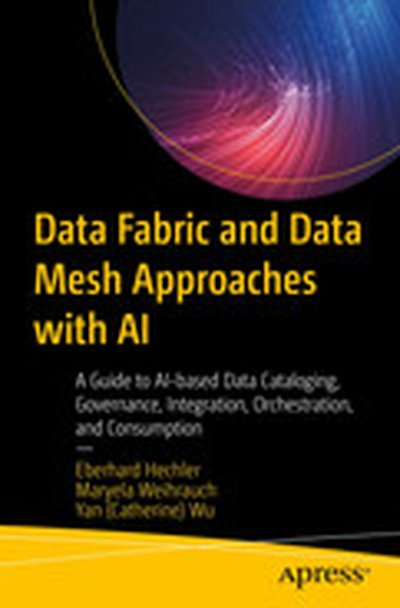
Data Fabric and Data Mesh Approaches with AI: A Guide to AI-based Data Cataloging, Governance, Integration, Orchestration, and Consumption

Understand modern data fabric and data mesh concepts using AI-based self-service data discovery and delivery capabilities, a range of intelligent data integration styles, and automated unified data governance—all designed to deliver "data as a product" within hybrid cloud landscapes. This book teaches you how to successfully deploy state-of-the-art data mesh solutions and gain a comprehensive overview on how a data fabric architecture uses artificial intelligence (AI) and machine learning (ML) for automated metadata management and self-service data discovery and consumption. You will learn how data fabric and data mesh relate to other concepts such as data DataOps, MLOps, AIDevOps, and more. Many examples are included to demonstrate how to modernize the consumption of data to enable a shopping-for-data (data as a product) experience. By the end of this book, you will understand the data fabric concept and architecture as it relates to themes such as automated unifieddata governance and compliance, enterprise information architecture, AI and hybrid cloud landscapes, and intelligent cataloging and metadata management. What You Will Learn Discover best practices and methods to successfully implement a data fabric architecture and data mesh solution Understand key data fabric capabilities, e.g., self-service data discovery, intelligent data integration techniques, intelligent cataloging and metadata management, and trustworthy AI Recognize the importance of data fabric to accelerate digital transformation and democratize data access Dive into important data fabric topics, addressing current data fabric challenges Conceive data fabric and data mesh concepts holistically within an enterprise context Become acquainted with the business benefits of data fabric and data mesh Who This Book Is For Anyone who is interested in deploying modern data fabric architectures and data mesh solutions within an enterprise, including IT and business leaders, data governance and data office professionals, data stewards and engineers, data scientists, and information and data architects. Readers should have a basic understanding of enterprise information architecture.

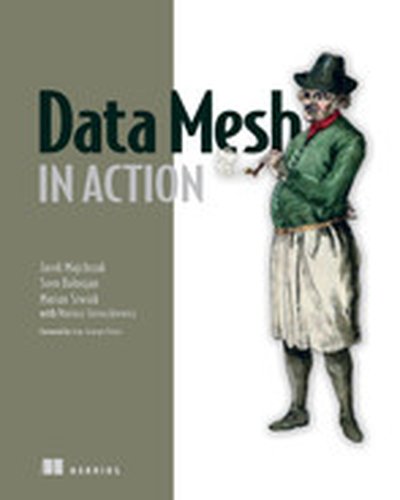
Data Mesh in Action

Revolutionize the way your organization approaches data with a data mesh! This new decentralized architecture outpaces monolithic lakes and warehouses and can work for a company of any size. In Data Mesh in Action you will learn how to: Implement a data mesh in your organization Turn data into a data product Move from your current data architecture to a data mesh Identify data domains, and decompose an organization into smaller, manageable domains Set up the central governance and local governance levels over data Balance responsibilities between the two levels of governance Establish a platform that allows efficient connection of distributed data products and automated governance Data Mesh in Action reveals how this groundbreaking architecture looks for both startups and large enterprises. You won’t need any new technology—this book shows you how to start implementing a data mesh with flexible processes and organizational change. You’ll explore both an extended case study and real-world examples. As you go, you’ll be expertly guided through discussions around Socio-Technical Architecture and Domain-Driven Design with the goal of building a sleek data-as-a-product system. Plus, dozens of workshop techniques for both in-person and remote meetings help you onboard colleagues and drive a successful transition. About the Technology Business increasingly relies on efficiently storing and accessing large volumes of data. The data mesh is a new way to decentralize data management that radically improves security and discoverability. A well-designed data mesh simplifies self-service data consumption and reduces the bottlenecks created by monolithic data architectures. About the Book Data Mesh in Action teaches you pragmatic ways to decentralize your data and organize it into an effective data mesh. You’ll start by building a minimum viable data product, which you’ll expand into a self-service data platform, chapter-by-chapter. You’ll love the book’s unique “sliders” that adjust the mesh to meet your specific needs. You’ll also learn processes and leadership techniques that will change the way you and your colleagues think about data. What's Inside Decompose an organization into manageable domains Turn data into a data product Set up central and local governance levels Build a fit-for-purpose data platform Improve management, initiation, and support techniques About the Reader For data professionals. Requires no specific programming stack or data platform. About the Authors Jacek Majchrzak is a hands-on lead data architect. Dr. Sven Balnojan manages data products and teams. Dr. Marian Siwiak is a data scientist and a management consultant for IT, scientific, and technical projects. Quotes This book teleports you into the seat of the chief architect on a data mesh project. - From the Foreword by Jean-Georges Perrin, PayPal A must-read for anyone who works in data. - Prukalpa Sankar, Co-Founder of Atlan Satisfies all those ‘what’, ‘why’, and ‘how’ questions. A unique blend of process and technology, and an excellent, example-driven resource. - Shiroshica Kulatilake, WSO2 The starting point for your journey in the new generation of data platforms. - Arnaud Castelltort, University of Montpellier

Oracle Autonomous Database in Enterprise Architecture

Explore the capabilities of Oracle Autonomous Database (ADB) to improve enterprise-level data management. Through this book, you will dive deep into deploying, managing, and securing ADBs using Oracle Cloud Infrastructure (OCI). Gain hands-on experience with high-availability setups, data migration methods, and advanced security measures to elevate your enterprise architecture. What this Book will help me do Understand the key considerations for planning, migrating, and maintaining Oracle Autonomous Databases. Learn to implement high availability solutions using Autonomous Data Guard in ADB environments. Master the configuration of backup, restore, and disaster recovery strategies within OCI. Implement advanced security practices including encryption and IAM policy management. Gain proficiency in leveraging ADB features like APEX, SQL Developer Web, and REST APIs for rapid application development. Author(s) The authors None Sharma, Krishnakumar KM, and None Panda are experts in database systems, particularly in Oracle technologies. With years of hands-on experience implementing enterprise solutions and training professionals, they have pooled their knowledge to craft a resource-rich guide filled with practical advice. Who is it for? This book is ideal for cloud architects, database administrators, and implementation consultants seeking to leverage Oracle's Autonomous Database for enhanced automation, security, and scalability. It is well-suited for professionals with foundational knowledge of Linux, OCI, and databases. Aspiring cloud engineers and students aiming to understand modern database management will also benefit greatly.

Data Mesh

We're at an inflection point in data, where our data management solutions no longer match the complexity of organizations, the proliferation of data sources, and the scope of our aspirations to get value from data with AI and analytics. In this practical book, author Zhamak Dehghani introduces data mesh, a decentralized sociotechnical paradigm drawn from modern distributed architecture that provides a new approach to sourcing, sharing, accessing, and managing analytical data at scale. Dehghani guides practitioners, architects, technical leaders, and decision makers on their journey from traditional big data architecture to a distributed and multidimensional approach to analytical data management. Data mesh treats data as a product, considers domains as a primary concern, applies platform thinking to create self-serve data infrastructure, and introduces a federated computational model of data governance. Get a complete introduction to data mesh principles and its constituents Design a data mesh architecture Guide a data mesh strategy and execution Navigate organizational design to a decentralized data ownership model Move beyond traditional data warehouses and lakes to a distributed data mesh

Data Mesh in Practice

The data mesh is poised to replace data lakes and data warehouses as the dominant architectural pattern in data and analytics. By promoting the concept of domain-focused data products that go beyond file sharing, data mesh helps you deal with data quality at scale by establishing true data ownership. This approach is so new, however, that many misconceptions and a general lack of practical experience for implementing data mesh are widespread. With this report, you'll learn how to successfully overcome challenges in the adoption process. By drawing on their experience building large-scale data infrastructure, designing data architectures, and contributing to data strategies of large and successful corporations, authors Max Schultze and Arif Wider have identified the most common pain points along the data mesh journey. You'll examine the foundations of the data mesh paradigm and gain both technical and organizational insights. This report is ideal for companies just starting to work with data, for organizations already in the process of transforming their data infrastructure landscape, as well as for advanced companies working on federated governance setups for a sustainable data-driven future. This report covers: Data mesh principles and practical examples for getting started Typical challenges and solutions you'll encounter when implementing a data mesh Data mesh pillars including domain ownership, data as a product, and infrastructure as a platform How to move toward a decentralized data product and build a data infrastructure platform

Database Benchmarking and Stress Testing: An Evidence-Based Approach to Decisions on Architecture and Technology

Provide evidence-based answers that can be measured and relied upon by your business. Database administrators will be able to make sound architectural decisions in a fast-changing landscape of virtualized servers and container-based solutions based on the empirical method presented in this book for answering “what if” questions about database performance. Today’s database administrators face numerous questions such as: What if we consolidate databases using multitenant features? What if we virtualize database servers as Docker containers? What if we deploy the latest in NVMe flash disks to speed up IO access? Do features such as compression, partitioning, and in-memory OLTP earn back their price? What if we move our databases to the cloud? As an administrator, do you know the answers or even how to test the assumptions? Database Benchmarking and Stress Testing introduces you to database benchmarking using industry-standard test suites such as the TCP series of benchmarks, which are the same benchmarks that vendors rely upon. You’ll learn to run these industry-standard benchmarks and collect results to use in answering questions about the performance impact of architectural changes, technology changes, and even down to the brand of database software. You’ll learn to measure performance and predict the specific impact of changes to your environment. You’ll know the limitations of the benchmarks and the crucial difference between benchmarking and workload capture/reply. This book teaches you how to create empirical evidence in support of business and technology decisions. It’s about not guessing when you should be measuring. Empirical testing is scientific testing that delivers measurable results. Begin with a hypothesis about the impact of a possible architecture or technology change. Then run the appropriate benchmarks to gather data and predict whether the change you’re exploring will be beneficial, and by what order of magnitude. Stop guessing. Start measuring. Let Database Benchmarking and Stress Testing show the way. What You'll Learn Understand the industry-standard database benchmarks, and when each is best used Prepare for a database benchmarking effort so reliable results can be achieved Perform database benchmarking for consolidation, virtualization, and cloud projects Recognize and avoid common mistakes in benchmarking database performance Measure and interpret results in a rational, concise manner for reliable comparisons Choose and provide advice on benchmarking tools based on their pros and cons Who This Book Is For Database administrators and professionals responsible for advising on architectural decisions such as whether to use cloud-based services, whether to consolidate and containerize, and who must make recommendations on storage or any other technology that impacts database performance

Expert Oracle Database Architecture, Third Edition

" Now in its third edition, this best-selling book continues to bring you some of the best thinking on how to apply Oracle Database to produce scalable applications that perform well and deliver correct results. Tom Kyte and Darl Kuhn share a simple philosophy: "you can treat Oracle as a black box and just stick data into it, or you can understand how it works and exploit it as a powerful computing environment." If you choose the latter, then you’ll find that there are few information management problems that you cannot solve quickly and elegantly. This fully revised third edition covers the developments up to Oracle Database 12 c. Significant new content is included surrounding Oracle's new cloud feature set, and especially the use of pluggable databases. Each feature is taught in a proof-by-example manner, not only discussing what it is, but also how it works, how to implement software using it, and the common pitfalls associated with it. Don’t treat Oracle Database as a black-box. Get this book. Get under the hood. Turbo-charge your career. Revised to cover Oracle Database 12 c Proof-by-example approach: Let the evidence be your guide Dives deeply into Oracle Database’s most powerful features"

Developing Essbase Applications

If you love Essbase and hate seeing it misused, then this is the book for you. Written by 12 Essbase professionals that are either acknowledged Essbase gurus or certified Oracle ACEs, Developing Essbase Applications: Advanced Techniques for Finance and IT Professionals provides an unparalleled investigation and explanation of Essbase theory and best practices. Detailing the hows and the whys of successful Essbase implementation, the book arms you with simple yet powerful tools to meet your immediate needs, as well as the theoretical knowledge to proceed to the next level with Essbase. Infrastructure, data sourcing and transformation, database design, calculations, automation, APIs, reporting, and project implementation are covered by subject matter experts who work with the tools and techniques on a daily basis. In addition to practical cases that illustrate valuable lessons learned, the book offers: —Dan Pressman describes the previously unpublished and undocumented inner workings of the ASO Essbase engine. Undocumented Secrets Authoritative Experts—If you have questions that no one else can solve, these 12 Essbase professionals are the ones who can answer them. Unpublished—Includes the only third-party guide to infrastructure. Infrastructure is easy to get wrong and can doom any Essbase project. Comprehensive—Let there never again be a question on how to create blocks or design BSO databases for performance—Dave Farnsworth provides the answers within. Innovative—Cameron Lackpour and Joe Aultman bring new and exciting solutions to persistent Essbase problems. With a list of contributors as impressive as the program of presenters at a leading Essbase conference, this book offers unprecedented access to the insights and experiences of those at the forefront of the field. The previously unpublished material presented in these pages will give you the practical knowledge needed to use this powerful and intuitive tool to build highly useful analytical models, reporting systems, and forecasting applications.