talk-data.com talk-data.com

Topic

DWH

Data Warehouse

analytics business_intelligence data_storage

143

tagged

Activity Trend

35 peak/qtr
2020-Q1 2026-Q1

Activities

Showing filtered results

Filtering by: O'Reilly Data Engineering Books ×
Business Metadata: Capturing Enterprise Knowledge

Business Metadata: Capturing Enterprise Knowledge is the first book that helps businesses capture corporate (human) knowledge and unstructured data, and offer solutions for codifying it for use in IT and management. Written by Bill Inmon, one of the fathers of the data warehouse and well-known author, the book is filled with war stories, examples, and cases from current projects. It includes a complete metadata acquisition methodology and project plan to guide readers every step of the way, and sample unstructured metadata for use in self-testing and developing skills. This book is recommended for IT professionals, including those in consulting, working on systems that will deliver better knowledge management capability. This includes people in these positions: data architects, data analysts, SOA architects, metadata analysts, repository (metadata data warehouse) managers as well as vendors that have a metadata component as part of their systems or tools. First book that helps businesses capture corporate (human) knowledge and unstructured data, and offer solutions for codifying it for use in IT and management Written by Bill Inmon, one of the fathers of the data warehouse and well-known author, and filled with war stories, examples, and cases from current projects Very practical, includes a complete metadata acquisition methodology and project plan to guide readers every step of the way Includes sample unstructured metadata for use in self-testing and developing skills

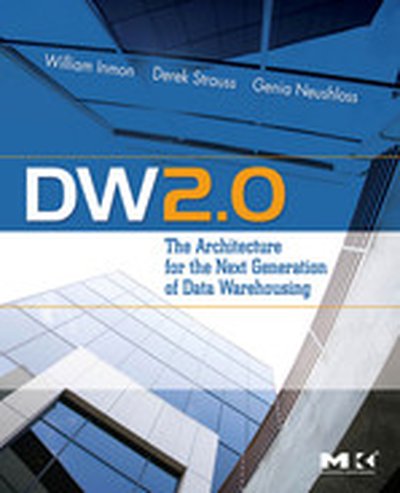
DW 2.0: The Architecture for the Next Generation of Data Warehousing

DW 2.0: The Architecture for the Next Generation of Data Warehousing is the first book on the new generation of data warehouse architecture, DW 2.0, by the father of the data warehouse. The book describes the future of data warehousing that is technologically possible today, at both an architectural level and technology level. The perspective of the book is from the top down: looking at the overall architecture and then delving into the issues underlying the components. This allows people who are building or using a data warehouse to see what lies ahead and determine what new technology to buy, how to plan extensions to the data warehouse, what can be salvaged from the current system, and how to justify the expense at the most practical level. This book gives experienced data warehouse professionals everything they need in order to implement the new generation DW 2.0. It is designed for professionals in the IT organization, including data architects, DBAs, systems design and development professionals, as well as data warehouse and knowledge management professionals. First book on the new generation of data warehouse architecture, DW 2.0 Written by the "father of the data warehouse", Bill Inmon, a columnist and newsletter editor of The Bill Inmon Channel on the Business Intelligence Network Long overdue comprehensive coverage of the implementation of technology and tools that enable the new generation of the DW: metadata, temporal data, ETL, unstructured data, and data quality control

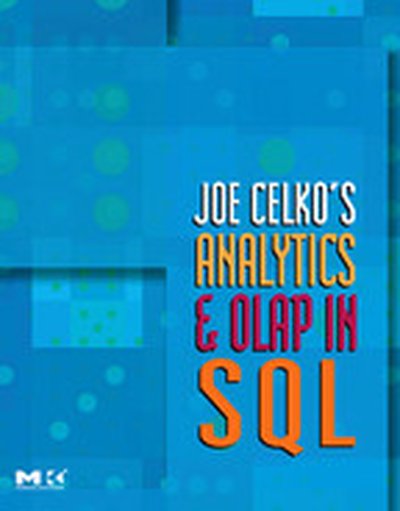
Joe Celko's Analytics and OLAP in SQL

Joe Celko's Analytics and OLAP in SQL is the first book that teaches what SQL programmers need in order to successfully make the transition from On-Line Transaction Processing (OLTP) systems into the world of On-Line Analytical Processing (OLAP). This book is not an in-depth look at particular subjects, but an overview of many subjects that will give the working RDBMS programmers a map of the terra incognita they will face — if they want to grow. It contains expert advice from a noted SQL authority and award-winning columnist, who has given ten years of service to the ANSI SQL standards committee and many more years of dependable help to readers of online forums. It offers real-world insights and lots of practical examples. It covers the OLAP extensions in SQL-99; ETL tools, OLAP features supported in DBMSs, other query tools, simple reports, and statistical software. This book is ideal for experienced SQL programmers who have worked with OLTP systems who need to learn techniques—and even some tricks—that they can use in an OLAP situation. Expert advice from a noted SQL authority and award-winning columnist, who has given ten years of service to the ANSI SQL standards committee and many more years of dependable help to readers of online forums First book that teaches what SQL programmers need in order to successfully make the transition from transactional systems (OLTP) into the world of data warehouse data and OLAP Offers real-world insights and lots of practical examples Covers the OLAP extensions in SQL-99; ETL tools, OLAP features supported in DBMSs, other query tools, simple reports, and statistical software

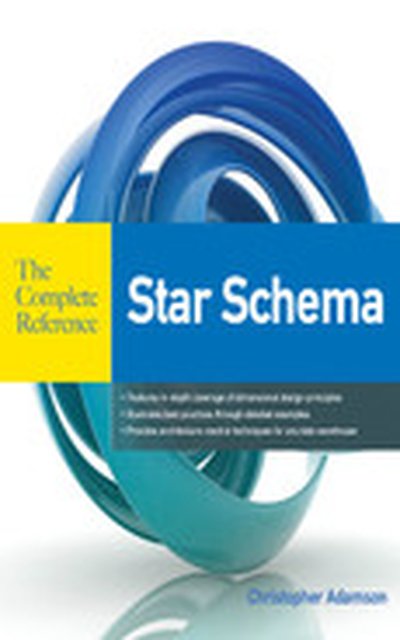
Star Schema The Complete Reference

The definitive guide to dimensional design for your data warehouse Learn the best practices of dimensional design. Star Schema: The Complete Reference offers in-depth coverage of design principles and their underlying rationales. Organized around design concepts and illustrated with detailed examples, this is a step-by-step guidebook for beginners and a comprehensive resource for experts. This all-inclusive volume begins with dimensional design fundamentals and shows how they fit into diverse data warehouse architectures, including those of W.H. Inmon and Ralph Kimball. The book progresses through a series of advanced techniques that help you address real-world complexity, maximize performance, and adapt to the requirements of BI and ETL software products. You are furnished with design tasks and deliverables that can be incorporated into any project, regardless of architecture or methodology. Master the fundamentals of star schema design and slow change processing Identify situations that call for multiple stars or cubes Ensure compatibility across subject areas as your data warehouse grows Accommodate repeating attributes, recursive hierarchies, and poor data quality Support conflicting requirements for historic data Handle variation within a business process and correlation of disparate activities Boost performance using derived schemas and aggregates Learn when it's appropriate to adjust designs for BI and ETL tools

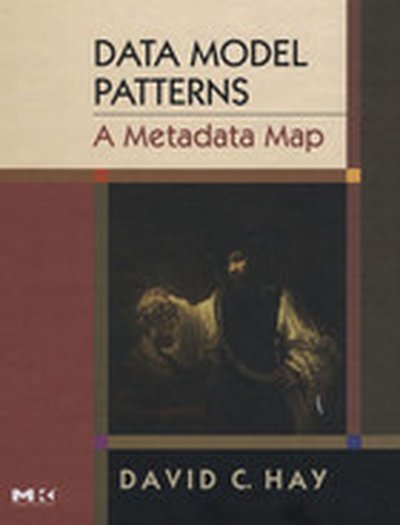
Data Model Patterns: A Metadata Map

Data Model Patterns: A Metadata Map not only presents a conceptual model of a metadata repository but also demonstrates a true enterprise data model of the information technology industry itself. It provides a step-by-step description of the model and is organized so that different readers can benefit from different parts. It offers a view of the world being addressed by all the techniques, methods, and tools of the information processing industry (for example, object-oriented design, CASE, business process re-engineering, etc.) and presents several concepts that need to be addressed by such tools. This book is pertinent, with companies and government agencies realizing that the data they use represent a significant corporate resource recognize the need to integrate data that has traditionally only been available from disparate sources. An important component of this integration is management of the "metadata" that describe, catalogue, and provide access to the various forms of underlying business data. The "metadata repository" is essential to keep track of the various physical components of these systems and their semantics. The book is ideal for data management professionals, data modeling and design professionals, and data warehouse and database repository designers. A comprehensive work based on the Zachman Framework for information architecture—encompassing the Business Owner's, Architect's, and Designer's views, for all columns (data, activities, locations, people, timing, and motivation) Provides a step-by-step description of model and is organized so that different readers can benefit from different parts Provides a view of the world being addressed by all the techniques, methods and tools of the information processing industry (for example, object-oriented design, CASE, business process re-engineering, etc.) Presents many concepts that are not currently being addressed by such tools — and should be

Data Warehousing Fundamentals for IT Professionals

Cutting-edge content and guidance from a data warehousing expert—now expanded to reflect field trends Data warehousing has revolutionized the way businesses in a wide variety of industries perform analysis and make strategic decisions. Since the first edition of Data Warehousing Fundamentals, numerous enterprises have implemented data warehouse systems and reaped enormous benefits. Many more are in the process of doing so. Now, this new, revised edition covers the essential fundamentals of data warehousing and business intelligence as well as significant recent trends in the field. The author provides an enhanced, comprehensive overview of data warehousing together with in-depth explanations of critical issues in planning, design, deployment, and ongoing maintenance. IT professionals eager to get into the field will gain a clear understanding of techniques for data extraction from source systems, data cleansing, data transformations, data warehouse architecture and infrastructure, and the various methods for information delivery. This practical Second Edition highlights the areas of data warehousing and business intelligence where high-impact technological progress has been made. Discussions on developments include data marts, real-time information delivery, data visualization, requirements gathering methods, multi-tier architecture, OLAP applications, Web clickstream analysis, data warehouse appliances, and data mining techniques. The book also contains review questions and exercises for each chapter, appropriate for self-study or classroom work, industry examples of real-world situations, and several appendices with valuable information. Specifically written for professionals responsible for designing, implementing, or maintaining data warehousing systems, Data Warehousing Fundamentals presents agile, thorough, and systematic development principles for the IT professional and anyone working or researching in information management.

Oracle Database 11g PL/SQL Programming Workbook

Ramp Up Your PL/SQL Programming Skills Master PL/SQL through the hands-on exercises, extensive examples, and real-world projects inside this Oracle Press guide. Filled with best practices, Oracle Database 11g PL/SQL Programming Workbook covers all the latest features and enhancements of the language. Mastery checks at the end of each chapter reinforce the material covered, and sample code from the book is available for download. Even experienced Oracle professionals will benefit from this practical resource. Understand the Oracle development architecture and the mechanics of connections Work with data types, structures, blocks, cursors, and PL/SQL semantics Write, deploy, and use functions, procedures, and packages Manage transactions and more Use dynamic SQL statements in real-world applications Support online transaction processing and data warehousing applications with external tables Find syntax samples and best practices to solve problems Write, deploy, and use object types For a complete list of Oracle Press titles, visit www.OraclePressBooks.com

Professional SQL Server® 2008 Internals and Troubleshooting

A hands-on resource for SQL Server 2008 troubleshooting methods and tools SQL Server administrators need to ensure that SQL Server remains running 24/7. Authored by leading SQL Server experts and MVPs, this book provides in-depth coverage of best practices based on a deep understanding of the internals of both SQL Server and the Windows operating system. You'll get a thorough look at the SQL Server database architecture and internals as well as Windows OS internals so that you can approach troubleshooting with a solid grasp of the total processing environment. Armed with this comprehensive understanding, readers will then learn how to use a suite of tools for troubleshooting performance problems whether they originate on the database server or operating system side. Topics Covered: SQL Server Architecture Understanding Memory SQL Server Waits and Extended Events Working with Storage CPU and Query Processing Locking and Latches Knowing Tempdb Defining Your Approach To Troubleshooting Viewing Server Performance with PerfMon and the PAL Tool Tracing SQL Server with SQL Trace and Profiler Consolidating Data Collection with SQLDiag and the PerfStats Script Introducing RML Utilities for Stress Testing and Trace File Analysis Bringing It All Together with SQL Nexus Using Management Studio Reports and the Performance Dashboard Using SQL Server Management Data Warehouse Shortcuts to Efficient Data Collection and Quick Analysis Note: CD-ROM/DVD and other supplementary materials are not included as part of eBook file.

Microsoft® SQL Server® 2008 Integration Services: Problem-Design-Solution

An authoritative guide to designing effective solutions for data cleansing, ETL, and file management with SQL Server 2008 Integration Services SQL Server Integration Services (SSIS) is the leading tool in the data warehouse industry, used for performing extraction, transformation, and load operations. After an overview of SSIS architecture, the authors walk you a series of real-world problems and show various techniques for handling them. Shows you how to design SSIS solutions for data cleansing, ETL and file management Demonstrates how to integrate data from a variety of data sources, Shows how to monitor SSIS performance, Demonstrates how to avoid common pitfalls involved with SSIS deployment Explains how to ensure performance of the deployed solution and effectively handle unexpected system failures and outages The companion Web site provides sample code and database scripts that readers can directly implement This book shows you how to design, build, deploy, and manage solutions to real-world problems that SSIS administrators and developers face day-to-day.

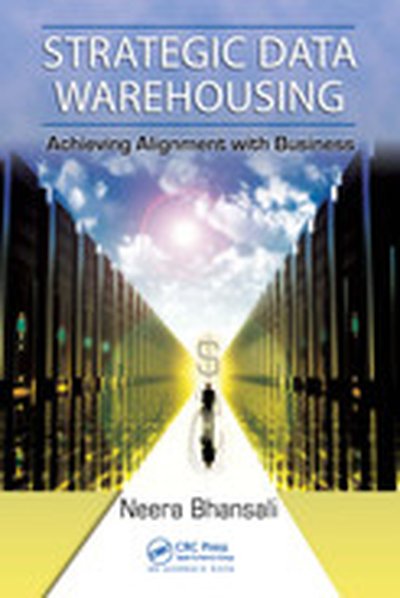
Strategic Data Warehousing

Organization of data warehouses are vital but often ignored aspects of growing enterprises. This work merges technological know-how with managerial practices to show both the business manager and the IT professional how better alignment between data warehouse plans and business strategies can lead to a successful data warehouse adoption that will support the entire infrastructure. More complete than any other text in the field, this resource also addresses the managerial and strategic aspects of data warehouses, offering doable solutions that will allow for the strategic alignment of these warehouses while building them and ensuring that this alignment is sustained.

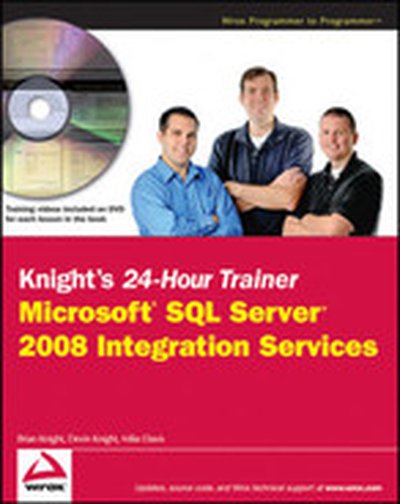
Knight's 24-Hour Trainer: Microsoft® SQL Server® 2008 Integration Services

A unique book-and-video package for Knight's 24-Hour Trainer: Microsoft® SQL Server® 2008 Integration Services If you need a practical, hands-on introduction to Microsoft SQL Server 2008 Integration Services (SSIS), this book and video package from foremost SSIS authority Brian Knight gets you thoroughly up to speed. Each lesson in the book includes three major components: a thorough description of how each SSIS feature or process works; a tutorial that walks you through the process or technique; and a video lesson that demonstrates it. If you take full advantage of this comprehensive package, you will gain enough experience to tackle your first SSIS project with confidence. SQL Server Integration Services 2008 (SSIS) builds on the revolutionary database product suite first introduced by Microsoft in 2005 and is a powerful tool for performing extraction, transformation, and load (ETL) operations essential to data warehousing If you're just learning SSIS, the step-by-step tutorials in this book and video training package will ready you to tackle your own first project Note: CD-ROM/DVD and other supplementary materials are not included as part of eBook file.

A Manager's Guide to Data Warehousing

Aimed at helping business and IT managers clearly communicate with each other, this helpful book addresses concerns straight-on and provides practical methods to building a collaborative data warehouse. You’ll get clear explanations of the goals and objectives of each stage of the data warehouse lifecycle while learning the roles that both business managers and technicians play at each stage. Discussions of the most critical decision points for success at each phase of the data warehouse lifecycle help you understand ways in which both business and IT management can make decisions that best meet unified objectives.

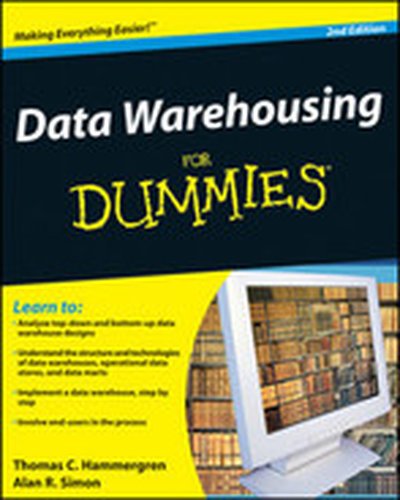
Data Warehousing For Dummies®, 2nd Edition

Data warehousing is one of the hottest business topics, and there’s more to understanding data warehousing technologies than you might think. Find out the basics of data warehousing and how it facilitates data mining and business intelligence with Data Warehousing For Dummies, 2nd Edition. Data is probably your company’s most important asset, so your data warehouse should serve your needs. The fully updated Second Edition of Data Warehousing For Dummies helps you understand, develop, implement, and use data warehouses, and offers a sneak peek into their future. You’ll learn to: Analyze top-down and bottom-up data warehouse designs Understand the structure and technologies of data warehouses, operational data stores, and data marts Choose your project team and apply best development practices to your data warehousing projects Implement a data warehouse, step by step, and involve end-users in the process Review and upgrade existing data storage to make it serve your needs Comprehend OLAP, column-wise databases, hardware assisted databases, and middleware Use data mining intelligently and find what you need Make informed choices about consultants and data warehousing products Data Warehousing For Dummies, 2nd Edition also shows you how to involve users in the testing process and gain valuable feedback, what it takes to successfully manage a data warehouse project, and how to tell if your project is on track. You’ll find it’s the most useful source of data on the topic!

The Data Model Resource Book, Volume 3: Universal Patterns for Data Modeling

This third volume of the best-selling "Data Model Resource Book" series revolutionizes the data modeling discipline by answering the question "How can you save significant time while improving the quality of any type of data modeling effort?" In contrast to the first two volumes, this new volume focuses on the fundamental, underlying patterns that affect over 50 percent of most data modeling efforts. These patterns can be used to considerably reduce modeling time and cost, to jump-start data modeling efforts, as standards and guidelines to increase data model consistency and quality, and as an objective source against which an enterprise can evaluate data models. Praise for The Data Model Resource Book, Volume 3 "Len and Paul look beneath the superficial issues of data modeling and have produced a work that is a must for every serious designer and manager of an IT project." " The Data Model Resource Book, Volume 3: Universal Patterns for Data Modeling is a great source for reusable patterns you can use to save a tremendous amount of time, effort, and cost on any data modeling effort. Len Silverston and Paul Agnewhave provided an indispensable reference of very high-quality patterns for the most foundational types of datamodel structures. This book represents a revolutionary leap in moving the data modeling profession forward." — Ron Powell, Cofounder and Editorial Director of the Business Intelligence Network "After we model a Customer, Product, or Order, there is still more about each of these that remains to be captured, such as roles they play, classifications in which they belong, or states in which they change. The Data Model Resource Book, Volume 3: Universal Patterns for Data Modeling clearly illustrates these common structures. Len Silverston and Paul Agnew have created a valuable addition to our field, allowing us to improve the consistency and quality of our models by leveraging the many common structures within this text." — Steve Hoberman, Best-Selling Author of Data Modeling Made Simple "The large national health insurance company I work at has actively used these data patterns and the (Universal Data Models) UDM, ahead of this book, through Len Silverston’s UDM Jump Start engagement. The patterns have found their way into the core of our Enterprise Information Model, our data warehouse designs, and progressively into key business function databases. We are getting to reuse the patterns across projects and are reaping benefits in understanding, flexibility, and time-to-market. Thanks so much." — David Chasteen, Enterprise Information Architect "Reusing proven data modeling design patterns means exactly that. Data models become stable, but remain very flexible to accommodate changes. We have had the fortune of having Len and Paul share the patterns that are described in this book via our engagements with Universal Data Models, LLC. These data modeling design patterns have helped us to focus on the essential business issues because we have leveraged these reusable building blocks for many of the standard design problems. These design patterns have also helped us to evaluate the quality of data models for their intended purpose. Many times there are a lot of enhancements required. Too often the very specialized business-oriented data model is also implemented physically. This may have significant drawbacks to flexibility. I’m looking forward to increasing the data modeling design pattern competence within Nokia with the help of this book." — Teemu Mattelmaki, Chief Information Architect, Nokia "Once again, Len Silverston, this time together with Paul Agnew, has made a valuable contribution to the body of knowledge about datamodels, and the act of building sound data models. As a professional data modeler, and teacher of data modeling for almost three decades, I have always been aware that I had developed some familiar mental "patterns" which I acquired very early in my data modeling experience. When teaching data modeling, we use relatively simple workshops, but they are carefully designed so the students will see and acquire a lot of these basic "patterns" — templates that they will recognize and can use to interpret different subject matter into data model form quickly and easily. I’ve always used these patterns in the course of facilitating data modeling sessions; I was able to recognize "Ah, this is just like . . .," and quickly apply a pattern that I’d seen before. But, in all this time, I’ve never sat down and clearly categorized and documented what each of these “patterns’’ actually was in such a way that they could be easily and clearly communicated to others; Len and Paul have done exactly that. As in the other Data Model Resource Books, the thinking and writing is extraordinarily clear and understandable. I personally would have been very proud to have authored this book, and I sincerely applaud Len and Paul for another great contribution to the art and science of data modeling. It will be of great value to any data modeler." — William G. Smith, President, William G. Smith & Associates, www.williamgsmith.com "Len Silverston and Paul Agnew’s book, Universal Patterns for Data Modeling, is essential reading for anyone undertaking commercial datamodeling. With this latest volume that compiles and insightfully describes fundamental, universal data patterns, The Data Model Resource Book series represents the most important contribution to the data modeling discipline in the last decade." — Dr. Graeme Simsion, Author of Data Modeling Essentials and Data Modeling Theory and Practice "Volume 3 of this trilogy is a most welcome addition to Len Silverston’s two previous books in this area. Guidance has existed for some time for those who desire to use pattern-based analysis to jump-start their data modeling efforts. Guidance exists for those who want to use generalized and industry-specific data constructs to leverage their efforts. What has been missing is guidance to those of us needing guidance to complete the roughly one-third of data models that are not generalized or industry-specific. This is where the magic of individual organizational strategies must manifest itself, and Len and Paul have done so clearly and articulately in a manner that complements the first two volumes of The Data Model Resource Book. By adding this book to Volumes 1 and 2 you will be gaining access to some of the most integrated data modeling guidance available on the planet." — Dr. Peter Aiken, Author of XML in Data Management and data management industry leader VCU/Data Blueprint

Professional SQL Server® 2008 Integration Services

The new edition of the successful previous version is 25 percent revised and packed with more than 200 pages of new material on the 2008 release of SQL Server Integration Services (SSIS) Renowned author Brian Knight and his expert coauthors show developers how to master the 2008 release of SSIS, which is both more powerful and more complex than ever Case studies and tutorial examples acquired over the three years since the previous edition will contribute to helping illustrate advanced concepts and techniques New chapters include coverage of data warehousing using SSIS, new methods for managing the SSIS platform, and improved techniques for ETL operations

Crystal Reports® 2008 Official Guide

CRYSTAL REPORTS® 2008 OFFICIAL GUIDE Whether you’re a DBA, data warehousing or business intelligence professional, Every significant enhancement introduced in Crystal Reports 2008 is covered, including its new visualization options and more robust Web services capabilities. The book concludes by showing how to use Crystal Reports’ powerful .NET and Java SDKs to customize and extend enterprise reporting in virtually unlimited ways. • Learn hands-on, through step-by-step examples and exercises–and discover tips and tricks proven in real-world enterprise environments • Master new Crystal Reports 2008 features, including interactive report viewing, Xcelsius dashboarding, Flex, and Flash integration, Report Designer improvements, report bursting, and more • Publish professional-quality reports against virtually any data source, including relational and OLAP databases, Universes, SAP, PeopleSoft, JavaBeans, .NET/COM objects, XML, and more • Discover advanced visualization techniques using Xcelsius, charts, and maps • Learn methods for distributing reports and integrating content into other applications • Learn about the latest reporting addition to the Business Objects family–Xcelsius and begin creating dynamic and interactive dashboards NEIL FITZGERALD has spent several years working at Business Objects and with one of Business Objects’ largest providers of custom BI and enterprise reporting solutions. BOB COATES currently works as a Sales Consultant for Business Objects, an SAP company, where he has been employed for more than eleven years. RYAN GOODMAN is the founder of Centigon Solutions, Inc., and remains one of the top Xcelsius experts and evangelists in the world. MICHAEL VOLOSHKO is a senior presales consultant for the financial services team at Business Objects. ON THE WEB Find all this and more at informit.com/sams: • Java and .NET sample reports and code samples for all examples in the book • Bonus chapters, tips, tricks, and links to great reporting resources CATEGORY: Database COVERS: Crystal Reports 2008, Crystal Reports Server 2008, Crystal Reports Viewer, crystalreports.com, Xcelsius 2008 USER LEVEL: Beginning–Intermediate informit.com/sams

SQL Fundamentals, Third Edition

SQL for the Real World Don’t just learn “generic” SQL. Learn SQL to get results with the world’s top database platforms–Oracle for the enterprise and Microsoft Access for the desktop. Based on John Patrick’s hands-on SQL course at the University of California, Berkeley Extension, this book shows exactly how to retrieve the data you want, when you need it, in any application–from ad hoc reports to the data warehouse. Thoroughly updated for the newest versions of Oracle, Access, and the SQL standard, this book contains more exercises, techniques, and solutions than ever before. You’ll learn exactly how to write SQL queries that are easy to understand, verify, modify, and extend–even if you’ve never worked with databases before. teaches you how to SQL Fundamentals,Third Edition, Build simple statements to retrieve, store, or modify data Craft complex queries that draw information from multiple tables Sort and summarize your data just the way you want it Create and edit your own tables Protect the integrity of your data Create more efficient, high-performance queries Work with unions, subqueries, self joins, cross joins, inner joins, and outer joins Use the Oracle Data Dictionary About the Web Site The accompanying Web site, https://www.box.com/shared/ylbckg2fn0 , contains all the SQL code and tables from the book, including the full databases for several versions of Access and code for building the corresponding Oracle databases. It also provides solutions to many of the book’s problems and an open area for discussions with the author and other readers.

Infrastructure Solutions: Design, Manage, and Optimize a 60 TB SAP NetWeaver Business Intelligence Data Warehouse

In order to improve the performance and operational efficiency of businesses worldwide, a customer using SAP® wanted to establish a global business program to define and implement a standardized, group-wide business process architecture and associated master data for the parameterization of the group of software tools. The expected growth of the number of users and the size of the database would be at a level never reached by other customers, however, so IBM® was asked to undertake the following tasks: * Test the application to be sure that it can sustain such growth. This project illustrates the new near real time business intelligence (BI) context approached by customers who want the ability to rapidly analyze their business data to gain market shares. Data today comes from many diverse global sources and needs to be merged into an intelligent data warehouse. This IBM Redbooks® publication describes the testing that was done in terms of performance and manageability in an SAP NetWeaver® BI and DB2® environment on IBM System p™ when scaling a client's solution to a data warehouse of 60 terabytes (TB). This book resulted from a joint cooperative effort that included the PSSC, the IBM/SAP International Competency Center, the DB2-SAP Center of Excellence, SAP AG, and a customer. The customer involved in this project is a worldwide company employing more than 250,000 employees with factories and logistics operations in almost every country in the world. This project involved multiple technical skills and multiple products, as described here: * Chapter 1, "Project overview: business objectives, architecture, infrastructure, and results" on page 1, summarizes the entire project, starting from the business needs through the description of the environment and options used, to the results achieved. This chapter can be viewed as an executive summary from an IT specialist perspective. * Chapter 2, "The SAP NetWeaver BI perspective" on page 47; Chapter 3, "The DB2 perspective" on page 127; and Chapter 4, "The IBM System p perspective" on page 287, provide detailed views of the project from the perspectives of SAP specialists, DB2 specialists, and System p and AIX® specialists, respectively. * Chapter 5, "The system storage perspective" on page 319, and Chapter 6, "The Tivoli Storage Manager perspective" on page 349, describe the storage environment and the manageability issues in such a large environment. * Finally Appendix A, "The scripts used" on page 395, provides the scripts that we needed to develop for this project.

The Data Warehouse Lifecycle Toolkit

The world of data warehousing has changed remarkably since the first edition of The Data Warehouse Lifecycle Toolkit was published in 1998. With this new edition, Ralph Kimball and his colleagues have refined the original set of Lifecycle methods and techniques based on their consulting and training experience. They walk you through the detailed steps of designing, developing, and deploying a data warehousing/business intelligence system. With substantial new and updated content, this second edition again sets the standard in data warehousing for the next decade.

Oracle Database 11g New Features

FOREWORD by Tom Kyte Your Must-Have Guide to Everything New in Oracle Database 11 g Realize the full potential of Oracle Database 11 g with help from the experts. Written by Robert G. Freeman, and with insightful commentary throughout from Arup Nanda, this Oracle Press guide offers full details on the architectural changes, database administration upgrades, availability and recovery revisions, security enhancements, and programming innovations. Every new and updated feature is covered and presented with screenshots, code samples, tables, and charts. Find out how to take full advantage of all the new and improved capabilities of Oracle Database 11 g, including: New Oracle Automatic Storage Management features, such as Fast Disk Resync, Compatibility Attributes, P referred Mirror Read, and Rolling Upgrade components Improved Automated Memory Management capabilities New database design features, such as virtual columns, tablespace encryption, and true table-level data compression New Database Advisors for data recovery and repair, partitioning, and streams performance New tuning features, such as Automatic SQL Tuning and SQL Performance Analyzer Enhancements to Oracle RMAN, including active database duplication and UNDO backup optimization Improved auditing and security capabilities Advanced BI, data warehousing, and partitioning features New SQL and PL/SQL enhancements