talk-data.com talk-data.com

Topic

DWH

Data Warehouse

analytics business_intelligence data_storage

568

tagged

Activity Trend

35 peak/qtr
2020-Q1 2026-Q1

Activities

568 activities · Newest first

The Data Warehouse ETL Toolkit: Practical Techniques for Extracting, Cleaning, Conforming, and Delivering Data

Cowritten by Ralph Kimball, the world's leading data warehousing authority, whose previous books have sold more than 150,000 copies Delivers real-world solutions for the most time- and labor-intensive portion of data warehousing-data staging, or the extract, transform, load (ETL) process Delineates best practices for extracting data from scattered sources, removing redundant and inaccurate data, transforming the remaining data into correctly formatted data structures, and then loading the end product into the data warehouse Offers proven time-saving ETL techniques, comprehensive guidance on building dimensional structures, and crucial advice on ensuring data quality

Building and Scaling SAP Business Information Warehouse on DB2 UDB ESE

SAP is a leading ERP vendor, with a large install base. A key element in their product set is the SAP Business Information Warehouse (BW). The primary objective of this IBM Redbooks publication is to provide guidelines to help you implement your SAP Business Information Warehouse on DB2 UDB ESE. Two major considerations when building a business information warehouse are scalability and performance. In this book, we have demonstrated the wide range of scalability of BW when implemented on DB2, while maintaining the performance requirements that are so critical. The parallelism and data partitioning capabilities of DB2 Universal Database ESE, enables a robust, highly scalable, and high performance business information warehouse. For a common understanding, we first discuss the concepts of data warehousing and then describe the SAP architecture and robust component capabilities of the SAP business information warehouse. To help in your implementation, we provide guidelines for how to configure SAP BW when it is built on DB2. We also describe and discuss the key capabilities and parameters to help you get the best from DB2. Key topics such as sizing, partitioning, performance tuning, and systems administration, are discussed to assist in the implementation and maintenance of your system. This book will help enable you to more quickly and easily implement a robust SAP BW on DB2 UDB ESE.

Implementing Tivoli Data Warehouse V 1.2

With Tivoli Data Warehouse, you can analyze historical trends from various Tivoli and customer applications. The Tivoli Data Warehouse infrastructure enables a set of extract, transform, and load (ETL) utilities to extract and move data from Tivoli application data stores to a central repository. The open architecture of Tivoli Data Warehouse also enables data from non-Tivoli applications to be integrated into its central repository. Data from the central repository can be extracted into data marts that pertain to the reporting needs of selected groups. These data marts can also be used to produce cross application reports. This IBM Redbooks publication focuses on planning, installation, customization, use, maintenance, and troubleshooting topics related to the new features of the Tivoli Data Warehouse version 1.2. This is done using a number of case study scenarios and several warehouse enablement packs. The instructions given in this book are very detailed and explicit. These instructions are not the only way to install the products and related prerequisites. They are meant to be followed by anyone to successfully install, configure, and set up Tivoli Data Warehouse environments of any size.

Preparing for DB2 Near-Realtime Business Intelligence

In this IBM Redbooks publication we discuss primary processes and various alternatives that prepare you in implementing a DB2 near-realtime business intelligence environment. We discuss architectural alternatives and include overviews of software products that you can use in an implementation. As a primary focus, we tested the capabilities for supporting continuous update of a DB2 data warehouse while running a continuous concurrent query workload against that data warehouse. We tested several implementation scenarios and the variables that impact them. The results of our testing and the issues we encountered are provided.

Oracle Essentials, 3rd Edition

An enormous system comprising myriad technologies, options, and releases, Oracle's complexities have spawned numerous areas of specialization. For each area of specialization there are equally specialized how-to books and manuals. O'Reilly's Oracle Essentials claims a unique place among these books. Rather than focusing on one area, the book explains the foundational concepts of the Oracle technology and the core technical and business aspects of using it.The new edition of this classic book, Oracle Essentials, 3rd Edition: Oracle Database 10g, distills a vast amount of knowledge into an easy-to-read volume covering every aspect of the Oracle database. Readers of all levels will learn about Oracle's features and technologies, including the product line, architecture, data structures, networking, concurrency, tuning, and much more.Featuring focused text, abundant illustrations, and helpful hints, the new edition offers a valuable overview of Oracle's Database 10 g--the industry's first database to support grid computing. Recent releases such as Oracle 9 i and 8 i are also covered. The book contains chapters on: Oracle products, options, and overall architecture for Oracle 10 g and prior recent releases Installing and running Oracle: how to configure, start up, and shut down the database, and various networking issues Oracle data structures, datatypes, and ways of extending datatypes, with an introduction to Oracle objects (e.g., tables, views, indexes) Managing Oracle: security, the Oracle Enterprise Manager, fragmentation and reorganization, and backup and recovery Oracle performance: characteristics of disk, memory, and CPU tuning Multi-user concurrency, online transaction processing (OLTP), and high availability Hardware architectures (e.g., SMP, MPP, NUMA) and their impact on Oracle Data warehousing and distributed databases Network deployment: using Oracle as an Internet computing platform and for grid computing What's new in Oracle 10 g: a summary of the database changes described in the book Oracle Essentials, 3rd Edition: Oracle Database 10g was written for anyone whose job involves managing or building systems using Oracle DBMS technology or working with staff that uses Oracle technology. This book is the perfect all-in-one source for understanding the complexities and capabilities of Oracle.

Business Intelligence

Business Intelligence describes the basic architectural components of a business intelligence environment, ranging from traditional topics such as business process modeling, data modeling, and more modern topics such as business rule systems, data profiling, information compliance and data quality, data warehousing, and data mining. This book progresses through a logical sequence, starting with data model infrastructure, then data preparation, followed by data analysis, integration, knowledge discovery, and finally the actual use of discovered knowledge. The book contains a quick reference guide for business intelligence terminology. Business Intelligence is part of Morgan Kaufmann's Savvy Manager's Guide series. * Provides clear explanations without technical jargon, followed by in-depth descriptions. * Articulates the business value of new technology, while providing relevant introductory technical background. * Contains a handy quick-reference to technologies and terminologies. * Guides managers through developing, administering, or simply understanding business intelligence technology. * Bridges the business-technical gap. * Is Web enhanced. Companion sites to the book and series provide value-added information, links, discussions, and more.

Oracle® DBA Guide to Data Warehousing and Star Schemas

The definitive, real-world guide to Oracle data warehousing Maximizing performance, flexibility, and manageability in production environments Hardware/software architectures, star schema design, partitioning, and more Industrial strength data loading and query optimization techniques By the world-renowned architect of 7-Eleven's multi-terabyte datawarehouse Maximize Oracle data warehouse performance, flexibility, and manageability Oracle DBAs finally have a definitive guide to every aspect of designing, constructing, tuning, and maintaining star schema data warehouses with Oracle 8i and 9i. Bert Scalzo, one of the world's leading Oracle data warehousing experts, offers practical, hard-won lessons and breakthrough techniques for maximizing performance, flexibility, and manageability in any production environment. Coverage includes: Data warehousing fundamentals for DBAs--including what a data warehouse isn't Planning software architecture: business intelligence, user interfaces, Oracle versions, OS platforms, and more Planning hardware architecture: CPUs, memory, disk space, and configuration Radically different star schema design for radically improved performance Tuning ad-hoc queries for lightning speed Industrial-strength data loading techniques Aggregate tables: maximizing performance benefits, minimizing complexity tradeoffs Improving manageability: The right ways to partition Data warehouse administration: Backup/recovery, space and extent management, updates, patches, and more

Up and Running with DB2 UDB ESE: Partitioning for Performance in an e-Business Intelligence World

Data warehouses in the 1990s were for the privileged few business analysts. Business Intelligence is now being democratized by being shared with the rank and file employee demanding higher levels of RDBMS scalability and ease of use, being delivered through Web portals. To support this emerging e-Business Intelligence world, the challenges that face the enterprises for their centralized data warehouse RDBMS technology are scalability, performance, availability and smart manageability. This IBM Redbooks publication focuses on the innovative technical functionalities of DB2 UDB ESE V8.1 and discusses: This book positions the new functionalities, so you can understand and evaluate their applicability in your own enterprise data warehouse environment, and get started prioritizing and implementing them. Please note that the additional material referenced in the text is not available from IBM.

Oracle SQL Plus Pocket Reference, 2nd Edition

SQLPlus is available at every Oracle site--from the largest data warehouse to the smallest single-user system--and it's a critical tool for virtually every Oracle user. Despite its wide use, few developers and DBAs know how powerful a tool SQLPlus can be. This pocket reference provides quick reference information that will help you use SQLPlus, Oracle's interactive query tool. It summarizes all of the SQLPlus syntax, including the syntax for the Oracle9i release. This book boils down the most vital information from Gennick's best-selling book, "Oracle SQL8Plus: The Definitive Guide", into an accessible summary and works as a vital companion to the larger book. It concisely describes interacting with SQLPlus, selecting data, formatting reports with SQLPlus, and tuning SQL queries. It also contains quick references to the SQLPlus commands and format elements. The new 2nd edition of our Oracle SQLPlus Pocket Reference includes many new features for Oracle9i (e.g., COALESCE function, searched CASE expressions, new table join syntax, partition operations, MERGE statement, and syntax changes in existing SQLPlus statements such as ACCEPT, DESRIBE, HELP, and SET) It also adds sections on basic SQL (a much-requested feature): INSERT, DELETE, UPDATE, SELECT, and transaction management. The pocket reference size is especially appropriate for this particular subject, since Oracle SQLPlus is used on every possible platform, it's particularly convenient to be able to carry a small book around from office computer to home computer to laptop.

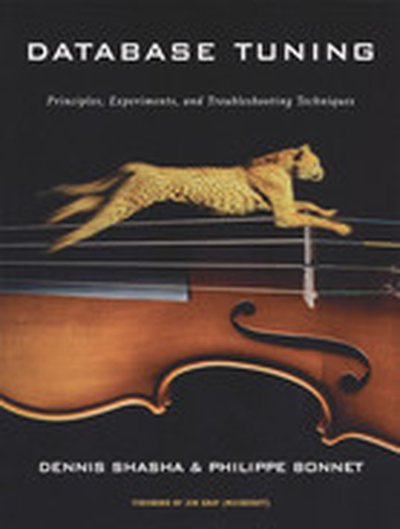
Database Tuning

Tuning your database for optimal performance means more than following a few short steps in a vendor-specific guide. For maximum improvement, you need a broad and deep knowledge of basic tuning principles, the ability to gather data in a systematic way, and the skill to make your system run faster. This is an art as well as a science, and Database Tuning: Principles, Experiments, and Troubleshooting Techniques will help you develop portable skills that will allow you to tune a wide variety of database systems on a multitude of hardware and operating systems. Further, these skills, combined with the scripts provided for validating results, are exactly what you need to evaluate competing database products and to choose the right one. Forward by Jim Gray, with invited chapters by Joe Celko and Alberto Lerner Includes industrial contributions by Bill McKenna (RedBrick/Informix), Hany Saleeb (Oracle), Tim Shetler (TimesTen), Judy Smith (Deutsche Bank), and Ron Yorita (IBM) Covers the entire system environment: hardware, operating system, transactions, indexes, queries, table design, and application analysis Contains experiments (scripts available on the author's site) to help you verify a system's effectiveness in your own environment Presents special topics, including data warehousing, Web support, main memory databases, specialized databases, and financial time series Describes performance-monitoring techniques that will help you recognize and troubleshoot problems

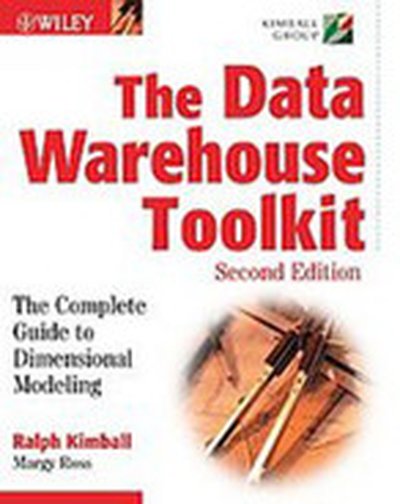
The Data Warehouse Toolkit: The Complete Guide to Dimensional Modeling

Single most authoritative guide from the inventor of the technique. Presents unique modeling techniques for e-commerce, and shows strategies for optimizing performance. Companion Web site provides updates on dimensional modeling techniques, links related to sites, and source code where appropriate.

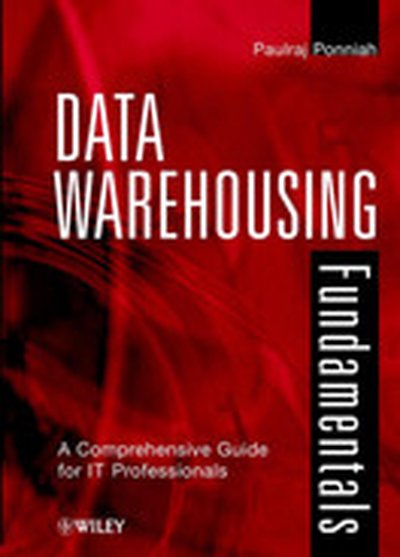
DATA WAREHOUSING FUNDAMENTALS: A Comprehensive Guide for IT Professionals

Geared to IT professionals eager to get into the all-important field of data warehousing, this book explores all topics needed by those who design and implement data warehouses. Readers will learn about planning requirements, architecture, infrastructure, data preparation, information delivery, implementation, and maintenance. They'll also find a wealth of industry examples garnered from the author's 25 years of experience in designing and implementing databases and data warehouse applications for major corporations. Market: IT Professionals, Consultants.

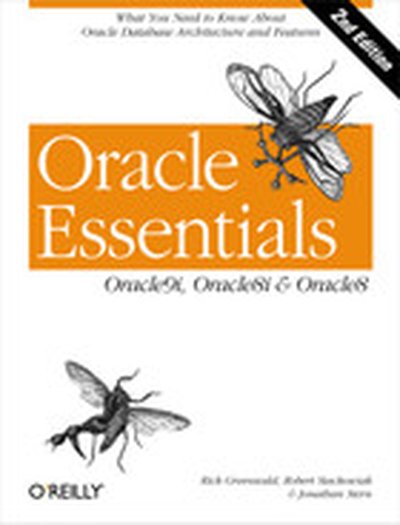
Oracle Essentials: Oracle9i, Oracle8i and Oracle8, Second Edition

The second edition of O'Reilly's bestselling Oracle Essentials has been updated to include the latest Oracle release, Oracle9 i. Oracle Essentials distills an enormous amount of information about Oracle's myriad technologies and releases into a compact, easy-to-read volume filled with focused text, illustrations, and helpful hints. Oracle9 i promises to be an even more significant upgrade than Oracle8 i, offering such major features as Real Application Clusters, flashback queries, Oracle personalization, clickstream intelligence, and Oracle Database Cache and Web Cache; it also promises significant improvements in Oracle's business intelligence, XML integration, high availability, and management capabilities. The book includes overviews of these features, as well as the new Oracle9 I Application Server (Oracle9 iAS) and Oracle9 i Portal. The book contains chapters on: Oracle products, options, and overall architecture for Oracle9 i and other recent releases Installing and running Oracle: creating databases, configuring Net8 (known as Oracle Net in Oracle9 i), starting up and shutting down Oracle Oracle data structures, datatypes, and ways of extending datatypes Managing Oracle: security, the Oracle Enterprise Manager, fragmentation and reorganization, and backup and recovery Oracle networking, monitoring, and tuning Multi-user concurrency, online transaction processing (OLTP), and high availability Hardware architectures (e.g., SMP, MPP, NUMA) and their impact on Oracle Data warehousing and distributed databases Oracle9 i, Oracle8 i, and the Web, including the latest Java, web, and XML technologies, interMedia, Oracle9 i Application Server, and Oracle9 i Portal For new Oracle users, DBAs, developers, and managers, Oracle Essentials is an all-in-one introduction to the full range of Oracle features and technologies, including the just-released Oracle9 i features. But even if you already have a library full of Oracle documentation, this compact book is the one you'll turn to, again and again, as your one-stop, truly essential reference.

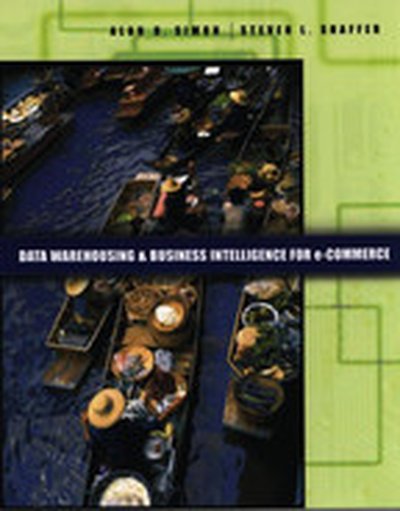
Data Warehousing And Business Intelligence For e-Commerce

You go online to buy a digital camera. Soon, you realize you've bought a more expensive camera than intended, along with extra batteries, charger, and graphics software-all at the prompting of the retailer. Happy with your purchases? The retailer certainly is, and if you are too, you both can be said to be the beneficiaries of "customer intimacy" achieved through the transformation of data collected during this visit or stored from previous visits into real business intelligence that can be exercised in real time. Data Warehousing and Business Intelligence for e-Commerce is a practical exploration of the technological innovations through which traditional data warehousing is brought to bear on this and other less modest e-commerce applications, such as those at work in B2B, G2C, B2G, and B2E models. The authors examine the core technologies and commercial products in use today, providing a nuts-and-bolts understanding of how you can deploy customer and product data in ways that meet the unique requirements of the online marketplace-particularly if you are part of a brick-and-mortar company with specific online aspirations. In so doing, they build a powerful case for investment in and aggressive development of these approaches, which are likely to separate winners from losers as e-commerce grows and matures. * Includes the latest from successful data warehousing consultants whose work has encouraged the field's new focus on e-commerce. * Presents information that is written for both consultants and practitioners in companies of all sizes. * Emphasizes the special needs and opportunities of traditional brick-and-mortar businesses that are going online or participating in B2B supply chains or e-marketplaces. * Explains how long-standing assumptions about data warehousing have to be rethought in light of emerging business models that depend on customer intimacy. * Provides advice on maintaining data quality and integrity in environments marked by extensive customer self-input. * Advocates careful planning that will help both old economy and new economy companies develop long-lived and successful e-commerce strategies. * Focuses on data warehousing for emerging e-commerce areas such as e-government and B2E environments.

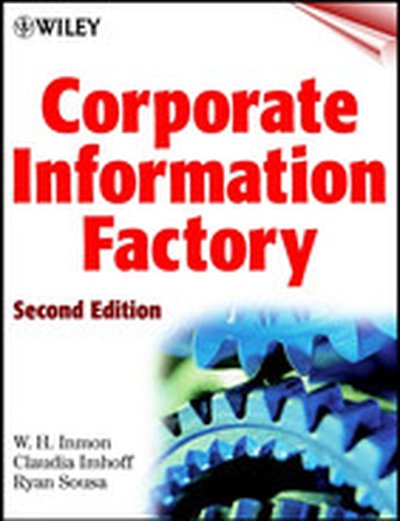
Corporate Information Factory

The "father of data warehousing" incorporates the latest technologies into his blueprint for integrated decision support systems Today's corporate IT and data warehouse managers are required to make a small army of technologies work together to ensure fast and accurate information for business managers. Bill Inmon created the to solve the needs of these managers. Since the First Edition, the design of the factory has grown and changed dramatically. This Second Edition, revised and expanded by 40% with five new chapters, incorporates these changes. This step-by-step guide will enable readers to connect their legacy systems with the data warehouse and deal with a host of new and changing technologies, including Web access mechanisms, e-commerce systems, ERP (Enterprise Resource Planning) systems. The book also looks closely at exploration and data mining servers for analyzing customer behavior and departmental data marts for finance, sales, and marketing. Corporate Information Factory

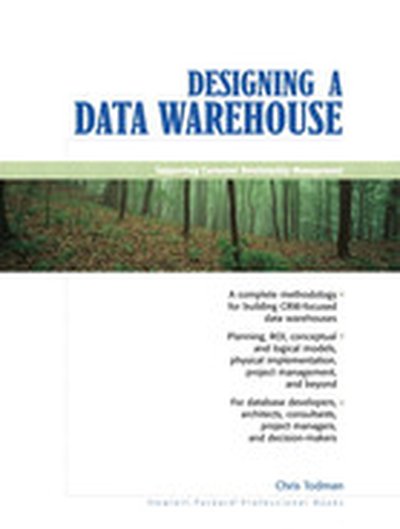
Designing a Data Warehouse: Supporting Customer Relationship Management

The complete guide to building tomorrow's CRM-focused data warehouses. A complete methodology for building CRM-focused data warehouses Planning, ROI, conceptual and logical models, physical implementation, project management, and beyond For database developers, architects, consultants, project managers, and decision-makers Today's next-generation data warehouses are being built with a clear goal: to maximize the power of Customer Relationship Management. To make CRM-focused data warehousing work, you need new techniques, and new methodologies. In this book, Dr. Chris Todman—one of the world's leading data warehouse consultants—delivers the first start-to-finish methodology for defining, designing, and implementing CRM-focused data warehouses. Todman covers all this, and more: Critical design challenges unique to CRM-focused data warehousing A new look at data warehouse conceptual models, logical models, and physical implementation The crucial implications of time in data warehouse modeling and querying Project management: deliverables, assumptions, risks, and team-building—including a full breakdown of work Estimating the ROI of CRM-focused data warehouses up front Choosing software for loading, extraction, transformation, querying, data mining, campaign management, personalization, and metadata DW futures: temporal databases, OLAP SQL extensions, active decision support, integrating external and unstructured data, search agents, and more If you want to leverage the full power of your CRM system, you need a data warehouse designed for the purpose. One book shows you exactly how to build one: Designing Data Warehouses by Dr. Chris Todman.

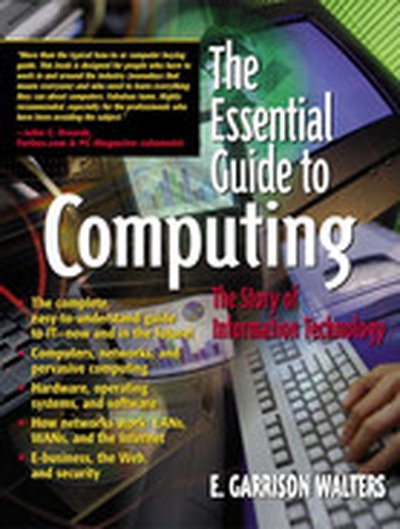
Essential Guide to Computing: The Story of Information Technology, The

The complete, easy-to-understand guide to IT—now and in the future! Computers, networks, and pervasive computing Hardware, operating systems, and software How networks work: LANs, WANs, and the Internet E-business, the Web, and security The guide for ANYONE who needs to understand the key technologies driving today's economy and high tech industries! You can't afford not to understand the information revolution that's sweeping the world-but who's got time for all the acronyms and hype most technology books give you? The Essential Guide to Computing demystifies the digital society we live in with an intelligent, thorough, and up-to-date explanation of computer, networking, and Internet technologies. It's perfect for smart professionals who want to get up to speed, but don't have computer science or engineering degrees! You'll find up-to-the-minute coverage on all of today's hottest technologies including: The evolution of computing: from the room-sized "monoliths" of the 1950s to today's global Internet Preview of the next revolution: "pervasive computing" Computer hardware: microprocessors, memory, storage, I/O, displays, and architecture Windows, Macintosh, UNIX/Linux, DOS, NetWare, Palm: what operating systems do, and how they compare Programming languages: from machine language to advanced object-oriented technologies Key software applications: databases, spreadsheets, word processing, voice recognition, and beyond Microsoft and the software industry: where they stand, where they're headed How networks work: LANs, WANs, packet switching, hardware, media, and more The Internet, e-commerce, and security Enterprise applications: data warehousing, Web-centered development, and groupware Whether you're a consumer, investor, marketer, or executive, this is your start-to-finish briefing on the information technologies that have changed the world-and the coming technologies that will transform it yet again!

Oracle SQL*Plus Pocket Reference

This pocket reference provides quick reference information that will help you use SQLPlus, Oracle's interactive query tool. It summarizes all of the SQLPlus syntax, including the syntax for new Oracle8 i release 8.1.6 features. SQLPlus is available at every Oracle site--from the largest data warehouse to the smallest single-user system--and it's a critical tool for virtually every Oracle user. Despite its wide use, few developers and DBAs know how powerful a tool SQLPlus can be. This book boils down the most vital information from Gennick's best-selling book, Oracle SQLPlus: The Definitive Guide, into an accessible summary. It concisely describes interacting with SQLPlus, selecting data, formatting reports with SQLPlus, and tuning SQL queries. It also contains quick references to the SQLPlus commands and format elements. This book is an indispensable companion to O'Reilly bestselling book, Oracle SQLPlus: The Definitive Guide, but it does not replace it; the larger book is truly the definitive guide, suitable for readers at all levels of expertise. The definitive guide describes the many tasks that SQLPlus can perform, and provides a tutorial on many SQLPlus topics. But this quick reference is an excellent, portable resource for readers who want a pocket-sized summary of SQLPlus capabilities and a reminder of how to issue specific commands and formatting options for SQLPlus. Table of Contents: Interacting with SQLPlus Selecting Data Formatting Reports Tuning SQL SQLPlus Format Elements SQLPlus Command Reference

Oracle Distributed Systems

Any organization that uses the Oracle relational database management system (RDBMS) these days needs to use multiple databases. There are many reasons to use more than a single database in a distributed database system: Different databases may be associated with particular business functions, such as manufacturing or human resources. Databases may be aligned with geographical boundaries, such as a behemoth database at a headquarters site and smaller databases at regional offices. Two different databases may be required to access the same data in different ways, such as an order entry database whose transactions are aggregated and analyzed in a data warehouse. A busy Internet commerce site may create multiple copies of the same database to attain horizontal scalability. A copy of a production database may be created to serve as a development test bed. Tunability Platform autonomy Fault tolerance Scalability Location transparency Site autonomy Introduction to Distributed Database Systems SQLNet and Net8 Configuration and Administration Distributed Database Security Designing the Distributed System Oracle's Distributed System Implementation Sample Configurations 8. Engineering Considerations Oracle Replication Architecture Advanced Replication Option Installation Basic Replication Multi-Master Replication Updateable Snapshots Procedural Replication Conflict Avoidance and Resolution Techniques In a distributed database environment, data in two or more databases is accessible as if it were in a single database. Usually, the different databases are on different servers, which may be located at the same site or a continent away. Communication between the servers takes place via SQLNet (for Oracle7) or Net8 (for Oracle8). Distributed database environments offer a number of benefits over single- database systems, including: This book describes how you can use multiple databases and the distributed features of Oracle to best advantage. It covers: Table of contents: Part I: The Distributed System Part II: Replication Part III: Appendixes Appendix A: Built-in Packages for Distributed Systems Appendix B: Scripts

Data Warehousing: Architecture and Implementation

8090B-0 A start-to-finish process for deploying successful data warehouses. This book delivers what every data warehousing project participant needs most: a thorough overview of today's best solutions, and a reliable step-by-step process for building warehouses that meet their objectives. It answers the key questions asked by everyone involved in a data warehouse initiative: project sponsors, developers, managers, and CIOs. And, with over 75 figures, it doesn't just tell you how to get the job done: it shows you. Migration strategies and scenarios Management and support: issue resolution, capacity planning, security, backup, and more Specific answers for project sponsors, managers, and CIOs 12 steps for implementation Best techniques for schema design and metadata Choosing the right hardware, software, and platforms Evolving as new technologies mature Rely on this book's up-to-date listings of vendors and Web resources. Learn to evolve your data warehouse as new technologies mature-including metadata interchange standards, Web solutions, and Windows …Ø NT. Whatever your goals, Data Warehousing for IT Professionals will help you achieve them faster and at lower cost.