talk-data.com talk-data.com

Topic

GitHub

version_control collaboration code_hosting

661

tagged

Activity Trend

79 peak/qtr
2020-Q1 2026-Q1

Activities

661 activities · Newest first

Está no ar, o Data Hackers News !! Os assuntos mais quentes da semana, com as principais notícias da área de Dados, IA e Tecnologia, que você também encontra na nossa Newsletter semanal, agora no Podcast do Data Hackers !!

Aperte o play e ouça agora, o Data Hackers News dessa semana !

Para saber tudo sobre o que está acontecendo na área de dados, se inscreva na Newsletter semanal:

⁠⁠⁠⁠⁠⁠⁠⁠⁠⁠⁠⁠⁠⁠⁠⁠⁠⁠⁠⁠⁠⁠⁠⁠⁠⁠⁠⁠⁠⁠⁠⁠https://www.datahackers.news/⁠⁠⁠⁠⁠⁠⁠⁠⁠⁠⁠⁠⁠⁠⁠⁠⁠⁠⁠⁠⁠⁠⁠⁠⁠⁠⁠⁠⁠⁠⁠⁠

Conheça nossos comentaristas do Data Hackers News:

⁠⁠⁠⁠⁠⁠⁠⁠⁠⁠⁠⁠⁠⁠⁠⁠⁠⁠⁠⁠⁠⁠⁠⁠⁠⁠⁠⁠Monique Femme⁠⁠⁠⁠⁠⁠⁠⁠⁠⁠⁠⁠⁠⁠⁠⁠⁠⁠⁠⁠⁠⁠⁠⁠⁠⁠⁠⁠⁠

Paulo Vasconcellos

⁠Matérias/assuntos comentados:

Python é a linguagem com mais desenvolvedores no mundo;

Github lança IA capaz de criar aplicativos a partir de texto;

OpenAI lança motor de busca pra competir com Google.

Demais canais do Data Hackers:

⁠⁠⁠⁠⁠⁠⁠⁠⁠⁠⁠⁠⁠⁠⁠⁠⁠⁠⁠⁠⁠⁠⁠⁠⁠⁠⁠⁠⁠⁠⁠⁠Site⁠⁠⁠⁠⁠⁠⁠⁠⁠⁠⁠⁠⁠⁠⁠⁠⁠⁠⁠⁠⁠⁠⁠⁠⁠⁠⁠⁠⁠⁠⁠⁠

⁠⁠⁠⁠⁠⁠⁠⁠⁠⁠⁠⁠⁠⁠⁠⁠⁠⁠⁠⁠⁠⁠⁠⁠⁠⁠⁠⁠⁠⁠⁠⁠Linkedin⁠⁠⁠⁠⁠⁠⁠⁠⁠⁠⁠⁠⁠⁠⁠⁠⁠⁠⁠⁠⁠⁠⁠⁠⁠⁠⁠⁠⁠⁠⁠⁠

⁠⁠⁠⁠⁠⁠⁠⁠⁠⁠⁠⁠⁠⁠⁠⁠⁠⁠⁠⁠⁠⁠⁠⁠⁠⁠⁠⁠⁠⁠⁠⁠Instagram⁠⁠⁠⁠⁠⁠⁠⁠⁠⁠⁠⁠⁠⁠⁠⁠⁠⁠⁠⁠⁠⁠⁠⁠⁠⁠⁠⁠⁠⁠⁠⁠

⁠⁠⁠⁠⁠⁠⁠⁠⁠⁠⁠⁠⁠⁠⁠⁠⁠⁠⁠⁠⁠⁠⁠⁠⁠⁠⁠⁠⁠⁠⁠⁠Tik Tok⁠⁠⁠⁠⁠⁠⁠⁠⁠⁠⁠⁠⁠⁠⁠⁠⁠⁠⁠⁠⁠⁠⁠⁠⁠⁠⁠⁠⁠⁠⁠⁠

⁠⁠⁠⁠⁠⁠⁠⁠⁠⁠⁠⁠⁠⁠⁠⁠⁠⁠⁠⁠⁠⁠⁠⁠⁠⁠⁠⁠⁠⁠⁠⁠You Tube⁠⁠⁠⁠⁠⁠⁠⁠⁠⁠⁠⁠⁠⁠⁠⁠⁠⁠⁠⁠⁠⁠⁠⁠⁠⁠⁠⁠⁠⁠⁠⁠

In this episode, Conor and Bryce record live from C++ Under the Sea and interview both keynote speakers, Jason Turner and Inbal Levi as well as speak to Jan Williams, Koen Poppe and Jonathan Müller briefly! Link to Episode 206 on WebsiteDiscuss this episode, leave a comment, or ask a question (on GitHub)Twitter ADSP: The PodcastConor HoekstraBryce Adelstein LelbachGuests Interviewed Jan WilmansJason TurnerJonathan MüllerInbal LeviKoen PoppeShow Notes Date Recorded: 2024-10-11 Date Released: 2024-11-01 C++ Under the SeaVIMEChttps://nullptr.nl/C++ Under the Sea - Bryce Lelbach C++ Execution Model TalkC++ Under the Sea - Jason Turner KeynoteCppCastC++ Weekly YouTube Channelcode_report YouTube ChannelADSP Episode 103: Jason Turner from CppCast!C++ Under the Sea - Inbal Levi Closing KeynoteC++26 Reflection ProposalTheWholeDaisy TwitchP3045 Quantities and units libraryADSP Episode 195: 🇨🇦 CppNorth Live 🇨🇦 David Olsen & Pure Chaos!Vandewiele GroupC++ Under the Sea - Logging TalkMinimal Logging Framework in C++20 - Koen Poppe - Meeting C++ 2023C++ Flux Libraryflux::adjacent_mapIntro Song Info Miss You by Sarah Jansen https://soundcloud.com/sarahjansenmusic Creative Commons — Attribution 3.0 Unported — CC BY 3.0 Free Download / Stream: http://bit.ly/l-miss-you Music promoted by Audio Library https://youtu.be/iYYxnasvfx8

Send us a text Welcome to Datatopics Unplugged, where the tech world’s buzz meets laid-back banter. In each episode, we dive into the latest in AI, data science, and technology—perfect for your inner geek or curious mind. Pull up a seat, tune in, and join us for insights, laughs, and the occasional hot take on the digital world.

In this episode, we are joined by Vitale to discuss:

Meta’s video generation breakthrough: Explore Meta’s new “MovieGen” model family that generates hyper-realistic, 16-second video clips with reflections, consistent spatial details, and multi-frame coherence. Also discussed: Sora, a sneak peek at Meta’s open-source possibilities. For a look back, check out this classic AI-generated video of Will Smith eating spaghetti. Anthropic’s Claude 3.5 updates: Meet Claude 3.5 and its “computer use” feature, letting it navigate your screen for you. Easily fine-tune & train LLMs, faster with Unsloth: Discover tools that simplify model fine-tuning and deployment, making it easier for small-scale developers to harness AI’s power. Don’t miss Gerganov’s GitHub contributions in this space, too. Deno 2.0 release hype: With a splashy promo video, Deno’s JavaScript runtime enters the scene as a streamlined, secure alternative to Node.js.

In this episode, Conor and Bryce record live from C++ Under the Sea and interview Phil Nash and Jonathan Müller! Link to Episode 205 on WebsiteDiscuss this episode, leave a comment, or ask a question (on GitHub)Twitter ADSP: The PodcastConor HoekstraBryce Adelstein LelbachGuests Interviewed Phil NashJonathan MüllerShow Notes Date Recorded: 2024-10-11 Date Released: 2024-10-25 C++ Under the SeaC++20 CoroutinesC++ Coroutines: Understanding Symmetric TransferC++23 std::generatorP1056 - Add lazy coroutine (coroutine task) typeC++ Online ConferenceC++ On Sea ConferenceSwift Craft ConferenceC++ Flux LibraryEpisode 136: 🇬🇧 C++ On Sea Live 🇬🇧 CppCast, TLB HIT & Two's Complement!CppCast Jonathan Müller EpisodesP3429 - should minimize standard library dependenciesIntro Song Info Miss You by Sarah Jansen https://soundcloud.com/sarahjansenmusic Creative Commons — Attribution 3.0 Unported — CC BY 3.0 Free Download / Stream: http://bit.ly/l-miss-you Music promoted by Audio Library https://youtu.be/iYYxnasvfx8

In this episode, Conor interviews Andor, Stephen and an attendee from Lambda World 2024. Link to Episode 204 on WebsiteDiscuss this episode, leave a comment, or ask a question (on GitHub)Twitter ADSP: The PodcastConor HoekstraGuests Interviewed Andor PénzesStephen TaylorShow Notes Date Recorded: 2024-10-04 Date Released: 2024-10-18 Lambda WorldADSP Episode 133: 🇵🇱 Lambda Days Live 🇵🇱 José Valim, Alexis King & More!Lambda World 2024 - The Butcherbird Combinator - Chris FordLambda World 2024 - Scala Sampler for Functional Soundscapes - Johanna OderskyUnite 2024 Barcelone (Unity Conference)Examples of easy dependently typed programming (in Idris) by Andor Penzes | Lambda Days 2023Dependently-Typed Python by Andor Penzes | Lambda Days 2024DepPy (Dependently Typed Python)CORECURSIVE #065 From Competitive Programming to APL With Conor HoekstraY CombinatorCategory Theory for Programmers - Bartosz MilewskiDevWorld ConferenceQCon ConferenceScala Days ConferenceLambda World 2024 - Stephen Taylor TalkAbove Average in APLDon't Be Mean in APLAPL Wiki MerchCan Programming Be Liberated from the von Neumann Style? John Backus Turing Award PaperLambda World 2024 - The Power of Function Composition - Conor HoekstraLambda World 2024 - Kamila Szewczyk TalkIntro Song Info Miss You by Sarah Jansen https://soundcloud.com/sarahjansenmusic Creative Commons — Attribution 3.0 Unported — CC BY 3.0 Free Download / Stream: http://bit.ly/l-miss-you Music promoted by Audio Library https://youtu.be/iYYxnasvfx8

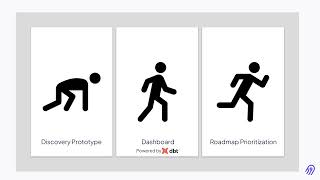
Coalesce 2024: Fueling product development and customer insights with dbt

At Airbyte, we leverage dbt to power our roadmap - from user discovery to customer retention efforts.

We need to parse across many sources of data across our open-source and Cloud communities, including Gong transcripts, NPS surveys, and Github issues. I'll share examples of how dbt powers how we work - from discovering product gaps and their importance to deals, to building retention tools like custom notifications around customer pipelines.

Speaker: Natalie Kwong Product Airbyte

Read the blog to learn about the latest dbt Cloud features announced at Coalesce, designed to help organizations embrace analytics best practices at scale https://www.getdbt.com/blog/coalesce-2024-product-announcements

Help us become the #1 Data Podcast by leaving a rating & review! We are 67 reviews away! Finding quality datasets doesn’t have to be hard. In this episode, we highlight seven must-know sources where you can easily grab free data for your next project. These resources are sure to inspire your work. Get FREE access to 1M+ Datasets here: https://datacareerjumpstart.com/datasets 💌 Join 30k+ aspiring data analysts & get my tips in your inbox weekly 👉 https://www.datacareerjumpstart.com/newsletter 🆘 Feeling stuck in your data journey? Come to my next free "How to Land Your First Data Job" training 👉 https://www.datacareerjumpstart.com/training 👩‍💻 Want to land a data job in less than 90 days? 👉 https://www.datacareerjumpstart.com/daa 👔 Ace The Interview with Confidence 👉 https://www.datacareerjumpstart.com//interviewsimulator ⌚ TIMESTAMPS 00:10 Kaggle 00:52 Data.World 01:23 Reddit's r/datasets 02:35 Awesome Datasets on GitHub 03:51 Google Dataset Search 04:57 Mendeley 05:42 UC Machine Learning Repository 🔗 CONNECT WITH AVERY 🎥 YouTube Channel 🤝 LinkedIn 📸 Instagram 🎵 TikTok 💻 Website Mentioned in this episode: Join the last cohort of 2025! The LAST cohort of The Data Analytics Accelerator for 2025 kicks off on Monday, December 8th and enrollment is officially open!

To celebrate the end of the year, we’re running a special End-of-Year Sale, where you’ll get: ✅ A discount on your enrollment 🎁 6 bonus gifts, including job listings, interview prep, AI tools + more

If your goal is to land a data job in 2026, this is your chance to get ahead of the competition and start strong.

👉 Join the December Cohort & Claim Your Bonuses: https://DataCareerJumpstart.com/daa https://www.datacareerjumpstart.com/daa

In this episode, Conor and Ben continue their chat with Sean Parent about std::rotate, std::stable_sort and more! Link to Episode 203 on WebsiteDiscuss this episode, leave a comment, or ask a question (on GitHub)Twitter ADSP: The PodcastConor HoekstraBen DeaneAbout the Guest: Sean Parent is a senior principal scientist and software architect managing Adobe's Software Technology Lab. Sean first joined Adobe in 1993 working on Photoshop and is one of the creators of Photoshop Mobile, Lightroom Mobile, and Lightroom Web. In 2009 Sean spent a year at Google working on Chrome OS before returning to Adobe. From 1988 through 1993 Sean worked at Apple, where he was part of the system software team that developed the technologies allowing Apple’s successful transition to PowerPC. Show Notes Date Recorded: 2024-09-26 Date Released: 2024-10-11 ADSP Episode 202: Rotates All the Way Down with Sean Parent (Part 1)From Mathematics to Generic Programming (FM2GP)Elements of ProgrammingStepanov Papers (website)Stepanov Papers: Notes on Higher Order Programming in SchemeStepanov Papers: Class Notes & Videos - Incomplete Notes for Foundations of ProgrammingC++ std::rotateC++ std::stable_sortC++ std::stable_partitionC++ Seasoning by Sean ParentC++ std::nth_elementC++ std::sortC++ std::partitionC++ std::partial_sortFour Algorithmic Journeys Part 1: Spoils of the EgyptiansIntro Song Info Miss You by Sarah Jansen https://soundcloud.com/sarahjansenmusic Creative Commons — Attribution 3.0 Unported — CC BY 3.0 Free Download / Stream: http://bit.ly/l-miss-you Music promoted by Audio Library https://youtu.be/iYYxnasvfx8

Send us a text Welcome to the cozy corner of the tech world where ones and zeros mingle with casual chit-chat. DataTopics Unplugged is your go-to spot for relaxed discussions around tech, news, data, and society. In this special one-year anniversary episode, we reminisce about our journey and dive into some intriguing tech stories: WordPress Governance Drama: We discuss recent issues with WordPress. Find out what’s behind the Automattic and WP Engine tension.Astral’s Business Model: Charlie Marsh shares insights into how Astral plans to balance open-source ideals with profitability.Deno 2.0 Release: Deno 2.0 claims to be a “Cargo for JavaScript.” Check out its new features and see how it compares to Node.js.OpenAI’s Soaring Valuation: OpenAI has hit a staggering $150 billion valuation after raising $6.5 billion in new funding.Adobe’s GenAI Policy: Adobe clarified their stance on GenAI, ensuring Firefly is only trained on stock images to support creators.Instructor Library for LLMs: Discover the Instructor library for turning unstructured data into structured outputs with ease.Repo2txt Tool: Convert your GitHub repo into a single text file using Repo2txt for easy analysis.Retro PC Fonts Galore: Explore a treasure trove of vintage fonts with the Ultimate Old-School PC Font Pack.Bop Spotter – Cultural Surveillance: Bop Spotter uses Shazam to capture the music trends and cultural vibes of San Francisco’s Mission District.

In this episode, Conor and Ben chat with Sean Parent about std::rotate, GCD, EOP, from Mathematics to Generic Programming and more! Link to Episode 202 on WebsiteDiscuss this episode, leave a comment, or ask a question (on GitHub)Twitter ADSP: The PodcastConor HoekstraBen DeaneAbout the Guest: Sean Parent is a senior principal scientist and software architect managing Adobe’s Software Technology Lab. Sean first joined Adobe in 1993 working on Photoshop and is one of the creators of Photoshop Mobile, Lightroom Mobile, and Lightroom Web. In 2009 Sean spent a year at Google working on Chrome OS before returning to Adobe. From 1988 through 1993 Sean worked at Apple, where he was part of the system software team that developed the technologies allowing Apple’s successful transition to PowerPC. Show Notes Date Recorded: 2024-09-26 Date Released: 2024-10-04 ADSP Episode 199: std::rotateSean’s TweetTristan’s TweetSwapping Sections PaperC++20 flux LibraryElements of ProgrammingNVIDIA/cccl rotate issueC++ std::rotateC++ std::partial_sortC++ Seasoning by Sean ParentC++Now 2019 - Algorithm IntuitionThat’s a Rotate VideoFrom Mathematics to Generic Programming (FM2GP)Four Algorithmic Journeys Part 1: Spoils of the EgyptiansProgramming Conversations Lecture 5 Part 1Alexander Stepanov: STL and Its Design Principles (2002)Greatest Common Measure: The Last 2500 Years - Alexander StepanovBinary GCD (Stein’s Algorithm)Intro Song Info Miss You by Sarah Jansen https://soundcloud.com/sarahjansenmusic Creative Commons — Attribution 3.0 Unported — CC BY 3.0 Free Download / Stream: http://bit.ly/l-miss-you Music promoted by Audio Library https://youtu.be/iYYxnasvfx8

In this episode, Conor and Ben recap the highlights of CppCon 2024. Link to Episode 201 on WebsiteDiscuss this episode, leave a comment, or ask a question (on GitHub)Twitter ADSP: The PodcastConor HoekstraBen DeaneShow Notes Date Recorded: 2024-09-26 Date Released: 2024-09-27 CppCon 2024 Cryptic CrosswordCppConC++Now 2024 - Embedded Asynchronous Abstraction C++ - Implementing Senders & Receivers Without an OS - Ben DeaneCppNorth - Message Handling with Boolean Algebra - Ben DeaneCppCon - Message Handling with Boolean Algebra - Ben DeaneCppCon 2016: Ben Deane "std::accumulate: Exploring an Algorithmic Empire"C++ Exceptions for Smaller Firmware - Khalil Estell - CppCon 2024Gazing Beyond Reflection for C++26 - Daveed Vandevoorde - CppCon 2024P2996: Reflection for C++26CppCon 2024 - Creating a Sender/Receiver HTTP Server - Dietmar KühlCppCon 2024 - How Meta Made Debugging Async Code Easier with Coroutines and Senders - Ian Petersen & Jessica WongCppCon 2024 - Deciphering Coroutines - Recap and Prerequisites - Andreas WeisCppCon 2024 - Sender Patterns to Wrangle Concurrency in Embedded Devices - Michael CaisseIntro Song Info Miss You by Sarah Jansen https://soundcloud.com/sarahjansenmusic Creative Commons — Attribution 3.0 Unported — CC BY 3.0 Free Download / Stream: http://bit.ly/l-miss-you Music promoted by Audio Library https://youtu.be/iYYxnasvfx8

MAPIE (Model Agnostic Prediction Interval Estimator) is your go-to solution for managing uncertainties and risks in machine learning models. This Python library, nestled within scikit-learn-contrib, offers a way to calculate prediction intervals with controlled coverage rates for regression, classification, and even time series analysis. But it doesn't stop there - MAPIE can also be used to handle more complex tasks like multi-label classification and semantic segmentation in computer vision, ensuring probabilistic guarantees on crucial metrics like recall and precision. MAPIE can be integrated with any model - whether it's scikit-learn, TensorFlow, or PyTorch. Join us as we delve into the world of conformal predictions and how to quickly manage your uncertainties using MAPIE.

Link to Github: https://github.com/scikit-learn-contrib/MAPIE

Aladin allows to visualize images of the sky or planetary surfaces just as an astronomical "openstreetmap" app. The view can be panned and explored interactively. In the ipyaladin widget -- that brings Aladin in the Jupyter Notebook environnement -- these abilities are extended with a python API. The users can send astronomical data in standard formats back and forth the viewer and their Python code. Such data can be images of the sky in different wavelengths, but also tabular data, complex shapes that characterize telescope observation regions, or even special sky features (such as probability region for the provenance of a gravitational event).

With these already existing features, and current work we are doing with the new development framework anywidget, ipyaladin is really close to a version 1.0.0. It is already used in its beta version in different experimental science platforms, for example in the ESCAPE European Science Cluster of Astronomy & Particle Physics project and in the experimental SKA (Square Kilometre Array, a telescope for radio astronomy) analysis platform.

In this presentation, we will share our feedback on the development of a widget thanks to anywidget compared to the bare ipywidget framework. And we will demonstrate the functionalities of the widget through scientific use cases.

The first episode of The Pragmatic Engineer Podcast is out. Expect similar episodes every other Wednesday. You can add the podcast in your favorite podcast player, and have future episodes downloaded automatically. Listen now on Apple, Spotify, and YouTube. Brought to you by: • Codeium: ​​Join the 700K+ developers using the IT-approved AI-powered code assistant. • TLDR: Keep up with tech in 5 minutes — On the first episode of the Pragmatic Engineer Podcast, I am joined by Simon Willison. Simon is one of the best-known software engineers experimenting with LLMs to boost his own productivity: he’s been doing this for more than three years, blogging about it in the open. Simon is the creator of Datasette, an open-source tool for exploring and publishing data. He works full-time developing open-source tools for data journalism, centered on Datasette and SQLite. Previously, he was an engineering director at Eventbrite, joining through the acquisition of Lanyrd, a Y Combinator startup he co-founded in 2010. Simon is also a co-creator of the Django Web Framework. He has been blogging about web development since the early 2000s. In today’s conversation, we dive deep into the realm of Gen AI and talk about the following:  • Simon’s initial experiments with LLMs and coding tools • Why fine-tuning is generally a waste of time—and when it’s not • RAG: an overview • Interacting with GPTs voice mode • Simon’s day-to-day LLM stack • Common misconceptions about LLMs and ethical gray areas  • How Simon’s productivity has increased and his generally optimistic view on these tools • Tips, tricks, and hacks for interacting with GenAI tools • And more! I hope you enjoy this episode. — In this episode, we cover: (02:15) Welcome (05:28) Simon’s ‘scary’ experience with ChatGPT (10:58) Simon’s initial experiments with LLMs and coding tools (12:21) The languages that LLMs excel at (14:50) To start LLMs by understanding the theory, or by playing around? (16:35) Fine-tuning: what it is, and why it’s mostly a waste of time (18:03) Where fine-tuning works (18:31) RAG: an explanation (21:34) The expense of running testing on AI (23:15) Simon’s current AI stack  (29:55) Common misconceptions about using LLM tools (30:09) Simon’s stack – continued  (32:51) Learnings from running local models (33:56) The impact of Firebug and the introduction of open-source  (39:42) How Simon’s productivity has increased using LLM tools (41:55) Why most people should limit themselves to 3-4 programming languages (45:18) Addressing ethical issues and resistance to using generative AI (49:11) Are LLMs are plateauing? Is AGI overhyped? (55:45) Coding vs. professional coding, looking ahead (57:27) The importance of systems thinking for software engineers  (1:01:00) Simon’s advice for experienced engineers (1:06:29) Rapid-fire questions — Where to find Simon Willison: • X: https://x.com/simonw • LinkedIn: https://www.linkedin.com/in/simonwillison/ • Website: https://simonwillison.net/ • Mastodon: https://fedi.simonwillison.net/@simon — Referenced: • Simon’s LLM project: https://github.com/simonw/llm • Jeremy Howard’s Fast Ai: https://www.fast.ai/ • jq programming language: https://en.wikipedia.org/wiki/Jq_(programming_language) • Datasette: https://datasette.io/ • GPT Code Interpreter: https://platform.openai.com/docs/assistants/tools/code-interpreter • Open Ai Playground: https://platform.openai.com/playground/chat • Advent of Code: https://adventofcode.com/ • Rust programming language: https://www.rust-lang.org/ • Applied AI Software Engineering: RAG: https://newsletter.pragmaticengineer.com/p/rag • Claude: https://claude.ai/ • Claude 3.5 sonnet: https://www.anthropic.com/news/claude-3-5-sonnet • ChatGPT can now see, hear, and speak: https://openai.com/index/chatgpt-can-now-see-hear-and-speak/ • GitHub Copilot: https://github.com/features/copilot • What are Artifacts and how do I use them?: https://support.anthropic.com/en/articles/9487310-what-are-artifacts-and-how-do-i-use-them • Large Language Models on the command line: https://simonwillison.net/2024/Jun/17/cli-language-models/ • Llama: https://www.llama.com/ • MLC chat on the app store: https://apps.apple.com/us/app/mlc-chat/id6448482937 • Firebug: https://en.wikipedia.org/wiki/Firebug_(software)# • NPM: https://www.npmjs.com/ • Django: https://www.djangoproject.com/ • Sourceforge: https://sourceforge.net/ • CPAN: https://www.cpan.org/ • OOP: https://en.wikipedia.org/wiki/Object-oriented_programming • Prolog: https://en.wikipedia.org/wiki/Prolog • SML: https://en.wikipedia.org/wiki/Standard_ML • Stabile Diffusion: https://stability.ai/ • Chain of thought prompting: https://www.promptingguide.ai/techniques/cot • Cognition AI: https://www.cognition.ai/ • In the Race to Artificial General Intelligence, Where’s the Finish Line?: https://www.scientificamerican.com/article/what-does-artificial-general-intelligence-actually-mean/ • Black swan theory: https://en.wikipedia.org/wiki/Black_swan_theory • Copilot workspace: https://githubnext.com/projects/copilot-workspace • Designing Data-Intensive Applications: The Big Ideas Behind Reliable, Scalable, and Maintainable Systems: https://www.amazon.com/Designing-Data-Intensive-Applications-Reliable-Maintainable/dp/1449373321 • Bluesky Global: https://www.blueskyglobal.org/ • The Atrocity Archives (Laundry Files #1): https://www.amazon.com/Atrocity-Archives-Laundry-Files/dp/0441013651 • Rivers of London: https://www.amazon.com/Rivers-London-Ben-Aaronovitch/dp/1625676158/ • Vanilla JavaScript: http://vanilla-js.com/ • jQuery: https://jquery.com/ • Fly.io: https://fly.io/ — Production and marketing by https://penname.co/. For inquiries about sponsoring the podcast, email [email protected].

Get full access to The Pragmatic Engineer at newsletter.pragmaticengineer.com/subscribe

Pixi goes further than existing conda-based package managers in many ways:

  • From scratch implemented in Rust and ships as a single binary
  • Integrates a new SAT solver called resolvo
  • Supports lockfiles like poetry / yarn / cargo do
  • Cross-platform task system (simple bash-like syntax)
  • Interoperability with PyPI packages by integrating uv
  • It's 100% open-source with a permissive licence

We’re looking forward to take a deep-dive together into what conda and PyPI packages are and how we are seamlessly integrating the two worlds in pixi.

We will show you how you can easily setup your new project using just one configuration file and always have a reproducible setup in your pocket. Which means that it will always run the same for your contributors, user and CI machine ( no more "but it worked on my machine!" ).

Using pixi's powerful cross-platform task system you can replace your Makefile and a ton of developer documentation with just pixi run task!

We’ll also look at benchmarks and explain more about the difference between the conda and pypi ecosystems.

This talk is for everyone who ever dealt with dependency hell.

More information about Pixi:

https://pixi.sh https://prefix.dev https://github.com/prefix-dev/pixi

JupyterLite is a JupyterLab distribution that runs entirely in the web browser, backed by in-browser language kernels. With standard JupyterLab, where kernels run in separate processes and communicate with the client by message passing, JupyterLite uses kernels that run entirely in the browser, based on JavaScript and WebAssembly.

This means JupyterLite deployments can be scaled to millions of users without the need for individual containers for each user session, only static files need to be served, which can be done with a simple web server like GitHub pages.

This opens up new possibilities for large-scale deployments, eliminating the need for complex cloud computing infrastructure. JupyterLite is versatile and supports a wide range of languages, with the majority of its kernels implemented using Xeus, a C++ library for developing language-specific kernels.

In conjunction with JupyterLite, we present Emscripten-forge, a conda/mamba based distribution for WebAssembly packages. Conda-forge is a community effort and a GitHub organization which contains repositories of conda recipes and thus provides conda packages for a wide range of software and platforms. However, targeting WebAssembly is not supported by conda-forge. Emscripten-forge addresses this gap by providing conda packages for WebAssembly, making it possible to create custom JupyterLite deployments with tailored conda environments containing the required kernels and packages.

In this talk, we delve deep into the JupyterLite ecosystem, exploring its integration with Xeus Mamba and Emscripten-forge.

We will demonstrate how this can be used to create sophisticated JupyterLite deployments with custom conda environments and give an outlook for future developments like R packages and runtime package resolution.

In this episode, Conor and Bryce follow up on a conversation from 2.5 years ago. Link to Episode 200 on WebsiteDiscuss this episode, leave a comment, or ask a question (on GitHub)Twitter ADSP: The Podcast Conor HoekstraBryce Adelstein LelbachShow Notes Date Recorded: 2024-08-26 & 2022-03-27 & 2024-09-18 Date Released: 2024-09-20 ADSP Episode 71: APL, COBOL, BASIC & MoreADSP Episode 72: C++ Algorithm Family Feud!NDC TechTownBayesian CredibilityIntro Song Info Miss You by Sarah Jansen https://soundcloud.com/sarahjansenmusic Creative Commons — Attribution 3.0 Unported — CC BY 3.0 Free Download / Stream: http://bit.ly/l-miss-you Music promoted by Audio Library https://youtu.be/iYYxnasvfx8

In this episode, Conor and Bryce chat about std::rotate. Link to Episode 199 on WebsiteDiscuss this episode, leave a comment, or ask a question (on GitHub)Twitter ADSP: The PodcastConor HoekstraBryce Adelstein LelbachShow Notes Date Recorded: 2024-08-26 Date Released: 2024-09-13 C++ std::rotateProgramming Pearlsthrust::copy_ifthrust::permutation_iteratorMicrosoft MSVC STL rotate ImplementationIntro Song Info Miss You by Sarah Jansen https://soundcloud.com/sarahjansenmusic Creative Commons — Attribution 3.0 Unported — CC BY 3.0 Free Download / Stream: http://bit.ly/l-miss-you Music promoted by Audio Library https://youtu.be/iYYxnasvfx8

Dr. Eirini Kalliamvakou is a senior researcher at GitHub Next. Eirini has built a career on studying software engineers, how to measure their productivity, how developer experience impacts productivity, and more. Recently, Eirini has been working on quantifying the impacts of GitHub Copilot. Does it actually help software engineers be more productive? Tristan and Eirini explore how to quantify developer productivity in the first place, and finally, arriving at whether or not Copilot‌ makes a difference. In the search for real business value, this research is a real bellwether of things to come. For full show notes and to read 6+ years of back issues of the podcast's companion newsletter, head to https://roundup.getdbt.com. The Analytics Engineering Podcast is sponsored by dbt Labs. Join data practitioners and data leaders this October in Las Vegas at Coalesce, the analytics engineering conference hosted by dbt Labs. Register now at coalesece.getdbt.com. Listeners of this show can use the code podcast20 for a 20% discount.

In this episode, Conor and Bryce chat and then Conor adds some technical content: upcoming conferences & recently watched talks. Link to Episode 198 on WebsiteDiscuss this episode, leave a comment, or ask a question (on GitHub)Twitter ADSP: The PodcastConor HoekstraBryce Adelstein LelbachShow Notes Date Recorded: 2024-08-26 & 2024-09-06 Date Released: 2024-09-06 C++ ContainersC++ std::rotateMaximum Contiguous Subarray Sum (MCSS)Rappel: Compose Algorithms, Not Iterators - Google's Alternative to Ranges - C++Now 2024Think Parallel - Bryce Adelstein Lelbach - ACCU 2024Hylo - The Safe Systems and Generic-programming Language Built on Value Semantics - Dave AbrahamsC++ Under the SeaLambda WorldImplementing Ranges and Views in C++ - Roi Barkan - C++Now 2024Reintroduction to Generic Programming for C++ Engineers - Nick DeMarco - C++NowIntro Song Info Miss You by Sarah Jansen https://soundcloud.com/sarahjansenmusic Creative Commons — Attribution 3.0 Unported — CC BY 3.0 Free Download / Stream: http://bit.ly/l-miss-you Music promoted by Audio Library https://youtu.be/iYYxnasvfx8