In this episode, Conor and Bryce record live from NDC TechTown in Norway! We interview Vittorio Romeo and JF Bastien about C++, training, their talks and more! Link to Episode 259 on WebsiteDiscuss this episode, leave a comment, or ask a question (on GitHub)Socials ADSP: The Podcast: TwitterConor Hoekstra: Twitter | BlueSky | MastodonBryce Adelstein Lelbach: TwitterAbout the Guests: Vittorio is a passionate C++ expert with over a decade of professional and personal experience. His expertise covers library development, high-performance financial backends, game development, open-source contributions, and active participation in ISO C++ standardization. He is the coauthor of "Embracing Modern C++ Safely" and is a speaker at over 25 international conferences. JF Bastien has worked on hardware, compilers, security, performance, web browsers, and airplanes. As chair of the C++ language evolution working group and co-designer of WebAssembly, his contributions have helped shape modern software development. Show Notes Date Recorded: 2025-09-24 Date Released: 2025-11-07 camomilla by Vittorio Romeoromeo.trainingRoku rostdASDP Episode 136: 🇬🇧 C++ On Sea Live 🇬🇧 CppCast, TLB HIT & Two's Complement!TLB.hitJAXOpenXLA[LATTE '22] Chris Leary: X-istentialism: Supercomputers, Silicon Atoms, and the Science Between!Guest Lecture - XLS (Chris Leary)Project DenverIntel pays NVIDIA $1.5BNDC TechTown JF Talk(char)0 = 0; - What Does the C++ Programmer Intend With This Code? - JF Bastien - C++ on Sea 2023Keynote: Safety and Security: The Future of C++ - JF Bastien - CppNow 2023All the Safeties: Safety in C++ - Sean Parent - CppNow 2023NDC TechTown Vittorio Romeo TalkMore Speed & Simplicity: Practical Data-Oriented Design in C++ - Vittorio Romeo - CppCon 2025CppCon 2014: Mike Acton "Data-Oriented Design and C++"Intro Song Info Miss You by Sarah Jansen https://soundcloud.com/sarahjansenmusic Creative Commons — Attribution 3.0 Unported — CC BY 3.0 Free Download / Stream: http://bit.ly/l-miss-you Music promoted by Audio Library https://youtu.be/iYYxnasvfx8
 talk-data.com
Topic
GitHub
661
tagged
Activity Trend
Top Events
What if your job hunt could run like a data system? In this episode, I share the story of how I used three AI agents — Researcher, Writer, and Reviewer — to rebuild my job search from the ground up. These agents read job descriptions, tailor resumes, and even critique tone and clarity — saving hours every week. But this episode isn’t just about automation. It’s about agency. I’ll talk about rejection, burnout, and the mindset shift that changed everything: treating every rejection as a data point, not a defeat. Whether you’re in tech, analytics, or just tired of the job search grind — this one’s for you. 🔹 Learn how I automated resume tailoring with GPT-4 🔹 Understand how to design AI systems that protect your mental energy 🔹 Discover why “efficiency” means doing less of what drains you 🔹 Hear the emotional story behind building these agents from scratch Join the Discussion (comments hub): https://mukundansankar.substack.com/notesTools I use for my Podcast and Affiliate PartnersRecording Partner: Riverside → Sign up here (affiliate)Host Your Podcast: RSS.com (affiliate )Research Tools: Sider.ai (affiliate)Sourcetable AI: Join Here(affiliate)🔗 Connect with Me:Free Email NewsletterWebsite: Data & AI with MukundanGitHub: https://github.com/mukund14Twitter/X: @sankarmukund475LinkedIn: Mukundan SankarYouTube: Subscribe
In this episode, Conor and Bryce record live from Norway! Bryce explains the taxonomy of algorithms: serial, parallel, and cooperative! Link to Episode 258 on WebsiteDiscuss this episode, leave a comment, or ask a question (on GitHub)Socials ADSP: The Podcast: TwitterConor Hoekstra: Twitter | BlueSky | MastodonBryce Adelstein Lelbach: TwitterDate Recorded: 2025-09-23 Date Released: 2025-10-31 MPIIPCRow-wise Softmax in TritonRow-wise Softmax in ParrotCCCL - Parallel and Cooperative AlgorithmsIntro Song Info Miss You by Sarah Jansen https://soundcloud.com/sarahjansenmusic Creative Commons — Attribution 3.0 Unported — CC BY 3.0 Free Download / Stream: http://bit.ly/l-miss-you Music promoted by Audio Library https://youtu.be/iYYxnasvfx8
What happens when an AI starts asking better questions than you? In this 60-minute episode, I share the real story behind “The AI That Thinks Like an Analyst” — a Streamlit + GPT-4 project that changed the way I see data, curiosity, and creativity. This isn’t a technical tutorial. It’s a journey into the mind of a data professional learning to think deeper — and how building this AI taught me the most human lesson of all: how to stay curious. We’ll explore: Why the hardest part of analysis isn’t code — it’s curiosity.How I built a privacy-first Streamlit app that generates questions instead of answers.What AI can teach us about slowing down, observing, and thinking like explorers.The moment I realized data analysis and self-reflection are the same skill.If you’ve ever felt stuck staring at your data, unsure what to ask next — this episode is for you. 📖 Read the full story: https://mukundansankar.substack.com/p/the-no-upload-ai-analyst-v4-secure Join the Discussion (comments hub): https://mukundansankar.substack.com/notesTools I use for my Podcast and Affiliate PartnersRecording Partner: Riverside → Sign up here (affiliate)Host Your Podcast: RSS.com (affiliate )Research Tools: Sider.ai (affiliate)Sourcetable AI: Join Here(affiliate)🔗 Connect with Me:Free Email NewsletterWebsite: Data & AI with MukundanGitHub: https://github.com/mukund14Twitter/X: @sankarmukund475LinkedIn: Mukundan SankarYouTube: Subscribe
In this talk, Hugo Bowne-Anderson, an independent data and AI consultant, educator, and host of the podcasts Vanishing Gradients and High Signal, shares his journey from academic research and curriculum design at DataCamp to advising teams at Netflix, Meta, and the US Air Force. Together, we explore how to build reliable, production-ready AI systems—from prompt evaluation and dataset design to embedding agents into everyday workflows.
You’ll learn about: How to structure teams and incentives for successful AI adoptionPractical prompting techniques for accurate timestamp and data generationBuilding and maintaining evaluation sets to avoid “prompt overfitting”- Cost-effective methods for LLM evaluation and monitoringTools and frameworks for debugging and observing AI behavior (Logfire, Braintrust, Phoenix Arise)The evolution of AI agents—from simple RAG systems to proactive, embedded assistantsHow to escape “proof of concept purgatory” and prioritize AI projects that drive business valueStep-by-step guidance for building reliable, evaluable AI agents This session is ideal for AI engineers, data scientists, ML product managers, and startup founders looking to move beyond experimentation into robust, scalable AI systems. Whether you’re optimizing RAG pipelines, evaluating prompts, or embedding AI into products, this talk offers actionable frameworks to guide you from concept to production.
LINKS Escaping POC Purgatory: Evaluation-Driven Development for AI Systems - https://www.oreilly.com/radar/escaping-poc-purgatory-evaluation-driven-development-for-ai-systems/Stop Building AI Agents - https://www.decodingai.com/p/stop-building-ai-agentsHow to Evaluate LLM Apps Before You Launch - https://www.youtube.com/watch?si=90fXJJQThSwGCaYv&v=TTr7zPLoTJI&feature=youtu.beMy Vanishing Gradients Substack - https://hugobowne.substack.com/Building LLM Applications for Data Scientists and Software Engineers https://maven.com/hugo-stefan/building-ai-apps-ds-and-swe-from-first-principles?promoCode=datatalksclub TIMECODES: 00:00 Introduction and Expertise 04:04 Transition to Freelance Consulting and Advising 08:49 Restructuring Teams and Incentivizing AI Adoption 12:22 Improving Prompting for Timestamp Generation 17:38 Evaluation Sets and Failure Analysis for Reliable Software 23:00 Evaluating Prompts: The Cost and Size of Gold Test Sets 27:38 Software Tools for Evaluation and Monitoring 33:14 Evolution of AI Tools: Proactivity and Embedded Agents 40:12 The Future of AI is Not Just Chat 44:38 Avoiding Proof of Concept Purgatory: Prioritizing RAG for Business Value 50:19 RAG vs. Agents: Complexity and Power Trade-Offs 56:21 Recommended Steps for Building Agents 59:57 Defining Memory in Multi-Turn Conversations
Connect with Hugo Twitter - https://x.com/hugobowneLinkedin - https://www.linkedin.com/in/hugo-bowne-anderson-045939a5/Github - https://github.com/hugobowneWebsite - https://hugobowne.github.io/ Connect with DataTalks.Club: Join the community - https://datatalks.club/slack.htmlSubscribe to our Google calendar to have all our events in your calendar - https://calendar.google.com/calendar/r?cid=ZjhxaWRqbnEwamhzY3A4ODA5azFlZ2hzNjBAZ3JvdXAuY2FsZW5kYXIuZ29vZ2xlLmNvbQCheck other upcoming events - https://lu.ma/dtc-eventsGitHub: https://github.com/DataTalksClub- LinkedIn - https://www.linkedin.com/company/datatalks-club/ Twitter - https://twitter.com/DataTalksClub - Website - https://datatalks.club/
In this talk, Sebastian, a bioinformatics researcher and software engineer, shares his inspiring journey from wet lab biotechnology to computational bioinformatics. Hosted by Data Talks Club, this session explores how data science, AI, and open-source tools are transforming modern biological research — from DNA sequencing to metagenomics and protein structure prediction.
You’ll learn about: - The difference between wet lab and dry lab workflows in biotechnology - How bioinformatics enables faster insights through data-driven modeling - The MCW2 Graph Project and its role in studying wastewater microbiomes - Using co-abundance networks and the CC Lasso algorithm to map microbial interactions - How AlphaFold revolutionized protein structure prediction - Building scientific knowledge graphs to integrate biological metadata - Open-source tools like VueGen and VueCore for automating reports and visualizations - The growing impact of AI and large language models (LLMs) in research and documentation - Key differences between R (BioConductor) and Python ecosystems for bioinformatics
This talk is ideal for data scientists, bioinformaticians, biotech researchers, and AI enthusiasts who want to understand how data science, AI, and biology intersect. Whether you work in genomics, computational biology, or scientific software, you’ll gain insights into real-world tools and workflows shaping the future of bioinformatics.
Links: - MicW2Graph: https://zenodo.org/records/12507444 - VueGen: https://github.com/Multiomics-Analytics-Group/vuegen - Awesome-Bioinformatics: https://github.com/danielecook/Awesome-Bioinformatics
TIMECODES00:00 Sebastian’s Journey into Bioinformatics06:02 From Wet Lab to Computational Biology08:23 Wet Lab vs Dry Lab Explained12:35 Bioinformatics as Data Science for Biology15:30 How DNA Sequencing Works19:29 MCW2 Graph and Wastewater Microbiomes23:10 Building Microbial Networks with CC Lasso26:54 Protein–Ligand Simulation Basics29:58 Predicting Protein Folding in 3D33:30 AlphaFold Revolution in Protein Prediction36:45 Inside the MCW2 Knowledge Graph39:54 VueGen: Automating Scientific Reports43:56 VueCore: Visualizing OMIX Data47:50 Using AI and LLMs in Bioinformatics50:25 R vs Python in Bioinformatics Tools53:17 Closing Thoughts from Ecuador Connect with Sebastian Twitter - https://twitter.com/sayalaruanoLinkedin - https://linkedin.com/in/sayalaruano Github - https://github.com/sayalaruanoWebsite - https://sayalaruano.github.io/ Connect with DataTalks.Club: Join the community - https://datatalks.club/slack.htmlSubscribe to our Google calendar to have all our events in your calendar - https://calendar.google.com/calendar/r?cid=ZjhxaWRqbnEwamhzY3A4ODA5azFlZ2hzNjBAZ3JvdXAuY2FsZW5kYXIuZ29vZ2xlLmNvbQCheck other upcoming events - https://lu.ma/dtc-eventsGitHub: https://github.com/DataTalksClubLinkedIn - https://www.linkedin.com/company/datatalks-club/Twitter - https://twitter.com/DataTalksClub - Website - https://datatalks.club/
In this episode, Conor and Bryce record live from Norway! They continue their chat about the replicate, scatter, gather and run length decode algorithms! Link to Episode 257 on WebsiteDiscuss this episode, leave a comment, or ask a question (on GitHub)Socials ADSP: The Podcast: TwitterConor Hoekstra: Twitter | BlueSky | MastodonBryce Adelstein Lelbach: TwitterDate Recorded: 2025-09-23 Date Released: 2025-10-24 thrust::gatherthrust::scatterthrust::permutation_iteratorthrust::counting_iteratorthrust::sequencethrust::transform_iteratorthrust::copy_if (stencil overload)parrot::replicate Implementationthrust::reduce_by_keycub::RunLengthDecodeC++20 std::views::takeC++20 std::views::take_whileAPL Wiki ReplicateArrayCast Episode 110: Implementing ReplicateIntro Song Info Miss You by Sarah Jansen https://soundcloud.com/sarahjansenmusic Creative Commons — Attribution 3.0 Unported — CC BY 3.0 Free Download / Stream: http://bit.ly/l-miss-you Music promoted by Audio Library https://youtu.be/iYYxnasvfx8
This week, I’m showing you exactly how I used AI agents to fix my job hunt — no hype, just results. I was juggling dozens of job applications, interviews, and follow-ups until I built three small agents that acted like my personal job search team. In this episode, I do a live demo of: A Researcher Agent that finds company insights automaticallyA Writer Agent that drafts personal outreach messagesA Reviewer Agent that polishes tone and clarityTogether, they turned hours of chaos into minutes of clear progress. You’ll see how these agents plan, collaborate, and improve your workflow — and how you can build your own version tonight using just ChatGPT or any LLM platform. By the end, you’ll understand what makes agents powerful: planning, memory, and feedback.
🔗 Connect with Me: Free Email NewsletterWebsite: Data & AI with MukundanGitHub: https://github.com/mukund14Twitter/X: @sankarmukund475LinkedIn: Mukundan SankarYouTube: Subscribe
In this episode, Conor and Bryce record live from Denmark! They talk about the replicate, scatter, gather and run length decode algorithms! Link to Episode 256 on WebsiteDiscuss this episode, leave a comment, or ask a question (on GitHub)Socials ADSP: The Podcast: TwitterConor Hoekstra: Twitter | BlueSky | MastodonBryce Adelstein Lelbach: TwitterDate Recorded: 2025-09-20 Date Released: 2025-10-17 thrust::gatherthrust::scatterthrust::permutation_iteratorthrust::counting_iteratorthrust::sequencethrust::transform_iteratorthrust::copy_if (stencil overload)parrot::replicate ImplementationJAXthrust::reduce_by_keycub::RunLengthDecodeAPL Wiki ReplicateArrayCast Episode 110: Implementing ReplicateRow-wise Softmax in TritonRow-wise Softmax in ParrotIntro Song Info Miss You by Sarah Jansen https://soundcloud.com/sarahjansenmusic Creative Commons — Attribution 3.0 Unported — CC BY 3.0 Free Download / Stream: http://bit.ly/l-miss-you Music promoted by Audio Library https://youtu.be/iYYxnasvfx8
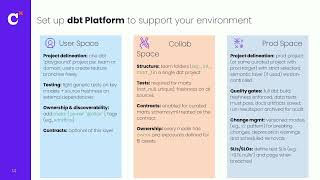
Learn how to structure your dbt projects to enable more collaborative development without losing control. This session covers best practices for managing GitHub repos, organizing Snowflake schemas, and enabling safe, governed access to dbt models. Leave with actionable workflows your platform team can implement today to balance speed and oversight.
In this episode, we talked with Aishwarya Jadhav, a machine learning engineer whose career has spanned Morgan Stanley, Tesla, and now Waymo. Aishwarya shares her journey from big data in finance to applied AI in self-driving, gesture understanding, and computer vision. She discusses building an AI guide dog for the visually impaired, contributing to malaria mapping in Africa, and the challenges of deploying safe autonomous systems. We also explore the intersection of computer vision, NLP, and LLMs, and what it takes to break into the self-driving AI industry.TIMECODES00:51 Aishwarya’s career journey from finance to self-driving AI05:45 Building AI guide dog for the visually impaired12:03 Exploring LiDAR, radar, and Tesla’s camera-based approach16:24 Trust, regulation, and challenges in self-driving adoption19:39 Waymo, ride-hailing, and gesture recognition for traffic control24:18 Malaria mapping in Africa and AI for social good29:40 Deployment, safety, and testing in self-driving systems37:00 Transition from NLP to computer vision and deep learning43:37 Reinforcement learning, robotics, and self-driving constraints51:28 Testing processes, evaluations, and staged rollouts for autonomous driving52:53 Can multimodal LLMs be applied to self-driving?55:33 How to get started in self-driving AI careersConnect with Aishwarya- Linkedin - https://www.linkedin.com/in/aishwaryajadhav8/Connect with DataTalks.Club:- Join the community - https://datatalks.club/slack.html- Subscribe to our Google calendar to have all our events in your calendar - https://calendar.google.com/calendar/r?cid=ZjhxaWRqbnEwamhzY3A4ODA5azFlZ2hzNjBAZ3JvdXAuY2FsZW5kYXIuZ29vZ2xlLmNvbQ- Check other upcoming events - https://lu.ma/dtc-events- GitHub: https://github.com/DataTalksClub- LinkedIn - https://www.linkedin.com/company/datatalks-club/ - Twitter - https://twitter.com/DataTalksClub - Website - https://datatalks.club/
In this episode, we talked with Ranjitha Kulkarni, a machine learning engineer with a rich career spanning Microsoft, Dropbox, and now NeuBird AI. Ranjitha shares her journey into ML and NLP, her work building recommendation systems, early AI agents, and cutting-edge LLM-powered products. She offers insights into designing reliable AI systems in the new era of generative AI and agents, and how context engineering and dynamic planning shape the future of AI products.TIMECODES00:00 Career journey and early curiosity04:25 Speech recognition at Microsoft05:52 Recommendation systems and early agents at Dropbox07:44 Joining NewBird AI12:01 Defining agents and LLM orchestration16:11 Agent planning strategies18:23 Agent implementation approaches22:50 Context engineering essentials30:27 RAG evolution in agent systems37:39 RAG vs agent use cases40:30 Dynamic planning in AI assistants43:00 AI productivity tools at Dropbox46:00 Evaluating AI agents53:20 Reliable tool usage challenges58:17 Future of agents in engineering Connect with Ranjitha- Linkedin - https://www.linkedin.com/in/ranjitha-gurunath-kulkarniConnect with DataTalks.Club:- Join the community - https://datatalks.club/slack.html- Subscribe to our Google calendar to have all our events in your calendar - https://calendar.google.com/calendar/r?cid=ZjhxaWRqbnEwamhzY3A4ODA5azFlZ2hzNjBAZ3JvdXAuY2FsZW5kYXIuZ29vZ2xlLmNvbQ- Check other upcoming events - https://lu.ma/dtc-events- GitHub: https://github.com/DataTalksClub- LinkedIn - https://www.linkedin.com/company/datatalks-club/ - Twitter - https://twitter.com/DataTalksClub - Website - https://datatalks.club/
In this episode, we talked with Abouzar Abbaspour, a data engineer whose career spans software engineering in Iran, building crowd and recommendation systems at a Dutch theme park, deploying large-scale ML models at Bol.com, and now working at Tesla. Abouzar shares how he bridged diverse industries, tackled real-world data challenges, and adapted to new roles while keeping a hands-on approach to machine learning and engineering.TIMECODES00:00 Career journey and early motivations06:17 Moving to Europe for data science12:18 Working with theme parks and crowd modeling18:29 Lessons from ride and visitor data23:06 Building recommendation systems at Efteling27:26 Joining Bol.com and the Dutch e-commerce industry32:49 Product and brand recommendation logic36:09 Experimenting with "Tinder for brands"40:26 Engagement metrics and product validation43:02 From ML engineering to data engineering roles52:04 Hands-on skills at Tesla and industry expectations57:43 Career growth, learning, and adviceConnect with AbouzarLinkedin - / abouzar-abbaspour Website - https://www.abouzar-abbaspour.com/ Connect with DataTalks.Club: Join the community - https://datatalks.club/slack.htmlSubscribe to our Google calendar to have all our events in your calendar - https://calendar.google.com/calendar/...Check other upcoming events - https://lu.ma/dtc-eventsGitHub: https://github.com/DataTalksClubLinkedIn - / datatalks-club Twitter - / datatalksclub Website - https://datatalks.club/
In this episode, we chat with Dashel Ruiz, whose journey spans semiconductors, machine learning, and teaching. Dashel shares how he transitioned from hardware to data science, navigated complex projects in diverse industries, and now combines technical expertise with a passion for teaching. Tune in to hear insights on building a career in data, mastering new technologies, and making an impact both in the lab and the classroom.
TIMECODES 00:00 Dashel's unique career path from music to semiconductors 06:16 The transition into data and software engineering at Microchip 11:44 Discovering machine learning to solve real problems in semiconductor manufacturing 20:40 How Dashel found and his experience with the Machine Learning Zoomcamp 29:33 The practical advantages of DataTalks.Club courses over other platforms 39:52 Overcoming challenges and the value of the learning community 48:10 Hands-on project experience: From image classification to Kaggle competitions 54:12 Staying motivated throughout the long-term course 59:55 The importance of deployment and full-stack ML skills 1:07:36 Closing thoughts on teaching and future courses
Connect with Dashel Linkedin - https://www.linkedin.com/in/dashel-ruiz-perez-2b036172/ Connect with DataTalks.Club: Join the community - https://datatalks.club/slack.htmlSubscribe to our Google calendar to have all our events in your calendar - https://calendar.google.com/calendar/r?cid=ZjhxaWRqbnEwamhzY3A4ODA5azFlZ2hzNjBAZ3JvdXAuY2FsZW5kYXIuZ29vZ2xlLmNvbQCheck other upcoming events - https://lu.ma/dtc-eventsGitHub: https://github.com/DataTalksClubLinkedIn - https://www.linkedin.com/company/datatalks-club/ Twitter - https://twitter.com/DataTalksClub Website - https://datatalks.club/
In this episode, Conor and Bryce record live from Denmark! They recap the C++ Copenhagen Meetup hosted by Symbion, the replicate algorithm and much more! Link to Episode 255 on WebsiteDiscuss this episode, leave a comment, or ask a question (on GitHub)Socials ADSP: The Podcast: TwitterConor Hoekstra: Twitter | BlueSky | MastodonBryce Adelstein Lelbach: TwitterDate Recorded: 2025-09-20 Date Released: 2025-10-10 Roku Engineering SymposiumDenmark DGX SuperpodTweet of Beer PouringAPL replicateC++98 std::copy_ifArrayCast Episode 110: Implementing ReplicateAPL Wiki Replicatethrust::copy_if (stencil overload)cub::RunLengthDecodethrust::reduce_by_keythrust::permutation_iteratorBDE LibrariesASL LibrariesEASTLIntro Song Info Miss You by Sarah Jansen https://soundcloud.com/sarahjansenmusic Creative Commons — Attribution 3.0 Unported — CC BY 3.0 Free Download / Stream: http://bit.ly/l-miss-you Music promoted by Audio Library https://youtu.be/iYYxnasvfx8
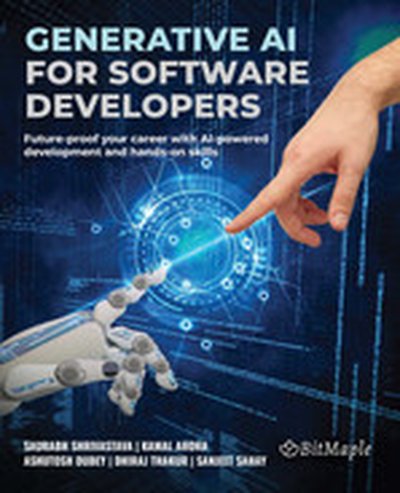
Master Generative AI in software development with hands-on guidance, from coding and debugging to testing and deployment, using GitHub Copilot, Amazon Q Developer, and OpenAI APIs to build scalable, AI-powered applications Key Features Hands-on guidance for mastering AI-powered coding, debugging, and deployment with real-world examples Comprehensive coverage of GenAI concepts, prompt engineering, fine-tuning, and SDLC integration Practical strategies for architecting and scaling production-ready AI-driven applications Book Description Generative AI for Software Developers is your practical guide to mastering AI-powered development and staying ahead in a fast-changing industry. Through a structured, hands-on approach, this book helps you understand, implement, and optimize Generative AI in modern software engineering. From AI-assisted coding, debugging, and documentation to testing, deployment, and system design, it equips you with the skills to integrate AI seamlessly into your workflows. You’ll work with tools such as GitHub Copilot, Amazon Q Developer, and OpenAI APIs while learning strategies for prompt engineering, fine-tuning, and building scalable AI-powered applications. Featuring real-world use cases, best practices, and expert insights, this book bridges the gap between experimenting with AI and production deployment. Whether you’re an aspiring AI developer, experienced engineer, or solutions architect, this guide gives you the clarity, confidence, and tactical knowledge to thrive in the GenAI-driven future of software development. Armed with these insights, you’ll be ready to build, integrate, and scale intelligent solutions that enhance every stage of the software development lifecycle. What you will learn Build a secure GenAI application with expert guidance Understand the fundamentals of GenAI and its applications in software engineering Automate coding tasks with tools like GitHub Copilot, Amazon Q Developer, and OpenAI APIs Apply AI for debugging, testing, documentation, and deployment workflows Get to grips with prompt engineering and fine-tuning techniques to optimize AI outputs Implement best practices for architecting and scaling AI-powered applications Build end-to-end GenAI projects, moving from experimentation to production Who this book is for This book is for software developers, engineers, architects, and tech professionals who want to understand the core concepts of Generative AI and its real-world applications, master AI-driven development workflows to improve efficiency and code quality, and leverage tools like GitHub Copilot, Amazon Q Developer, and OpenAI APIs to automate coding tasks.
Migration réussie vers Snowflake, mise en place de dbt… mais comment s’assurer que la donnée reste fiable au quotidien ? Avec Sifflet, l’équipe data d’ETAM a déployé une observabilité intelligente : détection d’anomalies, monitoring automatisé, intégration GitHub. Venez découvrir comment une petite équipe supervise à grande échelle et gagne en sérénité.
Você já pensou em como a Inteligência Artificial generativa está transformando o jeito que grandes empresas criam produtos digitais? Neste episódio, conversamos com o time do Grupo Boticário para entender como a companhia está unindo tecnologia e inovação para transformar o futuro da beleza. Exploramos como a GenAI vem impulsionando o desenvolvimento de produtos digitais e potencializando o trabalho de analistas, times de produto e engenharia com ferramentas. Falamos sobre os bastidores da Semana de IA GB, os aprendizados que ela trouxe para o negócio e como a GenAI está ajudando os times a ganharem eficiência e profundidade nas análises. Se você quer entender como uma das maiores empresas de beleza do país está moldando sua cultura de produto e engenharia para o futuro, esse episódio é para você! Lembrando que você pode encontrar todos os podcasts da comunidade Data Hackers no Spotify, iTunes, Google Podcast, Castbox e muitas outras plataformas. Convidados: Bruno Fuzetti Penso - Gerente Sênior de Plataforma Thayana Borba - Gerente Sênior de Produtos Digitais João Alves De Oliveira Neto - Gerente Sênior Produtos de Dados Nossa Bancada Data Hackers: Paulo Vasconcellos — Co-founder da Data Hackers e Principal Data Scientist na Hotmart. Monique Femme — Head of Community Management na Data Hackers Canais do Grupo Boticário: LinkedIn do GB Página de vagas do GB Instagram do GB Referências: Plataforma de Desenvolvimento (Alquimia) https://github.com/customer-stories/grupoboticario https://medium.com/gbtech/plataforma-do-desenvolvimento-grupo-botic%C3%A1rio-61b1aaddbc9b https://medium.com/gbtech/opentelemetry-na-nova-plataforma-de-integra%C3%A7%C3%A3o-350e744b6a5f https://aws.amazon.com/pt/solutions/case-studies/grupo-boticario-summit/
In this episode, Conor and Bryce record live from Denmark! They recap the Roku Engineering Symposium as well as many random topics including Polestar vs Tesla vs Prius, the city of Aarhus and much more! Link to Episode 254 on WebsiteDiscuss this episode, leave a comment, or ask a question (on GitHub)Socials ADSP: The Podcast: TwitterConor Hoekstra: Twitter | BlueSky | MastodonBryce Adelstein Lelbach: TwitterDate Recorded: 2025-09-19 Date Released: 2025-10-03 Roku Engineering SymposiumRoku rostdBDE LibrariesASL LibrariesEASTLIntro Song Info Miss You by Sarah Jansen https://soundcloud.com/sarahjansenmusic Creative Commons — Attribution 3.0 Unported — CC BY 3.0 Free Download / Stream: http://bit.ly/l-miss-you Music promoted by Audio Library https://youtu.be/iYYxnasvfx8
jupyter-fs provides an interface between PyFilesystem and fsspec file systems, the JupyterLab user interface, and the Jupyter notebooks you run. Connect and browse your local filesystem, S3, Samba, WebDAV, and more, interacting with data seamlessly from both the JupyterLab UI and your notebook's kernel.