talk-data.com talk-data.com

Topic

IBM

technology cloud ai

39

tagged

Activity Trend

26 peak/qtr
2020-Q1 2026-Q1

Activities

Showing filtered results

Filtering by: O'Reilly Data Science Books ×
IBM Cognos Dynamic Query

This IBM® Redbooks® publication explains how IBM Cognos® Business Intelligence (BI) administrators, authors, modelers, and power users can use the dynamic query layer effectively. It provides guidance for determining which technology within the dynamic query layer can best satisfy your business requirements. Administrators can learn how to tune the query service effectively and preferred practices for managing their business intelligence content. This book includes information about metadata modeling of relational data sources with IBM Cognos Framework Manager. It includes considerations that can help you author high-performing applications that satisfy analytical requirements of users. This book provides guidance for troubleshooting issues related to the dynamic query layer of Cognos BI.

IBM Cognos 10 Report Studio Cookbook - Second Edition

This cookbook is a comprehensive guide to mastering IBM Cognos 10 Report Studio, enabling users to become proficient in developing professional-grade reports. Through practical recipes, you will learn how to harness the full potential of Report Studio, mastering both fundamental and advanced features for real-world application. What this Book will help me do Efficiently organize and process data using advanced sorting and filtering techniques. Create visually engaging and functional reports, including dynamic drill-through links and enhanced formatting options. Master the use of conditional formatting, cascaded prompts, and master-detailed queries in your reports. Enhance reports with Active Reports, direct XML editing, and by integrating JavaScript and HTML elements. Adopt industry best practices for report development, including version control and regression testing. Author(s) The author of this cookbook is an experienced IBM Cognos consultant with years of experience in developing business intelligence solutions and creating comprehensive reports. They focus on combining technical expertise with practical examples, presenting information in an approachable and user-friendly manner. Who is it for? This book is ideal for Business Intelligence Developers with a working knowledge of IBM Cognos 10 who seek to enhance their report-building skills. It also serves Business Analysts or Power Users familiar with basic report authoring who aim to explore advanced features. Prior knowledge of IBM Cognos 10 architecture and basic Report Studio functionalities is assumed.

IBM Cognos 10 Framework Manager

"IBM Cognos 10 Framework Manager" is your complete guide to mastering the key features of IBM Cognos Framework Manager for robust data modeling. By following practical, step-by-step lessons enhanced with expert tips, you'll progress from handling imported data to developing dynamic, user-friendly data models optimized for Business Intelligence reporting. What this Book will help me do Import and model relational data effectively to support diverse reporting needs. Create organized, well-structured reporting packages for easy data access and usage. Utilize parameters and parameter reports to enable dynamic and adaptable reporting solutions. Manage models in multi-user environments, fostering collaboration and enhanced functionality. Leverage the Model Design Accelerator to quickly develop well-designed initial data models. Author(s) Terence Phillip Curran has extensive experience in data modeling and IBM Cognos technology. Through his practical expertise and hands-on teaching methods, he has become a trusted source of guidance in the field. In this book, Curran combines his practical knowledge with clear explanations to help users fully utilize IBM Cognos Framework Manager. Who is it for? This book serves developers interested in using IBM Cognos Framework Manager to build and optimize data models. If you're new to the tool, you'll benefit from its thorough and accessible approach to learning. For experienced users, it offers advanced techniques and tips to improve and streamline your modeling efforts. Whether you're preparing reporting packages or building multi-user collaborative models, this book provides the practical guidance you need.

Predictive Analytics: The Power to Predict Who Will Click, Buy, Lie, or Die

"The Freakonomics of big data." —Stein Kretsinger, founding executive of Advertising.com; former lead analyst at Capital One This book is easily understood by all readers. Rather than a "how to" for hands-on techies, the book entices lay-readers and experts alike by covering new case studies and the latest state-of-the-art techniques. You have been predicted — by companies, governments, law enforcement, hospitals, and universities. Their computers say, "I knew you were going to do that!" These institutions are seizing upon the power to predict whether you're going to click, buy, lie, or die. Why? For good reason: predicting human behavior combats financial risk, fortifies healthcare, conquers spam, toughens crime fighting, and boosts sales. How? Prediction is powered by the world's most potent, booming unnatural resource: data. Accumulated in large part as the by-product of routine tasks, data is the unsalted, flavorless residue deposited en masse as organizations churn away. Surprise! This heap of refuse is a gold mine. Big data embodies an extraordinary wealth of experience from which to learn. Predictive analytics unleashes the power of data. With this technology, the computer literally learns from data how to predict the future behavior of individuals. Perfect prediction is not possible, but putting odds on the future — lifting a bit of the fog off our hazy view of tomorrow — means pay dirt. In this rich, entertaining primer, former Columbia University professor and Predictive Analytics World founder Eric Siegel reveals the power and perils of prediction: What type of mortgage risk Chase Bank predicted before the recession. Predicting which people will drop out of school, cancel a subscription, or get divorced before they are even aware of it themselves. Why early retirement decreases life expectancy and vegetarians miss fewer flights. Five reasons why organizations predict death, including one health insurance company. How U.S. Bank, European wireless carrier Telenor, and Obama's 2012 campaign calculated the way to most strongly influence each individual. How IBM's Watson computer used predictive modeling to answer questions and beat the human champs on TV's Jeopardy! How companies ascertain untold, private truths — how Target figures out you're pregnant and Hewlett-Packard deduces you're about to quit your job. How judges and parole boards rely on crime-predicting computers to decide who stays in prison and who goes free. What's predicted by the BBC, Citibank, ConEd, Facebook, Ford, Google, IBM, the IRS, Match.com, MTV, Netflix, Pandora, PayPal, Pfizer, and Wikipedia. A truly omnipresent science, predictive analytics affects everyone, every day. Although largely unseen, it drives millions of decisions, determining whom to call, mail, investigate, incarcerate, set up on a date, or medicate. Predictive analytics transcends human perception. This book's final chapter answers the riddle: What often happens to you that cannot be witnessed, and that you can't even be sure has happened afterward — but that can be predicted in advance? Whether you are a consumer of it — or consumed by it — get a handle on the power of Predictive Analytics.

IBM Cognos Dynamic Cubes

IBM® Cognos® Business Intelligence (BI) provides a proven enterprise BI platform with an open data strategy, providing customers with the ability to leverage data from any source, package it into a business model, and make it available to consumers in various interfaces that are tailored to the task. IBM Cognos Dynamic Cubes complements the existing Cognos BI capabilities and continues the tradition of an open data model. It focuses on extending the scalability of the IBM Cognos platform to enable speed-of-thought analytics over terabytes of enterprise data, without having to invest in a new data warehouse appliance. This capability adds a new level of query intelligence so you can unleash the power of your enterprise data warehouse. This IBM Redbooks® publication addresses IBM Cognos Business Intelligence V10.2 and specifically, the IBM Cognos Dynamic Cubes capabilities. This book can help you in the following ways: Understand core features of the Dynamic Cubes capabilities of IBM Cognos BI V10.2 Learn by example with practical scenarios using the IBM Cognos samples

Solving Business Problems with Informix TimeSeries

The world is becoming more and more instrumented, interconnected, and intelligent in what IBM® terms a smarter planet, with more and more data being collected for analysis. In trade magazines, this trend is called big data. As part of this trend, the following types of time-based information are collected: Large data centers support a corporation or provide cloud services. These data centers need to collect temperature, humidity, and other types of Utility meters (referred to as smart meters) allow utility companies to collect information over a wireless network and to collect more data than ever before. IBM Informix® TimeSeries is optimized for the processing of time-based data and can provide the following benefits: Storage savings: Storage can be optimized when you know the characteristics of your time-based data. Informix TimeSeries often uses one third of the storage space that is required by a standard relational database. Query performance: Informix TimeSeries takes into consideration the type of data to optimize its organization on disk and eliminates the need for some large indexes and additional sorting. For these reasons and more, some queries can easily have an order of magnitude performance improvement compared to standard relational. Simpler queries: Informix TimeSeries includes a large set of specialized functions that allow you to better express the processing that you want to execute. It even provides a toolkit so that you can add proprietary algoritms to the library. This IBM Redbooks® publication is for people who want to implement a solution that revolves around time-based data. It gives you the information that you need to get started and be productive with Informix TimeSeries.

IBM Cognos TM1 Developer's Certification guide

The IBM Cognos TM1 Developer's Certification Guide is your hands-on resource to preparing for and passing the COG-310 certification exam. This book offers a practical, example-driven approach to mastering the core concepts and tools within IBM Cognos TM1, including dimension construction, scripting with Turbo Integrator, rules writing, and cube design. What this Book will help me do Master the key components and architecture of Cognos TM1 to build efficient financial models. Gain proficiency in Turbo Integrator scripting to automate data integration and transformations. Learn to create and use dimensions, cubes, and rules effectively within the TM1 environment. Understand advanced concepts like drill-through functionality, virtual cubes, and lookup cubes. Enhance your data presentation and reporting skills tailored to TM1 solutions. Author(s) James D. Miller is an experienced educator and IBM Cognos TM1 professional, with a strong background in financial and enterprise planning systems. With years of experience in the field, James brings his practical knowledge into his writing, making complex technical topics approachable and clear. He is committed to helping learners achieve their professional certifications and enhance their skill sets. Who is it for? This book is ideal for beginner to intermediate IBM Cognos TM1 developers who are looking to gain expertise in the field and obtain the COG-310 certification. If you are someone interested in enhancing your financial modeling skills and advancing your career, this guide is designed to meet your needs. It suits individuals wishing for structured, hands-on learning with practical exercises to build actual project-ready competence. Anyone aiming to independently prepare for the COG-310 certification exam will greatly benefit from this content.

IBM Cognos TM1 The Official Guide

The only official guide to building effective business solutions with TM1 from IBM Cognos IBM Cognos TM1: The Official Guide offers complete coverage of the 64-bit in-memory online analytical processing (OLAP) engine. Based on the newest release, TM1 10, this official guide offers an advanced tutorial for TM1 concepts from a technical and a business point of view. The authors, members of the TM1 team, provide typical business examples and technical insights for building practical solutions, based on their own experiences. Emphasis is placed on teaching best practices and expanding skills to learn the more powerful capabilities of TM1. The book covers analytical processing, data entry, simulation, workflow components, and more. : IBM Cognos TM1: The Official Guide The first and only officially endorsed book on IBM Cognos TM1 Written by members of IBM Cognos TM1 team with combined experience of 50 years with the product Provides working solutions for relevant business problems Offers deep insights into the most powerful and undocumented capabilities of TM1 Explains how to build actionable business intelligence

IBM Cognos 10 Report Studio: Practical Examples

IBM Cognos 10 is the next generation off the leading performance management, analysis, and reporting standard for mid- to large-sized companies. One of the most exciting and useful aspects of IBM Cognos software is its powerful custom report creation capabilities. After learning the basics, report authors in the enterprise need to apply the technology to reports in their actual, complex work environment. This book provides that advanced know how. Using practical examples based on years of teaching experiences as IBM Cognos instructors, the authors provide you with examples of typical advanced reporting designs and complex queries in reports. The reporting solutions in this book can be directly used in a variety of real-world scenarios to provide answers to your business problems today. The complexity of the queries and the application of design principles go well beyond basic course content or introductory books. IBM Cognos 10 Report Studio: Practical Examples will help you find the answers to specific questions based on your data and your business model. It will use a combination tutorial and cookbook approach to show real-world IBM Cognos 10 Report Studio solutions. If you are still using IBM Cognos 8 BI Report Studio, many of the examples have been tested against this platform as well. The final chapter has been dedicated to showing those features that are unique to the latest version of this powerful reporting solution.

IBM Cognos Business Intelligence V10.1 Handbook

IBM® Cognos® Business Intelligence (BI) helps organizations meet This IBM Redbooks® publication addresses IBM Cognos Business Intelligence V10.1. You can use this book to: This book uses a fictional business scenario to demonstrate the power of IBM Cognos BI. The book is primarily focused on the roles of Advanced Business User, Professional Report Author, Modeler, Administrator, and IT Architect.

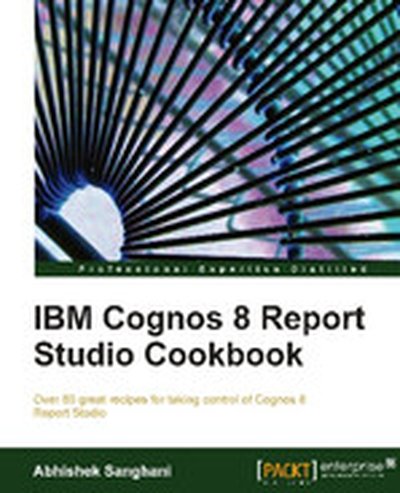
IBM Cognos 8 Report Studio Cookbook

The "IBM Cognos 8 Report Studio Cookbook" by Abhishek Sanghani provides over 80 hands-on recipes to enhance your proficiency in creating business reports using Cognos 8 Report Studio. From mastering basic techniques to leveraging advanced features, this book is your guide to developing reports that meet real-world business demands. What this Book will help me do Understand and utilize advanced techniques for sorting, filtering, and aggregating data in reports. Implement features like conditional formatting, cascaded prompts, and master-detail queries to enhance report functionality. Create dynamic, user-friendly business reports tailored to specific requirements. Make use of XML specifications to customize reports beyond the capabilities of the default tools. Adopt best practices in report development such as version control and regression testing. Author(s) Abhishek Sanghani is an experienced Business Intelligence professional specializing in IBM Cognos and data analytics. With practical knowledge from implementing solutions for various industries, he brings a wealth of insight into creating powerful business reports. Abhishek's approachable writing makes advanced Report Studio concepts accessible to readers. Who is it for? This book is ideally suited for Business Intelligence or MIS developers working with Cognos Report Studio, seeking advanced guidance for creating reports. Business analysts and power users wanting to extend beyond basic report authoring will also benefit greatly. The book assumes a functional understanding of Cognos Studio and familiarity with its ecosystem.

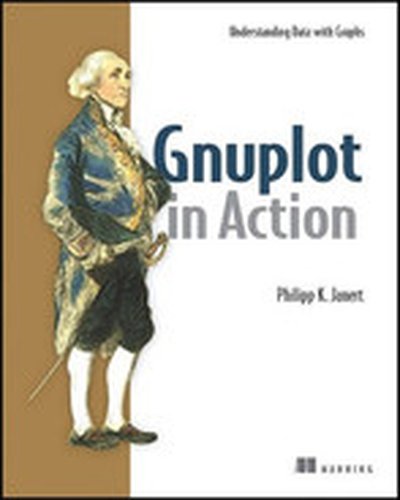
Gnuplot in Action

Gnuplot in Action is the first comprehensive introduction to gnuplot—from the basics to the power features and beyond. Besides providing a tutorial on gnuplot itself, it demonstrates how to apply and use gnuplot to extract intelligence from data. Particular attention is paid to tricky or poorly-explained areas. You will learn how to apply gnuplot to actual data analysis problems. This book looks at different types of graphs that can be generated with gnuplot and will discuss when and how to use them to extract actual information from data. About the Technology Statistical data is only as valuable as your ability to analyze, interpret, and present it in a meaningful way. Gnuplot is the most widely used program to plot and visualize data for Unix/Linux systems and it is also popular for Windows and the Mac. It's open-source (as in free!), actively maintained, stable, and mature. It can deal with arbitrarily large data sets and is capable of producing high-quality, publication-ready graphics. So far, the only comprehensive documentation available about gnuplot is the online reference documentation, which makes it both hard to get started and almost impossible to get a complete overview over all of its features. If you've never tried gnuplot—or have found it tough to get your arms around—read on. About the Book One of gnuplot's main advantages is that it requires no programming skills nor knowledge of advanced mathematical or statistical concepts. Gnuplot in Action assumes you have no previous knowledge of either gnuplot or statistics and data analysis. The books starts out with basic gnuplot concepts, then describes in depth how to get a graph ready for final presentation and to make it look "just right" by including arrows, labels, and other decorations. Next the book looks at advanced concepts, such as multi-dimensional graphs and false-color plots—powerful features for special purposes. The author also describes advanced applications of gnuplot, such as how to script gnuplot so that it can run unattended as a batch job, and how to call gnuplot from within a CGI script to generate graphics for dynamic websites on demand. What's Inside Creating graphs with gnuplot Data transformations and filters Preparing/polishing graphs for final presentation Publishing graphs in print or on the Web Using gnuplot's power features Gnuplot scripting and programming Types of graphs and when to use them Techniques of graphical analysis How to build, install, and develop for gnuplot Command and Option reference organized by concept About the Reader Gnuplot in Action makes gnuplot easy for anyone who needs to do data analysis, but doesn't have an education in analytical tools and methods. It's perfect for DBAs, programmers, and performance engineers; business analysts and MBAs; and Six-Sigma Black Belts and process engineers. About the Author Philipp K. Janert is Chief Consultant at Principal Value, LLC. He has been a gnuplot user for more than 15 years and regards it as one of the indispensable tools in his toolbox. He has worked for small start-ups and in large corporate environments, both in the US and overseas, including several years at Amazon.com, where he initiated and led several projects to improve Amazon's order fulfillment processes. Philipp K. Janert has written about software and software development for the O'Reilly Network, IBM developerWorks, IEEE Software, and Linux Magazine. He holds a Ph.D. in Theoretical Physics from the University of Washington. Visit his website at www.principal-value.com. Quotes Knee-deep in data? This is your guidebook to exploring it with gnuplot. - Austin King, Mozilla Sparkles with insight about visualization, image perception, and data exploration. - Richard B. Kreckel, GiNaC.de Incredibly useful for beginners - indispensable for advanced users. - Mark Pruett, Systems Architect Dominion Bridges the gap between gnupolt's reference manual and real-world problems. - Mitchell Johnson, Border Stylo A Swiss Army knife for plotting data. - Nishanth Sastry, Computer Laboratory, University of Cambridge/IBM

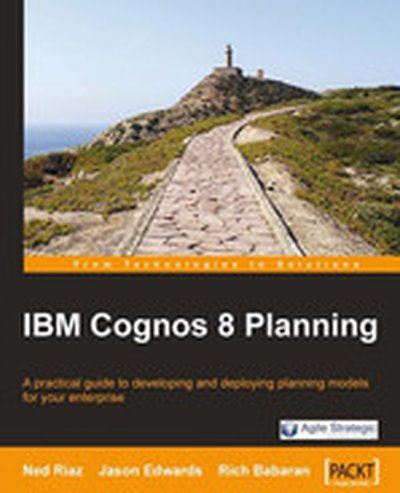
IBM Cognos 8 Planning

IBM Cognos 8 Planning is a powerful tool for creating, managing, and deploying business planning models effectively. This book guides you through the core concepts and practical steps required to master Cognos Planning, from the basics of model creation with Analyst to web deployment using Contributor. With a step-by-step approach, you'll learn everything needed to handle real-world projects. What this Book will help me do Understand the entire model development process in IBM Cognos 8 Planning, enabling you to plan effectively. Use Analyst tools to precisely define and manipulate data structures for seamless model integration. Master the creation of Contributor applications to collect and manage user input in a collaborative environment. Learn automation techniques to streamline common tasks, improving efficiency in planning workflows. Integrate IBM Cognos Planning with BI tools to turn planning insights into actionable business intelligence. Author(s) This book is collaboratively written by three seasoned Cognos experts, who bring over 25 years of professional experience in delivering Cognos solutions to businesses globally. Their pragmatic approach and deep knowledge ensure a resource written with clarity and effectiveness, sharing valuable insights gained from real-world implementations. Their passion is to empower learners. Who is it for? This book is ideal for developers starting with IBM Cognos Planning, or transitioning from another tool. If you're eager to design effective planning models while learning the practicalities of Cognos Planning, this guide provides foundational knowledge and actionable insights. Perfect for beginners seeking thorough and straightforward learning.

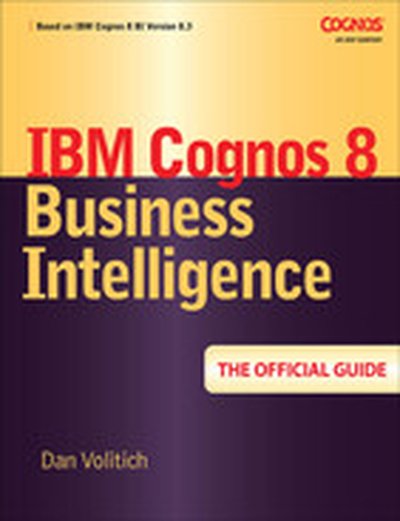
IBM Cognos 8 Business Intelligence: The Official Guide

The Only Authorized Guide to IBM Cognos 8 Business Intelligence Develop, deploy, and maintain a complete BI solution across your enterprise. IBM Cognos 8 Business Intelligence: The Official Guide shows you how to take full advantage of the robust service-oriented architecture and simplified role-based user interfaces. Learn how to create, share, and analyze data-rich reports that lead to increased productivity and better business decisions. Featuring real-world insight and expert tips, this is a must-have guide for IBM Cognos 8 Business Intelligence users of all levels, from administrators to end users. Measure and monitor performance using dashboards and scorecards Assign user roles and privileges Provide complete and consistent access to a broad range of data sources via Cognos Connection Use Cognos 8 Go! to extend BI to Office applications, mobile devices, and search engines Enable business users to create reports with Query Studio Develop new insights by exploring data in multiple dimensions and perspectives with Analysis Studio Build Dimensional Reports with Report Studio Use Event Studio to identify and deliver mission-critical information Create, modify, organize, and publish a model from Cognos Framework Manager Implement sound security measures Take advantage of the management tools in Cognos Administration to ensure maximum reliability and availability

Deployment Guide Series: ITCAM for Response Time V6.2

This IBM® Redbooks® publication is written as part of the deployment guide series. This book provides a step-by-step guide for deploying ITCAM for Response Time V6.2. This deployment guide can help an IBM or business partner service person plan and perform the deployment of the product. The discussion of ITCAM for Response Time includes the explanation of product architecture and its components. We discuss planning and sizing considerations before you implement the product and some guidelines on setting up service engagement for the product. The deployment explained in the book would fit for a demonstration or a small deployment system, although the information is highly relevant for larger deployment engagements. This book also explains some usage scenario that can be performed for demonstrating the product.

Healthcare Collaborative Network Solution Planning and Implementation

The IBM WebSphere Business Integration for Healthcare Collaborative Network is an internet-based, private information network that enables secure transmission of clinical data to healthcare participants. Healthcare Collaborative Network enables immediacy in the dissemination of clinical data and provides participants with capabilities to detect and respond rapidly to health risks such as adverse drug effects, to manage quality of care, and to implement monitoring and warning systems for detecting the onset of dangerous infectious diseases or bioterrorist attacks. This IBM IBM Redbooks publication provides a first-hand guide for creating solutions based on the IBM WebSphere Business Integration for Healthcare Collaborative Network. It includes an example scenario of a public health alert based on Avian Influenza (bird flu) and Avian Influenza A (H5N1). Healthcare Collaborative Network is aimed at hospitals and large groups of medical or dental practices, international and government agencies, pharmaceutical companies, and major insurance companies.

Preparing for DB2 Near-Realtime Business Intelligence

In this IBM Redbooks publication we discuss primary processes and various alternatives that prepare you in implementing a DB2 near-realtime business intelligence environment. We discuss architectural alternatives and include overviews of software products that you can use in an implementation. As a primary focus, we tested the capabilities for supporting continuous update of a DB2 data warehouse while running a continuous concurrent query workload against that data warehouse. We tested several implementation scenarios and the variables that impact them. The results of our testing and the issues we encountered are provided.

Up and Running with DB2 UDB ESE: Partitioning for Performance in an e-Business Intelligence World

Data warehouses in the 1990s were for the privileged few business analysts. Business Intelligence is now being democratized by being shared with the rank and file employee demanding higher levels of RDBMS scalability and ease of use, being delivered through Web portals. To support this emerging e-Business Intelligence world, the challenges that face the enterprises for their centralized data warehouse RDBMS technology are scalability, performance, availability and smart manageability. This IBM Redbooks publication focuses on the innovative technical functionalities of DB2 UDB ESE V8.1 and discusses: This book positions the new functionalities, so you can understand and evaluate their applicability in your own enterprise data warehouse environment, and get started prioritizing and implementing them. Please note that the additional material referenced in the text is not available from IBM.

Enhance Your Business Applications: Simple Integration of Advanced Data Mining Functions

Today data mining is no longer thought of as a set of stand-alone techniques, far from the business applications, and used only by data mining specialists or statisticians. Integrating data mining with mainstream applications is becoming an important issue for e-business applications. To support this move to applications, data mining is now an extension of the relational databases that database administrators or IT developers use. They use data mining as they would use any other standard relational function that they manipulate. This IBM Redbooks publication positions the new DB2 data mining functions: Part 1 of this book helps business analysts and implementers to understand and position these new DB2 data mining functions. Part 2 provides examples for implementers on how to easily and quickly integrate the data mining functions in business applications to enhance them. And part 3 helps database administrators and IT developers to configure these functions once to prepare them for use and integration in any application. Please note that the additional material referenced in the text is not available from IBM.