talk-data.com talk-data.com

Topic

LLM

Large Language Models (LLM)

nlp ai machine_learning

1405

tagged

Activity Trend

158 peak/qtr
2020-Q1 2026-Q1

Activities

1405 activities · Newest first

In this hands-on lab, you'll explore data with BigQuery's intuitive table explorer and data insight features, enabling you to gain valuable insights without writing SQL queries from scratch. Learn how to generate key insights from order item data, query location tables, and interact with your data seamlessly. By the end, you’ll be equipped to navigate complex datasets and uncover actionable insights quickly and efficiently.

If you register for a Learning Center lab, please ensure that you sign up for a Google Cloud Skills Boost account for both your work domain and personal email address. You will need to authenticate your account as well (be sure to check your spam folder!). This will ensure you can arrive and access your labs quickly onsite. You can follow this link to sign up!

Supercharge your Android apps with the power of generative AI. This session explores the Vertex AI integration with Firebase that empowers mobile developers to easily leverage Gemini and Imagen 3 for cutting-edge features like image generation. Learn production best practices, discover complementary Firebase solutions, and unlock new levels of creativity and user engagement in your apps.

Discover how machine learning (ML) engineers and app developers collaborate to build a viral AI app. This session takes you on a journey from a screenshot-to-calendar Python app running on a laptop to a globally scaled app. You’ll learn best practices for collaboration between ML engineers and app developers; how to build, refactor, and scale an AI app to millions of users with a modern architecture; and how to leverage the power of Gemini, Vertex AI, app hosting, and full-stack development. Find out how to build something greater than the sum of its parts!

The way we build software is fundamentally changing with AI-centric tools. In this session, learn how to build and ship full-stack AI apps faster with the newly launched Firebase Studio. Find out how your codebase becomes context for Gemini, enabling powerful agentic capabilities in your editor. Generate and modify code, execute commands – all with natural language prompts. And leave with strategies to ship better software, quicker.

Level up your Java apps with the power of Gemini. This session explores how Java developers can easily integrate generative AI features into their applications using LangChain4j. We’ll cover everything from building chatbots and implementing in-context learning to creating agentic workflows and using advanced techniques like unstructured data extraction. Learn best practices and build smart, AI-powered Java applications with ease. No Python experience required.

Build a multimodal search engine with Gemini and Vertex AI. This hands-on lab demonstrates Retrieval Augmented Generation (RAG) to query documents containing text and images. Learn to extract metadata, generate embeddings, and search using text or image queries.

If you register for a Learning Center lab, please ensure that you sign up for a Google Cloud Skills Boost account for both your work domain and personal email address. You will need to authenticate your account as well (be sure to check your spam folder!). This will ensure you can arrive and access your labs quickly onsite. You can follow this link to sign up!

Startup developers, are you ready to build? In this hands-on workshop, you'll design and code a generative AI app using Gemini and Vertex AI. Through focused coding exercises, you'll master essential skills in prompt engineering, multimodal AI, and real-world implementation. Walk away with functional AI code—and the foundation to power your AI-driven future.

**Please bring your laptop to get the most out of this hands-on session**

Unleash the power of Gemini with Vertex AI Studio. This hands-on lab guides you through using Gemini for image analysis, prompt engineering, and conversational AI, all within a user-friendly interface. Learn to design prompts and generate content directly from the Google Cloud console.

If you register for a Learning Center lab, please ensure that you sign up for a Google Cloud Skills Boost account for both your work domain and personal email address. You will need to authenticate your account as well (be sure to check your spam folder!). This will ensure you can arrive and access your labs quickly onsite. You can follow this link to sign up!

For years, mainframe modernization seemed out of reach. Generative AI breakthroughs, led by Google’s Gemini, offer automated assessments, code transformation, and risk mitigation for accelerated and cost-effective cloud migration. Learn from Ford and Intesa Sanpaolo about how they reduced costs, boosted performance, and embraced innovation by modernizing their core applications off the mainframe and onto Google Cloud. Learn how Google Cloud’s mainframe modernization solutions can work for your digital transformation journey.

Google Workspace customers are switching to Google Chat and Google Meet, AI-first collaboration tools that seamlessly integrate with the Workspace apps you use every day. Learn how they migrated from costly point solutions to enhance collaboration, improve data security, reduce costs, and unlock new levels of team productivity with Gemini.

Discover the breakthrough AI capabilities transforming cloud operations and management. Join us for an overview of Gemini Cloud Assist and learn how it brings you an AI-based cloud management experience. Gemini Cloud Assist empowers you to design and deploy apps faster, troubleshoot issues with AI insights, and optimize performance and costs through intelligent recommendations. We’ll showcase its new capabilities and integrations in various Google Cloud products, and show you how it can completely reshape your cloud management experience.

This session offers insight on diverse AI user journeys to help you visualize AI’s potential. Drawing on Google’s experience working with different clients, our experts will showcase impactful ways customers are driving their businesses forward with Google Workspace with Gemini. We’ll explore different use cases, demonstrating how AI can optimize operations, enhance experiences, and unlock new growth opportunities.

Está no ar, o Data Hackers News !! Os assuntos mais quentes da semana, com as principais notícias da área de Dados, IA e Tecnologia, que você também encontra na nossa Newsletter semanal, agora no Podcast do Data Hackers !! Aperte o play e ouça agora, o Data Hackers News dessa semana ! Para saber tudo sobre o que está acontecendo na área de dados, se inscreva na Newsletter semanal: ⁠⁠⁠⁠⁠⁠⁠⁠⁠⁠⁠⁠⁠⁠⁠⁠⁠⁠⁠⁠⁠⁠⁠⁠⁠⁠⁠⁠⁠⁠⁠⁠https://www.datahackers.news/⁠⁠⁠⁠⁠⁠⁠⁠⁠⁠⁠⁠⁠⁠⁠⁠⁠⁠⁠⁠⁠⁠⁠⁠⁠⁠⁠⁠⁠⁠⁠⁠ Conheça nossos comentaristas do Data Hackers News: ⁠⁠⁠⁠⁠⁠⁠⁠⁠⁠⁠⁠⁠⁠⁠⁠⁠⁠⁠⁠⁠⁠⁠⁠⁠⁠⁠⁠Monique Femme⁠⁠⁠⁠⁠⁠⁠⁠⁠⁠⁠⁠⁠⁠⁠⁠⁠⁠⁠⁠⁠⁠⁠⁠⁠⁠⁠⁠⁠ Demais canais do Data Hackers: ⁠⁠⁠⁠⁠⁠⁠⁠⁠⁠⁠⁠⁠⁠⁠⁠⁠⁠⁠⁠⁠⁠⁠⁠⁠⁠⁠⁠⁠⁠⁠⁠Site⁠⁠⁠⁠⁠⁠⁠⁠⁠⁠⁠⁠⁠⁠⁠⁠⁠⁠⁠⁠⁠⁠⁠⁠⁠⁠⁠⁠⁠⁠⁠⁠ ⁠⁠⁠⁠⁠⁠⁠⁠⁠⁠⁠⁠⁠⁠⁠⁠⁠⁠⁠⁠⁠⁠⁠⁠⁠⁠⁠⁠⁠⁠⁠⁠Linkedin⁠⁠⁠⁠⁠⁠⁠⁠⁠⁠⁠⁠⁠⁠⁠⁠⁠⁠⁠⁠⁠⁠⁠⁠⁠⁠⁠⁠⁠⁠⁠⁠ ⁠⁠⁠⁠⁠⁠⁠⁠⁠⁠⁠⁠⁠⁠⁠⁠⁠⁠⁠⁠⁠⁠⁠⁠⁠⁠⁠⁠⁠⁠⁠⁠Instagram⁠⁠⁠⁠⁠⁠⁠⁠⁠⁠⁠⁠⁠⁠⁠⁠⁠⁠⁠⁠⁠⁠⁠⁠⁠⁠⁠⁠⁠⁠⁠⁠ ⁠⁠⁠⁠⁠⁠⁠⁠⁠⁠⁠⁠⁠⁠⁠⁠⁠⁠⁠⁠⁠⁠⁠⁠⁠⁠⁠⁠⁠⁠⁠⁠Tik Tok⁠⁠⁠⁠⁠⁠⁠⁠⁠⁠⁠⁠⁠⁠⁠⁠⁠⁠⁠⁠⁠⁠⁠⁠⁠⁠⁠⁠⁠⁠⁠⁠ ⁠⁠⁠⁠⁠⁠⁠⁠⁠⁠⁠⁠⁠⁠⁠⁠⁠⁠⁠⁠⁠⁠⁠⁠⁠⁠⁠⁠⁠⁠⁠⁠You Tube⁠⁠⁠⁠⁠⁠⁠⁠⁠⁠⁠⁠⁠⁠⁠⁠⁠⁠⁠⁠⁠⁠⁠⁠⁠⁠⁠⁠⁠⁠⁠

Supported by Our Partners •⁠ CodeRabbit⁠⁠ — Cut code review time and bugs in half. Use the code PRAGMATIC to get one month free. •⁠ Modal⁠ — The cloud platform for building AI applications. — How will AI tools change software engineering? Tools like Cursor, Windsurf and Copilot are getting better at autocomplete, generating tests and documentation. But what is changing, when it comes to software design? Stanford professor John Ousterhout thinks not much. In fact, he believes that great software design is becoming even more important as AI tools become more capable in generating code.  In this episode of The Pragmatic Engineer, John joins me to talk about why design still matters and how most teams struggle to get it right. We dive into his book A Philosophy of Software Design, unpack the difference between top-down and bottom-up approaches, and explore why some popular advice, like writing short methods or relying heavily on TDD, does not hold up, according to John. We also explore:  • The differences between working in industry vs. academia  • Why John believes software design will become more important as AI capabilities expand • The top-down and bottoms-up design approaches – and why you should use both • John’s “design it twice” principle • Why deep modules are essential for good software design  • Best practices for special cases and exceptions • The undervalued trait of empathy in design thinking • Why John advocates for doing some design upfront • John’s criticisms of the single-responsibility principle, TDD, and why he’s a fan of well-written comments  • And much more! As a fun fact: when we recorded this podcast, John was busy contributing to the Linux kernel: adding support to the Homa Transport Protocol – a protocol invented by one of his PhD students. John wanted to make this protocol available more widely, and is putting in the work to do so. What a legend! (We previously covered how Linux is built and how to contribute to the Linux kernel) — Timestamps (00:00) Intro  (02:00) Why John transitioned back to academia (03:47) Working in academia vs. industry  (07:20) Tactical tornadoes vs. 10x engineers (11:59) Long-term impact of AI-assisted coding (14:24) An overview of software design (15:28) Why TDD and Design Patterns are less popular now  (17:04) Two general approaches to designing software  (18:56) Two ways to deal with complexity  (19:56) A case for not going with your first idea  (23:24) How Uber used design docs (26:44) Deep modules vs. shallow modules (28:25) Best practices for error handling (33:31) The role of empathy in the design process (36:15) How John uses design reviews  (38:10) The value of in-person planning and using old-school whiteboards  (39:50) Leading a planning argument session and the places it works best (42:20) The value of doing some design upfront  (46:12) Why John wrote A Philosophy of Software of Design  (48:40) An overview of John’s class at Stanford (52:20) A tough learning from early in Gergely’s career  (55:48) Why John disagrees with Robert Martin on short methods (1:10:40) John’s current coding project in the Linux Kernel  (1:14:13) Updates to A Philosophy of Software Design in the second edition (1:19:12) Rapid fire round (1:01:08) John’s criticisms of TDD and what he favors instead  (1:05:30) Why John supports the use of comments and how to use them correctly (1:09:20) How John uses ChatGPT to help explain code in the Linux Kernel — The Pragmatic Engineer deepdives relevant for this episode: • Engineering Planning with RFCs, Design Documents and ADRs • Paying down tech debt • Software architect archetypes • Building Bluesky: a distributed social network — See the transcript and other references from the episode at ⁠⁠https://newsletter.pragmaticengineer.com/podcast⁠⁠ — Production and marketing by ⁠⁠⁠⁠⁠⁠⁠⁠https://penname.co/⁠⁠⁠⁠⁠⁠⁠⁠. For inquiries about sponsoring the podcast, email [email protected].

Get full access to The Pragmatic Engineer at newsletter.pragmaticengineer.com/subscribe

Está no ar, o Data Hackers News !! Os assuntos mais quentes da semana, com as principais notícias da área de Dados, IA e Tecnologia, que você também encontra na nossa Newsletter semanal, agora no Podcast do Data Hackers !! Aperte o play e ouça agora, o Data Hackers News dessa semana ! Para saber tudo sobre o que está acontecendo na área de dados, se inscreva na Newsletter semanal: ⁠⁠⁠⁠⁠⁠⁠⁠⁠⁠⁠⁠⁠⁠⁠⁠⁠⁠⁠⁠⁠⁠⁠⁠⁠⁠⁠⁠⁠⁠⁠⁠https://www.datahackers.news/⁠⁠⁠⁠⁠⁠⁠⁠⁠⁠⁠⁠⁠⁠⁠⁠⁠⁠⁠⁠⁠⁠⁠⁠⁠⁠⁠⁠⁠⁠⁠⁠ Conheça nossos comentaristas do Data Hackers News: ⁠⁠⁠⁠⁠⁠⁠⁠⁠⁠⁠⁠⁠⁠⁠⁠⁠⁠⁠⁠⁠⁠⁠⁠⁠⁠⁠⁠Monique Femme⁠⁠⁠⁠⁠⁠⁠⁠⁠⁠⁠⁠⁠⁠⁠⁠⁠⁠⁠⁠⁠⁠⁠⁠⁠⁠⁠⁠⁠ Paulo Vasconcellos Demais canais do Data Hackers: ⁠⁠⁠⁠⁠⁠⁠⁠⁠⁠⁠⁠⁠⁠⁠⁠⁠⁠⁠⁠⁠⁠⁠⁠⁠⁠⁠⁠⁠⁠⁠⁠Site⁠⁠⁠⁠⁠⁠⁠⁠⁠⁠⁠⁠⁠⁠⁠⁠⁠⁠⁠⁠⁠⁠⁠⁠⁠⁠⁠⁠⁠⁠⁠⁠ ⁠⁠⁠⁠⁠⁠⁠⁠⁠⁠⁠⁠⁠⁠⁠⁠⁠⁠⁠⁠⁠⁠⁠⁠⁠⁠⁠⁠⁠⁠⁠⁠Linkedin⁠⁠⁠⁠⁠⁠⁠⁠⁠⁠⁠⁠⁠⁠⁠⁠⁠⁠⁠⁠⁠⁠⁠⁠⁠⁠⁠⁠⁠⁠⁠⁠ ⁠⁠⁠⁠⁠⁠⁠⁠⁠⁠⁠⁠⁠⁠⁠⁠⁠⁠⁠⁠⁠⁠⁠⁠⁠⁠⁠⁠⁠⁠⁠⁠Instagram⁠⁠⁠⁠⁠⁠⁠⁠⁠⁠⁠⁠⁠⁠⁠⁠⁠⁠⁠⁠⁠⁠⁠⁠⁠⁠⁠⁠⁠⁠⁠⁠ ⁠⁠⁠⁠⁠⁠⁠⁠⁠⁠⁠⁠⁠⁠⁠⁠⁠⁠⁠⁠⁠⁠⁠⁠⁠⁠⁠⁠⁠⁠⁠⁠Tik Tok⁠⁠⁠⁠⁠⁠⁠⁠⁠⁠⁠⁠⁠⁠⁠⁠⁠⁠⁠⁠⁠⁠⁠⁠⁠⁠⁠⁠⁠⁠⁠⁠ ⁠⁠⁠⁠⁠⁠⁠⁠⁠⁠⁠⁠⁠⁠⁠⁠⁠⁠⁠⁠⁠⁠⁠⁠⁠⁠⁠⁠⁠⁠⁠⁠You Tube⁠⁠⁠⁠⁠⁠⁠⁠⁠⁠⁠⁠⁠⁠⁠⁠⁠⁠⁠⁠⁠⁠⁠⁠⁠⁠⁠⁠⁠⁠⁠

Summary In this episode of the Data Engineering Podcast Sean Knapp, CEO of Ascend.io, explores the intersection of AI and data engineering. He discusses the evolution of data engineering and the role of AI in automating processes, alleviating burdens on data engineers, and enabling them to focus on complex tasks and innovation. The conversation covers the challenges and opportunities presented by AI, including the need for intelligent tooling and its potential to streamline data engineering processes. Sean and Tobias also delve into the impact of generative AI on data engineering, highlighting its ability to accelerate development, improve governance, and enhance productivity, while also noting the current limitations and future potential of AI in the field.

Announcements Hello and welcome to the Data Engineering Podcast, the show about modern data managementData migrations are brutal. They drag on for months—sometimes years—burning through resources and crushing team morale. Datafold's AI-powered Migration Agent changes all that. Their unique combination of AI code translation and automated data validation has helped companies complete migrations up to 10 times faster than manual approaches. And they're so confident in their solution, they'll actually guarantee your timeline in writing. Ready to turn your year-long migration into weeks? Visit dataengineeringpodcast.com/datafold today for the details. Your host is Tobias Macey and today I'm interviewing Sean Knapp about how Ascend is incorporating AI into their platform to help you keep up with the rapid rate of changeInterview IntroductionHow did you get involved in the area of data management?Can you describe what Ascend is and the story behind it?The last time we spoke was August of 2022. What are the most notable or interesting evolutions in your platform since then?In that same time "AI" has taken up all of the oxygen in the data ecosystem. How has that impacted the ways that you and your customers think about their priorities?The introduction of AI as an API has caused many organizations to try and leap-frog their data maturity journey and jump straight to building with advanced capabilities. How is that impacting the pressures and priorities felt by data teams?At the same time that AI-focused product goals are straining data teams capacities, AI also has the potential to act as an accelerator to their work. What are the roadblocks/speedbumps that are in the way of that capability?Many data teams are incorporating AI tools into parts of their workflow, but it can be clunky and cumbersome. How are you thinking about the fundamental changes in how your platform works with AI at its center?Can you describe the technical architecture that you have evolved toward that allows for AI to drive the experience rather than being a bolt-on?What are the concrete impacts that these new capabilities have on teams who are using Ascend?What are the most interesting, innovative, or unexpected ways that you have seen Ascend + AI used?What are the most interesting, unexpected, or challenging lessons that you have learned while working on incorporating AI into the core of Ascend?When is Ascend the wrong choice?What do you have planned for the future of AI in Ascend?Contact Info LinkedInParting Question From your perspective, what is the biggest gap in the tooling or technology for data management today?Closing Announcements Thank you for listening! Don't forget to check out our other shows. Podcast.init covers the Python language, its community, and the innovative ways it is being used. The AI Engineering Podcast is your guide to the fast-moving world of building AI systems.Visit the site to subscribe to the show, sign up for the mailing list, and read the show notes.If you've learned something or tried out a project from the show then tell us about it! Email [email protected] with your story.Links AscendCursor AI Code EditorDevinGitHub CopilotOpenAI DeepResearchS3 TablesAWS GlueAWS BedrockSnowparkCo-Intelligence: Living and Working with AI by Ethan Mollick (affiliate link)OpenAI o3The intro and outro music is from The Hug by The Freak Fandango Orchestra / CC BY-SA

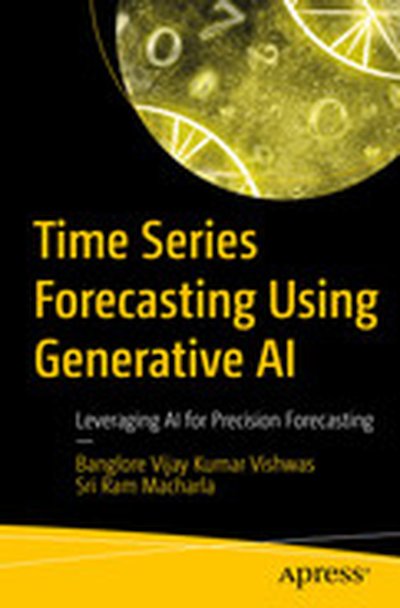
Time Series Forecasting Using Generative AI : Leveraging AI for Precision Forecasting

"Time Series Forecasting Using Generative AI introduces readers to Generative Artificial Intelligence (Gen AI) in time series analysis, offering an essential exploration of cutting-edge forecasting methodologies." The book covers a wide range of topics, starting with an overview of Generative AI, where readers gain insights into the history and fundamentals of Gen AI with a brief introduction to large language models. The subsequent chapter explains practical applications, guiding readers through the implementation of diverse neural network architectures for time series analysis such as Multi-Layer Perceptrons (MLP), WaveNet, Temporal Convolutional Network (TCN), Bidirectional Temporal Convolutional Network (BiTCN), Recurrent Neural Networks (RNN), Long Short-Term Memory (LSTM), Deep AutoRegressive(DeepAR), and Neural Basis Expansion Analysis(NBEATS) using modern tools. Building on this foundation, the book introduces the power of Transformer architecture, exploring its variants such as Vanilla Transformers, Inverted Transformer (iTransformer), DLinear, NLinear, and Patch Time Series Transformer (PatchTST). Finally, The book delves into foundation models such as Time-LLM, Chronos, TimeGPT, Moirai, and TimesFM enabling readers to implement sophisticated forecasting models tailored to their specific needs. This book empowers readers with the knowledge and skills needed to leverage Gen AI for accurate and efficient time series forecasting. By providing a detailed exploration of advanced forecasting models and methodologies, this book enables practitioners to make informed decisions and drive business growth through data-driven insights. ● Understand the core history and applications of Gen AI and its potential to revolutionize time series forecasting. ● Learn to implement different neural network architectures such as MLP, WaveNet, TCN, BiTCN, RNN, LSTM, DeepAR, and NBEATS for time series forecasting. ● Discover the potential of Transformer architecture and its variants, such as Vanilla Transformers, iTransformer, DLinear, NLinear, and PatchTST, for time series forecasting. ● Explore complex foundation models like Time-LLM, Chronos, TimeGPT, Moirai, and TimesFM. ● Gain practical knowledge on how to apply Gen AI techniques to real-world time series forecasting challenges and make data-driven decisions. Who this book is for: Data Scientists, Machine learning engineers, Business Aanalysts, Statisticians, Economists, Financial Analysts, Operations Research Analysts, Data Analysts, Students.

Build Bigger With Small Ai: Running Small Models Locally

It's finally possible to bring the awesome power of Large Language Models (LLMs) to your laptop. This talk will explore how to run and leverage small, openly available LLMs to power common tasks involving data, including selecting the right models, practical use cases for running small models, and best practices for deploying small models effectively alongside databases.

Bio: Jeffrey Morgan is the founder of Ollama, an open-source tool to get up and run large language models. Prior to founding Ollama, Jeffrey founded Kitematic, which was acquired by Docker and evolved into Docker Desktop. He has previously worked at companies including Docker, Twitter, and Google.

➡️ Follow Us LinkedIn: https://www.linkedin.com/company/small-data-sf/ X/Twitter : https://twitter.com/smalldatasf Website: https://www.smalldatasf.com/

Discover how to run large language models (LLMs) locally using Ollama, the easiest way to get started with small AI models on your Mac, Windows, or Linux machine. Unlike massive cloud-based systems, small open source models are only a few gigabytes, allowing them to run incredibly fast on consumer hardware without network latency. This video explains why these local LLMs are not just scaled-down versions of larger models but powerful tools for developers, offering significant advantages in speed, data privacy, and cost-effectiveness by eliminating hidden cloud provider fees and risks.

Learn the most common use case for small models: combining them with your existing factual data to prevent hallucinations. We dive into retrieval augmented generation (RAG), a powerful technique where you augment a model's prompt with information from a local data source. See a practical demo of how to build a vector store from simple text files and connect it to a model like Gemma 2B, enabling you to query your own data using natural language for fast, accurate, and context-aware responses.

Explore the next frontier of local AI with small agents and tool calling, a new feature that empowers models to interact with external tools. This guide demonstrates how an LLM can autonomously decide to query a DuckDB database, write the correct SQL, and use the retrieved data to answer your questions. This advanced tutorial shows you how to connect small models directly to your data engineering workflows, moving beyond simple chat to create intelligent, data-driven applications.

Get started with practical applications for small models today, from building internal help desks to streamlining engineering tasks like code review. This video highlights how small and large models can work together effectively and shows that open source models are rapidly catching up to their cloud-scale counterparts. It's never been a better time for developers and data analysts to harness the power of local AI.