talk-data.com talk-data.com

Topic

MySQL

relational_database open_source sql

268

tagged

Activity Trend

27 peak/qtr
2020-Q1 2026-Q1

Activities

268 activities · Newest first

Mastering phpMyAdmin 3.4 for Effective MySQL Management

This book, 'Mastering phpMyAdmin 3.4 for Effective MySQL Management', acts as a comprehensive guide to learning phpMyAdmin 3.4 and maximizing its potential. By reading this book, you will gain a solid understanding of MySQL management via phpMyAdmin, including database setups, administration, and advanced features like performance tuning and user management. What this Book will help me do Set up and customize phpMyAdmin for your specific MySQL administrative needs. Secure your MySQL databases through robust authentication and access controls. Efficiently manage complex relational data models using advanced phpMyAdmin tools. Perform advanced MySQL operations quickly using built-in features and custom queries. Diagnose and resolve common database management issues to enhance stability and performance. Author(s) The author is an experienced software developer and database administrator with years of expertise in MySQL and its management tools. They are passionate about teaching technology in an accessible way, catering to a wide range of skill levels. Their step-by-step instructional methods make complex topics easy to understand and actionable for readers. Who is it for? This book is designed for web developers, system administrators, or anyone involved in database management looking to streamline MySQL operations. It is suitable for individuals who have a foundational understanding of MySQL and wish to leverage phpMyAdmin for more efficient and effective database administration. Whether you're working on a team or managing personal projects, this resource will be invaluable in improving your database management skills.
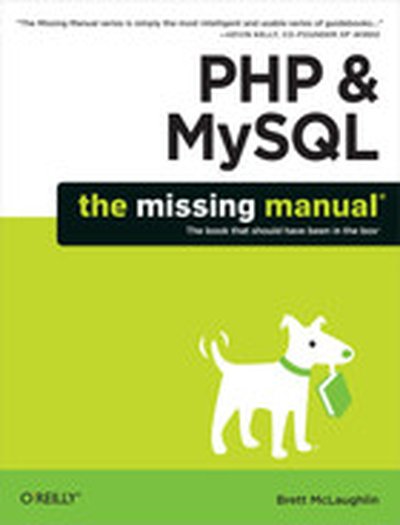
PHP & MySQL: The Missing Manual

If you can build websites with CSS and JavaScript, this book takes you to the next level—creating dynamic, database-driven websites with PHP and MySQL. Learn how to build a database, manage your content, and interact with users through queries and web forms. With step-by-step tutorials, real-world examples, and jargon-free explanations, you’ll soon discover the power of server-side programming. The important stuff you need to know: Get a running start. Write PHP scripts and create a web form right away. Learn the language. Get up to speed on PHP and SQL syntax quickly. Build a database. Use MySQL to store user information and other data. Make it dynamic. Create pages that change with each new viewing. Be ready for mistakes. Plan error messages to help direct users. Manage your content. Use the file system to access user data, including images and other binary files. Control operations. Create an administrative interface to oversee your site.

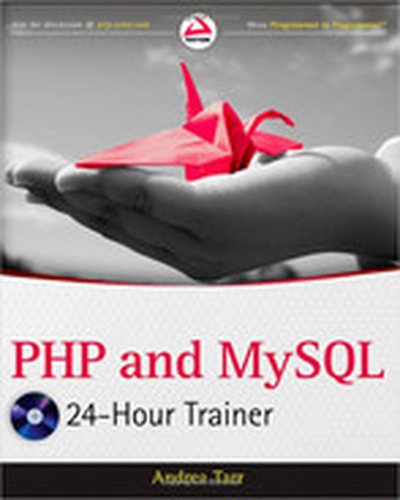
PHP and MySQL® 24-Hour Trainer

Step-by-step lessons for using PHP and MySQL in a unique book-and-video combination Assuming no previous experience with PHP or MySQL, this book-and-video package is ideal reading for anyone who wants to go beyond HTML/CSS in order to provide clients with the most dynamic web sites possible. The approachable tone breaks down the basics of programming and PHP and MySQL in individual lessons starting with the installation of the programs necessary to run PHP. You begin with a static web site and then watch and learn as PHP functionality is added as you work through the lessons. When working with databases, the MySQL database is introduced with demonstrations that show how to interact with it. The accompanying videos enhance your learning experience, as each lesson in the book is portrayed in the video exercises. Lessons include: Getting started with PHP Setting up your workspace Adding PHP to a web page Learning PHP syntax Working with variables Debugging code Working with complex data Making decisions Repeating program steps Learning about scope Reusing code with functions Creating forms Introducing object-oriented programming Defining classes Using classes Using advanced techniques Handling errors Writing secure code Introducing databases Introducing MySQL Creating and connecting to the Creating tables Entering data Selecting data Using multiple tables Changing data Deleting data Preventing database security issues Creating user logins Turn the case study into a content management system Note: As part of the print version of this title, video lessons are included on DVD. For e-book versions, video lessons can be accessed at wrox.com using a link provided in the interior of the e-book.

Effective MySQL Optimizing SQL Statements

The Essential Guide to SQL Statement Optimization Written by Oracle ACE Director and MySQL expert Ronald Bradford, Effective MySQL: Optimizing SQL Statements is filled with detailed explanations and practical examples that can be applied immediately to improve database and application performances. Featuring a step-by-step approach to SQL optimization, this Oracle Press book helps you to analyze and tune problematic SQL statements. Identify the essential analysis commands for gathering and diagnosing issues Learn how different index theories are applied and represented in MySQL Plan and execute informed SQL optimizations Create MySQL indexes to improve query performance Master the MySQL query execution plan Identify key configuration variables that impact SQL execution and performance Apply the SQL optimization lifecycle to capture, identify, confirm, analyze, and optimize SQL statements and verify the results Improve index utilization with covering indexes and partial indexes Learn hidden performance tips for improving index efficiency and simplifying SQL statements

Oracle Database 11g & MySQL 5.6 Developer Handbook

Master Application Development in a Mixed-Platform Environment Build powerful database applications in a mixed environment using the detailed information in this Oracle Press guide. Oracle Database 11g & MySQL 5.6 Developer Handbook lays out programming strategies and best practices for seamlessly operating between the two platforms. Find out how to migrate databases, port SQL dialects, work with Oracle MySQL databases, and configure effective queries. Security, monitoring, and tuning techniques are also covered in this comprehensive volume. Understand Oracle Database 11 g and MySQL 5.6 architecture Convert databases between platforms and ensure transactional integrity Create tables, sequences, indexes, views, and user accounts Build and debug PL/SQL, SQL*Plus, SQL/PSM, and MySQL Monitor scripts Execute complex queries and handle numeric and date mathematics Merge data from source tables and set up virtual directories

MariaDB Crash Course

This first-to-market tutorial covers everything beginners need to succeed with MariaDB, the open, community-based branch of MySQL. Master trainer Ben Forta introduces all the essentials through a series of quick, easy-to-follow, hands-on lessons. Instead of belaboring database theory and relational design, Forta focuses on teaching solutions for the majority of SQL users who simply want to interact with data. Forta covers all this, and more: Using the MariaDB toolset * Retrieving and sorting data Filtering data using comparisons, wildcards, and full text searching Analyzing data with aggregate functions Performing insert, update, and delete operations Joining relational tables using inner, outer, and self joins Combining queries using unions * Using views Creating and modifying tables, and accessing table schemas Working with stored procedures, cursors, and other advanced database features Managing databases, users, and security privileges This book was reviewed and is supported by MariaDB's developers, Monty Program AB. It contains a foreword by project founder Monty Widenius, primary developer of the original version of MySQL.

Sams Teach Yourself SQL in 24 Hours, Fifth Edition

Master all the fundamentals of modern SQL -- hands-on, step-by-step! ¿ The up-to-the-minute SQL tutorial for everyone who wants to create applications, query data, or manage databases Updated to cover the latest ANSI/ISO standards, plus powerful Oracle and SQL Server extensions Covers everything from the basics through optimization, security, and enterprise techniques Step-by-step instructions, examples, quizzes, exercises, and tips In just 24 sessions of one hour or less, beginning-to-intermediate-level readers learn how to use SQL to build effective databases, efficiently retrieve data, and manage everything from performance to security! Using this book's straightforward, step-by-step approach, you learn hands-on, through practical examples based on the free, open source MySQL database. One step at a time, you discover how to define efficient database structures, objects, and tables edit data and tables manage transactions write effective queries categorize, summarize, sort, group, and restructure data use joins and subqueries manage databases, users, and security use views, synonyms, and system catalogs extend SQL to the enterprise and Internet even master important Oracle and Microsoft SQL Server extensions. Step-by-step instructions carefully walk through common questions, issues, and tasks... Q and As, Quizzes, and Exercises help you build and test your knowledge... Notes, Tips, and Cautions point out shortcuts, solutions, and problems to avoid. Each lesson builds on what you've already learned, delivering a strong real-world foundation for success with any relational database environment or application!

Discovering SQL: A Hands-On Guide for Beginners

Teaching the SQL skills that businesses demand when hiring programmers If you're a SQL beginner, you don't just want to learn SQL basics, you also want to get some practical SQL skills you can use in the job market. This book gives you both. Covering the basics through intermediate topics with clear explanations, hands-on exercises, and helpful solutions, this book is the perfect introduction to SQL. Topics include both the current SQL:2008 standards, the upcoming SQL:2011 standards, and also how to use SQL against current releases of the most popular commercial SQL databases, such as Oracle, SQL Server, and MySQL. Introduces SQL concepts, explains SQL statements, and clearly shows how to write efficient and effective SQL code Uses a hands-on style and a sample database that incorporates all SQL concepts taught in the book; this database will be enhanced through the book as key points and lessons are covered Covers topics such as how SQL interacts with the sample database via various interfaces, including vendor-provided utilities, programming languages, SQL clients, and productivity software Includes appendices with primers on database normalization, set theory and bollean algebra, RDBMS software step-by-step setup guides, and database connectivity Learn how to write effective, efficient SQL code with Discovering SQL: A Hands-On Guide for Beginners.

SQL Pocket Guide, 3rd Edition

If you're a programmer or database administrator who uses SQL in your day-to-day work, this popular pocket guide is the ideal on-the-job reference. You'll find many examples that address the language's complexity, along with key aspects of SQL used in IBM DB2 Release 9.7, MySQL 5.1, Oracle Database 11g Release 2, PostgreSQL 9.0, and Microsoft SQL Server 2008 Release 2. SQL Pocket Guide describes how these database systems implement SQL syntax for querying, managing transactions, and making changes to data. It also shows how the systems use SQL functions, regular expression syntax, and type conversion functions and formats. All example SQL statements in this book execute against a set of tables, with data that you can quickly download. The third edition covers important database changes, including: Oracle's support of the recursive WITH syntax, and addition of PIVOT and UNPIVOT operators Functions new to Oracle, such as LISTAGG, NTH_VALUE, and more PostgreSQL’s support of recursive WITH and some window functions DB2 syntax and datatypes, some compatible with Oracle MySQL features such as the TIMESTAMP type and the TO_SECONDS function

The Definitive Guide to MongoDB: The NoSQL Database for Cloud and Desktop Computing

MongoDB, a cross-platform NoSQL database, is the fastest-growing new database in the world. MongoDB provides a rich document orientated structure with dynamic queries that you'll recognize from RDMBS offerings such as MySQL. In other words, this is a book about a NoSQL database that does not require the SQL crowd to re-learn how the database world works! MongoDB has reached 1.0 and already boasts 50,000+ users. The community is strong and vibrant and MongoDB is improving at a fast rate. With scalable and fast databases becoming critical for today's applications, this book shows you how to install, administer and program MongoDB without pretending SQL never existed.

Using SQLite

Application developers, take note: databases aren't just for the IS group any more. You can build database-backed applications for the desktop, Web, embedded systems, or operating systems without linking to heavy-duty client-server databases such as Oracle and MySQL. This book shows you how to use SQLite, a small and lightweight relational database engine that you can build directly into your application. With SQLite, you'll discover how to develop a database-backed application that remains manageable in size and complexity. This book guides you every step of the way. You'll get a crash course in data modeling, become familiar with SQLite's dialect of the SQL database language, and much more. Learn how to maintain localized storage in a single file that requires no configuration Build your own SQLite library or use a precompiled distribution in your application Get a primer on SQL, and learn how to use several language functions and extensions Work with SQLite using a scripting language or a C-based language such as C# or Objective-C Understand the basics of database design, and learn how to transfer what you already know to SQLite Take advantage of virtual tables and modules "Complex SQL concepts explained clearly." --D. Richard Hipp, creator of SQLite

MySQL High Availability

Server bottlenecks and failures are a fact of life in any database deployment, but they don't have to bring everything to a halt. MySQL has several features that can help you protect your system from outages, whether it's running on hardware, virtual machines, or in the cloud. MySQL High Availability explains how to use these replication, cluster, and monitoring features in a wide range of real-life situations. Written by engineers who designed many of the tools covered inside, this book reveals undocumented or hard-to-find aspects of MySQL reliability and high availability -- knowledge that’s essential for any organization using this database system. "MySQL replication is widely deployed but has never been adequately explained. This book changes that."-- Mark Callaghan, MySQL contributor and leader of MySQL engineering efforts at a few of the world's largest Internet companies Explore the binary log, a file for replication that helps in disaster recovery and troubleshooting Get techniques for improving response time and handling large data sets Monitor database activity and performance, as well as major operating system parameters Keep track of what masters and slaves are doing, and deal with failures and restarts, corruption, and other incidents Automate key tasks with code from an open source library written by the authors Learn techniques for using MySQL in virtualized environments, such as Amazon Web Services Use MySQL Cluster to achieve high availability

High Availability MySQL Cookbook

High Availability MySQL Cookbook is a practical guide to achieving superior reliability and redundancy in your MySQL databases. Through over 60 specific, hands-on recipes, this book skillfully navigates topics from configuring MySQL Clusters to mastering high availability using replication and storage technologies. What this Book will help me do Master the configuration of MySQL Clusters for scalability and reliability. Gain proficiency in backup and recovery techniques for MySQL. Learn the setup and maintenance of MySQL Replication for high availability. Understand the use of shared storage solutions with MySQL. Optimize MySQL performance effectively with tuning strategies. Author(s) Alexander Davies is a seasoned MySQL practitioner with extensive experience designing and implementing high availability database solutions. His hands-on expertise allows him to convey complex topics in an accessible and engaging manner. Davies brings his deep knowledge to this book, ensuring readers can confidently apply concepts to their own systems. Who is it for? This book is ideal for system administrators and database professionals familiar with Linux and basic MySQL usage. If you are looking to strengthen your database's reliability and explore high availability solutions, this book provides practical, actionable recipes. Perfect for those managing business-critical data and aiming to minimize downtime while ensuring system integrity.

SQL For Dummies®, 7th Edition

Learn SQL the fun and easy way – no programming experience needed! SQL For Dummies, 7th Edition, shows programmers and web developers how to use SQL to build relational databases and get valuable information from them. This book covers the core features of the SQL language. Topics covered include how to use SQL to structure a DBMS and implement a database design; secure a database; and retrieve information from a database. This edition will be revised to reflect the new enhancements of SQL/XML:2008. The latest update of the perennial bestselling SQL For Dummies, which has sold more than 210,000 units in six editions. SQL is the most popular database language in the world Covers creating, accessing, manipulating, maintaining, and storing information in relational database management systems (DBMS) such as Access, Oracle, SQL Server, and MySQL. Includes new content on using SQL with XML to power data-driven web sites and using SQL with Access 2010 Whether you're daunted by database development or a system admin star, SQL For Dummies, 7th Dummies will have you working your web site in no time at all.

PHP and MySQL® For Dummies®, 4th Edition

Here's what Web designers need to know to create dynamic, database-driven Web sites To be on the cutting edge, Web sites need to serve up HTML, CSS, and products specific to the needs of different customers using different browsers. An effective e-commerce site gathers information about users and provides information they need to get the desired result. PHP scripting language with a MySQL back-end database offers an effective way to design sites that meet these requirements. This full updated 4th Edition of PHP & MySQL For Dummies gets you quickly up to speed, even if your experience is limited. Explains the easy way to install and set up PHP and MySQL using XAMPP, so it works the same on Linux, Mac, and Windows Shows you how to secure files on a Web host and how to write secure code Packed with useful and understandable code examples for Web site creators who are not professional programmers Fully updated to ensure your code will be compliant based on PHP 5.3 and MySQL 5.1.31 Provides clear, accurate code examples PHP & MySQL For Dummies, 4th Edition provides what you need to know to create sites that get results.

Pentaho® Solutions: Business Intelligence and Data Warehousing with Pentaho and MySQL®

Your all-in-one resource for using Pentaho with MySQL for Business Intelligence and Data Warehousing Open-source Pentaho provides business intelligence (BI) and data warehousing solutions at a fraction of the cost of proprietary solutions. Now you can take advantage of Pentaho for your business needs with this practical guide written by two major participants in the Pentaho community. The book covers all components of the Pentaho BI Suite. You'll learn to install, use, and maintain Pentaho-and find plenty of background discussion that will bring you thoroughly up to speed on BI and Pentaho concepts. Of all available open source BI products, Pentaho offers the most comprehensive toolset and is the fastest growing open source product suite Explains how to build and load a data warehouse with Pentaho Kettle for data integration/ETL, manually create JFree (pentaho reporting services) reports using direct SQL queries, and create Mondrian (Pentaho analysis services) cubes and attach them to a JPivot cube browser Review deploying reports, cubes and metadata to the Pentaho platform in order to distribute BI solutions to end-users Shows how to set up scheduling, subscription and automatic distribution The companion Web site provides complete source code examples, sample data, and links to related resources.

Learning PHP, MySQL, and JavaScript

If you know HTML, this guide will have you building interactive websites quickly. You'll learn how to create responsive, data-driven websites with PHP, MySQL, and JavaScript, regardless of whether you already know how to program. Discover how the powerful combination of PHP and MySQL provides an easy way to build modern websites complete with dynamic data and user interaction. You'll also learn how to add JavaScript to create rich Internet applications and websites. Learning PHP, MySQL, and JavaScript explains each technology separately, shows you how to combine them, and introduces valuable web programming concepts, including objects, XHTML, cookies, and session management. You'll practice what you've learned with review questions in each chapter, and find a sample social networking platform built with the elements introduced in this book. This book will help you: Understand PHP essentials and the basics of object-oriented programming Master MySQL, from database structure to complex queries Create web pages with PHP and MySQL by integrating forms and other HTML features Learn about JavaScript, from functions and event handling to accessing the Document Object Model Use libraries and packages, including the Smarty web template system, PEAR program repository, and the Yahoo! User Interface Library Make Ajax calls and turn your website into a highly dynamic environment Upload and manipulate files and images, validate user input, and secure your applications

Developing Web Applications with Perl, memcached, MySQL® and Apache

The only book to address using cache to enhance and speed up Web application development Developers use Apache, MySQL, memcached, and Perl to build dynamic Web sites that store information within the MySQL database; this is the only book to address using these technologies together to alleviate the database load in Web development Covers each of the four systems and shows how to install, set up, and administer them; then shows the reader how to put the parts together to start building applications Explains the benefits of a base perl library for code re-use, and provides sample applications that demonstrate in a practical way the information covered in the previous chapters Examines monitoring, performance, and security, with a problem-solving chapter that walks the reader through solving real-world issues

SQL Injection Attacks and Defense, 2nd Edition

SQL Injection Attacks and Defense, First Edition: Winner of the Best Book Bejtlich Read Award "SQL injection is probably the number one problem for any server-side application, and this book unequaled in its coverage." –Richard Bejtlich, Tao Security blog SQL injection represents one of the most dangerous and well-known, yet misunderstood, security vulnerabilities on the Internet, largely because there is no central repository of information available for penetration testers, IT security consultants and practitioners, and web/software developers to turn to for help. SQL Injection Attacks and Defense, Second Edition is the only book devoted exclusively to this long-established but recently growing threat. This is the definitive resource for understanding, finding, exploiting, and defending against this increasingly popular and particularly destructive type of Internet-based attack. SQL Injection Attacks and Defense, Second Edition includes all the currently known information about these attacks and significant insight from its team of SQL injection experts, who tell you about: Understanding SQL Injection – Understand what it is and how it works Find, confirm and automate SQL injection discovery Tips and tricks for finding SQL injection within code Create exploits for using SQL injection Design apps to avoid the dangers these attacks SQL injection on different databases SQL injection on different technologies SQL injection testing techniques Case Studies Securing SQL Server, Second Edition is the only book to provide a complete understanding of SQL injection, from the basics of vulnerability to discovery, exploitation, prevention, and mitigation measures Covers unique, publicly unavailable information, by technical experts in such areas as Oracle, Microsoft SQL Server, and MySQL---including new developments for Microsoft SQL Server 2012 (Denali) Written by an established expert, author, and speaker in the field, with contributions from a team of equally renowned creators of SQL injection tools, applications, and educational materials

Sams Teach Yourself SQL in One Hour a Day, Fifth Edition

The Fifth Edition of Sams Teach Yourself SQL in 21 Days More than 48,000 sold! In just one hour a day, you’ll have all the skills you need to begin creating effective SQL queries, reports, and database applications. With this complete tutorial, you’ll quickly master the basics and then move on to more advanced features and concepts: Quickly apply essential SQL techniques in useful, real-world queries Design trustworthy, high-performance databases Manipulate your data with views and transactions Leverage powerful features including stored procedures, triggers, and cursors Work with new objects introduced with the latest SQL standards Get practical, expert tips on implementing SQL in your business environment Learn on your own time, at your own pace No previous SQL or database experience required Learn techniques that work with any current version of SQL Discover how to write faster, more efficient queries Secure your data using best practices from experienced database administrators Build more powerful databases with features exclusive to Oracle SQL*Plus, Oracle PL/SQL, and Microsoft Transact-SQL Write queries for the free, open source MySQL database Embed your SQL code in other applications Ryan Stephens and Ron Plew are President and VP of Perpetual Technologies, Inc. (PTI) in Indianapolis, IN, providing managed services and consulting for top database implementations running Oracle, SQL Server, and other leading technologies. They taught for 5+ years as adjunct professors at Indiana University-Purdue University. Their books include Sams Teach Yourself SQL in 24 Hours, First through Fourth Editions, Sams Teach Yourself SQL in 21 Days, Second through Fourth Editions, and Database Design. Table of Contents Introduction 1 PART I: Introducing SQL LESSON 1: Getting Started with SQL 5 A Brief History of SQL 5 A Brief History of Databases 6 Today’s Database Landscape 11 A Cross-Product Language 12 Early Implementations 12 SQL and Client/Server Application Development 13 An Overview of SQL 13 Popular SQL Implementations 14 MySQL 14 Oracle 14 Microsoft SQL Server and Sybase 15 IBM DB2 16 Open Database Connectivity 16 Embedding SQL in Application Programming 17 LESSON 2: Introducing the Query 21 Exploring SQL’s Background 21 Learning Basic Query Syntax 22 The Building Blocks of Data Retrieval: SELECT and FROM 23 Applying Query Concepts 25 Writing Your First Query 26 Terminating a SQL Statement 28 Selecting Individual Columns 28 Changing the Order of the Columns 29 Selecting Different Tables 31 Selecting Distinct Values 31 Exercises 37 LESSON 3: Expressions, Conditions, and Operators 39 Working with Query Expressions 40 Placing Conditions on Queries 40 Learning How to Use Operators 42 Arithmetic Operators 42 Comparison Operators 55 Character Operators 63 Logical Operators 70 Set Operators 75 Miscellaneous Operators: IN and BETWEEN 78 LESSON 4: Clauses in SQL Queries 85 Specifying Criteria with the WHERE Clause 87 Order from Chaos: The ORDER BY Clause 89 The GROUP BY Clause 98 The HAVING Clause 105 Combining Clauses 112 Example 4.1 112 Example 4.2 113 Example 4.3 113 Example 4.4 115 LESSON 5: Joining Tables 121 Joining Multiple Tables in a Single SELECT Statement 121 Cross Joining Tables &