talk-data.com talk-data.com

Topic

MySQL

relational_database open_source sql

268

tagged

Activity Trend

27 peak/qtr
2020-Q1 2026-Q1

Activities

268 activities · Newest first

MariaDB High Performance

Learn how to optimize your MariaDB installations for performance, scalability, and reliability. This comprehensive guide teaches you advanced replication techniques, clustering, sharding data, and optimizing engines. By the end of the book, you'll have the tools to build complex, high-performing database infrastructures. What this Book will help me do Master the setup of advanced replication models such as master/slave and dual-master setups. Implement a Galera Cluster to enhance your database's write scalability and reliability. Configure the Spider engine for effective data sharding across multiple nodes. Identify and mitigate performance bottlenecks through in-depth engine optimization. Deploy and maintain a disaster recovery solution using advanced database strategies. Author(s) Pierre Mavro is an experienced database administrator with years of expertise in MySQL and MariaDB systems. Having worked on numerous high-scale projects, he brings practical insights into creating robust, high-performance database solutions. Pierre enjoys sharing his knowledge and helping developers and administrators navigate complex database challenges. Who is it for? This book is perfect for database administrators and system architects who already have working experience with MariaDB or MySQL. If you're looking to enhance your skills and develop solutions for high traffic applications, this book is for you. Ideal for those comfortable with Linux-based infrastructures and eager to learn. Whether maintaining high-availability systems or scaling databases, you'll find this work essential.
MySQL Cookbook, 3rd Edition

MySQLâ??s popularity has brought a flood of questions about how to solve specific problems, and thatâ??s where this cookbook is essential. When you need quick solutions or techniques, this handy resource provides scores of short, focused pieces of code, hundreds of worked-out examples, and clear, concise explanations for programmers who donâ??t have the time (or expertise) to solve MySQL problems from scratch. Ideal for beginners and professional database and web developers, this updated third edition covers powerful features in MySQL 5.6 (and some in 5.7). The book focuses on programming APIs in Python, PHP, Java, Perl, and Ruby. With more than 200+ recipes, youâ??ll learn how to: Use the mysql client and write MySQL-based programs Create, populate, and select data from tables Store, retrieve, and manipulate strings Work with dates and times Sort query results and generate summaries Use stored routines, triggers, and scheduled events Import, export, validate, and reformat data Perform transactions and work with statistics Process web input, and generate web content from query results Use MySQL-based web session management Provide security and server administration

SQL Queries for Mere Mortals®: A Hands-On Guide to Data Manipulation in SQL, Third Edition

The #1 Easy, Common-Sense Guide to SQL Queries—Updated for Today’s Databases, Standards, and Challenges SQL Queries for Mere Mortals ® has earned worldwide praise as the clearest, simplest tutorial on writing effective SQL queries. The authors have updated this hands-on classic to reflect new SQL standards and database applications and teach valuable new techniques. Step by step, John L. Viescas and Michael J. Hernandez guide you through creating reliable queries for virtually any modern SQL-based database. They demystify all aspects of SQL query writing, from simple data selection and filtering to joining multiple tables and modifying sets of data. Three brand-new chapters teach you how to solve a wide range of challenging SQL problems. You’ll learn how to write queries that apply multiple complex conditions on one table, perform sophisticated logical evaluations, and think “outside the box” using unlinked tables. Coverage includes -- Getting started: understanding what relational databases are, and ensuring that your database structures are sound -- SQL basics: using SELECT statements, creating expressions, sorting information with ORDER BY, and filtering data using WHERE -- Summarizing and grouping data with GROUP BY and HAVING clauses -- Drawing data from multiple tables: using INNER JOIN, OUTER JOIN, and UNION operators, and working with subqueries -- Modifying data sets with UPDATE, INSERT, and DELETE statements Advanced queries: complex NOT and AND, conditions, if-then-else using CASE, unlinked tables, driver tables, and more Practice all you want with downloadable sample databases for today’s versions of Microsoft Office Access, Microsoft SQL Server, and the open source MySQL database. Whether you’re a DBA, developer, user, or student, there’s no better way to master SQL. informit.com/aw forMereMortals.com

Learning PHP, MySQL, JavaScript, CSS & HTML5, 3rd Edition

Build interactive, data-driven websites with the potent combination of open-source technologies and web standards, even if you only have basic HTML knowledge. With this popular hands-on guide, you’ll tackle dynamic web programming with the help of today’s core technologies: PHP, MySQL, JavaScript, CSS, and HTML5. Explore each technology separately, learn how to use them together, and pick up valuable web programming practices along the way. At the end of the book, you’ll put everything together to build a fully functional social networking site. Learn PHP in-depth, along with the basics of object-oriented programming Explore MySQL, from database structure to complex queries Create dynamic PHP web pages that tailor themselves to the user Manage cookies and sessions, and maintain a high level of security Master the JavaScript language and use it to create interactive web pages Use Ajax calls for background browser/server communication Acquire CSS2 & CSS3 skills for professionally styling your web pages Implement all the new HTML5 features, including geolocation, audio, video, and the canvas

MySQL High Availability, 2nd Edition

Server bottlenecks and failures are a fact of life in any database deployment, but they don’t have to bring everything to a halt. This practical book explains replication, cluster, and monitoring features that can help protect your MySQL system from outages, whether it’s running on hardware, virtual machines, or in the cloud.

SQL For Dummies, 8th Edition

Uncover the secrets of SQL and start building better relational databases today! This fun and friendly guide will help you demystify database management systems so you can create more powerful databases and access information with ease. Updated for the latest SQL functionality, SQL For Dummies, 8th Edition covers the core SQL language and shows you how to use SQL to structure a DBMS, implement a database design, secure your data, and retrieve information when you need it. Includes new enhancements of SQL:2011, including temporal data functionality which allows you to set valid times for transactions to occur and helps prevent database corruption Covers creating, accessing, manipulating, maintaining, and storing information in relational database management systems like Access, Oracle, SQL Server, and MySQL Provides tips for keeping your data safe from theft, accidental or malicious corruption, or loss due to equipment failures and advice on eliminating errors in your work Don't be daunted by database development anymore - get SQL For Dummies, 8th Edition, and you'll be on your way to SQL stardom.

Apache Sqoop Cookbook

Integrating data from multiple sources is essential in the age of big data, but it can be a challenging and time-consuming task. This handy cookbook provides dozens of ready-to-use recipes for using Apache Sqoop, the command-line interface application that optimizes data transfers between relational databases and Hadoop. Sqoop is both powerful and bewildering, but with this cookbook’s problem-solution-discussion format, you’ll quickly learn how to deploy and then apply Sqoop in your environment. The authors provide MySQL, Oracle, and PostgreSQL database examples on GitHub that you can easily adapt for SQL Server, Netezza, Teradata, or other relational systems. Transfer data from a single database table into your Hadoop ecosystem Keep table data and Hadoop in sync by importing data incrementally Import data from more than one database table Customize transferred data by calling various database functions Export generated, processed, or backed-up data from Hadoop to your database Run Sqoop within Oozie, Hadoop’s specialized workflow scheduler Load data into Hadoop’s data warehouse (Hive) or database (HBase) Handle installation, connection, and syntax issues common to specific database vendors

Oracle GoldenGate 11g Handbook

Master Oracle GoldenGate 11 g Enable highly available, real-time access to enterprise data in heterogeneous environments. Featuring hands-on workshops, Oracle GoldenGate 11g Handbook shows you how to install, configure, and implement this high-performance application. You’ll learn how to replicate data across Oracle databases and other platforms, including MySQL and Microsoft SQL Server, and perform near-zero-downtime migrations and upgrades. Monitoring, performance tuning, and troubleshooting are also discussed in this Oracle Press guide. Install and configure Oracle GoldenGate Implement Oracle GoldenGate one-way replication Configure multitarget and cascading replication Use bidirectional replication to build a heterogeneous database infrastructure Secure your environment, control and manipulate data, and prevent errors Configure Oracle GoldenGate for Oracle Clusterware and Oracle Real Application Clusters Use Oracle GoldenGate with MySQL and Microsoft SQL Server Perform near-zero-downtime upgrades and migrations Use Oracle GoldenGate Monitor and Oracle GoldenGate Director Ensure data quality with Oracle GoldenGate Veridata Implement nondatabase integration options

MySQL Workbench: Data Modeling & Development

The only Oracle Press guide to MySQL Workbench explains how to design and model MySQL databases. MySQL Workbench Data Modeling and Development helps developers learn how to effectively use this powerful product for database modeling, reverse engineering, and interaction with the database without writing SQL statements. MySQL Workbench is a graphical user interface that can be used to create and maintain MySQL databases without coding. The book covers the interface and explains how to accomplish each step by illustrating best practices visually. Clear examples, instructions, and explanations reveal, in a single volume, the art of database modeling. This Oracle Press guide shows you how to get the tool to do what you want. Annotated screen shots demonstrate all interactions with the tool, and text explains the how, what, and why of each step. Complete coverage Installation and Configuration; Creating and Managing Connections; Data Modeling Concepts; Creating an ERD; Defining the Physical Schemata; Creating and Managing Tables; Creating and Managing Relationships; Creating and Managing Views; Creating and Managing Routines; Creating and Managing Routine Groups; Creating and Managing User & Groups; Creating and Managing SQL Scripts; Generating SQL Scripts; Forward Engineering a Data Model; Synchronize a Model with a Database; Reverse Engineering a Database; Managing Differences in the Data Catalog; Creating and Managing Model Notes; Editing Table Data; Editing Generated Scripts; Creating New Instances; Managing Import and Export; Managing Security; Managing Server Instances

MySQL, 5th Edition

MySQL, Fifth Edition by Paul DuBois The definitive guide to using, programming and administering MySQL 5.5 and MySQL 5.6 MySQL provides a comprehensive guide to effectively using and administering the MySQL database management system (DBMS). Author Paul DuBois describes everything from the basics of getting information into a database and formulating queries, to using MySQL with PHP or Perl to generate dynamic web pages, to writing your own programs that access MySQL databases, to administering MySQL servers. The book also includes a comprehensive reference section providing detailed information on MySQL’s structure, language, syntax, and APIs. The fifth edition of this bestselling book has been meticulously revised and updated to thoroughly cover the latest features and capabilities of MySQL 5.5, as well as to add new coverage of features introduced with MySQL 5.6. MySQL is an open source relational database management system (DBMS) that has experienced a phenomenal growth in popularity and use. Known for its speed and ease of use, MySQL has proven itself to be particularly well-suited for developing database-backed websites and applications. MySQL runs on anything from modest hardware all the way up to enterprise servers, and its performance rivals any database system put up against it. Paul DuBois’ MySQL, Fifth Edition, is the definitive guide to fully exploiting all the power and versatility of MySQL 5.5 and MySQL 5.6 Contents at a Glance Part I: General MySQL Use Chapter 1 Getting Started with MySQL Chapter 2 Using SQL to Manage Data Chapter 3 Data Types Chapter 4 Views and Stored Programs Chapter 5 Query Optimization Part II: Using MySQL Programming Interfaces Chapter 6 Introduction to MySQL Programming Chapter 7 Writing MySQL Programs Using C Chapter 8 Writing MySQL Programs Using Perl DBI Chapter 9 Writing MySQL Programs Using PHP Part III: MySQL Administration Chapter 10 Introduction to MySQL Administration Chapter 11 The MySQL Data Directory Chapter 12 General MySQL Administration Chapter 13 Security and Access Control Chapter 14 Database Maintenance, Backups, and Replication Part IV: Appendixes Appendix A Software Required to Use This Book Appendix B Data Type Reference Appendix C Operator and Function Reference Appendix D System, Status, and User Variable Reference Appendix E SQL Syntax Reference Appendix F MySQL Program Reference Online Appendixes: Appendix G C API Reference Appendix H Perl DBI API Reference Appendix I PHP API Reference .

PHP, MySQL, JavaScript & HTML5 All-in-One For Dummies

Get the basics on four key web programming tools in one great book! PHP, JavaScript, and HTML5 are essential programming languages for creating dynamic websites that work with the MySQL database. PHP and MySQL provide a robust, easy-to-learn, open-source solution for creating superb e-commerce sites and content management. JavaScript and HTML5 add support for the most current multimedia effects. This one-stop guide gives you what you need to know about all four! Seven self-contained minibooks cover web technologies, HTML5 and CSS3, PHP programming, MySQL databases, JavaScript, PHP with templates, and web applications. Addresses how PHP, MySQL, JavaScript, and HTML5 are vital tools for creating dynamic, database-driven websites and are especially important for e-commerce sites Serves as essential reading for web designers who are new to these technologies, offering a crash course covering all of these powerful technologies in this handy volume of seven self-contained minibooks Covers how to program in PHP and how to create and administer a MySQL database as well as how to manipulate MySQL data via a web interface Shows how to create a secure website and how to code popular e-business applications such as login programs and shopping carts With seven books in one, PHP, MySQL, JavaScript & HTML5 All-in-One For Dummies will turn your website into the center of attention in no time at all.

Expert MySQL, Second Edition

Expert MySQL is the leading reference for learning, understanding, and extending the MySQL server. It unlocks the full promise of open source by showing how to modify the code, create your own storage engine, build your own authentication plugins, and even add your own functions and commands to the SQL language. No other book provides the level of detail or the extensive examples of the inner workings of MySQL that have taken engineers years to master. Expert MySQL is a must have book for all systems integrators, engineers, and software developers working with the MySQL server code. Expert MySQL is also a wealth of information on key aspects of MySQL internals. You'll learn about internal query representation, how the optimizer creates execution plans, and how to exert control over those plans for optimal performance in your environment. You'll even learn to build your own query optimizer, giving insight that can help you understand and resolve tough performance problems. High-availability and replication are also covered, making Expert MySQL a must-have book for anyone doing high-end work involving MySQL. Shows how to customize MySQL and its storage and authentication engines Provides in-depth knowledge of internals for use in query tuning and performance troubleshooting Covers high-end features such as high-availability and replication What you'll learn Learn the inner workings of MySQL Diagnose and improve poorly performing queries Implement high-availablity solutions and replication Modify and debug the server code Build your own pluggable storage engines and authentication modules Implement new SQL functions and syntax Build your own query optimizer Who this book is for Expert MySQL is written for systems integrators, software developers, and database administrators who are using MySQL and desire a deeper knowledge of MySQL internals in support of high-end work such as performance troubleshooting, customization of the engine and its plugins, query optimizaion, building of high-availability environments, replication of data, and so forth.

SQL Server 2012 Data Integration Recipes: Solutions for Integration Services and Other ETL Tools

SQL Server 2012 Data Integration Recipes provides focused and practical solutions to real world problems of data integration. Need to import data into SQL Server from an outside source? Need to export data and send it to another system? SQL Server 2012 Data Integration Recipes has your back. You'll find solutions for importing from Microsoft Office data stores such as Excel and Access, from text files such as CSV files, from XML, from other database brands such as Oracle and MySQL, and even from other SQL Server databases. You'll learn techniques for managing metadata, transforming data to meet the needs of the target system, handling exceptions and errors, and much more. What DBA or developer isn't faced with the need to move data back and forth? Author Adam Aspin brings 10 years of extensive ETL experience involving SQL Server, and especially satellite products such as Data Transformation Services and SQL Server Integration Services. Extensive coverage is given to Integration Services, Microsoft's flagship tool for data integration in SQL Server environments. Coverage is also given to the broader range of tools such as OPENDATASOURCE, linked servers, OPENROWSET, Migration Assistant for Access, BCP Import, and BULK INSERT just to name a few. If you're looking for a resource to cover data integration and ETL across the gamut of Microsoft's SQL Server toolset, SQL Server 2012 Data Integration Recipes is the one book that will meet your needs. Provides practical and proven solutions towards creating resilient ETL environments Clearly answers the tough questions which professionals ask Goes beyond the tools to a thorough discussion of the underlying techniques Covers the gamut of data integration, beyond just SSIS Includes example databases and files to allow readers to test the recipes What you'll learn Import and export to and from CSV files, XML files, and other text-based sources. Move data between SQL databases, including SQL Server and others such as Oracle Database and MySQL. Discover and manage metadata held in various database systems. Remove duplicates and consolidate from multiple sources. Transform data to meet the needs of target systems. Profile source data as part of the discovery process. Log and manage errors and exceptions during an ETL process. Improve efficiency by detecting and processing only changed data. Who this book is for SQL Server 2012 Data Integration Recipes is written for developers wishing to find fast and reliable solutions for importing and exporting to and from SQL Server. The book appeals to DBAs as well, who are often tasked with implementing ETL processes. Developers and DBAs moving to SQL Server from other platforms will find the succinct, example-based approach ideal for quickly applying their general ETL knowledge to the specific tools provided as part of a SQL Server environment.

Sams Teach Yourself SQL in 10 Minutes, Fourth Edition

Sams Teach Yourself SQL in 10 Minutes, Fourth Edition New full-color code examples help you see how SQL statements are structured Whether you're an application developer, database administrator, web application designer, mobile app developer, or Microsoft Office users, a good working knowledge of SQL is an important part of interacting with databases. And Sams Teach Yourself SQL in 10 Minutes offers the straightforward, practical answers you need to help you do your job. Expert trainer and popular author Ben Forta teaches you just the parts of SQL you need to know–starting with simple data retrieval and quickly going on to more complex topics including the use of joins, subqueries, stored procedures, cursors, triggers, and table constraints. You'll learn methodically, systematically, and simply–in 22 short, quick lessons that will each take only 10 minutes or less to complete. With the Fourth Edition of this worldwide bestseller, the book has been thoroughly updated, expanded, and improved. Lessons now cover the latest versions of IBM DB2, Microsoft Access, Microsoft SQL Server, MySQL, Oracle, PostgreSQL, SQLite, MariaDB, and Apache Open Office Base. And new full-color SQL code listings help the beginner clearly see the elements and structure of the language. 10 minutes is all you need to learn how to... Use the major SQL statements Construct complex SQL statements using multiple clauses and operators Retrieve, sort, and format database contents Pinpoint the data you need using a variety of filtering techniques Use aggregate functions to summarize data Join two or more related tables Insert, update, and delete data Create and alter database tables Work with views, stored procedures, and more Table of Contents 1 Understanding SQL 2 Retrieving Data 3 Sorting Retrieved Data 4 Filtering Data 5 Advanced Data Filtering 6 Using Wildcard Filtering 7 Creating Calculated Fields 8 Using Data Manipulation Functions 9 Summarizing Data 10 Grouping Data 11 Working with Subqueries 12 Joining Tables 13 Creating Advanced Joins 14 Combining Queries 15 Inserting Data 16 Updating and Deleting Data 17 Creating and Manipulating Tables 18 Using Views 19 Working with Stored Procedures 20 Managing Transaction Processing 21 Using Cursors 22 Understanding Advanced SQL Features Appendix A: Sample Table Scripts Appendix B: Working in Popular Applications Appendix C : SQL Statement Syntax Appendix D: Using SQL Datatypes Appendix E: SQL Reserved Words

Effective MySQL Replication Techniques in Depth

The Essential Guide to Scaling Your Business Solution Written by Oracle ACE Director and MySQL expert Ronald Bradford, with coauthor Chris Schneider, Effective MySQL: Replication Techniques in Depth describes what is needed to understand and implement MySQL replication to build scalable solutions. This book includes detailed syntax examples to demonstrate the features, options, and limitations of native MySQL replication. Providing an evaluation of various new replication features and additional third-party product implementations, this Oracle Press guide helps to ensure your MySQL environment can support the various high-availability needs of your business. Master the strengths and limitations of native asynchronous replication in a MySQL topology Identify the important features to improve replication for growing business requirements Recognize the key business factors to determine your optimal highavailability needs Understand the benefits of using MySQL replication for failover scenarios Identify the key configuration variables and SQL commands affecting master/ slave replication Learn about the advancements in replication techniques provided by new products, including Tungsten Replicator and Galera Optimize your replication management with various utilities and toolkits Find additional detailed information and presentations at EffectiveMySQL.com.

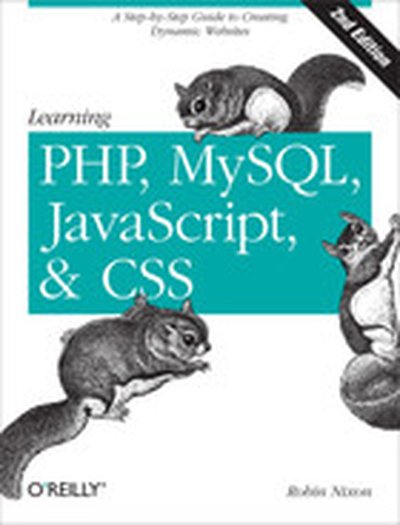
Learning PHP, MySQL, JavaScript, and CSS, 2nd Edition

Learn how to build interactive, data-driven websites—even if you don’t have any previous programming experience. If you know how to build static sites with HTML, this popular guide will help you tackle dynamic web programming. You’ll get a thorough grounding in today’s core open source technologies: PHP, MySQL, JavaScript, and CSS. Explore each technology separately, learn how to combine them, and pick up valuable web programming concepts along the way, including objects, XHTML, cookies, and session management. This book provides review questions in each chapter to help you apply what you’ve learned. Learn PHP essentials and the basics of object-oriented programming Master MySQL, from database structure to complex queries Create web pages with PHP and MySQL by integrating forms and other HTML features Learn JavaScript fundamentals, from functions and event handling to accessing the Document Object Model Pick up CSS basics for formatting and styling your web pages Turn your website into a highly dynamic environment with Ajax calls Upload and manipulate files and images, validate user input, and secure your applications Explore a working example that brings all of the ingredients together

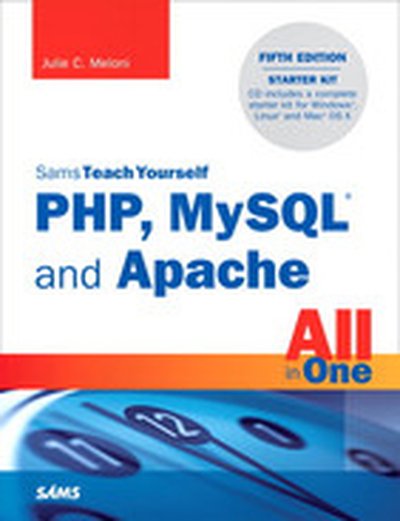
Sams Teach Yourself PHP, MySQL® and Apache All in One, Fifth Edition

In just a short time, you can learn how to use PHP, MySQL, and Apache together to create dynamic, interactive websites and applications using the three leading open-source web development technologies. Using a straightforward, step-by-step approach, each lesson in this book builds on the previous ones, enabling you to learn the essentials of PHP scripting, MySQL databases, and the Apache web server from the ground up. Julie C. Meloni is a technical consultant who has been developing web-based applications since the Web first saw the light of day. She has authored numerous books and articles on web application development and HTML/CSS, and you can find translations of her work in 18 different languages. Learn how to… • Install, configure, and set up the PHP scripting language, the MySQL database system, and the Apache Web server • Get these technologies to work together to create a dynamic, database-backed website • Interact with MySQL using PHP • Work with forms and files • Create a web-based discussion forum or mailing list • Add a storefront and shopping cart to your site • Optimize your MySQL databases • Fine-tune the Apache server’s performance • Restrict access to your applications • Set up a secure web server

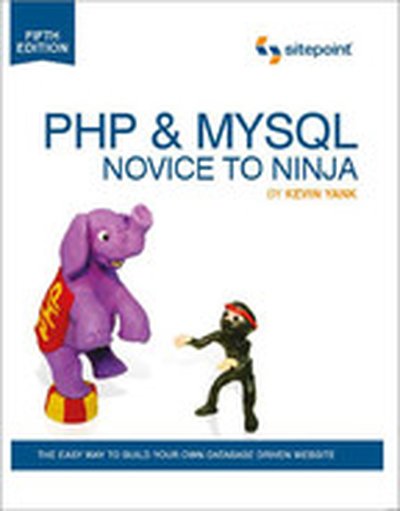
PHP & MySQL: Novice to Ninja, 5th Edition

PHP & MySQL: Novice to Ninja is a practical hands-on guide to learning all the tools, principles and techniques needed to build a fully-functional database-driven web site using PHP & MySQL. This book covers everything from installing PHP & MySQL under Windows, Linux, and Mac through to building a live web-based content management system. While this is essentially a beginner's book, it also covers more advanced topics such as the storage of binary data in MySQL, and cookies and sessions in PHP. It comes complete with a set of handy reference guides for PHP & MySQL that include: MySQL syntax MySQL functions MysQL column types PHP functions for working with MySQL

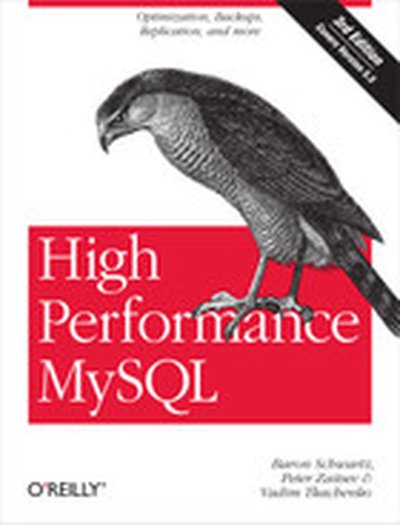
High Performance MySQL, 3rd Edition

How can you bring out MySQL’s full power? With High Performance MySQL, you’ll learn advanced techniques for everything from designing schemas, indexes, and queries to tuning your MySQL server, operating system, and hardware to their fullest potential. This guide also teaches you safe and practical ways to scale applications through replication, load balancing, high availability, and failover. Updated to reflect recent advances in MySQL and InnoDB performance, features, and tools, this third edition not only offers specific examples of how MySQL works, it also teaches you why this system works as it does, with illustrative stories and case studies that demonstrate MySQL’s principles in action. With this book, you’ll learn how to think in MySQL. Learn the effects of new features in MySQL 5.5, including stored procedures, partitioned databases, triggers, and views Implement improvements in replication, high availability, and clustering Achieve high performance when running MySQL in the cloud Optimize advanced querying features, such as full-text searches Take advantage of modern multi-core CPUs and solid-state disks Explore backup and recovery strategies—including new tools for hot online backups

MySQL Troubleshooting

Stuck with bugs, performance problems, crashes, data corruption, and puzzling output? If you’re a database programmer or DBA, they’re part of your life. The trick is knowing how to quickly recover from them. This unique, example-packed book shows you how to handle an array of vexing problems when working with MySQL. Written by a principal technical support engineer at Oracle, MySQL Troubleshooting provides the background, tools, and expert steps for solving problems from simple to complex—whether data you thought you inserted doesn’t turn up in a query, or the entire database is corrupt because of a server failure. With this book in hand, you’ll work with more confidence. Understand the source of a problem, even when the solution is simple Handle problems that occur when applications run in multiple threads Debug and fix problems caused by configuration options Discover how operating system tuning can affect your server Use troubleshooting techniques specific to replication issues Get a reference to additional troubleshooting techniques and tools, including third-party solutions Learn best practices for safe and effective troubleshooting—and for preventing problems