 talk-data.com
Topic
New Relic
25
tagged
Activity Trend
Top Events
By leveraging tools like Jaeger and New Relic, we’ll uncover how to gain a full view of your microservices, even in the face of Apache Kafka’s asynchronous nature. Join us for a live demo with a simple Java Spring-Boot app, where we’ll walk through both automatic and manual instrumentation to capture rich telemetry. We’ll also touch on infrastructure-level observability, pulling metrics and traces from Apache Kafka brokers and Apache Flink.
By leveraging tools like Jaeger and New Relic, we will uncover how to gain a full view of your microservices, even in the face of Apache Kafka's asynchronous nature. Join us for a live demo with a simple Java Spring-Boot app, where we will walk through both automatic and manual instrumentation to capture rich telemetry. We will also touch on infrastructure-level observability, pulling metrics and traces from Apache Kafka brokers and Apache Flink.
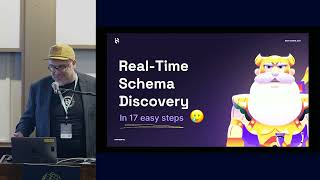
ABOUT THE TALK: In this talk, Dan Selans shows you how we developed a schema discovery process that is able to automatically evolve schemas in a complex distributed system that is processing upwards of a 100,000 messages per second.
He dives deep into the details of schema versioning, detecting schema conflicts, compatibility and normalization, all without the use of any batching processes.
He shows how they developed a schema discovery process that is able to automatically evolve schemas in a complex distributed system that is processing upwards of a 100,000 messages per second. He also details how to detect schema drift, determine compatibility and ultimately how to do all of this, without having to involve batching.
ABOUT THE SPEAKER: Daniel Selans is the co-founder and CTO of Streamdal.com, a streaming data performance monitoring company. Dan previously wrote software at companies such as InVisionApp, New Relic and DigitalOcean and before that, spent over 10 years doing integration and R&D work at data centers.
ABOUT DATA COUNCIL: Data Council (https://www.datacouncil.ai/) is a community and conference series that provides data professionals with the learning and networking opportunities they need to grow their careers.
Make sure to subscribe to our channel for the most up-to-date talks from technical professionals on data related topics including data infrastructure, data engineering, ML systems, analytics and AI from top startups and tech companies.
FOLLOW DATA COUNCIL: Twitter: https://twitter.com/DataCouncilAI LinkedIn: https://www.linkedin.com/company/datacouncil
Summary As data professionals we have a number of tools available for storing, processing, and analyzing data. We also have tools for collaborating on software and analysis, but collaborating on data is still an underserved capability. Gavin Mendel-Gleason encountered this problem first hand while working on the Sesshat databank, leading him to create TerminusDB and TerminusHub. In this episode he explains how the TerminusDB system is architected to provide a versioned graph storage engine that allows for branching and merging of data sets, how that opens up new possibilities for individuals and teams to work together on building new data repositories. This is a fascinating conversation on the technical challenges involved, the opportunities that such as system provides, and the complexities inherent to building a successful business on open source.
Announcements
Hello and welcome to the Data Engineering Podcast, the show about modern data management When you’re ready to build your next pipeline, or want to test out the projects you hear about on the show, you’ll need somewhere to deploy it, so check out our friends at Linode. With their managed Kubernetes platform it’s now even easier to deploy and scale your workflows, or try out the latest Helm charts from tools like Pulsar and Pachyderm. With simple pricing, fast networking, object storage, and worldwide data centers, you’ve got everything you need to run a bulletproof data platform. Go to dataengineeringpodcast.com/linode today and get a $60 credit to try out a Kubernetes cluster of your own. And don’t forget to thank them for their continued support of this show! Do you want to get better at Python? Now is an excellent time to take an online course. Whether you’re just learning Python or you’re looking for deep dives on topics like APIs, memory mangement, async and await, and more, our friends at Talk Python Training have a top-notch course for you. If you’re just getting started, be sure to check out the Python for Absolute Beginners course. It’s like the first year of computer science that you never took compressed into 10 fun hours of Python coding and problem solving. Go to dataengineeringpodcast.com/talkpython today and get 10% off the course that will help you find your next level. That’s dataengineeringpodcast.com/talkpython, and don’t forget to thank them for supporting the show. You invest so much in your data infrastructure – you simply can’t afford to settle for unreliable data. Fortunately, there’s hope: in the same way that New Relic, DataDog, and other Application Performance Management solutions ensure reliable software and keep application downtime at bay, Monte Carlo solves the costly problem of broken data pipelines. Monte Carlo’s end-to-end Data Observability Platform monitors and alerts for data issues across your data warehouses, data lakes, ETL, and business intelligence. The platform uses machine learning to infer and learn your data, proactively identify data issues, assess its impact through lineage, and notify those who need to know before it impacts the business. By empowering data teams with end-to-end data reliability, Monte Carlo helps organizations save time, increase revenue, and restore trust in their data. Visit dataengineeringpodcast.com/montecarlo today to request a demo and see how Monte Carlo delivers data observability across your data infrastructure. The first 25 will receive a free, limited edition Monte Carlo hat! Your host is Tobias Macey and today I’m interviewing Gavin Mendel-Gleason about TerminusDB, an open source model driven graph database for knowledge graph representation
Interview
Introduction How did you get involved in the area of data management? Can you start by describing what TerminusDB is and what motivated you to build it? What are the use cases that TerminusDB and TerminusHub are designed for? There are a number of different reasons and methods for versioning data, such as th
Summary As more organizations are gaining experience with data management and incorporating analytics into their decision making, their next move is to adopt machine learning. In order to make those efforts sustainable, the core capability they need is for data scientists and analysts to be able to build and deploy features in a self service manner. As a result the feature store is becoming a required piece of the data platform. To fill that need Kevin Stumpf and the team at Tecton are building an enterprise feature store as a service. In this episode he explains how his experience building the Michelanagelo platform at Uber has informed the design and architecture of Tecton, how it integrates with your existing data systems, and the elements that are required for well engineered feature store.
Announcements
Hello and welcome to the Data Engineering Podcast, the show about modern data management When you’re ready to build your next pipeline, or want to test out the projects you hear about on the show, you’ll need somewhere to deploy it, so check out our friends at Linode. With their managed Kubernetes platform it’s now even easier to deploy and scale your workflows, or try out the latest Helm charts from tools like Pulsar and Pachyderm. With simple pricing, fast networking, object storage, and worldwide data centers, you’ve got everything you need to run a bulletproof data platform. Go to dataengineeringpodcast.com/linode today and get a $60 credit to try out a Kubernetes cluster of your own. And don’t forget to thank them for their continued support of this show! Do you want to get better at Python? Now is an excellent time to take an online course. Whether you’re just learning Python or you’re looking for deep dives on topics like APIs, memory mangement, async and await, and more, our friends at Talk Python Training have a top-notch course for you. If you’re just getting started, be sure to check out the Python for Absolute Beginners course. It’s like the first year of computer science that you never took compressed into 10 fun hours of Python coding and problem solving. Go to dataengineeringpodcast.com/talkpython today and get 10% off the course that will help you find your next level. That’s dataengineeringpodcast.com/talkpython, and don’t forget to thank them for supporting the show. You invest so much in your data infrastructure – you simply can’t afford to settle for unreliable data. Fortunately, there’s hope: in the same way that New Relic, DataDog, and other Application Performance Management solutions ensure reliable software and keep application downtime at bay, Monte Carlo solves the costly problem of broken data pipelines. Monte Carlo’s end-to-end Data Observability Platform monitors and alerts for data issues across your data warehouses, data lakes, ETL, and business intelligence. The platform uses machine learning to infer and learn your data, proactively identify data issues, assess its impact through lineage, and notify those who need to know before it impacts the business. By empowering data teams with end-to-end data reliability, Monte Carlo helps organizations save time, increase revenue, and restore trust in their data. Visit dataengineeringpodcast.com/montecarlo today to request a demo and see how Monte Carlo delivers data observability across your data infrastructure. The first 25 will receive a free, limited edition Monte Carlo hat! Your host is Tobias Macey and today I’m interviewing Kevin Stumpf about Tecton and the role that the feature store plays in a modern MLOps platform
Interview
Introduction How did you get involved in the area of data management? Can you start by describing what you are building at Tecton and your motivation for starting the business? For anyone who isn’t familiar with the concept, what is an example of a feature? How do you define what a feature store is? What role does a feature store play in the overall lifecycle of a machine learning p
Summary Data governance is a term that encompasses a wide range of responsibilities, both technical and process oriented. One of the more complex aspects is that of access control to the data assets that an organization is responsible for managing. The team at Immuta has built a platform that aims to tackle that problem in a flexible and maintainable fashion so that data teams can easily integrate authorization, data masking, and privacy enhancing technologies into their data infrastructure. In this episode Steve Touw and Stephen Bailey share what they have built at Immuta, how it is implemented, and how it streamlines the workflow for everyone involved in working with sensitive data. If you are starting down the path of implementing a data governance strategy then this episode will provide a great overview of what is involved.
Announcements
Hello and welcome to the Data Engineering Podcast, the show about modern data management What are the pieces of advice that you wish you had received early in your career of data engineering? If you hand a book to a new data engineer, what wisdom would you add to it? I’m working with O’Reilly on a project to collect the 97 things that every data engineer should know, and I need your help. Go to dataengineeringpodcast.com/97things to add your voice and share your hard-earned expertise. When you’re ready to build your next pipeline, or want to test out the projects you hear about on the show, you’ll need somewhere to deploy it, so check out our friends at Linode. With their managed Kubernetes platform it’s now even easier to deploy and scale your workflows, or try out the latest Helm charts from tools like Pulsar and Pachyderm. With simple pricing, fast networking, object storage, and worldwide data centers, you’ve got everything you need to run a bulletproof data platform. Go to dataengineeringpodcast.com/linode today and get a $60 credit to try out a Kubernetes cluster of your own. And don’t forget to thank them for their continued support of this show! Feature flagging is a simple concept that enables you to ship faster, test in production, and do easy rollbacks without redeploying code. Teams using feature flags release new software with less risk, and release more often. ConfigCat is a feature flag service that lets you easily add flags to your Python code, and 9 other platforms. By adopting ConfigCat you and your manager can track and toggle your feature flags from their visual dashboard without redeploying any code or configuration, including granular targeting rules. You can roll out new features to a subset or your users for beta testing or canary deployments. With their simple API, clear documentation, and pricing that is independent of your team size you can get your first feature flags added in minutes without breaking the bank. Go to dataengineeringpodcast.com/configcat today to get 35% off any paid plan with code DATAENGINEERING or try out their free forever plan. You invest so much in your data infrastructure – you simply can’t afford to settle for unreliable data. Fortunately, there’s hope: in the same way that New Relic, DataDog, and other Application Performance Management solutions ensure reliable software and keep application downtime at bay, Monte Carlo solves the costly problem of broken data pipelines. Monte Carlo’s end-to-end Data Observability Platform monitors and alerts for data issues across your data warehouses, data lakes, ETL, and business intelligence. The platform uses machine learning to infer and learn your data, proactively identify data issues, assess its impact through lineage, and notify those who need to know before it impacts the business. By empowering data teams with end-to-end data reliability, Monte Carlo helps organizations save time, increase revenue, and restore trust in their data. Visit dataengineeringpodcast.com/montecarlo today to request a demo and see how Monte Carlo delivers data observability across your data inf
Q&A session with New Relic experts.
NRQL function demo session.
Business observability dashboards; Website performance monitoring; Popup handling; Custom visualisations
- Business observability dashboards
- Website performance monitoring
- Popup handling
- Custom visualisations
Business observability dashboards; Website performance monitoring; Popup handling; Custom visualisations
Business observability dashboards; Website performance monitoring; Popup handling; Custom visualisations
Business observability dashboards\nWebsite performance monitoring\nPopup handling\nCustom visualisations