talk-data.com talk-data.com

Topic

Pandas

data_manipulation data_analysis python

72

tagged

Activity Trend

17 peak/qtr
2020-Q1 2026-Q1

Activities

Showing filtered results

Filtering by: O'Reilly Data Science Books ×
Matplotlib 2.x By Example

"Matplotlib 2.x By Example" is your comprehensive guide to mastering data visualization in Python using the Matplotlib library. Through detailed explanations and hands-on examples, this book will teach you how to create stunning, insightful, and professional-looking visual representations of your data. You'll learn valuable skills tailored towards practical applications in science, marketing, and data analysis. What this Book will help me do Understand the core features of Matplotlib and how to use them effectively. Create professional 2D and 3D visualizations, such as scatter plots, line graphs, and more. Develop skills to transform raw data into meaningful insights through visualization. Enhance your data visualizations with interactive elements and animations. Leverage additional libraries such as Seaborn and Pandas to expand functionality. Author(s) Allen Yu, Claire Chung, and Aldrin Yim are seasoned data scientists and technical authors with extensive experience in Python and data visualization. Allen and his coauthors are dedicated to helping readers bridge the gap between their raw data and meaningful insights through visualization. With practical applications and real-world examples, their approachable writing makes complex libraries like Matplotlib accessible and production-ready. Who is it for? This book is perfect for data enthusiasts, analysts, and Python programmers looking to enhance their data visualization skills. Whether you're a professional aiming to create high-quality visual reports or a student eager to understand and present data effectively, this book provides practical and actionable insights. Basic Python knowledge is expected, while all Matplotlib-related aspects are thoroughly explained.
Elegant SciPy

Welcome to Scientific Python and its community. If you’re a scientist who programs with Python, this practical guide not only teaches you the fundamental parts of SciPy and libraries related to it, but also gives you a taste for beautiful, easy-to-read code that you can use in practice. You’ll learn how to write elegant code that’s clear, concise, and efficient at executing the task at hand. Throughout the book, you’ll work with examples from the wider scientific Python ecosystem, using code that illustrates principles outlined in the book. Using actual scientific data, you’ll work on real-world problems with SciPy, NumPy, Pandas, scikit-image, and other Python libraries. Explore the NumPy array, the data structure that underlies numerical scientific computation Use quantile normalization to ensure that measurements fit a specific distribution Represent separate regions in an image with a Region Adjacency Graph Convert temporal or spatial data into frequency domain data with the Fast Fourier Transform Solve sparse matrix problems, including image segmentations, with SciPy’s sparse module Perform linear algebra by using SciPy packages Explore image alignment (registration) with SciPy’s optimize module Process large datasets with Python data streaming primitives and the Toolz library

Learning pandas - Second Edition

Take your Python skills to the next level with 'Learning pandas,' your go-to guide for mastering data manipulation and analysis. This book walks you through the powerful tools offered by the pandas library, helping you unlock key insights from data efficiently. Whether you're handling time-series data or visualizing patterns, you'll gain the proficiency needed to make sense of complex datasets. What this Book will help me do Understand and effectively use pandas Series and DataFrame objects for data representation and manipulation. Master indexing, slicing, and combining data to perform detailed exploration and analysis. Learn to access and work with external data sources, including APIs, databases, and files, using pandas. Develop the skills to handle and analyze time-series data, managing its unique challenges. Create informative and professional data visualizations directly using pandas capabilities. Author(s) Michael Heydt is a respected author and educator in the field of Python and data analysis. With years of experience utilizing pandas in practical and professional environments, Michael offers a unique perspective that combines deep technical insight with approachable examples. His teaching philosophy emphasizes clarity, applicability, and engaging instruction, ensuring learners easily acquire valuable skills. Who is it for? This book is ideal for Python programmers looking to enhance their data analysis capabilities, as well as data analysts and scientists wanting to leverage pandas to improve their workflows. Readers are recommended to have some familiarity with Python, though prior experience with pandas is not required. If you have a keen interest in data exploration and quantitative techniques, this book is for you.

Python Data Science Handbook

For many researchers, Python is a first-class tool mainly because of its libraries for storing, manipulating, and gaining insight from data. Several resources exist for individual pieces of this data science stack, but only with the Python Data Science Handbook do you get them all—IPython, NumPy, Pandas, Matplotlib, Scikit-Learn, and other related tools. Working scientists and data crunchers familiar with reading and writing Python code will find this comprehensive desk reference ideal for tackling day-to-day issues: manipulating, transforming, and cleaning data; visualizing different types of data; and using data to build statistical or machine learning models. Quite simply, this is the must-have reference for scientific computing in Python. With this handbook, you’ll learn how to use: IPython and Jupyter: provide computational environments for data scientists using Python NumPy: includes the ndarray for efficient storage and manipulation of dense data arrays in Python Pandas: features the DataFrame for efficient storage and manipulation of labeled/columnar data in Python Matplotlib: includes capabilities for a flexible range of data visualizations in Python Scikit-Learn: for efficient and clean Python implementations of the most important and established machine learning algorithms

Practical Data Analysis - Second Edition

Practical Data Analysis provides a hands-on guide to mastering essential data analysis techniques using tools like Pandas, MongoDB, and Apache Spark. With step-by-step instructions, you'll explore how to process diverse data types, apply machine learning methods, and uncover actionable insights that can drive innovative projects and business solutions. What this Book will help me do Master data acquisition, formatting, and visualization techniques to prepare your data for analysis. Understand and apply machine learning algorithms for tasks like classification and forecasting. Learn to analyze textual data, such as performing sentiment analysis and text classification. Effectively work with databases using tools like MongoDB and handle big data with Apache Spark. Develop data-driven applications using real-world examples like image similarity searches and social network graph analysis. Author(s) None Cuesta and Dr. Sampath Kumar are experienced data scientists and educators. They have considerable experience applying data analysis techniques in various domains and a passion for teaching these skills. Their practical approach to data analysis ensures an engaging learning experience for readers. Who is it for? This book is ideal for developers and data enthusiasts aiming to incorporate practical data analysis into their projects. It is perfectly suited for readers with basic programming, statistics, and linear algebra knowledge. Even if you're new to professional data analysis, you'll find the step-by-step examples approachable. This book guides you in transforming raw data into valuable insights.

Mastering Python Data Analysis

Mastering Python Data Analysis provides a comprehensive roadmap for Python developers to enhance their data analysis skills to tackle real-world problems. This book delves into advanced statistical analysis, covering tools, models, and methods to transform raw data into valuable insights. What this Book will help me do Effectively handle and preprocess data using Python and Pandas. Explore statistical models to identify patterns and gain insights from data. Learn clustering approaches to detect data groupings and predict outcomes. Utilize Bayesian methods for quantifying causal relationships. Generate professional reports and visualizations with Python tools like Jupyter Notebook. Author(s) None Vilhelm Persson is a seasoned software developer and data analyst with expertise in leveraging Python for sophisticated data analysis and machine learning tasks. Drawing from years of experience in the tech industry, None provides practical, real-world insights throughout the book. His approachable writing style ensures technical concepts are conveyed with clarity, making data analysis accessible to developers at varying skill levels. Who is it for? This book is ideal for intermediate Python developers seeking to elevate their data analysis skills. If you are familiar with Python libraries and have an interest in solving complex data problems, this guide will serve as a stepping stone to mastery. Advanced beginners with a curiosity for statistical methods and a desire to learn through practical examples will find this book invaluable. It is also perfect for professionals aiming to integrate Python-based statistical techniques into their workflow.

Python: Real-World Data Science

Unleash the power of Python and its robust data science capabilities About This Book Unleash the power of Python 3 objects Learn to use powerful Python libraries for effective data processing and analysis Harness the power of Python to analyze data and create insightful predictive models Unlock deeper insights into machine learning with this vital guide to cutting-edge predictive analytics Who This Book Is For Entry-level analysts who want to enter in the data science world will find this course very useful to get themselves acquainted with Python's data science capabilities for doing real-world data analysis. What You Will Learn Install and setup Python Implement objects in Python by creating classes and defining methods Get acquainted with NumPy to use it with arrays and array-oriented computing in data analysis Create effective visualizations for presenting your data using Matplotlib Process and analyze data using the time series capabilities of pandas Interact with different kind of database systems, such as file, disk format, Mongo, and Redis Apply data mining concepts to real-world problems Compute on big data, including real-time data from the Internet Explore how to use different machine learning models to ask different questions of your data In Detail The Python: Real-World Data Science course will take you on a journey to become an efficient data science practitioner by thoroughly understanding the key concepts of Python. This learning path is divided into four modules and each module are a mini course in their own right, and as you complete each one, you'll have gained key skills and be ready for the material in the next module. The course begins with getting your Python fundamentals nailed down. After getting familiar with Python core concepts, it's time that you dive into the field of data science. In the second module, you'll learn how to perform data analysis using Python in a practical and example-driven way. The third module will teach you how to design and develop data mining applications using a variety of datasets, starting with basic classification and affinity analysis to more complex data types including text, images, and graphs. Machine learning and predictive analytics have become the most important approaches to uncover data gold mines. In the final module, we'll discuss the necessary details regarding machine learning concepts, offering intuitive yet informative explanations on how machine learning algorithms work, how to use them, and most importantly, how to avoid the common pitfalls. Style and approach This course includes all the resources that will help you jump into the data science field with Python and learn how to make sense of data. The aim is to create a smooth learning path that will teach you how to get started with powerful Python libraries and perform various data science techniques in depth.

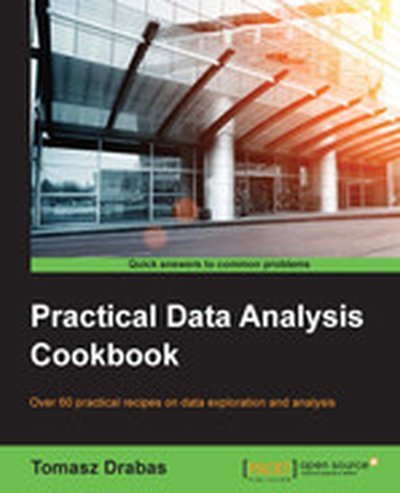
Practical Data Analysis Cookbook

Practical Data Analysis Cookbook takes you on a comprehensive journey to mastering data exploration and analysis using Python. From data cleaning and transformation to building predictive and classification models, this book provides practical recipes for tackling real-world data challenges and extracting valuable insights. What this Book will help me do Efficiently clean, transform, and explore datasets using tools like pandas and OpenRefine. Develop predictive models for time series and other datasets using Python libraries such as scikit-learn and Statsmodels. Apply clustering and classification techniques to real-world data problems to gain actionable insights. Explore advanced topics like natural language processing and graph theory concepts using specialized tools. Build the skills to solve practical data modeling problems encountered in a data science role. Author(s) None Drabas is an experienced data scientist and author who specializes in Python-based data analysis. With a background in tackling intricate data-driven problems, None brings real-world experience to the readers. In creating this Cookbook, None adopts a step-by-step approach, making complex techniques accessible to learners of all backgrounds. Who is it for? If you are a data analyst, data scientist, or someone interested in exploring Python for practical data problems, this book is for you. It suits beginners starting their data journey and intermediate professionals looking to enhance their toolset. With clear instructions, it's ideal for anyone willing to build practical skills and tackle real-world challenges in data analysis.

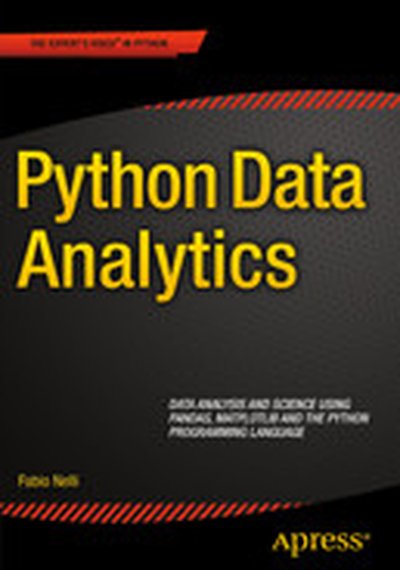
Python Data Analytics: Data Analysis and Science Using Pandas, matplotlib, and the Python Programming Language

Python Data Analytics will help you tackle the world of data acquisition and analysis using the power of the Python language. At the heart of this book lies the coverage of pandas, an open source, BSD-licensed library providing high-performance, easy-to-use data structures and data analysis tools for the Python programming language. Author Fabio Nelli expertly shows the strength of the Python programming language when applied to processing, managing and retrieving information. Inside, you will see how intuitive and flexible it is to discover and communicate meaningful patterns of data using Python scripts, reporting systems, and data export. This book examines how to go about obtaining, processing, storing, managing and analyzing data using the Python programming language. You will use Python and other open source tools to wrangle data and tease out interesting and important trends in that data that will allow you to predict future patterns. Whether you are dealing with sales data, investment data (stocks, bonds, etc.), medical data, web page usage, or any other type of data set, Python can be used to interpret, analyze, and glean information from a pile of numbers and statistics. This book is an invaluable reference with its examples of storing and accessing data in a database; it walks you through the process of report generation; it provides three real world case studies or examples that you can take with you for your everyday analysis needs.

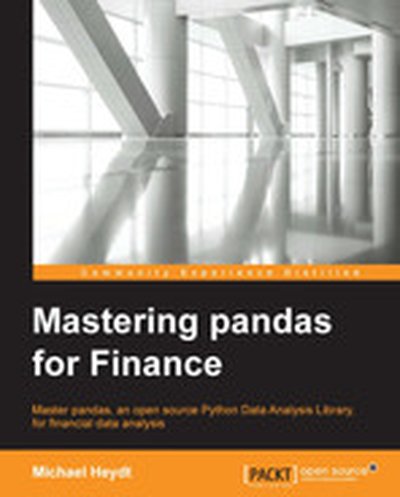
Mastering Pandas for Finance

"Mastering Pandas for Finance" takes a deep dive into applying Python and the pandas library to solve real-world financial data analysis problems. With a focus on financial modeling, backtesting trading strategies, and analyzing large datasets, this book equips you with the skills to leverage pandas effectively. What this Book will help me do Utilize pandas DataFrame for efficient financial data handling and manipulation. Develop robust time-series models and perform statistical analysis on financial data. Backtest algorithmic trading strategies including momentum and mean reversion. Price complex financial options and calculate Value at Risk for portfolio management. Optimize portfolio allocation and model financial performance using industry techniques. Author(s) Michael Heydt is an experienced software engineer and data scientist with a strong background in quantitative finance. He specializes in using Python for data analysis and has spent years teaching and writing about technical subjects. His detailed yet approachable writing style makes complex topics accessible to all. Who is it for? "Mastering Pandas for Finance" is perfect for finance professionals seeking to integrate Python into their workflows, data analysts exploring quantitative finance applications, and programmers aiming to specialize in financial analytics. Some baseline Python and pandas knowledge is recommended, but the book is structured to guide you effectively through advanced concepts too.

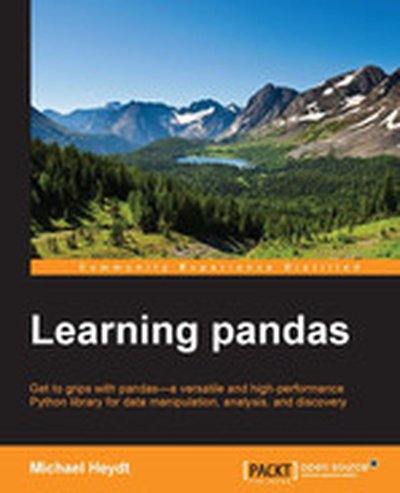
Learning Pandas

"Learning Pandas" is your comprehensive guide to mastering pandas, the powerful Python library for data manipulation and analysis. In this book, you'll explore pandas' capabilities and learn to apply them to real-world data challenges. With clear explanations and hands-on examples, you'll enhance your ability to analyze, clean, and visualize data effectively. What this Book will help me do Understand the core concepts of pandas and how it integrates with Python. Learn to efficiently manipulate and transform datasets using pandas. Gain skills in analyzing and cleaning data to prepare for insights. Explore techniques for working with time-series data and financial datasets. Discover how to create compelling visualizations with pandas to communicate findings. Author(s) Michael Heydt is an experienced Python developer and data scientist with expertise in teaching technical concepts to others. With a deep understanding of the pandas library, Michael has authored several guides on data analysis and is passionate about making complex information accessible. His practical approach ensures readers can directly apply lessons to their own projects. Who is it for? This book is ideal for Python programmers who want to harness the power of pandas for data analysis. Whether you're a beginner in data science or looking to refine your skills, you'll find clear, actionable guidance here. Basic programming knowledge is assumed, but no prior pandas experience is necessary. If you're eager to turn data into impactful insights, this book is for you.

Python for Data Analysis

Python for Data Analysis is concerned with the nuts and bolts of manipulating, processing, cleaning, and crunching data in Python. It is also a practical, modern introduction to scientific computing in Python, tailored for data-intensive applications. This is a book about the parts of the Python language and libraries you’ll need to effectively solve a broad set of data analysis problems. This book is not an exposition on analytical methods using Python as the implementation language. Written by Wes McKinney, the main author of the pandas library, this hands-on book is packed with practical cases studies. It’s ideal for analysts new to Python and for Python programmers new to scientific computing. Use the IPython interactive shell as your primary development environment Learn basic and advanced NumPy (Numerical Python) features Get started with data analysis tools in the pandas library Use high-performance tools to load, clean, transform, merge, and reshape data Create scatter plots and static or interactive visualizations with matplotlib Apply the pandas groupby facility to slice, dice, and summarize datasets Measure data by points in time, whether it’s specific instances, fixed periods, or intervals Learn how to solve problems in web analytics, social sciences, finance, and economics, through detailed examples