talk-data.com talk-data.com

Topic

relational-databases

507

tagged

Activity Trend

1 peak/qtr
2020-Q1 2026-Q1

Activities

507 activities · Newest first

PHP6 and MySQL® 6 Bible

MySQL is the leading open source database on the market and PHP continues to dominate the server side of the scripting market—together, they are the most popular and common team for creating dynamic, database-driven web sites. This comprehensive book covers the newest version of PHP and MySQL and is packed with extensive code examples, full working applications, and valuable troubleshooting advice. You’ll explore installing, developing, and debugging the latest versions of PHP and MySQL and get insight on advanced topics such as error handling, debugging, PEAR, security, HTTP, cookies, and OOP.

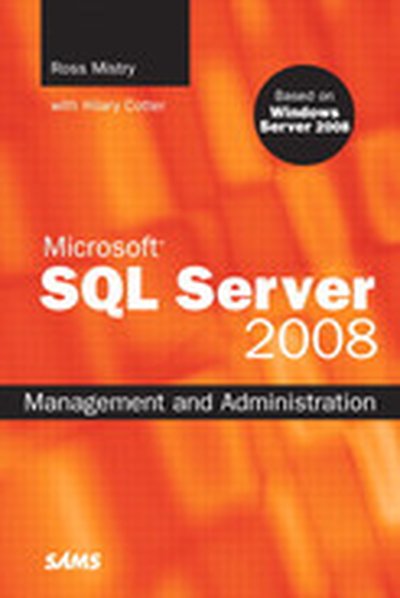
Microsoft® SQL Server 2008 Management and Administration

If you need to deploy, manage, or secure Microsoft SQL Server 2008, this is the complete, fast-paced, task-based reference you’ve been searching for. Authored by a world-class expert on SQL Server in the enterprise, this book goes far beyond the basics, taking on the complex tasks that DBAs need to make the most of Microsoft’s flagship database platform. SQL Server MVP, Ross Mistry presents proven techniques for SQL Server 2008 installation, upgrades, backup/restore, data transfer, indexing, high availability, security, and much more. He draws on extensive testing in high-profile production environments to offer step-by-step solutions and powerful tips you won’t find anywhere else. Every chapter begins with a section identifying SQL Server 2008’s most significant new improvements, and concludes with a convenient summary of best practices. Each chapter also outlines the benefits of leveraging Windows Server 2008. Understand how to: Master DBA tips, tricks, and best practices proven in actual enterprise environments Install, upgrade or transition to SQL Server 2008. Harden and Secure an implementation. Encrypt SQL Server from an end-to-end perspective. Implement high availability–and leverage SQL Server 2008’s major improvements to failover clustering and database mirroring Save time with SQL Server 2008’s new policy-based management tools Performance tune and troubleshoot a SQL Server 2008 environment. Optimize application performance and manage workloads with the powerful new Resource Governor Implement Performance Studio, maintenance plans, Transparent Data Encryption and much more… Bonus Content: The book is based on Windows Server 2008 Step by step instructions of how to implement a failover cluster on Windows Server 2008 SQL Server PoweShell Administration Tasks Consolidate and virtualize SQL Server with Hyper-V Step by step instructions on how to install Hyper-V Proactively Monitor SQL Server with Operations Manager Install Windows Server 2008 certificates to encrypt SQL Server data Contributing Writers include: Hilary Cotter — SQL Server MVP John Welch — SQL Server MVP Marco Shaw — PowerShell MVP Maciej Pilecki — SQL Server MVP Shirmattie Seenarine — Technical Writer

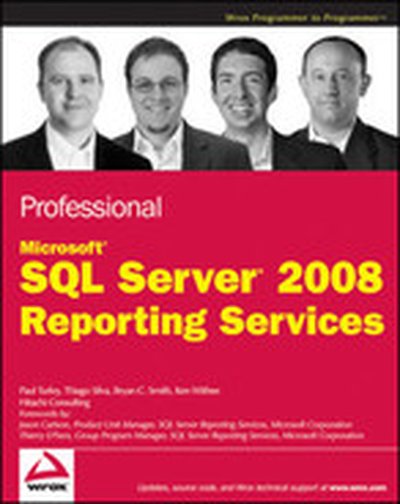
Professional Microsoft® SQL Server® 2008 Reporting Services

Teaches solution architects, designers, and developers how to use Microsoft's reporting platform to create reporting and business intelligence (BI) solutions Updated with new information about holistic BI solutions, comprehensive OLAP/Analysis Services reporting, and complete production deployment scenarios Includes programming examples focused on specific, scenario-based solutions Explains reporting services architecture and business intelligence, teaches the fundamentals of designing reports through the use of careful planning considerations, and covers advanced report design and filtering techniques

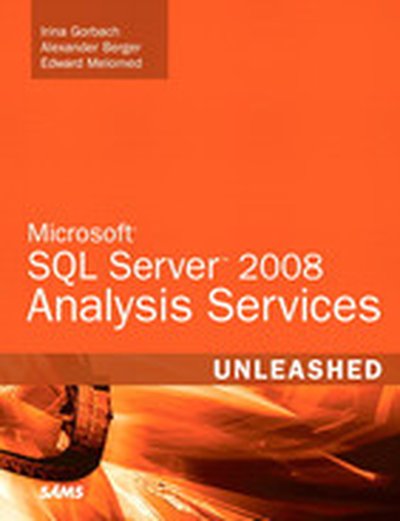
Microsoft® SQL Server™ 2008 Analysis Services Unleashed

As the foundation of the Microsoft Business Intelligence Strategy, Microsoft SQL Server 2008 Analysis Services provides users with faster access to data and even more tools for managing and analyzing data across multidimensional objects (databases, dimensions, cubes). Microsoft SQL Server 2008 Analysis Services Unleashed is the ultimate guide for anyone who is planning to use the latest version of Analysis Services. It gives readers insight into the way Analysis Services functions, and explains practical methods for designing and creating multidimensional objects. It also provides valuable insight into the reasons behind the design decisions taken by the product development team. The authors have been involved with Analysis Services from its earliest days. They have documented in detail the internal features of Analysis Services 2008, explaining server architecture, main data structures, data processing, and query resolution algorithms. Discover the new functionality introduced in Analysis Services 2008 including MDX enhancements and new DMV (dynamic memory views) Work with the Business Intelligence Development Studio, the new Dimension Editor, and Aggregation Designer interfaces Enjoy complete coverage of new Shared Scalable Databases scale-out infrastructure Learn the key concepts of multidimensional modeling Explore the multidimensional object model and its definition language Integrate multidimensional and relational databases Build client applications to access data in Analysis Services Unravel the inner workings of the server architecture, including main data structures, data processing, and query resolution algorithms Learn the main concepts of the MDX language and gain an in-depth understanding of advanced MDX concepts Gain a deeper understanding of the internal and external protocols for data transfer, including the XML/A protocol Discover how Analysis Services manages memory Explore the security model, including role-based security, code-access security, and data security Category: Microsoft SQL Server Covers: Microsoft SQL Server 2008 Analysis Services User Level: Intermediate-Advanced $59.99 USA / $65.99 CAN / £38.99 Net UK±

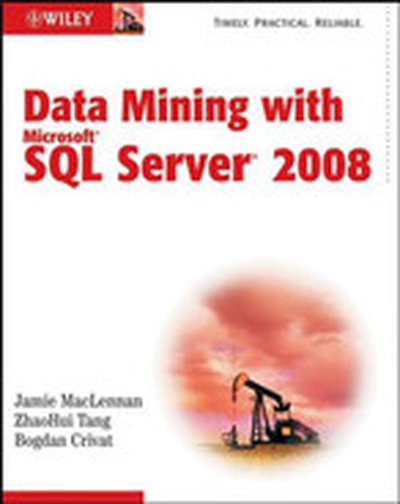
Data Mining with Microsoft® SQL Server® 2008

Understand how to use the new features of Microsoft SQL Server 2008 for data mining by using the tools in Data Mining with Microsoft SQL Server 2008, which will show you how to use the SQL Server Data Mining Toolset with Office 2007 to mine and analyze data. Explore each of the major data mining algorithms, including naive bayes, decision trees, time series, clustering, association rules, and neural networks. Learn more about topics like mining OLAP databases, data mining with SQL Server Integration Services 2008, and using Microsoft data mining to solve business analysis problems.

Microsoft® SQL Server® 2008 Step by Step

Teach yourself SQL Server 2008—one step at a time. Get the practical guidance you need to build database solutions that solve real-world business problems. Learn to integrate SQL Server data in your applications, write queries, develop reports, and employ powerful business intelligence systems. Discover how to: Install and work with core components and tools Create tables and index structures Manipulate and retrieve data Secure, manage, back up, and recover databases Apply tuning plus optimization techniques to generate high-performing database applications Optimize availability through clustering, database mirroring, and log shipping Tap business intelligence tools—Reporting, Analysis, and Integration Services CD features: Practice exercises and code samples Fully searchable eBook For customers who purchase an ebook version of this title, instructions for downloading the CD files can be found in the ebook.

Beginning Database Design Solutions

This book is intended for IT professionals and students who want to learn how to design, analyze, and understand databases. The material will benefit those who want a better high-level understanding of databases such as proposal managers, architects, project managers, and even customers. The material will also benefit those who will actually design, build, and work with databases such as database designers, database administrators, and programmers. In many projects, these roles overlap so the same person may be responsible for working on the proposal, managing part of the project, and designing and creating the database. This book is aimed at IT professionals and students of all experience levels. It does not assume that you have any previous experience with databases or programs that use them. It doesn't even assume that you have experience with computers. All you really need is a willingness and desire to learn. This book explains database design. It tells how to plan a database's structure so the database will be robust, resistant to errors, and flexible enough to accommodate a reasonable amount of future change. It explains how to discover database requirements, build data models to study data needs, and refine those models to improve the database's effectiveness. The book solidifies these concepts by working through a detailed example that designs a realistic database. Later chapters explain how to actually build databases using two common database products: Access 2007 and MySQL. The book finishes by describing some of the topics you need to understand to keep a database running effectively such as database maintenance and security. This book explains database design. It tells how to determine what should go in a database and how the database should be structured to give the best results. This book does not focus on actually creating the database. The details of database construction are different for different database tools so, to remain as generally as useful as possible, this book doesn't concentrate on any particular database system. You can apply the techniques described here equally to whatever database tool you use whether it's Access, SQL Server, Oracle, MySQL, or some other database product. Most database products include free editions that you can use for smaller projects. For example, SQL Server Express Edition, Oracle Express Edition, and MySQL Community Server are all free. To remain database neutral, the book does not assume you are using a particular database so you don't need any particular software or hardware. To work through the Exercises, all you really need is a pencil and some paper. You are welcome to type solutions into your computer if you like but you may actually find working with pencil and paper easier than using a graphical design tool to draw pictures, at least until you are comfortable with database design and are ready to pick a computerized design tool. "Goals of Effective Database Design," explains the reasons why people and organizations use databases. It explains a database's purpose and conditions that it must satisfy to be useful. This also describes the basic ACID (Atomicity, Consistency, Isolation, Durability) and CRUD (Create, Read, Update, Delete) features that any good database should have. It explains in high-level general terms what makes a good database and what makes a bad database. "Database Types," explains some of the different types of databases that you might decide to use. These include flat files, spreadsheets, hierarchical databases (XML), object databases, and relational databases. The relational database is one of the most powerful and most commonly used forms of database so it is the focus of this book, but it is important to realize that there are alternatives that may be more appropriate under certain circumstances. This gives some tips on deciding which kind of database might be best for a particular project. "Relational Database Fundamentals," explains basic relational database concepts such as tables, rows, and columns. It explains the common usage of relational database terms in addition to the more technical terms that are sometimes used by database theorists. It describes different kinds of constraints that databases use to guarantee that the data is stored safely and consistently. "Understanding User Needs," explains how to learn about the users' needs and gather user requirements. It tells how to study the users' current operations, existing databases (if any), and desired improvements. It describes common questions that you can ask to learn about users' operations, desires, and needs, and how to build the results into requirements documents and specifications. This explains what use cases are and tells how to use them and the requirements to guide database design and to measure success. "Translating User Needs into Data Models," introduces data modeling. It explains how to translate the user's conceptual model and the requirements into other more precise models that define the database design rigorously. This describes several database modeling techniques including user-interface models, semantic object models, entity-relationship diagrams, and relational models. "Extracting Business Rules," explains how a database can handle business rules. It explains what business rules are, how they differ from database structure requirements, and how you can identify business rules. This explains the benefits of separating business rules from the database structure and tells how achieve that separation. "Normalizing Data," explains one of the biggest tools in database design: normalization. Normalization techniques allow you to restructure a database to increase its flexibility and make it more robust. This explains the various forms of normalization, emphasizing the stages that are most common and important: first, second, and third normal forms (1NF, 2NF, and 3NF). It explains how each of these kinds of normalization helps prevent errors and tells why it is sometimes better to leave a database slightly less normalized to improve performance. "Designing Databases to Support Software Applications," explains how databases fit into the larger context of application design and lifecycle. This explains how later development depends on the underlying database design. It discusses multi-tier architectures that can help decouple the application and database design so there can be at least some changes to either without requiring changes to the other. "Common Design Patterns," explains some common patterns that are useful in many applications. Some of these techniques include implementing various kinds of relationships among objects, storing hierarchical and network data, recording temporal data, and logging and locking. "Common Design Pitfalls," explains some common design mistakes that occur in database development. It describes problems that can arise from insufficient planning, incorrect normalization, and obsession with ID fields and performance. "User Needs and Requirements," walks through the steps required to analyze the users' problem, define requirements, and create use cases. It describes interviews with fictitious customers that are used to identify the application's needs and translate them into database requirements. "Building a Data Model," translates the requirements gathered in the previous into a series of data models that precisely define the database's structure. This builds user-interface models, entity-relationship diagrams, semantic object models, and relational models to refine the database's initial design. The final relational models match the structure of a relational database fairly closely so they are easy to implement. "Extracting Business Rules," identifies the business rules embedded in the relational model. It shows how to extract those rules in order to separate them logically from the database's structure. This makes the database more robust in the face of future changes to the business rules. "Normalization and Refinement," refines the relational model by normalizing it. It walks through several versions of the database that are in different normal forms. It then selects the degree of normalization that provides a reasonable tradeoff between robust design and acceptable performance. "Microsoft Access," explains how to build a database with Microsoft Access 2007. This explains enough to get started and to use Access to build non-trivial databases. You can use other versions of Access to work through this, although the locations of menus, buttons, and other Access features are different in different versions. "MySQL," explains how to build a database with MySQL. This tells where to download a free version of MySQL. It explains how to use the MySQL Command Line Client as well as some useful graphical tools including MySQL Query Browser and MySQL Workbench. "Introduction to SQL," provides an introduction to SQL (Structured Query Language). It explains how to use SQL commands to add, insert, update, and delete data. By using SQL, you can help insulate a program from the idiosyncrasies of the particular database product that it uses to store data. "Building Databases with SQL Scripts," explains how to use SQL scripts to build a database. It explains the advantages of this technique, such as the ability to create scripts to initialize a database before performing tests. It also explains some of the restrictions on this method, such as the fact that the user must create and delete tables in specific orders to satisfy table relationships. "Database Maintenance," describes some of the database maintenance issues that are part of any database application. Though performing and restoring backups, compressing tables, rebuilding indexes, and populating data warehouses are strictly not database design tasks, they are essential to any working application. "Database Security," explains database security issues. It explains the kinds of security that some database products provide. It also explains some additional techniques that can enhance database security such as using database views to appropriately restrict the users' access to data.

Professional Microsoft® SQL Server® 2008 Administration

SQL Server 2008 represents a sizable jump forward in scalability, performance, and usability for the DBA, developer, and business intelligence (BI) developer. It is no longer unheard of to have 20-terabyte databases running on a SQL Server. SQL Server administration used to just be the job of a database administrator (DBA), but as SQL Server proliferates throughout smaller companies, many developers have begun to act as administrators as well. Additionally, some of the new features in SQL Server are more developer-centric, and poor configuration of these features can result in poor performance. SQL Server now enables you to manage the policies on hundreds of SQL Servers in your environment as if you were managing a single instance. We've provided a comprehensive, tutorial-based book to get you over the learning curve of how to configure and administer SQL Server 2008. Whether you're an administrator or developer using SQL Server, you can't avoid wearing a DBA hat at some point. Developers often have SQL Server on their own workstations and must provide guidance to the administrator about how they'd like the production configured. Oftentimes, they're responsible for creating the database tables and indexes. Administrators or DBAs support the production servers and often inherit the database from the developer. This book is intended for developers, DBAs, and casual users who hope to administer or may already be administering a SQL Server 2008 system and its business intelligence features, such as Integration Services. This book is a professional book, meaning the authors assume that you know the basics about how to query a SQL Server and have some rudimentary concepts of SQL Server already. For example, this book does not show you how to create a database or walk you through the installation of SQL Server using the wizard. Instead, the author of the installation chapter may provide insight into how to use some of the more advanced concepts of the installation. Although this book does not cover how to query a SQL Server database, it does cover how to tune the queries you've already written. The first ten chapters of the book are about administering the various areas of SQL Server, including the developer and business intelligence features. Chapter 1 briefly covers the architecture of SQL Server and the changing role of the DBA. Chapters 2 and 3 dive into best practices on installing and upgrading to SQL Server 2008. Managing your SQL Server database instance is talked about in Chapter 4. This chapter also describes some of the hidden tools you may not even know you have. Once you know how to manage your SQL Server, you can learn in Chapter 5 how to automate many of the redundant monitoring and maintenance tasks. This chapter also discusses best practices on configuring SQL Server Agent. Chapters 6 and 7 cover how to properly administer and automate many tasks inside of the Microsoft business intelligence products, such as Integration Services and Analysis Services. Developers will find that Chapter 8 is very useful, as it covers how to administer the development features, such as SQL CLR. Chapter 9 explains how to secure your SQL Server from many common threats and how to create logins and users. Chapter 10 covers how to create a SQL Server project and do proper change management in promoting your scripts through the various environments. It also covers the Policy-Based Management framework in SQL Server. Chapters 11 through 15 make up the performance tuning part of the book. Chapter 11 discusses how to choose the right hardware configuration for your SQL Server in order to achieve optimal performance. After the hardware and operating system is configured, Chapter 12 shows you how to optimize your SQL Server instance for the best performance. Chapter 13 describes how to monitor your SQL Server instance for problematic issues such as blocking and locking. Chapters 14 and 15 discuss how to optimize the T-SQL that accesses your tables and then how to index your tables appropriately. Chapters 16 through 20 consist of the high-availability chapters of the book. Chapter 16 covers how to use the various forms of replication, while database mirroring is covered in Chapter 17. Classic issues and best practices with backing up and recovering your database are discussed in Chapter 18. Chapter 19 dives deeply into the role of log shipping in your high-availability strategy, and Chapter 20 presents a step-by-step guide to clustering your SQL Server and Windows 2008 server. This edition of the book covers all the same great information we covered in the last book, and we've added loads of new content for SQL Server 2008, which adds numerous new features to improve the DBA's life. In short, the new version of SQL Server focuses on improving your efficiency, the scale of your server, and the performance of your environment, so you can do more in much less time, and with fewer resources and people. This means you can manage many servers at one time using Policy-Based Management, scale your I/O load using compression, and collect valuable information about your environment using data collectors, to name just a few key new features. To follow the examples in this book, you will need to have SQL Server 2008 installed. If you wish to learn how to administer the business intelligence features, you need to have Analysis Services and the Integration Services components installed. You need a machine that can support the minimum hardware requirements to run SQL Server 2008; and you also need the AdventureWorks2008 and AdventureWorksDW2008 databases installed. Instructions for accessing these databases can be found in the ReadMe file on this book's Web site. Some features in this book (especially in the high-availability part) require the Enterprise or Developer Edition of SQL Server. If you do not have this edition, you will still be able to follow through some of the examples in the chapter with Standard Edition.

Programming Microsoft® SQL Server™ 2008

Extend your programming skills with a comprehensive study of the key features of SQL Server 2008. Delve into the new core capabilities, get practical guidance from expert developers, and put their code samples to work. This is a must-read for Microsoft .NET and SQL Server developers who work with data access—at the database, business logic, or presentation levels. Discover how to: Query complex data with powerful Transact-SQL enhancements Use new, non-relational features: hierarchical tables, native file streaming, and geospatial capabilities Exploit XML inside the database to design XML-aware applications Consume and deliver your data using Microsoft LINQ, Entity Framework, and data binding Implement database-level encryption and server auditing Build and maintain data warehouses Use Microsoft Excel to build front ends for OLAP cubes, and MDX to query them Integrate data mining into applications quickly and effectively. Get code samples on the Web.

Database Design: Know It All

This book brings all of the elements of database design together in a single volume, saving the reader the time and expense of making multiple purchases. It consolidates both introductory and advanced topics, thereby covering the gamut of database design methodology ? from ER and UML techniques, to conceptual data modeling and table transformation, to storing XML and querying moving objects databases. The proposed book expertly combines the finest database design material from the Morgan Kaufmann portfolio. Individual chapters are derived from a select group of MK books authored by the best and brightest in the field. These chapters are combined into one comprehensive volume in a way that allows it to be used as a reference work for those interested in new and developing aspects of database design. This book represents a quick and efficient way to unite valuable content from leading database design experts, thereby creating a definitive, one-stop-shopping opportunity for customers to receive the information they would otherwise need to round up from separate sources. Chapters contributed by various recognized experts in the field let the reader remain up to date and fully informed from multiple viewpoints. Details multiple relational models and modeling languages, enhancing the reader’s technical expertise and familiarity with design-related requirements specification. Coverage of both theory and practice brings all of the elements of database design together in a single volume, saving the reader the time and expense of making multiple purchases.

Professional SQL Server® 2008 Integration Services

The new edition of the successful previous version is 25 percent revised and packed with more than 200 pages of new material on the 2008 release of SQL Server Integration Services (SSIS) Renowned author Brian Knight and his expert coauthors show developers how to master the 2008 release of SSIS, which is both more powerful and more complex than ever Case studies and tutorial examples acquired over the three years since the previous edition will contribute to helping illustrate advanced concepts and techniques New chapters include coverage of data warehousing using SSIS, new methods for managing the SSIS platform, and improved techniques for ETL operations

Crystal Reports® 2008 Official Guide

CRYSTAL REPORTS® 2008 OFFICIAL GUIDE Whether you’re a DBA, data warehousing or business intelligence professional, Every significant enhancement introduced in Crystal Reports 2008 is covered, including its new visualization options and more robust Web services capabilities. The book concludes by showing how to use Crystal Reports’ powerful .NET and Java SDKs to customize and extend enterprise reporting in virtually unlimited ways. • Learn hands-on, through step-by-step examples and exercises–and discover tips and tricks proven in real-world enterprise environments • Master new Crystal Reports 2008 features, including interactive report viewing, Xcelsius dashboarding, Flex, and Flash integration, Report Designer improvements, report bursting, and more • Publish professional-quality reports against virtually any data source, including relational and OLAP databases, Universes, SAP, PeopleSoft, JavaBeans, .NET/COM objects, XML, and more • Discover advanced visualization techniques using Xcelsius, charts, and maps • Learn methods for distributing reports and integrating content into other applications • Learn about the latest reporting addition to the Business Objects family–Xcelsius and begin creating dynamic and interactive dashboards NEIL FITZGERALD has spent several years working at Business Objects and with one of Business Objects’ largest providers of custom BI and enterprise reporting solutions. BOB COATES currently works as a Sales Consultant for Business Objects, an SAP company, where he has been employed for more than eleven years. RYAN GOODMAN is the founder of Centigon Solutions, Inc., and remains one of the top Xcelsius experts and evangelists in the world. MICHAEL VOLOSHKO is a senior presales consultant for the financial services team at Business Objects. ON THE WEB Find all this and more at informit.com/sams: • Java and .NET sample reports and code samples for all examples in the book • Bonus chapters, tips, tricks, and links to great reporting resources CATEGORY: Database COVERS: Crystal Reports 2008, Crystal Reports Server 2008, Crystal Reports Viewer, crystalreports.com, Xcelsius 2008 USER LEVEL: Beginning–Intermediate informit.com/sams

Microsoft® SQL Server® 2008 For Dummies®

If you’re a database administrator, you know Microsoft SQL Server 2008 is revolutionizing database development. Get up to speed on SQL Server 2008, impress your boss, and improve your company’s data management — read Microsoft SQL Server 2008 For Dummies! SQL Server 2008 lets you build powerful databases and create database queries that give your organization the information it needs to excel. Microsoft SQL Server 2008 For Dummies helps you build the skills you need to set up, administer, and troubleshoot SQL Server 2008. You’ll be able to: Develop and maintain a SQL Server system Design databases with integrity and efficiency Turn data into information with SQL Server Reporting Services Organize query results, summarizing data with aggregate functions and formatting output Import large quantities of data with SSIS Keep your server running smoothly Protect data from prying eyes Develop and implement a disaster recovery plan Improve performance with database snapshots Automate SQL Server 2008 administration Microsoft SQL Server 2008 For Dummies is a great first step toward becoming a SQL Server 2008 pro!

Microsoft® SQL Server™ 2008 All-In-One Desk Reference For Dummies®

If you’re in charge of database administration, developing database software, or looking for database solutions for your company, Microsoft SQL Server 2008 All-In-One Desk Reference For Dummies can help you get a handle on this extremely popular relational database management system. Here you’ll find what’s new in the latest version; how to choose and install the right variation for your needs; how to monitor, maintain, and protect your data; and what it takes to keep your database healthy. You’ll discover how to: Build and maintain tables Design a database and communicate with it Retrieve, analyze, and report data Build solid, robust database applications Use the SQL Server Optimizer and Query Designer Navigate SQL Server with Visual Studio Develop useful reports with the Report Builder and Report Designer Create Business Intelligence solutions with Business Intelligence Development Studio Configure your server and perform major administrative tasks To help you quickly find what you need, Microsoft SQL Server 2008 All-In-One Desk Reference For Dummies is divided into nine minibooks: Essential Concepts Designing and Using Databases Interacting With Your Data Database Programming Reporting Services Analysis Services Performance Tips and Tricks Database Administration Appendixes Microsoft SQL Server 2008 All-In-One Desk Reference For Dummies gets you started, helps you solve problems, and will even answer your questions down the road!

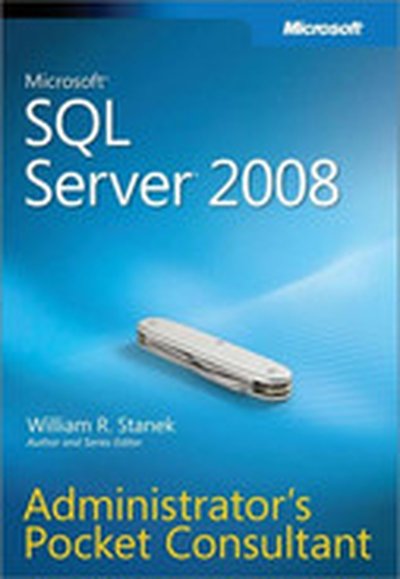
Microsoft® SQL Server® 2008 Administrator's Pocket Consultant

Get the practical, pocket-sized guide for IT professionals who need to administer, maintain, and optimize SQL Server 2008. Written by award-winning author William Stanek, this portable reference delivers essential details for using SQL Server 2008 to help protect and manage your company s data whether automating tasks, creating indexes and views, performing backups and recovery, replicating transactions, tuning performance, managing server activity, importing and exporting data, or performing other key tasks. Featuring quick-reference tables, lists, and step-by-step instructions, this handy, one-stop guide provides fast, accurate answers on the spot whether you re at your desk or in the field! Key Book Benefits Provides fast facts and immediate reference for administering SQL Server 2008 Delivers must-know details for taking advantage of the improved scalability, security features, and management tools in SQL Server 2008 Features concise tables, easy-to-scan lists, and step-by-step instructions for fast answers, wherever you need them

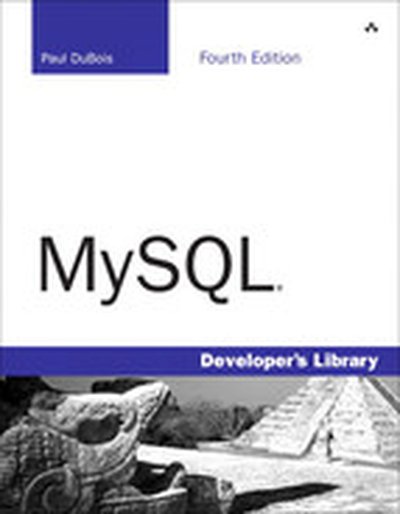
MySQL®

The Definitive Guide to Using, Programming, and Administering MySQL 5.0 and 5.1 MySQL is an open source relational database management system that has experienced a phenomenal growth in popularity and use. Known for its speed and ease of use, MySQL has proven itself to be particularly well-suited for developing database-backed websites and applications. In MySQL, Paul DuBois provides a comprehensive guide to using and administering MySQL effectively and productively. He describes everything from the basics of getting information into a database and formulating queries, to using MySQL with PHP or Perl to generate dynamic web pages, to writing your own programs that access MySQL databases, to administering MySQL servers. The fourth edition of this bestselling book has been meticulously revised and updated to thoroughly cover the latest features and capabilities of MySQL 5.0, as well as to add new coverage of features introduced with MySQL 5.1. “One of the best technical books I have read on any subject.” –Gregory Haley, C Vu, The Association of C & C++ Users “A top-notch user’s guide and reference manual, and in my opinion, the only book you’ll need for the daily operation and maintenance of MySQL databases.” –Eugene Kim, Web Techniques Introduction 1 Part I: General MySQL Use Chapter 1: Getting Started with MySQL 13 Chapter 2: Using SQL to Manage Data 101 Chapter 3: Data Types 201 Chapter 4: Stored Programs 289 Chapter 5: Query Optimization 303 Part II: Using MySQL Programming Interfaces Chapter 6: Introduction to MySQL Programming 341 Chapter 7: Writing MySQL Programs Using C 359 Chapter 8: Writing MySQL Programs Using Perl DBI 435 Chapter 9: Writing MySQL Programs Using PHP 527 Part III: MySQL Administration Chapter 10: Introduction to MySQL Administration 579 Chapter 11: The MySQL Data Directory 585 Chapter 12: General MySQL Administration 609 Chapter 13: Access Control and Security 699 Chapter 14: Database Maintenance, Backups, and Replication 737 Part IV: Appendixes Appendix A: Obtaining and Installing Software 777 Appendix B: Data Type Reference 797 Appendix C: Operator and Function Reference 813 Appendix D: System, Status, and User Variable Reference 889 Appendix E: SQL Syntax Reference 937 Appendix F: MySQL Program Reference 1037 Note: Appendixes G, H, and I are located online and are accessible either by registering this book at informit.com/register or by visiting www.kitebird.com/mysql-book. Appendix G: C API Reference 1121 Appendix H: Perl DBI API Reference 1177 Appendix I: PHP API Reference 1207 Index 1225

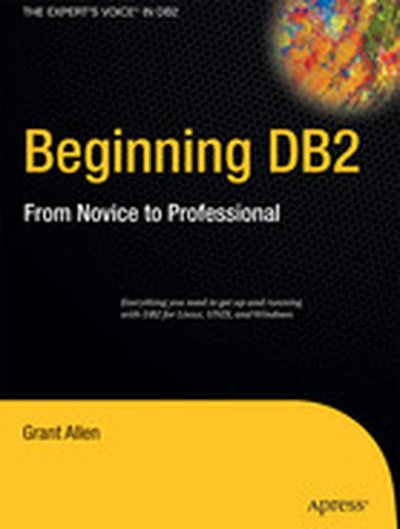
Beginning DB2: From Novice to Professional

IBM's DB2 Express Edition is one of the most capable of the free database platforms available in today's marketplace. In Beginning DB2, author Grant Allen gets you started using DB2 Express Edition for web sites, desktop applications, and more. The author covers the basics of DB2 for developers and database administrators, shows you how to manage data in both XML and relational form, and includes numerous code examples so that you are never in doubt as to how things work. In this book, you'll find: A friendly introduction to DB2 Express Edition, an industrial-strength, relational database from IBM Dozens of examples so that you are never in doubt as to how things work Coverage of important language interfaces, such as from PHP, Ruby, C#, Python, and more The book is aimed at developers who want a robust database to back their applications.

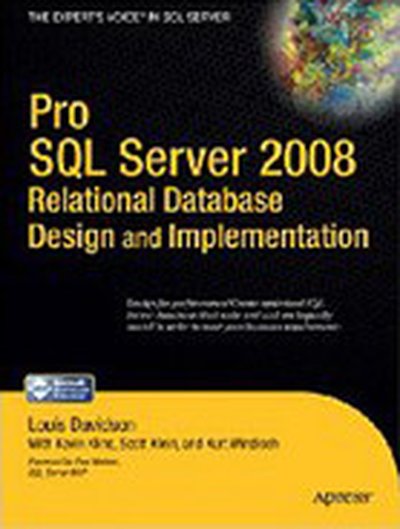
Pro SQL Server 2008 Relational Database Design and Implementation

Learn effective and scalable database design techniques in a SQL Server environment. Pro SQL Server 2008 Relational Database Design and Implementation covers everything from design logic that business users will understand, all the way to the physical implementation of the design in a SQL Server database. Grounded in best practices and a solid understanding of the underlying theory, authors Louis Davidson, Kevin Kline, Scott Klein, and Kurt Windisch show how to 'get it right' in SQL Server database design and lay a solid groundwork for the future use of valuable business data. Solid foundation in best practices and relational theory Maximize SQL Server features to enhance security, performance, scalability Thorough treatment from conceptual design to an effective, physical implementation What you'll learn Develop conceptual models of client data using interviews and client documentation Normalize data models to enhance scalability and the long term use of valuable data Translate conceptual models into high-performing SQL Server databases Secure and protect the integrity of data as part of meeting regulatory requirements Take full advantage of new SQL Server features such as the spatial datatype, XML support, transparent data encryption, and more Create effective indexing to speed query performance Who this book is for Pro SQL Server 2008 Relational Database Design and Implementation is designed for programmers of all types who want to use SQL Server 2008 to store data. Rookie database programmers will find a complete course on the fundamentals of database design that includes conceptual designs and physical implementation. Seasoned veterans will find many tips and tricks for implementing database systems that will be well worth the time invested in reading this book.

Microsoft SQL Server 2008 Reporting Services, 3rd Edition

The Definitive Guide to Microsoft SQL Server 2008 Reporting Services Create and deliver data-rich reports across the enterprise using this complete server-based reporting solution. Written by a member of the original Reporting Services development team, Microsoft SQL Server 2008 Reporting Services covers the entire report-building and distribution process, including data extraction, integration with desktop and Web applications, and end-user access. The book explains how to maximize all of the powerful features, including the new Tablix data format, as well as enhanced performance, scalability, and visualization capabilities. Install, configure, and customize SQL Server 2008 Reporting Services Create SELECT queries to extract data Generate reports from the Report Wizard and from scratch Add charts, images, and gauges Build reusable report templates Use the new Tablix data format to create reports with any structure Export reports to Word, Excel, PDF, HTML, XML, and other formats Enable end-user access to reports via the Report Server and its Report Manager web interface