talk-data.com talk-data.com

Topic

relational-databases

507

tagged

Activity Trend

1 peak/qtr
2020-Q1 2026-Q1

Activities

507 activities · Newest first

Concept Of Database Management System by Pearson

Concepts of Database Management System is designed to meet the syllabi requirements of undergraduate students of computer applications and computer science. It describes the concepts in an easy-to-understand language with sufficient number of examples. The overview of emerging trends in databases is thoroughly explained. A brief introduction to PL/SQL, MS-Access and Oracle is discussed to help students get a flavor of different types of database management systems.

Database Management Systems by Pearson

Express Learning is a series of books designed as quick reference guides to important undergraduate computer courses. The organized and accessible format of these books allows students to learn important concepts in an easy-to-understand, question-and-answer format. These portable learning tools have been designed as one-stop references for students to understand and master the subjects by themselves.

Features –

• Designed as a student-friendly self-learning guide. The book is written in a clear, concise, and lucid manner. • Easy-to-understand question-and-answer format. • Includes previously asked as well as new questions organized in chapters. • All types of questions including MCQs, short and long questions are covered. • Solutions to numerical questions asked at examinations are provided. • All ideas and concepts are presented with clear examples. • Text is well structured and well supported with suitable diagrams. • Inter-chapter dependencies are kept to a minimum

Book Contents –

1: Database System 2: Conceptual Modelling 3: Relational Model 4: Relational Algebra and Calculus 5: Structured Query Language 6: Relational Database Design 7: Data Storage and Indexing 8: Query Processing and Optimization 9: Introduction to Transaction Processing 10: Concurrency Control Techniques 11: Database Recovery System 12: Database Security 13: Database System Architecture 14: Data Warehousing, OLAP, and Data Mining 15: Information Retrieval 16: Miscellaneous Questions

Mastering MySQL Administration: High Availability, Security, Performance, and Efficiency

This book is your one-stop resource on MySQL database installation and server management for administrators. It covers installation, upgrades, monitoring, high availability, disaster recovery, security, and performance and troubleshooting. You will become fluent in MySQL 8.2, the latest version of the highly scalable and robust relational database system. With a hands-on approach, the book offers step-by-step guidance on installing, upgrading, and establishing robust high availability and disaster recovery capabilities for MySQL databases. It also covers high availability with InnoDB and NDB clusters, MySQL routers and enterprise MySQL tools, along with robust security design and performance techniques. Throughout, the authors punctuate concepts with examples taken from their experience with large-scale implementations at companies such as Meta and American Airlines, anchoring this practical guide to MySQL 8.2 administration in the real world. What YouWill Learn Understand MySQL architecture and best practices for administration of MySQL server Configure high availability, replication, disaster recovery with InnoDB and NDB engines Back up and restore with MySQL utilities and tools, and configure the database for zero data loss Troubleshoot with steps for real-world critical errors and detailed solutions Who This Book Is For Technical professionals, database administrators, developers, and engineers seeking to optimize MySQL databases for scale, security, and performance

Learn SQL using MySQL in One Day and Learn It Well

"Learn SQL using MySQL in One Day and Learn It Well" is your hands-on guide to mastering SQL efficiently using MySQL. This book takes you from understanding basic database concepts to executing advanced queries and implementing essential features like triggers and routines. With a project-based approach, you will confidently manage databases and unlock the potential of data. What this Book will help me do Understand database concepts and relational data architecture. Design and define tables to organize and store data effectively. Perform advanced SQL queries to manipulate and analyze data efficiently. Implement database triggers, views, and routines for advanced management. Apply practical skills in SQL through a comprehensive hands-on project. Author(s) Jamie Chan is a professional instructor and technical writer with extensive experience in database management and software development. Known for a clear and engaging teaching style, Jamie has authored numerous books focusing on hands-on learning. Jamie approaches pedagogy with the goal of making technical subjects accessible and practical for all learners. Who is it for? This book is designed for beginners eager to learn SQL and MySQL from scratch. It is perfect for professionals or students who want relevant and actionable skills in database management. Whether you're looking to enhance career prospects or leverage database tools for personal projects, this book is your practical starting point. Basic computer literacy is all that's needed.

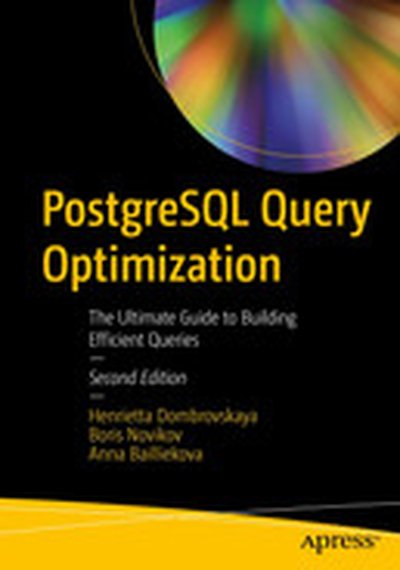
PostgreSQL Query Optimization: The Ultimate Guide to Building Efficient Queries

Write optimized queries. This book helps you write queries that perform fast and deliver results on time. You will learn that query optimization is not a dark art practiced by a small, secretive cabal of sorcerers. Any motivated professional can learn to write efficient queries from the get-go and capably optimize existing queries. You will learn to look at the process of writing a query from the database engine’s point of view, and know how to think like the database optimizer. The book begins with a discussion of what a performant system is and progresses to measuring performance and setting performance goals. It introduces different classes of queries and optimization techniques suitable to each, such as the use of indexes and specific join algorithms. You will learn to read and understand query execution plans along with techniques for influencing those plans for better performance. The book also covers advanced topics such as the use of functions and procedures, dynamic SQL, and generated queries. All of these techniques are then used together to produce performant applications, avoiding the pitfalls of object-relational mappers. This second edition includes new examples using Postgres 15 and the newest version of the PostgresAir database. It includes additional details and clarifications about advanced topics, and covers configuration parameters in greater depth. Finally, it makes use of advancements in NORM, using automatically generated functions. What You Will Learn Identify optimization goals in OLTP and OLAP systems Read and understand PostgreSQL execution plans Distinguish between short queries and long queries Choose the right optimization technique for each query type Identify indexes that will improve query performance Optimize full table scans Avoid the pitfalls of object-relational mapping systems Optimize the entire application rather than just database queries Who This Book Is For IT professionals working in PostgreSQL who want to develop performant and scalable applications, anyone whose job title contains the words “database developer” or “database administrator" or who is a backend developer charged with programming database calls, and system architects involved in the overall design of application systems running against a PostgreSQL database

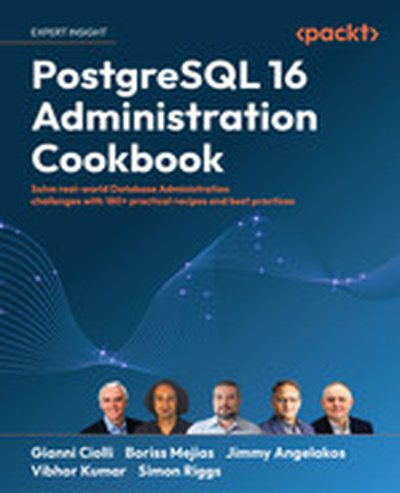
PostgreSQL 16 Administration Cookbook

This cookbook is a comprehensive guide to mastering PostgreSQL 16 database administration. With over 180 practical recipes, this book covers everything from query performance and backup strategies to replication and high availability. You'll gain hands-on expertise in solving real-world challenges while leveraging the new and improved features of PostgreSQL 16. What this Book will help me do Perform efficient batch processing with Postgres' SQL MERGE statement. Implement parallel transaction processes using logical replication. Enhance database backups and recovery with advanced compression techniques. Monitor and fine-tune database performance for optimal operation. Apply new PostgreSQL 16 features for secure and reliable databases. Author(s) The team of authors, including Gianni Ciolli, Boriss Mejías, Jimmy Angelakos, Vibhor Kumar, and Simon Riggs, bring years of experience in PostgreSQL database management and development. Their expertise spans professional system administration, academic research, and contributions to PostgreSQL development. Their collaborative insights enrich this comprehensive guide. Who is it for? This book is ideal for PostgreSQL database administrators seeking advanced techniques, data architects managing PostgreSQL in production, and developers interested in mastering PostgreSQL 16. Whether you're an experienced DBA upgrading to PostgreSQL 16 or a newcomer looking for practical recipes, this book provides valuable strategies and solutions.

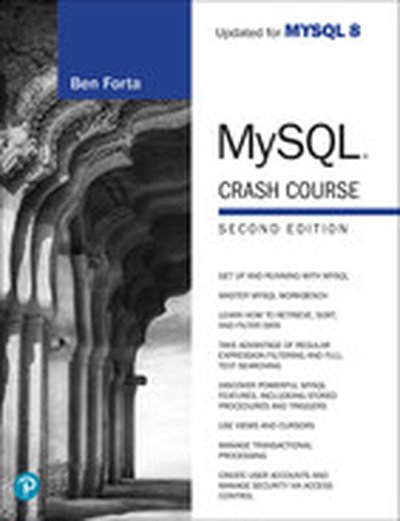
MySQL Crash Course, 2nd Edition

MySQL is one of the most popular database management systems available, powering everything from Internet powerhouses to individual corporate databases to simple end-user applications, and everything in between. This book will teach you all you need to know to be immediately productive with the latest version of MySQL. By working through 30 highly focused hands-on lessons, your MySQL Crash Course will be both easier and more effective than youd have thought possible. Learn How To Retrieve and Sort Data Filter Data Using Comparisons, Regular Expressions, Full Text Search, and Much More Join Relational Data Create and Alter Tables Insert, Update, and Delete Data Leverage the Power of Stored Procedures and Triggers Use Views and Cursors Manage Transactional Processing Create User Accounts and Manage Security via Access Control ...

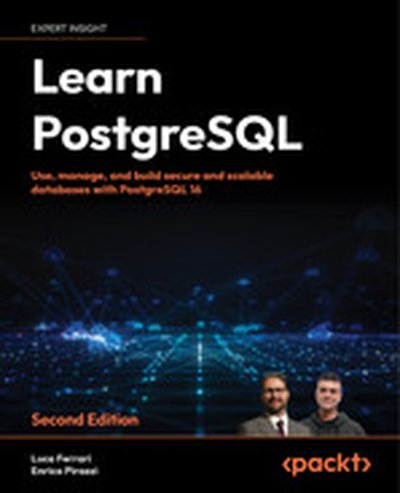
Learn PostgreSQL - Second Edition

Learn PostgreSQL, a comprehensive guide to mastering PostgreSQL 16, takes readers on a journey from the fundamentals to advanced concepts, such as replication and database optimization. With hands-on exercises and practical examples, this book provides all you need to confidently use, manage, and build secure and scalable databases. What this Book will help me do Master the essentials of PostgreSQL 16, including advanced SQL features and performance tuning. Understand database replication methods and manage a scalable architecture. Enhance database security through roles, schemas, and strict privilege management. Learn how to personalize your experience with custom extensions and functions. Acquire practical skills in backup, restoration, and disaster recovery planning. Author(s) Luca Ferrari and Enrico Pirozzi are experienced database engineers and PostgreSQL enthusiasts with years of experience using and teaching PostgreSQL technology. They specialize in creating learning content that is practical and focused on real-world situations. Their writing emphasizes clarity and systematically equips readers with professional skills. Who is it for? This book is perfect for database professionals, software developers, and system administrators looking to develop their PostgreSQL expertise. Beginners with an interest in databases will also find this book highly approachable. Ideal for readers seeking to improve their database scalability and robustness. If you aim to hone practical PostgreSQL skills, this guide is essential.

Procedural Programming with PostgreSQL PL/pgSQL: Design Complex Database-Centric Applications with PL/pgSQL

Learn the fundamentals of PL/PGSQL, the programming language of PostgreSQL which is most robust Open Source Relational Database. This book provides practical insights into developing database code objects such as functions and procedures, with a focus on effectively handling strings, numbers, and arrays to achieve desired outcomes, and transaction management. The unique approach to handling Triggers in PostgreSQL ensures that both functionality and performance are maintained without compromise. You'll gain proficiency in writing inline/anonymous server-side code within the limitations, along with learning essential debugging and profiling techniques. Additionally, the book delves into statistical analysis of PL/PGSQL code and offers valuable knowledge on managing exceptions while writing code blocks. Finally, you'll explore the installation and configuration of extensions to enhance the performance of stored procedures and functions. What You'll Learn Understand the PL/PGSQL concepts Learn to debug, profile, and optimize PL/PGSQL code Study linting PL/PGSQL code Review transaction management within PL/PGSQL code Work with developer friendly features like operators, casts, and aggregators Who Is This Book For App developers, database migration consultants, and database administrators.

Amazon Redshift: The Definitive Guide

Amazon Redshift powers analytic cloud data warehouses worldwide, from startups to some of the largest enterprise data warehouses available today. This practical guide thoroughly examines this managed service and demonstrates how you can use it to extract value from your data immediately, rather than go through the heavy lifting required to run a typical data warehouse. Analytic specialists Rajesh Francis, Rajiv Gupta, and Milind Oke detail Amazon Redshift's underlying mechanisms and options to help you explore out-of-the box automation. Whether you're a data engineer who wants to learn the art of the possible or a DBA looking to take advantage of machine learning-based auto-tuning, this book helps you get the most value from Amazon Redshift. By understanding Amazon Redshift features, you'll achieve excellent analytic performance at the best price, with the least effort. This book helps you: Build a cloud data strategy around Amazon Redshift as foundational data warehouse Get started with Amazon Redshift with simple-to-use data models and design best practices Understand how and when to use Redshift Serverless and Redshift provisioned clusters Take advantage of auto-tuning options inherent in Amazon Redshift and understand manual tuning options Transform your data platform for predictive analytics using Redshift ML and break silos using data sharing Learn best practices for security, monitoring, resilience, and disaster recovery Leverage Amazon Redshift integration with other AWS services to unlock additional value

Database-Driven Web Development: Learn to Operate at a Professional Level with PERL and MySQL

This book will teach you the essential knowledge required to be a successful and productive web developer with the ability to produce cutting-edge websites utilizing a database. This updated edition starts with the fundamentals of web development before delving into Perl and MySQL concepts such as script and database modelling, script-driven database interactions, content generation from a database, and information delivery from the server to the browser and vice versa. The only skills required to get the most from this book are basic knowledge of how the Internet works and a novice skill level with Perl and MySQL. The rest is intuitively presented code that most people can quickly and easily understand and employ. An extensive selection of practical, fully functional programming constructs in six different programming languages will give you the knowledge and tools required to create eye-catching, capable, and functionally impressive database-driven websites. Author Thomas Valentine has taken the concepts presented in the first edition of this book to new heights, offering in-depth discussions of each area of functionality required to develop fully formed database-driven web applications. He has expanded on the examples presented in the first edition and has included some very interesting and useful programming techniques for your consideration. Upon completing this book, you’ll have gained the benefit of the author’s decades worth of experience and will be able to apply your new knowledge and skills to your own projects. What You Will Learn Install, configure and use a trio of software packages (Apache Web Server, MySQL Database Server, and Perl Scripting Server) Create an effective web development workstation with databases in mind Use the PERL scripting language and MySQL databases effectively Maximize the Apache Web Server Who This Book Is For Those who already know web development basics and web developers who want to master database-driven web development. The skills required to understand the concepts put forth in this book are a working knowledge of PERL and basic MySQL.

Serverless Machine Learning with Amazon Redshift ML

Serverless Machine Learning with Amazon Redshift ML provides a hands-on guide to using Amazon Redshift Serverless and Redshift ML for building and deploying machine learning models. Through SQL-focused examples and practical walkthroughs, you will learn efficient techniques for cloud data analytics and serverless machine learning. What this Book will help me do Grasp the workflow of building machine learning models with Redshift ML using SQL. Learn to handle supervised learning tasks like classification and regression. Apply unsupervised learning techniques, such as K-means clustering, in Redshift ML. Develop time-series forecasting models within Amazon Redshift. Understand how to operationalize machine learning in serverless cloud architecture. Author(s) Debu Panda, Phil Bates, Bhanu Pittampally, and Sumeet Joshi are seasoned professionals in cloud computing and machine learning technologies. They combine deep technical knowledge with teaching expertise to guide learners through mastering Amazon Redshift ML. Their collaborative approach ensures that the content is accessible, engaging, and practically applicable. Who is it for? This book is perfect for data scientists, machine learning engineers, and database administrators using or intending to use Amazon Redshift. It's tailored for professionals with basic knowledge of machine learning and SQL who aim to enhance their efficiency and specialize in serverless machine learning within cloud architectures.

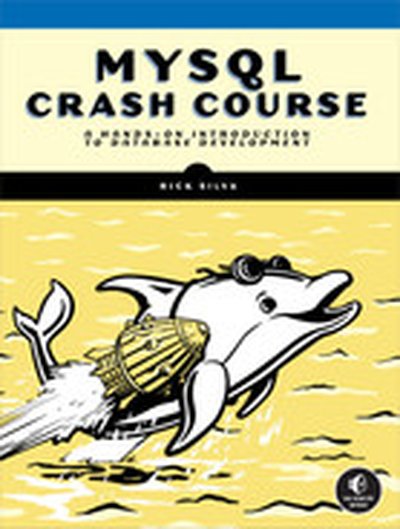
MySQL Crash Course

MySQL Crash Course is a fast-paced, no-nonsense introduction to relational database development. It’s filled with practical examples and expert advice that will have you up and running quickly. You’ll learn the basics of SQL, how to create a database, craft SQL queries to extract data, and work with events, procedures, and functions. You’ll see how to add constraints to tables to enforce rules about permitted data and use indexes to accelerate data retrieval. You’ll even explore how to call MySQL from PHP, Python, and Java. Three final projects will show you how to build a weather database from scratch, use triggers to prevent errors in an election database, and use views to protect sensitive data in a salary database. You’ll also learn how to: •Query database tables for specific information, order the results, comment SQL code, and deal with null values •Define table columns to hold strings, integers, and dates, and determine what data types to use •Join multiple database tables as well as use temporary tables, common table expressions, derived tables, and subqueries •Add, change, and remove data from tables, create views based on specific queries, write reusable stored routines, and automate and schedule events The perfect quick-start resource for database developers, MySQL Crash Course will arm you with the tools you need to build and manage fast, powerful, and secure MySQL-based data storage systems.

Beginning Database Design Solutions, 2nd Edition

A concise introduction to database design concepts, methods, and techniques in and out of the cloud In the newly revised second edition of Beginning Database Design Solutions: Understanding and Implementing Database Design Concepts for the Cloud and Beyond, Second Edition, award-winning programming instructor and mathematician Rod Stephens delivers an easy-to-understand guide to designing and implementing databases both in and out of the cloud. Without assuming any prior database design knowledge, the author walks you through the steps you’ll need to take to understand, analyze, design, and build databases. In the book, you’ll find clear coverage of foundational database concepts along with hands-on examples that help you practice important techniques so you can apply them to your own database designs, as well as: Downloadable source code that illustrates the concepts discussed in the book Best practices for reliable, platform-agnostic database design Strategies for digital transformation driven by universally accessible database design An essential resource for database administrators, data management specialists, and database developers seeking expertise in relational, NoSQL, and hybrid database design both in and out of the cloud, Beginning Database Design Solutions is a hands-on guide ideal for students and practicing professionals alike.

Azure SQL Hyperscale Revealed: High-performance Scalable Solutions for Critical Data Workloads

Take a deep dive into the Azure SQL Database Hyperscale Service Tier and discover a new form of cloud architecture from Microsoft that supports massive databases. The new horizontally scalable architecture, formerly code-named Socrates, allows you to decouple compute nodes from storage layers. This radically different approach dramatically increases the scalability of the service. This book shows you how to leverage Hyperscale to provide next-level scalability, high throughput, and fast performance from large databases in your environment. The book begins by showing how Hyperscale helps you eliminate many of the problems of traditional high-availability and disaster recovery architecture. You’ll learn how Hyperscale overcomes storage capacity limitations and issues with scale-up times and costs. With Hyperscale, your costs do not increase linearly with database size and you can manage more data than ever at a lower cost. The book teaches you how todeploy, configure, and monitor an Azure SQL Hyperscale database in a production environment. The book also covers migrating your current workloads from traditional architecture to Azure SQL Hyperscale. What You Will Learn Understand the advantages of Hyperscale over traditional architecture Deploy a Hyperscale database on the Azure cloud (interactively and with code) Configure the advanced features of the Hyperscale database tier Monitor and scale database performance to suit your needs Back up and restore your Azure SQL Hyperscale databases Implement disaster recovery and failover capability Compare performance of Hyperscale vs traditional architecture Migrate existing databases to the Hyperscale service tier Who This Book Is For SQL architects, data engineers, and DBAs who want the most efficient and cost-effective cloud technologies to run their critical data workloads, and those seeking rapid scalability and high performance and throughput while utilizing large databases

Expert Performance Indexing in Azure SQL and SQL Server 2022: Toward Faster Results and Lower Maintenance Both on Premises and in the Cloud

Take a deep dive into perhaps the single most important facet of query performance—indexes—and how to best use them. Newly updated for SQL Server 2022 and Azure SQL, this fourth edition includes new guidance and features related to columnstore indexes, improved and consolidated content on Query Store, deeper content around Intelligent Query Processing, and other updates to help you optimize query execution and make performance improvements to even the most challenging workloads. The book begins with explanations of the types of indexes and how they are stored in a database. Moving further into the book, you will learn how statistics are critical for optimal index usage and how the Index Advisor can assist in reviewing and optimizing index health. This book helps you build a clear understanding of how indexes work, how to implement and use them, and the many options available to tame even the most large and complex workloads. What You Will Learn Properly index row store, columnstore, and memory-optimized tables Make use of Intelligent Query Processing for faster query results Review statistics to understand indexing choices made by the optimizer Apply indexing strategies such as covering indexes, included columns, and index intersections Recognize and remove unnecessary indexes Design effective indexes for full-text, spatial, and XML data types Who This Book Is For Azure SQL and SQL Server administrators and developers who are ready to improve the performance of their database environment by thoughtfully building indexes to speed up queries that matter the most and make a difference to the business

Mastering PostgreSQL 15 - Fifth Edition

Mastering PostgreSQL 15 provides a deep dive into advanced topics of PostgreSQL database systems, covering installation, configuration, optimization, and administration. By reading this book, you will gain the skills to manage, secure, and optimize PostgreSQL database instances for complex applications. What this Book will help me do Understand and utilize advanced indexing techniques in PostgreSQL to improve query performance. Perform efficient database backup and recovery processes to ensure data safety and integrity. Master replication and failover methods to achieve high availability and data consistency. Implement authentication and encryption to enhance database server security. Troubleshoot PostgreSQL to identify and resolve common operational issues. Author(s) Hans-Jürgen Schönig, the author of Mastering PostgreSQL 15, is a leading expert in PostgreSQL with decades of experience in the field. His passion for databases has driven him to deliver solutions in high-performance database management and large-scale data systems. With a thorough and approachable style, Hans-Jürgen imparts complex technical knowledge effectively to his readers. Who is it for? This book is ideal for experienced PostgreSQL developers and database administrators looking to master PostgreSQL 15. Readers should have a foundational understanding of database systems and are seeking to implement advanced features and best practices in enterprise environments. It's tailored for those aspiring to enhance their operational and architectural skills in managing PostgreSQL systems.

Pro SQL Server 2022 Administration: A Guide for the Modern DBA

Get your daily work done efficiently using this comprehensive guide for SQL Server DBAs that covers all that a practicing database administrator needs to know. Updated for SQL Server 2022, this edition includes coverage of new features, such as Ledger, which provides an immutable record of table history to protect you against malicious data tampering, and integration with cloud providers to support hybrid cloud scenarios. You’ll also find new content on performance optimizations, such as query pan feedback, and security controls, such as new database roles, which are restructured for modern ways of working. Coverage also includes Query Store, installation on Linux, and the use of containerized SQL. Pro SQL Server 2022 Administration takes DBAs on a journey that begins with planning their SQL Server deployment and runs through installing and configuring the instance, administering and optimizing database objects, and ensuring that data issecure and highly available. Readers will learn how to perform advanced maintenance and tuning techniques, and discover SQL Server's hybrid cloud functionality. This book teaches you how to make the most of new SQL Server 2022 functionality, including integration for hybrid cloud scenarios. The book promotes best-practice installation, shows how to configure for scalability and high availability, and demonstrates the gamut of database-level maintenance tasks, such as index maintenance, database consistency checks, and table optimizations. What You Will Learn Integrate SQL Server with Azure for hybrid cloud scenarios Audit changes and prevent malicious data changes with SQL Server’s Ledger Secure and encrypt data to protect against embarrassing data breaches Ensure 24 x 7 x 365 access through high availability and disaster recovery features in today’s hybrid world Use Azure tooling, including Arc, to gain insight into and manage your SQL Server enterprise Install and configure SQL Server on Windows, Linux, and in containers Perform routine maintenance tasks, such as backups and database consistency checks Optimize performance and undertake troubleshooting in the Database Engine Who This Book Is For SQL Server DBAs who manage on-premise installations of SQL Server. This book is also useful for DBAs who wish to learn advanced features, such as integration with Azure, Query Store, Extended Events, and Policy-Based Management, or those who need to install SQL Server in a variety of environments.

SQL Server 2022 Revealed: A Hybrid Data Platform Powered by Security, Performance, and Availability

Know how to use the new capabilities and cloud integrations in SQL Server 2022. This book covers the many innovative integrations with the Azure Cloud that make SQL Server 2022 the most cloud-connected edition ever. The book covers cutting-edge features such as the blockchain-based Ledger for creating a tamper-evident record of changes to data over time that you can rely on to be correct and reliable. You'll learn about built-in Query Intelligence capabilities to help you to upgrade with confidence that your applications will perform at least as fast after the upgrade than before. In fact, you'll probably see an increase in performance from the upgrade, with no code changes needed. Also covered are innovations such as contained availability groups and data virtualization with S3 object storage. New cloud integrations covered in this book include Microsoft Azure Purview and the use of Azure SQL for high availability and disaster recovery. The bookcovers Azure Synapse Link with its built-in capabilities to take changes and put them into Synapse automatically. Anyone building their career around SQL Server will want this book for the valuable information it provides on building SQL skills from edge to the cloud. ​ What You Will Learn Know how to use all of the new capabilities and cloud integrations in SQL Server 2022 Connect to Azure for disaster recovery, near real-time analytics, and security Leverage the Ledger to create a tamper-evident record of data changes over time Upgrade from prior releases and achieve faster and more consistent performance with no code changes Access data and storage in different and new formats, such as Parquet and S3, without moving the data and using your existing T-SQL skills Explore new application scenarios using innovations with T-SQL in areassuch as JSON and time series Who This Book Is For SQL Server professionals who want to upgrade their skills to the latest edition of SQL Server; those wishing to take advantage of new integrations with Microsoft Azure Purview (governance), Azure Synapse (analytics), and Azure SQL (HA and DR); and those in need of the increased performance and security offered by Query Intelligence and the new Ledger