talk-data.com talk-data.com

Topic

SAS

statistical_software analytics data_management

245

tagged

Activity Trend

8 peak/qtr
2020-Q1 2026-Q1

Activities

Showing filtered results

Filtering by: O'Reilly Data Science Books ×
Practical Data Analysis with JMP, Second Edition, 2nd Edition

Understand the concepts and techniques of analysis while learning to reason statistically.

Being an effective analyst requires that you know how to properly define a problem and apply suitable statistical techniques, as well as clearly and honestly communicate the results with information-rich visualizations and precise language. Being a well-informed consumer of analyses requires the same set of skills so that you can recognize credible, actionable research when you see it.

Robert Carver's Practical Data Analysis with JMP, Second Edition uses the powerful interactive and visual approach of JMP to introduce readers to the logic and methods of statistical thinking and data analysis. It enables you to discriminate among and to use fundamental techniques of analysis, enabling you to engage in statistical thinking by analyzing real-world problems. “Application Scenarios” at the end of each chapter challenge you to put your knowledge and skills to use with data sets that go beyond mere repetition of chapter examples, and three new review chapters help readers integrate ideas and techniques. In addition, the scope and sequence of the chapters have been updated with more coverage of data management and analysis of data.

The book can stand on its own as a learning resource for professionals or be used to supplement a standard college-level introduction-to-statistics textbook. It includes varied examples and problems that rely on real sets of data, typically starting with an important or interesting research question that an investigator has pursued. Reflective of the broad applicability of statistical reasoning, the problems come from a wide variety of disciplines, including engineering, life sciences, business, economics, among

Practical Data Analysis with JMP, Second Edition introduces you to the major platforms and essential features of JMP and will leave you with a sufficient background and the confidence to continue your exploration independently.

This book is part of the SAS Press program.
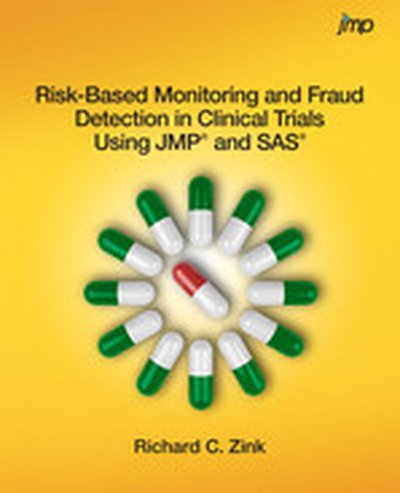
Risk-Based Monitoring and Fraud Detection in Clinical Trials Using JMP and SAS

Improve efficiency while reducing costs in clinical trials with centralized monitoring techniques using JMP and SAS.

International guidelines recommend that clinical trial data should be actively reviewed or monitored; the well-being of trial participants and the validity and integrity of the final analysis results are at stake. Traditional interpretation of this guidance for pharmaceutical trials has led to extensive on-site monitoring, including 100% source data verification. On-site review is time consuming, expensive (estimated at up to a third of the cost of a clinical trial), prone to error, and limited in its ability to provide insight for data trends across time, patients, and clinical sites. In contrast, risk-based monitoring (RBM) makes use of central computerized review of clinical trial data and site metrics to determine if and when clinical sites should receive more extensive quality review or intervention.

Risk-Based Monitoring and Fraud Detection in Clinical Trials Using JMP and SAS presents a practical implementation of methodologies within JMP Clinical for the centralized monitoring of clinical trials. Focused on intermediate users, this book describes analyses for RBM that incorporate and extend the recommendations of TransCelerate Biopharm Inc., methods to detect potential patient-or investigator misconduct, snapshot comparisons to more easily identify new or modified data, and other novel visual and analytical techniques to enhance safety and quality reviews. Further discussion highlights recent regulatory guidance documents on risk-based approaches, addresses the requirements for CDISC data, and describes methods to supplement analyses with data captured external to the study database.

Given the interactive, dynamic, and graphical nature of JMP Clinical, any individual from the clinical trial team - including clinicians, statisticians, data managers, programmers, regulatory associates, and monitors - can make use of this book and the numerous examples contained within to streamline, accelerate, and enrich their reviews of clinical trial data.

The analytical methods described in Risk-Based Monitoring and Fraud Detection in Clinical Trials Using JMP and SAS enable the clinical trial team to take a proactive approach to data quality and safety to streamline clinical development activities and address shortcomings while the study is ongoing.

This book is part of the SAS Press

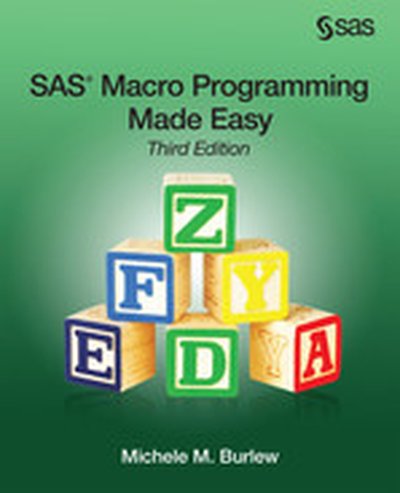
SAS Macro Programming Made Easy, Third Edition, 3rd Edition

This book provides beginners with a thorough foundation in SAS macro programming.

The macro facility is a popular part of SAS. Macro programming is a required skill for many SAS programming jobs, and the SAS Advanced Programming Certification Exam tests macro processing concepts. Whether you're looking to become certified, land a job, or increase your skills, you'll benefit from SAS Macro Programming Made Easy, Third Edition.

By following Michele Burlew's examples and step-by-step instructions, you'll be able to rapidly perform repetitive programming tasks, to pass information between programming steps more easily, and to make your programming easier to read.

Updated for SAS 9.4, this book teaches you the elements of the macro facility (macro variables, macro programs, macro language), how to write a macro program, techniques for macro programming, tips on using the macro facility, how the macro facility fits into SAS, and about the interfaces between the macro facility and other components of SAS.

Beginning macro programmers will learn to write SAS macro programs quickly and efficiently. More experienced programmers will find this book useful to refresh their conceptual knowledge and expand on their macro programming skills. Ultimately, any user interested in automating their programs—including analysts, programmers, and report writers—will find Michele Burlew's book an excellent tutorial.

This book is part of the SAS Press program.
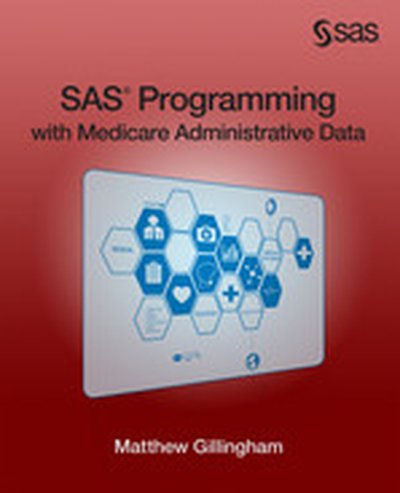
SAS Programming with Medicare Administrative Data, 2nd Edition

SAS Programming with Medicare Administrative Data is the most comprehensive resource available for using Medicare data with SAS. This book teaches you how to access Medicare data and, more importantly, how to apply this data to your research.

Knowing how to use Medicare data to answer common research and business questions is a critical skill for many SAS users. Due to its complexity, Medicare data requires specific programming knowledge in order to be applied accurately. Programmers need to understand the Medicare program in order to interpret and utilize its data.

With this book, you'll learn the entire process of programming with Medicare data—from obtaining access to data; to measuring cost, utilization, and quality; to overcoming common challenges. Each chapter includes exercises that challenge you to apply concepts to real-world programming tasks.

SAS Programming with Medicare Administrative Data offers beginners a programming project template to follow from beginning to end. It also includes more complex questions and discussions that are appropriate for advanced users. Matthew Gillingham has created a book that is both a foundation for programmers new to Medicare data and a comprehensive reference for experienced programmers.

This book is part of the SAS Press program.
Repeated Measurements and Cross-Over Designs

An introduction to state-of-the-art experimental design approaches to better understand and interpret repeated measurement data in cross-over designs. Repeated Measurements and Cross-Over Designs: Features the close tie between the design, analysis, and presentation of results Presents principles and rules that apply very generally to most areas of research, such as clinical trials, agricultural investigations, industrial procedures, quality control procedures, and epidemiological studies Includes many practical examples, such as PK/PD studies in the pharmaceutical industry, k-sample and one sample repeated measurement designs for psychological studies, and residual effects of different treatments in controlling conditions such as asthma, blood pressure, and diabetes. Utilizes SAS(R) software to draw necessary inferences. All SAS output and data sets are available via the book's related website. This book is ideal for a broad audience including statisticians in pre-clinical research, researchers in psychology, sociology, politics, marketing, and engineering.

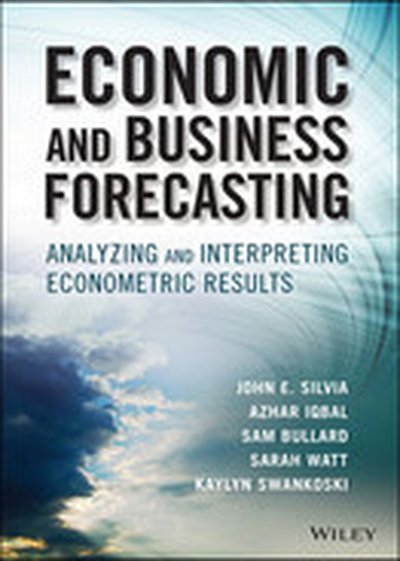
Economic and Business Forecasting: Analyzing and Interpreting Econometric Results

Discover the secrets to applying simple econometric techniques to improve forecasting Equipping analysts, practitioners, and graduate students with a statistical framework to make effective decisions based on the application of simple economic and statistical methods, Economic and Business Forecasting offers a comprehensive and practical approach to quantifying and accurate forecasting of key variables. Using simple econometric techniques, author John E. Silvia focuses on a select set of major economic and financial variables, revealing how to optimally use statistical software as a template to apply to your own variables of interest. Presents the economic and financial variables that offer unique insights into economic performance Highlights the econometric techniques that can be used to characterize variables Explores the application of SAS software, complete with simple explanations of SAS-code and output Identifies key econometric issues with practical solutions to those problems Presenting the "ten commandments" for economic and business forecasting, this book provides you with a practical forecasting framework you can use for important everyday business applications.

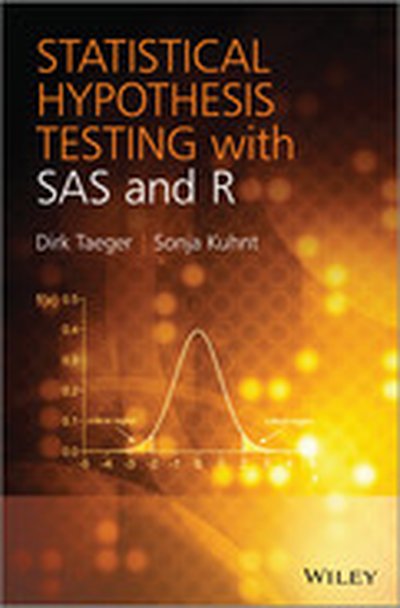
Statistical Hypothesis Testing with SAS and R

A comprehensive guide to statistical hypothesis testing with examples in SAS and R When analyzing datasets the following questions often arise: Is there a short hand procedure for a statistical test available in SAS or R? If so, how do I use it? If not, how do I program the test myself? This book answers these questions and provides an overview of the most common statistical test problems in a comprehensive way, making it easy to find and perform an appropriate statistical test. A general summary of statistical test theory is presented, along with a basic description for each test, including the necessary prerequisites, assumptions, the formal test problem and the test statistic. Examples in both SAS and R are provided, along with program code to perform the test, resulting output and remarks explaining the necessary program parameters. Key features: Provides examples in both SAS and R for each test presented. Looks at the most common statistical tests, displayed in a clear and easy to follow way. Supported by a supplementary website http://www.d-taeger.de featuring example program code. Academics, practitioners and SAS and R programmers will find this book a valuable resource. Students using SAS and R will also find it an excellent choice for reference and data analysis.

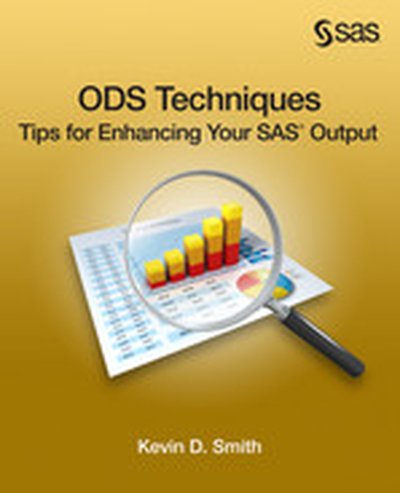
ODS Techniques

Enhance your SAS ODS output with this collection of basic to novel ideas.

SAS Output Delivery System (ODS) expert Kevin D. Smith has compiled a cookbook-style collection of his top ODS tips and techniques to teach you how to bring your reports to a new level and inspire you to see ODS in a new light.

This collection of code techniques showcases some of the most interesting and unusual methods you can use to enhance your reports within the SAS Output Delivery System. It includes general ODS tips, as well as techniques for styles, enhancing tabular output, ODS HTML, ODS PDF, ODS Microsoft Excel destinations, and ODS DOCUMENT.

Smith offers tips based on his own extensive knowledge of ODS, as well as those inspired by questions that frequently come up in his interactions with SAS users. There are simple techniques for beginners who have a minimal amount of ODS knowledge and advanced tips for the more adventurous SAS user. Together, these helpful methods provide a strong foundation for your ODS development and inspiration for building on and creating new, even more advanced techniques on your own.

This book is part of the SAS Press program.
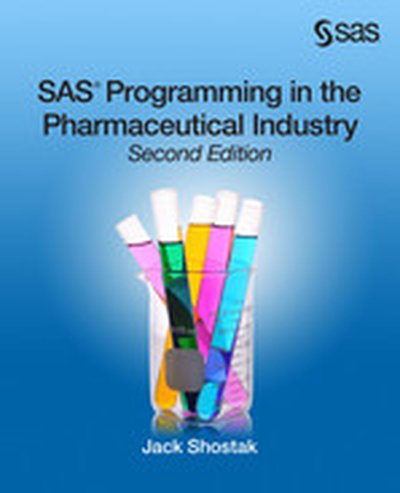
SAS Programming in the Pharmaceutical Industry, Second Edition, 2nd Edition

This comprehensive resource provides on-the-job training for statistical programmers who use SAS in the pharmaceutical industry

This one-stop resource offers a complete review of what entry- to intermediate-level statistical programmers need to know in order to help with the analysis and reporting of clinical trial data in the pharmaceutical industry.

SAS Programming in the Pharmaceutical Industry, Second Edition begins with an introduction to the pharmaceutical industry and the work environment of a statistical programmer. Then it gives a chronological explanation of what you need to know to do the job. It includes information on importing and massaging data into analysis data sets, producing clinical trial output, and exporting data. This edition has been updated for SAS 9.4, and it features new graphics as well as all new examples using CDISC SDTM or ADaM model data structures.

Whether you're a novice seeking an introduction to SAS programming in the pharmaceutical industry or a junior-level programmer exploring new approaches to problem solving, this real-world reference guide offers a wealth of practical suggestions to help you sharpen your skills.

This book is part of the SAS Press program.
Expert Cube Development with SSAS Multidimensional Models

"Expert Cube Development with SSAS Multidimensional Models" is a comprehensive guide designed for professionals looking to elevate their competence in creating and optimizing SSAS cube solutions. Focused on the multidimensional model, this book provides a detailed, pragmatic approach to delivering high-performance Business Intelligence solutions. What this Book will help me do Master the core features of multidimensional modeling with SSAS. Develop efficient and scalable OLAP cubes for business analysis. Implement advanced calculations and measures using MDX. Optimize and troubleshoot SSAS performance for real-world scenarios. Integrate SSAS models for insightful data visualization. Author(s) The authors of this book are seasoned SSAS consultants and developers, each with years of hands-on experience working with Microsoft Analysis Services in enterprise environments. Their deep understanding of multidimensional modeling shines through in this detailed and well-structured book, providing readers with not only practical guidance but also invaluable tips drawn from real-world projects. Who is it for? This book is tailored for BI developers and data professionals who already have some familiarity with Microsoft Analysis Services and want to deepen their expertise in SSAS multidimensional models. It is ideal for those looking to enhance their ability to design, implement, and optimize robust cube solutions for complex business scenarios. With step-by-step tutorials, it caters to intermediate to advanced learners seeking to take their SSAS skills to the next level.

Growth Curve Modeling: Theory and Applications

Features recent trends and advances in the theory and techniques used to accurately measure and model growth Growth Curve Modeling: Theory and Applications features an accessible introduction to growth curve modeling and addresses how to monitor the change in variables over time since there is no "one size fits all" approach to growth measurement. A review of the requisite mathematics for growth modeling and the statistical techniques needed for estimating growth models are provided, and an overview of popular growth curves, such as linear, logarithmic, reciprocal, logistic, Gompertz, Weibull, negative exponential, and log-logistic, among others, is included. In addition, the book discusses key application areas including economic, plant, population, forest, and firm growth and is suitable as a resource for assessing recent growth modeling trends in the medical field. SAS is utilized throughout to analyze and model growth curves, aiding readers in estimating specialized growth rates and curves. Including derivations of virtually all of the major growth curves and models, Growth Curve Modeling: Theory and Applications also features: Statistical distribution analysis as it pertains to growth modeling Trend estimations Dynamic site equations obtained from growth models Nonlinear regression Yield-density curves Nonlinear mixed effects models for repeated measurements data Growth Curve Modeling: Theory and Applications is an excellent resource for statisticians, public health analysts, biologists, botanists, economists, and demographers who require a modern review of statistical methods for modeling growth curves and analyzing longitudinal data. The book is also useful for upper-undergraduate and graduate courses on growth modeling.

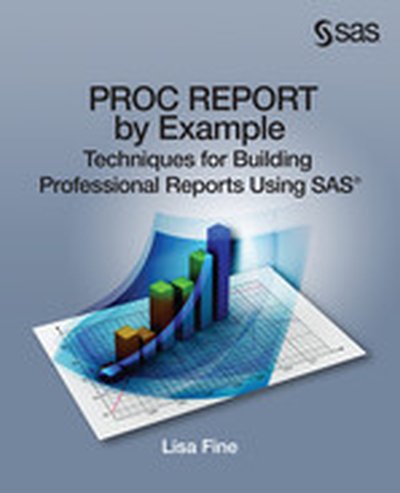
PROC REPORT by Example

PROC REPORT by Example: Techniques for Building Professional Reports Using SAS provides real-world examples using PROC REPORT to create a wide variety of professional reports. Written from the point of view of the programmer who produces the reports, this book explains and illustrates creative techniques used to achieve the desired results.

Each chapter focuses on a different concrete example, shows an image of the final report, and then takes you through the process of creating that report. You will be able to break each report down to find out how it was produced, including any data manipulation you have to do.

The book clarifies solutions to common, everyday programming challenges and typical daily tasks that programmers encounter. For example: obtaining desired report formats using style templates supplied by SAS and PROC TEMPLATE, PROC REPORT STYLE options, and COMPUTE block features employing different usage options (DISPLAY, ORDER, GROUP, ANALYSIS, COMPUTED) to create a variety of detail and summary reports using BREAK statements and COMPUTE blocks to summarize and report key findings producing reports in various Output Delivery System (ODS) destinations including RTF, PDF, XML, TAGSETS.RTF embedding images in a report and combining graphical and tabular data with SAS 9.2 and beyond

Applicable to SAS users from all disciplines, the real-life scenarios will help elevate your reporting skills learned from other books to the next level.

With PROC REPORT by Example: Techniques for Building Professional Reports Using SAS, what seemed complex will become a matter of practice.

This book is part of the SAS Press program.
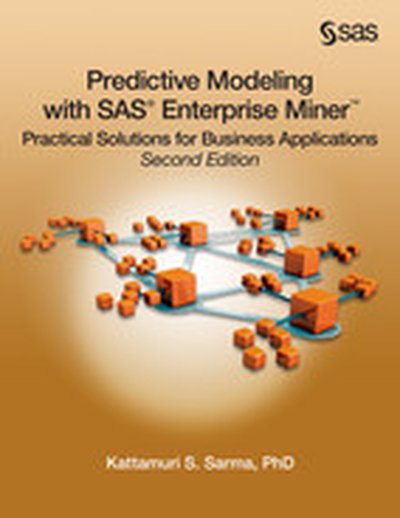
Predictive Modeling with SAS Enterprise Miner, 2nd Edition

Learn the theory behind and methods for predictive modeling using SAS Enterprise Miner.

Learn how to produce predictive models and prepare presentation-quality graphics in record time with Predictive Modeling with SAS Enterprise Miner: Practical Solutions for Business Applications, Second Edition.

If you are a graduate student, researcher, or statistician interested in predictive modeling; a data mining expert who wants to learn SAS Enterprise Miner; or a business analyst looking for an introduction to predictive modeling using SAS Enterprise Miner, you'll be able to develop predictive models quickly and effectively using the theory and examples presented in this book.

Author Kattamuri Sarma offers the theory behind, programming steps for, and examples of predictive modeling with SAS Enterprise Miner, along with exercises at the end of each chapter. You'll gain a comprehensive awareness of how to find solutions for your business needs. This second edition features expanded coverage of the SAS Enterprise Miner nodes, now including File Import, Time Series, Variable Clustering, Cluster, Interactive Binning, Principal Components, AutoNeural, DMNeural, Dmine Regression, Gradient Boosting, Ensemble, and Text Mining.

Develop predictive models quickly, learn how to test numerous models and compare the results, gain an in-depth understanding of predictive models and multivariate methods, and discover how to do in-depth analysis. Do it all with Predictive Modeling with SAS Enterprise Miner.

This book is part of the SAS Press program.
SAS 9.4 Language Reference, Second Edition

Provides conceptual information for the Base SAS language. Major topics include SAS keywords and naming conventions, SAS variables and expressions, error processing and debugging, SAS data sets and files, creating and customizing output, DATA step concepts and DATA step processing, reading raw data, and creating and managing SAS libraries.

PROC DOCUMENT by Example Using SAS
PROC DOCUMENT by Example Using SAS demonstrates the practical uses of the DOCUMENT procedure, a part of the Output Delivery System, in SAS 9.3. Michael Tuchman explains how to work with PROC DOCUMENT, which is designed to store your SAS procedure output for replay at a later time without having to rerun your original SAS code. You’ll learn how to:

save a collection of procedure output, descriptive text, and supporting graphs that can be replayed as a single unit save output once and distribute that same output in a variety of ODS formats such as HTML, CSV, and PDF create custom reports by comparing output from the same procedure run at different points in time create a table of contents for your output modify the appearance of both textual and graphical ODS output even if the original data is no longer available or easily accessible manage your tabular and graphical output by using descriptive labels, titles, and footnotes rearrange the original order of output in a procedure to suit your needs

After using this book, you’ll be able to quickly and easily create libraries of professional-looking output that are accessible at any time.

This book is part of the SAS Press program.
PROC SQL: Beyond the Basics Using SAS, Second Edition

Kirk Lafler's PROC SQL: Beyond the Basics Using SAS, Second Edition, offers a step-by-step example-driven guide that helps readers master the language of PROC SQL. Packed with analysis and examples illustrating an assortment of PROC SQL options, statements, and clauses, this book can be approached in a number of ways. Users can read it cover-to-cover or selectively by chapter; they can use the extensive index to find content of interest or refer to the helpful "Summary" that precede each chapter to look for help on a specific topic.

The second edition explores new and powerful features in SAS 9.3, and includes such topics as adding data to a table with a SET clause; bulk loading data from Microsoft Excel; distinguishing between DATA step merges and PROC SQL joins; rules for designing indexes; cardinality and index selectivity; and demystifying join algorithms. It also features an expanded discussion of CASE expressions, and new sections on complex query applications, and grouping and performance. Delving into the workings of PROC SQL with greater analysis and discussion, PROC SQL: Beyond the Basic Using SAS, Second Edition, examines a broad range of topics and provides greater detail about this powerful database language using discussion and numerous real-world examples.

This book is part of the SAS Press program.