talk-data.com talk-data.com

Topic

SQL

Structured Query Language (SQL)

database_language data_manipulation data_definition programming_language

780

tagged

Activity Trend

107 peak/qtr
2020-Q1 2026-Q1

Activities

Showing filtered results

Filtering by: O'Reilly Data Engineering Books ×
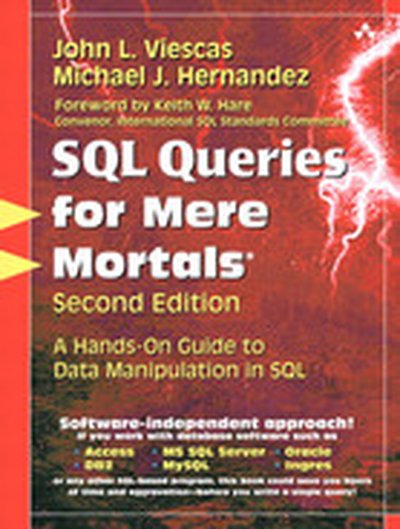
SQL Queries for Mere Mortals: A Hands-On Guide to Data Manipulation in SQL, Second Edition

Unless you are working at a very advanced level, this is the only SQL book you will ever need. The authors have taken the mystery out of complex queries and explained principles and techniques with such clarity that a "Mere Mortal" will indeed be empowered to perform the superhuman. Do not walk past this book! --Graham Mandeno, Database Consultant provides a step-by-step, easy-to-read introduction to writing SQL queries. It includes hundreds of examples with detailed explanations. This book provides the tools you need to understand, modify, and create SQL queries SQL Queries for Mere Mortals --Keith W. Hare, Convenor, ISO/IEC JTC1 SC32 WG3--the International SQL Standards Committee I learned SQL primarily from the first edition of this book, and I am pleased to see a second edition of this book so that others can continue to benefit from its organized presentation of the language. Starting from how to design your tables so that SQL can be effective (a common problem for database beginners), and then continuing through the various aspects of SQL construction and capabilities, the reader can become a moderate expert upon completing the book and its samples. Learning how to convert a question in English into a meaningful SQL statement will greatly facilitate your mastery of the language. Numerous examples from real life will help you visualize how to use SQL to answer the questions about the data in your database. Just one of the "watch out for this trap" items will save you more than the cost of the book when you avoid that problem when writing your queries. I highly recommend this book if you want to tap the full potential of your database. --Kenneth D. Snell, Ph.D., Database Designer/Programmer I don't think they do this in public schools any more, and it is a shame, but do you remember in the seventh and eighth grades when you learned to diagram a sentence? Those of you who do may no longer remember how you did it, but all of you do write better sentences because of it. John Viescas and Mike Hernandez must have remembered because they take everyday English queries and literally translate them into SQL. This is an important book for all database designers. It takes the complexity of mathematical Set Theory and of First Order Predicate Logic, as outlined in E. F. Codd's original treatise on relational database design, and makes it easy for anyone to understand. If you want an elementary- through intermediate-level course on SQL, this is the one book that is a requirement, no matter how many others you buy. --Arvin Meyer, MCP, MVP Even in this day of wizards and code generators, successful database developers still require a sound knowledge of Structured Query Language (SQL, the standard language for communicating with most database systems). In this book, John and Mike do a marvelous job of making what's usually a dry and difficult subject come alive, presenting the material with humor in a logical manner, with plenty of relevant examples. I would say that this book should feature prominently in the collection on the bookshelf of all serious developers, except that I'm sure it'll get so much use that it won't spend much time on the shelf! -- Doug Steele, Microsoft Access Developer and author Over the last several decades, SQL has evolved from a language known only to computer specialists to a widely used international standard of the computer industry. The number of new applications deployed each year using SQL now totals in the millions. If you are accessing corporate information from the Internet or from an internal network, you are probably using SQL. This new edition of helps new users learn the foundations of SQL queries, and is an essential reference guide for intermediate and advanced users. SQL Queries for Mere Mortals The accompanying CD contains five sample databases used for the example queries throughout the book in four different formats: Microsoft SQL Server 2000 and later, Microsoft Access 2000 and later, MySQL version 5.0 and later, and SQL scripts that can be used with most other implementations of the language.

Beginning PL/SQL: From Novice to Professional

Get started with PL/SQL, the built-in language that every Oracle developer and database administrator must know, in Beginning PL/SQL, a fast-paced and example-filled tutorial. Learn from author Don Bales extensive experience to discover the most commonly used aspects of PL/SQL, without wasting time with obscure and obsolete features. Bales takes his 20+ years of experience and a wealth of statistics he's gathered on PL/SQL usage over those years and applies the 80/20 rule: cover what's most needed and used by PL/SQL professionals and avoid what's not necessary! The result is a book that covers all the key features of PL/SQL without wasting your time discussing esoteric and obsolete parts of the language. Learn what really matters, so that you can get to work feeling confident with what you know about PL/SQL. Discover the 20% of PL/SQL that gives you 80% of the bang! Key topics covered include variables and datatypes, executing statements, working with cursors, real-world objects, debugging, testing, and more. Learn how to write production-level, object-oriented PL/SQL. You'll explore relational PL/SQL, but unlike most other books on the subject, this one emphasizes the use of PL/SQLs object-oriented features as well. Work through real examples of using of PL/SQL. You'll learn PL/SQL by applying it to real-world business problems, not by heavy theory.

Using the IBM System Storage N Series with Databases

This IBM® Redbooks® publication discusses how to optimize the IBM System Storage™ N series products with some of the major commercially available databases available to customers today. Topics include installation, performance, monitoring, and management when using the IBM System Storage N series with IBM DB2® , Microsoft® SQL, and Oracle® . We also cover best practices and tips for using the IBM System Storage N series with these major database applications.

Learning PHP & MySQL, 2nd Edition

PHP and MySQL are quickly becoming the de facto standard for rapid development of dynamic, database-driven web sites. This book is perfect for newcomers to programming as well as hobbyists who are intimidated by harder-to-follow books. With concepts explained in plain English, the new edition starts with the basics of the PHP language, and explains how to work with MySQL, the popular open source database. You then learn how to put the two together to generate dynamic content. If you come from a web design or graphics design background and know your way around HTML, Learning PHP & MySQL is the book you've been looking for. The content includes: PHP basics such as strings and arrays, and pattern matching A detailed discussion of the variances in different PHP versions MySQL data fundamentals like tables and statements Information on SQL data access for language A new chapter on XHTML Error handling, security, HTTP authentication, and more Learning PHP & MySQL explains everything from fundamental concepts to the nuts and bolts of performing specific tasks. As part of O'Reilly's bestselling Learning series, the book is an easy-to-use resource designed specifically for beginners. It's a launching pad for future learning, providing you with a solid foundation for more advanced development.

Sams Teach Yourself Microsoft® SQL Server T-SQL in 10 Minutes

Sams Teach Yourself Microsoft SQL Server T-SQL in 10 Minutes offers straightforward, practical answers when you need fast results. By working through 10-minute lessons, you’ll learn everything you need to know to take advantage of Microsoft SQL Server’s T-SQL language. This handy pocket guide starts with simple data retrieval and moves on to more complex topics, including the use of joins, subqueries, full text-based searches, functions and stored procedures, cursors, triggers, table constraints, XML, and much more. You’ll learn what you need to know methodically, systematically, and simply–in highly focused lessons designed to make you immediately and effortlessly productive. Tips point out shortcuts and solutions Cautions help you avoid common pitfalls Notes explain additional concepts, and provide additional information 10 minutes is all you need to learn how to… Use T-SQL in the Microsoft SQL Server environment Construct complex T-SQL statements using multiple clauses and operators Filter data so you get the information you need quickly Retrieve, sort, and format database contents Join two or more related tables Make SQL Server work for you with globalization and localization Create subqueries to pinpoint your data Automate your workload with triggers Create and alter database tables Work with views, stored procedures, and more Register your book at www.samspublishing.com/register to download examples and source code from this book.

Microsoft SQL Server 2005, Compact Edition

SQL Server Compact Edition is a slimmed down version of SQL Server that you can use on Pocket PCs, Smart phones, Tablet PCs, and Desktops. With this book, you will learn how to build applications for resource constrained devices. You’ll discover how the SQL Server Compact Edition database can also be used as an embedded in-proc database for desktop-based applications. You’ll learn how to manage the SQL Server Compact Edition database using SQL Server Management Studio, Visual Studio, and Query Analyzer. Laptops, Tablet PCs, and mobile devices enable information workers to access enterprise data from remote locations. With the step-by-step exercises provided in this book, you’ll learn how to synchronize data between SQL Server and SQL Server Compact Edition. You’ll also learn Remote Data Access–a lightweight method to exchange data between SQL Server and SQL Server Compact Edition. Also in this book are code samples to help you write database applications for mobile devices and for desktop PCs. Throughout the book you’ll find expert tips for building and deploying enterprise applications. Understand how to… Build mobile and desktop applications using SQL Server Compact Edition Set up the development and production environment with Visual Studio, SQL Server, and SQL Server Compact Edition Optimize performance and plan for security Manage databases using SQL Server Management Studio, Visual Studio, and Query Analyzer Develop applications using ADO.NET and OLEDB provider for SQL Server Compact Edition Upgrade from earlier versions of SQL CE, .NET Compact Framework, and Visual Studio Use Merge Replication to synchronize data between SQL Server and SQL Server Compact Edition Exchange data between SQL Server and SQL Server Compact Edition using Remote Data Access Introduction 1 1 Getting Started with SQL Server 2005 Compact Edition 7 2 Platform Support and Installation35 3 Getting to Know the Tools 63 4 Managing the SQL Server 2005 Compact Edition Database 109 5 Defining Database Structure 131 6 Manipulating the Database 175 7 Programming SQL Server 2005 Compact Edition with ADO.NET 205 8 Introducing Native Access 247 9 Using Operators in SQL Server 2005 Compact Edition 279 10 Using the Built-In Functions 295 11 Upgrading from a Previous Version 327 12 Synchronizing Data with Merge Replication 345 13 Synchronizing Data with Remote Data Access 411 14 Securing the SQL Server 2005 Compact Edition Database 459 15 SQL Server 2005 Compact Edition Performance Tuning 505 Index 551

MySQL Pocket Reference, 2nd Edition

To help you be more efficient in your work, this handy pocket reference gives you instant reminders on how to use important MySQL functions, especially in conjunction with key parts of the LAMP open source infrastructure. This powerful database system is so rich in features that no administrator or programmer can stay familiar with all of them. MySQL Pocket Reference is an ideal on-the-job companion, well organized to help you find and adapt the statements you need -- quickly. Updated for the latest versions of this popular database, this edition covers many complex features that have been added to MySQL 5.0 and 5.1, including a section dedicated to stored procedures and triggers. After a brief introduction on installation and initial setup, the book explains: You don't have time to stop and thumb through an exhaustive reference when you're hard at work. This portable and affordable guide is small enough to fit into your pocket, and gives you a convenient reference that you can consult anywhere. When you reach a sticking point and need to get to a solution quickly, the How to configure MySQL, such as setting the root password MySQL data types, including numerics, strings, dates, and complex types SQL syntax, commands, data types, operators, and functions Arithmetic, comparison and logical operators Aggregate and general functions Stored procedures and triggers, including procedure definition, procedure calls, procedure management, cursors, and triggers MySQL Pocket Reference is the book you want to have.

Oracle Database 10g Performance Tuning Tips & Techniques

"Offers hundreds of hints, tips, and tricks of the trade that can be useful to any DBA wanting to achieve maximum performance of Oracle applications. No Oracle library would be complete without this book." --Ken (Dr. DBA) Jacobs, Vice President of Product Strategy for Server Technologies, Oracle Corporation "Rich is the first and last stop for Oracle Database technology and performance tuning. His knowledge is a vital tool that you need to successfully negotiate the waters of Oracle database development." --Mike Frey, Principal Architect, Navteq

MCITP Administrator: Microsoft® SQL Server™ 2005 Optimization and Maintenance (70-444): Study Guide

This ebook does not provide access to the CD-ROM files. Covering Microsoft's brand-new SQL 2005 administrator exam, this study guide walks you through setting up, maintaining, and troubleshooting database solutions. You'll review key topics such as defining high-availability solutions, automating administrative tasks, defining security solutions, monitoring and troubleshooting the database server, and designing and executing deployments. Plus, the CD-ROM features leading exam prep software with an assessment test, test engine of case study practice questions, and electronic flashcards.

Microsoft® SQL Server™ 2005 Integration Services Step by Step

Teach yourself the fundamentals of SQL Server Integration Services—one step at a time. This practical, learn-by-doing tutorial delivers the guidance you need to transform and consolidate data—and build solutions that support your business intelligence needs. Discover how to: Design and execute packages that transform data between files and relational databases Configure connection managers to access other data sources Create data flows that alter, split, match, and merge data Develop event-handlers and monitor package performance Encrypt sensitive information and control access to packages Customize script code to automate Control Flow and Data Flow tasks Debug, troubleshoot, and optimize packages CD features: All practice exercises Sample databases Fully searchable eBook For customers who purchase an ebook version of this title, instructions for downloading the CD files can be found in the ebook.

Expert SQL Server™ 2005 Integration Services

As a practical guide for Integration Services ETL development, this book shows you ways to implement your ETL solution requirements from the data to the administration and everything in-between. Each chapter begins with a review of pertinent ETL concepts and moves into working those out into a design with multiple examples and related Integration Services features with the end goal of putting it all together to get a solution.

Understanding Oracle Clinical

This Short Cut is written to assist you, an Oracle Clinical Developer, with many of the tasks and decisions you may encounter on an occasional basis. These tasks involve study setup and maintenance, account maintenance, handling discrepancies, preparing data sets for analysis, batch-loading data, altering system-level settings and defining standard processes. A working knowledge of screen setup and procedure coding is assumed. Remote Data Capture (RDC), which moves data entry from the CRO or pharmaceutical company to the sites, is fast becoming the preferred way to gather and clean data for clinical trails. Thus, RDC, in either Classic or PDF form is frequently discussed here; however, occasionally traditional OC data entry methods will be noted. Ideally, you will have a general programming background as well as a strong knowledge of clinical trials and PL/SQL.

Beginning XML, 4th Edition

When the first edition of this book was written, XML was a relatively new language but already gaining ground fast and becoming more and more widely used in a vast range of applications. By the time of the second edition, XML had already proven itself to be more than a passing fad, and was in fact being used throughout the industry for an incredibly wide range of uses. With the third edition, it was clear that XML was a mature technology, but more important, it became evident that the XML landscape was dividing into several areas of expertise. Now in this edition, we needed to categorize the increasing number of specifications surrounding XML, which either use XML or provide functionality in addition to the XML core specification. So what is XML? It's a markup language, used to describe the structure of data in meaningful ways. Anywhere that data is input/output, stored, or transmitted from one place to another, is a potential fit for XML's capabilities. Perhaps the most well-known applications are web-related (especially with the latest developments in handheld web access—for which some of the technology is XML-based). However, there are many other non-web-based applications for which XML is useful—for example, as a replacement for (or to complement) traditional databases, or for the transfer of financial information between businesses. News organizations, along with individuals, have also been using XML to distribute syndicated news stories and blog entries. This book aims to teach you all you need to know about XML—what it is, how it works, what technologies surround it, and how it can best be used in a variety of situations, from simple data transfer to using XML in your web pages. It answers the fundamental questions: What is XML? How do you use XML? How does it work? * What can you use it for, anyway? This book is for people who know that it would be a pretty good idea to learn XML but aren't 100 percent sure why. You've heard the hype but haven't seen enough substance to figure out what XML is and what it can do. You may be using development tools that try to hide the XML behind user interfaces and scripts, but you want to know what is really happening behind the scenes. You may already be somehow involved in web development and probably even know the basics of HTML, although neither of these qualifications is absolutely necessary for this book. What you don't need is knowledge of markup languages in general. This book assumes that you're new to the concept of markup languages, and we have structured it in a way that should make sense to the beginner and yet quickly bring you to XML expert status. The word "Beginning" in the title refers to the style of the book, rather than the reader's experience level. There are two types of beginner for whom this book is ideal: Programmers who are already familiar with some web programming or data exchange techniques. Programmers in this category will already understand some of the concepts discussed here, but you will learn how you can incorporate XML technologies to enhance those solutions you currently develop. Those working in a programming environment but with no substantial knowledge or experience of web development or data exchange applications. In addition to learning how XML technologies can be applied to such applications, you will be introduced to some new concepts to help you understand how such systems work. The subjects covered in this book are arranged to take you from novice to expert in as logical a manner as we could. This Fourth Edition is structured in sections based on various areas of XML expertise. Unless you are already using XML, you should start by reading the introduction to XML in Part I. From there, you can quickly jump into specific areas of expertise, or, if you prefer, you can read through the book in order. Keep in mind that there is quite a lot of overlap in XML, and that some of the sections make use of techniques described elsewhere in the book. The book begins by explaining what exactly XML is and why the industry felt that a language like this was needed. After covering the why, the next logical step is the how, so it shows you how to create well-formed XML. Once you understand the whys and hows of XML, you'll go on to some more advanced things you can do when creating your XML documents, to make them not only well formed, but valid. (And you'll learn what "valid" really means.) After you're comfortable with XML and have seen it in action, the book unleashes the programmer within and looks at an XML-based programming language that you can use to transform XML documents from one format to another. Eventually, you will need to store and retrieve XML information from databases. At this point, you will learn not only the state of the art for XML and databases, but also how to query XML information using an SQL-like syntax called XQuery. XML wouldn't really be useful unless you could write programs to read the data in XML documents and create new XML documents, so we'll get back to programming and look at a couple of ways that you can do that. Understanding how to program and use XML within your own business is one thing, but sending that information to a business partner or publishing it to the Internet is another. You'll learn about technologies that use XML that enable you to send messages across the Internet, publish information, and discover services that provide information. Since you have all of this data in XML format, it would be great if you could easily display it to people, and it turns out you can. You'll see an XML version of HTML called XHTML. You'll also look at a technology you may already be using in conjunction with HTML documents called CSS. CSS enables you to add visual styles to your XML documents. In addition, you'll learn how to design stunning graphics and make interactive forms using XML. Finally, the book ends with a case study, which should help to give you ideas about how XML can be used in real-life situations, and which could be used in your own applications. This book builds on the strengths of the earlier editions, and provides new material to reflect the changes in the XML landscape—notably XQuery, RSS and Atom, and AJAX. Updates have been made to reflect the most recent versions of specifications and best practices throughout the book. In addition to the many changes, each chapter has a set of exercise questions to test your understanding of the material. Possible solutions to these questions appear in Appendix A. Part I: Introduction: The introduction is where most readers should begin. The first three chapters introduce some of the goals of XML as well as the specific rules for constructing XML. Once you have read this part you should be able to read and create your own XML documents. Chapter 1: What Is XML?: This chapter cover some basic concepts, introducing the fact that XML is a markup language (a bit like HTML) whereby you can define your own elements, tags, and attributes (known as a vocabulary). You'll see that tags have no presentation meaning—they're just a way to describe the structure of the data. Chapter 2: Well-Formed XML: In addition to explaining what well-formed XML is, we offer a look at the rules that exist (the XML 1.0 and 1.1 Recommendations) for naming and structuring elements—you need to comply with these rules in order to produce well-formed XML. Chapter 3: XML Namespaces: Because tags can be made up, you need to avoid name conflicts when sharing documents. Namespaces provide a way to uniquely identify a group of tags, using a URI. This chapter explains how to use namespaces. Part II: Validation: In addition to the well-formedness rules you learn in Part I, you will most likely want to learn how to create and use different XML vocabularies. This Part introduces you to DTDs, XML Schemas, and RELAX NG: three languages that define custom XML vocabularies. It also shows you how to utilize these definitions to validate your XML documents. Chapter 4: Document Type Definitions: You can specify how an XML document should be structured, and even provide default values, using Document Type Definitions (DTDs). If XML conforms to the associated DTD, it is known as valid XML. This chapter covers the basics of using DTDs. Chapter 5: XML Schemas: XML Schemas, like DTDs, enable you to define how a document should be structured. In addition to defining document structure, they enable you to specify the individual datatypes of attribute values and element content. They are a more powerful alternative to DTDs. Chapter 6: RELAX NG: RELAX NG is a third technology used to define the structure of documents. In addition to a new syntax and new features, it takes the best from XML Schemas and DTDs, and is therefore very simple and very powerful. RELAX NG has two syntaxes; both the full syntax and compact syntax are discussed. Part III: Processing: In addition to defining and creating XML documents, you need to know how to work with documents to extract information and convert it to other formats. In fact, easily extracting information and converting it to other formats is what makes XML so powerful. Chapter 7: XPath: The XPath language is used to locate sections and data in the XML document, and it's important in many other XML technologies. Chapter 8: XSLT: XML can be transformed into other XML documents, HTML, and other formats using XSLT stylesheets, which are introduced in this chapter. Part IV: Databases: Creating and processing XML documents is good, but eventually you will want to store those documents. This section describes strategies for storing and retrieving XML documents and document fragments from different databases. Chapter 9: XQuery, the XML Query Language: Very often, you will need to retrieve information from within a database. XQuery, which is built on XPath and XPath2, enables you to do this in an elegant way. Chapter 10: XML and Databases: XML is perfect for structuring data, and some traditional databases are beginning to offer support for XML. This chapter discusses these, and provides a general overview of how XML can be used in an n-tier architecture. In addition, new databases based on XML are introduced. Part V: Programming: At some point in your XML career, you will need to work with an XML document from within a custom application. The two most popular methodologies, the Document Object Model (DOM) and the Simple API for XML (SAX), are explained in this part. Chapter 11: The Document Object Model (DOM): Programmers can use a variety of programming languages to manipulate XML using the Document Object Model's objects, interfaces, methods, and properties, which are described in this chapter. Chapter 12: Simple API for XML (SAX): An alternative to the DOM for programmatically manipulating XML data is to use the Simple API for XML (SAX) as an interface. This chapter shows how to use SAX and utilizes examples from the Java SAX API. Part VI: Communication: Sending and receiving data from one computer to another is often difficult, but several technologies have been created to make communication with XML much easier. This part discusses RSS and content syndication, as well as web services and SOAP. This edition includes a new chapter on Ajax techniques. Chapter 13: RSS, Atom, and Content Syndication: RSS is an actively evolving technology that is used to publish syndicated news stories and website summaries on the Internet. This chapter not only discusses how to use the different versions of RSS and Atom, it also covers the future direction of the technology. In addition, it demonstrates how to create a simple newsreader application that works with any of the currently published versions. Chapter 14: Web Services: Web services enable you to perform cross-computer communications. This chapter describes web services and introduces you to using remote procedure calls in XML (using XML-RPC and REST), as well as giving you a brief look at major topics such as SOAP. Finally, it breaks down the assortment of specifications designed to work in conjunction with web services. Chapter 15: SOAP and WSDL: Fundamental to XML web services, the Simple Object Access Protocol (SOAP) is one of the most popular specifications for allowing cross-computer communications. Using SOAP, you can package up XML documents and send them across the Internet to be processed. This chapter explains SOAP and the Web Services Description Language (WSDL) that is used to publish your service. Chapter 16: Ajax: Ajax enables you to utilize JavaScript with web services and SOAP, or REST communications. Additionally, Ajax patterns can be used within web pages to communicate with the web server without refreshing. This chapter is new to the Fourth Edition. Part VII: Display: Several XML technologies are devoted to displaying the data stored inside of an XML document. Some of these technologies are web-based, and some are designed for applications and mobile devices. This part discusses the primary display strategies and formats used today. Chapter 17: Cascading Style Sheets (CSS): Website designers have long been using Cascading Style Sheets (CSS) with their HTML to easily make changes to a website's presentation without having to touch the underlying HTML documents. This power is also available for XML, enabling you to display XML documents right in the browser. Or, if you need a bit more flexibility with your presentation, you can use XSLT to transform your XML to HTML or XHTML and then use CSS to style these documents. Chapter 18: XHTML: XHTML is a new version of HTML that follows the rules of XML. This chapter discusses the differences between HTML and XHTML, and shows you how XHTML can help make your sites available to a wider variety of browsers, from legacy browsers to the latest browsers on mobile phones. Chapter 19: Scalable Vector Graphics (SVG): Do you want to produce a custom graphic using XML? SVG enables you to describe a graphic using XML-based vector commands. This chapter teaches you the basics of SVG and then dives into a more complex SVG-based application that can be published to the Internet. Chapter 20: XForms: XForms are XML-based forms that can be used to design desktop applications, paper-based forms, and of course XHTML-based forms. This chapter demonstrates both the basics and some of the more interesting uses of XForms. Part VIII: Case Study: Throughout the book you'll gain an understanding of how XML is used in web, business-to-business (B2B), data storage, and many other applications. The case study covers an example application and shows how the theory can be put into practice in real-life situations. The case study is new to this edition. Chapter 21: Case Study: Payment Calculator: This case study explores some of the possibilities and strategies for using XML in your website. It includes an example that demonstrates a loan payment calculator by creating a web page using XHTML and CSS, communicating with a local web service using AJAX, utilizing an XML Schema to build data structures in .NET, and ultimately using the Document Object Model to display the results in SVG. An online version of this case study on the book's website covers the same material using Ruby on Rails instead of .NET. Appendixes: Appendix A provides answers to the exercise questions that appear throughout the book. The remaining appendixes provide reference material that you may find useful as you begin to apply the knowledge gained throughout the book in your own applications. These are: Appendix B: XPath Reference; Appendix C: XSLT Reference; Appendix D: The XML Document Object Model; Appendix E: XML Schema Element and Attribute Reference; Appendix F: XML Schema Datatypes Reference; Appendix G: SAX 2.0.2 Reference. Appendixes A, B, and C are included within the book; Appendixes D-G are available on the book's website.

Expert SQL Server 2005 Development

While building on the skills you already have, Expert SQL Server 2005 Development will help you become an even better developer by focusing on best practices and demonstrating how to design high-performance, maintainable database applications. This book starts by reintroducing the database as a integral part of the software development ecosystem. You'll learn how to think about SQL Server development as you would any other software development. For example, there's no reason you can't architect and test database routines just as you would architect and test application code. And nothing should stop you from implementing the types of exception handling and security rules that are considered so important in other tiers, even if they are usually ignored in the database. You'll learn how to apply development methodologies like these to produce high-quality encryption and SQLCLR solutions. Furthermore, you'll discover how to exploit a variety of tools that SQL Server offers in order to properly use dynamic SQL and to improve concurrency in your applications. Finally, you'll become well versed in implementing spatial and temporal database designs, as well as approaching graph and hierarchy problems.

Access Data Analysis Cookbook

If you have large quantities of data in a Microsoft Access database, and need to study that data in depth, this book is a data cruncher's dream. Access Data Analysis Cookbook offers practical recipes to solve a variety of common problems that users have with extracting Access data and performing calculations on it. Each recipe includes a discussion on how and why the solution works. Whether you use Access 2007 or an earlier version, this book will teach you new methods to query data, different ways to move data in and out of Access, how to calculate answers to financial and investment issues, and more. Learn how to apply statistics to summarize business information, how to jump beyond SQL by manipulating data with VBA, how to process dates and times, and even how to reach into the Excel data analysis toolkit. Recipes demonstrate ways to: Develop basic and sophisticated queries Apply aggregate functions, custom functions, regular expressions, and crosstabs Apply queries to perform non-passive activities such as inserting, updating, and deleting data Create and manipulate tables and queries programmatically Manage text-based data, including methods to isolate parts of a string and ways to work with numbers that are stored as text Use arrays, read and write to the Windows registry, encrypt data, and use transaction processing Use the FileSystemObject, use XML with XSLT, communicate with SQL Server, and exchange data with other Office products Find answers from time-based data, such as how to add time, count elapsed time, work with leap years, and how to manage time zones in your calculations Deal with business and finance problems, including methods for calculating depreciation, loan paybacks, and Return on Investment (ROI) Explore statistical techniques, such as frequency, variance, kurtosis, linear regression, combinations and permutations Access Data Analysis Cookbook is a one-stop-shop for extracting nuggets of valuable information from your database, and anyone with Access experience will benefit from these tips and techniques, including seasoned developers. If you want to use your data, and not just store it, you'll find this guide indispensable.

Business Solutions Microsoft® Office Access 2007 Forms, Reports, and Queries

“Everything you need to master Access 2007 forms, reports, and queries.” –Charles Carr, Reviews Editor, ComputorEdge Magazine Create Forms for Business Ensure Data Entry Accuracy Build Elegant Form Interfaces Collect Data Via Email Design Effective Business Reports Make an Invoice Report Create Mailing Labels Extract Data Work with Multiple Tables Calculate Discounts Analyze Data Develop your Microsoft Access expertise instantly with proven techniques Let’s face it: Microsoft Access is a large, intimidating program. Most people never progress beyond creating simple tables and using wizards to build basic forms and reports. At the same time, you need information and you know that what you seek is embedded somewhere in your Access database. Without a more sophisticated knowledge of how to extract and present that data, you’re forced to rely on office gurus and overworked IT people to provide canned reports or one-size-fits-all solutions. This book changes all that by giving you the skills to build efficient front-ends for data (forms), publish the results in an attractive and easy-to-read format (reports), and extract the data you need (queries). This book shuns the big Access picture and instead focuses intently on forms, reports, and queries. This in-depth approach will give you the knowledge and understanding you need to get at the data and prove the old saw that knowledge is power. · Focuses on the three technologies that you must master to get the most out of Access: forms, reports, and queries. · Avoids database theory in favor of practical know-how that you can put to use right away. · Packed full of real-world examples and techniques to help you learn and understand the importance of each section. · Covers what’s new and changed in Microsoft Access 2007. Introduction Part I: Creating Forms Chapter 1 Creating and Using a Form Chapter 2 Working with Form Controls Chapter 3 Designing Forms for Efficient and Accurate Data Entry Chapter 4 Designing Forms for Business Use Chapter 5 Creating Specialized Forms Part II: Designing and Customizing Reports Chapter 6 Creating and Publishing a Report Chapter 7 Designing Effective Business Reports Chapter 8 Designing Advanced Reports Chapter 9 Creating Specialized Reports Part III: Creating Powerful Queries Chapter 10 Creating a Basic Query Chapter 11 Building Criteria Expressions Chapter 12 Working with Multiple-Table Queries Chapter 13 Creating Advanced Queries Chapter 14 Creating PivotTable Queries Chapter 15 Querying with SQL Statements Index

Foundations of SQL Server 2005 Business Intelligence

Just as every business needs to effectively employ business intelligence (BI) to stay competitive, every IT professional needs to master BI to stay employed in this fastest-growing segment of information technology. Foundations of SQL Server 2005 Business Intelligence is the quickest path to understanding BI, and it is essential reading for all who work with SQL Server 2005. It is written from a practical perspective, perfect for anyone who uses the tools in SQL Server 2005s extraordinarily rich BI product suite. This book explains how best to use Analysis Services, SQL Server Integration Services, SQL Server Reporting Services, and SQL Server Data Mining. It also describes best practices for implementing end-to-end BI solutions in small, medium, and large business environments. And it provides important information about integrating BI with various client tools, including Excel, Business Scorecards, Proclarity, and SharePoint Portal Server. Developers, end users, and even managers will find this an enlightening guide to the power and promise of SQL Server 2005 BI.

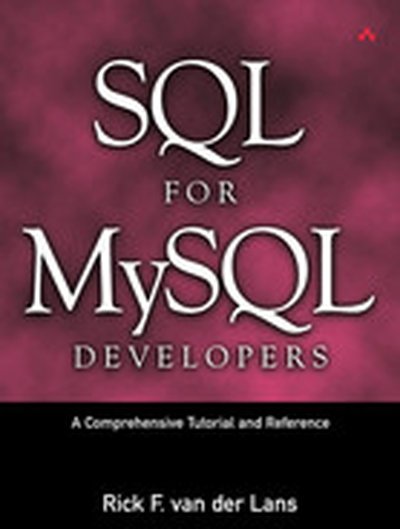
SQL for MySQL Developers: A Comprehensive Tutorial and Reference

The Most Complete and Practical Guide to MySQL Version 5’s Powerful SQL Dialect MySQL version 5 offers a SQL dialect with immense power. In SQL for MySQL Developers, Rick F. van der Lans helps you master this version ofSQL and take advantage of its full potential. Using case study examplesand hands-on exercises, van der Lans illuminates every key concept,technique, and statement–including advanced features that make iteasier to create even the most complex statements and programs. Drawing on decades of experience as an SQL standards team member and enterprise consultant, he reveals exactly why MySQL’s dialect works as it does–and how to get the most out of it. You’ll gain powerful insight into everything from basic queries to stored procedures, transactions to data security. Whether you’re a programmer, Web developer, analyst, DBA, or database user, this book can take you from “apprentice” to true SQL expert. If you’ve used SQL in older versions of MySQL, you’ll become dramatically more effective–and if you’re migrating from other database platforms, you’ll gain practical mastery fast. Coverage includes Writing queries, including joins, functions, and subqueries Updating data Creating tables, views, and other database objects Specifying keys and other integrity constraints Improving efficiency with indexes Enforcing security via passwords and privileges Embedding SQL statements within PHP programs Building stored procedures and triggers Using transactions, locking, rollback, and isolation levels Utilizing MySQL’s catalog All of the book’s sample programs are available for download from www.r20.nl. About the Author Rick F. van der Lans is author of the classic Introduction to SQL, the definitive SQL guide that database developers have relied on for more than 20 years. He is a consultant, author, and lecturer specializing in database technology, development tools, data warehousing, and XML. As managing director of the Netherlands-based R20/Consultancy, he has advised many large companies on defining their IT architectures. He chairs the European Meta Data Conference, and writes columns for several magazines. Contents About the Author Preface PART I Introduction CHAPTER 1 Introduction to MySQL CHAPTER 2 The Tennis Club Sample Database CHAPTER 3 Installing the Software CHAPTER 4 SQL in a Nutshell PART II Querying and Updating Data CHAPTER 5 SELECT Statement: Common Elements CHAPTER 6 SELECT Statements, Table Expressions, and Subqueries CHAPTER 7 SELECT Statement:The FROM Clause CHAPTER 8 SELECT Statement: The WHERE Clause CHAPTER 9 SELECT Statement: SELECT Clause and Aggregation Functions CHAPTER 10 SELECT Statement: The GROUP BY Clause CHAPTER 11 SELECT Statement: The HAVING Clause CHAPTER 12 SELECT Statement: The ORDER BY Clause CHAPTER 13 SELECT Statement: The LIMIT Clause CHAPTER 14 Combining Table Expressions CHAPTER 15 The User Variable and the SET Statement CHAPTER 16 The HANDLER Statement CHAPTER 17 Updating Tables CHAPTER 18 Loading and Unloading Data CHAPTER 19 Working with XML Documents PART III Creating Database Objects CHAPTER 20 Creating Tables CHAPTER 21 Specifying Integrity Constraints CHAPTER 22 Character Sets and Collations CHAPTER 23 The ENUM and SET Types CHAPTER 24 Changing and Dropping Tables CHAPTER 25 Using Indexes CHAPTER 26 Views CHAPTER 27 Creating Databases CHAPTER 28 Users and Data Security CHAPTER 29 Statements for Table Maintenance CHAPTER 30 The SHOW, DESCRIBE, and HELP Statements PART IV Procedural Database Objects CHAPTER 31 Stored Procedures CHAPTER 32 Stored Functions CHAPTER 33 Triggers CHAPTER 34 Events PART V Programming with SQL CHAPTER 35 MySQL and PHP CHAPTER 36 Dynamic SQL with Prepared Statement CHAPTER 37 Transactions and Multiuser Usage APPENDIX A Syntax of SQL APPENDIX B Scalar Functions APPENDIX C System Variables APPENDIX D Bibliography Index

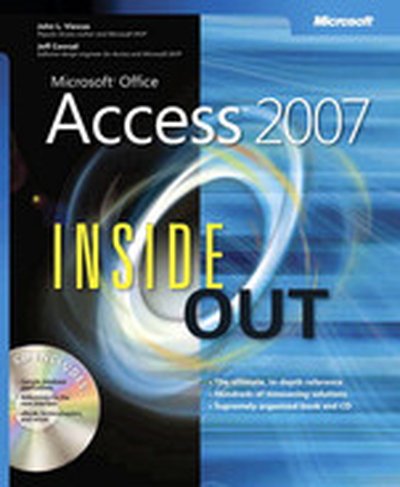
Microsoft Office® Access 2007 Inside Out

You’re beyond the basics, so dive right in and really put your database skills to work! This supremely organized reference is packed with hundreds of timesaving solutions, troubleshooting tips, and workarounds. It’s all muscle and no fluff. Discover how the experts tackle Access 2007—and challenge yourself to new levels of mastery! Create tables that support your database design strategy Import and link to data from spreadsheets, text files, databases, and other ODBC data sources Build simple to complex queries to manipulate data Learn advanced techniques for building and customizing user interface forms Design attractive reports to calculate and analyze large sets of data Automate your application with Microsoft Visual Basic(R) for Applications Customize the Office Fluent Ribbon Explore using XML and Windows(R) SharePoint(R) Services to create Web-based applications CD includes: Fully searchable eBook—plus bonus chapters Sample database applications—including query, form, and report examples Articles from the experts: designing databases, understanding SQL, exporting data, and more Links to demos, blogs, and user communities References for finding Access 2003 commands in Access 2007 Windows Vista(R) Product Guide eReference and other eBooks For customers who purchase an ebook version of this title, instructions for downloading the CD files can be found in the ebook.

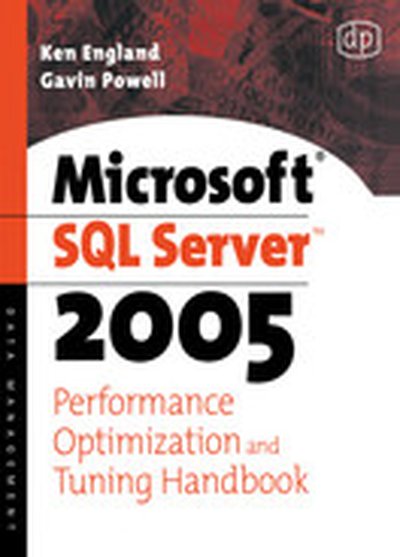
Microsoft SQL Server 2005 Performance Optimization and Tuning Handbook

Database professionals will find that this new edition aids in mastering the latest version of Microsoft’s SQL Server. Developers and database administrators (DBAs) use SQL on a daily basis in application development and the subsequent problem solving and fine tuning. Answers to SQL issues can be quickly located helping the DBA or developer optimize and tune a database to maximum efficiency. Basic questions are easily located on the topics of filtering, sorting, operators, conditionals, pseudo columns, single row functions, joins, grouping functions, sub queries, composite queries, hierarchies, flashback queries, parallel queries, expressions and regular expressions. Assistance on DML, data types (including collections), XML, DDL for basic database objects such as tales, views and indexes, partitioning, and security is also considered. * Identifies the most common issues DBAs face day to day for easy reference *Provides DBAs with solutions actually used by the authors in enterprise environments to resolve common and specialized problems to optimization issues. * Addresses issues that have been introduced by new features which can add more control but reduce performance.