talk-data.com talk-data.com

Topic

SQL

Structured Query Language (SQL)

database_language data_manipulation data_definition programming_language

25

tagged

Activity Trend

107 peak/qtr
2020-Q1 2026-Q1

Activities

Showing filtered results

Filtering by: O'Reilly Business Intelligence Books ×
Business Intelligence Career Master Plan

Embark on your business intelligence career with 'Business Intelligence Career Master Plan'. This book provides you with a clear roadmap, actionable insights, and expert advice to help you navigate the challenges of building a successful career in BI. You'll learn everything from identifying your starting point in BI to developing critical skills in data analysis, visualization, and management. What this Book will help me do Understand various business intelligence roles and their responsibilities to find your ideal BI career path. Develop expertise in using tools like Power BI and databases like AdventureWorks to handle and analyze data effectively. Master the art of creating informative and compelling data visualizations to tell impactful data stories. Gain the technical skills needed for programming and system development to excel in the BI field. Learn how to automate and optimize BI workflows to enhance productivity and efficiency. Author(s) The authors, None Chavez and None Moncada, excel in mentoring aspiring business intelligence professionals. With vast experience in BI systems and project management, they aim to make technical concepts accessible and fascinating. Their hands-on guidance empowers readers to build essential skills and thrive in the BI field. Who is it for? This book is ideal for aspiring business intelligence developers and data analysts eager to advance their careers. If you're passionate about data and enjoy solving complex problems, this resource will equip you with the knowledge and tools to succeed. Starting with a foundational understanding of common tools like Excel and SQL is recommended to get the most out of this book.
Pro DAX with Power BI: Business Intelligence with PowerPivot and SQL Server Analysis Services Tabular

Learn the intricate workings of DAX and the mechanics that are necessary to solve advanced Power BI challenges. This book is all about DAX (Data Analysis Expressions), the formula language used in Power BI—Microsoft’s leading self-service business intelligence application—and covers other products such as PowerPivot and SQL Server Analysis Services Tabular. You will learn how to leverage the advanced applications of DAX to solve complex tasks. Often a task seems complex due to a lack of understanding, or a misunderstanding of core principles, and how certain components interact with each other. The authors of this book use solutions and examples to teach you how to solve complex problems. They explain the intricate workings of important concepts such as Filter Context and Context Transition. You will learn how Power BI, through combining DAX building blocks (such as measures, table filtering, and data lineage), can yield extraordinary analytical power. Throughout Pro Dax with Power BI these building blocks are used to create and compose solutions for advanced DAX problems, so you can independently build solutions to your own complex problems, and gain valuable insight from your data. What You Will Learn Understand the intricate workings of DAX to solve advanced problems Deconstruct problems into manageable parts in order to create your own recipes Apply predefined solutions for addressing problems, and link back step-by-step to the mechanics of DAX, to know the foundation of this powerful query language Get fully on board with DAX, a new and evolving language, by learning best practices Who This Book Is For Anyone who wants to use Power BI to build advanced and complex models. Some experience writing DAX is helpful, but not essential if you have experience with other data query languages such as MDX or SQL.

Beginning DAX with Power BI: The SQL Pro’s Guide to Better Business Intelligence

Attention all SQL Pros, DAX is not just for writing Excel-based formulas! Get hands-on learning and expert advice on how to use the vast capabilities of the DAX language to solve common data modeling challenges. Beginning DAX with Power BI teaches key concepts such as mapping techniques from SQL to DAX, filtering, grouping, joining, pivoting, and using temporary tables, all aimed at the SQL professional. Join author Philip Seamark as he guides you on a journey through typical business data transformation scenarios and challenges, and teaches you, step-by-step, how to resolve challenges using DAX. Tips, tricks, and shortcuts are included and explained, along with examples of the SQL equivalent, in order to accelerate learning. Examples in the book range from beginner to advanced, with plenty of detailed explanation when walking through each scenario. What You’ll Learn Turbocharge your Power BI model by adding advanced DAX programming techniques Know when to use calculated measures versus calculated columns Generate new tables on the fly from existing data Optimize, monitor, and tune Power BI to improve performance of your models Discover new ideas, tricks, and time-saving techniques for better models Who This Book Is For Business intelligence developers, business analysts, or any SQL user who wants to use Power BI as a reporting tool. A solid understanding of SQL is recommended, as examples throughout the book include the DAX equivalents to SQL problem/solution scenarios.

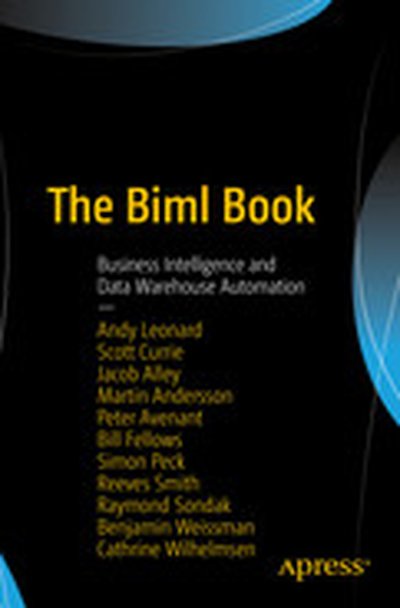
The Biml Book: Business Intelligence and Data Warehouse Automation

Learn Business Intelligence Markup Language (Biml) for automating much of the repetitive, manual labor involved in data integration. We teach you how to build frameworks and use advanced Biml features to get more out of SQL Server Integration Services (SSIS), Transact-SQL (T-SQL), and SQL Server Analysis Services (SSAS) than you ever thought possible. The first part of the book starts with the basics—getting your development environment configured, Biml syntax, and scripting essentials. Whether a beginner or a seasoned Biml expert, the next part of the book guides you through the process of using Biml to build a framework that captures both your design patterns and execution management. Design patterns are reusable code blocks that standardize the approach you use to perform certain types of data integration, logging, and other key data functions. Design patterns solve common problems encountered when developing data integration solutions. Because you do not have to build the code from scratch each time, design patterns improve your efficiency as a Biml developer. In addition to leveraging design patterns in your framework, you will learn how to build a robust metadata store and how to package your framework into Biml bundles for deployment within your enterprise. In the last part of the book, we teach you more advanced Biml features and capabilities, such as SSAS development, T-SQL recipes, documentation autogeneration, and Biml troubleshooting. The Biml Book: Provides practical and applicable examples Teaches you how to use Biml to reduce development time while improving quality Takes you through solutions to common data integration and BI challenges What You'll Learn Master the basics of Business Intelligence Markup Language (Biml) Study patterns for automating SSIS package generation Build a Biml Framework Import and transform database schemas Automate generation of scripts and projects Who This Book Is For BI developers wishing to quickly locate previously tested solutions, Microsoft BI specialists, those seeking more information about solution automation and code generation, and practitioners of Data Integration Lifecycle Management (DILM) in the DevOps enterprise

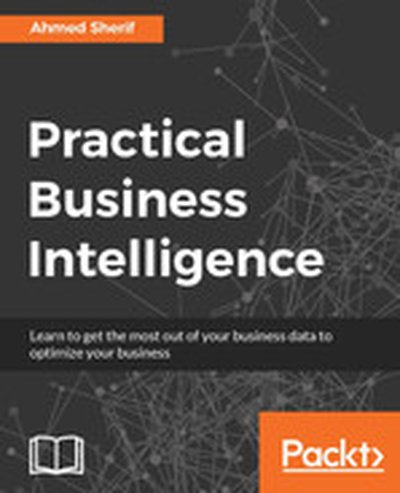
Practical Business Intelligence

Master the art of business intelligence in just a few steps with this hands-on guide. By following the detailed examples and techniques in this book, you'll learn to create effective BI solutions that analyze data for strategic decision-making. You'll explore tools like D3.js, R, Tableau, QlikView, and Python to visualize data and gain actionable insights. What this Book will help me do Develop the ability to create self-service reporting environments for business analytics. Understand and apply SQL techniques to aggregate and manipulate data effectively. Design and implement data models suitable for analytical and reporting purposes. Connect data warehouses with advanced BI tools to streamline reporting processes. Analyze and visualize data using industry-leading tools like D3.js, R, Tableau, and Python. Author(s) Written by seasoned experts in data analytics and business intelligence, the authors bring years of industry experience and practical insights to this well-rounded guide. They specialize in turning complex data into manageable, insightful BI solutions. Their writing style is approachable yet detailed, ensuring you gain both foundational and advanced knowledge in a structured way. Who is it for? This book caters to data enthusiasts and professionals in roles such as data analysis, BI development, or data management. It's perfect for beginners seeking practical BI skills, as well as experienced developers looking to integrate and implement sophisticated BI tools. The focus is on actionable insights, making it ideal for anyone aiming to leverage data for business growth.

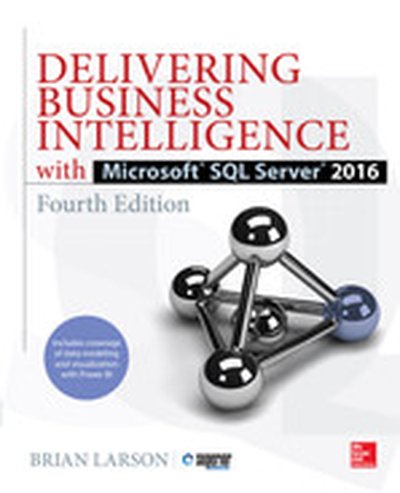
Delivering Business Intelligence with Microsoft SQL Server 2016, Fourth Edition, 4th Edition

Distribute Actionable, Timely BI with Microsoft® SQL Server® 2016 and Power BI Drive better, faster, more informed decision making across your organization using the expert tips and best practices featured in this hands-on guide. Delivering Business Intelligence with Microsoft SQL Server 2016, Fourth Edition, shows, step-by-step, how to distribute high-performance, custom analytics to users enterprise-wide. Discover how to build BI Semantic Models, create data marts and OLAP cubes, write MDX and DAX scripts, and share insights using Microsoft client tools. The book includes coverage of self-service business intelligence with Power BI. • Understand the goals and components of successful BI • Build data marts, OLAP cubes, and Tabular models • Load and cleanse data with SQL Server Integration Services • Manipulate and analyze data using MDX and DAX scripts and queries • Work with SQL Server Analysis Services and the BI Semantic Model • Author interactive reports using SQL Server Data Tools • Create KPIs and digital dashboards • Implement time-based analytics • Embed data model content in custom applications using ADOMD.NET • Use Power BI to gather, model, and visualize data in a self-service environment

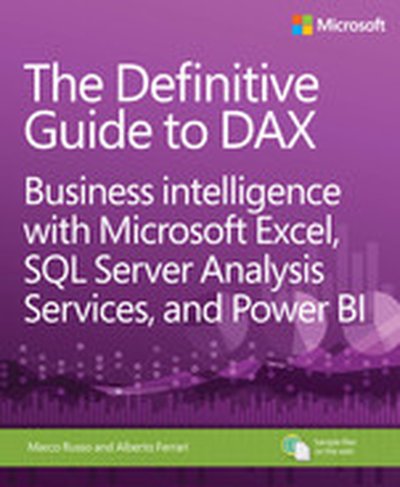
The Definitive Guide to DAX: Business intelligence with Microsoft Excel, SQL Server Analysis Services, and Power BI

This comprehensive and authoritative guide will teach you the DAX language for business intelligence, data modeling, and analytics. Leading Microsoft BI consultants Marco Russo and Alberto Ferrari help you master everything from table functions through advanced code and model optimization. You’ll learn exactly what happens under the hood when you run a DAX expression, how DAX behaves differently from other languages, and how to use this knowledge to write fast, robust code. If you want to leverage all of DAX’s remarkable power and flexibility, this no-compromise “deep dive” is exactly what you need. Perform powerful data analysis with DAX for Microsoft SQL Server Analysis Services, Excel, and Power BI Master core DAX concepts, including calculated columns, measures, and error handling Understand evaluation contexts and the CALCULATE and CALCULATETABLE functions Perform time-based calculations: YTD, MTD, previous year, working days, and more Work with expanded tables, complex functions, and elaborate DAX expressions Perform calculations over hierarchies, including parent/child hierarchies Use DAX to express diverse and unusual relationships Measure DAX query performance with SQL Server Profiler and DAX Studio

Applied Microsoft Business Intelligence

Leverage the integration of SQL Server and Office for more effective BI Applied Microsoft Business Intelligence shows you how to leverage the complete set of Microsoft tools—including Microsoft Office and SQL Server—to better analyze business data. This book provides best practices for building complete BI solutions using the full Microsoft toolset. You will learn how to effectively use SQL Server Analysis and Reporting Services, along with Excel, SharePoint, and other tools to provide effective and cohesive solutions for the enterprise. Coverage includes BI architecture, data queries, semantic models, multidimensional modeling, data analysis and visualization, performance monitoring, data mining, and more, to help you learn to perform practical business analysis and reporting. Written by an author team that includes a key member of the BI product team at Microsoft, this useful reference provides expert instruction for more effective use of the Microsoft BI toolset. Use Microsoft BI suite cohesively for more effective enterprise solutions Search, analyze, and visualize data more efficiently and completely Develop flexible and scalable tabular and multidimensional models Monitor performance, build a BI portal, and deploy and manage the BI Solution

Business Intelligence with SQL Server Reporting Services

Business Intelligence with SQL Server Reporting Services helps you deliver business intelligence with panache. Harness the power of the Reporting Services toolkit to combine charts, gauges, sparklines, indicators, and maps into compelling dashboards and scorecards. Create compelling visualizations that seize your audience’s attention and help business users identify and react swiftly to changing business conditions. Best of all, you'll do all these things by creating new value from software that is already installed and paid for – SQL Server and the included SQL Server Reporting Services. Businesses run on numbers, and good business intelligence systems make the critical numbers immediately and conveniently accessible. Business users want access to key performance indicators in the office, at the beach, and while riding the subway home after a day's work. Business Intelligence with SQL Server Reporting Services helps you meet these need for anywhere/anytime access by including chapters specifically showing how to deliver on modern devices such as smart phones and tablets. You'll learn to deliver the same information, with similar look-and-feel, across the entire range of devices used in business today. Key performance indicators give fast notification of business unit performance Polished dashboards deliver essential metrics and strategic comparisons Visually arresting output on multiple devices focuses attention

Microsoft Business Intelligence Tools for Excel Analysts

Bridge the big data gap with Microsoft Business Intelligence Tools for Excel Analysts The distinction between departmental reporting done by business analysts with Excel and the enterprise reporting done by IT departments with SQL Server and SharePoint tools is more blurry now than ever before. With the introduction of robust new features like PowerPivot and Power View, it is essential for business analysts to get up to speed with big data tools that in the past have been reserved for IT professionals. Written by a team of Business Intelligence experts, Microsoft Business Intelligence Tools for Excel Analysts introduces business analysts to the rich toolset and reporting capabilities that can be leveraged to more effectively source and incorporate large datasets in their analytics while saving them time and simplifying the reporting process. Walks you step-by-step through important BI tools like PowerPivot, SQL Server, and SharePoint and shows you how to move data back and forth between these tools and Excel Shows you how to leverage relational databases, slice data into various views to gain different visibility perspectives, create eye-catching visualizations and dashboards, automate SQL Server data retrieval and integration, and publish dashboards and reports to the web Details how you can use SQL Server's built-in functions to analyze large amounts of data, Excel pivot tables to access and report OLAP data, and PowerPivot to create powerful reporting mechanisms You'll get on top of the Microsoft BI stack and all it can do to enhance Excel data analysis with this one-of-a-kind guide written for Excel analysts just like you.

Pro SharePoint 2013 Business Intelligence Solutions

To get ahead in today's hyper-competitive marketplace, your business has to take advantage of the data you already have and mine that data to give you new insight, metrics, and clues to what drives successful customer interactions. In Pro SharePoint 2013 Business Intelligence Solutions, you'll learn exactly how to unlock that magic, build business intelligence facilities on SharePoint, and glean insights from data to propel your business to the next level. To understand the various business intelligence offerings in SharePoint 2013, you need to understand the core SQL Server business intelligence concepts, and the first part of the book presents a comprehensive tutorial on those fundamentals. Pro SharePoint 2013 Business Intelligence Solutions then focuses on specific SharePoint business intelligence investments including: Visio Services Excel Services SQL Server Reporting Services Business Connectivity Services Power View and PerformancePoint Services Authors Manpreet Singh, Sha Anandan, Sahil Malik, and Steve Wright walk you through all of this material comprehensively in practical, hands-on format, with plenty of examples to empower you to use these products in your real-life projects. As compelling as SharePoint and SQL Server business intelligence are together, the challenge always has been finding people who understand both SharePoint and SQL Server well enough to deliver such business intelligence solutions. With this book in hand, you become part of that select group. Get your copy of Pro SharePoint 2013 Business Intelligence Solutions today!

Developing Business Intelligence Apps for SharePoint

Create dynamic business intelligence (BI) solutions for SharePoint faster and with more capabilities than previously possible. With this book, you’ll learn the entire process—from high-level concepts to development and deployment—for building data-rich BI applications with Visual Studio LightSwitch, SQL Server 2012, and a host of related Microsoft technologies. You’ll learn practical techniques and patterns necessary to use all of these technologies together as you build an example application through the course of the book, step by step. Discover how to solve real problems, using BI solutions that will evolve to meet future needs. Learn the fundamentals of SharePoint, LightSwitch, and SQL Server 2012 Get a solid grounding in BI application basics and database design principles Use LightSwitch to build a help desk app, including data model design and SharePoint data integration Build a tabular cube with Microsoft’s Business Intelligence Semantic Model (BISM) Dive into the data visualization stack, including Excel and SQL Server Reporting Services Create reports with Excel Services, Report Builder, and PowerView Use tips and tricks for setting up your BI application development environment

Business Intelligence in Microsoft SharePoint 2013

Dive into the business intelligence features in SharePoint 2013—and use the right combination of tools to deliver compelling solutions. Take control of business intelligence (BI) with the tools offered by SharePoint 2013 and Microsoft SQL Server 2012. Led by a group of BI and SharePoint experts, you’ll get step-by-step instructions for understanding how to use these technologies best in specific BI scenarios—whether you’re a SharePoint administrator, SQL Server developer, or business analyst. Discover how to: Manage the entire BI lifecycle, from determining key performance indicators to building dashboards Use web-based Microsoft Excel services and publish workbooks on a SharePoint Server Mash up data from multiple sources and create Data Analysis Expressions (DAX) using PowerPivot Create data-driven diagrams that provide interactive processes and context with Microsoft Visio Services Use dashboards, scorecards, reports, and key performance indicators to monitor and analyze your business Use SharePoint to view BI reports side by side, no matter which tools were used to produced them

Business Intelligence Cookbook: A Project Lifecycle Approach Using Oracle Technology

Business Intelligence Cookbook: A Project Lifecycle Approach Using Oracle Technology is an expert guide for enhancing your data warehousing and business intelligence skills, specifically targeted at Oracle Database 11g. With over 80 advanced step-by-step recipes, this book walks you through creating, optimizing, and managing actionable business intelligence solutions. What this Book will help me do Understand practical project management approaches specific to business intelligence and data warehousing. Learn to effectively estimate efforts for DW/BI projects using structured methodologies. Model data using Oracle Database and Oracle SQL Data Modeler while aligning it with business requirements. Discover best practices for transitioning BI solutions from development to deployment. Master techniques to secure organizational data as a critical asset. Author(s) John Heaton is an experienced IT professional specializing in data warehousing and business intelligence projects. With extensive knowledge of Oracle technologies, John brings deep technical insights along with a clear writing style, making complex concepts accessible to readers. He is passionate about helping professionals in the IT industry enhance their skills. Who is it for? This book is ideal for IT professionals, data warehouse developers, and project managers working with Oracle Database who seek to advance their expertise in business intelligence. If you have foundational knowledge of DW/BI concepts and want to professionally manage complete lifecycle projects leveraging Oracle tools, this guide is tailored for you.

Delivering Business Intelligence with Microsoft SQL Server 2012 3/E, 3rd Edition

Implement a Robust BI Solution with Microsoft SQL Server 2012 Equip your organization for informed, timely decision making using the expert tips and best practices in this practical guide. Delivering Business Intelligence with Microsoft SQL Server 2012, Third Edition explains how to effectively develop, customize, and distribute meaningful information to users enterprise-wide. Learn how to build data marts and create BI Semantic Models, work with the MDX and DAX languages, and share insights using Microsoft client tools. Data mining and forecasting are also covered in this comprehensive resource. Understand the goals and components of successful BI Design, deploy, and manage data marts and OLAP cubes Load and cleanse data with SQL Server Integration Services Manipulate and analyze data using MDX and DAX scripts and queries Work with SQL Server Analysis Services and the BI Semantic Model Author interactive reports using SQL Server Data Tools Create KPIs and digital dashboards Use data mining to identify patterns, correlations, and clusters Implement time-based analytics Embed BI reports in custom applications using ADOMD.NET

Business Intelligence in Microsoft® SharePoint® 2010

Dive into the business intelligence (BI) features in SharePoint 2010—and use the right combination of tools to deliver compelling solutions. This practical guide helps you explore several BI application services available in SharePoint 2010 and Microsoft SQL Server 2008 R2. You’ll learn each technology with step-by-step instructions, and determine which ones work best in specific BI scenarios—whether you’re a SharePoint administrator, SQL Server developer, or business analyst. Choose the BI tools that meet your needs—and learn how they work together Examine the BI lifecycle, from determining key performance indicators to building dashboards Take Microsoft Excel further—gain more control and functionality with web-based Excel Services Mash up data from multiple sources using PowerPivot for Excel 2010 Create data visualizations with objects, context, and metrics using Microsoft Visio Services Build dashboards, scorecards, and other monitoring and analysis tools with PerformancePoint Services Use SharePoint to view BI reports side by side, no matter which tools were used to produced them Your companion web content includes: Interactive exercises that help you try out concepts or techniques Code samples that enable you to work with the exercises

Foundations of SQL Server 2008 R2 Business Intelligence, Second Edition

Foundations of SQL Server 2008 R2 Business Intelligence introduces the exciting gamut of business intelligence tools included with SQL Server 2008. Microsoft has designed SQL Server 2008 to be more than just a database. It's a complete business intelligence (BI) platform. The database is at the core, and surrounding the database are tools for data mining, modeling, reporting, analyzing, charting, and integration with other, enterprise-level software packages. SQL Server 2008 puts an incredible amount of BI functionality at your disposal. But how do you take advantage of it? That's what this book is all about. Authors Guy Fouché and Lynn Langit show how to implement end-to-end BI solutions using SQL Server Analysis Services (SSAS), SQL Server Integration Services (SSIS), SQL Server Reporting Services (SSRS), and other tools in the Microsoft BI toolkit. You'll learn about all-new features such as PowerPivot and Report Builder 3.0. Also provided are clear examples of predictive analysis made possible through powerful data mining features in SQL Server. If you're an analyst or developer working with SQL Server 2008 who is charged with delivering results that drive business success, you can't afford to be without this book; you can't afford to ignore the powerful BI suite that Microsoft has placed at your disposal. Provides the "big picture" of Microsoft's BI tool suite Covers PowerPivot and other game-changing technologies introduced alongside SQL Server 2008 Release 2 Gives a practical analysis of features based on real-world practices What you'll learn Apply dimensional- and fact-based modeling to create OLAP schemas Optimize data extraction and transformation with SQL Server Integration Services Develop OLAP and data-mining solutions using SQL Server Analysis Services Create compelling reports using the new Report Builder 3.0 in SQL Server Reporting Services Deliver self-service business-intelligence via Microsoft PowerPivot Manage and maintain control over your business intelligence environment Who this book is for Foundations of SQL Server 2008 R2 Business Intelligence is for business intelligence analysts and developers wanting to employ the full stack of business intelligence tools that are part of SQL Server. The book also appeals to database administrators managing databases in support of business intelligence efforts.

The Microsoft® Data Warehouse Toolkit: With SQL Server 2008 R2 and the Microsoft® Business Intelligence Toolset, Second Edition

Best practices and invaluable advice from world-renowned data warehouse experts In this book, leading data warehouse experts from the Kimball Group share best practices for using the upcoming "Business Intelligence release" of SQL Server, referred to as SQL Server 2008 R2. In this new edition, the authors explain how SQL Server 2008 R2 provides a collection of powerful new tools that extend the power of its BI toolset to Excel and SharePoint users and they show how to use SQL Server to build a successful data warehouse that supports the business intelligence requirements that are common to most organizations. Covering the complete suite of data warehousing and BI tools that are part of SQL Server 2008 R2, as well as Microsoft Office, the authors walk you through a full project lifecycle, including design, development, deployment and maintenance. Features more than 50 percent new and revised material that covers the rich new feature set of the SQL Server 2008 R2 release, as well as the Office 2010 release Includes brand new content that focuses on PowerPivot for Excel and SharePoint, Master Data Services, and discusses updated capabilities of SQL Server Analysis, Integration, and Reporting Services Shares detailed case examples that clearly illustrate how to best apply the techniques described in the book The accompanying Web site contains all code samples as well as the sample database used throughout the case studies The Microsoft Data Warehouse Toolkit, Second Edition provides you with the knowledge of how and when to use BI tools such as Analysis Services and Integration Services to accomplish your most essential data warehousing tasks.

Microsoft® Business Intelligence For Dummies®

Learn to create an effective business strategy using Microsoft's BI stack Microsoft Business Intelligence tools are among the most widely used applications for gathering, providing access to, and analyzing data to enable the enterprise to make sound business decisions. The tools include SharePoint Server, the Office Suite, PerformancePoint Server, and SQL Server, among others. With so much jargon and so many technologies involved, Microsoft Business Intelligence For Dummies provides a much-needed step-by-step explanation of what's involved and how to use this powerful package to improve your business. Microsoft Business Intelligence encompasses a broad collection of tools designed to help business owners and managers direct the enterprise effectively This guide provides an overview of SharePoint, PerformancePoint, the SQL Server suite, Microsoft Office, and the BI development technologies Explains how the various technologies work together to solve functional problems Translates the buzzwords and shows you how to create your business strategy Examines related technologies including data warehousing, data marts, Online Analytical Processing (OLAP), data mining, reporting, dashboards, and Key Performance Indicators (KPIs) Simplifies this complex package to get you up and running quickly Microsoft Business Intelligence For Dummies demystifies these essential tools for enterprise managers, business analysts, and others who need to get up to speed.

Business Intelligence with Microsoft® Office PerformancePoint™ Server 2007

Deliver BI Solutions with Microsoft Office PerformancePoint Server 2007 Maximize the powerful BI tools available in PerformancePoint 2007 with help from this practical guide. You will learn how to collect and store data, monitor progress, analyze performance, distribute dynamic reports, and create maintainable projects and forecasts. Business Intelligence with Microsoft Office PerformancePoint Server 2007 provides full details on creating scorecards and dashboards, performing advanced analysis on data, and setting up business plans. You will also learn how to integrate PerformancePoint with ProClarity, Excel 2007, and SQL Server Reporting Services. Configure, deploy, and secure all the PerformancePoint components Create KPIs, scorecards, reports, and dashboards with the Dashboard Designer Create business models with the Planning Business Modeler and create budgets and forecasts with Excel 2007 Enable advanced data analysis with PerformancePoint Server and ProClarity tools Take advantage of the enhanced analytic capabilities of Excel 2007 Use SQL Server Reporting Services for analytics Align performance with organizational objectives