talk-data.com talk-data.com

Topic

SQL

Structured Query Language (SQL)

database_language data_manipulation data_definition programming_language

82

tagged

Activity Trend

107 peak/qtr
2020-Q1 2026-Q1

Activities

Showing filtered results

Filtering by: O'Reilly Data Science Books ×
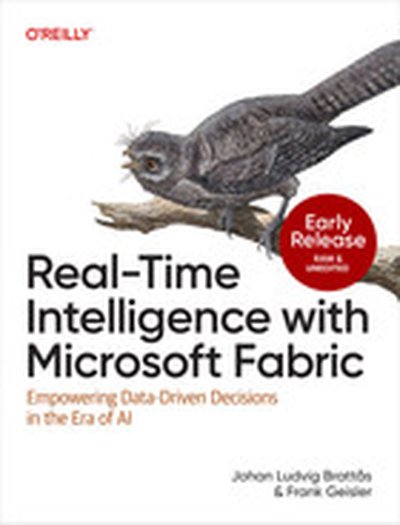
Real-Time Intelligence with Microsoft Fabric

In today's hyper-connected world, many organizations are overwhelmed by the volume of data generated every second. Making timely decisions using this information remains a challenge for many. Real-time intelligence has transformed from a luxury to a necessity for businesses striving to stay ahead in a rapidly evolving marketplace. Enter Microsoft Fabric's Real-Time Intelligence: a new tool that not only analyzes data but also acts upon the results. If you're ready to unlock the power of immediate insights, this comprehensive primer offers an exploration into the capabilities of Real-Time Intelligence with Microsoft Fabric. Authors Johan Ludvig Brattås and Frank Geisler explain AI-driven insights and how to use them to drive business success. Whether you're a seasoned professional or an enthusiast, this guide is the key to understanding an exciting new platform. You'll discover: The core concepts of Real-Time Intelligence within Microsoft Fabric Challenges that can be solved with Real-Time Intelligence, enhancing efficiency Techniques for using KQL queries, including SQL knowledge to optimize these queries Practical applications including data analytic solutions, event streams, and more How to automatically trigger actions based on data conditions

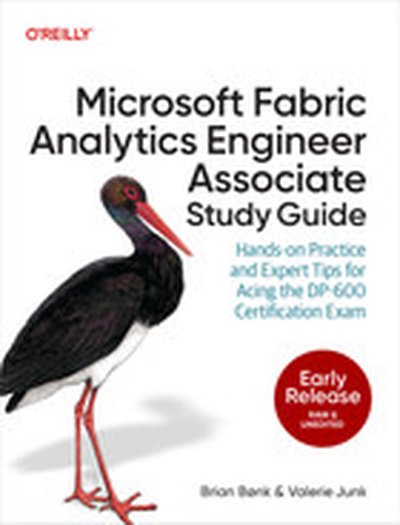
Microsoft Fabric Analytics Engineer Associate Study Guide

Data is the heartbeat of business. Microsoft's Fabric Analytics Engineer Associate (DP-600) certification proves you understand the tools and technologies to make use of it. This comprehensive guide covers everything you need to know to design and implement enterprise-grade analytics solutions—and ace your certification exam. Drawing on their extensive experience working with Microsoft Fabric and Power BI, Brian Bønk and Valerie Junk take you through preparing and transforming data, securing and managing analytics assets, and building and optimizing semantic models. You'll learn to work with data warehouses and lakehouses, ensuring data is structured and ready for analysis. You will also discover how to query and analyze data using SQL, KQL, and DAX, which are essential skills for anyone working with Fabric. Whether you're preparing for the exam or just looking to expand your Fabric expertise, this book gives you the foundation to succeed. Prepare and enrich data for analysis Work with, secure, and maintain analytics assets Implement and manage semantic models Utilize data warehouses and lakehouses Handle workspace access control and item-level access control Optimize enterprise-scale semantic models

The Data Flow Map: A Practical Guide to Clear and Creative Analytics in Any Data Environment

Unlock the secrets of practical data analysis with the Data Flow Map framework—a game-changing approach that transcends tools and platforms. This book isn’t just another programming manual; it’s a guide to thinking and communicating about data at a higher level. Whether you're working with spreadsheets, databases, or AI-driven models, you'll learn how to express your analytics in clear, common language that anyone can understand. In today’s data-rich world, clarity is the real challenge. Technical details often obscure insights that could drive real impact. The Data Flow Map framework simplifies complexity into three core motions: source, focus, and build. The first half of the book explores these concepts through illustrations and stories. The second half applies them to real-world datasets using tools like Excel, SQL, and Python, showing how the framework works across platforms and use cases. A vital resource for analysts at any level, this book offers a practical, tool-agnostic approach to data analysis. With hands-on examples and a universal mental model, you’ll gain the confidence to tackle any dataset, align your team, and deliver insights that matter. Whether you're a beginner or a seasoned pro, the Data Flow Map framework will transform how you approach data analytics. What You Will Learn Grasp essential elements applicable to every data analysis workflow Adapt quickly to any dataset, tool, or platform Master analytic thinking at a higher level Use analytics patterns to better understand the world Break complex analysis into manageable, repeatable steps Iterate faster to uncover deeper insights and better solutions Communicate findings clearly for better decision-making Who This Book Is For Aspiring data professionals and experienced analysts, from beginners to seasoned data engineers, focused on data collection, analysis, and decision making

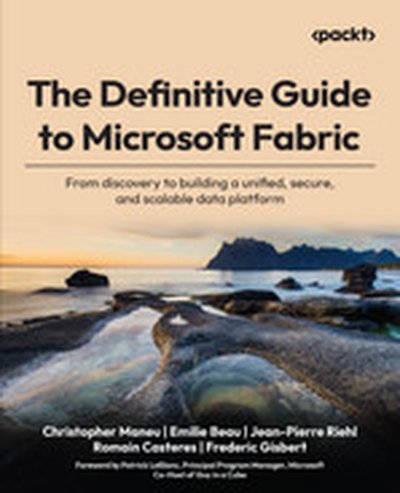
The Definitive Guide to Microsoft Fabric

Master Microsoft Fabric from basics to advanced architectures with expert guidance to unify, secure, and scale analytics on real-world data platforms Key Features Build a complete data analytics platform with Microsoft Fabric Apply proven architectures, governance, and security strategies Gain real-world insights from five seasoned data experts Purchase of the print or Kindle book includes a free PDF eBook Book Description Microsoft Fabric is reshaping how organizations manage, analyze, and act on data by unifying ingestion, storage, transformation, analytics, AI, and visualization in a single platform. The Definitive Guide to Microsoft Fabric takes you from your very first workspace to building a secure, scalable, and future-proof analytics environment. You’ll learn how to unify data in OneLake, design data meshes, transform and model data, implement real-time analytics, and integrate AI capabilities. The book also covers advanced topics, such as governance, security, cost optimization, and team collaboration using DevOps and DataOps principles. Drawing on the real-world expertise of five seasoned professionals who have built and advised on platforms for startups, SMEs, and Europe’s largest enterprises, this book blends strategic insight with practical guidance. By the end of this book, you’ll have gained the knowledge and skills to design, deploy, and operate a Microsoft Fabric platform that delivers sustainable business value. What you will learn Understand Microsoft Fabric architecture and concepts Unify data storage and data governance with OneLake Ingest and transform data using multiple Fabric tools Implement real-time analytics and event processing Design effective semantic models and reports Integrate AI and machine learning into data workflows Apply governance, security, and compliance controls Optimize performance and costs at scale Who this book is for This book is for data engineers, analytics engineers, architects, and data analysts moving into platform design roles. It’s also valuable for technical leaders seeking to unify analytics in their organizations. You’ll need only a basic grasp of databases, SQL, and Python.

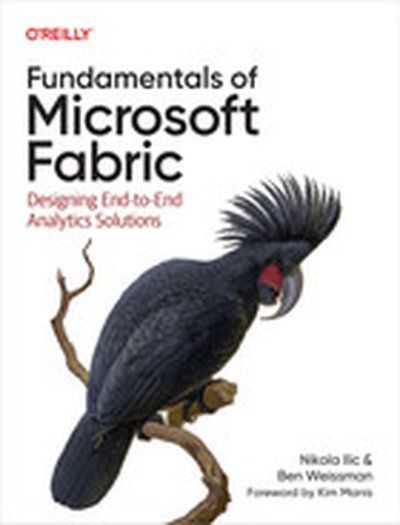
Fundamentals of Microsoft Fabric

In the rapidly evolving world of data and analytics, professionals face the challenge of navigating complex platforms in order to build more efficient solutions. Microsoft Fabric, hailed as Microsoft’s “biggest data product in history after SQL Server,” offers powerful capabilities but comes with a steep learning curve. The myriad of choices within Fabric can be overwhelming, with multiple ways to tackle tasks, not all of which are equally efficient. This book serves as a definitive roadmap to understanding Microsoft Fabric—and leveraging it to suit your needs. Authors Nikola Ilic and Ben Weissman demystify the core concepts and components necessary to build, manage, and administer robust data solutions within this game-changing product. Discover the core Microsoft Fabric components and understand key concepts and techniques for building a robust data platform Learn to apply Microsoft Fabric effectively in your day-to-day job Understand the concept of a lake-centric architecture Gain the skills to implement a scalable and efficient end-to-end analytics solution Manage and administer a Fabric tenant

Effective Data Analysis

Learn the technical and soft skills you need to succeed in your career as a data analyst. You’ve learned how to use Python, R, SQL, and the statistical skills needed to get started as a data analyst—so, what’s next? Effective Data Analysis bridges the gap between foundational skills and real-world application. This book provides clear, actionable guidance on transforming business questions into impactful data projects, ensuring you’re tracking the right metrics, and equipping you with a modern data analyst’s essential toolbox. In Effective Data Analysis, you’ll gain the skills needed to excel as a data analyst, including: Maximizing the impact of your analytics projects and deliverables Identifying and leveraging data sources to enhance organizational insights Mastering statistical tests, understanding their strengths, limitations, and when to use them Overcoming the challenges and caveats at every stage of an analytics project Applying your expertise across a variety of domains with confidence Effective Data Analysis is full of sage advice on how to be an effective data analyst in a real production environment. Inside, you’ll find methods that enhance the value of your work—from choosing the right analysis approach, to developing a data-informed organizational culture. About the Technology Data analysts need top-notch knowledge of statistics and programming. They also need to manage clueless stakeholders, navigate messy problems, and advocate for resources. This unique book covers the essential technical topics and soft skills you need to be effective in the real world. About the Book Effective Data Analysis helps you lock down those skills along with unfiltered insight into what the job really looks like. You’ll build out your technical toolbox with tips for defining metrics, testing code, automation, sourcing data, and more. Along the way, you’ll learn to handle the human side of data analysis, including how to turn vague requirements into efficient data pipelines. And you’re sure to love author Mona Khalil’s illustrations, industry examples, and a friendly writing style. What's Inside Identify and incorporate external data Communicate with non-technical stakeholders Apply and interpret statistical tests Techniques to approach any business problem About the Reader Written for early-career data analysts, but useful for all. About the Author Mona Khalil is the Senior Manager of Analytics Engineering at Justworks. Quotes Your roadmap to becoming a standout data analyst! An intriguing blend of technical expertise and practical wisdom. - Chester Ismay, MATE Seminars A thoughtful guide to delivering real-world data analysis. It will be an eye-opening read for all data professionals! - David Lee, Justworks Inc. Compelling insights into the relationship between organizations and data. The real-life examples will help you excel in your data career. - Jeremy Moulton, Greenhouse Mona’s wide range of experience shines in her thoughtful, relevant examples. - Jessica Cherny, Fivetran

Implementing Analytics Solutions Using Microsoft Fabric—DP-600 Exam Study Guide

Master the art of designing and implementing analytics solutions using Microsoft Fabric with this comprehensive guide. Whether you're preparing for the DP-600 certification exam or want to advance your career, this book offers expert insights into data analytics in Microsoft environments. What this Book will help me do Confidently pass the DP-600 certification exam by mastering exam-tested skills. Acquire practical expertise in deploying data analytics solutions with Microsoft Fabric. Understand and optimize data integration, security, and performance in analytics systems. Learn advanced techniques including semantic model optimization and advanced SQL querying. Prepare for real-world challenges through mock exams and hands-on exercises. Author(s) Jagjeet Singh Makhija and Charles Odunukwe, authors of this guide, are seasoned Microsoft specialists with decades of experience in data analytics, certification training, and technology consulting. Their clear and methodical approach ensures learners at all levels can grow their expertise. Who is it for? If you're a data analyst or IT professional looking to enhance your skills in analytics and Microsoft's technologies, this book is for you. It's ideal for those pursuing the DP-600 certification or aiming to improve their data integration and analysis capabilities.

DuckDB: Up and Running

DuckDB, an open source in-process database created for OLAP workloads, provides key advantages over more mainstream OLAP solutions: It's embeddable and optimized for analytics. It also integrates well with Python and is compatible with SQL, giving you the performance and flexibility of SQL right within your Python environment. This handy guide shows you how to get started with this versatile and powerful tool. Author Wei-Meng Lee takes developers and data professionals through DuckDB's primary features and functions, best practices, and practical examples of how you can use DuckDB for a variety of data analytics tasks. You'll also dive into specific topics, including how to import data into DuckDB, work with tables, perform exploratory data analysis, visualize data, perform spatial analysis, and use DuckDB with JSON files, Polars, and JupySQL. Understand the purpose of DuckDB and its main functions Conduct data analytics tasks using DuckDB Integrate DuckDB with pandas, Polars, and JupySQL Use DuckDB to query your data Perform spatial analytics using DuckDB's spatial extension Work with a diverse range of data including Parquet, CSV, and JSON

DuckDB in Action

Dive into DuckDB and start processing gigabytes of data with ease—all with no data warehouse. DuckDB is a cutting-edge SQL database that makes it incredibly easy to analyze big data sets right from your laptop. In DuckDB in Action you’ll learn everything you need to know to get the most out of this awesome tool, keep your data secure on prem, and save you hundreds on your cloud bill. From data ingestion to advanced data pipelines, you’ll learn everything you need to get the most out of DuckDB—all through hands-on examples. Open up DuckDB in Action and learn how to: Read and process data from CSV, JSON and Parquet sources both locally and remote Write analytical SQL queries, including aggregations, common table expressions, window functions, special types of joins, and pivot tables Use DuckDB from Python, both with SQL and its "Relational"-API, interacting with databases but also data frames Prepare, ingest and query large datasets Build cloud data pipelines Extend DuckDB with custom functionality Pragmatic and comprehensive, DuckDB in Action introduces the DuckDB database and shows you how to use it to solve common data workflow problems. You won’t need to read through pages of documentation—you’ll learn as you work. Get to grips with DuckDB's unique SQL dialect, learning to seamlessly load, prepare, and analyze data using SQL queries. Extend DuckDB with both Python and built-in tools such as MotherDuck, and gain practical insights into building robust and automated data pipelines. About the Technology DuckDB makes data analytics fast and fun! You don’t need to set up a Spark or run a cloud data warehouse just to process a few hundred gigabytes of data. DuckDB is easily embeddable in any data analytics application, runs on a laptop, and processes data from almost any source, including JSON, CSV, Parquet, SQLite and Postgres. About the Book DuckDB in Action guides you example-by-example from setup, through your first SQL query, to advanced topics like building data pipelines and embedding DuckDB as a local data store for a Streamlit web app. You’ll explore DuckDB’s handy SQL extensions, get to grips with aggregation, analysis, and data without persistence, and use Python to customize DuckDB. A hands-on project accompanies each new topic, so you can see DuckDB in action. What's Inside Prepare, ingest and query large datasets Build cloud data pipelines Extend DuckDB with custom functionality Fast-paced SQL recap: From simple queries to advanced analytics About the Reader For data pros comfortable with Python and CLI tools. About the Authors Mark Needham is a blogger and video creator at @‌LearnDataWithMark. Michael Hunger leads product innovation for the Neo4j graph database. Michael Simons is a Java Champion, author, and Engineer at Neo4j. Quotes I use DuckDB every day, and I still learned a lot about how DuckDB makes things that are hard in most databases easy! - Jordan Tigani, Founder, MotherDuck An excellent resource! Unlocks possibilities for storing, processing, analyzing, and summarizing data at the edge using DuckDB. - Pramod Sadalage, Director, Thoughtworks Clear and accessible. A comprehensive resource for harnessing the power of DuckDB for both novices and experienced professionals. - Qiusheng Wu, Associate Professor, University of Tennessee Excellent! The book all we ducklings have been waiting for! - Gunnar Morling, Decodable

Getting Started with DuckDB

Unlock the full potential of DuckDB with 'Getting Started with DuckDB,' your guide to mastering data analysis efficiently. By reading this book, you'll discover how to load, transform, and query data using DuckDB, leveraging its unique capabilities for processing large datasets. Gain hands-on experience with SQL, Python, and R to enhance your data science and engineering workflows. What this Book will help me do Effectively load and manage various types of data in DuckDB for seamless processing. Gain hands-on experience writing and optimizing SQL queries tailored for analytical tasks. Integrate DuckDB capabilities into Python and R workflows for streamlined data analysis. Understand DuckDB's optimizations and extensions for specialized data applications. Explore the broader ecosystem of data tools that complement DuckDB's capabilities. Author(s) Simon Aubury and Ned Letcher are seasoned experts in the field of data analytics and engineering. With extensive experience in using both SQL and programming languages like Python and R, they bring practical insights into the innovative uses of DuckDB. They have designed this book to provide a hands-on and approachable way to learn DuckDB, making complex concepts accessible. Who is it for? This book is well-suited for data analysts aiming to accelerate their data analysis workflows, data engineers looking for effective tools for data processing, and data scientists searching for a versatile library for scalable data manipulation. Prior exposure to SQL and programming in Python or R will be beneficial for readers to maximize their learning.

Data Modeling with Microsoft Power BI

Data modeling is the single most overlooked feature in Power BI Desktop, yet it's what sets Power BI apart from other tools on the market. This practical book serves as your fast-forward button for data modeling with Power BI, Analysis Services tabular, and SQL databases. It serves as a starting point for data modeling, as well as a handy refresher. Author Markus Ehrenmueller-Jensen, founder of Savory Data, shows you the basic concepts of Power BI's semantic model with hands-on examples in DAX, Power Query, and T-SQL. If you're looking to build a data warehouse layer, chapters with T-SQL examples will get you started. You'll begin with simple steps and gradually solve more complex problems. This book shows you how to: Normalize and denormalize with DAX, Power Query, and T-SQL Apply best practices for calculations, flags and indicators, time and date, role-playing dimensions and slowly changing dimensions Solve challenges such as binning, budget, localized models, composite models, and key value with DAX, Power Query, and T-SQL Discover and tackle performance issues by applying solutions in DAX, Power Query, and T-SQL Work with tables, relations, set operations, normal forms, dimensional modeling, and ETL

Cracking the Data Science Interview

"Cracking the Data Science Interview" is your ultimate resource for preparing for roles in the competitive field of data science. With this book, you'll explore essential topics such as Python, SQL, statistics, and machine learning, as well as learn practical skills for building portfolios and acing interviews. Follow its guidance and you'll be equipped to stand out in any data science interview. What this Book will help me do Confidently explain complex statistical and machine learning concepts. Develop models and deploy them while ensuring version control and efficiency. Learn and apply scripting skills in shell and Bash for productivity. Master Git workflows to handle collaborative coding in projects. Perfectly tailor portfolios and resumes to land data science opportunities. Author(s) Leondra R. Gonzalez, with years of data science and mentorship experience, co-authors this book with None Stubberfield, a seasoned expert in technology and machine learning. Together, they integrate their expertise to provide practical advice for navigating the data science job market. Who is it for? If you're preparing for data science interviews, this book is for you. It's ideal for candidates with a foundational knowledge of Python, SQL, and statistics looking to refine and expand their technical and professional skills. Professionals transitioning into data science will also find it invaluable for building confidence and succeeding in this rewarding field.

Learn Microsoft Fabric

Dive into the wonders of Microsoft Fabric, the ultimate solution for mastering data analytics in the AI era. Through engaging real-world examples and hands-on scenarios, this book will equip you with all the tools to design, build, and maintain analytics systems for various use cases like lakehouses, data warehouses, real-time analytics, and data science. What this Book will help me do Understand and utilize the key components of Microsoft Fabric for modern analytics. Build scalable and efficient data analytics solutions with medallion architecture. Implement real-time analytics and machine learning models to derive actionable insights. Monitor and administer your analytics platform for high performance and security. Leverage AI-powered assistant Copilot to boost analytics productivity. Author(s) Arshad Ali and None Schacht bring years of expertise in data analytics and system architecture to this book. Arshad is a seasoned professional specialized in AI-integrated analytics platforms, while None Schacht has a proven track record in deploying enterprise data solutions. Together, they provide deep insights and practical knowledge with a structured and approachable teaching method. Who is it for? Ideal for data professionals such as data analysts, engineers, scientists, and AI/ML experts aiming to enhance their data analytics skills and master Microsoft Fabric. It's also suited for students and new entrants to the field looking to establish a firm foundation in analytics systems. Requires a basic understanding of SQL and Spark.

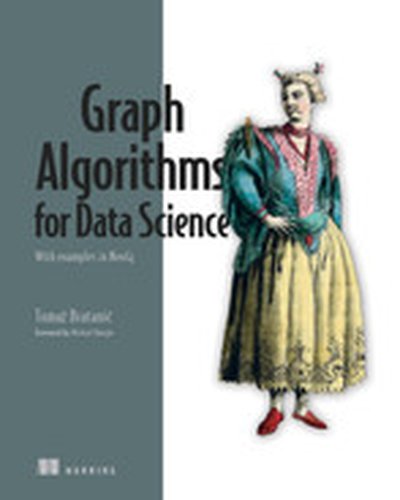
Graph Algorithms for Data Science

Practical methods for analyzing your data with graphs, revealing hidden connections and new insights. Graphs are the natural way to represent and understand connected data. This book explores the most important algorithms and techniques for graphs in data science, with concrete advice on implementation and deployment. You don’t need any graph experience to start benefiting from this insightful guide. These powerful graph algorithms are explained in clear, jargon-free text and illustrations that makes them easy to apply to your own projects. In Graph Algorithms for Data Science you will learn: Labeled-property graph modeling Constructing a graph from structured data such as CSV or SQL NLP techniques to construct a graph from unstructured data Cypher query language syntax to manipulate data and extract insights Social network analysis algorithms like PageRank and community detection How to translate graph structure to a ML model input with node embedding models Using graph features in node classification and link prediction workflows Graph Algorithms for Data Science is a hands-on guide to working with graph-based data in applications like machine learning, fraud detection, and business data analysis. It’s filled with fascinating and fun projects, demonstrating the ins-and-outs of graphs. You’ll gain practical skills by analyzing Twitter, building graphs with NLP techniques, and much more. About the Technology A graph, put simply, is a network of connected data. Graphs are an efficient way to identify and explore the significant relationships naturally occurring within a dataset. This book presents the most important algorithms for graph data science with examples from machine learning, business applications, natural language processing, and more. About the Book Graph Algorithms for Data Science shows you how to construct and analyze graphs from structured and unstructured data. In it, you’ll learn to apply graph algorithms like PageRank, community detection/clustering, and knowledge graph models by putting each new algorithm to work in a hands-on data project. This cutting-edge book also demonstrates how you can create graphs that optimize input for AI models using node embedding. What's Inside Creating knowledge graphs Node classification and link prediction workflows NLP techniques for graph construction About the Reader For data scientists who know machine learning basics. Examples use the Cypher query language, which is explained in the book. About the Author Tomaž Bratanič works at the intersection of graphs and machine learning. Arturo Geigel was the technical editor for this book. Quotes Undoubtedly the quickest route to grasping the practical applications of graph algorithms. Enjoyable and informative, with real-world business context and practical problem-solving. - Roger Yu, Feedzai Brilliantly eases you into graph-based applications. - Sumit Pal, Independent Consultant I highly recommend this book to anyone involved in analyzing large network databases. - Ivan Herreros, talentsconnect Insightful and comprehensive. The author’s expertise is evident. Be prepared for a rewarding journey. - Michal Štefaňák, Volke

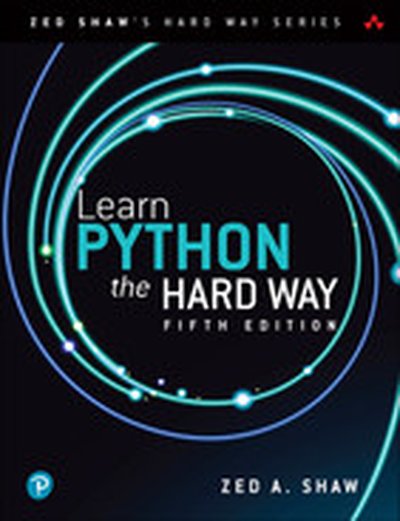
Learn Python the Hard Way: A Deceptively Simple Introduction to the Terrifyingly Beautiful World of Computers and Data Science, 5th Edition

You Will Learn Python! Zed Shaw has created the world's most reliable system for learning Python. Follow it and you will succeed--just like the millions of beginners Zed has taught to date! You bring the discipline, persistence, and attention; the author supplies the masterful knowledge you need to succeed. In Learn Python the Hard Way, Fifth Edition, you'll learn Python by working through 60 lovingly crafted exercises. Read them. Type in the code. Run it. Fix your mistakes. Repeat. As you do, you'll learn how a computer works, how to solve problems, and how to enjoy programming . . . even when it's driving you crazy. Install a complete Python environment Organize and write code Fix and break code Basic mathematics Strings and text Interact with users Work with files Looping and logic Object-oriented programming Data structures using lists and dictionaries Modules, classes, and objects Python packaging Automated testing Basic SQL for Data Science Web scraping Fixing bad data (munging) The "Data" part of "Data Science" It'll be frustrating at first. But if you keep trying, you'll get it--and it'll feel amazing! This course will reward you for every minute you put into it. Soon, you'll know one of the world's most powerful, popular programming languages. You'll be a Python programmer. This Book Is Perfect For Total beginners with zero programming experience Junior developers who know one or two languages Returning professionals who haven't written code in years Aspiring Data Scientists or academics who need to learn to code Seasoned professionals looking for a fast, simple crash course in Python for Data Science Register your book for convenient access to downloads, updates, and/or corrections as they become available. See inside book for details.

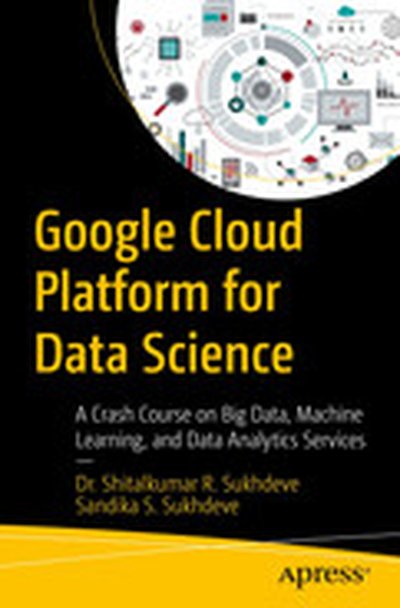
Google Cloud Platform for Data Science: A Crash Course on Big Data, Machine Learning, and Data Analytics Services

This book is your practical and comprehensive guide to learning Google Cloud Platform (GCP) for data science, using only the free tier services offered by the platform. Data science and machine learning are increasingly becoming critical to businesses of all sizes, and the cloud provides a powerful platform for these applications. GCP offers a range of data science services that can be used to store, process, and analyze large datasets, and train and deploy machine learning models. The book is organized into seven chapters covering various topics such as GCP account setup, Google Colaboratory, Big Data and Machine Learning, Data Visualization and Business Intelligence, Data Processing and Transformation, Data Analytics and Storage, and Advanced Topics. Each chapter provides step-by-step instructions and examples illustrating how to use GCP services for data science and big data projects. Readers will learn how to set up a Google Colaboratory account and run Jupyternotebooks, access GCP services and data from Colaboratory, use BigQuery for data analytics, and deploy machine learning models using Vertex AI. The book also covers how to visualize data using Looker Data Studio, run data processing pipelines using Google Cloud Dataflow and Dataprep, and store data using Google Cloud Storage and SQL. What You Will Learn Set up a GCP account and project Explore BigQuery and its use cases, including machine learning Understand Google Cloud AI Platform and its capabilities Use Vertex AI for training and deploying machine learning models Explore Google Cloud Dataproc and its use cases for big data processing Create and share data visualizations and reports with Looker Data Studio Explore Google Cloud Dataflow and its use cases for batch and stream data processing Run data processing pipelines on Cloud Dataflow Explore Google Cloud Storageand its use cases for data storage Get an introduction to Google Cloud SQL and its use cases for relational databases Get an introduction to Google Cloud Pub/Sub and its use cases for real-time data streaming Who This Book Is For Data scientists, machine learning engineers, and analysts who want to learn how to use Google Cloud Platform (GCP) for their data science and big data projects

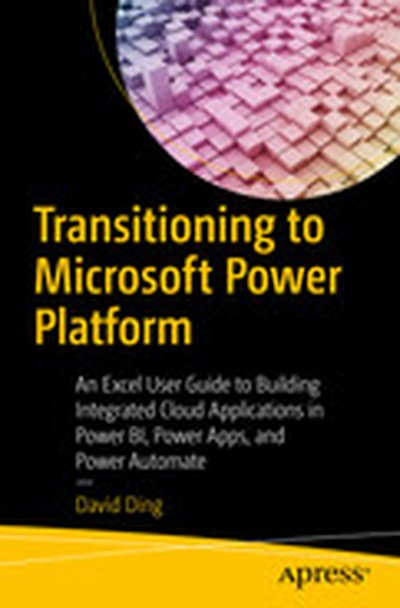
Transitioning to Microsoft Power Platform: An Excel User Guide to Building Integrated Cloud Applications in Power BI, Power Apps, and Power Automate

Welcome to this step-by-step guide for Excel users, data analysts, and finance specialists. It is designed to take you through practical report and development scenarios, including both the approach and the technical challenges. This book will equip you with an understanding of the overall Power Platform use case for addressing common business challenges. While Power BI continues to be an excellent tool of choice in the BI space, Power Platform is the real game changer. Using an integrated architecture, a small team of citizen developers can build solutions for all kinds of business problems. For small businesses, Power Platform can be used to build bespoke CRM, Finance, and Warehouse management tools. For large businesses, it can be used to build an integration point for existing systems to simplify reporting, operation, and approval processes. The author has drawn on his15 years of hands-on analytics experience to help you pivot from the traditional Excel-based reporting environment. By using different business scenarios, this book provides you with clear reasons why a skill is important before you start to dive into the scenarios. You will use a fast prototyping approach to continue to build exciting reporting, automation, and application solutions and improve them while you acquire new skill sets. The book helps you get started quickly with Power BI. It covers data visualization, collaboration, and governance practices. You will learn about the most practical SQL challenges. And you will learn how to build applications in PowerApps and Power Automate. The book ends with an integrated solution framework that can be adapted to solve a wide range of complex business problems. What You Will Learn Develop reporting solutions and business applications Understand the Power Platform licensing and development environment Apply Data ETL and modeling in Power BI Use Data Storytelling and dashboard design to better visualize data Carry out data operations with SQL and SharePoint lists Develop useful applications using Power Apps Develop automated workflows using Power Automate Integrate solutions with Power BI, Power Apps, and Power Automate to build enterprise solutions Who This Book Is For Next-generation data specialists, including Excel-based users who want to learn Power BI and build internal apps; finance specialists who want to take a different approach to traditional accounting reports; and anyone who wants to enhance their skill set for the future job market.

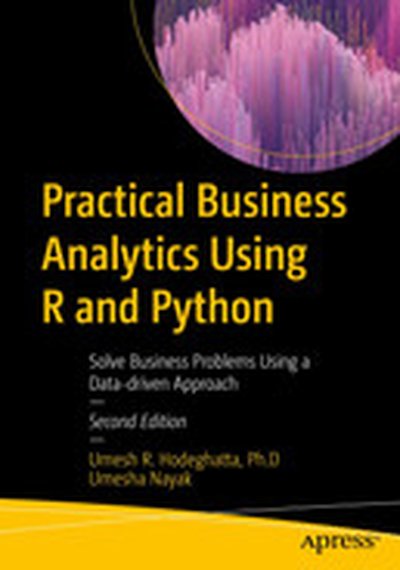
Practical Business Analytics Using R and Python: Solve Business Problems Using a Data-driven Approach

This book illustrates how data can be useful in solving business problems. It explores various analytics techniques for using data to discover hidden patterns and relationships, predict future outcomes, optimize efficiency and improve the performance of organizations. You’ll learn how to analyze data by applying concepts of statistics, probability theory, and linear algebra. In this new edition, both R and Python are used to demonstrate these analyses. Practical Business Analytics Using R and Python also features new chapters covering databases, SQL, Neural networks, Text Analytics, and Natural Language Processing.Part one begins with an introduction to analytics, the foundations required to perform data analytics, and explains different analytics terms and concepts such as databases and SQL, basic statistics, probability theory, and data exploration. Part two introduces predictive models using statistical machine learning and discusses concepts like regression, classification, and neural networks. Part three covers two of the most popular unsupervised learning techniques, clustering and association mining, as well as text mining and natural language processing (NLP). The book concludes with an overview of big data analytics, R and Python essentials for analytics including libraries such as pandas and NumPy. Upon completing this book, you will understand how to improve business outcomes by leveraging R and Python for data analytics. What You Will Learn Master the mathematical foundations required for business analytics Understand various analytics models and data mining techniques such as regression, supervised machine learning algorithms for modeling, unsupervised modeling techniques, and how to choose the correct algorithm for analysis in any given task Use R and Python to develop descriptive models, predictive models, and optimize models Interpret and recommend actions based on analytical model outcomes Who This Book Is For Software professionals and developers, managers, and executives who want to understand and learn the fundamentals of analytics using R and Python.

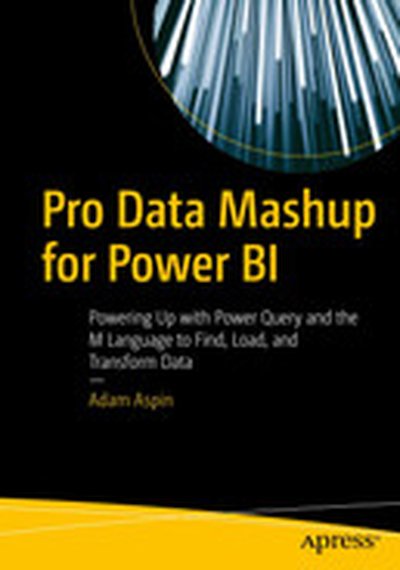
Pro Data Mashup for Power BI: Powering Up with Power Query and the M Language to Find, Load, and Transform Data

This book provides all you need to find data from external sources and load and transform that data into Power BI where you can mine it for business insights and a competitive edge. This ranges from connecting to corporate databases such as Azure SQL and SQL Server to file-based data sources, and cloud- and web-based data sources. The book also explains the use of Direct Query and Live Connect to establish instant connections to databases and data warehouses and avoid loading data. The book provides detailed guidance on techniques for transforming inbound data into normalized data sets that are easy to query and analyze. This covers data cleansing, data modification, and standardization as well as merging source data into robust data structures that can feed into your data model. You will learn how to pivot and transpose data and extrapolate missing values as well as harness external programs such as R and Python into a Power Query data flow. You also will see how to handle errors in source data and extend basic data ingestion to create robust and parameterized data load and transformation processes. Everything in this book is aimed at helping you deliver compelling and interactive insight with remarkable ease using Power BI’s built-in data load and transformation tools. What You Will Learn Connect Power BI to a range of external data sources Prepare data from external sources for easy analysis in Power BI Cleanse data from duplicates, outliers, and other bad values Make live connections from which to refresh data quickly and easily Apply advanced techniques to interpolate missing data Who This Book Is For All Power BI users from beginners to super users. Any user of the world’s leading dashboarding toolcan leverage the techniques explained in this book to turbo-charge their data preparation skills and learn how a wide range of external data sources can be harnessed and loaded into Power BI to drive their analytics. No previous knowledge of working with data, databases, or external data sources is required—merely the need to find, transform, and load data into Power BI..

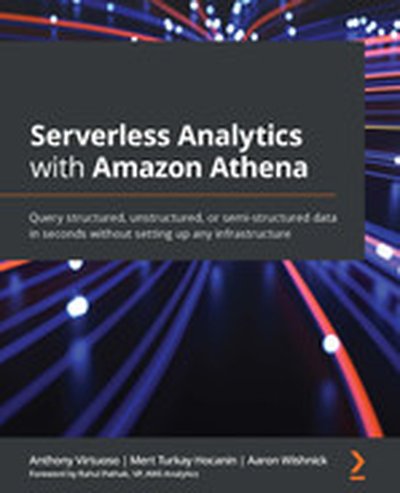
Serverless Analytics with Amazon Athena

Delve into the serverless world of Amazon Athena with the comprehensive book 'Serverless Analytics with Amazon Athena'. This guide introduces you to the power of Athena, showing you how to efficiently query data in Amazon S3 using SQL without the hassle of managing infrastructure. With clear instructions and practical examples, you'll master querying structured, unstructured, and semi-structured data seamlessly. What this Book will help me do Effectively query and analyze both structured and unstructured data stored in S3 using Amazon Athena. Integrate Athena with other AWS services to create powerful, secure, and cost-efficient data workflows. Develop ETL pipelines and machine learning workflows leveraging Athena's compatibility with AWS Glue. Monitor and troubleshoot Athena queries for consistent performance and build scalable serverless data solutions. Implement security best practices and optimize costs when managing your Athena-driven data solutions. Author(s) None Virtuoso, along with co-authors Mert Turkay Hocanin None and None Wishnick, brings a wealth of experience in cloud solutions, serverless technologies, and data engineering. They excel in demystifying complex technical topics and have a passion for empowering readers with practical skills and knowledge. Who is it for? This book is tailored for business intelligence analysts, application developers, and system administrators who want to harness Amazon Athena for seamless, cost-efficient data analytics. It suits individuals with basic SQL knowledge looking to expand their capabilities in querying and processing data. Whether you're managing growing datasets or building data-driven applications, this book provides the know-how to get it right.