talk-data.com talk-data.com

Topic

SQL

Structured Query Language (SQL)

database_language data_manipulation data_definition programming_language

780

tagged

Activity Trend

107 peak/qtr
2020-Q1 2026-Q1

Activities

Showing filtered results

Filtering by: O'Reilly Data Engineering Books ×
MySQL, Second Edition: Visual Quickstart Guide

Even if you've never used MySQL before, this Visual QuickStart Guide will have you up and running with the world’s most popular open source database application in no time. In this completely updated edition of our best-selling guide to MySQL, leading technology author Larry Ullman uses his trademark crystal-clear instructions and friendly prose to introduce you to everything that’s new in MySQL. Filled with step-by-step, task-based instructions and loads of visual aids, this book explains how to interact with MySQL using SQL, the language common to all databases. The interface examples show how to use MySQL’s own tools and how to use three popular programming languages (PHP, Perl, and Java). The book covers MySQL versions 3 and 4, as well as everything new in the eagerly anticipated version 5. Along the way, you'll find extensive coverage of MySQL installation, administration, database design, as well as its use with various programming languages, database programming techniques, utilities, advanced MySQL and SQL, and more! • Takes an easy, visual approach to teaching MySQL, using pictures to guide you through the software and show you what to do. • Works like a reference book—you look up what you need and then get straight to work. • No long-winded passages—concise, straightforward commentary explains what you need to know. • Affordably priced, because buying a computer book shouldn’t be an investment in itself. • Companion Web site at www.DMCInsights.com/mysql2 contains complete source code for examples in the book, online resources, extra scripts and tutorials, updates, a reader forum, and more.

A Developer’s Guide to SQL Server 2005

"I come from a T-SQL background, so when I first laid my eyes on SQL Server 2005, I was shocked--and then, I was scared! I didn't have a CLR or XML background and suddenly had an urgent need to learn it. SQL Server 2005 is too big of a release to learn from the books online. Fortunately, now there is a book for developers who need to go from SQL Server 2000 to SQL Server 2005 and to do it as painlessly as possible. Basically, it's one-stop shopping for serious developers who have to get up to speed quickly. I'll keep this one on my desk--not on my bookshelf. Well done, Bob and Dan!" --Dr. Tom Moreau SQL Server MVP and Monthly Columnist SQL Server Professional, Brockman Moreau Consulting Inc. "A SQL book truly for developers, from two authorities on the subject. I'll be turning to this book first when I need to understand a component of SQL Server 2005." --Matt Milner Instructor Pluralsight "An excellent book for those of us who need to get up to speed on what's new in SQL Server 2005. The authors made sure this book includes the final information for the release version of the product. Most other books out now are based on beta versions. It covers key areas from XML and SQLCLR to Notification Services. Although the wide variety of information is great, my favorite part was the advice given on when to use what, and how performance is affected." --Laura Blood Senior Software Developer Blue Note Computing, Inc. "SQL Server 2005 is a massive release with a large number of new features. Many of these features were designed to make SQL Server a great application development platform. This book provides comprehensive information about the SQL Server features of most interest to application developers. The lucid text and wealth of examples will give a developer a clear understanding of how to use SQL Server 2005 to a whole new class of database applications. It should be on every SQL Server developer's bookshelf." --Roger Wolter Solutions Architect Microsoft Corporation "While there will be a lot of good books on SQL Server 2005 development, when people refer to the 'bible,' they'll be talking about this book." --Dr. Greg Low Senior Consultant Readify Pty Ltd "SQL Server 2005 is loaded with new features and getting a good overview is essential to understand how you can benefit from SQL Server 2005's features as a developer. Bob and Dan's book goes beyond enumerating the new SQL Server 2005 features, and will provide you with lots of good examples. They did a good job striking a balance between overview and substance." --Michiel Wories Senior Program Manager, SQL Server Microsoft Corporation Few technologies have been as eagerly anticipated as Microsoft SQL Server 2005. Now, two SQL Server insiders deliver the definitive hands-on guide--accurate, comprehensive, and packed with examples. starts where Microsoft's documentation, white papers, and Web articles leave off, showing developers how to take full advantage of SQL Server 2005's key innovations. It draws on exceptional cooperation from Microsoft's SQL Server developers and the authors' extensive access to SQL Server 2005 since its earliest alpha releases. A Developer's Guide to SQL Server 2005 You'll find practical explanations of the new SQL Server 2005 data model, built-in .NET hosting, improved programmability, SQL:1999 compliance, and much more. Virtually every key concept is illuminated via sample code that has been fully updated for and tested with the shipping version of the product. Key coverage includes Using SQL Server 2005 as a .NET runtime host: extending the server while enhancing security, reliability, and performance Writing procedures, functions, triggers, and types in .NET languages Exploiting enhancements to T-SQL for robust error-handling, efficient queries, and improved syntax Effectively using the XML data type and XML queries Implementing native SQL Server 2005 Web Services Writing efficient, robust clients for SQL Server 2005 using ADO.NET, classic ADO, and other APIs Taking full advantage of user-defined types (UDTs), query notifications, promotable transactions, and multiple active result sets (MARS) Using SQL Management Objects (SMO), SQL Service Broker, and SQL Server Notification Services to build integrated applications

Inside Microsoft® SQL Server™ 2005: T-SQL Querying

This thorough, hands-on reference for database developers and administrators delivers expert guidance on sophisticated uses of Transact-SQL (T-SQL)—one of the most familiar and powerful programming languages for SQL Server. Written by a T-SQL guru, this guide focuses on advanced querying techniques and how queries are interpreted and processed by the SQL Server execution engine. You’ll get in-depth coverage of the sophisticated uses of T-SQL, including the differences between logical and physical processing, nesting of queries, and much more. The book explains and compares solutions to database-development problems in both SQL Server 2000 and SQL Server 2005, discussing the new T-SQL programming features added to SQL Server 2005 in detail. Includes extensive code samples, table examples, and logic puzzles to help database developers and administrators understand the intricacies and help promote mastery of T-SQL

SQL Pocket Guide, 2nd Edition

SQL is the language of databases. It's used to create and maintain database objects, place data into those objects, query the data, modify the data, and, finally, delete data that is no longer needed. Databases lie at the heart of many, if not most business applications. Chances are very good that if you're involved with software development, you're using SQL to some degree. And if you're using SQL, you should own a good reference or two. Now available in an updated second edition, our very popular SQL Pocket Guide is a major help to programmers, database administrators, and everyone who uses SQL in their day-to-day work. The SQL Pocket Guide is a concise reference to frequently used SQL statements and commonly used SQL functions. Not just an endless collection of syntax diagrams, this portable guide addresses the language's complexity head on and leads by example. The information in this edition has been updated to reflect the latest versions of the most commonly used SQL variants including: Oracle Database 10g, Release 2 (includingthe free Oracle Database 10g Express Edition (XE)) Microsoft SQL Server 2005 MySQL 5 IBM DB2 8.2 PostreSQL 8.1 database

Microsoft® SQL Server™ 2005 Analysis Services Step by Step

Your hands-on guide to learning Microsoft SQL Server Analysis Services, Microsoft’s customizable analysis solution for business data modeling and interpretation. Analysis Services is a powerful tool for business intelligence, so understanding the essentials—how to create a cube, as well as how to deploy, customize, and extend the basic calculations—is critical to harnessing the full benefits of SQL Server. This step-by-step tutorial shows you how to get started, how to build scalable analytical applications, and how to use and administer advanced features. Interactivity features (enhanced in SQL Server 2005), data translation, and security are also covered in detail. With STEP BY STEP, you work at your own pace through hands-on, learn-by-doing exercises. Whether you’re a beginning programmer or new to this version of the technology, you’ll understand the fundamental techniques for using Analysis Services. A companion CD includes data sets and sample code.

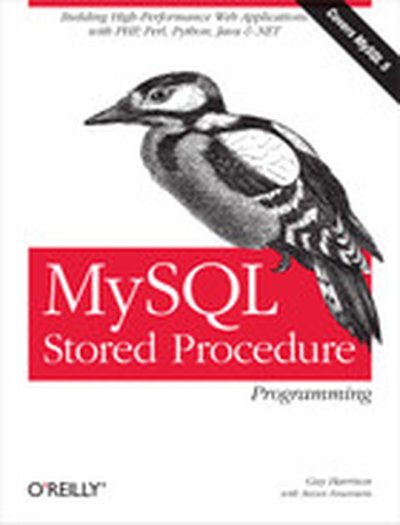
MySQL Stored Procedure Programming

The implementation of stored procedures in MySQL 5.0 a hugemilestone -- one that is expected to lead to widespread enterprise adoption ofthe already extremely popular MySQL database. If you are serious aboutbuilding the web-based database applications of the future, you need toget up to speed quickly on how stored procedures work -- and how tobuild them the right way. This book, destined to be the bible of storedprocedure development, is a resource that no real MySQL programmer canafford to do without. In the decade since MySQL burst on the scene, it has become thedominant open source database, with capabilities and performancerivaling those of commercial RDBMS offerings like Oracle and SQLServer. Along with Linux and PHP, MySQL is at the heart of millions ofapplications. And now, with support for stored procedures, functions,and triggers in MySQL 5.0, MySQL offers the programming power neededfor true enterprise use. MySQL's new procedural language has a straightforward syntax, making iteasy to write simple programs. But it's not so easy to write secure,easily maintained, high-performance, and bug-free programs. Few in theMySQL world have substantial experience yet with stored procedures, butGuy Harrison and Steven Feuerstein have decades of combined expertise. In MySQL Stored Procedure Programming, they putthat hard-won experience to good use. Packed with code examples and coveringeverything from language basics to application building to advancedtuning and best practices, this highly readable book is the one-stopguide to MySQL development. It consists of four major sections: MySQL stored programming fundamentals -- tutorial, basicstatements, SQL in stored programs, and error handling Building MySQL stored programs -- transaction handling,built-in functions, stored functions, and triggers MySQL stored programs in applications -- using storedprograms with PHP, Java, Perl, Python, and .NET (C# and VB.NET) Optimizing MySQL stored programs -- security, basic andadvanced SQL tuning, optimizing stored program code, and programmingbest practices A companion web site contains many thousands of lines of code, that youcan put to use immediately. Guy Harrison is Chief Architect of Database Solutions at Quest Softwareand a frequent speaker and writer on MySQL topics. Steven Feuerstein isthe author of Oracle PL/SQL Programming, the classic reference for Oracle stored programming for more than ten years. Both have decades of experience as database developers, and between them they have authored a dozen books.

Microsoft® SQL Server 2005 Reporting Services

SQL Server Reporting enables the creation, management, and delivery of both traditional, paper-oriented reports and interactive, Web-based reports. An integrated part of the Microsoft business intelligence framework, Reporting Services combines the data management capabilities of SQL Server and Microsoft Windows Server with familiar and powerful Microsoft Office System applications to deliver real-time information to support daily operations and drive decisions. Microsoft SQL Server 2005 Reporting Services will help you understand Reporting Services from various perspectives: How it fits business scenarios How to install and configure Reporting Services Reporting Services components Developing reports As you progress to advanced user status, you will enjoy the chapter about accessing Reporting Services programmatically and extending Reporting Services, and you will be able to use this book as a convenient reference.

MySQL® Clustering

Clustering is the final component of MySQL that makes it truly enterprise-level and able to compete fully with proprietary databases such as Oracle and Microsoft SQL Server. The increased number of high-demand, high-productivity corporations and institutions choosing MySQL, including MIT, the Department of Homeland Security, NASA, and Nokia, to name a few, need the benefit of clustering databases for high performance and scalability. MySQL AB has stepped up to the plate to offer advanced, high-availability, reliable clustering. As this demand has increased, so has the need for information. MySQL Clustering offers thorough, authoritative instruction on setting up and administering a MySQL Cluster from the developers of the cluster itself. You will learn about everything from installation and configuration to performance and troubleshooting in this authoritative reference guide to MySQL clustering.

SQL Server 2005 Distilled

Need to get your arms around Microsoft SQL Server 2005 fast, without getting buried in the details? Need to make fundamental decisions about deploying, using, or administering Microsoft’s latest enterprise database? Need to understand what’s new in SQL Server 2005, and how it fits with your existing IT and business infrastructure? SQL Server 2005 Distilled delivers the answers you need–quickly, clearly, and objectively. Former SQL Server team member Eric L. Brown offers realistic insight into every significant aspect of SQL Server 2005: its new features, architecture, administrative tools, security model, data management capabilities, development environment, and much more. Brown draws on his extensive experience consulting with enterprise users, outlining realistic usage scenarios that leverage SQL Server 2005’s strengths and minimize its limitations. Coverage includes Architectural overview: how SQL Server 2005’s features work together and what it means to you Security management, policies, and permissions: gaining tighter control over your data SQL Server Management Studio: Microsoft’s new, unified tool suite for authoring, management, and operations Availability enhancements: online restoration, improved replication, shorter maintenance/recovery windows, and more Scalability improvements, including a practical explanation of SQL Server 2005’s complex table partitioning feature Data access enhancements, from ADO.NET 2.0 to XML SQL Server 2005’s built-in .NET CLR: how to use it, when to use it, and when to stay with T-SQL Business Intelligence Development Studio: leveraging major improvements in reporting and analytics Visual Studio integration: improving efficiency throughout the coding and debugging process Simple code examples demonstrating SQL Server 2005’s most significant new features

The Art of SQL

For all the buzz about trendy IT techniques, data processing is still at the core of our systems, especially now that enterprises all over the world are confronted with exploding volumes of data. Database performance has become a major headache, and most IT departments believe that developers should provide simple SQL code to solve immediate problems and let DBAs tune any "bad SQL" later. In The Art of SQL, author and SQL expert Stephane Faroult argues that this "safe approach" only leads to disaster. His insightful book, named after Art of War by Sun Tzu, contends that writing quick inefficient code is sweeping the dirt under the rug. SQL code may run for 5 to 10 years, surviving several major releases of the database management system and on several generations of hardware. The code must be fast and sound from the start, and that requires a firm understanding of SQL and relational theory. The Art of SQL offers best practices that teach experienced SQL users to focus on strategy rather than specifics. Faroult's approach takes a page from Sun Tzu's classic treatise by viewing database design as a military campaign. You need knowledge, skills, and talent. Talent can't be taught, but every strategist from Sun Tzu to modern-day generals believed that it can be nurtured through the experience of others. They passed on their experience acquired in the field through basic principles that served as guiding stars amid the sound and fury of battle. This is what Faroult does with SQL. Like a successful battle plan, good architectural choices are based on contingencies. What if the volume of this or that table increases unexpectedly? What if, following a merger, the number of users doubles? What if you want to keep several years of data online? Faroult's way of looking at SQL performance may be unconventional and unique, but he's deadly serious about writing good SQL and using SQL well. The Art of SQL is not a cookbook, listing problems and giving recipes. The aim is to get you-and your manager-to raise good questions.

MDX Solutions: With Microsoft® SQL Server™ Analysis Services 2005 and Hyperion® Essbase, Second Edition

Serving as both a tutorial and a reference guide to the MDX (Multidimensional Expressions) query language, this book shows data warehouse developers what they need to know to build effective multidimensional data warehouses After a brief overview of the MDX language and a look at how it is used to access data in sophisticated, multidimensional databases and data warehousing, the authors move directly to providing practical examples of MDX in use New material covers changes in the MDX language itself as well as major changes in its implementation with the latest software releases of Microsoft SQL Server Analysis Services 2005 and Hyperion Essbase Also covers more advanced techniques, like aggregation, query templates, and MDX optimization, and shows users what they need to know to access and analyze data to make better business decisions Note: CD-ROM/DVD and other supplementary materials are not included as part of eBook file.

Fixing Access Annoyances

When an application is part of the Microsoft Office suite, it's sure to be a leader in its field. In the realm of desktop database management, Access is top dog with millions of users. But this is one dog that can bite. Although Access is a powerful, relational tool with the fetching talents of a Labrador, it's not an easy beast to train. Still, millions of users count on Access for everything from managing parts databases to running Web catalogs to working as a front end to mondo SQL databases. But Access is chockablock with annoyances---report hassles, query conundrums, VBA bugs, arcane error messages, and more. O'Reilly's Annoyances series offer real-world help, right now, and Fixing Access Annoyances continues tradition. You'll not only squash bugs and workaround Access' limits, but you'll learn how to use Access to the max, whether you're a newbie or a seasoned pro. Coverage includes install/configuration annoyances, building better tables and queries, creating forms that work right, generating reliable and sophisticated reports, pulling in data from a variety of sources, crafting macros and VBA code to customize Access, and much more. You could grab those other books for help, but do they solve problems from page one? Meet a book of a different stripe. The authors come armed with knowledge of the program's quirks, design hurdles and interface snags. They provide you with battle plans in Fixing Access Annoyances to save you time and bouts of hair pulling. Stop information from spiraling out of control when working with Access and trying to make this #$@@#$ thing work! Don't let its quirks, bugs, and troublemaking features beat you. Who you gonna call for help? Instead of waiting on the line for tech support or searching for the answer on the Internet with its too many resources to find exactly what you need, take control of databases with Fixing Access Annoyances, your partner on database adventures.

Programming SQL Server 2005

SQL Server 2005, Microsoft's next-generation data management and analysis solution, represents a huge leap forward. It comes with a myriad of changes that deliver increased security, scalability, and power--making it the complete data package. Used properly, SQL Server 2005 can help organizations of all sizes meet their data challenges head on. Programming SQL Server 2005 from O'Reilly provides a practical look at this updated version of Microsoft's premier database product. It guides you through all the new features, explaining how they work and how to use them. The first half of the book examines the changes and new features of the SQL Server Engine itself. The second addresses the enhanced features and tools of the platform, including the new services blended into this popular version. Each chapter contains numerous code samples-written in C# and compiled using the Visual Studio 2005 development environment-that show you exactly how to program SQL Server 2005. Programming SQL Server 2005 can help you: Build, deploy, and manage enterprise applications that are more secure, scalable, and reliable Maximize IT productivity by reducing the complexity of building, deploying, and managing database applications Share data across multiple platforms, applications, and devices to make it easier to connect internal and external systems Because the goal of Programming SQL Server 2005 is to introduce all facets of Programming SQL Server 2005, it's beneficial to programmers of all levels. The book can be used as a primer by developers with little experience with SQL Server, as a ramp up to the new programming models for SQL Server 2005 for more experienced programmers, or as background and primer to specific concepts. Any IT professional who wants to learn about SQL Server 2005's comprehensive feature set, interoperability with existing systems, and automation of routine tasks will find the answers in this authoritative guide.

Microsoft SQL Server 2005 Notification Services

Microsoft SQL Server 2005 Notification Services covers the basic problems of notification applications, describes the SQL Notification Services platform and describes how to use it to build rich, scalable notification applications. Written by Shyam Pather, the Technical Lead for the SQL Notification Services Team, this book is based on his three years of experience teaching SQL Notification Services to new customers. This book is your complete resource for learning SQL Notification Services application development and the underlying architectural concepts.

Professional SQL Server™ 2005 Integration Services

This book will help you get past the initial learning curve quickly so that you can get started using SSIS to transform data, create a workflow, or maintain your SQL Server. Offering you hands-on guidance, you'll learn a new world of integration possibilities and be able to move away from scripting complex logic to programming tasks using a full-featured language. What you will learn from this book Ways to quickly move and transform data How to configure every aspect of SSIS How to interface SSIS with web services and XML Techniques to scale the SSIS and make it more reliable How to migrate DTS packages to SSIS How to create your own custom tasks and user interfaces How to create an application that interfaces with SSIS to manage the environment A detailed usable case study for a complete ETL solution Who this book is for This book is for developers, DBAs, and users who are looking to program custom code in all of the .NET languages. It is expected that you know the basics of how to query the SQL Server and have some fundamental programming skills. Wrox Professional guides are planned and written by working programmers to meet the real-world needs of programmers, developers, and IT professionals. Focused and relevant, they address the issues technology professionals face every day. They provide examples, practical solutions, and expert education in new technologies, all designed to help programmers do a better job.

Business Process Execution Language for Web Services - Second Edition

Key Features Architecture, syntax, development and composition of Business Processes and Services using BPEL Advanced BPEL features such as compensation, concurrency, links, scopes, events, dynamic partner links, and correlations Oracle BPEL Process Manager and BPEL Designer Microsoft BizTalk Server as a BPEL server Book Description Web services provide the basic technical platform required for application interoperability. They do not, however, provide higher level control, such as which web services need to be invoked, which operations should be called and in what sequence. Nor do they provide ways to describe the semantics of interfaces, the workflows, or e-business processes. BPEL is the missing link to assemble and integrate web services into a real business process BPEL4WS standardizes process automation between web services. This applies both within the enterprise, where BPEL4WS is used to integrate previously isolated systems, and between enterprises, where BPEL4WS enables easier and more effective integration with business partners. In providing a standard descriptive structure BPEL4WS enables enterprises to define their business processes during the design phase. Wider business benefits can flow from this through business process optimization, reengineering, and the selection of most appropriate processes . Supported by major vendors - including BEA, Hewlett-Packard, IBM, Microsoft, Novell, Oracle, SAP, Sun, and others - BPEL4WS is becoming the accepted standard for business process management. This book provides detailed coverage of BPEL4WS, its syntax, and where, and how, it is used. It begins with an overview of web services, showing both the foundation of, and need for, BPEL. The web services orchestration stack is explained, including standards such as WS-Security, WS-Coordination, WS-Transaction, WS-Addressing, and others. The BPEL language itself is explained in detail, with Code snippets and complete examples illustrating both its syntax and typical construction. Having covered BPEL itself, the book then goes on to show BPEL is used in context. by providing an overview of major BPEL4WS servers. It covers the Oracle BPEL Process Manager and Microsoft BizTalk Server 2004 in detail, and shows how to write BPEL4WS solutions using these servers. What you will learn Chapter 1 provides a detailed introduction to BPEL and Service Oriented Architecture (SOA). It discusses business processes and their automation, explains the role of BPEL, web services, and Enterprise Service Buses (ESB) in SOA, provides insight into business process composition with BPEL, explains the most important features, compares BPEL to other specifications, provides an overview of BPEL servers, and discusses the future of BPEL. Chapter 2 provides a detailed introduction to the Web Services Technology Stack. It discusses the important standards and specifications for using BPEL and implementing SOA with web services, such as WS-Security, WS-Addressing, WS-Coordination, WS-AtomicTransaction, WS-BusinessActivity, WS-Reliable Messaging, etc. Chapter 3 discusses the composition of web services with BPEL. The chapter introduces the core concepts of BPEL and explains how to define synchronous and asynchronous business processes with BPEL. The reader gets familiar with BPEL process structure, partner links, sequential and parallel service invocation, variables, conditions, etc. Chapter 4 goes deeper into the BPEL specification and covers advanced features for modeling complex business processes. Advanced activities, scopes, serialization, fault handing, compensations, event handling, correlation sets, concurrent activities and links, process lifecycle, and dynamic partner links are covered in detail. Chapter 5 explains how to use the Oracle BPEL Process Manager for deploying and executing business processes defined in BPEL. It describes the server architecture, tools, features, and common approaches for managing and debugging BPEL processes. The chapter also looks at graphical development of BPEL processes using Oracle BPEL Designer for JDeveloper and for Eclipse. Chapter 6 takes a detailed look at the advanced features of the Oracle BPEL Process Manager including extension functions, dynamic parallel flows, Web Services Invocation Framework, Java embedding, Notification service, Workflow service, Identity service, and Oracle BPEL Server APIs. Chapter 7 discusses MS BizTalk Server 2004 and its support for BPEL. It explains how to develop business processes in BizTalk and export them to BPEL. It also explains how to import BPEL processes into BizTalk and how to use the Orchestration Designer tool to define processes graphically, and compares BizTalk and BPEL constructs. Appendix A provides a syntax reference for BPEL version 1.1. The appendix covers standard BPEL activities and elements, functions, attributes, and faults. Who this book is for This book is aimed at architects and developers in the design, implementation, and integration phases of advanced information systems and e-business solutions, developing business processes and dealing with the issues of composition, orchestration, transactions, coordination, and security. The book presumes knowledge of XML and web services, web services development (either on J2EE or .NET), and multi-tier architecture

Microsoft SQL Server 2005 Reporting Services, 2nd Edition

Microsoft's Reporting Services product is a vital part of the SQL Server 2005 business intelligence platform, but it works with virtually any data source. This hands-on guide explains how to transform data into insightful and interactive Web-based reports using Microsoft SQL Server 2005 Reporting Services. With coverage of everything from installation to administration, the book demonstrates how to use this powerful server-based reporting solution to improve business decision-making and facilitate company-wide -- even worldwide -- communication.

MySQL® Crash Course

MySQL is one of the most popular database management systems available, powering everything from Internet powerhouses to individual corporate databases to simple end-user applications, and everything in between. And this book will teach you all you need to know to be immediately productive with MySQL. By working through 30 highly focused hands-on lessons, your MySQL Crash Course will be both easier and more effective than you'd have thought possible. Learn how to: Retrieve and sort data Filter data using comparisons, regular expressions, full text search, and much more Join relational data Create and alter tables Insert, update, and delete data Leverage the power of stored procedures and triggers Use views and Cursors Manage transactional processing Create user accounts and manage security via access control Ben Forta is Macromedia's Senior Technical Evangelist, and has almost 20 years of experience in the computer industry in product development, support, training, and product marketing. Ben is the author of the best-selling Sams Teach Yourself SQL in 10 Minutes (now in its third edition, and translated into over a dozen languages), ColdFusion Web Application Construction Kit, and Advanced ColdFusion Development (both published by Que Publishing), Sams Teach Yourself Regular Expressions in 10 Minutes, as well as books on SQL, Flash, JSP, HomeSite, WAP, Windows 2000, and other subjects.

Cost-Based Oracle Fundamentals

The question, "Why isn't Oracle using my index?" must be one of the most popular (or perhaps unpopular) questions ever asked on the Oracle help forums. You've picked exactly the right columns, you've got them in the ideal order, you've computed statistics, you've checked for null columns—and the optimizer flatly refuses to use your index unless you hint it. What could possibly be going wrong? If you've suffered the frustration of watching the optimizer do something completely bizarre when the best execution plan is totally obvious, or spent hours or days trying to make the optimizer do what you want it to do, then this is the book you need. You'll come to know how the optimizer thinks, understand why it makes mistakes, and recognize the data patterns that make it go awry. With this information at your fingertips, you will save an enormous amount of time on designing and trouble-shooting your SQL. The cost-based optimizer is simply a piece of code that contains a model of how Oracle databases work. By applying this model to the statistics about your data, the optimizer tries to efficiently convert your query into an executable plan. Unfortunately, the model can't be perfect, your statistics can't be perfect, and the resulting execution plan may be far from perfect. In Cost-Based Oracle Fundamentals, the first book in a series of three, Jonathan Lewis—one of the foremost authorities in this field—describes the most commonly used parts of the model, what the optimizer does with your statistics, and why things go wrong. With this information, you'll be in a position to fix entire problem areas, not just single SQL statements, by adjusting the model or creating more truthful statistics.

Microsoft® SQL Server™ 2005 Administrator's Pocket Consultant

Here’s the utterly practical, pocket-sized reference for IT professionals who need to administer, optimize, and maintain Microsoft SQL Server 2005 in their organization. This unique guide provides essential details for using Microsoft SQL Server 2005 to help protect and manage your company’s data—whether automating tasks; creating indexes and views; performing backups and recovery; replicating transactions; tuning performance; managing server activity; importing and exporting data; or performing other key tasks. Featuring quick-reference tables, lists, and step-by-step instructions, this handy, one-stop guide provides fast, accurate answers on the spot—whether you’re at your desk or in the field!