talk-data.com talk-data.com

Topic

SQL

Structured Query Language (SQL)

database_language data_manipulation data_definition programming_language

780

tagged

Activity Trend

107 peak/qtr
2020-Q1 2026-Q1

Activities

Showing filtered results

Filtering by: O'Reilly Data Engineering Books ×
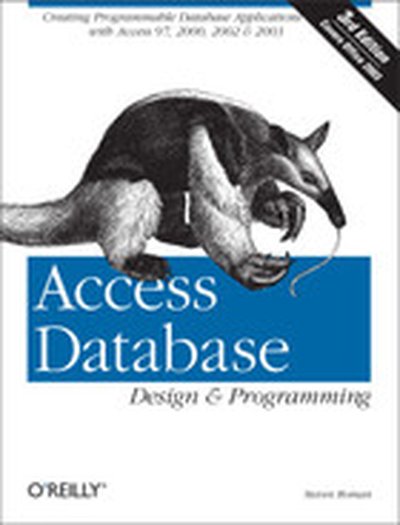
Access Database Design & Programming, 3rd Edition

Access Database Design & Programming takes you behind the details of the Access interface, focusing on the general knowledge necessary for Access power users or developers to create effective database applications. When using software products with graphical interfaces, we frequently focus so much on the interface that we forget about the general concepts that allow us to understand and use the software effectively. In particular, this book focuses on three areas: Unlike other Access books that take the long, detailed approach to every topic of concern to Access programmers, Database design. The book provides an enjoyable, informative overview of database design that carefully shows you how to normalize tables to eliminate redundancy without losing data. Queries. The book examines multi-table queries (i.e.,various types of joins) and shows how to implement them indirectly by using the Access interface or directly by using Access SQL. Programming. The book examines the VBA integrated development environment (IDE). It then goes on to provide an excellent introduction to Data Access Objects (DAO), ActiveX Data Objects (ADO), and ADO Extensions for Data Definition and Security (ADOX). These sections serve as a handy introduction and primer for basic database operations,such as modifying a table under program control, dynamically adding and deleting a record, and repositioning a record pointer. The concluding chapter focuses on common programming problems, such as computing running sums and comparing two sets. Access Database Design &Programming instead focuses on the core concepts, enabling programmers to develop solid, effective database applications. This book also serves as a 'second course' in Access that provides a relatively experienced Access user who is new to programming with the frequently overlooked techniques necessary to develop successfully in the Microsoft Access environment.Anyone interested in learning Access in depth, rather than just scraping the surface, will enjoy and benefit immensely from reading this book.
Oracle SQL Tuning Pocket Reference

One of the most important challenges faced by Oracle database administrators and Oracle developers is the need to tune SQL statements so that they execute efficiently. Poorly tuned SQL statements are one of the leading causes of substandard database performance and poor response time. SQL statements that perform poorly result in frustration for users, and can even prevent a company from serving its customers in a timely manner. In this book, Mark Gurry shares his in-depth knowledge of Oracle's SQL statement optimizers. Mark's knowledge is the result of many hard-fought tuning battles during his many years of providing Oracle tuning services to clients. Mark provides insights into the workings of the rule-based optimizer that go well beyond what the rules tell you. Mark also provides solutions to many common problems that occur with both the rule-based and cost-based optimizers. In addition to the specific problem/solution scenarios for the optimizers, Mark provides a number of handy SQL tuning tips. He discusses the various optimizer hints, telling you when they can be used to good effect. Finally, Mark discusses the use of the DBMS_STATS package to manage database statistics, and the use of outlines to specify execution plans for SQL statements in third-party applications that you can't otherwise modify.

Guru's Guide to SQL Server™ Stored Procedures, XML, and HTML, The

"This is a book that deserves a prominent place by anyone who aspires to be a real professional developer of SQL Server applications." --from the Foreword by Ron Soukup The message of this book is that building stored procedures in Transact-SQL is very much like building programs in any other language. It requires the same type of skill, planning, attention to detail, and overall grasp of technology that successful development in other languages requires. To master Transact-SQL, one must first master the fundamental concepts of software development, then build on this foundation by embracing and studying Transact-SQL as a programming language in its own right. This book teaches you how to do that and more. More than just a catalog of coding tricks and syntax subtleties, explores the philosophy of Transact-SQL programming. It teaches readers how to apply this philosophy in order to develop their own coding techniques and discover their own solutions to real-world programming problems. A follow-up to the widely acclaimed The Guru's Guide to SQL Server(TM) Stored Procedures, XML, and HTML The Guru's Guide to Transact-SQL, this book teaches that stored procedure development does not occur in a vacuum--it involves a wide variety of skills, subjects, and technologies--and helps the reader become a better software engineer, not just a stored procedure expert. Blending theoretical detail with practical application, this comprehensive reference begins with a foundational overview of SQL Server(TM) stored procedure programming. From there, the focus moves on to best practices and design considerations before progressing to advanced topics and a general philosophy of software craftsmanship. In all, this book provides the most complete coverage of SQL Server stored procedure programming available in one source. Topics such as user-defined functions, views, triggers, extended procedures, error handling, OLE Automation, database design, and XML are covered in detail. The book spotlights undocumented language features and brings the first application of design patterns to the SQL language. The preview of .NET and a groundbreaking approach to adding arrays to Transact-SQL make for the most thorough and engaging read published to date on SQL Server programming. The accompanying CD-ROM contains the book's source code. More than 700 SQL scripts, programming utilities, and extended procedures provide a veritable treasure trove of high-quality example code. Theoretically sound, yet immensely practical, provides developers with the tools they need to become expert stored procedure programmers and better software engineers. The Guru's Guide to SQL Server(TM) Stored Procedures, XML, and HTML 0201700468B11262001

PostgreSQL Developer's Handbook

PostgreSQL is an object-relational database server that is widely considered to be the world¿s most advanced open-source database system. It is ANSI SQL-compatible, and it offers powerful features to enable more complex software design than would be possible with relational databases that are not object-oriented. PostgreSQL is extremely modular, it supports a large number of datatypes, and programming interfaces for PostgreSQL are available for all important programming languages, including C, Perl, Python, Tcl, Java, and PHP. PostgreSQL Developer¿s Handbook provides a complete overview of the PostgreSQL database server and extensive coverage of its core features, including object orientation, PL/pgSQL, and the most important programming interfaces. The book introduces the reader to the language and syntax of PostgreSQL and then moves quickly into advanced programming topics.

Advanced Functions and Administration on DB2 Universal Database for iSeries

Dive into the details of DB2 Universal Database for iSeries advanced functions and database administration. This IBM Redbooks publication aims to equip programmers, analysts, and database administrators with all the skills and tools necessary to take advantage of the powerful features of the DB2 Universal Database for iSeries relational database system. It provides suggestions, guidelines, and practical examples about when and how to effectively use DB2 Universal Database for iSeries. This book contains information that you may not find anywhere else, including programming techniques for the following functions: - Referential integrity and check constraints - DRDA over SNA, DRDA over TCP/IP, and two-phase commit - DB2 Connect - Import and Export utilities This book also offers a detailed explanation of the new database administration features that are available with Operations Navigator in V5R1. Among the tools, you will find: - Database Navigator - Reverse engineering and Generate SQL - Visual Explain - Database administration using Operations Navigator With the focus on advanced functions and administration in this fourth edition of the book, we moved the information about stored procedures and triggers into a new book -- "Stored Procedures and Triggers on DB2 Universal Database for iSeries", SG24-6503.

XML and SQL: Developing Web Applications

"Dan's book provides something that the formal standards and development manuals sorely lack: a context that helps developers understand how to use XML in their own projects." --Tim Kientzle, Independent Software Consultant is a guide for Web developers and database programmers interested in building robust XML applications backed by SQL databases. It makes it easier than ever for Web developers to create and manage scalable database applications optimized for the Internet. XML and SQL: Developing Web Applications The author offers an understanding of the many advantages of both XML and SQL and provides practical information and techniques for utilizing the best of both systems. The book explores the stages of application development step by step, featuring a real-world perspective and many examples of when and how each technology is most effective. Specific topics covered include: Project definition for a data-oriented application Creating a bullet-proof data model DTDs (document type definitions) and the design of XML documents When to use XML, and what parts of your data should remain purely relational Related standards, such as XSLT and XML Schema How to use the XML support incorporated into Microsoft's SQL Server™ 2000 The XML-specific features of J2EE™ (Java™ 2 Enterprise Edition) Throughout this book, numerous concrete examples illustrate how to use each of these powerful technologies to circumvent the other's limitations. If you want to use the best part of XML and SQL to create robust, data-centric systems then there is no better resource than this book. 0201657961B10152001

Learning Oracle PL/SQL

PL/SQL, Oracle's programming language for stored procedures, delivers a world of possibilities for your database programs. PL/SQL supplements the standard relational database language, SQL, with a wide range of procedural features, including loops, IF-THEN statements, advanced data structures, and rich transactional control--all closely integrated with the Oracle database server. Knowing where to start with Oracle's procedural language is not always obvious to a newcomer, especially considering the language's feature set and the sheer size of the official documentation (not to mention Oracle's ever-increasing number of pre-built PL/SQL programs). But Learning Oracle PL/SQL offers the signposts and guidance you need to come up to speed on the language, delivered in a manageable number of pages while covering all the essentials. Topics include: PL/SQL--what is it, and why use it? Why use PL/SQL instead of Java? Syntax and examples of all core language constructs Creating, using, and reusing stored procedures, functions, and packages Building web-based applications using PL/SQL features available "out of the box" (such as PL/SQL Server Pages) Securing PL/SQL programs against attack Benefits of third-party developer tools and integrated development environments Connecting PL/SQL to email, Java, and the Internet Meticulously crafted with all-new examples downloadable from examples.oreilly.com/learnoracle, the book addresses language features available in all versions of Oracle, from Oracle7 to Oracle8i to Oracle9i. Learning Oracle PL/SQL was written by PL/SQL experts Bill Pribyl and Steven Feuerstein, whose easy-to-read style and attention to detail has made other O'Reilly books (such as the bestselling Oracle PL/SQL Programming) very popular among Oracle developers worldwide. Learning Oracle PL/SQL is meant for a wide range of target audiences, including both beginning programmers and those already experienced with other programming languages. Whether you are a new developer, a crossover programmer from another database system, or a new database administrator who needs to learn PL/SQL, this book will get you well on your way. It is the perfect introduction to Oracle PL/SQL Programming, also by Pribyl and Feuerstein.

PostgreSQL Essential Reference

PostgreSQL Essential Reference is a reference book for developers and system administrators who are already familiar with SQL database concepts but that need clear and concise documentation that is specific to PostgreSQL. The book is divided into 3 parts; Basic SQL Reference, PostgreSQL specifics, and PostgreSQL administration. On a whole, it provides a command, the syntax, available options, description, and example code. Readers will be able to easily utilize the code and concepts into their use f the product. An added advantage to this book is that provides all reference material in two ways; alphabetically and by task. This is important because readers of the book will be looking for this information by both methods.

Special Edition Using SOAP

This book will introduce the reader to SOAP and serve as a comprehensive reference to both experienced and new developers in the area. Only one other book completely dedicated to SOAP is currently on the market, and it has strong sales because no other information is available. SE Using SOAP will capture more readers than the competition because it provides real-world examples and troubleshooting with complete data conversion information. The emphasis will be on getting started fast instead of reading through white paper-style theory in hopes of finding applicable information. By reading this book and working through the examples, the reader will be well versed in SOAP and its applications immediately. SE Using SOAP includes difficult to find information on how SOAP works with different languages and protocols including Visual Basic.NET, Visual Basic 6, C#, XML, HTTP, SDL, DISCO, COM, SQL Server, plus much more. Also covers how to work with PDAs, an ever-growing need in the data transfer market.

SQL Server DTS

This book appeals to both developers and database administrators who are faced with the common situation of having to migrate or integrate data from one location into another. While the first section of the book is designed for the beginner to DTS, it is assumed that the reader has at least basic database and programming experience. The second section is extensive coding, and is best used by someone with intermediate to advanced programming skills. The third section contains a mix of examples that will be useful to all levels of database administrators and programmers. For the readers who have been using DTS this section can be used as a reference section and help with DTS designs and usage. Unlike other resources available, this book covers data transformation in both SQL Server 7 and 2000.

DB2® Universal Database for OS/390® Version 7.1 Certification Guide

IBM's definitive, authoritative DB2 for OS/390 and z/OS reference and self-study guide! The only comprehensive IBM(r) DB2 UDB V7.1 for OS/390 certification prep guide Covers administration, security, SQL, application development, tuning, and much more Contains dozens of expert DB2 tips, techniques and guidelines CD-ROM contains complete DB2 for OS/390 sample exam Written by IBM Gold Consultants for DB2 and S/390 The total resource for every professional running DB2 UDB V7.1 in OS/390 and z/OS environments Database administration, security, monitoring, tuning, SQL, and application development Sample test questions help you prepare for IBM's new DB2 UDB V7.1 for OS/390 exams The CD-ROM included with this book contains a complete IBM DB2 for OS/390 certification sample exam. IBM's DB2 Universal Database Version 7.1 for OS/390 delivers unparalleled performance, scalability, and reliability in today's enterprise e-business environments! Now, there's a complete, authoritative guide to deploying, managing, and developing applications with DB2 UDB V7.1 in both OS/390 and z/OS environments—and preparing for IBM's updated DB2 UDB V7.1 for OS/390 certification exam! Direct from IBM, this comprehensive day-to-day reference for running DB2 UDB in OS/390 and z/OS environments is also the only book with the in-depth knowledge professionals need in order to pass IBM's latest DB2 for OS/390DBA certification exam. Full of expert tips, techniques, and guidelines, it covers virtually every aspect of working with DB2 UDB in enterprise server: administration, connectivity, development, and much more. IBM Gold Consultants Richard Yevich and Susan Lawson present start-to-finish coverage of DB2's latest and most powerful enhancements, tools, and utilities, showing how to make the most of DB2 running on both OS/390 and next-generation z/OS platforms. Coverage includes: An overview of the DB2 UDB product family DB2 in OS/390 and z/OS environments: address spaces, attachments, interfaces, commands, and utilities Comprehensive security coverage, including access controls and auditing techniques SQL in depth: DB2 data structures, database objects, basic database design, and advanced coding DB2 UDB administration: maintaining data, backup/recovery, and more Performance monitoring and optimization: access paths, indexes, parallelism, buffer pool tuning, and subsystem tuning Data sharing: architecture and implementation in a Parallel Sysplex environment Detailed application development coverage: database extenders, cursors, stored procedures, triggers, object-relational extensions, locking, and concurrency Whether you're deploying DB2 UDB V7.1 in an OS/390 environment, managing DB2 UDB V7.1, preparing for DB2 UDB V7.1 certification, or all three, DB2 Universal Database Version 7.1 for OS/390 Certification Guide will be your single most valuable resource.

Practical SQL Handbook, The: Using SQL Variants, Fourth Edition

This latest edition of the best-selling implementation guide to the Structured Query Language teaches SQL fundamentals while providing practical solutions for critical business applications. now includes expanded platform SQL coverage and extensive real-world examples based on feedback from actual SQL users. The Practical SQL Handbook, Fourth Edition begins with a step-by-step introduction to SQL basics and examines the issues involved in designing SQL-based database applications. It fully explores SQL’s most popular implementations from industry leaders, Oracle, Microsoft, Sybase, and Informix. The Practical SQL Handbook Highlights include: Detailed coverage of SQL commands for creating databases, tables, and indexes, and for adding, changing, and deleting data Using the SELECT command to retrieve specific data Handling NULL values (missing information) in a relational database Joining tables, including self joins and outer joins (ANSI and WHERE-clause syntax) Working with nested queries (subqueries) to get data from multiple tables Creating views (virtual tables) to provide customized access to data Using SQL functions A bonus CD-ROM contains a time-limited, full-feature version of the Sybase® Adaptive Server Anywhere™ software as well as the sample database, scripts, and examples included in the book. is the most complete reference available for day-to-day SQL implementations. The Practical SQL Handbook 0201703092B05222001

Sams Teach Yourself SQL in 10 Minutes, Second Edition

Sams Teach Yourself SQL in 10 Minutes, 2E is a tutorial-based book, organized into a series of easy-to-follow, 10-minute lessons. These well targeted lessons teach you in 10 minutes what some books take several hours or days to teach. Instead of dwelling of database theory and relational design, this book takes a very hands-on approach to solving the needs of the majority of SQL users who simply need to interact with data. The reader of this book will learn how to: Retrieve and sort data Filter data using comparisons and wildcards Use the aggregate functions to analyze data Perform insert, update, and delete operations Join relational tables using inner, outer, and self joins Combine queries using unions Use views Create and use stored procedures, triggers, and other advanced database features

Oracle SQL*Loader: The Definitive Guide

SQL Loader is a ubiquitous tool in the Oracle world. It has been shipped with Oracle since at least Version 6 and continues to be supported and enhanced with each new version of Oracle, including Oracle8 and Oracle8Loader is to load data from flat files into an Oracle database. It's optimized for loading large volumes of data, and is flexible enough to handle virtually any input format.Almost every Oracle user has to use SQL i. The job of SQL Loader at one time or another, and DBAs are frequently called upon to load data for the users in their organization. Despite SQLLoader's wide availability and usage, few DBAs and developers know how to get the most out of it. Oracle SQL has everything you need to know to put SQLLoader to its best use: an introduction to SQL Loader: The Definitive Guide Loader, a reference to all of its syntax options, and most importantly, step-by-step instructions for all the SQLLoader tasks you'd want to perform--and maybe some you didn't realize you COULD perform.You'll learn how to construct the necessary control files and load from different types of files containing different types of data (e.g., fixed-width data, delimited data, and data of various datatypes). You'll also learn how to validate data, load it selectively, transform it as it is loaded, and recover after failure. This book explains how to optimize SQL Loader performance by adjusting the transaction size and using the new direct path option. It also covers the newest SQLLoader features--the loading of large object (LOB) columns and the new object types (nested tables, varying arrays, and object tables). Oracle SQL is an indispensable resource for anyone who is new to SQLLoader; a task-oriented learning tool for those who are already using it; and a quick reference for every user. If you want to take best advantage of an essential Oracle tool, you need this book. Loader: The Definitive Guide

Microsoft® SQL Server™ 2000 Programming by Example

SQL Server 2000 Programming by Example provides clear and concise examples of basic programming techniques used in SQL Server 2000 primarily using Transact-SQL. Even if you're a complete novice to SQL Server 2000 programming, you will benefit by reading through the book's logical process. SQL Server 2000 is introduced and explored, database structure is designed and built, and finally a variety of programming techniques are studied and reviewed. If you are already familiar with SQL Server 2000 programming, you may use the book as a quick reference guide that provides plenty of pertinent examples.

Oracle PL/SQL Best Practices

In this book, Steven Feuerstein, widely recognized as one of the world's experts on the Oracle PL/SQL language, distills his many years of programming, writing, and teaching about PL/SQL into a set of PL/SQL language "best practices"--rules for writing code that is readable, maintainable, and efficient. Too often, developers focus on simply writing programs that run without errors--and ignore the impact of poorly written code upon both system performance and their ability (and their colleagues' ability) to maintain that code over time. Oracle PL/SQL Best Practices is a concise, easy-to-use reference to Feuerstein's recommendations for excellent PL/SQL coding. It answers the kinds of questions PL/SQL developers most frequently ask about their code: The book contains 120 best practices, divided by topic area. It's full of advice on the program development process, coding style, writing SQL in PL/SQL, data structures, control structures, exception handling, program and package construction, and built-in packages. It also contains a handy, pull-out quick reference card. As a helpful supplement to the text, code examples demonstrating each of the best practices are available on the O'Reilly web site. How should I format my code? What naming conventions, if any, should I use? How can I write my packages so they can be more easily maintained? What is the most efficient way to query information from the database? How can I get all the developers on my team to handle errors the same way? Oracle PL/SQL Best Practices is intended as a companion to O'Reilly's larger Oracle PL/SQL books. It's a compact, readable reference that you'll turn to again and again--a book that no serious developer can afford to be without.

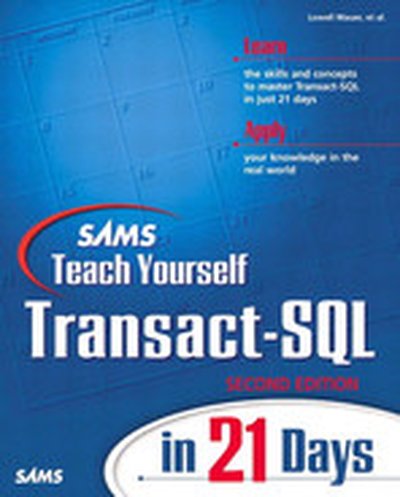
Sams Teach Yourself Transact-SQL in 21 Days, Second Edition

Sams Teach Yourself Transact-SQL in 21 Days, 2E will teach programmers how to develop Transact-SQL queries. There will be a focus on providing methods for improving productivity without a reducing performance. Specifically, the reader will:Learn Transact-SQL syntax Learn how to add, delete, and modifying data using Transact-SQL Understand coding standards Review variations from ANSI-standard SQL Be presented with basic server operations. Recognize performance issues with queries. This book will also include:Constructs such as CUBE, ROLLUP, CASE, and JOIN. Techniques to solve complex problems How the server uses indexes Methods to write (correctly) stored procedures and triggers. Templates of procedures and triggers (reference) Advanced Topics such as: Outer and self joins Temporary tables Sub-queries.

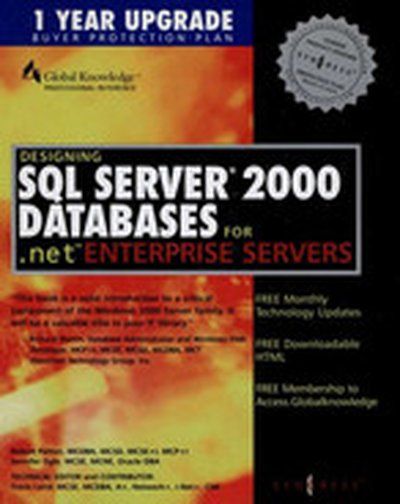
Designing SQL Server 2000 Databases

The Microsoft .NET initiative is the future of e-commerce - making it possible for organisations to build a secure, reliable e-commerce infrastructure. This is the first book to outline the capabilities of SQL Server 2000, one of the key components of .NET. SQL Server 2000 introduces powerful new data mining functionality designed specifically to capture and process customer profiles and to predict future buying patterns on e-commerce sites. Designing SQL Server 2000 Databases addresses the needs of IT professionals migrating from the popular SQL 7 databases to the new SQL 2000, as well as those who are starting from scratch. Covers all key features of SQL Server 2000 including; XML support, enhanced data-mining capabilities and integration with Windows 2000 While there are many books available on SQL 7 - this is the first to be announced for SQL 2000 Free ongoing customer support and information upgrades

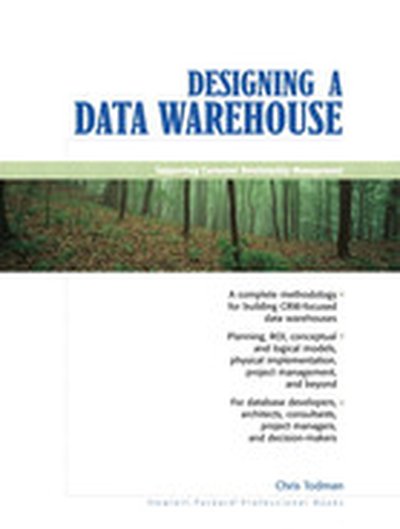
Designing a Data Warehouse: Supporting Customer Relationship Management

The complete guide to building tomorrow's CRM-focused data warehouses. A complete methodology for building CRM-focused data warehouses Planning, ROI, conceptual and logical models, physical implementation, project management, and beyond For database developers, architects, consultants, project managers, and decision-makers Today's next-generation data warehouses are being built with a clear goal: to maximize the power of Customer Relationship Management. To make CRM-focused data warehousing work, you need new techniques, and new methodologies. In this book, Dr. Chris Todman—one of the world's leading data warehouse consultants—delivers the first start-to-finish methodology for defining, designing, and implementing CRM-focused data warehouses. Todman covers all this, and more: Critical design challenges unique to CRM-focused data warehousing A new look at data warehouse conceptual models, logical models, and physical implementation The crucial implications of time in data warehouse modeling and querying Project management: deliverables, assumptions, risks, and team-building—including a full breakdown of work Estimating the ROI of CRM-focused data warehouses up front Choosing software for loading, extraction, transformation, querying, data mining, campaign management, personalization, and metadata DW futures: temporal databases, OLAP SQL extensions, active decision support, integrating external and unstructured data, search agents, and more If you want to leverage the full power of your CRM system, you need a data warehouse designed for the purpose. One book shows you exactly how to build one: Designing Data Warehouses by Dr. Chris Todman.