talk-data.com talk-data.com

Topic

statistics

505

tagged

Activity Trend

1 peak/qtr
2020-Q1 2026-Q1

Activities

Showing filtered results

Filtering by: O'Reilly Data Science Books ×
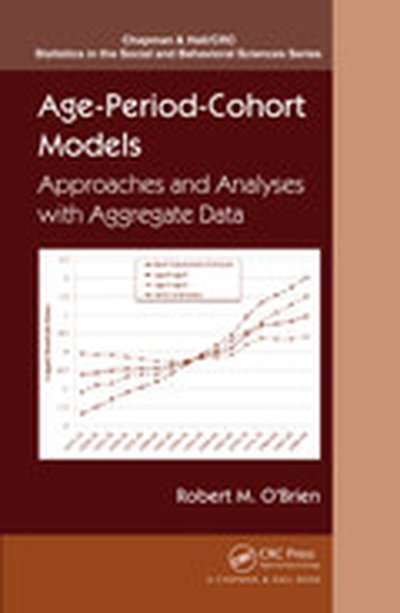
Age-Period-Cohort Models

This book presents an introduction to the problems and strategies for modeling age, period, and cohort (APC) effects for aggregate-level data. These strategies include constrained estimation, the use of age and/or period and/or cohort characteristics, estimable functions, variance decomposition and a new technique called the s-constraint approach.

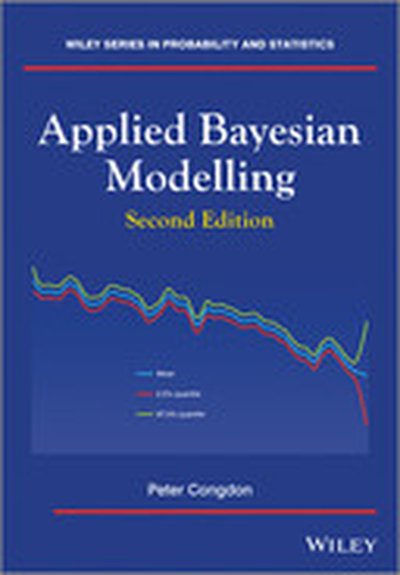
Applied Bayesian Modelling, 2nd Edition

This book provides an accessible approach to Bayesian computing and data analysis, with an emphasis on the interpretation of real data sets. Following in the tradition of the successful first edition, this book aims to make a wide range of statistical modeling applications accessible using tested code that can be readily adapted to the reader's own applications. The second edition has been thoroughly reworked and updated to take account of advances in the field. A new set of worked examples is included. The novel aspect of the first edition was the coverage of statistical modeling using WinBUGS and OPENBUGS. This feature continues in the new edition along with examples using R to broaden appeal and for completeness of coverage.

Basic Data Analysis for Time Series with R

Written at a readily accessible level, Basic Data Analysis for Time Series with R emphasizes the mathematical importance of collaborative analysis of data used to collect increments of time or space. Balancing a theoretical and practical approach to analyzing data within the context of serial correlation, the book presents a coherent and systematic regression-based approach to model selection. The book illustrates these principles of model selection and model building through the use of information criteria, cross validation, hypothesis tests, and confidence intervals. Focusing on frequency- and time-domain and trigonometric regression as the primary themes, the book also includes modern topical coverage on Fourier series and Akaike's Information Criterion (AIC). In addition, Basic Data Analysis for Time Series with R also features: Real-world examples to provide readers with practical hands-on experience Multiple R software subroutines employed with graphical displays Numerous exercise sets intended to support readers understanding of the core concepts Specific chapters devoted to the analysis of the Wolf sunspot number data and the Vostok ice core data sets

Better Business Decisions from Data

" Everyone encounters statistics on a daily basis. They are used in proposals, reports, requests, and advertisements, among others, to support assertions, opinions, and theories. Unless you're a trained statistician, it can be bewildering. What are the numbers really saying or not saying? Better Business Decisions from Data: Statistical Analysis for Professional Success provides the answers to these questions and more. It will show you how to use statistical data to improve small, every-day management judgments as well as major business decisions with potentially serious consequences. Author Peter Kenny-with deep experience in industry-believes that "while the methods of statistics can be complicated, the meaning of statistics is not." He first outlines the ways in which we are frequently misled by statistical results, either because of our lack of understanding or because we are being misled intentionally. Then he offers sound approaches for understanding and assessing statistical data to make excellent decisions. Kenny assumes no prior knowledge of statistical techniques; he explains concepts simply and shows how the tools are used in various business situations. With the arrival of Big Data, statistical processing has taken on a new level of importance. Kenny lays a foundation for understanding the importance and value of Big Data, and then he shows how mined data can help you see your business in a new light and uncover opportunity. Among other things, this book covers: How statistics can help you assess the probability of a successful outcome How data is collected, sampled, and best interpreted How to make effective forecasts based on the data at hand How to spot the misuse or abuse of statistical evidence in advertisements, reports, and proposals How to commission a statistical analysis Arranged in seven parts-Uncertainties, Data, Samples, Comparisons, Relationships, Forecasts, and Big Data-" Better Business Decisions from Data is a guide for busy people in general management, finance, marketing, operations, and other business disciplines who run across statistics on a daily or weekly basis. You'll return to it again and again as new challenges emerge, making better decisions each time that boost your organization's fortunes—as well as your own.

Theory and Application of Statistical Energy Analysis, 2nd Edition

This up-to-date second edition provides a comprehensive examination of the theory and application of Statistical Energy Analysis (SEA) in acoustics and vibration. Complete with examples and data taken from real problems this unique book also exploresthe influence of computers on SEA and emphasizes computer based SEA calculations. In addition to a discussion of the relationship between SEA and other procedures used in response estimation, Theory and Application of Statistical Energy Anlaysis, SecondEdition, explores the basic relationships between model and wave descriptions of systems.

Discrete and Continuous Simulation

When it comes to discovering glitches inherent in complex systems—be it a railway or banking, chemical production, medical, manufacturing, or inventory control system—developing a simulation of a system can identify problems with less time, effort, and disruption than it would take to employ the original. Advantageous to both academic and industrial practitioners, Discrete and Continuous Simulation: Theory and Practice offers a detailed view of simulation that is useful in several fields of study. This text concentrates on the simulation of complex systems, covering the basics in detail and exploring the diverse aspects, including continuous event simulation and optimization with simulation. It explores the connections between discrete and continuous simulation, and applies a specific focus to simulation in the supply chain and manufacturing field. It discusses the Monte Carlo simulation, which is the basic and traditional form of simulation. It addresses future trends and technologies for simulation, with particular emphasis given to .NET technologies and cloud computing, and proposes various simulation optimization algorithms from existing literature. Includes chapters on input modeling and hybrid simulation Introduces general probability theory Contains a chapter on Microsoft ® Excel ™ and MATLAB ®/Simulink ® Discusses various probability distributions required for simulation Describes essential random number generators Discrete and Continuous Simulation: Theory and Practice defines the simulation of complex systems. This text benefits academic researchers in industrial/manufacturing/systems engineering, computer sciences, operations research, and researchers in transportation, operations management, healthcare systems, and human–machine systems.

Advanced Backend Optimization

This book is a summary of more than a decade of research in the area of backend optimization. It contains the latest fundamental research results in this field. While existing books are often more oriented toward Masters students, this book is aimed more towards professors and researchers as it contains more advanced subjects. It is unique in the sense that it contains information that has not previously been covered by other books in the field, with chapters on phase ordering in optimizing compilation; register saturation in instruction level parallelism; code size reduction for software pipelining; memory hierarchy effects and instruction level parallelism. Other chapters provide the latest research results in well-known topics such as register need, and software pipelining and periodic register allocation.

Recursive Identification and Parameter Estimation

Recursive Identification and Parameter Estimation describes a recursive approach to solving system identification and parameter estimation problems arising from diverse areas. Supplying rigorous theoretical analysis, it presents the material and proposed algorithms in a manner that makes it easy to understand—providing readers with the modeling and identification skills required for successful theoretical research and effective application. The book begins by introducing the basic concepts of probability theory, including martingales, martingale difference sequences, Markov chains, mixing processes, and stationary processes. Next, it discusses the root-seeking problem for functions, starting with the classic RM algorithm, but with attention mainly paid to the stochastic approximation algorithms with expanding truncations (SAAWET) which serves as the basic tool for recursively solving the problems addressed in the book. The book not only identifies the results of system identification and parameter estimation, but also demonstrates how to apply the proposed approaches for addressing problems in a range of areas, including: Identification of ARMAX systems without imposing restrictive conditions Identification of typical nonlinear systems Optimal adaptive tracking Consensus of multi-agents systems Principal component analysis Distributed randomized PageRank computation This book recursively identifies autoregressive and moving average with exogenous input (ARMAX) and discusses the identification of non-linear systems. It concludes by addressing the problems arising from different areas that are solved by SAAWET. Demonstrating how to apply the proposed approaches to solve problems across a range of areas, the book is suitable for students, researchers, and engineers working in systems and control, signal processing, communication, and mathematical statistics.

The Mystery of Market Movements: An Archetypal Approach to Investment Forecasting and Modelling

A quantifiable framework for unlocking the unconscious forces that shape markets There has long been a notion that subliminal forces play a great part in causing the seemingly irrational financial bubbles, which conventional economic theory, again and again, fails to explain. However, these forces, sometimes labeled 'animal spirits' or 'irrational exuberance, have remained elusive - until now. The Mystery of Market Movements provides you with a methodology to timely predict and profit from changes in human investment behaviour based on the workings of the collective unconscious. Niklas Hageback draws in on one of psychology's most influential ideas - archetypes - to explain how they form investor's perceptions and can be predicted and turned into profit. The Mystery of Market Movements provides; A review of the collective unconscious and its archetypes based on Carl Jung's theories and empirical case studies that highlights and assesses the influences of the collective unconscious on financial bubbles and zeitgeists For the first time being able to objectively measure the impact of archetypal forces on human thoughts and behaviour with a view to provide early warning signals on major turns in the markets. This is done through a step-by-step guide on how to develop a measurement methodology based on an analysis of the language of the unconscious; figurative speech such as metaphors and symbolism, drawn out and deciphered from Big Data sources, allowing for quantification into time series The book is supplemented with an online resource that presents continuously updated bespoken archetypal indexes with predictive capabilities to major financial indexes Investors are often unaware of the real reasons behind their own financial decisions. This book explains why psychological drivers in the collective unconscious dictates not only investment behaviour but also political, cultural and social trends. Understanding these forces allows you to stay ahead of the curve and profit from market tendencies that more traditional methods completely overlook.

Bayesian Networks

Understand the Foundations of Bayesian Networks—Core Properties and Definitions Explained Bayesian Networks: With Examples in R introduces Bayesian networks using a hands-on approach. Simple yet meaningful examples in R illustrate each step of the modeling process. The examples start from the simplest notions and gradually increase in complexity. The authors also distinguish the probabilistic models from their estimation with data sets. The first three chapters explain the whole process of Bayesian network modeling, from structure learning to parameter learning to inference. These chapters cover discrete Bayesian, Gaussian Bayesian, and hybrid networks, including arbitrary random variables. The book then gives a concise but rigorous treatment of the fundamentals of Bayesian networks and offers an introduction to causal Bayesian networks. It also presents an overview of R and other software packages appropriate for Bayesian networks. The final chapter evaluates two real-world examples: a landmark causal protein signaling network paper and graphical modeling approaches for predicting the composition of different body parts. Suitable for graduate students and non-statisticians, this text provides an introductory overview of Bayesian networks. It gives readers a clear, practical understanding of the general approach and steps involved.

Fundamentals of Applied Probability and Random Processes, 2nd Edition

The long-awaited revision of Fundamentals of Applied Probability and Random Processes expands on the central components that made the first edition a classic. The title is based on the premise that engineers use probability as a modeling tool, and that probability can be applied to the solution of engineering problems. Engineers and students studying probability and random processes also need to analyze data, and thus need some knowledge of statistics. This book is designed to provide students with a thorough grounding in probability and stochastic processes, demonstrate their applicability to real-world problems, and introduce the basics of statistics. The book's clear writing style and homework problems make it ideal for the classroom or for self-study. Demonstrates concepts with more than 100 illustrations, including 2 dozen new drawings Expands readers’ understanding of disruptive statistics in a new chapter (chapter 8) Provides new chapter on Introduction to Random Processes with 14 new illustrations and tables explaining key concepts. Includes two chapters devoted to the two branches of statistics, namely descriptive statistics (chapter 8) and inferential (or inductive) statistics (chapter 9).

Methods and Applications of Statistics in Clinical Trials, Volume 2: Planning, Analysis, and Inferential Methods

Methods and Applications of Statistics in Clinical Trials, Volume 2: Planning, Analysis, and Inferential Methods includes updates of established literature from the Wiley Encyclopedia of Clinical Trials as well as original material based on the latest developments in clinical trials. Prepared by a leading expert, the second volume includes numerous contributions from current prominent experts in the field of medical research. In addition, the volume features: Multiple new articles exploring emerging topics, such as evaluation methods with threshold, empirical likelihood methods, nonparametric ROC analysis, over- and under-dispersed models, and multi-armed bandit problems Up-to-date research on the Cox proportional hazard model, frailty models, trial reports, intrarater reliability, conditional power, and the kappa index Key qualitative issues including cost-effectiveness analysis, publication bias, and regulatory issues, which are crucial to the planning and data management of clinical trials

Introduction to Imprecise Probabilities

In recent years, the theory has become widely accepted and has been further developed, but a detailed introduction is needed in order to make the material available and accessible to a wide audience. This will be the first book providing such an introduction, covering core theory and recent developments which can be applied to many application areas. All authors of individual chapters are leading researchers on the specific topics, assuring high quality and up-to-date contents. An Introduction to Imprecise Probabilities provides a comprehensive introduction to imprecise probabilities, including theory and applications reflecting the current state if the art. Each chapter is written by experts on the respective topics, including: Sets of desirable gambles; Coherent lower (conditional) previsions; Special cases and links to literature; Decision making; Graphical models; Classification; Reliability and risk assessment; Statistical inference; Structural judgments; Aspects of implementation (including elicitation and computation); Models in finance; Game-theoretic probability; Stochastic processes (including Markov chains); Engineering applications. Essential reading for researchers in academia, research institutes and other organizations, as well as practitioners engaged in areas such as risk analysis and engineering.

Statistical Applications for Environmental Analysis and Risk Assessment

Statistical Applications for Environmental Analysis and Risk Assessment guides readers through real-world situations and the best statistical methods used to determine the nature and extent of the problem, evaluate the potential human health and ecological risks, and design and implement remedial systems as necessary. Featuring numerous worked examples using actual data and "ready-made" software scripts, Statistical Applications for Environmental Analysis and Risk Assessment also includes: Descriptions of basic statistical concepts and principles in an informal style that does not presume prior familiarity with the subject Detailed illustrations of statistical applications in the environmental and related water resources fields using real-world data in the contexts that would typically be encountered by practitioners Software scripts using the high-powered statistical software system, R, and supplemented by USEPA's ProUCL and USDOE's VSP software packages, which are all freely available Coverage of frequent data sample issues such as non-detects, outliers, skewness, sustained and cyclical trend that habitually plague environmental data samples Clear demonstrations of the crucial, but often overlooked, role of statistics in environmental sampling design and subsequent exposure risk assessment.

Nonparametric Statistics: A Step-by-Step Approach, 2nd Edition

"...a very useful resource for courses in nonparametric statistics in which the emphasis is on applications rather than on theory. It also deserves a place in libraries of all institutions where introductory statistics courses are taught." -CHOICE This Second Edition presents a practical and understandable approach that enhances and expands the statistical toolset for readers. This book includes: New coverage of the sign test and the Kolmogorov-Smirnov two-sample test in an effort to offer a logical and natural progression to statistical power SPSS (Version 21) software and updated screen captures to demonstrate how to perform and recognize the steps in the various procedures Data sets and odd-numbered solutions provided in an appendix, and tables of critical values Supplementary material to aid in reader comprehension, which includes: narrated videos and screen animations with step-by-step instructions on how to follow the tests using SPSS; online decision trees to help users determine the needed type of statistical test; and additional solutions not found within the book.

Handbook in Monte Carlo Simulation: Applications in Financial Engineering, Risk Management, and Economics

An accessible treatment of Monte Carlo methods, techniques, and applications in the field of finance and economics Providing readers with an in-depth and comprehensive guide, the Handbook in Monte Carlo Simulation: Applications in Financial Engineering, Risk Management, and Economics presents a timely account of the applicationsof Monte Carlo methods in financial engineering and economics. Written by an international leading expert in thefield, the handbook illustrates the challenges confronting present-day financial practitioners and provides various applicationsof Monte Carlo techniques to answer these issues. The book is organized into five parts: introduction andmotivation; input analysis, modeling, and estimation; random variate and sample path generation; output analysisand variance reduction; and applications ranging from option pricing and risk management to optimization. The Handbook in Monte Carlo Simulation features: An introductory section for basic material on stochastic modeling and estimation aimed at readers who may need a summary or review of the essentials Carefully crafted examples in order to spot potential pitfalls and drawbacks of each approach An accessible treatment of advanced topics such as low-discrepancy sequences, stochastic optimization, dynamic programming, risk measures, and Markov chain Monte Carlo methods Numerous pieces of R code used to illustrate fundamental ideas in concrete terms and encourage experimentation The Handbook in Monte Carlo Simulation: Applications in Financial Engineering, Risk Management, and Economics is a complete reference for practitioners in the fields of finance, business, applied statistics, econometrics, and engineering, as well as a supplement for MBA and graduate-level courses on Monte Carlo methods and simulation.

Wavelet Neural Networks: With Applications in Financial Engineering, Chaos, and Classification

A step-by-step introduction to modeling, training, and forecasting using wavelet networks Wavelet Neural Networks: With Applications in Financial Engineering, Chaos, and Classification presents the statistical model identification framework that is needed to successfully apply wavelet networks as well as extensive comparisons of alternate methods. Providing a concise and rigorous treatment for constructing optimal wavelet networks, the book links mathematical aspects of wavelet network construction to statistical modeling and forecasting applications in areas such as finance, chaos, and classification. The authors ensure that readers obtain a complete understanding of model identification by providing in-depth coverage of both model selection and variable significance testing. Featuring an accessible approach with introductory coverage of the basic principles of wavelet analysis, Wavelet Neural Networks: With Applications in Financial Engineering, Chaos, and Classification also includes: Methods that can be easily implemented or adapted by researchers, academics, and professionals in identification and modeling for complex nonlinear systems and artificial intelligence Multiple examples and thoroughly explained procedures with numerous applications ranging from financial modeling and financial engineering, time series prediction and construction of confidence and prediction intervals, and classification and chaotic time series prediction An extensive introduction to neural networks that begins with regression models and builds to more complex frameworks Coverage of both the variable selection algorithm and the model selection algorithm for wavelet networks in addition to methods for constructing confidence and prediction intervals Ideal as a textbook for MBA and graduate-level courses in applied neural network modeling, artificial intelligence, advanced data analysis, time series, and forecasting in financial engineering, the book is also useful as a supplement for courses in informatics, identification and modeling for complex nonlinear systems, and computational finance. In addition, the book serves as a valuable reference for researchers and practitioners in the fields of mathematical modeling, engineering, artificial intelligence, decision science, neural networks, and finance and economics.

Design, Evaluation, and Analysis of Questionnaires for Survey Research, 2nd Edition

Design, Evaluation, and Analysis of Questionnaires for Survey Research, Second Edition explores updates on the statistical knowledge and development of survey questionnaires, including analyzing the important decisions researchers make throughout the survey design process. The new edition provides coverage of an updated SQP program, which has an expanded question database from the Multi-trait Multi-method (MTMM) experiments. This book aims to give students and survey researchers a state-of-the-art introduction to questionnaire design and how to construct questionnaires with the highest relevance and accuracy. The pitfalls of questionnaire design are outlined throughout the book, which alerts designers of questionnaires to the many prior decisions that will affect the quality of the research outcome. It is important to measure the quality of questions at the outset in order for students and researchers to consider the consequences and methods of achieving reliable and effective questions.

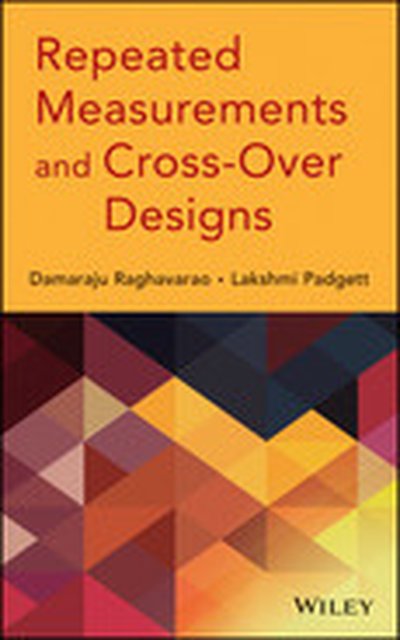
Repeated Measurements and Cross-Over Designs

An introduction to state-of-the-art experimental design approaches to better understand and interpret repeated measurement data in cross-over designs. Repeated Measurements and Cross-Over Designs: Features the close tie between the design, analysis, and presentation of results Presents principles and rules that apply very generally to most areas of research, such as clinical trials, agricultural investigations, industrial procedures, quality control procedures, and epidemiological studies Includes many practical examples, such as PK/PD studies in the pharmaceutical industry, k-sample and one sample repeated measurement designs for psychological studies, and residual effects of different treatments in controlling conditions such as asthma, blood pressure, and diabetes. Utilizes SAS(R) software to draw necessary inferences. All SAS output and data sets are available via the book's related website. This book is ideal for a broad audience including statisticians in pre-clinical research, researchers in psychology, sociology, politics, marketing, and engineering.

Statistics: Principles and Methods, 7th Edition

Johnson/Bhattacharyya is unique in its clarity of exposition while maintaining the mathematical correctness of its explanations. Many other books that claim to be easier to understand often sacrifice mathematical rigor. In contrast, Johnson/ Bhattacharyya maintain a focus on accuracy without getting bogged down in unnecessary details.