talk-data.com talk-data.com

Topic

Tableau

data_visualization bi analytics

41

tagged

Activity Trend

11 peak/qtr
2020-Q1 2026-Q1

Activities

41 activities · Newest first

Why self-serve analytics & AI fail -- and how metadata can save them

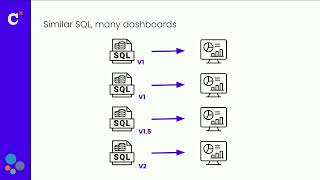
Self-serve analytics promises speed. But without clear guidance, it often leads to hidden obstacles like cluttered dashboards, runaway costs, and a loss of trust in the data. Add AI to the mix, and those faults become fractures. In this session, we'll unpack why self-serve efforts stall, with lessons from real-world teams at Shopify and Tableau. We’ll also explore how BetterHelp uses dbt alongside Euno’s lineage and usage insights to declutter, cut compute costs, and determine which data assets and reports teams (and AI agents) can trust.

Geo-Powering Insights: The Art of Spatial Data Integration and Visualization

In this presentation, we will explore how to leverage Databricks' SQL engine to efficiently ingest and transform geospatial data. We'll demonstrate the seamless process of connecting to external systems such as ArcGIS to retrieve datasets, showcasing the platform's versatility in handling diverse data sources. We'll then delve into the power of Databricks Apps, illustrating how you can create custom geospatial dashboards using various frameworks like Streamlit and Flask, or any framework of your choice. This flexibility allows you to tailor your visualizations to your specific needs and preferences. Furthermore, we'll highlight the Databricks Lakehouse's integration capabilities with popular dashboarding tools such as Tableau and Power BI. This integration enables you to combine the robust data processing power of Databricks with the advanced visualization features of these specialized tools.

AI/BI Dashboards and AI/BI Genie: Dashboards and Last-Mile Analytics Made Simple

Databricks announced two new features in 2024: AI/BI Dashboards and AI/BI Genie. Dashboards is a redesigned dashboarding experience for your regular reporting needs, while Genie provides a natural language experience for your last-mile analytics. In this session, Databricks Solutions Architect and content creator Youssef Mrini will present alongside Databricks MVP and content creator Josue A. Bogran on how you can get the most value from these tools for your organization. Content covered includes: Setup necessary, including Unity Catalog, permissions and compute Building out a dashboard with AI/BI Dashboards Creating and training an AI/BI Genie workspace to reliably deliver answers When to use Dashboards, Genie, and when to use other tools such as PBI, Tableau, Sigma, ChatGPT, etc. Fluff-free, full of practical tips, and geared to help you deliver immediate impact with these new Databricks capabilities.

Accelerating Analytics: Integrating BI and Partner Tools to Databricks SQL

This session is repeated. Did you know that you can integrate with your favorite BI tools directly from Databricks SQL? You don’t even need to stand up an additional warehouse. This session shows the integrations with Microsoft Power Platform, Power BI, Tableau and dbt so you can have a seamless integration experience. Directly connect your Databricks workspace with Fabric and Power BI workspaces or Tableau to publish and sync data models, with defined primary and foreign keys, between the two platforms.

Is BI Too Big for Small Data?

This is a talk about how we thought we had Big Data, and we built everything planning for Big Data, but then it turns out we didn't have Big Data, and while that's nice and fun and seems more chill, it's actually ruining everything, and I am here asking you to please help us figure out what we are supposed to do now.

📓 Resources Big Data is Dead: https://motherduck.com/blog/big-data-... Small Data Manifesto: https://motherduck.com/blog/small-dat... Is Excel Immortal?: https://benn.substack.com/p/is-excel-immortal Small Data SF: https://www.smalldatasf.com/

➡️ Follow Us LinkedIn: / motherduck
X/Twitter : / motherduck
Blog: https://motherduck.com/blog/


Mode founder David Wheeler challenges the data industry's obsession with "big data," arguing that most companies are actually working with "small data," and our tools are failing us. This talk deconstructs the common sales narrative for BI tools, exposing why the promise of finding game-changing insights through data exploration often falls flat. If you've ever built dashboards nobody uses or wondered why your analytics platform doesn't deliver on its promises, this is a must-watch reality check on the modern data stack.

We explore the standard BI demo, where an analyst uncovers a critical insight by drilling into event data. This story sells tools like Tableau and Power BI, but it rarely reflects reality, leading to a "revolving door of BI" as companies swap tools every few years. Discover why the narrative of the intrepid analyst finding a needle in the haystack only works in movies and how this disconnect creates a cycle of failed data initiatives and unused "trashboards."

The presentation traces our belief that "data is the new oil" back to the early 2010s, with examples from Target's predictive analytics and Facebook's growth hacking. However, these successes were built on truly massive datasets. For most businesses, analyzing small data results in noisy charts that offer vague "directional vibes" rather than clear, actionable insights. We contrast the promise of big data analytics with the practical challenges of small data interpretation.

Finally, learn actionable strategies for extracting real value from the data you actually have. We argue that BI tools should shift focus from data exploration to data interpretation, helping users understand what their charts actually mean. Learn why "doing things that don't scale," like manually analyzing individual customer journeys, can be more effective than complex models for small datasets. This talk offers a new perspective for data scientists, analysts, and developers looking for better data analysis techniques beyond the big data hype.

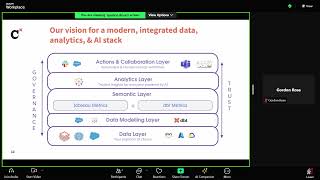
Coalesce 2024: Tableau and the dbt Semantic Layer - a data join made in heaven

This session will cover all things Tableau and the dbt Semantic Layer. Gordon will show you how to configure and connect to the dbt Semantic Layer in Tableau. He will address the differences between using the semantic layer with Tableau Server and Desktop - in particular how the semantic layer can help eliminate tech debt on Tableau Server. There will also be a deep dive into best practices - for instance, how and why saved queries are such a powerful semantic layer feature for Tableau users.

Speakers: Madeline Lee Product Manager, Tableau

Gordon Rose Principal Solutions Architect dbt Labs

Read the blog to learn about the latest dbt Cloud features announced at Coalesce, designed to help organizations embrace analytics best practices at scale https://www.getdbt.com/blog/coalesce-2024-product-announcements

Data Sharing and Cross-Organization Collaboration. Presented by Matei Zaharia at Data + AI Summit

Speaker: Matei Zaharia, Original Creator of Apache Spark™ and MLflow; Chief Technologist, Databricks

Summary: Data sharing and collaboration are important aspects of the data space. Matei Zaharia explains the evolution of the Databricks data platform to facilitate data sharing and collaboration for customers and their partners.

Delta Sharing allows you to share parts of your table with third parties authorized to view them. Over 16,000 data recipients use Delta Sharing, and 40% are not on Databricks—a testament to the open nature.

Databricks Marketplace has been growing rapidly and now has over 2,000 data listings, making it one of the largest data marketplaces available. New Marketplace partners include T-Mobile, Tableau, Atlassian, Epsilon, Shutterstock and more.

To learn more about Delta Sharing features and the expansion of partner sharing ecosystem, see the recent blog: https://www.databricks.com/blog/whats-new-data-sharing-and-collaboration

The Best Data Warehouse is a Lakehouse

Reynold Xin, Co-founder and Chief Architect at Databricks, presented during Data + AI Summit 2024 on Databricks SQL and its advancements and how to drive performance improvements with the Databricks Data Intelligence Platform.

Speakers: Reynold Xin, Co-founder and Chief Architect, Databricks Pearl Ubaru, Technical Product Engineer, Databricks

Main Points and Key Takeaways (AI-generated summary)

Introduction of Databricks SQL: - Databricks SQL was announced four years ago and has become the fastest-growing product in Databricks history. - Over 7,000 customers, including Shell, AT&T, and Adobe, use Databricks SQL for data warehousing.

Evolution from Data Warehouses to Lakehouses: - Traditional data architectures involved separate data warehouses (for business intelligence) and data lakes (for machine learning and AI). - The lakehouse concept combines the best aspects of data warehouses and data lakes into a single package, addressing issues of governance, storage formats, and data silos.

Technological Foundations: - To support the lakehouse, Databricks developed Delta Lake (storage layer) and Unity Catalog (governance layer). - Over time, lakehouses have been recognized as the future of data architecture.

Core Data Warehousing Capabilities: - Databricks SQL has evolved to support essential data warehousing functionalities like full SQL support, materialized views, and role-based access control. - Integration with major BI tools like Tableau, Power BI, and Looker is available out-of-the-box, reducing migration costs.

Price Performance: - Databricks SQL offers significant improvements in price performance, which is crucial given the high costs associated with data warehouses. - Databricks SQL scales more efficiently compared to traditional data warehouses, which struggle with larger data sets.

Incorporation of AI Systems: - Databricks has integrated AI systems at every layer of their engine, improving performance significantly. - AI systems automate data clustering, query optimization, and predictive indexing, enhancing efficiency and speed.

Benchmarks and Performance Improvements: - Databricks SQL has seen dramatic improvements, with some benchmarks showing a 60% increase in speed compared to 2022. - Real-world benchmarks indicate that Databricks SQL can handle high concurrency loads with consistent low latency.

User Experience Enhancements: - Significant efforts have been made to improve the user experience, making Databricks SQL more accessible to analysts and business users, not just data scientists and engineers. - New features include visual data lineage, simplified error messages, and AI-driven recommendations for error fixes.

AI and SQL Integration: - Databricks SQL now supports AI functions and vector searches, allowing users to perform advanced analysis and query optimizations with ease. - The platform enables seamless integration with AI models, which can be published and accessed through the Unity Catalog.

Conclusion: - Databricks SQL has transformed into a comprehensive data warehousing solution that is powerful, cost-effective, and user-friendly. - The lakehouse approach is presented as a superior alternative to traditional data warehouses, offering better performance and lower costs.