talk-data.com talk-data.com

Event

O'Reilly Data Engineering Books

2001-10-19 – 2027-05-25 Oreilly Visit website ↗

Activities tracked

3377

Collection of O'Reilly books on Data Engineering.

Filtering by: data-engineering ×

Sessions & talks

Showing 3001–3025 of 3377 · Newest first

Search within this event →
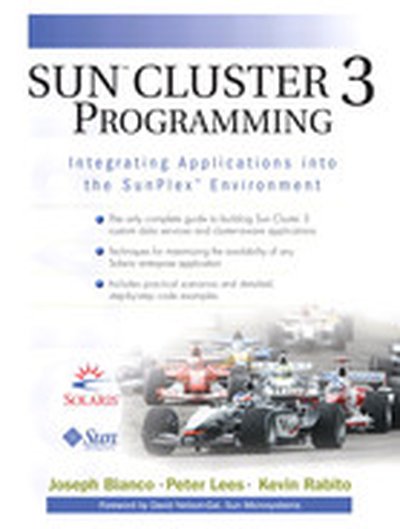
Sun™ Cluster 3 Programming: Integrating Applications into the SunPlex™ Environment

Customize Applications for Maximum Availability in Sun Cluster Environments The Sun Cluster 3 environment offers developers and administrators a powerful API for creating custom "data services" that maximize the availability and enhance the horizontal scalability of many enterprise applications. Now, here's an authoritative tutorial and reference to building custom data services with the Sun Cluster 3 API. In , three leading Sun Cluster experts systematically review the tools, programming interfaces, and features that make custom data services possible. Then, through a series of step-by-step examples, they demonstrate how to ensure that applications can recover smoothly from even the most serious failures. Sun Cluster 3 Programming This book Reviews every facet of "availability" and what it takes to make software available Provides extensive easy-to-understand code examples, all available for download Covers all areas of agent development, from quick basics to advanced techniques Covers all the APIs provided with Sun Cluster 3 Walks step-by-step through making existing applications available, scalable, and cluster-aware Until now, this information has been available only in a three-day Sun training course. Now, with the help of Sun's in-house experts, you have all the information you need to build Sun Cluster 3 custom applications that deliver unprecedented levels of application availability.

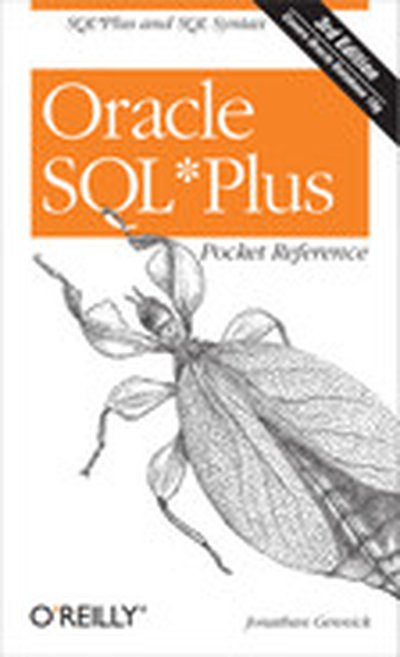
Oracle SQL*Plus Pocket Reference, 3rd Edition

The Oracle SQL is a must-have for anyone working with Oracle databases, especially those looking to maximize the effectiveness of SQLPlus. As Oracle's long-standing interactive query tool, SQL Plus Pocket Reference Plus is available at every Oracle site, from the largest data warehouse to the smallest single-user system. Despite its wide use, however, SQLPlus is still often not completely understood or fully utilized.Database administrators and developers alike will therefore find the Oracle SQL to be extremely beneficial. In addition to summarizing all of the SQLPlus syntax and format options, including new Oracle Database 10 Plus Pocket Reference g features, this handy, on-the-job guide specifically shows readers how to: The new third edition of this book has been updated for Oracle Database 10 Differentiate between SQL and SQL Plus Interact with SQLPlus from both the command line and the web browser Select, insert, update, and delete data Format both text and HTML reports with SQL Plus Specify SQLPlus commands and format elements Tune SQL queries g to include information on both SQL Plus and SQL. New SQL information includes the SELECT statement's new MODEL clause, flashback queries, partition outer joins, and DBMS_XPLAN.With its quick-reference format and compact size, the Plus Pocket Reference follows in the long line of successful "pocket references" offered by O'Reilly. It also serves as the ideal companion to O'Reilly's larger, more comprehensive book on SQL Oracle SQL Plus, the bestselling Plus: The Definitive Guide.Author Jonathan Gennick is an editor for O'Reilly specializing in database and programming titles, having amassed some 17 years of programming and database management experience. Oracle SQL

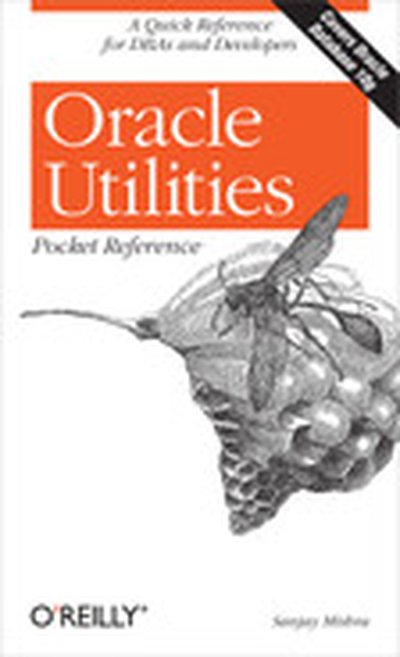
Oracle Utilities Pocket Reference

The Oracle Utilities Pocket Reference is a handy, quick-reference guide to the multitude of Oracle utilities that database administrators (DBAs) use every hour of every day.As the undisputed leader among database products, Oracle is grasped conceptually by most DBAs. However, they understandably may not recall the specific utility to use for a given task, and, more commonly, won't in many cases remember the syntax to use. And that's exactly what the Oracle Utilities Pocket Reference supplies--the syntax and options for whatever utility a DBA needs to perform a given task.Some of the utilities documented in this guide include: Packed with information in an easy-to-read format, this valuable resource is ideal for any experienced DBA. Even database programmers who deal with Oracle will truly appreciate having the SQL*Loader, for loading data expdp and exp for exporting data to another database oradebug for use in troubleshooting loadjava and dropjava for loading and unloading Java programs Oracle Utilities Pocket Reference close at hand.Authored by Sanjay Mishra, a foremost authority on Oracle systems, this convenient and compact guide is focused and to-the-point, eliminating any potential guesswork or difficult memorization. The Oracle Utilities Pocket Reference is part of the strong-selling collection of O'Reilly "pocket reference" books.

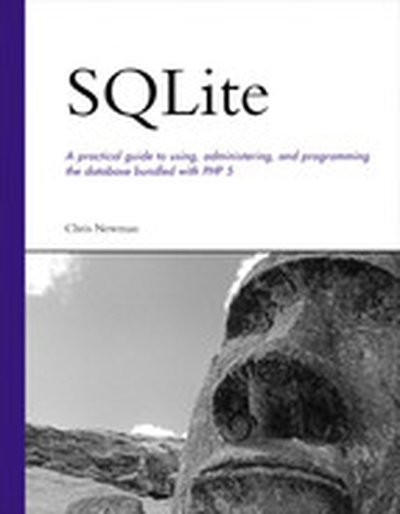
SQLite

SQLite is a small, fast, embeddable database. What makes it popular is the combination of the database engine and interface into a single library as well as the ability to store all the data in a single file. Its functionality lies between MySQL and PostgreSQL, however it is faster than both databases. In SQLite, author Chris Newman provides a thorough, practical guide to using, administering and programming this up-and-coming database. If you want to learn about SQLite or about its use in conjunction with PHP this is the book for you.

Microsoft® SQL Server High Availability

Offers example-based coverage for various high availability solutions. High availability is becoming an increasingly important topic for database administrators, data architects and system architects. Covers choosing, planning, implementing and administering a high availability solution along with the business justifications. Paul Bertucci has over 20 years of database experience including consulting for numerous Fortune 500 companies.

Customizing IBM Tivoli Workload Scheduler for z/OS V8.2 to Improve Performance

Scheduling is generally considered as the nucleus of the data center, because the orderly, reliable sequencing and management of process execution is an essential part of IT management. IBM Tivoli Workload Scheduler for z/OS is the IBM strategic product used in many large-to-midsized customer environments, responsible for scheduling critical batch applications. Therefore, the performance of Tivoli Workload Scheduler for z/OS is one of the important factors that affect the overall satisfaction from the IT services for these companies. This IBM Redbooks publication covers the techniques that can be used to improve performance of Tivoli Workload Scheduler for z/OS (including end-to-end scheduling). There are many factors that might affect the performance of any subsystem. In this book, we confine ourselves to those things that are internal to Tivoli Workload Scheduler, or can be easily verified and modified, and are likely to apply to the majority of Tivoli Workload Scheduler customer sites. Although this book is aimed at those very large installations with a batch load of 100,000 or more jobs per day, it will also be relevant to installations with a smaller batch workload who are suffering from a shrinking batch window, or those who are trying to maximize the throughput on their existing hardware, or both. Please note that the additional material referenced in the text is not available from IBM.

DB2 II: Performance Monitoring, Tuning and Capacity Planning Guide

This IBM Redbooks publication provides an overview of DB2 Information Integrator V8.2 key performance drivers; best practices to achieve optimal performance; and guidelines for monitoring a DB2 Information Integrator environment for capacity planning, problem diagnosis, and problem resolution. This publication documents procedures for monitoring existing DB2 II implementations for the purposes of capacity planning. It also documents a methodology for routine and exception monitoring of a DB2 II environment for performance problem determination; and describes some commonly encountered performance problem scenarios and the step-by-step approach used in problem determination and resolution.

The IBM TotalStorage NAS Gateway 500 Integration Guide

This IBM Redbooks publication describes how to install and configure the very latest IBM storage solution and concept, the IBM TotalStorage Network Attached Storage (NAS) Gateway 500, in heterogeneous environments. The IBM TotalStorage NAS Gateway 500 series is an innovative Network Attached Storage device that connects clients and servers on an IP network to Fibre Channel storage, efficiently bridging the gap between LAN storage needs and SAN storage capacities. The IBM TotalStorage NAS Gateway 500 is a storage solution for UNIX/AIX/Linux, Apple, and Microsoft Windows environments. In this book, we show how to integrate the IBM TotalStorage NAS Gateway 500 and explain how it can benefit your company’s business needs. This book is an easy-to-follow guide which describes the market segment that the IBM TotalStorage NAS Gateway 500 is aimed at, and explains NAS installation, ease-of-use, remote management, expansion capabilities, high availability (two node clustering and up to four node remote mirroring), and backup and recovery techniques. It also explains open systems storage concepts and methodologies for common data sharing for UNIX/AIX/Linux, Apple, and Microsoft Windows environments. Please note that the additional material referenced in the text is not available from IBM.

DB2 Integrated Cluster Environment Deployment Guide

The IBM DB2 Integrated Cluster Environment for Linux is a completely integrated, high-performance, and pre-tested solution that incorporates best-of-breed software, hardware, and services. This IBM Redbooks publication provides you with the technical details of the DB2 Integrated Cluster Environment. We begin with a general overview of DB2 Integrated Cluster Environment and the fundamentals of DB2 in a Linux cluster environment, followed by a discussion of hardware options for cluster ingredients that constitute DB2 Integrated Cluster Environment and considerations for their selection. We cover the planning and database design considerations for building a DB2 partitioned database that is both flexible and scalable and provide the implementation details of DB2 Linux clusters. This publication also cover the new autonomic features of DB2 UDB V8.2 and system tools monitoring. It describes components and possible configurations of a high-availability solution and provides implementation details of a failover protection in an DB2 Integrated Cluster Environment. At the end, we discuss scalability in the DB2 Integrated Cluster Environment, including some guidance in planning for the growth of a business and database. We also examine a number of scaling strategies in more detail and provide the steps involved in scaling a database.

Oracle Database Foundations

The world of IT is always evolving, but in every area there are stable, core concepts that anyone just setting out needed to know last year, needs to know this year, and will still need to know next year. The purpose of the Foundations series is to identify these concepts and present them in a way that gives you the strongest possible starting point, no matter what your endeavor. Oracle Database Foundations provides essential knowledge about installing, configuring, maintaining, and querying Oracle 9i and 10g databases. What you learn here will benefit you in the short term, as you acquire and practice your skills, and in the long term, as you use them. Topics covered include: Basic relational database concepts Reporting and querying using SQLPlus and iSQLPlus Creating and maintaining a database Managing user access and security Understanding Oracle database functions Using multiple tables in a query Restricting, sorting, and grouping data Optimizing database performance Creating backups Troubleshooting database errors

DB2 UDB V8.2 on the Windows Environment

IBM DB2 Universal Database Version 8.2 is another significant jump in DBRM technology. It delivers new features to address the ever-increasing demands and requirements of information management customers. This IBM Redbooks publication is an update of DB2 UDB Exploitation of the Windows Environment (SG24-6893), with a focus on DB2 UDB Version 8.2 functions and features. We illustrate, step-by-step, the installation and migration processes. The new autonomic computing technology that makes the DBA’s job easier is described in detail. The new security features and their integration with the Windows environment are discussed intensively. This book covers the new performance and monitoring enhancements of Version 8.2. New, exciting high availability functions are described in detail. Further, we discuss aspects of DB2 application development with .NET 2003 and Java and provide programming details using ADO.NET, CLR, and Java.

Mastering the IBM WebFacing Tool

The IBM WebFacing Tool, part of IBM WebSphere Development Studio Client for iSeries, is one of the most important tools for IBM eServer iSeries developers. It facilitates quick conversion of existing host applications into Web applications. WebSphere Development Studio Client for iSeries comes in two editions, Standard and Advanced, each of which support a different level of features. WebSphere Development Studio Client for iSeries Advanced Edition V 5.1.2 introduces support for system screens for the WebFacing applications. This new feature removes one of the biggest limitations of previous versions of the IBM WebFacing Tool. This IBM Redbooks publication provides helpful guidance to developers who are new to refacing applications using the IBM WebFacing Tool. It also offers advanced techniques to developers who have some experience in using the IBM WebFacing Tool and want to refine their Web applications. First, this book introduces you to the IBM WebFacing Tool. Then it walks you through a scenario, which involves converting a 5250 application to a Web application. Next it explains how to refine your browser interface and customize a WebFacing application. Finally, it discusses how to integrate and extend your WebFacing application to provide the required and added functions. Please note that the additional material referenced in the text is not available from IBM.

Using ThinkVantage Technologies, Volume 1: Creating and Deploying Client Systems

ThinkVantage Technologies bring your IBM PCs one step closer to being self-configured, self-optimizing, self-protecting, or self-healing, to help save you time and money throughout the life of your systems. In short, ThinkVantage Technologies let you focus your attention on your business, rather than on your computer. ThinkVantage Technologies are software tools designed to help customers drive down IT support costs (in particular, the cost of a PC in managing and supporting systems after its initial purchase), increase security and decrease the complexity of today’s IT infrastructure. This series of Redbooks will help you install, tailor and configure the IBM ThinkVantage Technologies on IBM and OEM desktops. Using ThinkVantage Technologies, Volume 1: Creating and Deploying Client Systems describes how to create and deploy client systems. The tools covered include: - ImageUltra Builder

Oracle Database 10g PL/SQL Programming

Create dynamic client/server applications using PL/SQL and the comprehensive information contained in this authoritative volume. Expert Oracle insiders cover the features of PL/SQL, explain scripting semantics and syntax, and fully detail the PL/SQL functionality of Oracle Database 10 g. You’ll learn how to write powerful PL/SQL programs, interact with Oracle databases, perform complex calculations, and handle error conditions.

IBM Tivoli Monitoring for Network Performance V2.1 The Mainframe Network Management Solution

This IBM Redbooks publication explains the new IBM Tivoli Monitoring for Network Performance Version 2.1. This version of IBM Tivoli Monitoring for Network Performance provides a complete redesign of the z/OS TCP/IP management tools that is started by the NetView Performance Monitor for TCP/IP. IBM Tivoli Monitoring for Network Performance provides a comprehensive TCP/IP stack monitoring for z/OS. It collects performance metrics from the z/OS Communication Servers system management interface, measuring response time and Simple Network Management Protocol (SNMP) Management Information Base (MIB) variable collection. IBM Tivoli Monitoring for Network Performance uses strategic IBM software platforms such as WebSphere Application Server as the Web application platform and DB2 Universal Database as the central repository. This book starts with exploring on the architecture of IBM Tivoli Monitoring for Network Performance and its components. We also discuss various implementation scenario and evaluate the benefits and drawbacks of each scenario. Implementation planning and consideration is presented and lastly operational consideration is explained.

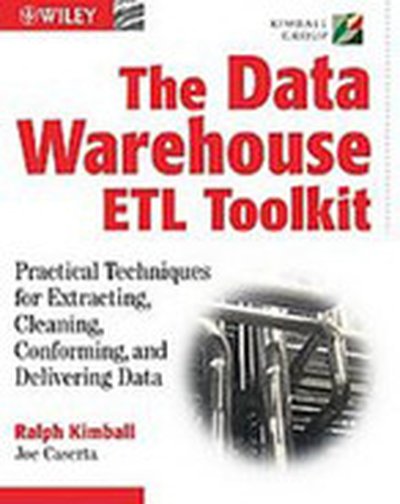
The Data Warehouse ETL Toolkit: Practical Techniques for Extracting, Cleaning, Conforming, and Delivering Data

Cowritten by Ralph Kimball, the world's leading data warehousing authority, whose previous books have sold more than 150,000 copies Delivers real-world solutions for the most time- and labor-intensive portion of data warehousing-data staging, or the extract, transform, load (ETL) process Delineates best practices for extracting data from scattered sources, removing redundant and inaccurate data, transforming the remaining data into correctly formatted data structures, and then loading the end product into the data warehouse Offers proven time-saving ETL techniques, comprehensive guidance on building dimensional structures, and crucial advice on ensuring data quality

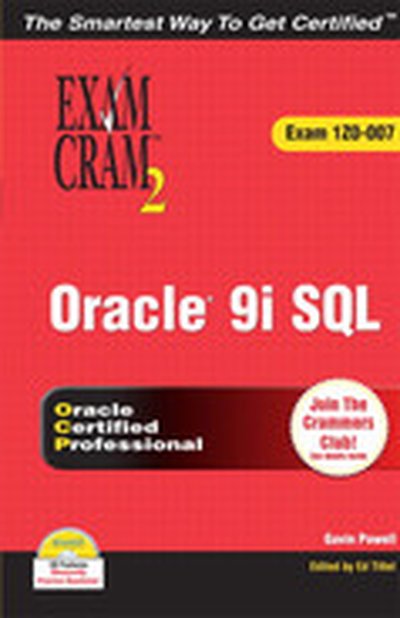
Oracle® 9i SQL Exam Cram™ 2 (Exam 1Z0-007)

Whether you're studying for the Oracle 9i SQL exam or just need to take the New Features update exam, Oracle 9i: SQL Exam Cram 2 can help you get certified. This efficient study guide follows the exam objectives clearly and concisely. New Features materials are also included in the book, as well as a full-customizable practice test engine on CD. Oracle 9i: SQL Exam Cram 2 is your smartest way to get certified.

PHP and MySQL Web Development, Third Edition

A new edition of this title is available, ISBN-10: 0672329166 ISBN-13: 9780672329166 We've taken the best and made it even better. The third edition of the best-selling PHP and MySQL Web Development has been updated to include material and code on MySQL 5, PHP 5 and on PHPs object model and validation. Through a clear, practical approach, you will learn to develop secure, dynamic websites by integrating and implementing the PHP scripting language and the MySQL database system. Real-world examples and working sample projects will give you a strong foundation on which to start building your own websites, complete with features such as SSL, shopping carts and payment systems. The accompanying CD includes the source code from each example in the book, the entire book in PDF format, and source code and binaries for PHP 5, MySQL 5 and Apache. Readers have called PHP and MySQL Web Development call it the best technical book they've ever read, but don't take their word for it. Find out for yourself!

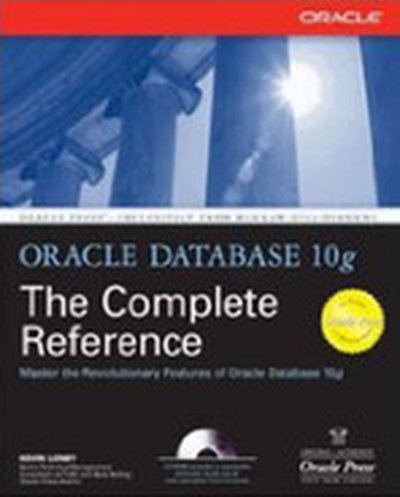
Oracle Database 10g The Complete Reference

Get a thorough understanding of Oracle Database 10 g from the most comprehensive Oracle database reference on the market, published by Oracle Press. From critical architecture concepts to advanced object-oriented concepts, this powerhouse contains nearly 50 chapters designed to enlighten you. Upgrade from earlier versions, use SQL, SQL Plus, and PL/SQL. Get code examples and access popular documentation PDFs--plus a full electronic copy of the book on the included CD-ROM. Go beyond the basics and learn security, text searches, external tables, using Java in Oracle, and a great deal more.

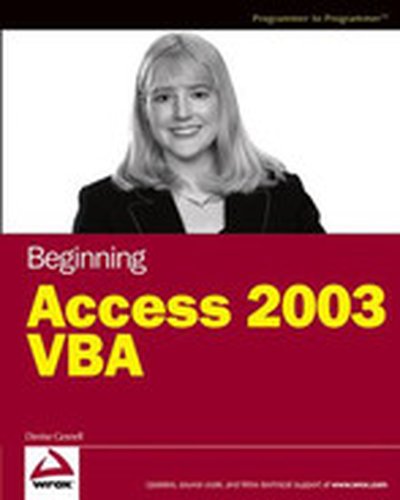
Beginning Access 2003 VBA

What is this book about? Written by an Access programmer with more than 10 years of VBA experience, this is the perfect guide for Access users who are ready to take their databases to the next level, or for programmers who are new to Access or VBA. Veteran Access developer Denise Gosnell shows readers the ins and outs of Access VBA and provides plenty of source code, and fully developed sample applications to guide you along the way. Not only do readers learn to build "stand-alone" desktop applications, but readers also learn how to integrate Access applications with Web Services, and SQL Server.

SQL in a Nutshell, 2nd Edition

SQL in a Nutshell applies the eminently useful "Nutshell" format to Structured Query Language (SQL), the elegant--but complex--descriptive language that is used to create and manipulate large stores of data. For SQL programmers, analysts, and database administrators, the new second edition of SQL in a Nutshell is the essential date language reference for the world's top SQL database products. SQL in a Nutshell is a lean, focused, and thoroughly comprehensive reference for those who live in a deadline-driven world.This invaluable desktop quick reference drills down and documents every SQL command and how to use it in both commercial (Oracle, DB2, and Microsoft SQL Server) and open source implementations (PostgreSQL, and MySQL). It describes every command and reference and includes the command syntax (by vendor, if the syntax differs across implementations), a clear description, and practical examples that illustrate important concepts and uses. And it also explains how the leading commercial and open sources database product implement SQL. This wealth of information is packed into a succinct, comprehensive, and extraordinarily easy-to-use format that covers the SQL syntax of no less than 4 different databases.When you need fast, accurate, detailed, and up-to-date SQL information, SQL in a Nutshell, Second Edition will be the quick reference you'll reach for every time. SQL in a Nutshell is small enough to keep by your keyboard, and concise (as well as clearly organized) enough that you can look up the syntax you need quickly without having to wade through a lot of useless fluff. You won't want to work on a project involving SQL without it.

XML in a Nutshell, 3rd Edition

If you're a developer working with XML, you know there's a lot to know about XML, and the XML space is evolving almost moment by moment. But you don't need to commit every XML syntax, API, or XSLT transformation to memory; you only need to know where to find it. And if it's a detail that has to do with XML or its companion standards, you'll find it--clear, concise, useful, and well-organized--in the updated third edition of XML in a Nutshell.With XML in a Nutshell beside your keyboard, you'll be able to: This powerful new edition is the comprehensive XML reference. Serious users of XML will find coverage on just about everything they need, from fundamental syntax rules, to details of DTD and XML Schema creation, to XSLT transformations, to APIs used for processing XML documents. Quick-reference syntax rules and usage examples for the core XML technologies, including XML, DTDs, Xpath, XSLT, SAX, and DOM Develop an understanding of well-formed XML, DTDs, namespaces, Unicode, and W3C XML Schema Gain a working knowledge of key technologies used for narrative XML documents such as web pages, books, and articles technologies like XSLT, Xpath, Xlink, Xpointer, CSS, and XSL-FO Build data-intensive XML applications Understand the tools and APIs necessary to build data-intensive XML applications and process XML documents, including the event-based Simple API for XML (SAX2) and the tree-oriented Document Object Model (DOM) XML in a Nutshell also covers XML 1.1, as well as updates to SAX2 and DOM Level 3 coverage. If you need explanation of how a technology works, or just need to quickly find the precise syntax for a particular piece, XML in a Nutshell puts the information at your fingertips.Simply put, XML in a Nutshell is the critical, must-have reference for any XML developer.

End-to-End Scheduling with IBM Tivoli Workload Scheduler Version 8.2

The beginning of the new century sees the data center with a mix of work, hardware, and operating systems previously undreamed of. Today’s challenge is to manage disparate systems with minimal effort and maximum reliability. People experienced in scheduling traditional host-based batch work must now manage distributed systems, and those working in the distributed environment must take responsibility for work running on the corporate OS/390 system. This IBM Redbooks publication considers how best to provide end-to-end scheduling using IBM Tivoli Workload Scheduler Version 8.2, both distributed (previously known as Maestro) and mainframe (previously known as OPC) components. In this book, we provide the information for installing the necessary Tivoli Workload Scheduler 8.2 software components and configuring them to communicate with each other. In addition to technical information, we consider various scenarios that may be encountered in the enterprise and suggest practical solutions. We describe how to manage work and dependencies across both environments using a single point of control. We believe that this book will be a valuable reference for IT specialists who implement end-to-end scheduling with Tivoli Workload Scheduler 8.2.

Privacy What Developers and IT Professionals Should Know

Praise for J.C. Cannon's Privacy "A wonderful exploration of the multifaceted work being done to protect the privacy of users, clients, companies, customers, and everyone in between." —Peter Wayner, author of Translucent Databases "Cannon provides an invaluable map to guide developers through the dark forest created by the collision of cutting-edge software development and personal privacy." —Eric Fredericksen, Sr. Software Engineer, PhD., Foundstone, Inc. "Cannon's book is the most comprehensive work today on privacy for managers and developers. I cannot name any technical areas not covered. No practitioners should miss it." —Ray Lai, Principal Engineer, Sun Microsystems, Inc., co-author of Core Security Patterns and author of J2EE Platform Web Services "Every developer should care deeply about privacy and this is the best book I've read on the subject. Get it, read it, and live it." —Keith Ballinger, Program Manager, Advanced Web Services, Microsoft "J.C. Cannon's book demonstrates that information and communication technology can contribute in a significant way to restoring individual privacy and raises more awareness of the complexity and importance of this societal problem." —Dr. John J. Borking, Former Commissioner and Vice-President of the Dutch Data Protection Authority "If you are planning, implementing, coding, or managing a Privacy campaign in your company or your personal computing, there is no more relevant reference. J.C. Cannon nails the issues." —Rick Kingslan, CISSP, Microsoft MVP-Windows Server: Directory Services and Right Management, West Corporation "It's often been said that security is a process, not a product. Privacy is no different! Unlike other privacy books, J.C. Cannon's book has something valuable to convey to everyone involved in the privacy process, from executives to designers and developers, many of whom aren't thinking about privacy but should be." —Keith Brown, Co-founder of Pluralsight and author of The .NET Developer's Guide to Windows Security and Programming Windows Security "J.C. Cannon's new book on electronic privacy is an important addition to the available works in this emerging field of study and practice. Through many humorous (and occasionally frightening) examples of privacy gone wrong, J.C. helps you better understand how to protect your privacy and how to build privacy awareness into your organization and its development process. Keenly illustrating both the pros and cons of various privacy-enhancing and potentially privacy-invading technologies, J.C.'s analysis is thorough and well-balanced. J.C. also explains many of the legal implications of electronic privacy policies and technologies, providing an invaluable domestic and international view." —Steve Riley, Product Manager, Security Business and Technology Unit, Windows Division, Microsoft "Privacy concerns are pervasive in today's high-tech existence. The issues covered by this book should be among the foremost concerns of developers and technology management alike." —Len Sassaman, Security Architect, Anonymizer, Inc. You're responsible for your customers' private information. If you betray their trust, it can destroy your business. Privacy policies are no longer enough. You must make sure your systems truly protect privacy—and it isn't easy. That's where this book comes in. J.C. Cannon, Microsoft's top privacy technology strategist, covers every facet of protecting customer privacy, both technical and organizational. You'll learn how to systematically build privacy safeguards into any application, Web site, or enterprise system, in any environment, on any platform. You'll discover the best practices for building business infrastructure and processes that protect customer privacy. You'll even learn how to help your customers work with you in protecting their own privacy. Coverage includes How privacy and security relate—and why security isn't enough Understanding your legal obligations to protect privacy Contemporary privacy policies, privacy-invasive technologies, and privacy-enhancing solutions Auditing existing systems to identify privacy problem areas Protecting your organization against privacy intrusions Integrating privacy throughout the development process Developing privacy-aware applications: a complete sample application Building a team to promote customer privacy: staffing, training, evangelization, and quick-response Protecting data and databases via role-based access control Using Digital Rights Management to restrict customer information Privacy from the customer's standpoint: spam avoidance, P3P, and other tools and resources Whether you're a manager, IT professional, developer, or security specialist, this book delivers all the information you need to protect your customers—and your organization. The accompanying CD-ROM provides sample privacy-enabling source code and additional privacy resources for developers and managers. J. C. CANNON, privacy strategist at Microsoft's Corporate Privacy Group, specializes in implementing application technologies that maximize consumer control over privacy and enable developers to create privacy-aware applications. He works closely with Microsoft product groups and external developers to help them build privacy into applications. He also contributed the chapter on privacy to Michael Howard's Writing Secure Code (Microsoft Press 2003). Cannon has spent nearly twenty-five years in software development. © Copyright Pearson Education. All rights reserved.