talk-data.com talk-data.com

Event

O'Reilly Data Engineering Books

2001-10-19 – 2027-05-25 Oreilly Visit website ↗

Activities tracked

240

Collection of O'Reilly books on Data Engineering.

Filtering by: AI/ML ×

Sessions & talks

Showing 151–175 of 240 · Newest first

Search within this event →
IBM Power Systems Enterprise AI Solutions

This IBM® Redpaper publication helps the line of business (LOB), data science, and information technology (IT) teams develop an information architecture (IA) for their enterprise artificial intelligence (AI) environment. It describes the challenges that are faced by the three roles when creating and deploying enterprise AI solutions, and how they can collaborate for best results. This publication also highlights the capabilities of the IBM Cognitive Systems and AI solutions: IBM Watson® Machine Learning Community Edition IBM Watson Machine Learning Accelerator (WMLA) IBM PowerAI Vision IBM Watson Machine Learning IBM Watson Studio Local IBM Video Analytics H2O Driverless AI IBM Spectrum® Scale IBM Spectrum Discover This publication examines the challenges through five different use case examples: Artificial vision Natural language processing (NLP) Planning for the future Machine learning (ML) AI teaming and collaboration This publication targets readers from LOBs, data science teams, and IT departments, and anyone that is interested in understanding how to build an IA to support enterprise AI development and deployment.

IBM Reference Architecture for High Performance Data and AI in Healthcare and Life Sciences

This IBM® Redpaper publication provides an update to the original description of IBM Reference Architecture for Genomics. This paper expands the reference architecture to cover all of the major vertical areas of healthcare and life sciences industries, such as genomics, imaging, and clinical and translational research. The architecture was renamed IBM Reference Architecture for High Performance Data and AI in Healthcare and Life Sciences to reflect the fact that it incorporates key building blocks for high-performance computing (HPC) and software-defined storage, and that it supports an expanding infrastructure of leading industry partners, platforms, and frameworks. The reference architecture defines a highly flexible, scalable, and cost-effective platform for accessing, managing, storing, sharing, integrating, and analyzing big data, which can be deployed on-premises, in the cloud, or as a hybrid of the two. IT organizations can use the reference architecture as a high-level guide for overcoming data management challenges and processing bottlenecks that are frequently encountered in personalized healthcare initiatives, and in compute-intensive and data-intensive biomedical workloads. This reference architecture also provides a framework and context for modern healthcare and life sciences institutions to adopt cutting-edge technologies, such as cognitive life sciences solutions, machine learning and deep learning, Spark for analytics, and cloud computing. To illustrate these points, this paper includes case studies describing how clients and IBM Business Partners alike used the reference architecture in the deployments of demanding infrastructures for precision medicine. This publication targets technical professionals (consultants, technical support staff, IT Architects, and IT Specialists) who are responsible for providing life sciences solutions and support.

Learn PySpark: Build Python-based Machine Learning and Deep Learning Models

Leverage machine and deep learning models to build applications on real-time data using PySpark. This book is perfect for those who want to learn to use this language to perform exploratory data analysis and solve an array of business challenges. You'll start by reviewing PySpark fundamentals, such as Spark’s core architecture, and see how to use PySpark for big data processing like data ingestion, cleaning, and transformations techniques. This is followed by building workflows for analyzing streaming data using PySpark and a comparison of various streaming platforms. You'll then see how to schedule different spark jobs using Airflow with PySpark and book examine tuning machine and deep learning models for real-time predictions. This book concludes with a discussion on graph frames and performing network analysis using graph algorithms in PySpark. All the code presented in the book will be available in Python scripts on Github. What You'll Learn Develop pipelines for streaming data processing using PySpark Build Machine Learning & Deep Learning models using PySpark latest offerings Use graph analytics using PySpark Create Sequence Embeddings from Text data Who This Book is For Data Scientists, machine learning and deep learning engineers who want to learn and use PySpark for real time analysis on streaming data.

Advanced Elasticsearch 7.0

Dive deep into the advanced capabilities of Elasticsearch 7.0 with this expert-level guide. In this book, you will explore the most effective techniques and tools for building, indexing, and querying advanced distributed search engines. Whether optimizing performance, scaling applications, or integrating with big data analytics, this guide empowers you with practical skills and insights. What this Book will help me do Master ingestion pipelines and preprocess documents for faster and more efficient indexing. Model search data optimally for complex and varied real-world applications. Perform exploratory data analyses using Elasticsearch's robust features. Integrate Elasticsearch with modern analytics platforms like Kibana and Logstash. Leverage Elasticsearch with Apache Spark and machine learning libraries for real-time advanced analytics. Author(s) None Wong is a seasoned Elasticsearch expert with years of real-world experience developing enterprise-grade search and analytics systems. With a passion for innovation and teaching, Wong enjoys breaking down complex technical concepts into digestible learning experiences. His work reflects a pragmatic and results-driven approach to teaching Elasticsearch. Who is it for? This book is ideal for Elasticsearch developers and data engineers with some prior experience who are looking to elevate their skills to an advanced level. It suits professionals seeking to enhance their expertise in building scalable search and analytics solutions. If you aim to master sophisticated Elasticsearch operations and real-time integrations, this book is tailored for you.

Mastering SQL Server 2017

Leverage the power of SQL Server 2017 Integration Services to build data integration solutions with ease Key Features Work with temporal tables to access information stored in a table at any time Get familiar with the latest features in SQL Server 2017 Integration Services Program and extend your packages to enhance their functionality Book Description Microsoft SQL Server 2017 uses the power of R and Python for machine learning and containerization-based deployment on Windows and Linux. By learning how to use the features of SQL Server 2017 effectively, you can build scalable apps and easily perform data integration and transformation. You'll start by brushing up on the features of SQL Server 2017. This Learning Path will then demonstrate how you can use Query Store, columnstore indexes, and In-Memory OLTP in your apps. You'll also learn to integrate Python code in SQL Server and graph database implementations for development and testing. Next, you'll get up to speed with designing and building SQL Server Integration Services (SSIS) data warehouse packages using SQL server data tools. Toward the concluding chapters, you'll discover how to develop SSIS packages designed to maintain a data warehouse using the data flow and other control flow tasks. By the end of this Learning Path, you'll be equipped with the skills you need to design efficient, high-performance database applications with confidence. This Learning Path includes content from the following Packt books: SQL Server 2017 Developer's Guide by Milos Radivojevic, Dejan Sarka, et. al SQL Server 2017 Integration Services Cookbook by Christian Cote, Dejan Sarka, et. al What you will learn Use columnstore indexes to make storage and performance improvements Extend database design solutions using temporal tables Exchange JSON data between applications and SQL Server Migrate historical data to Microsoft Azure by using Stretch Database Design the architecture of a modern Extract, Transform, and Load (ETL) solution Implement ETL solutions using Integration Services for both on-premise and Azure data Who this book is for This Learning Path is for database developers and solution architects looking to develop ETL solutions with SSIS, and explore the new features in SSIS 2017. Advanced analysis practitioners, business intelligence developers, and database consultants dealing with performance tuning will also find this book useful. Basic understanding of database concepts and T-SQL is required to get the best out of this Learning Path.

Rebuilding Reliable Data Pipelines Through Modern Tools

When data-driven applications fail, identifying the cause is both challenging and time-consuming—especially as data pipelines become more and more complex. Hunting for the root cause of application failure from messy, raw, and distributed logs is difficult for performance experts and a nightmare for data operations teams. This report examines DataOps processes and tools that enable you to manage modern data pipelines efficiently. Author Ted Malaska describes a data operations framework and shows you the importance of testing and monitoring to plan, rebuild, automate, and then manage robust data pipelines—whether it’s in the cloud, on premises, or in a hybrid configuration. You’ll also learn ways to apply performance monitoring software and AI to your data pipelines in order to keep your applications running reliably. You’ll learn: How performance management software can reduce the risk of running modern data applications Methods for applying AI to provide insights, recommendations, and automation to operationalize big data systems and data applications How to plan, migrate, and operate big data workloads and data pipelines in the cloud and in hybrid deployment models

Streaming Data

Managers and staff responsible for planning, hiring, and allocating resources need to understand how streaming data can fundamentally change their organizations. Companies everywhere are disrupting business, government, and society by using data and analytics to shape their business. Even if you don’t have deep knowledge of programming or digital technology, this high-level introduction brings data streaming into focus. You won’t find math or programming details here, or recommendations for particular tools in this rapidly evolving space. But you will explore the decision-making technologies and practices that organizations need to process streaming data and respond to fast-changing events. By describing the principles and activities behind this new phenomenon, author Andy Oram shows you how streaming data provides hidden gems of information that can transform the way your business works. Learn where streaming data comes from and how companies put it to work Follow a simple data processing project from ingesting and analyzing data to presenting results Explore how (and why) big data processing tools have evolved from MapReduce to Kubernetes Understand why streaming data is particularly useful for machine learning projects Learn how containers, microservices, and cloud computing led to continuous integration and DevOps

Deep Learning for Search

Deep Learning for Search teaches you how to improve the effectiveness of your search by implementing neural network-based techniques. By the time you're finished with the book, you'll be ready to build amazing search engines that deliver the results your users need and that get better as time goes on! About the Technology Deep learning handles the toughest search challenges, including imprecise search terms, badly indexed data, and retrieving images with minimal metadata. And with modern tools like DL4J and TensorFlow, you can apply powerful DL techniques without a deep background in data science or natural language processing (NLP). This book will show you how. About the Book Deep Learning for Search teaches you to improve your search results with neural networks. You’ll review how DL relates to search basics like indexing and ranking. Then, you’ll walk through in-depth examples to upgrade your search with DL techniques using Apache Lucene and Deeplearning4j. As the book progresses, you’ll explore advanced topics like searching through images, translating user queries, and designing search engines that improve as they learn! What's Inside Accurate and relevant rankings Searching across languages Content-based image search Search with recommendations About the Reader For developers comfortable with Java or a similar language and search basics. No experience with deep learning or NLP needed. About the Author Tommaso Teofili is a software engineer with a passion for open source and machine learning. As a member of the Apache Software Foundation, he contributes to a number of open source projects, ranging from topics like information retrieval (such as Lucene and Solr) to natural language processing and machine translation (including OpenNLP, Joshua, and UIMA). He currently works at Adobe, developing search and indexing infrastructure components, and researching the areas of natural language processing, information retrieval, and deep learning. He has presented search and machine learning talks at conferences including BerlinBuzzwords, International Conference on Computational Science, ApacheCon, EclipseCon, and others. You can find him on Twitter at @tteofili. Quotes A practical approach that shows you the state of the art in using neural networks, AI, and deep learning in the development of search engines. - From the Foreword by Chris Mattmann, NASA JPL A thorough and thoughtful synthesis of traditional search and the latest advancements in deep learning. - Greg Zanotti, Marquette Partners A well-laid-out deep dive into the latest technologies that will take your search engine to the next level. - Andrew Wyllie, Thynk Health Hands-on exercises teach you how to master deep learning for search-based products. - Antonio Magnaghi, System1

Stream Processing with Apache Spark

Before you can build analytics tools to gain quick insights, you first need to know how to process data in real time. With this practical guide, developers familiar with Apache Spark will learn how to put this in-memory framework to use for streaming data. You’ll discover how Spark enables you to write streaming jobs in almost the same way you write batch jobs. Authors Gerard Maas and François Garillot help you explore the theoretical underpinnings of Apache Spark. This comprehensive guide features two sections that compare and contrast the streaming APIs Spark now supports: the original Spark Streaming library and the newer Structured Streaming API. Learn fundamental stream processing concepts and examine different streaming architectures Explore Structured Streaming through practical examples; learn different aspects of stream processing in detail Create and operate streaming jobs and applications with Spark Streaming; integrate Spark Streaming with other Spark APIs Learn advanced Spark Streaming techniques, including approximation algorithms and machine learning algorithms Compare Apache Spark to other stream processing projects, including Apache Storm, Apache Flink, and Apache Kafka Streams

Data Science from Scratch, 2nd Edition

To really learn data science, you should not only master the tools—data science libraries, frameworks, modules, and toolkits—but also understand the ideas and principles underlying them. Updated for Python 3.6, this second edition of Data Science from Scratch shows you how these tools and algorithms work by implementing them from scratch. If you have an aptitude for mathematics and some programming skills, author Joel Grus will help you get comfortable with the math and statistics at the core of data science, and with the hacking skills you need to get started as a data scientist. Packed with new material on deep learning, statistics, and natural language processing, this updated book shows you how to find the gems in today’s messy glut of data. Get a crash course in Python Learn the basics of linear algebra, statistics, and probability—and how and when they’re used in data science Collect, explore, clean, munge, and manipulate data Dive into the fundamentals of machine learning Implement models such as k-nearest neighbors, Naïve Bayes, linear and logistic regression, decision trees, neural networks, and clustering Explore recommender systems, natural language processing, network analysis, MapReduce, and databases

Data Science and Engineering at Enterprise Scale

As enterprise-scale data science sharpens its focus on data-driven decision making and machine learning, new tools have emerged to help facilitate these processes. This practical ebook shows data scientists and enterprise developers how the notebook interface, Apache Spark, and other collaboration tools are particularly well suited to bridge the communication gap between their teams. Through a series of real-world examples, author Jerome Nilmeier demonstrates how to generate a model that enables data scientists and developers to share ideas and project code. You’ll learn how data scientists can approach real-world business problems with Spark and how developers can then implement the solution in a production environment. Dive deep into data science technologies, including Spark, TensorFlow, and the Jupyter Notebook Learn how Spark and Python notebooks enable data scientists and developers to work together Explore how the notebook environment works with Spark SQL for structured data Use notebooks and Spark as a launchpad to pursue supervised, unsupervised, and deep learning data models Learn additional Spark functionality, including graph analysis and streaming Explore the use of analytics in the production environment, particularly when creating data pipelines and deploying code

IBM Storage Solutions for IBM Cloud Private Blueprint

IBM Storage Solutions for IBM Cloud™ Private delivers a blueprint for multicloud architecture. IBM, delivering solutions to help you win. In this blueprint, learn how to: Combine the benefits of IBM Systems with the performance of IBM Storage solutions so that you can deliver the right services to your clients today. Deliver optimized private cloud services ahead of schedule and under budget with a complete IBM Cloud Private stack. Containerize applications and deliver the SLAs that your team needs to thrive and win. Implement IBM Cloud Private to deploy modern applications like blockchain and AI or modernize what you already have. You now have the capabilities. This edition applies to IBM Storage Solutions for IBM Cloud Private Version 1 Release 5.0.

AI and Big Data on IBM Power Systems Servers

Abstract As big data becomes more ubiquitous, businesses are wondering how they can best leverage it to gain insight into their most important business questions. Using machine learning (ML) and deep learning (DL) in big data environments can identify historical patterns and build artificial intelligence (AI) models that can help businesses to improve customer experience, add services and offerings, identify new revenue streams or lines of business (LOBs), and optimize business or manufacturing operations. The power of AI for predictive analytics is being harnessed across all industries, so it is important that businesses familiarize themselves with all of the tools and techniques that are available for integration with their data lake environments. In this IBM® Redbooks® publication, we cover the best practices for deploying and integrating some of the best AI solutions on the market, including: IBM Watson Machine Learning Accelerator (see note for product naming) IBM Watson Studio Local IBM Power Systems™ IBM Spectrum™ Scale IBM Data Science Experience (IBM DSX) IBM Elastic Storage™ Server Hortonworks Data Platform (HDP) Hortonworks DataFlow (HDF) H2O Driverless AI We map out all the integrations that are possible with our different AI solutions and how they can integrate with your existing or new data lake. We also walk you through some of our client use cases and show you how some of the industry leaders are using Hortonworks, IBM PowerAI, and IBM Watson Studio Local to drive decision making. We also advise you on your deployment options, when to use a GPU, and why you should use the IBM Elastic Storage Server (IBM ESS) to improve storage management. Lastly, we describe how to integrate IBM Watson Machine Learning Accelerator and Hortonworks with or without IBM Watson Studio Local, how to access real-time data, and security. Note: IBM Watson Machine Learning Accelerator is the new product name for IBM PowerAI Enterprise. Note: Hortonworks merged with Cloudera in January 2019. The new company is called Cloudera. References to Hortonworks as a business entity in this publication are now referring to the merged company. Product names beginning with Hortonworks continue to be marketed and sold under their original names.

Apache Spark Quick Start Guide

Dive into the world of scalable data processing with the "Apache Spark Quick Start Guide." This book offers a foundational introduction to Spark, empowering readers to harness its capabilities for big data processing. With clear explanations and hands-on examples, you'll learn to implement Spark applications that handle complex data tasks efficiently. What this Book will help me do Understand and implement Spark's RDDs and DataFrame APIs to process large datasets effectively. Set up a local development environment for Spark-based projects. Develop skills to debug and optimize slow-performing Spark applications. Harness built-in modules of Spark for SQL, streaming, and machine learning applications. Adopt best practices and optimization techniques for high-performance Spark applications. Author(s) Shrey Mehrotra is a seasoned software developer with expertise in big data technologies, particularly Apache Spark. With years of hands-on industry experience, Shrey focuses on making complex technical concepts accessible to all. Through his writing, he aims to share clear, practical guidance for developers of all levels. Who is it for? This guide is perfect for big data enthusiasts and professionals looking to learn Apache Spark's capabilities from scratch. It's aimed at data engineers interested in optimizing application performance and data scientists wanting to integrate machine learning with Spark. A basic familiarity with either Scala, Python, or Java is recommended.

Hands-On Deep Learning with Apache Spark

"Hands-On Deep Learning with Apache Spark" is an essential resource for mastering distributed deep learning frameworks and applications on Apache Spark. Through practical examples and guided tutorials, this book teaches you to deploy scalable deep learning solutions for handling complex data challenges efficiently. What this Book will help me do Understand how to set up Apache Spark for deep learning workflows. Gain practical insight into implementing neural networks, including CNNs and RNNs, on distributed platforms. Learn to train and optimize models using popular frameworks like TensorFlow and Keras. Develop expertise in analyzing large datasets with textual and image-based deep learning methods. Acquire skills to deploy trained models for real-world applications in distributed environments. Author(s) None Iozzia is an accomplished software engineer and data scientist with a strong background in distributed computing and machine learning. With years of experience working with Apache Spark and deep learning technologies, None brings a wealth of practical knowledge to the table. Their passion for providing clear, hands-on guidance makes this book an approachable and valuable resource for learners of all levels. Who is it for? This book is aimed at Scala developers, data scientists, and data analysts who are looking to extend their skill set to include distributed deep learning on Apache Spark. It's ideally suited for readers familiar with machine learning basics and those with prior exposure to Apache Spark workflows. If you aim to create scalable machine learning solutions that handle complex data, this book offers precisely what you need.

Machine Learning with Apache Spark Quick Start Guide

"Machine Learning with Apache Spark Quick Start Guide" introduces you to the fundamental concepts and tools needed to harness the power of Apache Spark for data processing and machine learning. This book combines practical examples and real-world scenarios to show you how to manage big data efficiently while uncovering actionable insights through advanced analytics. What this Book will help me do Understand the role of Apache Spark in the big data ecosystem. Set up and configure an Apache Spark development environment. Learn and implement supervised and unsupervised learning models using Spark MLlib. Apply advanced analytical algorithms to real-world big data problems. Develop and deploy real-time machine learning pipelines with Apache Spark. Author(s) None Quddus is an experienced practitioner in the fields of big data, distributed technologies, and machine learning. With a career dedicated to using advanced analytics to solve real-world problems, Quddus brings practical expertise to each topic addressed. Their approachable writing style ensures readers can apply concepts effectively, even in complex scenarios. Who is it for? This book is ideal for business analysts, data analysts, and data scientists who are eager to gain hands-on experience with big data technologies. Whether you are new to Apache Spark or looking to expand your knowledge of its machine learning capabilities, this guide provides the tools and insights necessary to achieve those goals. Technical professionals wanting to develop their skills in processing and analyzing big data will find this resource invaluable.

Apache Spark 2: Data Processing and Real-Time Analytics

Build efficient data flow and machine learning programs with this flexible, multi-functional open-source cluster-computing framework Key Features Master the art of real-time big data processing and machine learning Explore a wide range of use-cases to analyze large data Discover ways to optimize your work by using many features of Spark 2.x and Scala Book Description Apache Spark is an in-memory, cluster-based data processing system that provides a wide range of functionalities such as big data processing, analytics, machine learning, and more. With this Learning Path, you can take your knowledge of Apache Spark to the next level by learning how to expand Spark's functionality and building your own data flow and machine learning programs on this platform. You will work with the different modules in Apache Spark, such as interactive querying with Spark SQL, using DataFrames and datasets, implementing streaming analytics with Spark Streaming, and applying machine learning and deep learning techniques on Spark using MLlib and various external tools. By the end of this elaborately designed Learning Path, you will have all the knowledge you need to master Apache Spark, and build your own big data processing and analytics pipeline quickly and without any hassle. This Learning Path includes content from the following Packt products: Mastering Apache Spark 2.x by Romeo Kienzler Scala and Spark for Big Data Analytics by Md. Rezaul Karim, Sridhar Alla Apache Spark 2.x Machine Learning Cookbook by Siamak Amirghodsi, Meenakshi Rajendran, Broderick Hall, Shuen MeiCookbook What you will learn Get to grips with all the features of Apache Spark 2.x Perform highly optimized real-time big data processing Use ML and DL techniques with Spark MLlib and third-party tools Analyze structured and unstructured data using SparkSQL and GraphX Understand tuning, debugging, and monitoring of big data applications Build scalable and fault-tolerant streaming applications Develop scalable recommendation engines Who this book is for If you are an intermediate-level Spark developer looking to master the advanced capabilities and use-cases of Apache Spark 2.x, this Learning Path is ideal for you. Big data professionals who want to learn how to integrate and use the features of Apache Spark and build a strong big data pipeline will also find this Learning Path useful. To grasp the concepts explained in this Learning Path, you must know the fundamentals of Apache Spark and Scala.

Machine Learning with PySpark: With Natural Language Processing and Recommender Systems

Build machine learning models, natural language processing applications, and recommender systems with PySpark to solve various business challenges. This book starts with the fundamentals of Spark and its evolution and then covers the entire spectrum of traditional machine learning algorithms along with natural language processing and recommender systems using PySpark. Machine Learning with PySpark shows you how to build supervised machine learning models such as linear regression, logistic regression, decision trees, and random forest. You’ll also see unsupervised machine learning models such as K-means and hierarchical clustering. A major portion of the book focuses on feature engineering to create useful features with PySpark to train the machine learning models. The natural language processing section covers text processing, text mining, and embedding for classification. After reading thisbook, you will understand how to use PySpark’s machine learning library to build and train various machine learning models. Additionally you’ll become comfortable with related PySpark components, such as data ingestion, data processing, and data analysis, that you can use to develop data-driven intelligent applications. What You Will Learn Build a spectrum of supervised and unsupervised machine learning algorithms Implement machine learning algorithms with Spark MLlib libraries Develop a recommender system with Spark MLlib libraries Handle issues related to feature engineering, class balance, bias and variance, and cross validation for building an optimal fit model Who This Book Is For Data science and machine learning professionals.

Practical Apache Spark: Using the Scala API

Work with Apache Spark using Scala to deploy and set up single-node, multi-node, and high-availability clusters. This book discusses various components of Spark such as Spark Core, DataFrames, Datasets and SQL, Spark Streaming, Spark MLib, and R on Spark with the help of practical code snippets for each topic. Practical Apache Spark also covers the integration of Apache Spark with Kafka with examples. You’ll follow a learn-to-do-by-yourself approach to learning – learn the concepts, practice the code snippets in Scala, and complete the assignments given to get an overall exposure. On completion, you’ll have knowledge of the functional programming aspects of Scala, and hands-on expertise in various Spark components. You’ll also become familiar with machine learning algorithms with real-time usage. What You Will Learn Discover the functional programming features of Scala Understand the completearchitecture of Spark and its components Integrate Apache Spark with Hive and Kafka Use Spark SQL, DataFrames, and Datasets to process data using traditional SQL queries Work with different machine learning concepts and libraries using Spark's MLlib packages Who This Book Is For Developers and professionals who deal with batch and stream data processing.

Hands-On Geospatial Analysis with R and QGIS

Dive into the intricate world of geospatial data with "Hands-On Geospatial Analysis with R and QGIS". This book guides readers through managing, analyzing, and visualizing spatial data using the popular tools R and QGIS. Packed with practical examples, it empowers you to effectively handle GIS and remote sensing data in your projects. What this Book will help me do Understand how to install and set up R and QGIS environments for geospatial tasks. Learn the fundamentals of spatial data processing, including management, visualization, and analysis. Create compelling geospatial visualizations using R packages like ggplot2 and tools in QGIS. Master raster data handling and leverage the QGIS graphical modeler for automating geoprocessing tasks. Apply machine learning techniques to geospatial problems such as landslide susceptibility mapping using real-world data. Author(s) None Hamson and None Islam are experts in the field of geospatial analysis and provide practical, actionable insights throughout this book. With extensive experience in GIS and remote sensing technologies, they focus on guiding readers from basic principles to advanced applications. Their collaborative teaching style ensures clarity and accessibility for learners at different skill levels. Who is it for? This book is ideal for geographers, environmental scientists, and other professionals working with spatial data. Beginner to intermediate-level readers will find it approachable, with step-by-step instructions to build their expertise. While prior familiarity with R or QGIS can be helpful, it is not required. The book is tailored for those eager to expand their skills in geospatial data analysis and visualization.

Data Science with SQL Server Quick Start Guide

"Data Science with SQL Server Quick Start Guide" introduces you to leveraging SQL Server's most recent features for data science projects. You will explore the integration of data science techniques using R, Python, and Transact-SQL within SQL Server's environment. What this Book will help me do Use SQL Server's capabilities for data science projects effectively. Understand and preprocess data using SQL queries and statistics. Design, train, and evaluate machine learning models in SQL Server. Visualize data insights through advanced graphing techniques. Deploy and utilize machine learning models within SQL Server environments. Author(s) Dejan Sarka is a data science and SQL Server expert with years of industry experience. He specializes in melding database systems with advanced analytics, offering practical guidance through real-world scenarios. His writing provides clear, step-by-step methods, making complex topics accessible. Who is it for? This book is tailored for professionals familiar with SQL Server who are looking to delve into data science. It is also ideal for data scientists aiming to incorporate SQL Server into their analytics workflows. The content assumes basic exposure to SQL Server, ensuring a straightforward learning curve for its audience.

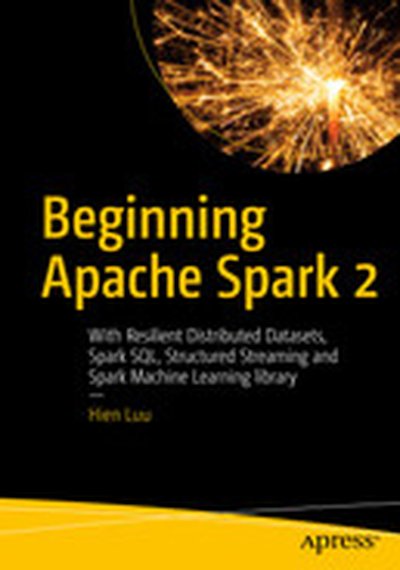
Beginning Apache Spark 2: With Resilient Distributed Datasets, Spark SQL, Structured Streaming and Spark Machine Learning library

Develop applications for the big data landscape with Spark and Hadoop. This book also explains the role of Spark in developing scalable machine learning and analytics applications with Cloud technologies. Beginning Apache Spark 2 gives you an introduction to Apache Spark and shows you how to work with it. Along the way, you’ll discover resilient distributed datasets (RDDs); use Spark SQL for structured data; and learn stream processing and build real-time applications with Spark Structured Streaming. Furthermore, you’ll learn the fundamentals of Spark ML for machine learning and much more. After you read this book, you will have the fundamentals to become proficient in using Apache Spark and know when and how to apply it to your big data applications. What You Will Learn Understand Spark unified data processing platform Howto run Spark in Spark Shell or Databricks Use and manipulate RDDs Deal with structured data using Spark SQL through its operations and advanced functions Build real-time applications using Spark Structured Streaming Develop intelligent applications with the Spark Machine Learning library Who This Book Is For Programmers and developers active in big data, Hadoop, and Java but who are new to the Apache Spark platform.

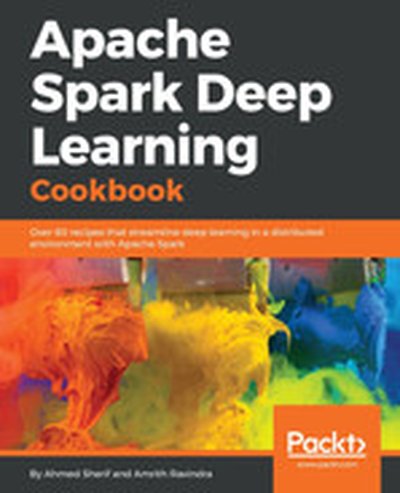
Apache Spark Deep Learning Cookbook

Embark on a journey to master distributed deep learning with the "Apache Spark Deep Learning Cookbook". Designed specifically for leveraging the capabilities of Apache Spark, TensorFlow, and Keras, this book offers over 80 problem-solving recipes to efficiently train and deploy state-of-the-art neural networks, addressing real-world AI challenges. What this Book will help me do Set up and configure a working Apache Spark environment optimized for deep learning tasks. Implement distributed training practices for deep learning models using TensorFlow and Keras. Develop and test neural networks such as CNNs and RNNs targeting specific big data problems. Apply Spark's built-in libraries and integrations for enhanced NLP and computer vision applications. Effectively manage and preprocess large datasets using Spark DataFrames for machine learning tasks. Author(s) Authors Ahmed Sherif and None Ravindra bring years of experience in deep learning, Apache Spark use cases, and hands-on practical training. Their collective expertise has contributed to designing this cookbook approach, focusing on clarity and usability for readers tackling challenging machine learning scenarios. Who is it for? This book is ideal for IT professionals, data scientists, and software developers with foundational understanding of machine learning concepts and Apache Spark framework capabilities. If you aim to scale deep learning and integrate efficient computing with Spark's power, this guide is for you. Familiarity with Python will help maximize the book's potential.

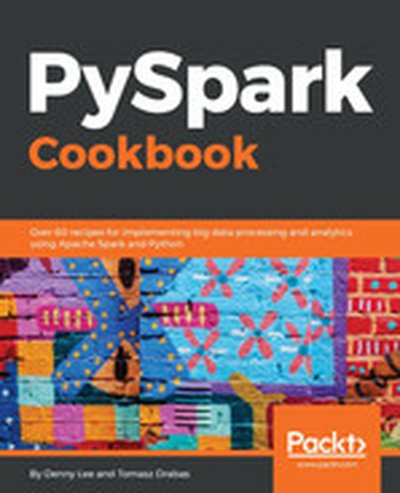
PySpark Cookbook

Dive into the world of big data processing and analytics with the "PySpark Cookbook". This book provides over 60 hands-on recipes for implementing efficient data-intensive solutions using Apache Spark and Python. By mastering these recipes, you'll be equipped to tackle challenges in large-scale data processing, machine learning, and stream analytics. What this Book will help me do Set up and configure PySpark environments effectively, including working with Jupyter for enhanced interactivity. Understand and utilize DataFrames for data manipulation, analysis, and transformation tasks. Develop end-to-end machine learning solutions using the ML and MLlib modules in PySpark. Implement structured streaming and graph-processing solutions to analyze and visualize data streams and relationships. Deploy PySpark applications to the cloud infrastructure efficiently using best practices. Author(s) This book is co-authored by None Lee and None Drabas, who are experienced professionals in data processing and analytics leveraging Python and Apache Spark. With their deep technical expertise and a passion for teaching through practical examples, they aim to make the complex concepts of PySpark accessible to developers of varied experience levels. Who is it for? This book is ideal for Python developers who are keen to delve into the Apache Spark ecosystem. Whether you're just starting with big data or have some experience with Spark, this book provides practical recipes to enhance your skills. Readers looking to solve real-world data-intensive challenges using PySpark will find this resource invaluable.

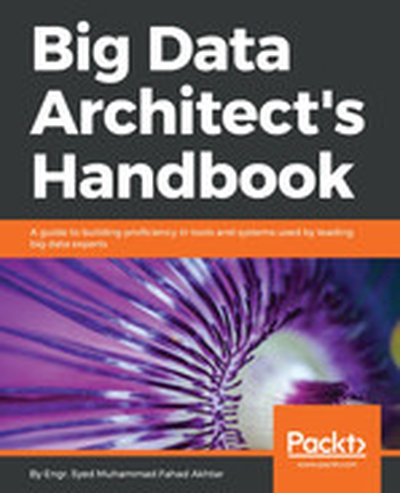
Big Data Architect???s Handbook

Big Data Architect's Handbook is your comprehensive guide to mastering the art of building sophisticated big data solutions. As you delve into this book, you'll learn to design end-to-end big data pipelines and integrate data from various sources for insightful analysis. What this Book will help me do Understand the Hadoop ecosystem and familiarize yourself with major Apache projects. Make informed decisions when designing cloud infrastructures for big data needs. Gain expertise in analyzing structured and unstructured data using machine learning. Develop skills to implement scalable and efficient big data pipelines. Enhance your ability to visualize and monitor data insights effectively. Author(s) None Akhtar has amassed a wealth of experience in big data architecture and related technologies. With years of hands-on involvement in development, analysis, and implementation of big data systems, None brings a pragmatic and insightful perspective. This passion for educating others about data-driven technologies shines through in a user-first approach to making complex topics accessible. Who is it for? This book caters to aspiring data professionals, software developers, and tech enthusiasts aiming to enhance their expertise in big data. Readers with basic programming and data analysis skills will find the content approachable yet challenging enough to deepen their understanding. If your career goal involves managing, analyzing, and making decisions based on large datasets, this book will help bridge the gap between skill and application.