talk-data.com talk-data.com

Event

O'Reilly Data Science Books

2013-08-09 – 2026-02-25 Oreilly Visit website ↗

Activities tracked

2093

Collection of O'Reilly books on Data Science.

Filtering by: data ×

Sessions & talks

Showing 376–400 of 2093 · Newest first

Search within this event →
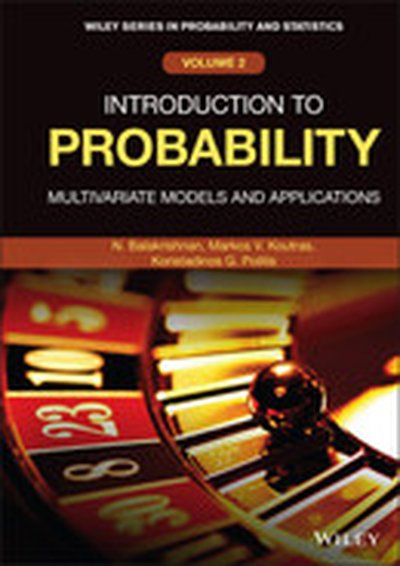
Introduction to Probability

INTRODUCTION TO PROBABILITY Discover practical models and real-world applications of multivariate models useful in engineering, business, and related disciplines In Introduction to Probability: Multivariate Models and Applications, a team of distinguished researchers delivers a comprehensive exploration of the concepts, methods, and results in multivariate distributions and models. Intended for use in a second course in probability, the material is largely self-contained, with some knowledge of basic probability theory and univariate distributions as the only prerequisite. This textbook is intended as the sequel to Introduction to Probability: Models and Applications. Each chapter begins with a brief historical account of some of the pioneers in probability who made significant contributions to the field. It goes on to describe and explain a critical concept or method in multivariate models and closes with two collections of exercises designed to test basic and advanced understanding of the theory. A wide range of topics are covered, including joint distributions for two or more random variables, independence of two or more variables, transformations of variables, covariance and correlation, a presentation of the most important multivariate distributions, generating functions and limit theorems. This important text: Includes classroom-tested problems and solutions to probability exercises Highlights real-world exercises designed to make clear the concepts presented Uses Mathematica software to illustrate the text’s computer exercises Features applications representing worldwide situations and processes Offers two types of self-assessment exercises at the end of each chapter, so that students may review the material in that chapter and monitor their progress Perfect for students majoring in statistics, engineering, business, psychology, operations research and mathematics taking a second course in probability, Introduction to Probability: Multivariate Models and Applications is also an indispensable resource for anyone who is required to use multivariate distributions to model the uncertainty associated with random phenomena.
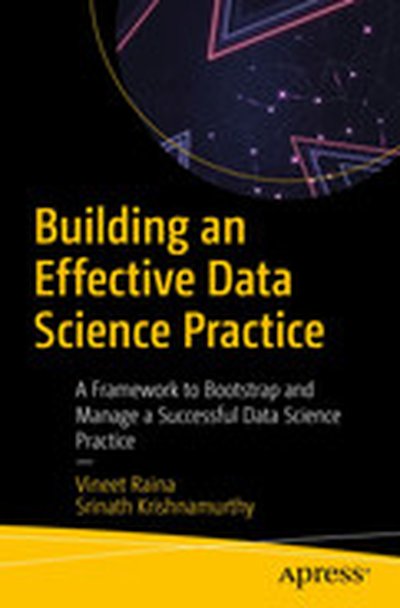
Building an Effective Data Science Practice: A Framework to Bootstrap and Manage a Successful Data Science Practice

Gain a deep understanding of data science and the thought process needed to solve problems in that field using the required techniques, technologies and skills that go into forming an interdisciplinary team. This book will enable you to set up an effective team of engineers, data scientists, analysts, and other stakeholders that can collaborate effectively on crucial aspects such as problem formulation, execution of experiments, and model performance evaluation. You’ll start by delving into the fundamentals of data science – classes of data science problems, data science techniques and their applications – and gradually build up to building a professional reference operating model for a data science function in an organization. This operating model covers the roles and skills required in a team, the techniques and technologies they use, and the best practices typically followed in executing data science projects. Building an Effective Data Science Practice provides a common base of reference knowledge and solutions, and addresses the kinds of challenges that arise to ensure your data science team is both productive and aligned with the business goals from the very start. Reinforced with real examples, this book allows you to confidently determine the strategic answers to effectively align your business goals with the operations of the data science practice. What You’ll Learn Transform business objectives into concrete problems that can be solved using data science Evaluate how problems and the specifics of a business drive the techniques and model evaluation guidelines used in a project Build and operate an effective interdisciplinary data science team within an organization Evaluating the progress of the team towards the business RoI Understand the important regulatory aspects that are applicable to a data science practice Who This Book Is For Technology leaders, data scientists, and project managers

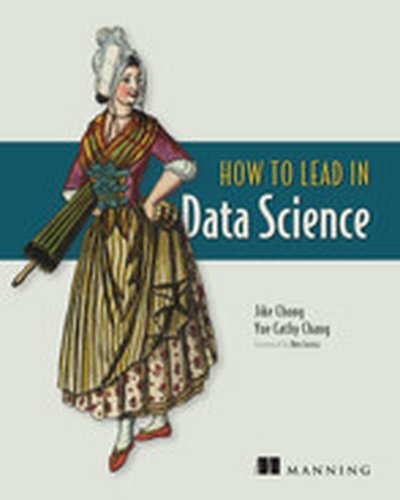
How to Lead in Data Science

A field guide for the unique challenges of data science leadership, filled with transformative insights, personal experiences, and industry examples. In How To Lead in Data Science you will learn: Best practices for leading projects while balancing complex trade-offs Specifying, prioritizing, and planning projects from vague requirements Navigating structural challenges in your organization Working through project failures with positivity and tenacity Growing your team with coaching, mentoring, and advising Crafting technology roadmaps and championing successful projects Driving diversity, inclusion, and belonging within teams Architecting a long-term business strategy and data roadmap as an executive Delivering a data-driven culture and structuring productive data science organizations How to Lead in Data Science is full of techniques for leading data science at every seniority level—from heading up a single project to overseeing a whole company's data strategy. Authors Jike Chong and Yue Cathy Chang share hard-won advice that they've developed building data teams for LinkedIn, Acorns, Yiren Digital, large asset-management firms, Fortune 50 companies, and more. You'll find advice on plotting your long-term career advancement, as well as quick wins you can put into practice right away. Carefully crafted assessments and interview scenarios encourage introspection, reveal personal blind spots, and highlight development areas. About the Technology Lead your data science teams and projects to success! To make a consistent, meaningful impact as a data science leader, you must articulate technology roadmaps, plan effective project strategies, support diversity, and create a positive environment for professional growth. This book delivers the wisdom and practical skills you need to thrive as a data science leader at all levels, from team member to the C-suite. About the Book How to Lead in Data Science shares unique leadership techniques from high-performance data teams. It’s filled with best practices for balancing project trade-offs and producing exceptional results, even when beginning with vague requirements or unclear expectations. You’ll find a clearly presented modern leadership framework based on current case studies, with insights reaching all the way to Aristotle and Confucius. As you read, you’ll build practical skills to grow and improve your team, your company’s data culture, and yourself. What's Inside How to coach and mentor team members Navigate an organization’s structural challenges Secure commitments from other teams and partners Stay current with the technology landscape Advance your career About the Reader For data science practitioners at all levels. About the Authors Dr. Jike Chong and Yue Cathy Chang build, lead, and grow high-performing data teams across industries in public and private companies, such as Acorns, LinkedIn, large asset-management firms, and Fortune 50 companies. Quotes Spot-on as a career resource! Captures what’s important to be successful as a data scientist. - Eric Colson, Former Data Executive at Stitch Fix, Netflix The first-of-its-kind book to discuss data science career development in a systematic way! Highly valuable and timely in a world that generates more and more data!” - Michael Li, VP of Data at Coinbase A valuable reference filled with new and useful coaching and techniques. A must-have. - Jesse Bridgewater, VP Data Science at Brightline, formerly Livongo, Twitter, eBay A great book providing frameworks and tools that help contemplate and address key problems faced by data science leaders. - Ron Kohavi, Best-selling Author, Former Executive at Airbnb, Microsoft, Amazon

Strategic Data Management for Successful Healthcare Outcomes

Strategy is paramount for successful modern healthcare data management. The healthcare landscape continues to evolve in an effort to accommodate our ever-connected world. A digital healthcare system poses new challenges and exposes existing issues as professionals—like you—strive to solve concerns. This book recognizes the unique tasks of dedicated professionals while attempting to decrease confusion on this key topic. It’s time to discuss why strategy is important for modern healthcare data management, how strategy can create new business or upscale a business in healthcare data management, and how these tactics assist your business in gaining a competitive advantage. Cut through the frustration generated by the staggering amount of healthcare data currently being created, collected, and distributed—this book will teach you how. This book will help you to understand: Critical types of data How to strategically manage data How to build better patient care Tips for improving performance New ways for your business to thrive And so much more…

Hands-on Matplotlib: Learn Plotting and Visualizations with Python 3

Learn the core aspects of NumPy, Matplotlib, and Pandas, and use them to write programs with Python 3. This book focuses heavily on various data visualization techniques and will help you acquire expert-level knowledge of working with Matplotlib, a MATLAB-style plotting library for Python programming language that provides an object-oriented API for embedding plots into applications. You'll begin with an introduction to Python 3 and the scientific Python ecosystem. Next, you'll explore NumPy and ndarray data structures, creation routines, and data visualization. You'll examine useful concepts related to style sheets, legends, and layouts, followed by line, bar, and scatter plots. Chapters then cover recipes of histograms, contours, streamplots, and heatmaps, and how to visualize images and audio with pie and polar charts. Moving forward, you'll learn how to visualize with pcolor, pcolormesh, and colorbar, and how to visualize in 3D in Matplotlib, create simple animations, and embed Matplotlib with different frameworks. The concluding chapters cover how to visualize data with Pandas and Matplotlib, Seaborn, and how to work with the real-life data and visualize it. After reading Hands-on Matplotlib you'll be proficient with Matplotlib and able to comfortably work with ndarrays in NumPy and data frames in Pandas. What You'll Learn Understand Data Visualization and Python using Matplotlib Review the fundamental data structures in NumPy and Pandas Work with 3D plotting, visualizations, and animations Visualize images and audio data Who This Book Is For Data scientists, machine learning engineers and software professionals with basic programming skills.

Extending Power BI with Python and R

Dive into the world of advanced analytics and visualizations in Power BI with "Extending Power BI with Python and R". This comprehensive guide will teach you how to integrate Python and R scripting into your Power BI projects, allowing you to build data models, transform data, and create rich visualizations. Learn practical techniques to make your Power BI dashboards more interactive and insightful. What this Book will help me do Master the integration of Python and R scripts into Power BI to enhance its functionality. Learn to implement advanced data transformations and enrichments using external APIs. Create advanced visualizations and custom visuals with R for improved analytics. Perform advanced data analysis including handling missing data using Python and R. Leverage machine learning techniques within Power BI projects to extract actionable insights. Author(s) None Zavarella is a data science expert and renowned author specializing in data analytics and visualization tools. With years of experience working with Power BI, Python, and R in diverse data-driven projects, Zavarella offers a unique perspective on enhancing Power BI capabilities. Passionate about teaching, they craft clear and impactful tutorials for learners. Who is it for? This book is perfect for business intelligence professionals, data scientists, and business analysts who already use Power BI and want to augment its features with Python and R. If you have a foundational understanding of Power BI and some basic familiarity with Python and R, this book will help you explore their combined potential for advanced analytics.

Tableau for Business Users: Learn to Automate and Simplify Dashboards for Better Decision Making

Learn Tableau by working through concrete examples and issues that you are likely to face in your day-to-day work. Author Shankar Arul starts by teaching you the fundamentals of data analytics before moving on to the core concepts of Tableau. You will learn how to create calculated fields, and about the currently available calculation functionalities in Tableau, including Basic Expressions, Level of Detail (LOD) Expressions, and Table Calculations. As the book progresses, you’ll be walked through comparisons and trend calculations using tables. A concluding chapter on dashboarding will show you how to build actionable dashboards to communicate analysis and visualizations. You’ll also see how Tableau can complement and communicate with Excel. After completing this book, you will be ready to tackle the challenges of data analytics using Tableau without getting bogged down by the technicalities of the tool. What Will You Learn Master the core concepts of Tableau Automate and simplify dashboards to help business users Understand the basics of data visualization techniques Leverage powerful features such as parameters, table calculations, level of detail expressions, and more Who is This book For Business analysts, data analysts, as well as financial analysts.

Serverless Analytics with Amazon Athena

Delve into the serverless world of Amazon Athena with the comprehensive book 'Serverless Analytics with Amazon Athena'. This guide introduces you to the power of Athena, showing you how to efficiently query data in Amazon S3 using SQL without the hassle of managing infrastructure. With clear instructions and practical examples, you'll master querying structured, unstructured, and semi-structured data seamlessly. What this Book will help me do Effectively query and analyze both structured and unstructured data stored in S3 using Amazon Athena. Integrate Athena with other AWS services to create powerful, secure, and cost-efficient data workflows. Develop ETL pipelines and machine learning workflows leveraging Athena's compatibility with AWS Glue. Monitor and troubleshoot Athena queries for consistent performance and build scalable serverless data solutions. Implement security best practices and optimize costs when managing your Athena-driven data solutions. Author(s) None Virtuoso, along with co-authors Mert Turkay Hocanin None and None Wishnick, brings a wealth of experience in cloud solutions, serverless technologies, and data engineering. They excel in demystifying complex technical topics and have a passion for empowering readers with practical skills and knowledge. Who is it for? This book is tailored for business intelligence analysts, application developers, and system administrators who want to harness Amazon Athena for seamless, cost-efficient data analytics. It suits individuals with basic SQL knowledge looking to expand their capabilities in querying and processing data. Whether you're managing growing datasets or building data-driven applications, this book provides the know-how to get it right.

Data Science Bookcamp

Learn data science with Python by building five real-world projects! Experiment with card game predictions, tracking disease outbreaks, and more, as you build a flexible and intuitive understanding of data science. In Data Science Bookcamp you will learn: Techniques for computing and plotting probabilities Statistical analysis using Scipy How to organize datasets with clustering algorithms How to visualize complex multi-variable datasets How to train a decision tree machine learning algorithm In Data Science Bookcamp you’ll test and build your knowledge of Python with the kind of open-ended problems that professional data scientists work on every day. Downloadable data sets and thoroughly-explained solutions help you lock in what you’ve learned, building your confidence and making you ready for an exciting new data science career. About the Technology A data science project has a lot of moving parts, and it takes practice and skill to get all the code, algorithms, datasets, formats, and visualizations working together harmoniously. This unique book guides you through five realistic projects, including tracking disease outbreaks from news headlines, analyzing social networks, and finding relevant patterns in ad click data. About the Book Data Science Bookcamp doesn’t stop with surface-level theory and toy examples. As you work through each project, you’ll learn how to troubleshoot common problems like missing data, messy data, and algorithms that don’t quite fit the model you’re building. You’ll appreciate the detailed setup instructions and the fully explained solutions that highlight common failure points. In the end, you’ll be confident in your skills because you can see the results. What's Inside Web scraping Organize datasets with clustering algorithms Visualize complex multi-variable datasets Train a decision tree machine learning algorithm About the Reader For readers who know the basics of Python. No prior data science or machine learning skills required. About the Author Leonard Apeltsin is the Head of Data Science at Anomaly, where his team applies advanced analytics to uncover healthcare fraud, waste, and abuse. Quotes Valuable and accessible… a solid foundation for anyone aspiring to be a data scientist. - Amaresh Rajasekharan, IBM Corporation Really good introduction of statistical data science concepts. A must-have for every beginner! - Simone Sguazza, University of Applied Sciences and Arts of Southern Switzerland A full-fledged tutorial in data science including common Python libraries and language tricks! - Jean-François Morin, Laval University This book is a complete package for understanding how the data science process works end to end. - Ayon Roy, Internshala

Maximizing Tableau Server

Maximizing Tableau Server guides you on how to make the most of your Tableau Server experience. You'll learn to organize, share, and interact with dashboards and data sources effectively. This book empowers you to enhance your productivity with Tableau Server and achieve seamless collaboration with your team. What this Book will help me do Navigate Tableau Server's interface to locate and customize content easily. Manage and organize Tableau Server content for efficient collaboration. Share, download, and interact with dashboards, enhancing user productivity. Automate tasks such as subscriptions and data refresh schedules. Apply best practices to optimize dashboard performance and usability. Author(s) None Sarsfield and None Locker are seasoned data professionals with extensive knowledge of Tableau. They have guided many organizations in utilizing Tableau Server to its full potential. Their practical insights and step-by-step approach demystify Tableau Server for readers of all backgrounds. Who is it for? This book is perfect for BI developers, data analysts, and professionals who are new to Tableau Server. If you're aiming to streamline the way you handle and share dashboards and want actionable advice on enhancing efficiency, this book is ideal for you. Basic familiarity with web navigation is all that is needed.

Practical Biomedical Signal Analysis Using MATLAB®, 2nd Edition

Fully updated and with exclusive new content, this second edition presents a coherent treatment of various signal processing methods and applications. The book not only covers the current techniques of biomedical signal processing, but it also offers guidance on which methods are appropriate for a given task and different types of data.

Automating Analytics

Do you have a method for seeing all the data that passes through your organization? The need to democratize access to data and analytics, automate complex and tedious business processes, and amplify human output has led to analytic process automation (APA). Thousands of organizations across nearly every business and industry vertical use this software to accelerate data-driven business outcomes. This report examines the power of APA using technology, business, and real-world examples. If you're a technical business, analytics, or business intelligence leader, you'll learn how to use APA to tackle complex problems, increase productivity, and improve efficiency. You'll discover what APA means for your business and for you. This report explores: The importance of data: understand how data is transformed into information and insights for making business decisions Gathering data with APA: learn how APA differs from your current process Data democratization: grant data access to employees and empower them to analyze specific tasks and performance Data reporting: learn how APA blends data tables, fields, and values to help you search for insights at a granular level Analytics: explore new tools that use AI and ML to improve the analytic process

Modern Analytics Platforms

From a global pandemic to extreme weather, the events of 2020 and 2021 have caused organizations to make quick and constant adjustments to their strategy and operations. This transformation is likely to continue and have a major impact on analytics. Not only do responders to Experian's annual Global Data Management survey confirm more demand for data insights, but most of them also believe the lack of agility hurt their organization's responses to fast-changing business needs. With this O'Reilly report, you'll learn how organizations have begun to take new approaches to analytics for business reinvention and digital transformation. Chief analytics and data officers and data analytics, data science, data visualization leaders will explore converged analytics and find out how it differs from legacy and current analytics approaches. You'll see where your organization stands in its journey to convergence--and what you need to do next. This report helps you: Examine how three organizations in different industries and with different objectives have benefited from modern analytics Learn how analytics has evolved to support greater business agility at scale Examine the alignment of people, processes, tools, and data in converged analytics Learn the five stages of analytical competition and six dimensions for benchmarking maturity Explore practices that you can adopt to improve your analytics capabilities and your agility

Computational Intelligence and Healthcare Informatics

COMPUTATIONAL INTELLIGENCE and HEALTHCARE INFORMATICS The book provides the state-of-the-art innovation, research, design, and implements methodological and algorithmic solutions to data processing problems, designing and analysing evolving trends in health informatics, intelligent disease prediction, and computer-aided diagnosis. Computational intelligence (CI) refers to the ability of computers to accomplish tasks that are normally completed by intelligent beings such as humans and animals. With the rapid advance of technology, artificial intelligence (AI) techniques are being effectively used in the fields of health to improve the efficiency of treatments, avoid the risk of false diagnoses, make therapeutic decisions, and predict the outcome in many clinical scenarios. Modern health treatments are faced with the challenge of acquiring, analyzing and applying the large amount of knowledge necessary to solve complex problems. Computational intelligence in healthcare mainly uses computer techniques to perform clinical diagnoses and suggest treatments. In the present scenario of computing, CI tools present adaptive mechanisms that permit the understanding of data in difficult and changing environments. The desired results of CI technologies profit medical fields by assembling patients with the same types of diseases or fitness problems so that healthcare facilities can provide effectual treatments. This book starts with the fundamentals of computer intelligence and the techniques and procedures associated with it. Contained in this book are state-of-the-art methods of computational intelligence and other allied techniques used in the healthcare system, as well as advances in different CI methods that will confront the problem of effective data analysis and storage faced by healthcare institutions. The objective of this book is to provide researchers with a platform encompassing state-of-the-art innovations; research and design; implementation of methodological and algorithmic solutions to data processing problems; and the design and analysis of evolving trends in health informatics, intelligent disease prediction and computer-aided diagnosis. Audience The book is of interest to artificial intelligence and biomedical scientists, researchers, engineers and students in various settings such as pharmaceutical & biotechnology companies, virtual assistants developing companies, medical imaging & diagnostics centers, wearable device designers, healthcare assistance robot manufacturers, precision medicine testers, hospital management, and researchers working in healthcare system.

Computation in BioInformatics

COMPUTATION IN BIOINFORMATICS Bioinformatics is a platform between the biology and information technology and this book provides readers with an understanding of the use of bioinformatics tools in new drug design. The discovery of new solutions to pandemics is facilitated through the use of promising bioinformatics techniques and integrated approaches. This book covers a broad spectrum of the bioinformatics field, starting with the basic principles, concepts, and application areas. Also covered is the role of bioinformatics in drug design and discovery, including aspects of molecular modeling. Some of the chapters provide detailed information on bioinformatics related topics, such as silicon design, protein modeling, DNA microarray analysis, DNA-RNA barcoding, and gene sequencing, all of which are currently needed in the industry. Also included are specialized topics, such as bioinformatics in cancer detection, genomics, and proteomics. Moreover, a few chapters explain highly advanced topics, like machine learning and covalent approaches to drug design and discovery, all of which are significant in pharma and biotech research and development. Audience Researchers and engineers in computation biology, information technology, bioinformatics, drug design, biotechnology, pharmaceutical sciences.

Power Query Cookbook

The "Power Query Cookbook" is your comprehensive guide to mastering data preparation and transformation using Power Query. With this book, you'll learn to connect to data sources, reshape data to fit business requirements, and use both no-code transformations and custom M code solutions to unlock the full potential of your data. Step-by-step examples will guide you through optimizing dataflows in Power BI. What this Book will help me do Master connecting to various data sources and performing intuitive transformations using Power Query. Learn to reshape and enrich data to meet complex business requirements efficiently. Explore advanced capabilities of Power Query, including M code and online dataflows. Develop custom data transformations with a blend of GUI-based and M code techniques. Optimize the performance of Power BI Dataflows using best practices and diagnostics tools. Author(s) None Janicijevic is a seasoned expert in data analytics, specializing in Microsoft Power BI and Power Query. With years of experience in data engineering and a passion for teaching, None brings a clear, actionable, and results-driven approach to demystifying complex technical concepts. Their work empowers professionals with the tools they need to excel in data-driven decision-making. Who is it for? This book is designed for data analysts, business intelligence developers, and data engineers aiming to enhance their skills in data preparation using Power Query. If you have a basic understanding of Power BI and want to delve into integrating and optimizing data from multiple sources, this book is for you. It's ideal for professionals seeking practical insights and techniques to improve data transformations. Novices with some exposure to BI tools will also find the material accessible and rewarding.

2021 Data/AI Salary Survey

Curious about what technologies will have the biggest impact on salaries in the coming year? Want to determine whether a particular certification is worth going for? Looking for the most lucrative programming language to learn next? Are you hiring for a data team? Or do you just want to see how your skills and salary compare to others in the field? Get answers to your salary questions in the 2021 Data/AI Salary Survey .

Text as Data

Text As Data: Combining qualitative and quantitative algorithms within the SAS system for accurate, effective and understandable text analytics The need for powerful, accurate and increasingly automatic text analysis software in modern information technology has dramatically increased. Fields as diverse as financial management, fraud and cybercrime prevention, Pharmaceutical R&D, social media marketing, customer care, and health services are implementing more comprehensive text-inclusive, analytics strategies. Text as Data: Computational Methods of Understanding Written Expression Using SAS presents an overview of text analytics and the critical role SAS software plays in combining linguistic and quantitative algorithms in the evolution of this dynamic field. Drawing on over two decades of experience in text analytics, authors Barry deVille and Gurpreet Singh Bawa examine the evolution of text mining and cloud-based solutions, and the development of SAS Visual Text Analytics. By integrating quantitative data and textual analysis with advanced computer learning principles, the authors demonstrate the combined advantages of SAS compared to standard approaches, and show how approaching text as qualitative data within a quantitative analytics framework produces more detailed, accurate, and explanatory results. Understand the role of linguistics, machine learning, and multiple data sources in the text analytics workflow Understand how a range of quantitative algorithms and data representations reflect contextual effects to shape meaning and understanding Access online data and code repositories, videos, tutorials, and case studies Learn how SAS extends quantitative algorithms to produce expanded text analytics capabilities Redefine text in terms of data for more accurate analysis This book offers a thorough introduction to the framework and dynamics of text analytics—and the underlying principles at work—and provides an in-depth examination of the interplay between qualitative-linguistic and quantitative, data-driven aspects of data analysis. The treatment begins with a discussion on expression parsing and detection and provides insight into the core principles and practices of text parsing, theme, and topic detection. It includes advanced topics such as contextual effects in numeric and textual data manipulation, fine-tuning text meaning and disambiguation. As the first resource to leverage the power of SAS for text analytics, Text as Data is an essential resource for SAS users and data scientists in any industry or academic application.

Microsoft Power BI Cookbook - Second Edition

"Microsoft Power BI Cookbook" is an advanced reference for professionals working with Power BI. Featuring over 90 practical, hands-on recipes, this book allows you to master Power BI for data modeling, creating dashboards, and optimizing queries. You will learn practical tips and techniques, enabling you to create effective and customized Power BI solutions for various business needs. What this Book will help me do Master advanced data cleansing and integration techniques in Power BI's Power Query Editor. Develop intuitive, efficient dashboards and reports using best practices for data visualization. Optimize performance for large datasets using aggregation tables and efficient query techniques. Implement sophisticated analysis and business logic using the power of DAX programming language. Deploy and manage Power BI solutions leveraging integration with Microsoft ecosystem tools. Author(s) Greg Deckler and None Powell are seasoned Power BI experts with extensive backgrounds in business intelligence and data solutions. Greg is a recognized Power BI consultant and author with a focus on delivering impactful BI solutions. None brings their experience in utilizing Power BI for diverse organizational needs. Together, they emphasize hands-on learning and actionable insights in their collaborative writing. Who is it for? This book is aimed at business intelligence professionals who already have a basic understanding of Power BI. Ideal readers are those seeking to deepen their knowledge of advanced features and apply best practices in their projects. Whether you're enhancing your existing Power BI skills or managing complex datasets, this book will provide the techniques and insights to excel in your role.

Pandas in Action

Take the next steps in your data science career! This friendly and hands-on guide shows you how to start mastering Pandas with skills you already know from spreadsheet software. In Pandas in Action you will learn how to: Import datasets, identify issues with their data structures, and optimize them for efficiency Sort, filter, pivot, and draw conclusions from a dataset and its subsets Identify trends from text-based and time-based data Organize, group, merge, and join separate datasets Use a GroupBy object to store multiple DataFrames Pandas has rapidly become one of Python's most popular data analysis libraries. In Pandas in Action, a friendly and example-rich introduction, author Boris Paskhaver shows you how to master this versatile tool and take the next steps in your data science career. You’ll learn how easy Pandas makes it to efficiently sort, analyze, filter and munge almost any type of data. About the Technology Data analysis with Python doesn’t have to be hard. If you can use a spreadsheet, you can learn pandas! While its grid-style layouts may remind you of Excel, pandas is far more flexible and powerful. This Python library quickly performs operations on millions of rows, and it interfaces easily with other tools in the Python data ecosystem. It’s a perfect way to up your data game. About the Book Pandas in Action introduces Python-based data analysis using the amazing pandas library. You’ll learn to automate repetitive operations and gain deeper insights into your data that would be impractical—or impossible—in Excel. Each chapter is a self-contained tutorial. Realistic downloadable datasets help you learn from the kind of messy data you’ll find in the real world. What's Inside Organize, group, merge, split, and join datasets Find trends in text-based and time-based data Sort, filter, pivot, optimize, and draw conclusions Apply aggregate operations About the Reader For readers experienced with spreadsheets and basic Python programming. About the Author Boris Paskhaver is a software engineer, Agile consultant, and online educator. His programming courses have been taken by 300,000 students across 190 countries. Quotes Of all the introductory pandas books I’ve read—and I did read a few—this is the best, by a mile. - Erico Lendzian, idibu.com This approachable guide will get you up and running quickly with all the basics you need to analyze your data. - Jonathan Sharley, SiriusXM Media Understanding and putting in practice the concepts of this book will help you increase productivity and make you look like a pro. - Jose Apablaza, Steadfast Networks Teaches both novice and expert Python users the essential concepts required for data analysis and data science. - Ben McNamara, DataGeek

Cryptography and Cryptanalysis in MATLAB: Creating and Programming Advanced Algorithms

Master the essentials of cryptography and cryptanalysis and learn how to put them to practical use. Each chapter of this book starts with an introduction to the concepts on which cryptographic algorithms are based and how they are used in practice, providing fully working examples for each of the algorithms presented. Implementation sections will guide you through the entire process of writing your own applications and programs using MATLAB. Cryptography and Cryptanalysis in MATLAB will serve as your definitive go-to cryptography reference, whether you are a student, professional developer, or researcher, showing how a multitude of cryptographic challenges can be overcome using the powerful tools of MATLAB. What You Will Learn Discover MATLAB’s cryptography functions Work with conversion mechanisms in MATLAB Implement cryptographic algorithms using arithmetic operations Understand the classical, simple cryptosystems that form the basis of modern cryptography Develop fully working solutions (encryption/decryption operations) Study pseudo-random generators and their real-life implementations Utilize hash functions by way of practical examples Implement solutions to defend against practical cryptanalysis methods and attacks Understand asymmetric and symmetric encryption systems and how to use them Leverage visual cryptography, steganography, and chaos-based cryptography Who This Book Is For Those who are new to cryptography/analysis. Some prior exposure to MATLAB recommended.

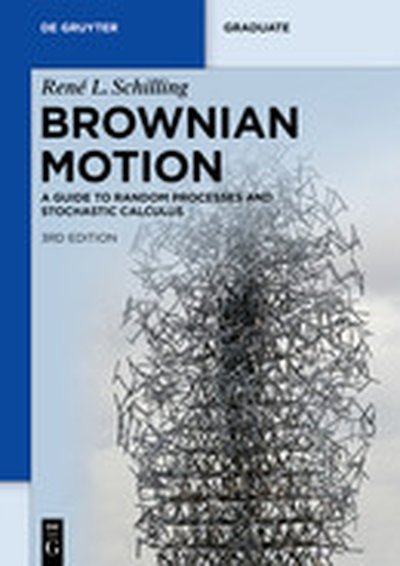
Brownian Motion, 3rd Edition

Stochastic processes occur everywhere in the sciences, economics and engineering, and they need to be understood by (applied) mathematicians, engineers and scientists alike. This book gives a gentle introduction to Brownian motion and stochastic processes, in general. Brownian motion plays a special role, since it shaped the whole subject, displays most random phenomena while being still easy to treat, and is used in many real-life models. Im this new edition, much material is added, and there are new chapters on ''Wiener Chaos and Iterated Itô Integrals'' and ''Brownian Local Times''.