talk-data.com talk-data.com

Event

O'Reilly Data Science Books

2013-08-09 – 2026-02-25 Oreilly Visit website ↗

Activities tracked

2118

Collection of O'Reilly books on Data Science.

Sessions & talks

Showing 101–125 of 2118 · Newest first

Search within this event →
Microsoft Power Apps Cookbook - Third Edition

Microsoft Power Apps Cookbook is a comprehensive guide to harnessing the full potential of Microsoft Power Apps, a powerful low-code platform for building business applications. Packed with practical recipes, this book details how to develop scalable, efficient apps, automate workflows with RPA, and utilize new capabilities like AI-powered Microsoft Copilot and the Power Apps Component Framework. What this Book will help me do Create and deploy scalable canvas and model-driven apps using Microsoft Power Apps. Utilize AI-powered features like Copilot to speed up app creation and development. Implement robust data management strategies with Microsoft Dataverse. Extend app functionalities using the Power Apps Component Framework for custom components. Design and build secure external-facing websites with Microsoft Power Pages. Author(s) Eickhel Mendoza is an experienced Microsoft Power Platform developer and educator who has helped numerous organizations enhance their capabilities through low-code app development. Authoring from extensive hands-on experience, their teaching style bridges technical theory and practical application. Eickhel is passionate about empowering users to achieve more with modern app development tools. Who is it for? This book is ideal for information workers and developers looking to streamline their application development processes with Microsoft's low-code solutions. It is particularly targeted toward users with a foundational understanding of the Power Platform looking to deepen their knowledge. Readers will benefit most if they are eager to learn how to create innovative solutions efficiently. Traditional developers aiming to explore a new paradigm of rapid application development will also find it highly beneficial.
Pandas Cookbook - Third Edition

Discover the power of pandas for your data analysis tasks. Pandas Cookbook provides practical, hands-on recipes for mastering pandas 2.x, guiding you through real-world scenarios quickly and effectively. What this Book will help me do Efficiently manipulate and clean data using pandas. Perform advanced grouping and aggregation operations. Handle time series data with pandas robust functions. Optimize pandas code for better performance. Integrate pandas with tools like NumPy and databases. Author(s) William Ayd and Matthew Harrison co-authored this insightful cookbook. With years of practical experience in data science and Python development, both authors aim to make data analysis accessible and efficient using pandas. Who is it for? This book is perfect for Python developers and data analysts looking to enhance their data manipulation skills. Whether you're a beginner aiming to understand pandas or a professional seeking advanced insights, this book is tailored for anyone handling structured data.

Hands-On Prescriptive Analytics

Business decisions in any context—operational, tactical, or strategic—can have considerable consequences. Whether the outcome is positive and rewarding or negative and damaging to the business, its employees, and stakeholders is unknown when action is approved. These decisions are usually made under the proverbial cloud of uncertainty. With this practical guide, data analysts, data scientists, and business analysts will learn why and how maximizing positive consequences and minimizing negative ones requires three forms of rich information: Descriptive analytics explores the results from an action—what has already happened. Predictive analytics focuses on what could happen. The third, prescriptive analytics, informs us what should happen in the future. While all three are important for decision-makers, the primary focus of this book is on the third: prescriptive analytics. Author Walter R. Paczkowski, Ph.D. shows you: The distinction among descriptive, predictive, and prescriptive analytics How predictive analytics produces a menu of action options How prescriptive analytics narrows the menu of action options The forms of prescriptive analytics: eight prescriptive methods Two broad classes of these methods: non-stochastic and stochastic How to develop prescriptive analyses for action recommendations Ways to use an appropriate tool-set in Python

Computational Intelligence in Sustainable Computing and Optimization

Computational Intelligence in Sustainable Computing and Optimization: Trends and Applications focuses on developing and evolving advanced computational intelligence algorithms for the analysis of data involved in applications, such as agriculture, biomedical systems, bioinformatics, business intelligence, economics, disaster management, e-learning, education management, financial management, and environmental policies. The book presents research in sustainable computing and optimization, combining methods from engineering, mathematics, artificial intelligence, and computer science to optimize environmental resources Computational intelligence in the field of sustainable computing combines computer science and engineering in applications ranging from Internet of Things (IoT), information security systems, smart storage, cloud computing, intelligent transport management, cognitive and bio-inspired computing, and management science. In addition, data intelligence techniques play a critical role in sustainable computing. Recent advances in data management, data modeling, data analysis, and artificial intelligence are finding applications in energy networks and thus making our environment more sustainable. Presents computational, intelligence–based data analysis for sustainable computing applications such as pattern recognition, biomedical imaging, sustainable cities, sustainable transport, sustainable agriculture, and sustainable financial management Develops research in sustainable computing and optimization, combining methods from engineering, mathematics, and computer science to optimize environmental resources Includes three foundational chapters dedicated to providing an overview of computational intelligence and optimization techniques and their applications for sustainable computing

Fuzzy Methods for Assessment and Decision Making

Fuzzy Methods for Assessment and Decision Making presents the assessment of learning and problem-solving skills with qualitative grades. These methods are outcomes of the author’s research work on the subject for more than 20 years. In particular, a hybrid assessment model uses the Center of Gravity (COG) defuzzification technique, closed real intervals (grey numbers), neutrosophic sets, and soft sets as tools. The book starts with the basic mathematical background that is needed for an understanding of its contents. The Rectangular Fuzzy Assessment Model (RFAM) of Subbotin and Voskoglou is presented next, the outcomes of which are compared to those of the GPA index. The book presents innovative fuzzy assessment methods, enabling readers to assess the mean and quality performance of learning or problem-solving skills of a group of students when qualitative (linguistic) grades are used for this purpose. In the case of using linguistic grades for the assessment of a group’s skills, the classical method of calculating the mean value of the (numerical) grades cannot be applied. Also, no safe conclusions can be obtained on comparing the quality performance of two groups when the values of their GPA index are equal. Presents innovative, fuzzy assessment methods to enable readers to assess the mean and quality performance of learning Discusses fuzzy logic and techniques for decision-making in all domains Includes applications of fuzzy decision-making as a hybrid model using soft sets, grey numbers, and neutrosophic sets

Data Analysis and Related Applications 4

This book is a collective work by a number of leading scientists, analysts, engineers, mathematicians and statisticians who have been working at the forefront of data analysis and related applications, arising from data science, operations research, engineering, machine learning or statistics. The chapters of this collaborative work represent a cross-section of current research interests in the above scientific areas. The collected material has been divided into appropriate sections to provide the reader with both theoretical and applied information on data analysis methods, models and techniques, along with appropriate applications. Data Analysis and Related Applications 4 investigates a number of different topics in the areas mentioned above, touching on statistical analysis, stochastic processes, estimation methods, algorithms, distributions and networks, among others.

Numerical Python: Scientific Computing and Data Science Applications with Numpy, SciPy and Matplotlib

Learn how to leverage the scientific computing and data analysis capabilities of Python, its standard library, and popular open-source numerical Python packages like NumPy, SymPy, SciPy, matplotlib, and more. This book demonstrates how to work with mathematical modeling and solve problems with numerical, symbolic, and visualization techniques. It explores applications in science, engineering, data analytics, and more. Numerical Python, Third Edition, presents many case study examples of applications in fundamental scientific computing disciplines, as well as in data science and statistics. This fully revised edition, updated for each library's latest version, demonstrates Python's power for rapid development and exploratory computing due to its simple and high-level syntax and many powerful libraries and tools for computation and data analysis. After reading this book, readers will be familiar with many computing techniques, including array-based and symbolic computing, visualization and numerical file I/O, equation solving, optimization, interpolation and integration, and domain-specific computational problems, such as differential equation solving, data analysis, statistical modeling, and machine learning. What You'll Learn Work with vectors and matrices using NumPy Review Symbolic computing with SymPy Plot and visualize data with Matplotlib Perform data analysis tasks with Pandas and SciPy Understand statistical modeling and machine learning with statsmodels and scikit-learn Optimize Python code using Numba and Cython Who This Book Is For Developers who want to understand how to use Python and its ecosystem of libraries for scientific computing and data analysis.

CQRS by Example

CQRS by Example is your gateway to mastering the Command Query Responsibility Segregation (CQRS) architecture. In this book, you will learn how to design robust and scalable systems by effectively separating read and write operations. Through detailed examples and practical implementation advice, you'll discover how CQRS improves maintainability and performance in complex software systems. What this Book will help me do Gain a deep understanding of the CQRS pattern and its benefits in software design. Learn to effectively distinguish between read (query) and write (command) operations. Master event sourcing to achieve strong data consistency in distributed systems. Understand and implement eventual consistency using practical examples. Apply CQRS architecture in real-world scenarios for scalable system design. Author(s) Carlos Buenosvinos, Christian Soronellas, and Keyvan Akbary bring decades of software development and system architecture expertise to this book. Having worked extensively in building high-performance, scalable systems across different industries, they have distilled their experience into a detailed guide for mastering CQRS. They have a passion for teaching complex concepts in an approachable way, making their work practical, actionable, and engaging. Who is it for? CQRS by Example is perfect for software developers and architects aiming to design scalable, high-performance systems. Whether you are a seasoned professional familiar with domain-driven design and microservices or a developer looking to adopt advanced architectural practices, this book has the insights you need. Prior knowledge of CQRS is not mandatory, but understanding of database design and distributed systems is beneficial. The content is aimed at empowering readers to apply CQRS effectively in professional projects.

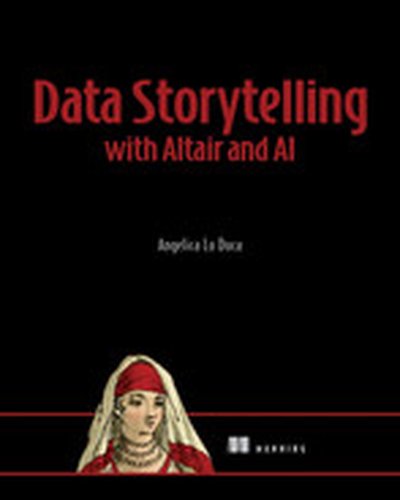
Data Storytelling with Altair and AI

Great data presentations tell a story. Learn how to organize, visualize, and present data using Python, generative AI, and the cutting-edge Altair data visualization toolkit. Take the fast track to amazing data presentations! Data Storytelling with Altair and AI introduces a stack of useful tools and tried-and-tested methodologies that will rapidly increase your productivity, streamline the visualization process, and leave your audience inspired. In Data Storytelling with Altair and AI you’ll discover: Using Python Altair for data visualization Using Generative AI tools for data storytelling The main concepts of data storytelling Building data stories with the DIKW pyramid approach Transforming raw data into a data story Data Storytelling with Altair and AI teaches you how to turn raw data into effective, insightful data stories. You’ll learn exactly what goes into an effective data story, then combine your Python data skills with the Altair library and AI tools to rapidly create amazing visualizations. Your bosses and decision-makers will love your new presentations—and you’ll love how quick Generative AI makes the whole process! About the Technology Every dataset tells a story. After you’ve cleaned, crunched, and organized the raw data, it’s your job to share its story in a way that connects with your audience. Python’s Altair data visualization library, combined with generative AI tools like Copilot and ChatGPT, provide an amazing toolbox for transforming numbers, code, text, and graphics into intuitive data presentations. About the Book Data Storytelling with Altair and AI teaches you how to build enhanced data visualizations using these tools. The book uses hands-on examples to build powerful narratives that can inform, inspire, and motivate. It covers the Altair data visualization library, along with AI techniques like generating text with ChatGPT, creating images with DALL-E, and Python coding with Copilot. You’ll learn by practicing with each interesting data story, from tourist arrivals in Portugal to population growth in the USA to fake news, salmon aquaculture, and more. What's Inside The Data-Information-Knowledge-Wisdom (DIKW) pyramid Publish data stories using Streamlit, Tableau, and Comet Vega and Vega-Lite visualization grammar About the Reader For data analysts and data scientists experienced with Python. No previous knowledge of Altair or Generative AI required. About the Author Angelica Lo Duca is a researcher at the Institute of Informatics and Telematics of the National Research Council, Italy. The technical editor on this book was Ninoslav Cerkez. Quotes This book’s step-by-step approach, illustrated through real-world examples, makes complex data accessible and actionable. - Alexey Grigorev, DataTalks.Club A clear and concise guide to data storytelling. Highly recommended. - Andrew Madson, Insights x Design Data storytelling in a way that anyone can do! This book feels ahead of its time. - Avery Smith, Data Career Jumpstart Excellent hands-on exercises that combine two of my favorite tools: AI and the Altair library. - Jose Berengueres, Author of DataViz and Storytelling

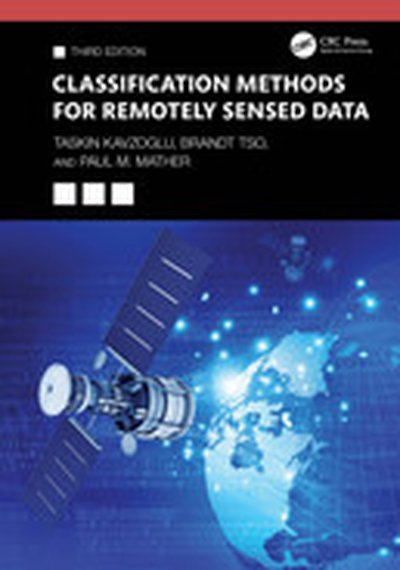
Classification Methods for Remotely Sensed Data, 3rd Edition

The new edition of the bestselling Classification Methods for Remotely Sensed Data covers current state-of-the-art machine learning algorithms and developments in the analysis of remotely sensed data, and presents new AI-based analysis tools and metrics together with ongoing debates on accuracy assessment strategies and XAI methods.

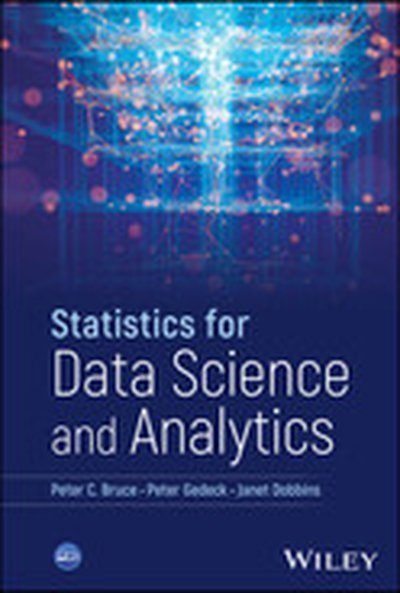
Statistics for Data Science and Analytics

Introductory statistics textbook with a focus on data science topics such as prediction, correlation, and data exploration Statistics for Data Science and Analytics is a comprehensive guide to statistical analysis using Python, presenting important topics useful for data science such as prediction, correlation, and data exploration. The authors provide an introduction to statistical science and big data, as well as an overview of Python data structures and operations. A range of statistical techniques are presented with their implementation in Python, including hypothesis testing, probability, exploratory data analysis, categorical variables, surveys and sampling, A/B testing, and correlation. The text introduces binary classification, a foundational element of machine learning, validation of statistical models by applying them to holdout data, and probability and inference via the easy-to-understand method of resampling and the bootstrap instead of using a myriad of “kitchen sink” formulas. Regression is taught both as a tool for explanation and for prediction. This book is informed by the authors’ experience designing and teaching both introductory statistics and machine learning at Statistics.com. Each chapter includes practical examples, explanations of the underlying concepts, and Python code snippets to help readers apply the techniques themselves. Statistics for Data Science and Analytics includes information on sample topics such as: Int, float, and string data types, numerical operations, manipulating strings, converting data types, and advanced data structures like lists, dictionaries, and sets Experiment design via randomizing, blinding, and before-after pairing, as well as proportions and percents when handling binary data Specialized Python packages like numpy, scipy, pandas, scikit-learn and statsmodels—the workhorses of data science—and how to get the most value from them Statistical versus practical significance, random number generators, functions for code reuse, and binomial and normal probability distributions Written by and for data science instructors, Statistics for Data Science and Analytics is an excellent learning resource for data science instructors prescribing a required intro stats course for their programs, as well as other students and professionals seeking to transition to the data science field.

Income Statement Semantic Models: Building Enterprise-Grade Income Statement Models with Power BI

This comprehensive guide will teach you how to build an income statement semantic model, also known as the profit and loss (P&L) statement. Author Chris Barber— a business intelligence (BI) consultant, Microsoft MVP, and chartered accountant (ACMA, CGMA)—helps you master everything from designing conceptual models to building semantic models based on these designs. You will learn how to build a re-usable solution based on the trial balance and how to expand upon this to build enterprise-grade solutions. If you want to leverage the Microsoft BI platform to understand profit within your organization, this is the resource you need. What You Will Learn Modeling and the income statement: Learn what modelling the income statement entails, why it is important, and how income statements are constructed Calculating account balances: Learn how to optimally calculate account balances using a Star Schema Producing external income statement semantic models: Learn how to produce external income statement semantic models as they enable income statements to be analyzed from a range of perspectives and can be explored to reveal the underlying accounts and journal entries Producing internal income statement semantic models: Learn how to create multiple income statement layouts and further contextualize financial information by including percentages and non-financial information, and learn about the various security and self-service considerations Who This Book Is For Technical users (solution architects, Microsoft Fabric developers, Power BI developers) who require a comprehensive methodology for income statement semantic models because of the modeling complexities and knowledge needed of the accounting process; and finance (management accountants) who have hit the limits of Excel and have started using Power BI, but are unsure how income statement semantic models are built

LLMs and Generative AI for Healthcare

Large language models (LLMs) and generative AI are rapidly changing the healthcare industry. These technologies have the potential to revolutionize healthcare by improving the efficiency, accuracy, and personalization of care. This practical book shows healthcare leaders, researchers, data scientists, and AI engineers the potential of LLMs and generative AI today and in the future, using storytelling and illustrative use cases in healthcare. Authors Kerrie Holley, former Google healthcare professionals, guide you through the transformative potential of large language models (LLMs) and generative AI in healthcare. From personalized patient care and clinical decision support to drug discovery and public health applications, this comprehensive exploration covers real-world uses and future possibilities of LLMs and generative AI in healthcare. With this book, you will: Understand the promise and challenges of LLMs in healthcare Learn the inner workings of LLMs and generative AI Explore automation of healthcare use cases for improved operations and patient care using LLMs Dive into patient experiences and clinical decision-making using generative AI Review future applications in pharmaceutical R&D, public health, and genomics Understand ethical considerations and responsible development of LLMs in healthcare "The authors illustrate generative's impact on drug development, presenting real-world examples of its ability to accelerate processes and improve outcomes across the pharmaceutical industry." --Harsh Pandey, VP, Data Analytics & Business Insights, Medidata-Dassault Kerrie Holley is a retired Google tech executive, IBM Fellow, and VP/CTO at Cisco. Holley's extensive experience includes serving as the first Technology Fellow at United Health Group (UHG), Optum, where he focused on advancing and applying AI, deep learning, and natural language processing in healthcare. Manish Mathur brings over two decades of expertise at the crossroads of healthcare and technology. A former executive at Google and Johnson & Johnson, he now serves as an independent consultant and advisor. He guides payers, providers, and life sciences companies in crafting cutting-edge healthcare solutions.

Microsoft Power BI Performance Best Practices - Second Edition

Microsoft Power BI Performance Best Practices is your comprehensive guide to designing, optimizing, and scaling Power BI solutions. By understanding data modeling, DAX formulation, and report design, you will be able to enhance the efficiency and performance of your Power BI systems, ensuring that they meet the demands of modern data-driven decision-making. What this Book will help me do Understand and apply techniques for high-efficient data modeling to enhance Power BI performance and manage large datasets. Identify and resolve performance bottlenecks in Power BI reports and dashboards using tools like DAX Studio and VertiPaq Analyzer. Implement governance and monitoring strategies for Power BI performance to ensure robust and scalable systems. Gain expertise in leveraging Power BI Premium and Azure for handling larger scale data and integrations. Adopt best practices for designing, implementing row-level security, and optimizing queries for efficient operations. Author(s) Thomas LeBlanc and Bhavik Merchant are experienced professionals in the field of Business Intelligence and Power BI. Thomas brings over 30 years of IT expertise as a Business Intelligence Architect, ensuring practical and effective solutions for BI challenges. Bhavik is a recognized expert in enterprise-grade Power BI implementation. Together, they share actionable insights and strategies to make Power BI solutions advanced and highly performant. Who is it for? This book is ideal for data analysts, BI developers, and data professionals seeking to elevate their Power BI implementations. If you are proficient with the essentials of Power BI and aim to excel in optimizing its performance and scalability, this book will guide you to achieve those goals efficiently and effectively.

Polars Cookbook

Dive into the world of data analysis with the Polars Cookbook. This book, ideal for data professionals, covers practical recipes to manipulate, transform, and analyze data using the Python Polars library. You'll learn both the fundamentals and advanced techniques to build efficient and scalable data workflows. What this Book will help me do Master the basics of Python Polars including installation and setup. Perform complex data manipulation like pivoting, grouping, and joining. Handle large-scale time series data for accurate analysis. Understand data integration with libraries like pandas and numpy. Optimize workflows for both on-premise and cloud environments. Author(s) Yuki Kakegawa is an experienced data analytics consultant who has collaborated with companies such as Microsoft and Stanford Health Care. His passion for data led him to create this detailed guide on Polars. His expertise ensures you gain real-world, actionable insights from every chapter. Who is it for? This book is perfect for data analysts, engineers, and scientists eager to enhance their efficiency with Python Polars. If you are familiar with Python and tools like pandas but are new to Polars, this book will upskill you. Whether handling big data or optimizing code for performance, the Polars Cookbook has the guidance you need to succeed.

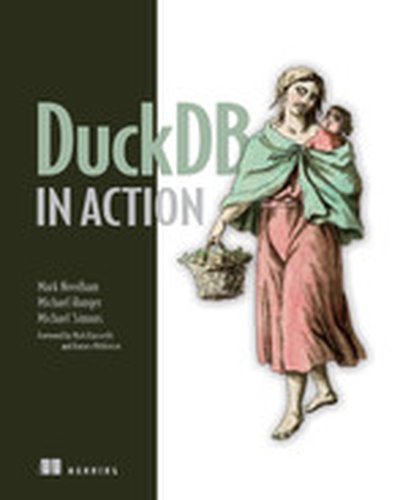
DuckDB in Action

Dive into DuckDB and start processing gigabytes of data with ease—all with no data warehouse. DuckDB is a cutting-edge SQL database that makes it incredibly easy to analyze big data sets right from your laptop. In DuckDB in Action you’ll learn everything you need to know to get the most out of this awesome tool, keep your data secure on prem, and save you hundreds on your cloud bill. From data ingestion to advanced data pipelines, you’ll learn everything you need to get the most out of DuckDB—all through hands-on examples. Open up DuckDB in Action and learn how to: Read and process data from CSV, JSON and Parquet sources both locally and remote Write analytical SQL queries, including aggregations, common table expressions, window functions, special types of joins, and pivot tables Use DuckDB from Python, both with SQL and its "Relational"-API, interacting with databases but also data frames Prepare, ingest and query large datasets Build cloud data pipelines Extend DuckDB with custom functionality Pragmatic and comprehensive, DuckDB in Action introduces the DuckDB database and shows you how to use it to solve common data workflow problems. You won’t need to read through pages of documentation—you’ll learn as you work. Get to grips with DuckDB's unique SQL dialect, learning to seamlessly load, prepare, and analyze data using SQL queries. Extend DuckDB with both Python and built-in tools such as MotherDuck, and gain practical insights into building robust and automated data pipelines. About the Technology DuckDB makes data analytics fast and fun! You don’t need to set up a Spark or run a cloud data warehouse just to process a few hundred gigabytes of data. DuckDB is easily embeddable in any data analytics application, runs on a laptop, and processes data from almost any source, including JSON, CSV, Parquet, SQLite and Postgres. About the Book DuckDB in Action guides you example-by-example from setup, through your first SQL query, to advanced topics like building data pipelines and embedding DuckDB as a local data store for a Streamlit web app. You’ll explore DuckDB’s handy SQL extensions, get to grips with aggregation, analysis, and data without persistence, and use Python to customize DuckDB. A hands-on project accompanies each new topic, so you can see DuckDB in action. What's Inside Prepare, ingest and query large datasets Build cloud data pipelines Extend DuckDB with custom functionality Fast-paced SQL recap: From simple queries to advanced analytics About the Reader For data pros comfortable with Python and CLI tools. About the Authors Mark Needham is a blogger and video creator at @‌LearnDataWithMark. Michael Hunger leads product innovation for the Neo4j graph database. Michael Simons is a Java Champion, author, and Engineer at Neo4j. Quotes I use DuckDB every day, and I still learned a lot about how DuckDB makes things that are hard in most databases easy! - Jordan Tigani, Founder, MotherDuck An excellent resource! Unlocks possibilities for storing, processing, analyzing, and summarizing data at the edge using DuckDB. - Pramod Sadalage, Director, Thoughtworks Clear and accessible. A comprehensive resource for harnessing the power of DuckDB for both novices and experienced professionals. - Qiusheng Wu, Associate Professor, University of Tennessee Excellent! The book all we ducklings have been waiting for! - Gunnar Morling, Decodable

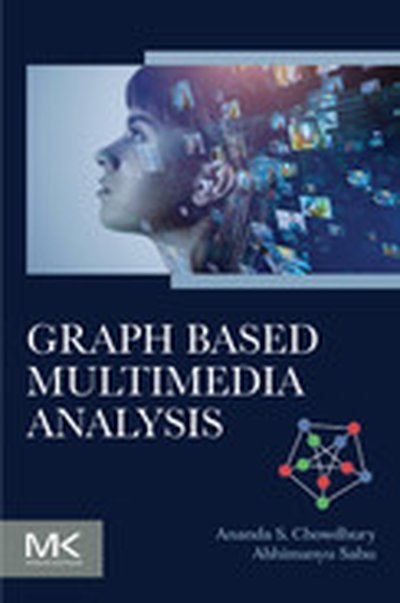
Graph Based Multimedia Analysis

Graph Based Multimedia Analysis applies concepts from graph theory to the problems of analyzing overabundant video data. Video data can be quite diverse: exocentric (captured by a standard camera) or egocentric (captured by a wearable device like Google Glass); of various durations (ranging from a few seconds to several hours); and could be from a single source or multiple sources. Efficient extraction of important information from such a large class of diverse video data can be overwhelming. The book, with its rich repertoire of theoretically elegant solutions, from graph theory in conjunction with deep learning, constrained optimization, and game theory, empowers the audience to achieve tasks like obtaining concise yet useful summaries and precisely recognizing single as well as multiple actions in a computationally efficient manner. The book provides a unique treatise on topics like egocentric video analysis and scalable video processing. Addresses a number of challenging state-of-the-art problems in multimedia analysis like summarization, co-summarization, and action recognition Handles a wide class of video with different genres, durations, and numbers Applies a class of theoretically rich algorithms from the discipline of graph theory, in conjunction with deep learning, constrained optimization and game theory Includes thorough complexity analyses of the proposed solutions, and an appendix containing implementable source codes

Microsoft Power BI Cookbook - Third Edition

Discover how to harness the full potential of Microsoft Power BI in "Microsoft Power BI Cookbook". Through its recipe-based structure, this book offers step-by-step guidance on mastering data integration, crafting impactful visualizations, and utilizing Power BI's latest features like Hybrid tables and enhanced scorecards. This edition equips you with the skills to transform raw data into actionable insights for your organization. What this Book will help me do Turn business data into actionable insights by utilizing Microsoft Data Fabric effectively. Create engaging and clear visualizations through Hybrid tables and advanced reporting techniques. Gain competence in managing real-time data accuracy and implementing dynamic analytics in Power BI. Ensure robust data compliance and governance integrated seamlessly into business reporting workflows. Leverage cutting-edge Power BI features to prepare for emerging trends in data intelligence. Author(s) Greg Deckler and None Powell, both esteemed professionals in the Power BI and data analytics domain, co-author this comprehensive guide. With decades of experience, they bring vast knowledge and practical skills to this work, presenting it in a structured and approachable manner. Both are dedicated to empowering learners of all levels to excel with Power BI. Who is it for? This book is ideal for professionals like data analysts, business intelligence developers, and IT specialists focused on reporting. It suits readers with a basic familiarity with Power BI, looking to deepen their understanding. If you aim to stay current with Power BI's most modern practices and features, this book will help you achieve that. Additionally, it supports those aiming to enhance business decision-making through better visualizations and advanced analysis.

Bio-Inspired Optimization for Medical Data Mining

This book is a comprehensive exploration of bio-inspired optimization techniques and their potential applications in healthcare. Bio-Inspired Optimization for Medical Data Mining is a groundbreaking book that delves into the convergence of nature’s ingenious algorithms and cutting-edge healthcare technology. Through a comprehensive exploration of state-of-the-art algorithms and practical case studies, readers gain unparalleled insights into optimizing medical data processing, enabling more precise diagnosis, optimizing treatment plans, and ultimately advancing the field of healthcare. Organized into 15 chapters, readers learn about the theoretical foundation of pragmatic implementation strategies and actionable advice. In addition, it addresses current developments in molecular subtyping and how they can enhance clinical care. By bridging the gap between cutting-edge technology and critical healthcare challenges, this book is a pivotal contribution, providing a roadmap for leveraging nature-inspired algorithms. In this book, the reader will discover Cutting-edge bio-inspired algorithms designed to optimize medical data processing, providing efficient and accurate solutions for complex healthcare challenges; How bio-inspired optimization can fine-tune diagnostic accuracy, leading to better patient outcomes and improved medical decision-making; How bio-inspired optimization propels healthcare into a new era, unlocking transformative solutions for medical data analysis; Practical insights and actionable advice on implementing bio-inspired optimization techniques and equipping effective real-world medical data scenarios; Compelling case studies illustrating how bio-inspired optimization has made a significant impact in the medical field, inspiring similar success stories. Audience This book is designed for a wide-ranging audience, including medical professionals, healthcare researchers, data scientists, and technology enthusiasts.