talk-data.com talk-data.com

Topic

ai-ml

111

tagged

Activity Trend

1 peak/qtr
2020-Q1 2026-Q1

Activities

111 activities · Newest first

Artificial Intelligence and Machine Learning in Drug Design and Development

The book is a comprehensive guide that explores the use of artificial intelligence and machine learning in drug discovery and development covering a range of topics, including the use of molecular modeling, docking, identifying targets, selecting compounds, and optimizing drugs. The intersection of Artificial Intelligence (AI) and Machine Learning (ML) within the field of drug design and development represents a pivotal moment in the history of healthcare and pharmaceuticals. The remarkable synergy between cutting-edge technology and the life sciences has ushered in a new era of possibilities, offering unprecedented opportunities, formidable challenges, and a tantalizing glimpse into the future of medicine. AI can be applied to all the key areas of the pharmaceutical industry, such as drug discovery and development, drug repurposing, and improving productivity within a short period. Contemporary methods have shown promising results in facilitating the discovery of drugs to target different diseases. Moreover, AI helps in predicting the efficacy and safety of molecules and gives researchers a much broader chemical pallet for the selection of the best molecules for drug testing and delivery. In this context, drug repurposing is another important topic where AI can have a substantial impact. With the vast amount of clinical and pharmaceutical data available to date, AI algorithms find suitable drugs that can be repurposed for alternative use in medicine. This book is a comprehensive exploration of this dynamic and rapidly evolving field. In an era where precision and efficiency are paramount in drug discovery, AI and ML have emerged as transformative tools, reshaping the way we identify, design, and develop pharmaceuticals. This book is a testament to the profound impact these technologies have had and will continue to have on the pharmaceutical industry, healthcare, and ultimately, patient well-being. The editors of this volume have assembled a distinguished group of experts, researchers, and thought leaders from both the AI, ML, and pharmaceutical domains. Their collective knowledge and insights illuminate the multifaceted landscape of AI and ML in drug design and development, offering a roadmap for navigating its complexities and harnessing its potential. In each section, readers will find a rich tapestry of knowledge, case studies, and expert opinions, providing a 360-degree view of AI and ML’s role in drug design and development. Whether you are a researcher, scientist, industry professional, policymaker, or simply curious about the future of medicine, this book offers 19 state-of-the-art chapters providing valuable insights and a compass to navigate the exciting journey ahead. Audience The book is a valuable resource for a wide range of professionals in the pharmaceutical and allied industries including researchers, scientists, engineers, and laboratory workers in the field of drug discovery and development, who want to learn about the latest techniques in machine learning and AI, as well as information technology professionals who are interested in the application of machine learning and artificial intelligence in drug development.
Google Machine Learning and Generative AI for Solutions Architects

This book teaches solutions architects how to effectively design and implement AI/ML solutions utilizing Google Cloud services. Through detailed explanations, examples, and hands-on exercises, you will understand essential AI/ML concepts, tools, and best practices while building advanced applications. What this Book will help me do Build robust AI/ML solutions using Google Cloud tools such as TensorFlow, BigQuery, and Vertex AI. Prepare and process data efficiently for machine learning workloads. Establish and apply an MLOps framework for automating ML model lifecycle management. Implement cutting-edge generative AI solutions using best practices. Address common challenges in AI/ML projects with insights from expert solutions. Author(s) Kieran Kavanagh is a seasoned principal architect with nearly twenty years of experience in the tech industry. He has successfully led teams in designing, planning, and governing enterprise cloud strategies, and his wealth of experience is distilled into the practical approaches and insights in this book. Who is it for? This book is ideal for IT professionals aspiring to design AI/ML solutions, particularly in the role of solutions architects. It assumes a basic knowledge of Python and foundational AI/ML concepts but is suitable for both beginners and seasoned practitioners. If you're looking to deepen your understanding of state-of-the-art AI/ML applications on Google Cloud, this resource will guide you.

Prompt Engineering for Generative AI

Large language models (LLMs) and diffusion models such as ChatGPT and Stable Diffusion have unprecedented potential. Because they have been trained on all the public text and images on the internet, they can make useful contributions to a wide variety of tasks. And with the barrier to entry greatly reduced today, practically any developer can harness LLMs and diffusion models to tackle problems previously unsuitable for automation. With this book, you'll gain a solid foundation in generative AI, including how to apply these models in practice. When first integrating LLMs and diffusion models into their workflows, most developers struggle to coax reliable enough results from them to use in automated systems. Authors James Phoenix and Mike Taylor show you how a set of principles called prompt engineering can enable you to work effectively with AI. Learn how to empower AI to work for you. This book explains: The structure of the interaction chain of your program's AI model and the fine-grained steps in between How AI model requests arise from transforming the application problem into a document completion problem in the model training domain The influence of LLM and diffusion model architecture—and how to best interact with it How these principles apply in practice in the domains of natural language processing, text and image generation, and code

Math and Architectures of Deep Learning

Shine a spotlight into the deep learning “black box”. This comprehensive and detailed guide reveals the mathematical and architectural concepts behind deep learning models, so you can customize, maintain, and explain them more effectively. Inside Math and Architectures of Deep Learning you will find: Math, theory, and programming principles side by side Linear algebra, vector calculus and multivariate statistics for deep learning The structure of neural networks Implementing deep learning architectures with Python and PyTorch Troubleshooting underperforming models Working code samples in downloadable Jupyter notebooks The mathematical paradigms behind deep learning models typically begin as hard-to-read academic papers that leave engineers in the dark about how those models actually function. Math and Architectures of Deep Learning bridges the gap between theory and practice, laying out the math of deep learning side by side with practical implementations in Python and PyTorch. Written by deep learning expert Krishnendu Chaudhury, you’ll peer inside the “black box” to understand how your code is working, and learn to comprehend cutting-edge research you can turn into practical applications. About the Technology Discover what’s going on inside the black box! To work with deep learning you’ll have to choose the right model, train it, preprocess your data, evaluate performance and accuracy, and deal with uncertainty and variability in the outputs of a deployed solution. This book takes you systematically through the core mathematical concepts you’ll need as a working data scientist: vector calculus, linear algebra, and Bayesian inference, all from a deep learning perspective. About the Book Math and Architectures of Deep Learning teaches the math, theory, and programming principles of deep learning models laid out side by side, and then puts them into practice with well-annotated Python code. You’ll progress from algebra, calculus, and statistics all the way to state-of-the-art DL architectures taken from the latest research. What's Inside The core design principles of neural networks Implementing deep learning with Python and PyTorch Regularizing and optimizing underperforming models About the Reader Readers need to know Python and the basics of algebra and calculus. About the Author Krishnendu Chaudhury is co-founder and CTO of the AI startup Drishti Technologies. He previously spent a decade each at Google and Adobe. Quotes Machine learning uses a cocktail of linear algebra, vector calculus, statistical analysis, and topology to represent, visualize, and manipulate points in high dimensional spaces. This book builds that foundation in an intuitive way–along with the PyTorch code you need to be a successful deep learning practitioner. - Vineet Gupta, Google Research A thorough explanation of the mathematics behind deep learning! - Grigory Sapunov, Intento Deep learning in its full glory, with all its mathematical details. This is the book! - Atul Saurav, Genworth Financial

Artificial Intelligence: Beyond Classical AI

Pearson’s Artificial Intelligence encompasses a comprehensive text on the fundamental principles and concepts of Artificial Intelligence—a new-age technology that fuels the much-coveted ‘Industry 4.0’. Presented in lucid English, this book covers all the basic concepts, enriched with latest examples. It also discusses all the major components of AI, such as Neural Networks, Natural Language Processing, Reinforcement Learning, Machine Learning, Deep Learning and Computer Vision. The book is a deliberation of classical as well modern AI techniques and related technologies that provides readers with an overall knowledge and understanding of AI in present-day context.

Machine Learning Q and AI

If you're ready to venture beyond introductory concepts and dig deeper into machine learning, deep learning, and AI, the question-and-answer format of Machine Learning Q and AI will make things fast and easy for you, without a lot of mucking about. Born out of questions often fielded by author Sebastian Raschka, the direct, no-nonsense approach of this book makes advanced topics more accessible and genuinely engaging. Each brief, self-contained chapter journeys through a fundamental question in AI, unraveling it with clear explanations, diagrams, and hands-on exercises. WHAT'S INSIDE: FOCUSED CHAPTERS: Key questions in AI are answered concisely, and complex ideas are broken down into easily digestible parts. WIDE RANGE OF TOPICS: Raschka covers topics ranging from neural network architectures and model evaluation to computer vision and natural language processing. PRACTICAL APPLICATIONS: Learn techniques for enhancing model performance, fine-tuning large models, and more. You'll also explore how to: Manage the various sources of randomness in neural network training Differentiate between encoder and decoder architectures in large language models Reduce overfitting through data and model modifications Construct confidence intervals for classifiers and optimize models with limited labeled data Choose between different multi-GPU training paradigms and different types of generative AI models Understand performance metrics for natural language processing Make sense of the inductive biases in vision transformers If you've been on the hunt for the perfect resource to elevate your understanding of machine learning, Machine Learning Q and AI will make it easy for you to painlessly advance your knowledge beyond the basics.

AI-Assisted Programming

Get practical advice on how to leverage AI development tools for all stages of code creation, including requirements, planning, design, coding, debugging, testing, and documentation. With this book, beginners and experienced developers alike will learn how to use a wide range of tools, from general-purpose LLMs (ChatGPT, Gemini, and Claude) to code-specific systems (GitHub Copilot, Tabnine, Cursor, and Amazon CodeWhisperer). You'll also learn about more specialized generative AI tools for tasks such as text-to-image creation. Author Tom Taulli provides a methodology for modular programming that aligns effectively with the way prompts create AI-generated code. This guide also describes the best ways of using general purpose LLMs to learn a programming language, explain code, or convert code from one language to another. This book examines: The core capabilities of AI-based development tools Pros, cons, and use cases of popular systems such as GitHub Copilot and Amazon CodeWhisperer Ways to use ChatGPT, Gemini, Claude, and other generic LLMs for coding Using AI development tools for the software development lifecycle, including requirements, planning, coding, debugging, and testing Prompt engineering for development Using AI-assisted programming for tedious tasks like creating regular expressions, starter code, object-oriented programming classes, and GitHub Actions How to use AI-based low-code and no-code tools, such as to create professional UIs

Applying Artificial Intelligence in Cybersecurity Analytics and Cyber Threat Detection

APPLYING ARTIFICIAL INTELLIGENCE IN CYBERSECURITY ANALYTICS AND CYBER THREAT DETECTION Comprehensive resource providing strategic defense mechanisms for malware, handling cybercrime, and identifying loopholes using artificial intelligence (AI) and machine learning (ML) Applying Artificial Intelligence in Cybersecurity Analytics and Cyber Threat Detection is a comprehensive look at state-of-the-art theory and practical guidelines pertaining to the subject, showcasing recent innovations, emerging trends, and concerns as well as applied challenges encountered, and solutions adopted in the fields of cybersecurity using analytics and machine learning. The text clearly explains theoretical aspects, framework, system architecture, analysis and design, implementation, validation, and tools and techniques of data science and machine learning to detect and prevent cyber threats. Using AI and ML approaches, the book offers strategic defense mechanisms for addressing malware, cybercrime, and system vulnerabilities. It also provides tools and techniques that can be applied by professional analysts to safely analyze, debug, and disassemble any malicious software they encounter. With contributions from qualified authors with significant experience in the field, Applying Artificial Intelligence in Cybersecurity Analytics and Cyber Threat Detection explores topics such as: Cybersecurity tools originating from computational statistics literature and pure mathematics, such as nonparametric probability density estimation, graph-based manifold learning, and topological data analysis Applications of AI to penetration testing, malware, data privacy, intrusion detection system (IDS), and social engineering How AI automation addresses various security challenges in daily workflows and how to perform automated analyses to proactively mitigate threats Offensive technologies grouped together and analyzed at a higher level from both an offensive and defensive standpoint Providing detailed coverage of a rapidly expanding field, Applying Artificial Intelligence in Cybersecurity Analytics and Cyber Threat Detection is an essential resource for a wide variety of researchers, scientists, and professionals involved in fields that intersect with cybersecurity, artificial intelligence, and machine learning.

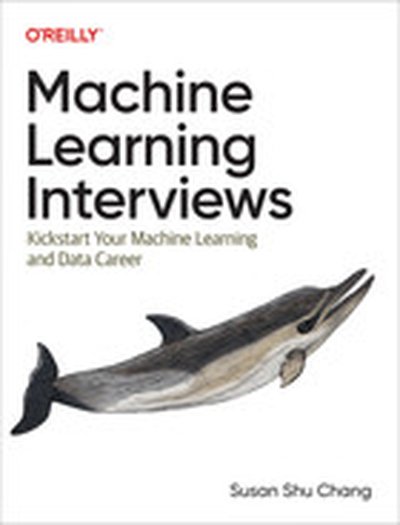
Machine Learning Interviews

As tech products become more prevalent today, the demand for machine learning professionals continues to grow. But the responsibilities and skill sets required of ML professionals still vary drastically from company to company, making the interview process difficult to predict. In this guide, data science leader Susan Shu Chang shows you how to tackle the ML hiring process. Having served as principal data scientist in several companies, Chang has considerable experience as both ML interviewer and interviewee. She'll take you through the highly selective recruitment process by sharing hard-won lessons she learned along the way. You'll quickly understand how to successfully navigate your way through typical ML interviews. This guide shows you how to: Explore various machine learning roles, including ML engineer, applied scientist, data scientist, and other positions Assess your interests and skills before deciding which ML role(s) to pursue Evaluate your current skills and close any gaps that may prevent you from succeeding in the interview process Acquire the skill set necessary for each machine learning role Ace ML interview topics, including coding assessments, statistics and machine learning theory, and behavioral questions Prepare for interviews in statistics and machine learning theory by studying common interview questions

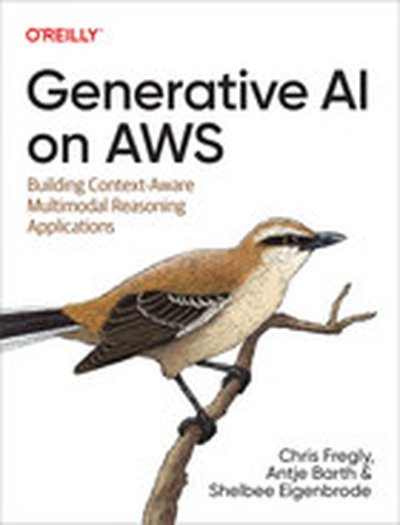
Generative AI on AWS

Companies today are moving rapidly to integrate generative AI into their products and services. But there's a great deal of hype (and misunderstanding) about the impact and promise of this technology. With this book, Chris Fregly, Antje Barth, and Shelbee Eigenbrode from AWS help CTOs, ML practitioners, application developers, business analysts, data engineers, and data scientists find practical ways to use this exciting new technology. You'll learn the generative AI project life cycle including use case definition, model selection, model fine-tuning, retrieval-augmented generation, reinforcement learning from human feedback, and model quantization, optimization, and deployment. And you'll explore different types of models including large language models (LLMs) and multimodal models such as Stable Diffusion for generating images and Flamingo/IDEFICS for answering questions about images. Apply generative AI to your business use cases Determine which generative AI models are best suited to your task Perform prompt engineering and in-context learning Fine-tune generative AI models on your datasets with low-rank adaptation (LoRA) Align generative AI models to human values with reinforcement learning from human feedback (RLHF) Augment your model with retrieval-augmented generation (RAG) Explore libraries such as LangChain and ReAct to develop agents and actions Build generative AI applications with Amazon Bedrock

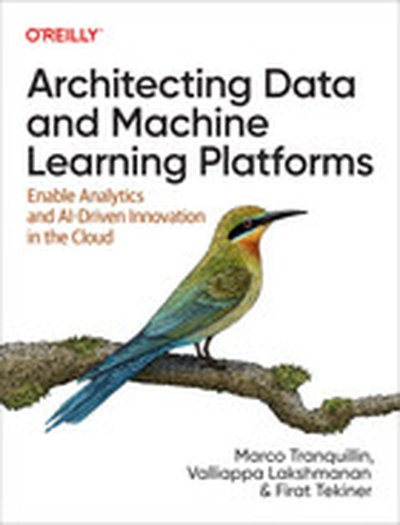
Architecting Data and Machine Learning Platforms

All cloud architects need to know how to build data platforms that enable businesses to make data-driven decisions and deliver enterprise-wide intelligence in a fast and efficient way. This handbook shows you how to design, build, and modernize cloud native data and machine learning platforms using AWS, Azure, Google Cloud, and multicloud tools like Snowflake and Databricks. Authors Marco Tranquillin, Valliappa Lakshmanan, and Firat Tekiner cover the entire data lifecycle from ingestion to activation in a cloud environment using real-world enterprise architectures. You'll learn how to transform, secure, and modernize familiar solutions like data warehouses and data lakes, and you'll be able to leverage recent AI/ML patterns to get accurate and quicker insights to drive competitive advantage. You'll learn how to: Design a modern and secure cloud native or hybrid data analytics and machine learning platform Accelerate data-led innovation by consolidating enterprise data in a governed, scalable, and resilient data platform Democratize access to enterprise data and govern how business teams extract insights and build AI/ML capabilities Enable your business to make decisions in real time using streaming pipelines Build an MLOps platform to move to a predictive and prescriptive analytics approach

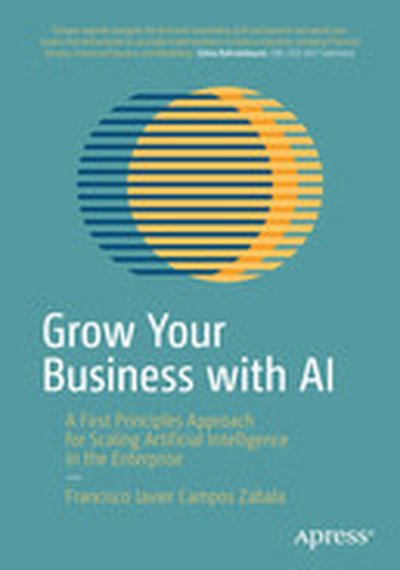
Grow Your Business with AI: A First Principles Approach for Scaling Artificial Intelligence in the Enterprise

Leverage the power of Artificial Intelligence (AI) to drive the growth and success of your organization. This book thoroughly explores the reasons why it is so hard to implement AI, and highlights the need to reconcile the motivations and goals of two very different groups of people, business-minded and technical-minded. Divided into four main parts (First Principles, The Why, The What, The How), you'll review case studies and examples from companies that have successfully implemented AI. Part 1 provides a comprehensive overview of the First Principles approach and its basic conventions. Part 2 provides an in-depth look at the current state of AI and why it is increasingly important to businesses of all sizes. Part 3 delves into the key concepts and technologies of AI. Part 4 shares practical guidance and actionable steps for businesses looking to implement AI. Grow Your Business with AI is a must-read for anyone looking to understand and harness the power of AI for business growth and to stay ahead of the curve. What You'll Learn Review the key concepts and technologies of AI, including machine learning, natural language processing, and computer vision Apply the benefits of AI, including increased efficiency, improved decision-making, and new revenue streams in different industries Integrate AI into existing systems and processes. Who This Book Is For Entrepreneurs, business leaders, and professionals looking to leverage the power of AI to drive growth and success for their organizations.

Low-Code AI

Take a data-first and use-case-driven approach with Low-Code AI to understand machine learning and deep learning concepts. This hands-on guide presents three problem-focused ways to learn no-code ML using AutoML, low-code using BigQuery ML, and custom code using scikit-learn and Keras. In each case, you'll learn key ML concepts by using real-world datasets with realistic problems. Business and data analysts get a project-based introduction to ML/AI using a detailed, data-driven approach: loading and analyzing data; feeding data into an ML model; building, training, and testing; and deploying the model into production. Authors Michael Abel and Gwendolyn Stripling show you how to build machine learning models for retail, healthcare, financial services, energy, and telecommunications. You'll learn how to: Distinguish between structured and unstructured data and the challenges they present Visualize and analyze data Preprocess data for input into a machine learning model Differentiate between the regression and classification supervised learning models Compare different ML model types and architectures, from no code to low code to custom training Design, implement, and tune ML models Export data to a GitHub repository for data management and governance

Machine Learning for High-Risk Applications

The past decade has witnessed the broad adoption of artificial intelligence and machine learning (AI/ML) technologies. However, a lack of oversight in their widespread implementation has resulted in some incidents and harmful outcomes that could have been avoided with proper risk management. Before we can realize AI/ML's true benefit, practitioners must understand how to mitigate its risks. This book describes approaches to responsible AI—a holistic framework for improving AI/ML technology, business processes, and cultural competencies that builds on best practices in risk management, cybersecurity, data privacy, and applied social science. Authors Patrick Hall, James Curtis, and Parul Pandey created this guide for data scientists who want to improve real-world AI/ML system outcomes for organizations, consumers, and the public. Learn technical approaches for responsible AI across explainability, model validation and debugging, bias management, data privacy, and ML security Learn how to create a successful and impactful AI risk management practice Get a basic guide to existing standards, laws, and assessments for adopting AI technologies, including the new NIST AI Risk Management Framework Engage with interactive resources on GitHub and Colab

Essential Math for AI

Companies are scrambling to integrate AI into their systems and operations. But to build truly successful solutions, you need a firm grasp of the underlying mathematics. This accessible guide walks you through the math necessary to thrive in the AI field such as focusing on real-world applications rather than dense academic theory. Engineers, data scientists, and students alike will examine mathematical topics critical for AI--including regression, neural networks, optimization, backpropagation, convolution, Markov chains, and more--through popular applications such as computer vision, natural language processing, and automated systems. And supplementary Jupyter notebooks shed light on examples with Python code and visualizations. Whether you're just beginning your career or have years of experience, this book gives you the foundation necessary to dive deeper in the field. Understand the underlying mathematics powering AI systems, including generative adversarial networks, random graphs, large random matrices, mathematical logic, optimal control, and more Learn how to adapt mathematical methods to different applications from completely different fields Gain the mathematical fluency to interpret and explain how AI systems arrive at their decisions

Applied Machine Learning and AI for Engineers

While many introductory guides to AI are calculus books in disguise, this one mostly eschews the math. Instead, author Jeff Prosise helps engineers and software developers build an intuitive understanding of AI to solve business problems. Need to create a system to detect the sounds of illegal logging in the rainforest, analyze text for sentiment, or predict early failures in rotating machinery? This practical book teaches you the skills necessary to put AI and machine learning to work at your company. Applied Machine Learning and AI for Engineers provides examples and illustrations from the AI and ML course Prosise teaches at companies and research institutions worldwide. There's no fluff and no scary equations—just a fast start for engineers and software developers, complete with hands-on examples. This book helps you: Learn what machine learning and deep learning are and what they can accomplish Understand how popular learning algorithms work and when to apply them Build machine learning models in Python with Scikit-Learn, and neural networks with Keras and TensorFlow Train and score regression models and binary and multiclass classification models Build facial recognition models and object detection models Build language models that respond to natural-language queries and translate text to other languages Use Cognitive Services to infuse AI into the apps that you write

Intelligent Document Processing with AWS AI/ML

Dive into the world of Intelligent Document Processing (IDP) with the power of AWS AI/ML. This book guides you from understanding the challenges of document processing to building effective IDP pipelines using advanced AWS APIs and Python. Through hands-on projects and real-world applications, this book will equip you with the skills needed to automate and unlock value from your document workflows. What this Book will help me do Understand the stages and challenges of the Intelligent Document Processing pipeline. Learn how to automate document processing workflow using AWS AI services. Acquire practical insights into Python libraries for document processing. Discover industry applications including healthcare and financial sectors. Develop the skill to solve real-world IDP problems with AI/ML. Author(s) Sonali Sahu is a seasoned AI/ML consultant and author with a focus on innovative technologies for industry problems. With extensive hands-on project experience and deep expertise in AWS AI/ML tools, she bridges the gap between theory and application. Her writing is approachable and practical, aimed to empower technical practitioners to excel. Who is it for? This book is aimed at developers, data scientists, and technical professionals wanting to leverage AWS AI/ML for document processing. Aimed at intermediate-level professionals, the content helps those with a working knowledge of Python or AI tools to enhance their skills. Whether you're in healthcare, finance, or a similar field, this book equips you to address document-centric problems using cutting-edge solutions.