talk-data.com talk-data.com

Topic

ai-ml

111

tagged

Activity Trend

1 peak/qtr
2020-Q1 2026-Q1

Activities

111 activities · Newest first

Designing Machine Learning Systems

Machine learning systems are both complex and unique. Complex because they consist of many different components and involve many different stakeholders. Unique because they're data dependent, with data varying wildly from one use case to the next. In this book, you'll learn a holistic approach to designing ML systems that are reliable, scalable, maintainable, and adaptive to changing environments and business requirements. Author Chip Huyen, co-founder of Claypot AI, considers each design decision--such as how to process and create training data, which features to use, how often to retrain models, and what to monitor--in the context of how it can help your system as a whole achieve its objectives. The iterative framework in this book uses actual case studies backed by ample references. This book will help you tackle scenarios such as: Engineering data and choosing the right metrics to solve a business problem Automating the process for continually developing, evaluating, deploying, and updating models Developing a monitoring system to quickly detect and address issues your models might encounter in production Architecting an ML platform that serves across use cases Developing responsible ML systems
Artificial Intelligence Programming with Python

A hands-on roadmap to using Python for artificial intelligence programming In Practical Artificial Intelligence Programming with Python: From Zero to Hero, veteran educator and photophysicist Dr. Perry Xiao delivers a thorough introduction to one of the most exciting areas of computer science in modern history. The book demystifies artificial intelligence and teaches readers its fundamentals from scratch in simple and plain language and with illustrative code examples. Divided into three parts, the author explains artificial intelligence generally, machine learning, and deep learning. It tackles a wide variety of useful topics, from classification and regression in machine learning to generative adversarial networks. He also includes: Fulsome introductions to MATLAB, Python, AI, machine learning, and deep learning Expansive discussions on supervised and unsupervised machine learning, as well as semi-supervised learning Practical AI and Python “cheat sheet” quick references This hands-on AI programming guide is perfect for anyone with a basic knowledge of programming—including familiarity with variables, arrays, loops, if-else statements, and file input and output—who seeks to understand foundational concepts in AI and AI development.

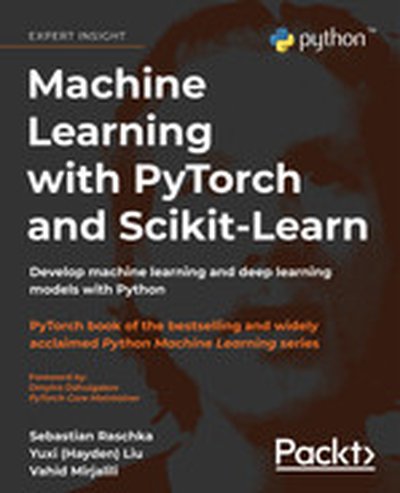
Machine Learning with PyTorch and Scikit-Learn

Machine Learning with PyTorch and Scikit-Learn is a comprehensive resource for developers looking to dive deep into the world of machine learning. It introduces foundational concepts alongside practical implementations using Python and leading libraries such as PyTorch and Scikit-Learn. With well-explained techniques and real-world examples, you'll gain the knowledge needed to design, build, and optimize machine learning systems. What this Book will help me do Understand and apply core concepts in machine learning using Scikit-Learn. Develop and deploy deep learning models using PyTorch efficiently. Configure and optimize neural networks, transformers, and GANs for various applications. Handle and preprocess data effectively for building robust models. Follow best practices for model evaluation, tuning, and deployment. Author(s) Sebastian Raschka, Yuxi (Hayden) Liu, and Vahid Mirjalili are experienced professionals in the field of machine learning with extensive teaching and writing backgrounds. They bring their expertise in Python and machine learning frameworks like PyTorch to provide both theoretical and practical insights helpful for learners. Their combined knowledge ensures a thorough and engaging learning experience suited for aspiring data scientists. Who is it for? This book is tailored for Python developers and data scientists eager to master machine learning and deep learning techniques. If you're familiar with Python programming and possess fundamental knowledge of calculus and linear algebra, you will find this book incredibly insightful. Whether you're entering the field or seeking to enhance your expertise, this resource caters to your professional growth in building advanced machine learning systems.

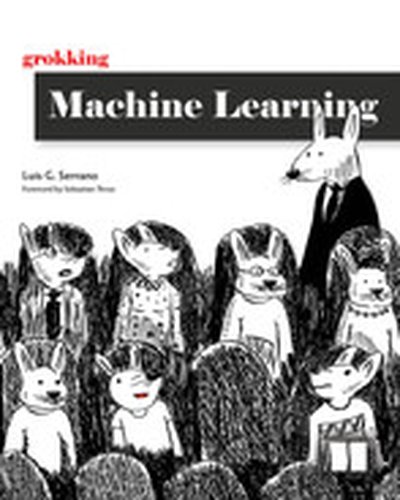
Grokking Machine Learning

Discover valuable machine learning techniques you can understand and apply using just high-school math. In Grokking Machine Learning you will learn: Supervised algorithms for classifying and splitting data Methods for cleaning and simplifying data Machine learning packages and tools Neural networks and ensemble methods for complex datasets Grokking Machine Learning teaches you how to apply ML to your projects using only standard Python code and high school-level math. No specialist knowledge is required to tackle the hands-on exercises using Python and readily available machine learning tools. Packed with easy-to-follow Python-based exercises and mini-projects, this book sets you on the path to becoming a machine learning expert. About the Technology Discover powerful machine learning techniques you can understand and apply using only high school math! Put simply, machine learning is a set of techniques for data analysis based on algorithms that deliver better results as you give them more data. ML powers many cutting-edge technologies, such as recommendation systems, facial recognition software, smart speakers, and even self-driving cars. This unique book introduces the core concepts of machine learning, using relatable examples, engaging exercises, and crisp illustrations. About the Book Grokking Machine Learning presents machine learning algorithms and techniques in a way that anyone can understand. This book skips the confused academic jargon and offers clear explanations that require only basic algebra. As you go, you’ll build interesting projects with Python, including models for spam detection and image recognition. You’ll also pick up practical skills for cleaning and preparing data. What's Inside Supervised algorithms for classifying and splitting data Methods for cleaning and simplifying data Machine learning packages and tools Neural networks and ensemble methods for complex datasets About the Reader For readers who know basic Python. No machine learning knowledge necessary. About the Author Luis G. Serrano is a research scientist in quantum artificial intelligence. Previously, he was a Machine Learning Engineer at Google and Lead Artificial Intelligence Educator at Apple. Quotes Did you think machine learning is complicated and hard to master? It’s not! Read this book! Serrano demystifies some of the best-held secrets of the machine learning society. - Sebastian Thrun, Founder, Udacity The first step to take on your machine learning journey. - Millad Dagdoni, Norwegian Labour and Welfare Administration A nicely written guided introduction, especially for those who want to code but feel shaky in their mathematics. - Erik D. Sapper, California Polytechnic State University The most approachable introduction to machine learning I’ve had the pleasure to read in recent years. Highly recommended. - Kay Engelhardt, devstats

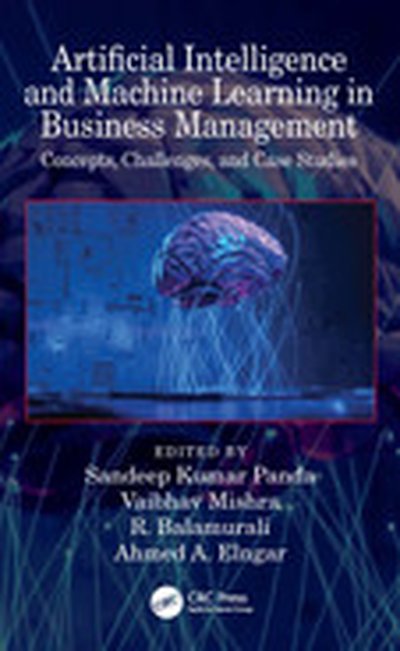
Artificial Intelligence and Machine Learning in Business Management

The focus of this book is to introduce Artificial Intelligence (AI) and Machine Learning (ML) technologies into the context of Business Management. The book gives insights into the implementation and impact of AI and ML to business leaders, managers, technology developers, and implementers.

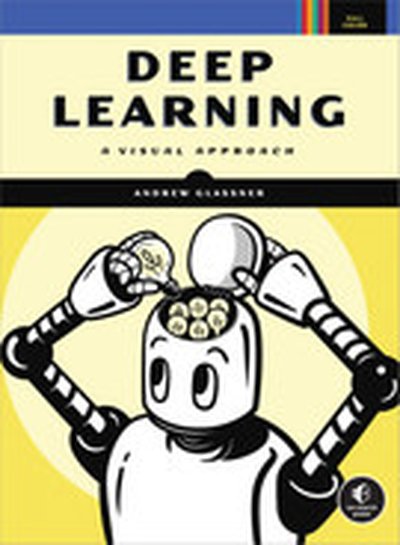
Deep Learning

Ever since computers began beating us at chess, they've been getting better at a wide range of human activities, from writing songs and generating news articles to helping doctors provide healthcare. Deep learning is the source of many of these breakthroughs, and its remarkable ability to find patterns hiding in data has made it the fastest growing field in artificial intelligence (AI). Digital assistants on our phones use deep learning to understand and respond intelligently to voice commands; automotive systems use it to safely navigate road hazards; online platforms use it to deliver personalized suggestions for movies and books – the possibilities are endless. Deep Learning: A Visual Approach is for anyone who wants to understand this fascinating field in depth, but without any of the advanced math and programming usually required to grasp its internals. If you want to know how these tools work, and use them yourself, the answers are all within these pages. And, if you’re ready to write your own programs, there are also plenty of supplemental Python notebooks in the accompanying Github repository to get you going. The book’s conversational style, extensive color illustrations, illuminating analogies, and real-world examples expertly explain the key concepts in deep learning, including: •How text generators create novel stories and articles •How deep learning systems learn to play and win at human games •How image classification systems identify objects or people in a photo •How to think about probabilities in a way that’s useful to everyday life •How to use the machine learning techniques that form the core of modern AI Intellectual adventurers of all kinds can use the powerful ideas covered in Deep Learning: A Visual Approach to build intelligent systems that help us better understand the world and everyone who lives in it. It’s the future of AI, and this book allows you to fully envision it.

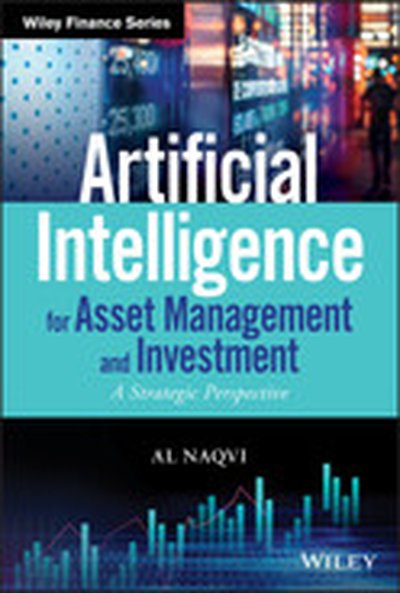
Artificial Intelligence for Asset Management and Investment

Make AI technology the backbone of your organization to compete in the Fintech era The rise of artificial intelligence is nothing short of a technological revolution. AI is poised to completely transform asset management and investment banking, yet its current application within the financial sector is limited and fragmented. Existing AI implementations tend to solve very narrow business issues, rather than serving as a powerful tech framework for next-generation finance. Artificial Intelligence for Asset Management and Investment provides a strategic viewpoint on how AI can be comprehensively integrated within investment finance, leading to evolved performance in compliance, management, customer service, and beyond. No other book on the market takes such a wide-ranging approach to using AI in asset management. With this guide, you’ll be able to build an asset management firm from the ground up—or revolutionize your existing firm—using artificial intelligence as the cornerstone and foundation. This is a must, because AI is quickly growing to be the single competitive factor for financial firms. With better AI comes better results. If you aren’t integrating AI in the strategic DNA of your firm, you’re at risk of being left behind. See how artificial intelligence can form the cornerstone of an integrated, strategic asset management framework Learn how to build AI into your organization to remain competitive in the world of Fintech Go beyond siloed AI implementations to reap even greater benefits Understand and overcome the governance and leadership challenges inherent in AI strategy Until now, it has been prohibitively difficult to map the high-tech world of AI onto complex and ever-changing financial markets. Artificial Intelligence for Asset Management and Investment makes this difficulty a thing of the past, providing you with a professional and accessible framework for setting up and running artificial intelligence in your financial operations.

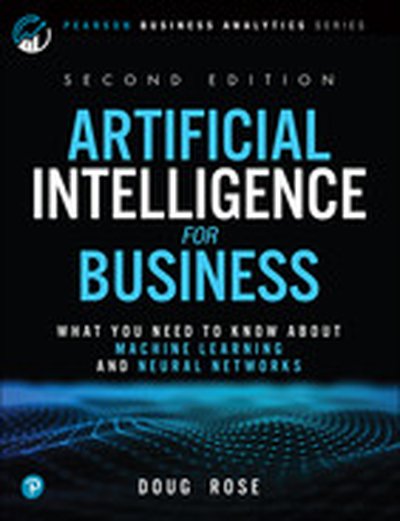
Artificial Intelligence for Business, 2nd Edition

Millions of non-technical professionals and leaders want to understand Artificial Intelligence (AI) and Machine Learning (ML) — whether to improve their businesses, be more effective citizens, consumers or policymakers, or just out of sheer curiosity. Until now, most books on the subject have either been too complicated and mathematical, or have simply avoided the big picture by focusing on the use of specific software libraries. In , Doug Rose bridges the gap, offering today’s most accessible and useful introduction to AI and ML technologies — and what they can and can’t do. Artificial Intelligence for Business Rose begins by tracing AI’s evolution from the early 1950s to the present, illuminating core ideas that still drive its development. Next, he explores recent innovations that have reinvigorated the field by providing the “big data” that makes machine learning so powerful – innovations such as GPS, social media and electronic transactions. Finally, he explains how today’s machines learn by combining powerful processing, advanced algorithms, and artificial neural networks that mimic the human brain. Throughout, he illustrates key concepts with practical examples that help you connect AI, ML, and neural networks to specific problems and solutions. Step by step, he systematically demystifies these powerful technologies, removing the fear, bewilderment, and advanced math — so you can understand the new possibilities they create, and start using them.

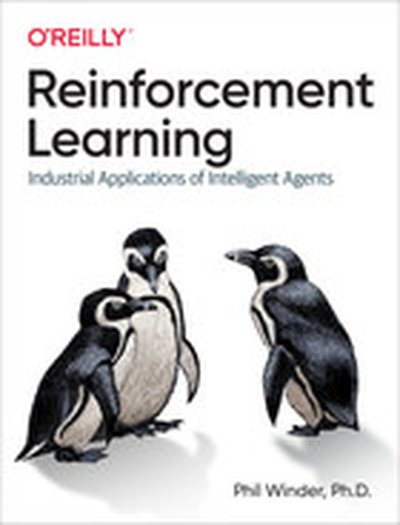
Reinforcement Learning

Reinforcement learning (RL) will deliver one of the biggest breakthroughs in AI over the next decade, enabling algorithms to learn from their environment to achieve arbitrary goals. This exciting development avoids constraints found in traditional machine learning (ML) algorithms. This practical book shows data science and AI professionals how to learn by reinforcement and enable a machine to learn by itself. Author Phil Winder of Winder Research covers everything from basic building blocks to state-of-the-art practices. You'll explore the current state of RL, focus on industrial applications, learn numerous algorithms, and benefit from dedicated chapters on deploying RL solutions to production. This is no cookbook; doesn't shy away from math and expects familiarity with ML. Learn what RL is and how the algorithms help solve problems Become grounded in RL fundamentals including Markov decision processes, dynamic programming, and temporal difference learning Dive deep into a range of value and policy gradient methods Apply advanced RL solutions such as meta learning, hierarchical learning, multi-agent, and imitation learning Understand cutting-edge deep RL algorithms including Rainbow, PPO, TD3, SAC, and more Get practical examples through the accompanying website

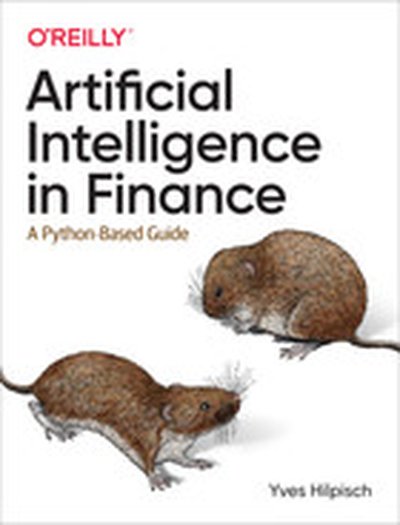
Artificial Intelligence in Finance

The widespread adoption of AI and machine learning is revolutionizing many industries today. Once these technologies are combined with the programmatic availability of historical and real-time financial data, the financial industry will also change fundamentally. With this practical book, you'll learn how to use AI and machine learning to discover statistical inefficiencies in financial markets and exploit them through algorithmic trading. Author Yves Hilpisch shows practitioners, students, and academics in both finance and data science practical ways to apply machine learning and deep learning algorithms to finance. Thanks to lots of self-contained Python examples, you'll be able to replicate all results and figures presented in the book. In five parts, this guide helps you: Learn central notions and algorithms from AI, including recent breakthroughs on the way to artificial general intelligence (AGI) and superintelligence (SI) Understand why data-driven finance, AI, and machine learning will have a lasting impact on financial theory and practice Apply neural networks and reinforcement learning to discover statistical inefficiencies in financial markets Identify and exploit economic inefficiencies through backtesting and algorithmic trading--the automated execution of trading strategies Understand how AI will influence the competitive dynamics in the financial industry and what the potential emergence of a financial singularity might bring about

AI and Machine Learning for Coders

If you're looking to make a career move from programmer to AI specialist, this is the ideal place to start. Based on Laurence Moroney's extremely successful AI courses, this introductory book provides a hands-on, code-first approach to help you build confidence while you learn key topics. You'll understand how to implement the most common scenarios in machine learning, such as computer vision, natural language processing (NLP), and sequence modeling for web, mobile, cloud, and embedded runtimes. Most books on machine learning begin with a daunting amount of advanced math. This guide is built on practical lessons that let you work directly with the code. You'll learn: How to build models with TensorFlow using skills that employers desire The basics of machine learning by working with code samples How to implement computer vision, including feature detection in images How to use NLP to tokenize and sequence words and sentences Methods for embedding models in Android and iOS How to serve models over the web and in the cloud with TensorFlow Serving

Artificial Intelligence Business: How you can profit from AI

Artificial Intelligence Business: How you can profit from AI is your essential guide to understanding how AI shapes the modern business landscape. This book guides you through the power of machine learning and artificial intelligence, revealing how these technologies can elevate businesses and impact society. What this Book will help me do Gain insight into how artificial intelligence can foster innovative cultures in enterprises. Learn key strategies for utilizing AI to accelerate start-up success. Understand the application of AI in fields such as manufacturing, logistics, and content generation. Discover how text and image generation technologies are transforming modern industries. Explore the societal and political implications of artificial intelligence. Author(s) Noelle Silver Russel and Przemek Chojecki bring extensive expertise in artificial intelligence and business strategy. Noelle is a renowned AI thought leader, with substantial experience in applying machine learning in corporate settings. Przemek is a successful entrepreneur and technologist passionate about innovation in AI. Together, they provide approachable yet informed insights tailored for practical learning. Who is it for? This book is perfect for professionals or enthusiasts with an interest in artificial intelligence and its applications in business. It's suitable for individuals in business roles seeking to enhance their understanding of AI's potential to transform enterprises. The content is designed for learners ranging from AI beginners to those with moderate knowledge looking to explore AI's practical uses. If you're keen on leveraging AI for strategic advantage, this book is for you.

Machine Learning for Algorithmic Trading - Second Edition

Explore the intersection of machine learning and algorithmic trading with "Machine Learning for Algorithmic Trading" by Stefan Jansen. This comprehensive guide walks you through applying predictive modeling and data analysis to uncover financial signals and build systematic trading strategies. By the end, you'll be equipped to design and implement machine learning-driven trading systems. What this Book will help me do Develop data-driven trading strategies using supervised, unsupervised, and reinforcement learning methods. Master techniques for extracting predictive features from market and alternative datasets. Gain expertise in backtesting and validating ML-based trading strategies in Python. Apply text analysis techniques like NLP to news articles and transcripts for financial insights. Optimize portfolio risk and returns using advanced Python libraries. Author(s) Stefan Jansen is a quantitative researcher and data scientist with extensive experience in developing algorithmic trading solutions. He specializes in leveraging machine learning to extract financial insights and optimize investment strategies. His practical approach to applying ML in trading is reflected in this comprehensive guide, helping readers navigate complex trading challenges. Who is it for? This book is crafted for Python developers, data scientists, and finance professionals looking to integrate machine learning into algorithmic trading. Ideal for those with a basic understanding of Python and ML principles, it guides readers in crafting data-driven trading strategies. It's especially useful for analysts aiming to harness diverse data types for financial applications.

Artificial Intelligence for Business

Artificial Intelligence for Business: A Roadmap for Getting Started with AI will provide the reader with an easy to understand roadmap for how to take an organization through the adoption of AI technology. It will first help with the identification of which business problems and opportunities are right for AI and how to prioritize them to maximize the likelihood of success. Specific methodologies are introduced to help with finding critical training data within an organization and how to fill data gaps if they exist. With data in hand, a scoped prototype can be built to limit risk and provide tangible value to the organization as a whole to justify further investment. Finally, a production level AI system can be developed with best practices to ensure quality with not only the application code, but also the AI models. Finally, with this particular AI adoption journey at an end, the authors will show that there is additional value to be gained by iterating on this AI adoption lifecycle and improving other parts of the organization.

Business Data Science: Combining Machine Learning and Economics to Optimize, Automate, and Accelerate Business Decisions

Publisher's Note: Products purchased from Third Party sellers are not guaranteed by the publisher for quality, authenticity, or access to any online entitlements included with the product. Use machine learning to understand your customers, frame decisions, and drive value The business analytics world has changed, and Data Scientists are taking over. Business Data Science takes you through the steps of using machine learning to implement best-in-class business data science. Whether you are a business leader with a desire to go deep on data, or an engineer who wants to learn how to apply Machine Learning to business problems, you’ll find the information, insight, and tools you need to flourish in today’s data-driven economy. You’ll learn how to: •Use the key building blocks of Machine Learning: sparse regularization, out-of-sample validation, and latent factor and topic modeling •Understand how use ML tools in real world business problems, where causation matters more that correlation •Solve data science programs by scripting in the R programming language Today’s business landscape is driven by data and constantly shifting. Companies live and die on their ability to make and implement the right decisions quickly and effectively. Business Data Science is about doing data science right. It’s about the exciting things being done around Big Data to run a flourishing business. It’s about the precepts, principals, and best practices that you need know for best-in-class business data science.

Machine Learning for Finance

Dive deep into how machine learning is transforming the financial industry with 'Machine Learning for Finance'. This comprehensive guide explores cutting-edge concepts in machine learning while providing practical insights and Python code examples to help readers apply these techniques to real-world financial scenarios. Whether tackling fraud detection, financial forecasting, or sentiment analysis, this book equips you with the understanding and tools needed to excel. What this Book will help me do Understand and implement machine learning techniques for structured data, natural language, images, and text. Learn Python-based tools and libraries such as scikit-learn, Keras, and TensorFlow for financial data analysis. Apply machine learning for tasks like predicting financial trends, detecting fraud, and customer sentiment analysis. Explore advanced topics such as neural networks, generative adversarial networks (GANs), and reinforcement learning. Gain hands-on experience with machine learning debugging, products launch preparation, and addressing bias in data. Author(s) James Le None and Jannes Klaas are experts in machine learning applications in financial technology. Jannes has extensive experience training financial professionals on implementing machine learning strategies in their work and pairs this with a deep academic understanding of the topic. Their dedication to empowering readers to confidently integrate AI and machine learning into financial applications shines through in this user-focused, richly detailed book. Who is it for? This book is tailored for financial professionals, data scientists, and enthusiasts aiming to harness machine learning's potential in finance. Readers should have a foundational understanding of mathematics, statistics, and Python programming. If you work in financial services and are curious about applications ranging from fraud detection to trend forecasting, this resource is for you. It's designed for those looking to advance their skills and make impactful contributions in financial technology.

Hands-On Artificial Intelligence for Beginners

"Hands-On Artificial Intelligence for Beginners" is your gateway to understanding and implementing modern AI technologies. This book introduces foundational AI concepts, delves into machine learning, deep learning, and neural networks, and guides you through practical applications in real-world scenarios. What this Book will help me do Understand and apply core AI and machine learning principles using tools like TensorFlow. Develop and train artificial neural networks for various applications. Implement advanced models like CNNs, RNNs, and generative models to solve real-world tasks. Explore reinforcement learning techniques and their game-playing strategies. Design, deploy, and optimize scalable AI systems for long-term use. Author(s) None Dindi and Patrick D. Smith are experts in Artificial Intelligence with extensive teaching and development experience. They dedicate their writing to demystifying complex ideas and making them accessible to learners. Their commitment to hands-on practice ensures that readers build concrete skills while grasping theoretical concepts. Who is it for? If you're an aspiring data scientist or developer keen to break into Artificial Intelligence, this book is perfect for you. Beginners with basic programming knowledge will feel comfortable progressing through the material. Readers looking for practical illustrations of AI concepts will benefit greatly from the hands-on approach. This book is tailored for learners aiming to build and deploy real-world AI systems efficiently.

Business Strategy in the Artificial Intelligence Economy

Technological breakthroughs relating to artificial intelligence has redefined business operations worldwide. For example, the ways in which data is captured, processed, and utilized to optimize customer interactions has grown by leaps and bounds. The change is redefining the structural dynamics of business strategy, economic theory, and management concepts. Leading technology companies around the world have expanded their research in artificial intelligence. With IBM’s launch of Watson, a new cognitive era has started. Investment firms have backed numerous emerging artificial intelligence companies. Meanwhile, there is paucity of academic and business research on the subject. This book project is a pioneering examination of how artificial intelligence is transforming the contemporary business strategy.