talk-data.com talk-data.com

Topic

analytics-platforms

402

tagged

Activity Trend

1 peak/qtr
2020-Q1 2026-Q1

Activities

402 activities · Newest first

Categorical Data Analysis Using The SAS® System, 2nd Edition

Statisticians and researchers will find this book auseful discussion of categorical data analysis techniques as well as an invaluable aid in applying these methods with the SAS System. Practical examples from a broad range of applications illustrate the use of the FREQ, LOGISTIC, GENMOD, and CATMOD procedures in a variety of analyses. Other procedures discussed include the PHREG and NPAR1WAY procedures. Topics discussed include assessing association in contingency tables and sets of tables, logistic regression and conditional logistic regression, weighted least squares modeling, repeated measurements analyses, loglinear models, and bioassay analysis. The second edition has been revised for use with Version 8 of the SAS System. New topics include additional exact tests, generalized estimating equations, use of the CLASS statement in the LOGISTIC procedure, exact logistic regression using the LOGISTIC procedure, and comparisons of the use of subject-specific models versus population-averaged models. Supports releases 6.07 and higher of SAS software.
SAS® Certification Prep Guide: Base Programming for SAS®9 Second Edition

New and experienced SAS users who want to prepare for the Base Programming for SAS 9 exam will find the SAS Certification Prep Guide: Base Programming for SAS 9, Second Edition, to be an invaluable, convenient, and comprehensive resource that covers all of the objectives tested on the exam. Major topics include importing and exporting raw data files, creating and modifying SAS data sets, and identifying and correcting data syntax and programming logic errors. You will also become familiar with the enhancements and new functionality that are available in SAS 9. Each chapter includes a quiz on the chapter's contents, and the book includes a free CD-ROM with tutorials, practice data, and sample programs to further reinforce and test your SAS skills. This guide and the accompanying CD-ROM provide you with a solid study resource as well as a go-to reference for your library.

Analyzing and Interpreting Continuous Data Using JMP®: A Step-by-Step Guide

Based on real-world applications, Analyzing and Interpreting Continuous Data Using JMP: A Step-by-Step Guide, by Jose Ramirez, Ph.D., and Brenda S. Ramirez, M.S., combines statistical instructions with a powerful and popular software platform to solve common problems in engineering and science. In the many case studies provided, the authors clearly set up the problem, explain how the data were collected, show the analysis using JMP, interpret the output in a user-friendly way, and then draw conclusions and make recommendations. This step-by-step format enables users new to statistics or JMP to learn as they go, but the book will also be helpful to those with some familiarity with statistics and JMP. The book includes a foreword written by Professor Douglas C. Montgomery.

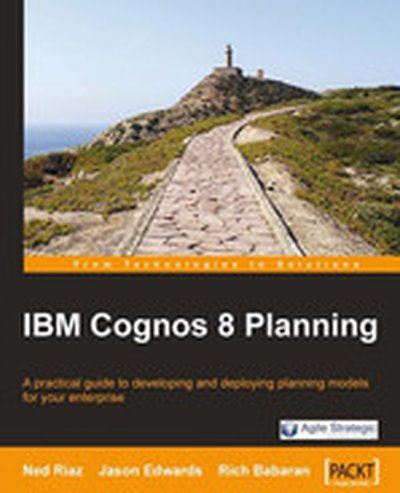
IBM Cognos 8 Planning

IBM Cognos 8 Planning is a powerful tool for creating, managing, and deploying business planning models effectively. This book guides you through the core concepts and practical steps required to master Cognos Planning, from the basics of model creation with Analyst to web deployment using Contributor. With a step-by-step approach, you'll learn everything needed to handle real-world projects. What this Book will help me do Understand the entire model development process in IBM Cognos 8 Planning, enabling you to plan effectively. Use Analyst tools to precisely define and manipulate data structures for seamless model integration. Master the creation of Contributor applications to collect and manage user input in a collaborative environment. Learn automation techniques to streamline common tasks, improving efficiency in planning workflows. Integrate IBM Cognos Planning with BI tools to turn planning insights into actionable business intelligence. Author(s) This book is collaboratively written by three seasoned Cognos experts, who bring over 25 years of professional experience in delivering Cognos solutions to businesses globally. Their pragmatic approach and deep knowledge ensure a resource written with clarity and effectiveness, sharing valuable insights gained from real-world implementations. Their passion is to empower learners. Who is it for? This book is ideal for developers starting with IBM Cognos Planning, or transitioning from another tool. If you're eager to design effective planning models while learning the practicalities of Cognos Planning, this guide provides foundational knowledge and actionable insights. Perfect for beginners seeking thorough and straightforward learning.

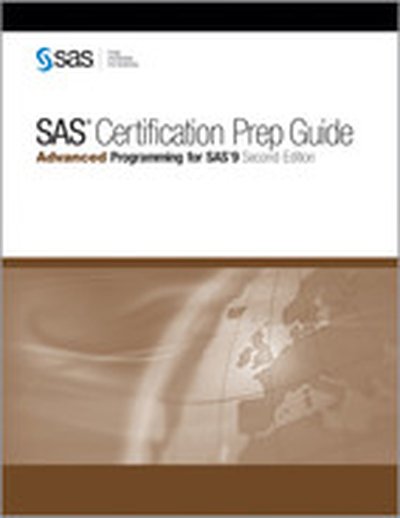
SAS® Certification Prep Guide: Advanced Programming for SAS®9 Second Edition

The SAS Certification Prep Guide: Advanced Programming for SAS 9, Second Edition, prepares you to take the Advanced Programming for SAS 9 exam. Major topics include SQL processing with SAS, the SAS macro language, advanced SAS programming techniques, and optimizing SAS programs. You will also become familiar with the enhancements and new functionality that are available in SAS 9. Experienced SAS users who want to prepare for this exam will find this guide to be an invaluable, convenient, and comprehensive resource that covers all of the objectives tested on the exam. The text contains quizzes that enable you to test your understanding of material in each chapter. Additionally, solutions to all quizzes are included at the back of the book. Candidates must earn the SAS Certified Base Programmer Credential for SAS 9 before taking the SAS Advanced Programming for SAS 9 exam.

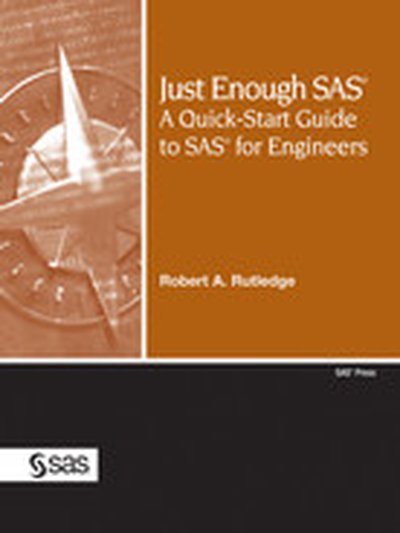
Just Enough SAS®: A Quick-Start Guide to SAS® for Engineers

In Just Enough SAS: A Quick-Start Guide to SAS for Engineers, Robert Rutledge provides "just enough" instruction on a broad variety of topics so that a new SAS user can become productive very quickly. Although most of the material in the book is geared toward a general audience, engineers will especially benefit from the focus on analysis of quality and reliability data found in Chapters 9 and 10 as well as in the examples throughout the book. This comprehensive text, prepared using SAS 9.2, can be used both as a tutorial for getting started with SAS and as a reference for details that even experienced SAS users find themselves looking up over and over again. In addition, the companion code to the book includes a set of commonly used utility macros that allow SAS users to wield maximum power with minimal effort. A complete bibliography provides readers with numerous opportunities for further learning.Topics addressed include bringing data into SAS from a spreadsheet or relational database, plotting data with ODS Statistical Graphics, summarizing and manipulating data for analysis using DATA steps and procedures, publishing results on the Internet and in PDF and RTF, creating appropriate plots of data using PROC GPLOT and PROC GCHART and the newer statistical graphics procedures, with particular emphasis on quality control and reliability analysis - key areas for engineers working in high-tech manufacturing and development, and using the SAS macro language to streamline and automate data analysis projects.New SAS users will find Rutledge's book useful as a quick-start guide to doing meaningful work with SAS, and experienced users will find numerous tips and techniques for improving and extending their coding methods.

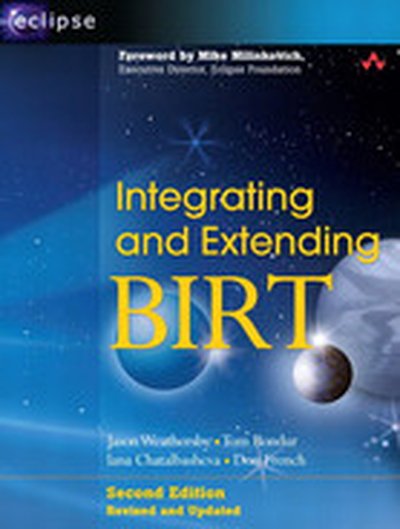
Integrating and Extending BIRT

The world-wide developer community has downloaded over three million copies of BIRT (Business Intelligence and Reporting Tools) from the Eclipse web site. Built on the open-source Eclipse platform, BIRT is a powerful reporting system that provides an end-to-end solution, from creating and deploying reports to integrating report capabilities in enterprise applications. The second of a two-book series on business intelligence and reporting technology, introduces programmers to BIRT architecture and the reporting framework. BIRT technology makes it possible for a programmer to build a customized report using scripting and BIRT APIs. A programmer can also extend the BIRT framework by creating a new plug-in using the Eclipse Plug-in Development Environment. This book provides extensive examples on how to build plug-ins to extend the features of the BIRT framework. The source code for these examples is available for download. Integrating and Extending BIRT, Second Edition The topics discussed include Installing and deploying BIRT Deploying a BIRT report to an application server Understanding BIRT architecture Scripting in a BIRT report design Integrating BIRT functionality into applications Working with the BIRT extension framework This second edition, revised and expanded, adds the following new content Updated architectural diagrams Expanded scripting examples Tag library descriptions In-depth description of BIRT Web Viewer Configuring BIRT to use a JNDI connection XML report rendering plug-in example Fragment plug-in localization example Open Data Access (ODA) plug-in example implementing the new Data Tools Platform (DTP) design and run-time wizards

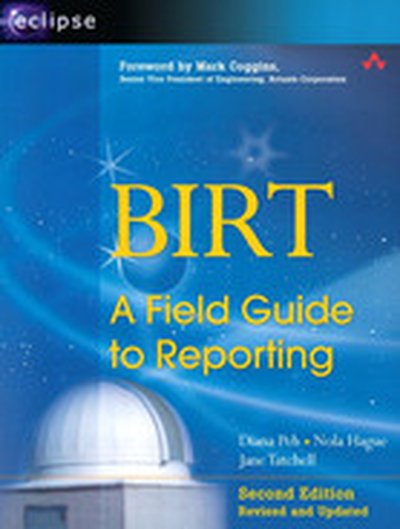
BIRT: A Field Guide to Reporting

The world-wide developer community has downloaded over three million copies of BIRT (Business Intelligence and Reporting Tools) from the Eclipse web site. Built on the open-source Eclipse platform, BIRT is a powerful reporting system that provides an end-to-end solution, from creating and deploying reports to integrating report capabilities in enterprise applications. The first in a two-book series about this exciting technology, is the authoritative guide to using BIRT Report Designer, the graphical tool that enables users of all levels to build reports, simple to sophisticated, without any programming. BIRT, Second Edition: A Field Guide to Reporting is an essential resource for users who want to create presentation quality reports from day one. The extensive examples, step-by-step instructions, and abundant illustrations help new users develop their report design skills quickly. Power users can find the information they need to make the most of the product’s rich set of features to build complex and compelling reports. By the time you finish this book, you learn the following and more BIRT, Second Edition: A Field Guide to Reporting Design effective business and corporate reports that convey information through images, charts, tables, and cross tabs Build reports using data from a variety of sources, including databases, XML documents, spreadsheets, and web services Enliven reports with interactive features, such as hyperlinks, Tooltips, and highlighting Create consistently styled reports and collaborate with other report designers through the use of templates and libraries of reusable elements Localize reports for an international audience This second edition, revised and expanded, adds updated examples and covers all the new and improved product features, including Cross tabs and OLAP cubes New chart types, including Gantt, bubble, tube, and cone charts Web services as a new data source New report output formats, including doc, ppt, xls, and PostScript The capability for reports to reference CSS Localization of report parameter and data values

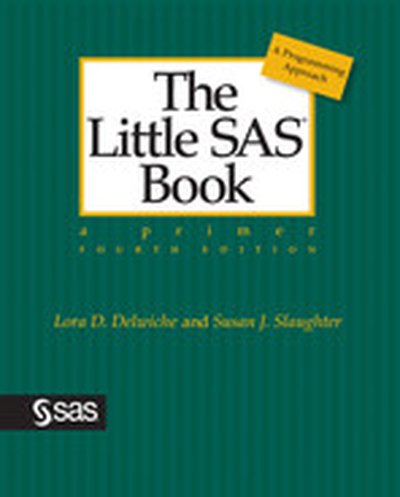
The Little SAS® Book: A Primer, Fourth Edition

Now in its fourth edition, The Little SAS Book is a classic, helping many people learn SAS programming. Authors Lora Delwiche and Susan Slaughter's friendly, easy-to-read writing style gently introduces readers to the most commonly used features of the SAS language. Topics include basic SAS concepts such as the DATA and PROC steps, inputting data, modifying and combining data sets, summarizing data, producing reports, and debugging SAS programs. Each topic is presented in a self-contained two-page layout complete with examples and graphics. This clear and concise format enables new users to get up and running quickly, while the examples allow readers to type in the program and see it work! New topics in the fourth edition include ODS Graphics for statistical procedures, PROC SGPLOT for graphics, creating new variables in PROC REPORT with a COMPUTE block, WHERE= data set option, SORTSEQ=LINGUISTIC option in PROC SORT, and more functions, including ANYALPHA, CAT, PROPCASE, and YRDIF.

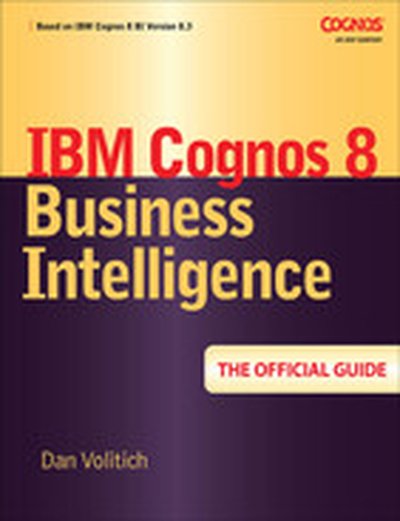
IBM Cognos 8 Business Intelligence: The Official Guide

The Only Authorized Guide to IBM Cognos 8 Business Intelligence Develop, deploy, and maintain a complete BI solution across your enterprise. IBM Cognos 8 Business Intelligence: The Official Guide shows you how to take full advantage of the robust service-oriented architecture and simplified role-based user interfaces. Learn how to create, share, and analyze data-rich reports that lead to increased productivity and better business decisions. Featuring real-world insight and expert tips, this is a must-have guide for IBM Cognos 8 Business Intelligence users of all levels, from administrators to end users. Measure and monitor performance using dashboards and scorecards Assign user roles and privileges Provide complete and consistent access to a broad range of data sources via Cognos Connection Use Cognos 8 Go! to extend BI to Office applications, mobile devices, and search engines Enable business users to create reports with Query Studio Develop new insights by exploring data in multiple dimensions and perspectives with Analysis Studio Build Dimensional Reports with Report Studio Use Event Studio to identify and deliver mission-critical information Create, modify, organize, and publish a model from Cognos Framework Manager Implement sound security measures Take advantage of the management tools in Cognos Administration to ensure maximum reliability and availability

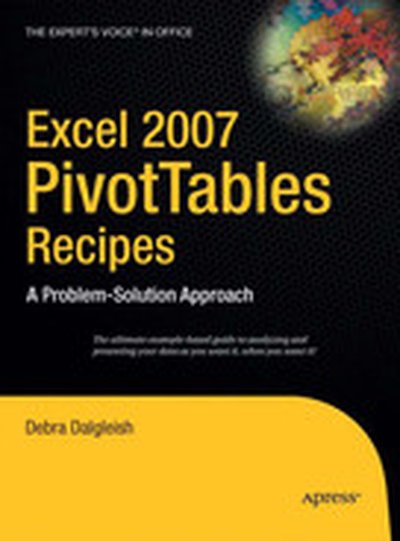
Excel 2007 PivotTables Recipes: A Problem-Solution Approach

Debra Dalgleish, Microsoft Office Excel "Most Valuable Professional" since 2001, and an expert and trainer in Excel, brings together a one-stop resource for anyone curious about representing, analyzing, and using their data with PivotTables and PivotCharts. You'll find this book inimitable when facing any new or difficult problem in PivotTables, covering the entire breadth of situations you could ever encounter, from planning and creating, to formatting and extracting data, to maximizing performance and troubleshooting. The author presents tips and techniques in this collection of recipes that can't be found in Excel's Help section, while carefully explaining the most confusing features of PivotTables to help you realize their powerful potential. The chapters in this book have been organized into a collection of recipes to take you step by step from the problem you are experiencing to the solution you are aiming for. Without fuss, you'll find clear and precise information to help you assess your situation, whether common or unique, and solve your problem. Working examples of complex PivotTables and numerous PivotTable programming examples will help you solve problems quickly, without the need to digest heavy content.

Excel® 2007 PivotTables and PivotCharts

Though many consumers know the basics of using Excel, few users understand the powerful capabilities of the PivotTable and PivotChart features. These tools can help turn long lists of unreadable data into dynamically generated, easy-to-read tables and charts that highlight useful and pertinent business information. Companies rely on this type of data from marketing, accounting, and finance to help make better decisions about products, sales and even human resources. Charts are interactive, allowing the consumer to tweak results with the click of a mouse and PivotTables allow you to fuse data from several sources into one document. This book shows users how to work with PivotTables and PivotCharts to make sense of their data. It covers features such as: understanding PivotTable benefits and uses; creating and customizing PivotTables; using PivotTables to analyze business data; building custom calculations; linking to external data sources, including Access databases, Word tables, Web pages, XML data, SQL Server databases, and OLAP cubes; publishing PivotTables to the Web; multiple consolidation of data, for example, summarizing annual fiscal data by quarters; preparing financial reporting, budgeting, and data analysis across departments; and using VBA to create macros that automate frequently used PivotTable tasks.

Beginning Pivot Tables in Excel 2007

Beginning PivotTables in Excel 2007 explains what PivotTables are, how you can benefit from using them, how to create them and modify them, and how to use their enhanced features. Using a Pivot Table in Microsoft Office Excel 2007 is a quick and exciting way to slice and dice a large amount of data. Carefully explains the benefits of using Pivot Tables for fast data analysis Provides a step-by-step approach to those new to Pivot Tables Offers tips and tricks that cannot be found elsewhere

SAS® Programming for Enterprise Guide® Users

In this pragmatic, example-driven book, author Neil Constable demonstrates how you can use SAS code to enhance the capabilities of SAS Enterprise Guide. Designed to help you gain extra value from the products you already have, SAS Programming for Enterprise Guide Users contains tips and techniques that show you a variety of features that cannot be accessed directly through the task interfaces. In all cases, techniques are shown with examples that you can try and test, plus additional exercises are included to give you more practice. The end result is more efficient and resilient use of SAS Enterprise Guide in a wider variety of business areas. Included is a discussion of the following subject areas: the Output Delivery System advanced formatting macro variables and macros advanced reporting using PROC REPORT highlighting in reports hyperlinking between reports and graphs data manipulation using SQL data manipulation using the DATA step extended graphics By adding small amounts of code in key areas, SAS Enterprise Guide users can get more out of the product than the tasks reveal. Users should be familiar with the SAS Enterprise Guide user interface and tasks. No programming experience is necessary.

SAS for Mixed Models, Second Edition, 2nd Edition
The indispensable, up-to-date guide to mixed models using SAS. Discover the latest capabilities available for a variety of applications featuring the MIXED, GLIMMIX, and NLMIXED procedures in SAS for Mixed Models, Second Edition, the comprehensive mixed models guide for data analysis, completely revised and updated for SAS 9 by authors Ramon Littell, George Milliken, Walter Stroup, Russell Wolfinger, and Oliver Schabenberger. The theory underlying the models, the forms of the models for various applications, and a wealth of examples from different fields of study are integrated in the discussions of these models: random effect only and random coefficients models; split-plot, multilocation, and repeated measures models; hierarchical models with nested random effects; analysis of covariance models; spatial correlation models; generalized linear mixed models; and nonlinear mixed models.

Professionals and students with a background in two-way ANOVA and regression and a basic knowledge of linear models and matrix algebra will benefit from the topics covered.

This book is part of the SAS Press program.

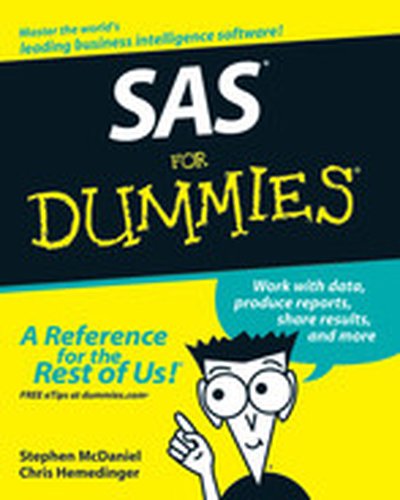
SAS For Dummies

Created in partnership with SAS, this book explores SAS, a business intelligence software that can be used in any business setting or enterprise for data delivery, reporting, data mining, forecasting, statistical analysis, and more. SAS employee and technologist Stephen McDaniel combines real-world expertise and a friendly writing style to introduce readers to SAS basics. It covers crucial topics such as getting various types of data into the software, producing reports, working with the data, basic SAS programming, macros, and working with SAS and databases.

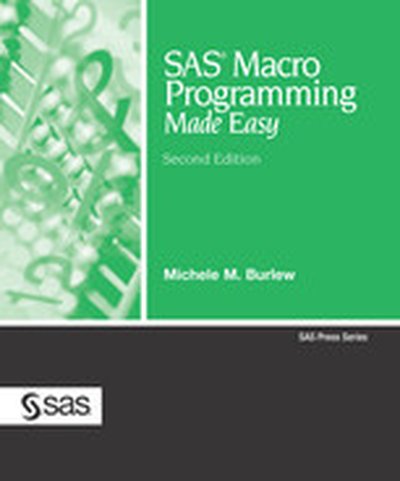
SAS® Macro Programming Made Easy, Second Edition

Need help understanding the SAS macro facility? You will find all the answers that you need in this easy-to-follow book! Michele Burlew puts her decades of macro programming experience to work for you as she guides you through the basics, as well as the more complex features of the SAS macro facility. Updated extensively for SAS 9, this book includes plenty of examples and step-by-step instructions. You will learn the elements of the macro facility (macro variables, macro programs, macro language), how to write a macro program, macro programming techniques, tips on using the macro facility, how the macro facility fits into SAS, and about the interfaces between the macro facility and other components of SAS. New topics for the second edition include using SAS 9 macro and SAS language features, debugging macro programs, adding error checking to macro programs, and building a library of utility macro programs. Beginning macro programmers will learn to write SAS macro programs quickly and efficiently. More experienced macro programmers will find this book useful to refresh their conceptual knowledge and expand on their macro programming skills. It is also important to note that the macro facility is a highly popular part of SAS and found in the job requirements for many SAS programming jobs. In addition, macro facility concepts are tested on the SAS Advanced Programming Exam. The book assumes some SAS programming experience, including knowledge of how to write a DATA step and how to use SAS procedures.

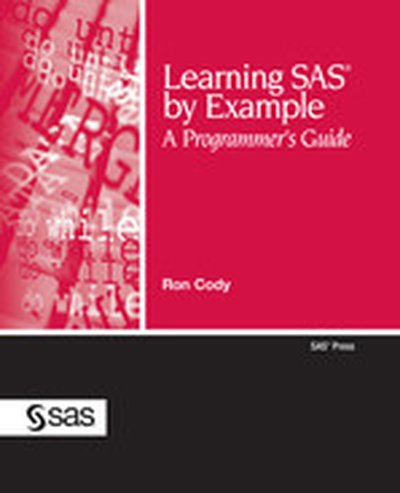
Learning SAS by Example
Learn to program SAS by example!

If you like learning by example, then Learning SAS by Example: A Programmer's Guide makes it easy to learn SAS programming. In an instructive and conversational tone, author Ron Cody clearly explains each programming technique and then illustrates it with one or more real-life examples, followed by a detailed description of how the program works. The text is divided into four major sections: Getting Started; DATA Step Processing; Presenting and Summarizing Your Data; and Advanced Topics. Subjects addressed include: Reading data from external sources Learning details of DATA step programming Subsetting and combining SAS data sets Understanding SAS functions and working with arrays Creating reports with PROC REPORT and PROC TABULATE Learning to use the SAS Output Delivery System Getting started with the SAS macro language Introducing PROC SQL

You can test your knowledge and hone your skills by solving the problems at the end of each chapter. (Solutions to odd-numbered problems are located at the back of this book. Solutions to all problems are available to instructors by visiting Ron Cody's author page for details.) This book is intended for beginners and intermediate users. Readers should know how to enter and submit a SAS program from their operating system.

This book is part of the SAS Press program.

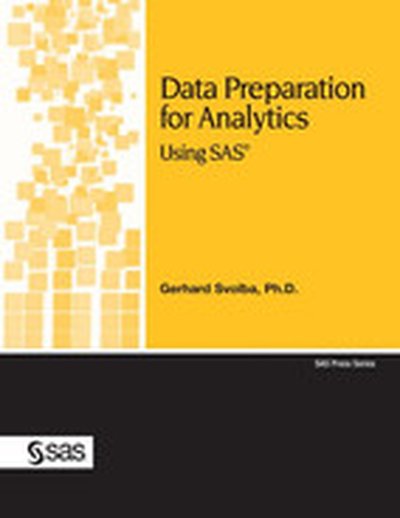
Data Preparation for Analytics Using SAS

Written for anyone involved in the data preparation process for analytics, Gerhard Svolba's Data Preparation for Analytics Using SAS offers practical advice in the form of SAS coding tips and tricks, and provides the reader with a conceptual background on data structures and considerations from a business point of view. The tasks addressed include viewing analytic data preparation in the context of its business environment, identifying the specifics of predictive modeling for data mart creation, understanding the concepts and considerations of data preparation for time series analysis, using various SAS procedures and SAS Enterprise Miner for scoring, creating meaningful derived variables for all data mart types, using powerful SAS macros to make changes among the various data mart structures, and more!

Integrating and Extending BIRT

A new edition of this title is available, ISBN-10: 0321580303 ISBN-13: 9780321580306 The second of a two-book series about business intelligence and reporting technology, introduces programmers to BIRT architecture and the reporting framework. Built on the Eclipse platform, this exciting technology makes it possible for programmers to build and deploy customized reports using scripting and BIRT APIs. In addition, programmers can extend the BIRT framework by building new plug-ins using the Eclipse Plug-in Development Environment. Integrating and Extending BIRT This book describes the key components of BIRT architecture, applications, and engines, including installing, deploying, and troubleshooting the Reporting and Charting engines in an Enterprise Java application-server environment.For developers who wish to incorporate custom business logic in their reports or access data from Java objects, the book describes BIRT's extensive scripting capabilities in JavaScript and Java. For developers who want to extend the BIRT framework, the book describes the key extension points to use in creating customized report items, rendering extensions for generating output other than HTML or PDF, and Open Data Access (ODA) drivers for new data sources. The book provides extensive examples of how to build plug-ins to extend the features of the BIRT framework. Topics discussed include Installing and deploying BIRT Deploying a BIRT report to an application server Understanding BIRT architecture Scripting in a BIRT report design Integrating BIRT functionality in applications Working with the BIRT extension framework