talk-data.com talk-data.com

Topic

analytics-platforms

402

tagged

Activity Trend

1 peak/qtr
2020-Q1 2026-Q1

Activities

402 activities · Newest first

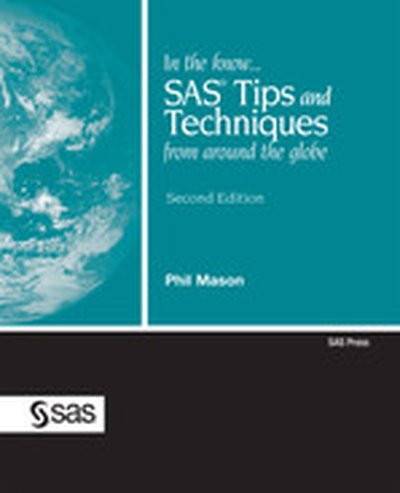
In the Know...SAS(R) Tips and Techniques From Around the Globe, Second Edition

You'll gain a world of knowledge through Phil Mason's inventive tips and techniques. Updated and expanded to cover the breadth of functionality offered in SAS 8 and SAS 9, In the Know...SAS Tips and Techniques From Around the Globe, Second Edition, is packed with timeless classics and plenty of new material addressing such popular topics as the DATA step, SQL, macros, functions, ODS, and much more. Each tip is presented in a self-contained format that is both informative and easy to use. Every chapter contains a collection of related tips with frequent use of code and log examples to help improve productivity. Users of all levels will discover how to save time and effort by incorporating the wisdom found in these practical tips.

BIRT: A Field Guide to Reporting

A new edition of this title is available, ISBN-10: 0321580273 ISBN-13: 9780321580276 The first in a two-book series about Business Intelligence and Reporting Technology, introduces reporting to a broad base of users. Built on the Eclipse platform, this exciting technology makes it possible for programmers and non-programmers to build and deploy complex reports with minimal effort. BIRT: A Field Guide to Reporting presents information about how to develop and customize reports of progressive complexity using BIRT Report Designer. This tool was designed from the ground up for Web applications and uses a Web page-oriented design metaphor in contrast to older banded report writers that were developed before the advent of the Internet. This unique approach to report creation makes BIRT an approachable and effective tool for developers of all levels. BIRT: A Field Guide to Reporting Report designs discussed include Listing reports that include sorting, grouping, and totals Summary reports, such as top N reports Charts, including pie, line, bar, and gauge charts Master-detail reports Other topics discussed include Understanding the technology Planning report designs Accessing data Laying out and formatting reports Building charts Enhancing reports with interactive viewing, shared libraries, and localized text Preparing reports for international data

The Little SAS® Book for Enterprise Guide® 4.1

Learning to use SAS Enterprise Guide has never been easier! With The Little SAS Book for Enterprise Guide 4.1, Susan Slaughter and Lora Delwiche help you quickly become familiar with the SAS Enterprise Guide point-and-click environment. A series of carefully designed tutorials help you master the basics of the tasks you will want to do most frequently. The reference section of the book expands on the tutorial topics, focusing on specific features. If you are new to SAS or new to SAS Enterprise Guide, this book will be an invaluable tool on your way to becoming an expert.

Oracle Discoverer 10g Handbook

Generate detailed reports that will give your company the competitive edge Put essential information in the hands of end-users across your organization using Oracle Business Intelligence Discoverer 10 g and the comprehensive information contained in this Oracle Press guide. You’ll learn, step-by-step, how to query databases and warehouses, format the results, and distribute dynamic, Web-enabled reports. All features are covered in full detail, including OracleBI Discoverer Desktop, Workbook Wizard, Plus, Viewer, Discoverer Administrator, Portlet Provider, OLAP, and Enterprise Manager. Real-world case studies and tutorials illustrate all of the analysis, security, and reporting capabilities of Oracle Discoverer 10 g. Set up, configure, and manage Oracle Business Intelligence Discoverer 10 g Perform ad hoc and fixed queries using the Workbook Wizard Integrate sorts, calculations, percentages, and parameters using Discoverer Plus Create reports with graphs, tables, titles, headers, footers, and margins Use Discoverer Viewer to review, format, export, email, and print reports Refine queries using interactive pivoting, drilling, and Hyper Drilling Control OLAP workbooks using the Discoverer Catalog and Oracle Enterprise Manager Establish access and sharing rights, and scheduling privileges with Discoverer Administrator Set up and use Portal using Discoverer Portlet Provider and Portlets Implement query shortcuts, cascading parameters and advanced analytic calculations using templates

SAS® Certification Prep Guide: Base Programming for SAS®9

Prepare for the SAS Base Programming for SAS®9 certification exam with the official guide by the SAS® Certified Professional Program. New and experienced SAS users who want to prepare for the SAS Base Programming for SAS®9 certification exam will find this guide an invaluable, convenient and comprehensive resource that covers all of the objectives tested on the exam. Major topics include importing and exporting raw data files, creating and modifying SAS data sets, and identifying and correcting data syntax and programming logic errors.You will also become familiar with the enhancements and new functionality that are available in SAS®9. Includes a free CD-ROM with tutorials, practice data, and sample programs to further reinforce and test your SAS skills.

Excel Pivot Tables Recipe Book: A Problem-Solution Approach

Excel Pivot Tables Recipe Book: A Problem-Solution Approach is for anyone who uses Excel frequently. This book follows a problem-solution format that covers the entire breadth of situations you might encounter when working with PivotTables—from planning and creating, to formatting and extracting data, to maximizing performance and troubleshooting. The author presents tips and techniques in this collection of recipes that cannot be found in Excel's Help section, and she carefully explains the most confusing features of PivotTables. All chapters have been organized into a collection of recipes that take you step-by-step from the problem you are experiencing to the solution you are aiming for. There's no fuss to this book, only clear and precise information to help you assess your situationwhether common or uniqueand solve your problem. The book includes real-world examples of complex PivotTables, as well as numerous PivotTable programming examples.

SAS® Programming in the Pharmaceutical Industry

At last! A real-world reference guide for clinical trial SAS programming, packed with solutions that programmers can apply to their day-to-day problems. Discover key techniques and tools available within Base SAS (including the macro language and PROC SQL), SAS/GRAPH, and SAS/STAT that can be used to resolve many common issues in working with clinical trial data. Organized to reflect the statistical programmer's work flow, this user-friendly text begins with an introduction to the working environment, then presents chapters on importing and massaging data into analysis data sets, producing clinical trial output, and exporting data. Valuable plug-and-play programming examples are provided throughout. Whether you're a novice seeking an introduction to SAS programming for the pharmaceutical industry or a junior-level programmer exploring new approaches to problem solving, you'll find a wealth of practical suggestions to help you sharpen your skills.

SAS® Guide to Report Writing: Examples, Second Edition

Jump-start your report-writing skills! Report writing has never been easier. Learn how you can easily avoid common report-writing pitfalls with SAS Guide to Report Writing: Examples, Second Edition. Updated for SAS®9, this task-oriented book guides you through the steps that you need to produce professional reports. Using a wealth of easy-to-follow examples, this time-saving book demonstrates the many different styles of reports that are available and the SAS tools used to generate them. The examples enable more experienced programmers to quickly grasp new techniques, while margin notes and additional discussions provide novice users with the details that they need for effective learning. You can save programming hours by using the SAS programs as they are or as models for developing your own reports. Whether you are a beginner or an expert, this must-have guide will strengthen your report-writing expertise and give you the tools that you need to enhance the power of your reports!

Pivot Table Data Crunching

Become a savvy Microsoft Excel user. Pivot tables are a great feature in Excel that help you organize and analyze data, but not many Excel users know how to use pivot tables. Pivot Table Data Crunching offers a comprehensive review of all the functionalities of Pivot Tables from author Bill Jelen, otherwise known as Mr. Excel from www.mrexcel.com, and Michael Alexander, a Microsoft Certified Application Developer. The authors' practical scenarios and real-world advice demonstrate the benefits of Pivot Tables and how to avoid the common pitfalls of every day data crunching. Each solution presented in the book can be accomplished with resources available in the Excel interface, making Pivot Table Data Crunching a beneficial resource for all levels of Excel users.

Analysis of Clinical Trials Using SAS

In Analysis of Clinical Trials Using SAS: A Practical Guide, Alex Dmitrienko, Geert Molenberghs, Christy Chuang-Stein, and Walter Offen bridge the gap between modern statistical methodology and real-world clinical trial applications. Step-by-step instructions illustrated with examples from actual trials and case studies serve to define a statistical method and its relevance in a clinical trials setting and to illustrate how to implement the method rapidly and efficiently using the power of SAS software. Topics reflect the International Conference on Harmonization (ICH) guidelines for the pharmaceutical industry and address important statistical problems encountered in clinical trials, including analysis of stratified data, incomplete data, multiple inferences, issues arising in safety and efficacy monitoring, and reference intervals for extreme safety and diagnostic measurements. Clinical statisticians, research scientists, and graduate students in biostatistics will greatly benefit from the decades of clinical research experience compiled in this book. Numerous ready-to-use SAS macros and example code are included.

This book is part of the SAS Press program.

PROC SQL: Beyond the Basics Using SAS®

Master the language of PROC SQL! Get faster and better results when you use the SQL procedure with this step-by-step, example-driven guide in your hands. You will find information about implementing both American National Standards Institute (ANSI) guidelines and non-ANSI features. A broad range of SAS users, including applications programmers, database designers and administrators, statisticians, and systems analysts, will find techniques in Kirk Lafler's PROC SQL: Beyond the Basics Using SAS to enhance their data access, manipulation, and presentation prowess. Topics examined include database design; an introduction to SQL, dictionary tables, and tables; coding PROC SQL logic as well as complex queries; working with views; troubleshooting and debugging SQL code; and tuning for performance. With the growing popularity of databases, PROC SQL is becoming the language of choice for SAS users around the world. Intermediate and advanced users will appreciate the straightforward explanations and numerous examples.

The Little SAS® Book: A Primer, Third Edition

Getting started with SAS is easy with The Little SAS Book. This friendly, easy-to-read guide gently introduces you to the most commonly used features of SAS software plus a whole lot more! The book has been revised to include concepts of the Output Delivery System; the STYLE= option in the PRINT, REPORT, and TABULATE procedures; ODS HTML, RTF, PRINTER, and OUTPUT destinations; PROC REPORT; more on PROC TABULATE; exporting data; and the colon modifier for informats. You'll find clear and concise explanations of basic SAS concepts (such as DATA and PROC steps), inputting data, modifying and combining data sets, summarizing and presenting data, basic statistical procedures, and debugging SAS programs. Each topic is presented in a self-contained, two-page layout complete with examples and graphics. This format enables new users to get up and running quickly, while the examples allow you to type in the program and see it work!

Supply Chains: A Manager's Guide

“An excellent summary of the state of supply chain management going into the twenty-first century. Explains the essential concepts clearly and offers practical, down-to-earth advice for making supply chains more efficient and adaptive. Truly a survival guide for executives as they struggle to cope with the increasing competition between supply chains.” — Christian Knoll, Vice President of Global Supply Chain Management, SAP AG “Through real-world case studies and graphic illustrations, David Taylor clearly demonstrates the bottom-line benefits of managing the supply chain effectively. Although the book is written for managers, I recommend it for everyone from the executive suite to the shipping floor because they all have to work together to master the supply chain. But beware—you can expect many passionate employees demanding improvements in your company’s supply chain after reading this book!” — David Myers, President, WinfoSoft Inc., Former Board Member of Supply Chain Council “A comprehensive, thoroughly researched, and well-designed book that gives managers the information they need in a highly readable form. I am already starting to use the techniques in this book to improve our international distribution system.” — Jim Muller, Vice President of Produce Sales, SoFresh Produce “Supply chain management is a deceptively deep subject. Simple business practices combine to form complex systems that seem to defy rational analysis: Companies that form trading partnerships continue to compete despite their best efforts to cooperate; small variations in consumer buying create devastating swings in upstream demand, and so on. In his trademark fashion, Taylor clearly reveals the hidden logic at work in your supply chain and gives you the practical tools you need to make better management decisions. A must-read for every manager who affects a supply chain, and in today's marketplace there are few managers who are exempt from this requirement.” — Adrian J. Bowles, Ph.D., President, CoSource.net “David Taylor has done it again. With his new book, David makes supply chain management easy to grasp for the working manager, just as he did with his earlier guides to business technology. If you work for a company that is part of a supply chain, you need this book.” — Dirk Riehle, Ph.D. “David Taylor has done a masterful job of defining the core issues in supply chain management without getting trapped in the quicksand of jargon. This concise book is well written, highly informative, and easy to read.” — Marcia Robinson, President, E-Business Strategies, author of Services Blueprint: Roadmap “Taylor has done a tremendous job of giving readers an intuitive grasp of a complicated subject. If you’re new to supply chains, this book will give you an invaluable map of the territory. If you're already among the initiated, it will crystallize your insights and help you make better decisions. In either case, you can only come out ahead by reading this book.” — Kevin Dick, Founder of Kevin Dick Associates, author of XML: A Manager’s Guide “My motto for compressing data is ‘squeeze it til it gags.’ In the current business climate, that’s what you have to do to costs, and Taylor shows you many ways to squeeze costs out of your supply chain. He also writes with the same economy: This book contains exactly what you need to manage your supply chain effectively. Nothing is missing, and nothing is extra.” — Charles Ashbacher, President, Charles Ashbacher Technologies Today's fiercest business battles are taking place between competitors' supply chains, with victory dependent on finding a way to deliver products to customers more quickly and efficiently than the competition. For proof, just look to Dell and Amazon.com, both of which revolutionized their industries by changing how companies produce, distribute, and sell physical goods. But they're hardly alone. By revamping their supply chains, Siemens CT improved lead time from six months to two weeks, Gillette slashed $400 million of inventory, and Chrysler saved $1.7 billion a year. It's a high-stakes game, and you don't have a lot of choice about playing: If your company touches a physical product, it's part of a supply chain--and your success ultimately hangs on the weakest link in that chain. In , best-selling author David Taylor explains how to assemble a killer supply chain using the knowledge, technology, and tools employed in supply-chain success stories. Using his signature fast-track summaries and informative graphics, Taylor offers a clear roadmap to understanding and solving the complex problems of supply-chain management. Supply Chains: A Manager's Guide Modern manufacturing has driven down the time and cost of the production process, leaving supply chains as the final frontier for cost reduction and competitive advantage. will quickly give managers the foundation they need to contribute effectively to their company's supply-chain success. Supply Chains: A Manager's Guide

Service- and Component-based Development: Using Select Perspective™ and UML

This book presents the approaches and practices for the construction of software systems using Select Perspective. It details the key workflows for a contemporary approach to supplying, managing, and consuming software assets to deliver business IT systems. This book provides a comprehensive development lifecycle (Select Perspective) for component and web service based IT solutions, that supports parallel development activities, to reduce time-to-market. It introduces the Select Perspective as a Supply, Manage, Consume software development process. It provides a real world project experience and examples. Technology: Unlike other development processes, Select Perspective is focused on a small number of key deliverables within an organizational framework of suppliers and consumers, of solution driven components. Audience: For CIOs, IT Directors, Project Managers, and solution developers. Level Intermediate. Hedley Apperly is Vice President, Product Marketing and Development with Aonix Hedley has graduate and post-graduate qualifications in production engineering, business computing and strategic marketing. His 19 years experience in IT, have focused on the design and development of relational, object-oriented and component-bases systems. He is also a committee member of the British Computer Societies (BCS), Object-Oriented Programming and Systems (OOPS) specialist group. As well as his involvement Component Based Development for Enterprise Systems, published by Cambridge University Press, Hedley co-authored Component Based Software Engineering; Putting the Pieces Together, published by Addison Wesley. Ralph Hofman works in Manager Services (Benelux) at Aonix. Ralph studied computer science at the University of Twente in the Netherlands. He started as a freelance consultant for different companies and specialized in methods and tools for system development. Ralph initiated component-based development as a way of working within a major international Bank. He joined Aonix in 2000, where he is responsible for the consultancy and services in the Benelux. Steve Latchem is Director of International Services with Aonix. Steve has been within the IT industry for over 18 years, holding positions in large consultancy groups and IT Departments ranging from business analyst to object oriented consultant, architect and project manager. Steve now directs the global professional services group at Aonix. Steve collaborated on AntiPatterns: Refactoring Software & Projects in Crisis and co-authored Component Based Software Engineering; Putting the Pieces Together, published by Addison Wesley. Barry Maybank is Principal Consultant with Aonix . Barry has been within the IT industry for over 17 years, holding positions in consultancy groups, IT Product Companies and Engineering companies with roles ranging from software engineer to architect. Barry McGibbon is Associate Consultant with Aonix. Barry has worked in the IT industry for over 35 years, holding very senior management positions with leading computing services providers. He has been involved in component-based development initiatives for significant enterprises in the UK and Europe. As well as a frequent contributor to major journals, he is author of Managing Your Move To Object Technology: Guidelines & Strategies for a Smooth Transition published by SIGS Books Inc. He is also Technical Chair for Europe's largest CBD/OO conference and a series editor for Cambridge University Press. David Piper is a Principal Consultant with Aonix. David has been working in the IT industry for over 20 years holding positions in manufacturing, financial services and IT consultancy with roles ranging from analyst to quality assurance manager and project manager. Chris Simons is a Senior Consultant with Aonix. Christopher has been within the IT industry for over 12 years, holding positions in real-time, defense, retail, public sector and finance domains, with roles ranging from software engineer, lead analyst to technical architect. He has also taught object-orientation and development process at various universities as a visiting lecturer.

SAS for Linear Models, Fourth Edition

This clear and comprehensive guide provides everything you need for powerful linear model analysis. Using a tutorial approach and plenty of examples, authors Ramon Littell, Walter Stroup, and Rudolf Freund lead you through methods related to analysis of variance with fixed and random effects. You will learn to use the appropriate SAS procedure for most experiment designs (including completely random, randomized blocks, and split plot) as well as factorial treatment designs and repeated measures. SAS for Linear Models, Fourth Edition, also includes analysis of covariance, multivariate linear models, and generalized linear models for non-normal data. Find inside: regression models; balanced ANOVA with both fixed- and random-effects models; unbalanced data with both fixed- and random-effects models; covariance models; generalized linear models; multivariate models; and repeated measures. New in this edition: MIXED and GENMOD procedures, updated examples, new software-related features, and other new material.

This book is part of the SAS Press program.

Longitudinal Data and SAS
Working with longitudinal data introduces a unique set of challenges. Once you've mastered the art of performing calculations within a single observation of a data set, you're faced with the task of performing calculations or making comparisons between observations. It's easy to look backward in data sets, but how do you look forward and across observations? Ron Cody provides straightforward answers to these and other questions. Longitudinal Data and SAS details useful techniques for conducting operations between observations in a SAS data set. For quick reference, the book is conveniently organized to cover tools, including an introduction to powerful SAS programming techniques for longitudinal data; case studies, including a variety of illuminating examples that use Ron's techniques; and macros, including detailed descriptions of helpful longitudinal data macros. Beginning to intermediate SAS users will appreciate this book's informative, easy-to-comprehend style. And users who frequently process longitudinal data will learn to make the most of their analyses by following Ron's methodologies.

This book is part of the SAS Press program.

Essential Guide to Computing: The Story of Information Technology, The

The complete, easy-to-understand guide to IT—now and in the future! Computers, networks, and pervasive computing Hardware, operating systems, and software How networks work: LANs, WANs, and the Internet E-business, the Web, and security The guide for ANYONE who needs to understand the key technologies driving today's economy and high tech industries! You can't afford not to understand the information revolution that's sweeping the world-but who's got time for all the acronyms and hype most technology books give you? The Essential Guide to Computing demystifies the digital society we live in with an intelligent, thorough, and up-to-date explanation of computer, networking, and Internet technologies. It's perfect for smart professionals who want to get up to speed, but don't have computer science or engineering degrees! You'll find up-to-the-minute coverage on all of today's hottest technologies including: The evolution of computing: from the room-sized "monoliths" of the 1950s to today's global Internet Preview of the next revolution: "pervasive computing" Computer hardware: microprocessors, memory, storage, I/O, displays, and architecture Windows, Macintosh, UNIX/Linux, DOS, NetWare, Palm: what operating systems do, and how they compare Programming languages: from machine language to advanced object-oriented technologies Key software applications: databases, spreadsheets, word processing, voice recognition, and beyond Microsoft and the software industry: where they stand, where they're headed How networks work: LANs, WANs, packet switching, hardware, media, and more The Internet, e-commerce, and security Enterprise applications: data warehousing, Web-centered development, and groupware Whether you're a consumer, investor, marketer, or executive, this is your start-to-finish briefing on the information technologies that have changed the world-and the coming technologies that will transform it yet again!

Cody’s Data Cleaning Techniques Using SAS® Software

The key to ensuring accurate data is having clean data. This book develops and describes data cleaning programs and macros. You can use many of the programs and macros that are provided, as is, or you can modify them for your own special data cleaning tasks. Ron has carefully explained and documented each of the programs and macros, thus providing you with SAS programming instruction on an intermediate-to-advanced level. Topics presented include validation checks on character data, numeric data, missing values, and date values; searching for duplicate records; working with multiple files; double entry and verification using the COMPARE procedure; and SQL solutions and using validation data sets. Written in Ron's signature informal, tutorial style, this book gives anyone who manages data thoroughly documented, step-by-step instructions for the development of data cleaning programs and macros. Supports releases 6.12 and higher of SAS software.

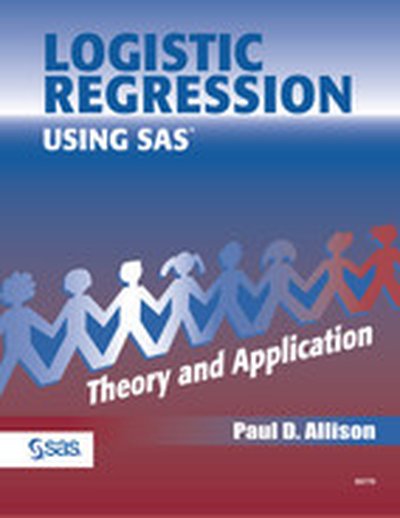
Logistic Regression Using SAS®: Theory and Application

If you are a researcher or student with experience in multiple linear regression and want to learn about logistic regression, this book is for you! Informal and nontechnical, this book both explains the theory behind logistic regression and looks at all the practical details involved in its implementation using the SAS System. Several social science real-world examples are included in full detail. This book also explains the differences and similarities among the many generalizations of the logistic regression model. The following topics are covered: binary logit analysis, logit analysis of contingency tables, multinomial logit analysis, ordered logit analysis, discrete-choice analysis with the PHREG procedure, and Poisson regression. Other highlights include discussions on how to use the GENMOD procedure to do loglinear analysis and GEE estimation for longitudinal binary data. Only basic knowledge of the SAS DATA step is assumed. Supports releases 6.12 and higher of SAS software.