talk-data.com talk-data.com

Topic

Analytics

data_analysis insights metrics

4552

tagged

Activity Trend

398 peak/qtr
2020-Q1 2026-Q1

Activities

4552 activities · Newest first

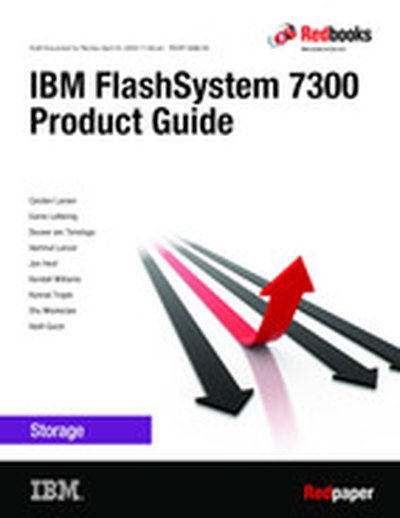
IBM FlashSystem 7300 Product Guide

This IBM® Redpaper Product Guide describes the IBM FlashSystem® 7300 solution, which is a next-generation IBM FlashSystem control enclosure. It combines the performance of flash and a Non-Volatile Memory Express (NVMe)-optimized architecture with the reliability and innovation of IBM FlashCore® technology and the rich feature set and high availability (HA) of IBM Spectrum® Virtualize. To take advantage of artificial intelligence (AI)-enhanced applications, real-time big data analytics, and cloud architectures that require higher levels of system performance and storage capacity, enterprises around the globe are rapidly moving to modernize established IT infrastructures. However, for many organizations, staff resources, and expertise are limited, and cost-efficiency is a top priority. These organizations have important investments in existing infrastructure that they want to maximize. They need enterprise-grade solutions that optimize cost-efficiency while simplifying the pathway to modernization. IBM FlashSystem 7300 is designed specifically for these requirements and use cases. It also delivers a cyber resilience without compromising application performance. IBM FlashSystem 7300 provides a rich set of software-defined storage (SDS) features that are delivered by IBM Spectrum Virtualize, including the following examples: Data reduction and deduplication Dynamic tiering Thin-provisioning Snapshots Cloning Replication and data copy services Cyber resilience Transparent Cloud Tiering (TCT) IBM HyperSwap® including 3-site replication for high availability Scale-out and scale-up configurations further enhance capacity and throughput for better availability With the release of IBM Spectrum Virtualize V8.5, extra functions and features are available, including support for new third-generation IBM FlashCore Modules Non-Volatile Memory Express (NVMe) type drives within the control enclosure, and 100 Gbps Ethernet adapters that provide NVMe Remote Direct Memory Access (RDMA) options. New software features include GUI enhancements, security enhancements including multifactor authentication and single sign-on, and Fibre Channel (FC) portsets.

podcast_episode
by John Toohig (Raymond James) , Cris deRitis , Mark Zandi (Moody's Analytics) , Marisa DiNatale (Moody's Analytics)

John Toohig, head of Whole Loan Trading at Raymond James, joins Mark, Cris and Marisa to discuss the fallout of the banking crisis on lending standards, credit growth and the economy. The fallout so far seems manageable, but... For more on John Toohig, click here or follow him on LinkedIn or Twitter.   If you would like to learn more about upcoming Moody’s Analytics & Raymond James in Conversation events click here For the full transcript, click here Follow Mark Zandi @MarkZandi, Cris deRitis @MiddleWayEcon, and Marisa DiNatale on LinkedIn for additional insight.

Questions or Comments, please email us at [email protected]. We would love to hear from you.    To stay informed and follow the insights of Moody's Analytics economists, visit Economic View.

Advances in ML have transformed data privacy from a regulatory necessity into an opportunity to improve the work of data people. Synthetic data for modeling + testing is one example of a hard thing that's now easy - and in this conversation with Tristan and Julia, Ian + Abhishek cover many other ways that privacy can actually be a skill that propels your work forward, rather than a mere legal best practice. For full show notes and to read 6+ years of back issues of the podcast's companion newsletter, head to https://roundup.getdbt.com.  The Analytics Engineering Podcast is sponsored by dbt Labs.

If you find yourself in a situation where you don't have a college degree, I want you to know it is possible to land a data job.

In this episode, Teshawn Black shares his experience landing data contracts at Google & LinkedIn despite having no certifications.

🌟 Join the data project club!

“25OFF” to get 25% off (first 50 members).

📊 Come to my next free “How to Land Your First Data Job” training

🏫 Check out my 10-week data analytics bootcamp

Teshawn’s Links:

https://www.tiktok.com/@the6figureanalyst

https://app.mediakits.com/the6figureanalyst

Timestamps:

(6:29) - Providing value is KEY! (10:49) - We don’t have tomorrow, so live today (13:43) - Understand what company looks for (17:05) - Learn to communicate effectively (19:14) - Working contract jobs is a blessing (20:17) - Always market yourself (22:33) - Ask the budget first (25:07) - Is job security really SECURE? (27:35) - We are all expendable (29:32) - Focus on data cleaning & data manipulation (30:42) - Don’t skip Excel!

Connect with Avery:

📺 Subscribe on YouTube

🎙Listen to My Podcast

👔 Connect with me on LinkedIn

📸 Instagram

🎵 TikTok

Mentioned in this episode: Join the last cohort of 2025! The LAST cohort of The Data Analytics Accelerator for 2025 kicks off on Monday, December 8th and enrollment is officially open!

To celebrate the end of the year, we’re running a special End-of-Year Sale, where you’ll get: ✅ A discount on your enrollment 🎁 6 bonus gifts, including job listings, interview prep, AI tools + more

If your goal is to land a data job in 2026, this is your chance to get ahead of the competition and start strong.

👉 Join the December Cohort & Claim Your Bonuses: https://DataCareerJumpstart.com/daa https://www.datacareerjumpstart.com/daa

The Modern Data Stack has brought a lot of new buzzwords into the data engineering lexicon: "data mesh", "data observability", "reverse ETL", "data lineage", "analytics engineering". In this light-hearted talk we will demystify the evolving revolution that will define the future of data analytics & engineering teams.

Our journey begins with the PyData Stack: pandas pipelines powering ETL workflows...clean code, tested code, data validation, perfect for in-memory workflows. As demand for self-serve analytics grows, new data sources bring more APIs to model, more code to maintain, DAG workflow orchestration tools, new nuances to capture ("the tax team defines revenue differently"), more dashboards, more not-quite-bugs ("but my number says this...").

This data maturity journey is a well-trodden path with common pitfalls & opportunities. After dashboards comes predictive modelling ("what will happen"), prescriptive modelling ("what should we do?"), perhaps eventually automated decision making. Getting there is much easier with the advent of the Python Powered Modern Data Stack.

In this talk, we will cover the shift from ETL to ELT, the open-source Modern Data Stack tools you should know, with a focus on how dbt's new Python integration is changing how data pipelines are built, run, tested & maintained. By understanding the latest trends & buzzwords, attendees will gain a deeper insight into Python's role at the core of the future of data engineering.

Apache Arrow is a multi-language toolbox for accelerated data interchange and in-memory processing, and is becoming the de facto standard for tabular data. This talk will give an overview of the recent developments both in Apache Arrow itself as how it is being adopted in the PyData ecosystem (and beyond) and can improve your day-to-day data analytics workflows.

In this talk I will present two new open-source packages that make up a powerful and state-of-the-art marketing analytics toolbox. Specifically, PyMC-Marketing is a new library built on top of the popular Bayesian modeling library PyMC. PyMC-Marketing allows robust estimation of customer acquisition costs (via media mix modeling) as well as customer lifetime value. In addition, I will show how we can estimate the effectiveness of marketing campaigns using a new Bayesian causal inference package called CausalPy. The talk will be applied with a real-world case-study and many code examples. Special emphasis will be placed on the interplay between these tools and how they can be combined together to make optimal marketing budget decisions in complex scenarios.

Today I’m chatting with Osian Jones, Head of Product for the Data Platform at Stuart. Osian describes how impact and ROI can be difficult metrics to measure in a data platform, and how the team at Stuart has sought to answer this challenge. He also reveals how user experience is intrinsically linked to adoption and the technical problems that data platforms seek to solve. Throughout our conversation, Osian shares a holistic overview of what it was like to design a data platform from scratch, the lessons he’s learned along the way, and the advice he’d give to other data product managers taking on similar projects. 

Highlights/ Skip to:

Osian describes his role at Stuart (01:36) Brian and Osian explore the importance of creating an intentional user experience strategy (04:29) Osian explains how having a clear mission enables him to create parameters to measure product success (11:44) How Stuart developed the KPIs for their data platform (17:09) Osian gives his take on the pros and cons of how data departments are handled in regards to company oversight (21:23) Brian and Osian discuss how vital it is to listen to your end users rather than relying on analytics alone to measure adoption (26:50) Osian reveals how he and his team went about designing their platform (31:33) What Osian learned from building out the platform and what he would change if he had to tackle a data product like this all over again (36:34)

Quotes from Today’s Episode “Analytics has been treated very much as a technical problem, and very much so on the data platform side, which is more on the infrastructure and the tooling to enable analytics to take place. And so, viewing that purely as a technical problem left us at odds in a way, compared to [teams that had] a product leader, where the user was the focus [and] the user experience was very much driving a lot of what was roadmap.” — Osian Jones (03:15)

“Whenever we get this question of what’s the impact? What’s the value? How does it impact our company top line? How does it impact our company OKRs? This is when we start to panic sometimes, as data platform leaders because that’s an answer that’s really challenging for us, simply because we are mostly enablers for analytics teams who are themselves enablers. It’s almost like there’s two different degrees away from the direct impact that your team can have.” — Osian Jones (12:45)

“We have to start with a very clear mission. And our mission is to empower everyone to make the best data-driven decisions as fast as possible. And so, hidden within there, that’s a function of reducing time to insight, it’s also about maximizing trust and obviously minimizing costs.” — Osian Jones (13:48)

“We can track [metrics like reliability, incidents, time to resolution, etc.], but also there is a perception aspect to that as well. We can’t underestimate the importance of listening to our users and qualitative data.” — Osian Jones (30:16)

“These were questions that I felt that I naturally had to ask myself as a product manager. … Understanding who our users are, what they are trying to do with data and what is the current state of our data platform—so those were the three main things that I really wanted to get to the heart of, and connecting those three things together.” – Osian Jones (35:29)

“The advice that I would give to anyone who is taking on the role of a leader of a data platform or a similar role is, you can easily get overwhelmed by just so many different use cases. And so, I would really encourage [leaders] to avoid that.” – Osian Jones (37:57)

“Really look at your data platform from an end-user perspective and almost think of it as if you were to put the data platform on a supermarket shelf, what would that look like? And so, for each of the different components, how would you market that in a single one-liner in terms of what can this do for me?” – Osian Jones (39:22)

Links Stuart: https://stuart.com/ Article on IIA: https://iianalytics.com/community/blog/how-to-build-a-data-platform-as-a-product-a-retrospective Experiencing Data Episode 80 with Doug Hubbard: https://designingforanalytics.com/resources/episodes/080-how-to-measure-the-impact-of-data-productsand-anything-else-with-forecasting-and-measurement-expert-doug-hubbard/ LinkedIn: https://www.linkedin.com/in/osianllwydjones/ Medium: https://medium.com/@osianllwyd

The name WALD-stack stems from the four technologies it is composed of, i.e. a cloud-computing Warehouse like Snowflake or Google BigQuery, the open-source data integration engine Airbyte, the open-source full-stack BI platform Lightdash, and the open-source data transformation tool DBT.

Using a Formula 1 Grand Prix dataset, I will give an overview of how these four tools complement each other perfectly for analytics tasks in an ELT approach. You will learn the specific uses of each tool as well as their particular features. My talk is based on a full tutorial, which you can find under waldstack.org.

podcast_episode
by Mike Brisson (Moody's Analytics) , Cris deRitis , Mark Zandi (Moody's Analytics) , Jonathan Smoke (Cox Automotive)

Jonathan Smoke, chief economist of Cox Automotive and colleague Mike Brisson join Mark and Cris to discuss what’s going on in the vehicle market. After a rundown on this week’s inflation stats we discuss prospects for vehicle prices, sales, production, and the implications of tighter underwriting and weaker credit quality in the auto loan market. We also take up the tough new emission standards and what they mean for EV adoption. Full episode transcript For more on Jonathan Smoke,  click here. Follow Mark Zandi @MarkZandi, Cris deRitis @MiddleWayEcon, and Marisa DiNatale on LinkedIn for additional insight.

Questions or Comments, please email us at [email protected]. We would love to hear from you.    To stay informed and follow the insights of Moody's Analytics economists, visit Economic View.

Hosted by Simplecast, an AdsWizz company. See pcm.adswizz.com for information about our collection and use of personal data for advertising.

Ryan Dolley and I chat about why BI needs to evolve, moving beyond dashboards, the impact of generative AI on analytics, SuperDataBros, and more.

data #analytics #businessintelligence #datascience


If you like this show, give it a 5-star rating on your favorite podcast platform.

Purchase Fundamentals of Data Engineering at your favorite bookseller.

Check out my substack: https://joereis.substack.com/

Building data analytics projects is the key to landing your first data job.

Here’s a 6-step guide to doing your first project.

🌟 Join the data project club!

“25OFF” to get 25% off (first 50 members).

📊 Come to my next free “How to Land Your First Data Job” training

🏫 Check out my 10-week data analytics bootcamp

Timestamps:

(1:43) - Step 1: Deciding What Project To Do

(4:00) - Step 2: Finding a Good Data Set

(5:30) - Step 3: Defining the Project

(6:32) - Step 4: Exploratory Data Analysis

(9:16) - Step 5: Real Analysis

(11:04) - Step 6: Publish the project

Connect with Avery:

📺 Subscribe on YouTube

🎙Listen to My Podcast

👔 Connect with me on LinkedIn

📸 Instagram

🎵 TikTok

Mentioned in this episode: Join the last cohort of 2025! The LAST cohort of The Data Analytics Accelerator for 2025 kicks off on Monday, December 8th and enrollment is officially open!

To celebrate the end of the year, we’re running a special End-of-Year Sale, where you’ll get: ✅ A discount on your enrollment 🎁 6 bonus gifts, including job listings, interview prep, AI tools + more

If your goal is to land a data job in 2026, this is your chance to get ahead of the competition and start strong.

👉 Join the December Cohort & Claim Your Bonuses: https://DataCareerJumpstart.com/daa https://www.datacareerjumpstart.com/daa

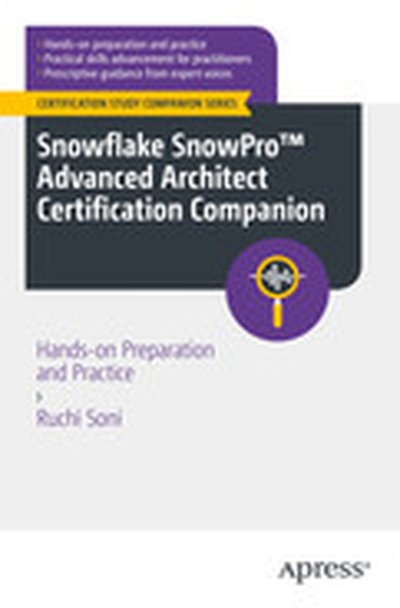
Snowflake SnowPro™ Advanced Architect Certification Companion: Hands-on Preparation and Practice

Master the intricacies of Snowflake and prepare for the SnowPro Advanced Architect Certification exam with this comprehensive study companion. This book provides robust and effective study tools to help you prepare for the exam and is also designed for those who are interested in learning the advanced features of Snowflake. The practical examples and in-depth background on theory in this book help you unleash the power of Snowflake in building a high-performance system. The best practices demonstrated in the book help you use Snowflake more powerfully and effectively as a data warehousing and analytics platform. Reading this book and reviewing the concepts will help you gain the knowledge you need to take the exam. The book guides you through a study of the different domains covered on the exam: Accounts and Security, Snowflake Architecture, Data Engineering, and Performance Optimization. You’ll also be well positioned to apply your newly acquired practical skills to real-world Snowflake solutions. You will have a deep understanding of Snowflake to help you take full advantage of Snowflake’s architecture to deliver value analytics insight to your business. What You Will Learn Gain the knowledge you need to prepare for the exam Review in-depth theory on Snowflake to help you build high-performance systems Broaden your skills as a data warehouse designer to cover the Snowflake ecosystem Optimize performance and costs associated with your use of the Snowflake data platform Share data securely both inside your organization and with external partners Apply your practical skills to real-world Snowflake solutions Who This Book Is For Anyone who is planning to take the SnowPro Advanced Architect Certification exam, those who want to move beyond traditional database technologies and build their skills to design and architect solutions using Snowflake services, and veteran database professionals seeking an on-the-job reference to understand one of the newest and fastest-growing technologies in data

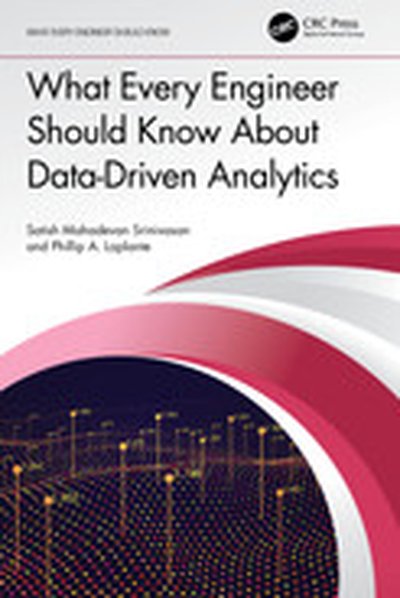
What Every Engineer Should Know About Data-Driven Analytics

What Every Engineer Should Know About Data-Driven Analytics provides a comprehensive introduction to the machine learning theoretical concepts and approaches that are used in predictive data analytics through practical applications and case studies.

Data is revolutionising our world, yet many companies fail to harness its value. What needs to be done for CEOs to see the value of having analytics as part of the executive inner circle? Unfortunately, many analytics teams struggle to move past the common challenges of fostering analytics literacy, getting executive buy-in for more investment in data and analytics and showcasing the value delivered into the business. How can analytics leaders make their discipline an indispensable superpower in their organisation? In this episode of Leaders of Analytics, long-time analytics C-suite executive Murli Buluswar gives us the formula for success. Murli is Head of Analytics, US Consumer Bank at Citi, and leads a team of almost 600 analytics professionals. He reports directly to the CEO and his team is responsible for supplying the rest of the organisation with insights and data-driven solutions that lead to better customer experience and engagement. In this episode of Leaders of Analytics, Murli explains: How to position an analytics function as a key strategic enablerHow Citi’s analytics department picks and validates the most valuable use cases to work onHow to foster the skills and organisational discipline to push analytics into the rest of the organisationHow to measure and communicate an analytics team’s impact on the company and its customersWhat’s required of analytics leaders to elevate their function to the C-suite, and much more.Murli Buluswar on LinkedIn Previous episode: Why Sport is Leading the Analytics Revolution with Ari Kaplan

podcast_episode
by Mark Zandi (Moody's Analytics) , Chris Lafakis , Heather Boushey (White House Council of Economic Advisers)

Heather Boushey, a member of the White House Council of Economic Advisors, joins the podcast. She gives us a rundown on the economy, including her thoughts on the job market and inflation, and the hard work of incorporating climate risk into the outlook for the economy and federal budget. For more information on Heather Boushey’s work with the Council of Economic Advisers click here or follow her on Twitter at @HBoushey46.  Follow Mark Zandi @MarkZandi, Cris deRitis @MiddleWayEcon, and Marisa DiNatale on LinkedIn for additional insight.

Questions or Comments, please email us at [email protected]. We would love to hear from you.    To stay informed and follow the insights of Moody's Analytics economists, visit Economic View.

Send us a text Datatopics is a podcast presented by Kevin Missoorten to talk about the fuzzy and misunderstood concepts in the world of data, analytics, and AI and get to the bottom of things.

In today's episode - a second one on collaborative data ecosystems - , we're diving into the world of collaborative Intelligence covering topics like federated learning, swarm learning, Edge AI and more groundbreaking approaches that are transforming the landscape of machine learning.

Join our expert guests Thomas Huybrechts and Virginie Marelli as we explore the inner workings of this innovative approach. We'll delve into the core concepts of federated learning, including how it enables organizations to leverage the collective knowledge of distributed data while maintaining data privacy and security. We'll also discuss the practical applications of federated learning in various domains, such as healthcare, finance, and IoT, and how it is being used to address real-world challenges.

Datatopics is brought to you by Dataroots Music: The Gentlemen - DivKidThe thumbnail is generated by Midjourney

Ofcom is the government-approved regulatory and competition authority for the broadcasting, telecommunications and postal industries of the United Kingdom. It plays a vital role in ensuring TV, radio and telecoms work as they should. With vast swathes of information from a wide range of sources, data plays a huge role in the way Ofcom operates - in this episode, we learn the key drivers of Ofcom’s data strategy.  Richard Davis is the Chief Data Officer at Ofcom, responsible for enabling data and analytics capabilities across the organisation. Prior to Ofcom, Richard worked as a Quantitative Analyst as well as being the former Head of Analytics and Innovation at LLoyds Bank, proving he has a wealth of experience across a variety of data roles.  After joining Ofcom in 2022, Richard describes his experience of joining Ofcom, his ambition to bring in new processes, and how he leverages the community of data professionals. Richard also shares his advice for a new data leader, which includes understanding the pain points of the team, making insights more efficient, and keeping data teams aligned with the business's needs. He also elaborates on the key components of the data strategy at Ofcom, including aligning to good data, good people, and good decisions.

Also discussed is the importance of cultural change in an organization and how to upskill data experts and train non-data specialists in data literacy, the difference between technical experts and people managers, and how organizations can enable people to grow to become technical leaders. Finally, Richard emphasizes the importance of evidence-based regulation, and how data literacy supports effective output. Richard provides excellent insight into the world of regulatory data, the challenges faced by Ofcom, and the solutions they can implement to overcome them.

On today’s episode, we’re joined by Scott Hurff, Founder & Chief Product Officer at Churnkey, a platform built to supercharge every part of customer retention and optimize your company’s growth.

We talk about:

  • Scott’s background and the story of Churnkey.
  • What a good SaaS product needs.
  • Ensuring company alignment when it comes to design.
  • Balancing flexibility, power and ease of use.
  • How pricing impacts customer retention.
  • How to raise SaaS prices without losing customers.

Scott Hurff - https://www.linkedin.com/in/scotthurff/ Churnkey - https://www.linkedin.com/company/churnkey/

This episode is brought to you by Qrvey

The tools you need to take action with your data, on a platform built for maximum scalability, security and cost efficiencies. If you’re ready to reduce complexity and dramatically lower costs, contact us today at qrvey.com.

Qrvey, the modern no-code analytics solution for SaaS companies on AWS.