talk-data.com talk-data.com

Topic

Big Data

data_processing analytics large_datasets

12

tagged

Activity Trend

28 peak/qtr
2020-Q1 2026-Q1

Activities

Showing filtered results

Filtering by: O'Reilly Business Intelligence Books ×
Artificial Intelligence for Business, 2nd Edition

Millions of non-technical professionals and leaders want to understand Artificial Intelligence (AI) and Machine Learning (ML) — whether to improve their businesses, be more effective citizens, consumers or policymakers, or just out of sheer curiosity. Until now, most books on the subject have either been too complicated and mathematical, or have simply avoided the big picture by focusing on the use of specific software libraries. In , Doug Rose bridges the gap, offering today’s most accessible and useful introduction to AI and ML technologies — and what they can and can’t do. Artificial Intelligence for Business Rose begins by tracing AI’s evolution from the early 1950s to the present, illuminating core ideas that still drive its development. Next, he explores recent innovations that have reinvigorated the field by providing the “big data” that makes machine learning so powerful – innovations such as GPS, social media and electronic transactions. Finally, he explains how today’s machines learn by combining powerful processing, advanced algorithms, and artificial neural networks that mimic the human brain. Throughout, he illustrates key concepts with practical examples that help you connect AI, ML, and neural networks to specific problems and solutions. Step by step, he systematically demystifies these powerful technologies, removing the fear, bewilderment, and advanced math — so you can understand the new possibilities they create, and start using them.

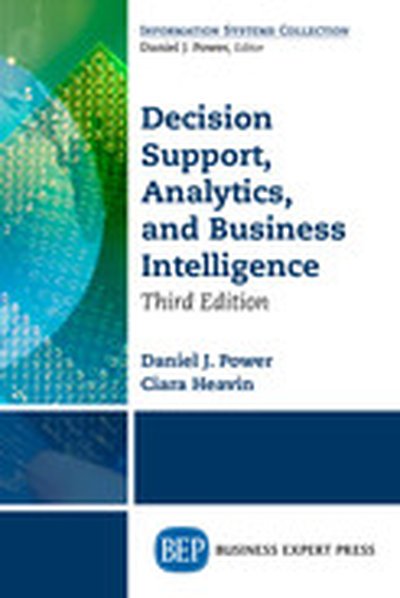
Decision Support, Analytics, and Business Intelligence, Third Edition

Rapid technology change is impacting organizations large and small. Mobile and Cloud computing, the Internet of Things (IoT), and “Big Data” are driving forces in organizational digital transformation. Decision support and analytics are available to many people in a business or organization. Business professionals need to learn about and understand computerized decision support for organizations to succeed. This text is targeted to busy managers and students who need to grasp the basics of computerized decision support, including: What is analytics? What is a decision support system? What is “Big Data”? What are “Big Data” business use cases? Overall, it addresses 61 fundamental questions. In a short period of time, readers can “get up to speed” on decision support, analytics, and business intelligence. The book then provides a quick reference to important recurring questions.

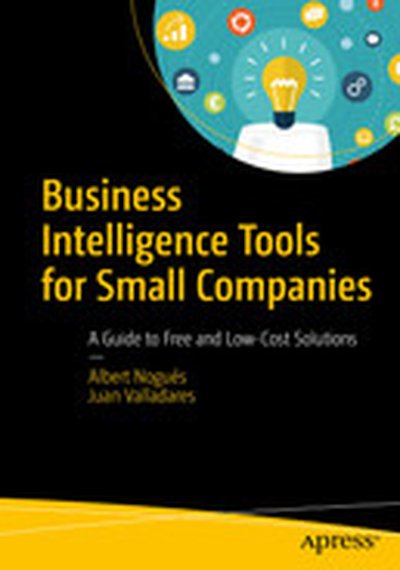
Business Intelligence Tools for Small Companies: A Guide to Free and Low-Cost Solutions

Learn how to transition from Excel-based business intelligence (BI) analysis to enterprise stacks of open-source BI tools. Select and implement the best free and freemium open-source BI tools for your company's needs and design, implement, and integrate BI automation across the full stack using agile methodologies. Business Intelligence Tools for Small Companies provides hands-on demonstrations of open-source tools suitable for the BI requirements of small businesses. The authors draw on their deep experience as BI consultants, developers, and administrators to guide you through the extract-transform-load/data warehousing (ETL/DWH) sequence of extracting data from an enterprise resource planning (ERP) database freely available on the Internet, transforming the data, manipulating them, and loading them into a relational database. The authors demonstrate how to extract, report, and dashboard key performance indicators (KPIs) in a visually appealing format from the relational database management system (RDBMS). They model the selection and implementation of free and freemium tools such as Pentaho Data Integrator and Talend for ELT, Oracle XE and MySQL/MariaDB for RDBMS, and Qliksense, Power BI, and MicroStrategy Desktop for reporting. This richly illustrated guide models the deployment of a small company BI stack on an inexpensive cloud platform such as AWS. What You'll Learn You will learn how to manage, integrate, and automate the processes of BI by selecting and implementing tools to: Implement and manage the business intelligence/data warehousing (BI/DWH) infrastructure Extract data from any enterprise resource planning (ERP) tool Process and integrate BI data using open-source extract-transform-load (ETL) tools Query, report, and analyze BI data using open-source visualization and dashboard tools Use a MOLAP tool to define next year's budget, integrating real data with target scenarios Deploy BI solutions and big data experiments inexpensively on cloud platforms Who This Book Is For Engineers, DBAs, analysts, consultants, and managers at small companies with limited resources but whose BI requirements have outgrown the limitations of Excel spreadsheets; personnel in mid-sized companies with established BI systems who are exploring technological updates and more cost-efficient solutions

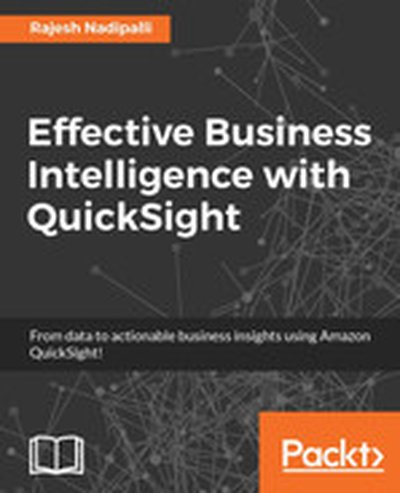
Effective Business Intelligence with QuickSight

Effective Business Intelligence with QuickSight introduces you to Amazon QuickSight, a modern BI tool that enables interactive visualizations powered by the cloud. With comprehensive tutorials, you'll master how to load, prepare, and visualize your data for actionable insights. This book provides real-world examples to showcase how QuickSight integrates into the AWS ecosystem. What this Book will help me do Understand how to effectively use Amazon QuickSight for business intelligence. Learn how to connect QuickSight to data sources like S3, RDS, and more. Create interactive dashboards and visualizations with QuickSight tools. Gain expertise in managing users, permissions, and data security in QuickSight. Execute a real-world big data project using AWS Data Lakes and QuickSight. Author(s) None Nadipalli is a seasoned data architect with extensive experience in cloud computing and business intelligence. With expertise in the AWS ecosystem, she has worked on numerous large-scale data analytics projects. Her writing focuses on providing practical knowledge through easy-to-follow examples and actionable insights. Who is it for? This book is ideal for business intelligence architects, developers, and IT executives seeking to leverage Amazon QuickSight. It is suited for readers with foundational knowledge of AWS who want to enhance their capabilities in BI and data visualization. If your goal is to modernize your business intelligence systems and explore advanced analytics, this book is perfect for you.

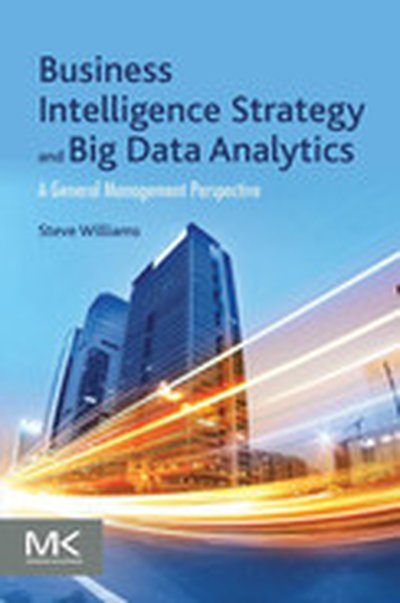
Business Intelligence Strategy and Big Data Analytics

Business Intelligence Strategy and Big Data Analytics is written for business leaders, managers, and analysts - people who are involved with advancing the use of BI at their companies or who need to better understand what BI is and how it can be used to improve profitability. It is written from a general management perspective, and it draws on observations at 12 companies whose annual revenues range between $500 million and $20 billion. Over the past 15 years, my company has formulated vendor-neutral business-focused BI strategies and program execution plans in collaboration with manufacturers, distributors, retailers, logistics companies, insurers, investment companies, credit unions, and utilities, among others. It is through these experiences that we have validated business-driven BI strategy formulation methods and identified common enterprise BI program execution challenges. In recent years, terms like “big data” and “big data analytics” have been introduced into the business and technical lexicon. Upon close examination, the newer terminology is about the same thing that BI has always been about: analyzing the vast amounts of data that companies generate and/or purchase in the course of business as a means of improving profitability and competitiveness. Accordingly, we will use the terms BI and business intelligence throughout the book, and we will discuss the newer concepts like big data as appropriate. More broadly, the goal of this book is to share methods and observations that will help companies achieve BI success and thereby increase revenues, reduce costs, or both. Provides ideas for improving the business performance of one’s company or business functions Emphasizes proven, practical, step-by-step methods that readers can readily apply in their companies Includes exercises and case studies with road-tested advice about formulating BI strategies and program plans

The Four Intelligences of the Business Mind: How to Rewire Your Brain and Your Business for Success

I highly recommend that you look at your organization through the lens of The Four Intelligences of the Business Mind. If you do so, your business will improve in unexpected ways." —Mark Waldman, Executive MBA Faculty, Loyola Marymount University "A new pragmatic synthesis of organizational psychology, business analytics, and multiple intelligences theory, The Four Intelligences of the Business Mind uses a revolutionary four-quadrant-based approach to teach you how to retrain your brain to optimize and transform your business. Valeh Nazemoff has written an excellent book with a commonsense approach and clear guidance." —Shaun Khalfan, Chief of Cyber Infrastructure, Department of the Navy The Four Intelligences of the Business Mind lays out a scheme of four discrete but interlocking types of intelligence essential to business success. These intelligences are scalable and transferable from the individual leader to the organizational ecosystem. This short book teaches executives first to analyze and train their own brains in these four intelligences; then to transform their organizations by applying their sharpened quadruplex intelligence to their business analyses and decisions; and finally to train and incentivize their companies to map onto a collective organizational scale the mental transformation modeled by the "mastermind" leader. The four essential business intelligences identified by IT executive and organizational psychologist Valeh Nazemoff are financial intelligence, customer intelligence, data intelligence, and mastermind intelligence. Financial intelligence informs your ability to reinvest and regrow your business boldly but prudently in the light of predictive, risk, and business analytics. Customer intelligence informs your ability to rethink your approaches to attracting and keeping customers using customer, web, mobile, social, big data, and behavioral analytics. Data intelligence informs your ability to reinvent and recreate information in automated graphical representations to enable rapid decision-making using visual, cloud, web, and operational analytics, AI, and distance collaboration platforms. Finally, mastermind intelligence involves your ability through leadership and team exercises to impart to your employees and organization the same transformative honing and integration of business intelligences as you have undergone yourself. "Practical, relevant, insightful, engaging, and a pleasant read, The Four Intelligences of the Business Mind puts human decision making into a whole new light, revealing practical steps that will allow you to reinvent your business and customer relationships!" —James Brady, PhD, FHIMSS, Chief Information Officer, Kaiser Permanente Orange County "An invaluable book that shows you how to harness the inevitable transformations in business by understanding your mind better." —Alan Komet, Vice President, Global Sales Operations, FalconStor Software, Inc. "A must-read book for every business person." —Chuck Corjay, Ret. Chairman, AFCEA International "Valeh Nazemoff has written an intelligent, thoughtful book full of insight and practical advice. The Four Intelligences of the Business Mind reframes the way our minds work, and in doing so transforms how we drive business forward. This book is a must-read!" —Joe DiStefano, Senior Vice President and Market Executive, Cardinal Bank

Business Intelligence Guidebook

Between the high-level concepts of business intelligence and the nitty-gritty instructions for using vendors’ tools lies the essential, yet poorly-understood layer of architecture, design and process. Without this knowledge, Big Data is belittled – projects flounder, are late and go over budget. Business Intelligence Guidebook: From Data Integration to Analytics shines a bright light on an often neglected topic, arming you with the knowledge you need to design rock-solid business intelligence and data integration processes. Practicing consultant and adjunct BI professor Rick Sherman takes the guesswork out of creating systems that are cost-effective, reusable and essential for transforming raw data into valuable information for business decision-makers. After reading this book, you will be able to design the overall architecture for functioning business intelligence systems with the supporting data warehousing and data-integration applications. You will have the information you need to get a project launched, developed, managed and delivered on time and on budget – turning the deluge of data into actionable information that fuels business knowledge. Finally, you’ll give your career a boost by demonstrating an essential knowledge that puts corporate BI projects on a fast-track to success. Provides practical guidelines for building successful BI, DW and data integration solutions. Explains underlying BI, DW and data integration design, architecture and processes in clear, accessible language. Includes the complete project development lifecycle that can be applied at large enterprises as well as at small to medium-sized businesses Describes best practices and pragmatic approaches so readers can put them into action. Companion website includes templates and examples, further discussion of key topics, instructor materials, and references to trusted industry sources.

Modern Enterprise Business Intelligence and Data Management

Nearly every large corporation and governmental agency is taking a fresh look at their current enterprise-scale business intelligence (BI) and data warehousing implementations at the dawn of the "Big Data Era"…and most see a critical need to revitalize their current capabilities. Whether they find the frustrating and business-impeding continuation of a long-standing "silos of data" problem, or an over-reliance on static production reports at the expense of predictive analytics and other true business intelligence capabilities, or a lack of progress in achieving the long-sought-after enterprise-wide "single version of the truth" – or all of the above – IT Directors, strategists, and architects find that they need to go back to the drawing board and produce a brand new BI/data warehousing roadmap to help move their enterprises from their current state to one where the promises of emerging technologies and a generation’s worth of best practices can finally deliver high-impact, architecturally evolvable enterprise-scale business intelligence and data warehousing. Author Alan Simon, whose BI and data warehousing experience dates back to the late 1970s and who has personally delivered or led more than thirty enterprise-wide BI/data warehousing roadmap engagements since the mid-1990s, details a comprehensive step-by-step approach to building a best practices-driven, multi-year roadmap in the quest for architecturally evolvable BI and data warehousing at the enterprise scale. Simon addresses the triad of technology, work processes, and organizational/human factors considerations in a manner that blends the visionary and the pragmatic. Takes a fresh look at true enterprise-scale BI/DW in the "Dawn of the Big Data Era" Details a checklist-based approach to surveying one’s current state and identifying which components are enterprise-ready and which ones are impeding the key objectives of enterprise-scale BI/DW Provides an approach for how to analyze and test-bed emerging technologies and architectures and then figure out how to include the relevant ones in the roadmaps that will be developed Presents a tried-and-true methodology for building a phased, incremental, and iterative enterprise BI/DW roadmap that is closely aligned with an organization’s business imperatives, organizational culture, and other considerations

Microsoft Business Intelligence Tools for Excel Analysts

Bridge the big data gap with Microsoft Business Intelligence Tools for Excel Analysts The distinction between departmental reporting done by business analysts with Excel and the enterprise reporting done by IT departments with SQL Server and SharePoint tools is more blurry now than ever before. With the introduction of robust new features like PowerPivot and Power View, it is essential for business analysts to get up to speed with big data tools that in the past have been reserved for IT professionals. Written by a team of Business Intelligence experts, Microsoft Business Intelligence Tools for Excel Analysts introduces business analysts to the rich toolset and reporting capabilities that can be leveraged to more effectively source and incorporate large datasets in their analytics while saving them time and simplifying the reporting process. Walks you step-by-step through important BI tools like PowerPivot, SQL Server, and SharePoint and shows you how to move data back and forth between these tools and Excel Shows you how to leverage relational databases, slice data into various views to gain different visibility perspectives, create eye-catching visualizations and dashboards, automate SQL Server data retrieval and integration, and publish dashboards and reports to the web Details how you can use SQL Server's built-in functions to analyze large amounts of data, Excel pivot tables to access and report OLAP data, and PowerPivot to create powerful reporting mechanisms You'll get on top of the Microsoft BI stack and all it can do to enhance Excel data analysis with this one-of-a-kind guide written for Excel analysts just like you.

Successful Business Intelligence, Second Edition, 2nd Edition

Revised to cover new advances in business intelligence—big data, cloud, mobile, and more—this fully updated bestseller reveals the latest techniques to exploit BI for the highest ROI. “Cindi has created, with her typical attention to details that matter, a contemporary forward-looking guide that organizations could use to evaluate existing or create a foundation for evolving business intelligence / analytics programs. The book touches on strategy, value, people, process, and technology, all of which must be considered for program success. Among other topics, the data, data warehousing, and ROI comments were spot on. The ‘technobabble’ chapter was brilliant!” — Bill Frank, Business Intelligence and Data Warehousing Program Manager, Johnson & Johnson “If you want to be an analytical competitor, you’ve got to go well beyond business intelligence technology. Cindi Howson has wrapped up the needed advice on technology, organization, strategy, and even culture in a neat package. It’s required reading for quantitatively oriented strategists and the technologists who support them.” — Thomas H. Davenport, President’s Distinguished Professor, Babson College and co-author, Competing on Analytics “Cindi has created an exceptional, authoritative description of the end-to-end business intelligence ecosystem. This is a great read for those who are just trying to better understand the business intelligence space, as well as for the seasoned BI practitioner.” — Sully McConnell, Vice President, Business Intelligence and Information Management, Time Warner Cable “Cindi’s book succinctly yet completely lays out what it takes to deliver BI successfully. IT and business leaders will benefit from Cindi’s deep BI experience, which she shares through helpful, real-world definitions, frameworks, examples, and stories. This is a must-read for companies engaged in – or considering – BI.” — Barbara Wixom, PhD, Principal Research Scientist, MIT Sloan Center for Information Systems Research Expanded to cover the latest advances in business intelligence such as big data, cloud, mobile, visual data discovery, and in-memory computing, this fully updated bestseller by BI guru Cindi Howson provides cutting-edge techniques to exploit BI for maximum value. Successful Business Intelligence: Unlock the Value of BI & Big Data, Second Edition describes best practices for an effective BI strategy. Find out how to: Garner executive support to foster an analytic culture Align the BI strategy with business goals Develop an analytic ecosystem to exploit data warehousing, analytic appliances, and Hadoop for the right BI workload Continuously improve the quality, breadth, and timeliness of data Find the relevance of BI for everyone in the company Use agile development processes to deliver BI capabilities and improvements at the pace of business change Select the right BI tools to meet user and business needs Measure success in multiple ways Embrace innovation, promote successes and applications, and invest in training Monitor your evolution and maturity across various factors for impact Exclusive industry survey data and real-world case studies from Medtronic, Macy’s, 1-800 CONTACTS, The Dow Chemical Company, Netflix, Constant Contact, and other companies show successful BI initiatives in action. From Moneyball to Nate Silver, BI and big data have permeated our cultural, political, and economic landscape. This timely, up-to-date guide reveals how to plan and deploy an agile, state-of-the-art BI solution that links insight to action and delivers a sustained competitive advantage.

Big Data, Big Analytics: Emerging Business Intelligence and Analytic Trends for Today's Businesses

Unique prospective on the big data analytics phenomenon for both business and IT professionals The availability of Big Data, low-cost commodity hardware and new information management and analytics software has produced a unique moment in the history of business. The convergence of these trends means that we have the capabilities required to analyze astonishing data sets quickly and cost-effectively for the first time in history. These capabilities are neither theoretical nor trivial. They represent a genuine leap forward and a clear opportunity to realize enormous gains in terms of efficiency, productivity, revenue and profitability. The Age of Big Data is here, and these are truly revolutionary times. This timely book looks at cutting-edge companies supporting an exciting new generation of business analytics. Learn more about the trends in big data and how they are impacting the business world (Risk, Marketing, Healthcare, Financial Services, etc.) Explains this new technology and how companies can use them effectively to gather the data that they need and glean critical insights Explores relevant topics such as data privacy, data visualization, unstructured data, crowd sourcing data scientists, cloud computing for big data, and much more.

Business Intelligence Applied: Implementing an Effective Information and Communications Technology Infrastructure

Expert guidance for building an information communication and technology infrastructure that provides best in business intelligence Enterprise performance management (EPM) technology has been rapidly advancing, especially in the areas of predictive analysis and cloud-based solutions. Business intelligence caught on as a concept in the business world as the business strategy application of data warehousing in the early 2000s. With the recent surge in interest in data analytics and big data, it has seen a renewed level of interest as the ability of a business to find the valuable data in a timely—and competitive—fashion. Business Intelligence Applied reveals essential information for building an optimal and effective information and communication technology (ICT) infrastructure. Defines ICT infrastructure Examines best practices for documenting business change and for documenting technology recommendations Includes examples and cases from Europe and Asia Written for business intelligence staff, CIOs, CTOs, and technology managers With examples and cases from Europe and Asia, Business Intelligence Applied expertly covers business intelligence, a hot topic in business today as a key element to business and data analytics.