Blockchain technology, cryptocurrencies and decentralised finance are described by some as massively disruptive technologies that will turn our existing financial system on its head. For the traditional financial services industry, these technologies have the potential to create huge efficiency gains and democratise more complex financial services for individual users. On the other hand, DeFi also reduces – and potentially removes – the need for trusted intermediaries, which makes the model unsettling to some operators in the current financial system. DeFi also opens the opportunity for global financial inclusion of enterprises and private individuals in developing markets – a very large group whose needs are typically unmet by traditional finance. With all this huge potential about to be released, we better learn why these technologies are so revolutionary and what will they do for us now and in the future. To answer these questions and many more relating to DeFi, I recently spoke to Daniel Liebau. Dan is the Chief Investment Officer, Blockchain Strategy at Modular Asset Management and the Founding Chairman of Lightbulb Capital, a DeFi investment and consulting firm. In this episode of Leaders of Analytics, Dan and I discuss: Why is DeFi so revolutionary and the opportunities and risks that lie within this space for individual users, corporations and nation statesThe difference between Payment, Utility and Security tokens and how these are likely to be used in our future financial systemThe utility of NFTs and their future as an asset categoryHow blockchains, cryptocurrencies and DeFi will be part of our lives in 5, 10 and 20 years respectivelyWhat Dan is teaching his FinTech, crypto and DeFi students, and much more. Daniel Liebau on LinkedIn: https://www.linkedin.com/in/liebauda/ Lightbulb Capital: https://www.lightbulbcap.com/
 talk-data.com
Topic
Blockchain
76
tagged
Activity Trend
Top Events
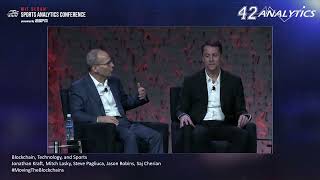
In this talk Kris Ewald, data analytics veteran will review the current status on analytics data vs blockchain data - pro et contra for each techstack, followup on the discussion from the fireside chat on data ownership and control, and how to turn data into quantifiable (value) objects.
On this episode, we chat with Aileen Crowley, former Vice President of Global Streaming Marketing at Universal Music Group. Before leaving the major label world in November 2020, Aileen devised data-driven streaming strategy for developing artists, working directly with artist management to translate streaming analytics, develop artist release strategies, and implement plans for audience growth.
Prior to that, Aileen was the General Manager of DigSin, a subscription-based independent music label focused on singles, playlisting, and data, as well as being an artist manager—and that was after spending almost seven years at world-renowned consulting firm McKinsey & Co. Today, Aileen runs The Streaming Story, a website dedicated to contextualizing streaming success with the narrative surrounding that success. Since recording this interview, Aileen has teamed up with Lark42, a digital consultancy that solves hard problems in the music, data, blockchain, streaming and startup space. You can connect with Aileen on LinkedIn here. If you want more free insights, follow our podcast, our blog, and our socials. If you're an artist with a free Chartmetric account, sign up for the artist plan, made exclusively for you, here. If you're new to Chartmetric, follow the URL above after creating a free account here.
Single-purpose databases were designed to address specific problems and use cases. Given this narrow focus, there are inherent tradeoffs required when trying to accommodate multiple datatypes or workloads in your enterprise environment. The result is data fragmentation that spills over into application development, IT operations, data security, system scalability, and availability. In this report, author Alice LaPlante explains why developing modern, data-driven applications may be easier and more synergistic when using a converged database. Senior developers, architects, and technical decision-makers will learn cloud-native application development techniques for working with both structured and unstructured data. You'll discover ways to run transactional and analytical workloads on a single, unified data platform. This report covers: Benefits and challenges of using a converged database to develop data-driven applications How to use one platform to work with both structured and unstructured data that includes JSON, XML, text and files, spatial and graph, Blockchain, IoT, time series, and relational data Modern development practices on a converged database, including API-driven development, containers, microservices, and event streaming Use case examples including online food delivery, real-time fraud detection, and marketing based on real-time analytics and geospatial targeting
In a world of changing privacy regulations, identity theft, and online anonymity, identity is a precious and complex concept. Self-Sovereign Identity (SSI) is a set of technologies that move control of digital identity from third party “identity providers” directly to individuals, and it promises to be one of the most important trends for the coming decades. Now in Self-Sovereign Identity, privacy and personal data experts Drummond Reed and Alex Preukschat lay out a roadmap for a future of personal sovereignty powered by the Blockchain and cryptography. Cutting through the technical jargon with dozens of practical use cases from experts across all major industries, it presents a clear and compelling argument for why SSI is a paradigm shift, and shows how you can be ready to be prepared for it. About the Technology Trust on the internet is at an all-time low. Large corporations and institutions control our personal data because we’ve never had a simple, safe, strong way to prove who we are online. Self-sovereign identity (SSI) changes all that. About the Book In Self-Sovereign Identity: Decentralized digital identity and verifiable credentials, you’ll learn how SSI empowers us to receive digitally-signed credentials, store them in private wallets, and securely prove our online identities. It combines a clear, jargon-free introduction to this blockchain-inspired paradigm shift with interesting essays written by its leading practitioners. Whether for property transfer, ebanking, frictionless travel, or personalized services, the SSI model for digital trust will reshape our collective future. What's Inside The architecture of SSI software and services The technical, legal, and governance concepts behind SSI How SSI affects global business industry-by-industry Emerging standards for SSI About the Reader For technology and business readers. No prior SSI, cryptography, or blockchain experience required. About the Authors Drummond Reed is the Chief Trust Officer at Evernym, a technology leader in SSI. Alex Preukschat is the co-founder of SSIMeetup.org and AlianzaBlockchain.org. Quotes This book is a comprehensive roadmap to the most crucial fix for today’s broken Internet. - Brian Behlendorf, GM for Blockchain, Healthcare and Identity at the Linux Foundation If trusted relationships over the Internet are important to you or your business, this book is for you. - John Jordan, Executive Director, Trust over IP Foundation Decentralized identity represents not only a wide range of trust-enabling technologies, but also a paradigm shift in our increasingly digital-first world. - Rouven Heck, Executive Director, Decentralized Identity Foundation
Collect data and build trust. With the rise of data science and machine learning, companies are awash in customer data and powerful new ways to gain insight from that data. But in the absence of regulation and clear guidelines from most federal or state governments, it's difficult for companies to understand what qualifies as reasonable use and then determine how to act in the best interest of their customers. How do they build, not erode, trust? Customer Data and Privacy: The Insights You Need from Harvard Business Review brings you today's most essential thinking on customer data and privacy to help you understand the tangled interdependencies and complexities of this evolving issue. The lessons in this book will help you develop strategies that allow your company to be a good steward, collecting, using, and storing customer data responsibly. Business is changing. Will you adapt or be left behind? Get up to speed and deepen your understanding of the topics that are shaping your company's future with the Insights You Need from Harvard Business Review series. Featuring HBR's smartest thinking on fast-moving issues—blockchain, cybersecurity, AI, and more—each book provides the foundational introduction and practical case studies your organization needs to compete today and collects the best research, interviews, and analysis to get it ready for tomorrow. You can't afford to ignore how these issues will transform the landscape of business and society. The Insights You Need series will help you grasp these critical ideas—and prepare you and your company for the future.
Is your company ready for the next wave of analytics? Data analytics offer the opportunity to predict the future, use advanced technologies, and gain valuable insights about your business. But unless you're staying on top of the latest developments, your company is wasting that potential--and your competitors will be gaining speed while you fall behind. Strategic Analytics: The Insights You Need from Harvard Business Review will provide you with today's essential thinking about what data analytics are capable of, what critical talents your company needs to reap their benefits, and how to adopt analytics throughout your organization--before it's too late. Business is changing. Will you adapt or be left behind? Get up to speed and deepen your understanding of the topics that are shaping your company's future with the Insights You Need from Harvard Business Review series. Featuring HBR's smartest thinking on fast-moving issues--blockchain, cybersecurity, AI, and more--each book provides the foundational introduction and practical case studies your organization needs to compete today and collects the best research, interviews, and analysis to get it ready for tomorrow. You can't afford to ignore how these issues will transform the landscape of business and society. The Insights You Need series will help you grasp these critical ideas--and prepare you and your company for the future.
Summary Every business collects data in some fashion, but sometimes the true value of the collected information only comes when it is combined with other data sources. Data trusts are a legal framework for allowing businesses to collaboratively pool their data. This allows the members of the trust to increase the value of their individual repositories and gain new insights which would otherwise require substantial effort in duplicating the data owned by their peers. In this episode Tom Plagge and Greg Mundy explain how the BrightHive platform serves to establish and maintain data trusts, the technical and organizational challenges they face, and the outcomes that they have witnessed. If you are curious about data sharing strategies or data collaboratives, then listen now to learn more!
Announcements
Hello and welcome to the Data Engineering Podcast, the show about modern data management When you’re ready to build your next pipeline, or want to test out the projects you hear about on the show, you’ll need somewhere to deploy it, so check out our friends at Linode. With 200Gbit private networking, scalable shared block storage, and a 40Gbit public network, you’ve got everything you need to run a fast, reliable, and bullet-proof data platform. If you need global distribution, they’ve got that covered too with world-wide datacenters including new ones in Toronto and Mumbai. And for your machine learning workloads, they just announced dedicated CPU instances. Go to dataengineeringpodcast.com/linode today to get a $20 credit and launch a new server in under a minute. And don’t forget to thank them for their continued support of this show! You listen to this show to learn and stay up to date with what’s happening in databases, streaming platforms, big data, and everything else you need to know about modern data management. For even more opportunities to meet, listen, and learn from your peers you don’t want to miss out on this year’s conference season. We have partnered with organizations such as O’Reilly Media, Corinium Global Intelligence, ODSC, and Data Council. Upcoming events include the Software Architecture Conference in NYC, Strata Data in San Jose, and PyCon US in Pittsburgh. Go to dataengineeringpodcast.com/conferences to learn more about these and other events, and take advantage of our partner discounts to save money when you register today. Your host is Tobias Macey and today I’m interviewing Tom Plagge and Gregory Mundy about BrightHive, a platform for building data trusts
Interview
Introduction How did you get involved in the area of data management? Can you start by describing what a data trust is?
Why might an organization want to build one?
What is BrightHive and what is its origin story? Beyond having a storage location with access controls, what are the components of a data trust that are necessary for them to be viable? What are some of the challenges that are common in establishing an agreement among organizations who are participating in a data trust?
What are the responsibilities of each of the participants in a data trust? For an individual or organization who wants to participate in an existing trust, what is involved in gaining access?
How does BrightHive support the process of building a data trust? How is ownership of derivative data sets/data products and associated intellectual property handled in the context of a trust? How is the technical architecture of BrightHive implemented and how has it evolved since it first started? What are some of the ways that you approach the challenge of data privacy in these sharing agreements? What are some legal and technical guards that you implement to encourage ethical uses of the data contained in a trust? What is the motivation for releasing the technical elements of BrightHive as open source? What are some of the most interesting, innovative, or inspirational ways that you have seen BrightHive used? Being a shared platform for empowering other organizations to collaborate I imagine there is a strong focus on long-term sustainability. How are you approaching that problem and what is the business model for BrightHive? What have you found to be the most interesting/unexpected/challenging aspects of building and growing the technical and business infrastructure of BrightHive? What do you have planned for the future of BrightHive?
Contact Info
Tom
LinkedIn tplagge on GitHub
Gregory
LinkedIn gregmundy on GitHub @graygoree on Twitter
Parting Question
From your perspective, what is the biggest gap in the tooling or technology for data management today?
Closing Announcements
Thank you for listening! Don’t forget to check out our other show, Podcast.init to learn about the Python language, its community, and the innovative ways it is being used. Visit the site to subscribe to the show, sign up for the mailing list, and read the show notes. If you’ve learned something or tried out a project from the show then tell us about it! Email [email protected]) with your story. To help other people find the show please leave a review on iTunes and tell your friends and co-workers Join the community in the new Zulip chat workspace at dataengineeringpodcast.com/chat
Links
BrightHive Data Science For Social Good Workforce Data Initiative NASA NOAA Data Trust Data Collaborative Public Benefit Corporation Terraform Airflow
Podcast.init Episode
Dagster
Podcast Episode
Secure Multi-Party Computation Public Key Encryption AWS Macie Blockchain Smart Contracts
The intro and outro music is from The Hug by The Freak Fandango Orchestra / CC BY-SA
Support Data Engineering Podcast
This Blueprint is intended to define the infrastructure that is required for a blockchain remote peer and to facilitate the deployment of IBM Blockchain Platform on IBM Cloud Private using that infrastructure. This infrastructure includes the necessary document handler components, such as IBM Blockchain Document Store, and covers the required storage for on-chain and off-chain blockchain data. To complete these tasks, you must have a basic understanding of each of the used components or have access the correct educational material to gain that knowledge.
Send us a text This week on Making Data Simple, Dinesh Nirmal comes on the show to discuss current industry trends. Host Al Martin poses questions that are both technical and leadership oriented. Together, they discuss the new, emerging technologies that drives them while providing their own definitions of team building and success. Listen, engage, react. Give us your feedback and get in on the conversation.
Show Notes Check us out on: - YouTube - Apple Podcasts - Google Play Music - Spotify - TuneIn - Stitcher 00:10 - Connect with Producer Steve Moore on LinkedIn and Twitter. 00:15 - Connect with Producer Liam Seston on LinkedIn and Twitter. 00:20 - Connect with Producer Rachit Sharma on LinkedIn. 00:25 - Connect with Host Al Martin on LinkedIn and Twitter. 01:37 - Connect with Dinesh Nirmal on LinkedIn and Twitter. 06:06 - An interesting read on the state of illegal dumping in rural California 11:14 - Some examples of successful AI uses cases. 14:31 - Learn about blockchain here. 29:06 - Find out how open source is helping remove data silos in the enterprise. 32:40 - Check out IBM's content on big data analytics. Want to be featured as a guest on Making Data Simple? Reach out to us at [email protected] and tell us why you should be next. The Making Data Simple Podcast is hosted by Al Martin, WW VP Technical Sales, IBM, where we explore trending technologies, business innovation, and leadership ... while keeping it simple & fun.
IBM Storage Solutions for IBM Cloud™ Private delivers a blueprint for multicloud architecture. IBM, delivering solutions to help you win. In this blueprint, learn how to: Combine the benefits of IBM Systems with the performance of IBM Storage solutions so that you can deliver the right services to your clients today. Deliver optimized private cloud services ahead of schedule and under budget with a complete IBM Cloud Private stack. Containerize applications and deliver the SLAs that your team needs to thrive and win. Implement IBM Cloud Private to deploy modern applications like blockchain and AI or modernize what you already have. You now have the capabilities. This edition applies to IBM Storage Solutions for IBM Cloud Private Version 1 Release 5.0.
Send us a text Seth Dobrin is back to kick off season 3 and reflect on data and tech in 2018. Seth Dobrin, vice president and Chief Data Officer of IBM Analytics, gives insight to leading the data science elite team, and he details the steps and strategies required to be successful in the field. Host Al Martin and Seth also make some data science predictions for 2019, letting you know what you should be looking out for in the year ahead.
Shownotes: 00:00 - Check us out on YouTube and SoundCloud. 00:10 - Connect with Producer Steve Moore on LinkedIn and Twitter. 00:15 - Connect with Producer Liam Seston on LinkedIn and Twitter. 00:20 - Connect with Producer Rachit Sharma on LinkedIn. 00:25 - Connect with Host Al Martin on LinkedIn and Twitter. 00:55 – Connect with Seth Dobrin on LinkedIn and Twitter. 02:00 – Seth Dobrin’s first podcast from January 2018. 03:30 - What is data science? 04:25 - Seth Dobrin’s Blog: Don’t let data science become a scam. 10:55 - IBM Data Science Elite Team: Kickstart, build andaccelerate 31:55 - What is AI? 37:58 - What are data pipelines? 41:55 - What is Blockchain? Want to be featured as a guest on Making Data Simple? Reach out to us at [email protected] and tell us why you should be next. The Making Data Simple Podcast is hosted by Al Martin, WW VP Technical Sales, IBM, where we explore trending technologies, business innovation, and leadership ... while keeping it simple & fun.
In this podcast, @BillFranksGA talks about the ingredients of a successful analytics ecosystem. He shared his analytics journey, his perspective on how other businesses are engaging in data analytics practice. He also sheds some light on best practices that businesses could adopt to execute a successful data strategy.
Timeline: 0:28 Bill's journey. 4:00 Bill's journey as an analyst. 9:29 Maturity of the analytics market. 11:56 Business, IT, and Data. 16:18 Introducing centralized analytics practice in an enterprise. 19:50 Tips and strategies for chief data officers to deliver the goods. 26:07 What do businesses don't get about data analytics? 29:40 Is the future aligned with data or analytics. 34:25 Importance for leadership to understand analytics. 36:35 The role of analytics professionals in the age of AI. 41:42 Upgrading analytics models. 47:50 How much should a business experiment on AI. 55:25 Evaluating blockchain. 59:50 Bill's success mantra. 1:05:25 Bill's favorite reads. 1:07:17 Key takeaway.
Podcast Link: https://futureofdata.org/billfranksga-on-the-ingredients-of-successful-analytics-ecosystem-futureofdata-podcast/
Bill's BIO: Bill Franks is Chief Analytics Officer for The International Institute For Analytics (IIA), where he provides perspective on trends in the analytics and big data space and helps clients understand how IIA can support their efforts to improve analytic performance. He also serves on the advisory boards of multiple university and professional analytic programs. He has held a range of executive positions in the analytics space in the past, including several years as Chief Analytics Officer for Teradata (NYSE: TDC).
Bill is the author of the book Taming The Big Data Tidal Wave (John Wiley & Sons). In the book, he applies his two decades of experience working with clients on large-scale analytics initiatives to outline what it takes to succeed in today’s world of big data and analytics. The book made Tom Peter’s list of 2014 “Must Read” books and also the Top 10 Most Influential Translated Technology Books list from CSDN in China.
His focus has always been to help translate complex analytics into terms that business users can understand and to then help an organization implement the results effectively within their processes. His work has spanned clients in a variety of industries for companies ranging in size from Fortune 100 companies to small non-profit organizations.
He earned a Bachelor’s degree in Applied Statistics from Virginia Tech and a Master’s degree in Applied Statistics from North Carolina State University.
About #Podcast:
FutureOfData podcast is a conversation starter to bring leaders, influencers and lead practitioners to come on show and discuss their journey in creating the data driven future.
Want to sponsor? Email us @ [email protected]
Keywords:
FutureOfData #DataAnalytics #Leadership #Podcast #BigData #Strategy
In this episode of Data Skeptic, Kyle chats with Jerry Schwarz from the Independent Investigations Group (IIG)'s SF Bay Area chapter about testing claims of the paranormal. The IIG is a volunteer-based organization dedicated to investigating paranormal or extraordinary claim from a scientific viewpoint. The group, headquartered at the Center for Inquiry-Los Angeles in Hollywood, offers a $100,000 prize to anyone who can show, under proper observing conditions, evidence of any paranormal, supernatural, or occult power or event. CHICAGO Tues, May 15, 6pm. Come to our Data Skeptic meetup. CHICAGO Saturday, May 19, 10am. Kyle will be giving a talk at the Chicago AI, Data Science, and Blockchain Conference 2018.
In this podcast, Joel Comm from The Bad Crypto Podcast sat with Vishal Kumar, CEO AnalyticsWeek, and discuss the World of Crypto Currencies. The discussion sheds light on the nuances in the rapidly exploding world of Crypto Currencies and some of the thinking behind the currencies. The discussion also sheds light on the opportunities and risks in the industry. Joel sheds his insights about how to think about these currencies and the long term implications of the algos that run these currencies. The podcast is a great listen for anyone who wants to understand the world of cryptocurrencies.
Timeline: 0:29 Joel's journey. 5:45 Thinking behind "Bad Crypto". 7:50 Getting into the domain of cryptocurrency. 13:30 Underlying technology behind cryptocurrency. 17:00 On Bitcoin. 18:50 Tracing back a ledger. 20:36 The use of blockchain. 23:00 Every bitcoin is a country. 25:11 Parameters to invest in Cryptocurrency. 26:05 Some better known Cryptocurrency. 31:52 The security aspect of Cryptocurrency. 41:52 Security and regulations of tokens. 44:03 The consensus element of blockchain. 46:25 Alternatives to the blockchain. 49:30 Bitcoin as payment. 58:15 Manipulation of the Crypto market. 1:00:51 Joel's favorite reads.
Youtube: https://youtu.be/xJucEIDitas iTunes: http://apple.co/2ynxopz
Please note, this podcast and/or its content in no way advocate any investment advice and nor intended to generate any positive or negative influence. Crypto Currencies are highly volatile in nature, and any investor must use absolute caution and care while evaluating such currencies.
Joel's Recommended Read: Cryptocurrencies 101 By James Altucher http://bit.ly/2Bi5FMv
Podcast Link: https://futureofdata.org/discussing-world-crypto-joelcomm-badcrypto/
Joel's BIO: As a knowledgeable & inspirational speaker, Joel speaks on a variety of business and entrepreneurial topics. He presents a step-by-step playbook on how to use social media as a leveraging tool to expand the reach of your brand, increase your customer base, and create fierce brand loyalty for your business. Joel is also able to speak with authority on the various ways to harness the marketing power of technology to explode profits. He offers an inspiring yet down-to-earth call to action for those who dream of obtaining growth and financial success. As someone who went from having only 87 cents in his bank account to creating multiple successful businesses, Joel is uniquely poised to instruct and inspire when it comes to using the various forms of new media as avenues towards the greater goal of business success. He is a broadcast veteran with thousands of hours in radio, podcasting, television, and online video experience. Joel is the host of two popular yet completely different podcasts. FUN with Joel Comm features the lighter side of the top business and social leaders. The Bad Crypto Podcast makes cryptocurrency and bitcoin understandable to the masses.
Joel is the New York Times best-selling author of 14 books, including The AdSense Code, Click Here to Order: Stories from the World's Most Successful Entrepreneurs, KaChing: How to Run an Online Business that Pays and Paysm Twitter Power 3.0, and Self Employed: 50 Signs That You Might Be an Entrepreneur. He has also written over 40 ebooks. He has appeared in The New York Times, on Jon Stewart's The Daily Show, on CNN online, on Fox News, and many other places.
About #Podcast:
FutureOfData podcast is a conversation starter to bring leaders, influencers, and lead practitioners to discuss their journey to create the data-driven future.
Wanna Join? If you or any you know wants to join in, Register your interest @ http://play.analyticsweek.com/guest/
Want to sponsor? Email us @ [email protected]
Keywords: