talk-data.com talk-data.com

Topic

data-engineering

3377

tagged

Activity Trend

1 peak/qtr
2020-Q1 2026-Q1

Activities

Showing filtered results

Filtering by: O'Reilly Data Engineering Books ×
Google Maps

Create custom applications with the Google Maps API Featuring step-by-step examples, this practical resource gets you started programming the Google Maps API with JavaScript in no time. Learn how to embed maps on web pages, annotate the embedded maps with your data, generate KML files to store and reuse your map data, and enable client applications to request spatial data through web services. Google Maps: Power Tools for Maximizing the API explains techniques for visualizing masses of data and animating multiple items on the map. You’ll also find out how to embed Google maps in desktop applications to combine the richness of the Windows interface with the unique features of the API. You can use the numerous samples included throughout this hands-on guide as your starting point for building customized applications. Create map-enabled web pages with a custom look Learn the JavaScript skills required to exploit the Google Maps API Create highly interactive interfaces for mapping applications Embed maps in desktop applications written in .NET Annotate maps with labels, markers, and shapes Understand geodesic paths and shapes and perform geodesic calculations Store geographical data in KML format Add GIS features to mapping applications Store large sets of geography data in databases and perform advanced spatial queries Use web services to request spatial data from within your script on demand Automate the generation of standalone web pages with annotated maps Use the Geocoding and Directions APIs Visualize large data sets using symbols and heatmaps Animate items on a map Bonus online content includes: A tutorial on The SQL Spatial application A bonus chapter on animating multiple airplanes Three appendices: debugging scripts in the browser; scalable vector graphics; and applying custom styles
Apache Hadoop™ YARN: Moving beyond MapReduce and Batch Processing with Apache Hadoop™ 2

“This book is a critically needed resource for the newly released Apache Hadoop 2.0, highlighting YARN as the significant breakthrough that broadens Hadoop beyond the MapReduce paradigm.” —From the Foreword by Raymie Stata, CEO of Altiscale The Insider’s Guide to Building Distributed, Big Data Applications with Apache Hadoop™ YARN Apache Hadoop is helping drive the Big Data revolution. Now, its data processing has been completely overhauled: Apache Hadoop YARN provides resource management at data center scale and easier ways to create distributed applications that process petabytes of data. And now in two Hadoop technical leaders show you how to develop new applications and adapt existing code to fully leverage these revolutionary advances. Apache Hadoop™ YARN, YARN project founder Arun Murthy and project lead Vinod Kumar Vavilapalli demonstrate how YARN increases scalability and cluster utilization, enables new programming models and services, and opens new options beyond Java and batch processing. They walk you through the entire YARN project lifecycle, from installation through deployment. You’ll find many examples drawn from the authors’ cutting-edge experience—first as Hadoop’s earliest developers and implementers at Yahoo! and now as Hortonworks developers moving the platform forward and helping customers succeed with it. Coverage includes YARN’s goals, design, architecture, and components—how it expands the Apache Hadoop ecosystem Exploring YARN on a single node Administering YARN clusters and Capacity Scheduler Running existing MapReduce applications Developing a large-scale clustered YARN application Discovering new open source frameworks that run under YARN

Deployment Guide for InfoSphere Guardium

IBM® InfoSphere® Guardium® provides the simplest, most robust solution for data security and data privacy by assuring the integrity of trusted information in your data center. InfoSphere Guardium helps you reduce support costs by automating the entire compliance auditing process across heterogeneous environments. InfoSphere Guardium offers a flexible and scalable solution to support varying customer architecture requirements. This IBM Redbooks® publication provides a guide for deploying the Guardium solutions. This book also provides a roadmap process for implementing an InfoSphere Guardium solution that is based on years of experience and best practices that were collected from various Guardium experts. We describe planning, installation, configuration, monitoring, and administrating an InfoSphere Guardium environment. We also describe use cases and how InfoSphere Guardium integrates with other IBM products. The guidance can help you successfully deploy and manage an IBM InfoSphere Guardium system. This book is intended for the system administrators and support staff who are responsible for deploying or supporting an InfoSphere Guardium environment.

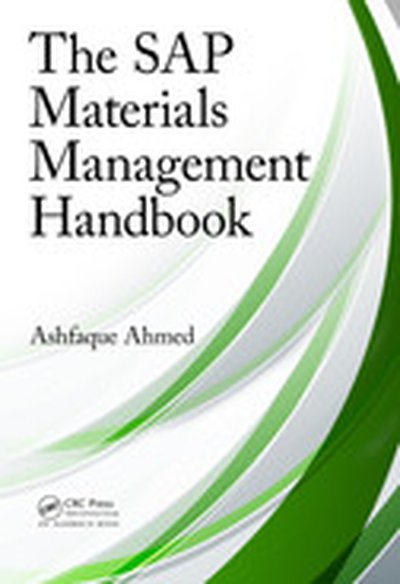
The SAP Materials Management Handbook

This handbook provides a complete understanding of how to configure and implement the SAP materials management module across various types of projects. It uses system screenshots of SAP environments to illustrate the complete flow of business transactions involved with SAP MM. Supplying detailed explanations of the steps involved, it presents case studies from actual projects that demonstrate how to convert theory into powerful SAP MM solutions. The book explains how to use the SAP MM module to take care of the complete range of business functions related to purchasing and inventory management.

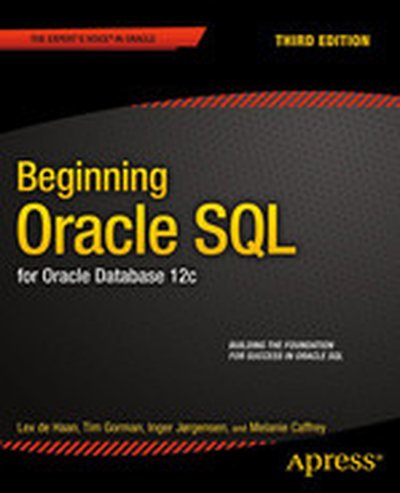
Beginning Oracle SQL: for Oracle Database 12c, Third Edition

Beginning Oracle SQL is your introduction to the interactive query tools and specific dialect of SQL used with Oracle Database. These tools include SQLPlus and SQL Developer. SQLPlus is the one tool any Oracle developer or database administrator can always count on, and it is widely used in creating scripts to automate routine tasks. SQL Developer is a powerful, graphical environment for developing and debugging queries. Oracle's is possibly the most valuable dialect of SQL from a career standpoint. Oracle's database engine is widely used in corporate environments worldwide. It is also found in many government applications. Oracle SQL implements many features not found in competing products. No developer or DBA working with Oracle can afford to be without knowledge of these features and how they work, because of the performance and expressiveness they bring to the table. Written in an easygoing and example-based style, Beginning Oracle SQL is the book that will get you started down the path to successfully writing SQL statements and getting results from Oracle Database. Takes an example-based approach, with clear and authoritative explanations Introduces both SQL and the query tools used to execute SQL statements Shows how to create tables, populate them with data, and then query that data to generate business results What you'll learn Create database tables and define their relationships. Add data to your tables. Then change and delete that data. Write database queries that generate accurate results. Avoid common traps and pitfalls in writing SQL queries, especially from nulls. Reap the performance and expressiveness of analytic and window functions. Make use of Oracle Database's support for object types. Write recursive queries to query hierarchical data. Who this book is for Beginning Oracle SQL is aimed at developers and database administrators who must write SQL statements to execute against an Oracle database. No prior knowledge of SQL is assumed.

Process Modeling Style

Process Modeling Style focuses on other aspects of process modeling beyond notation that are very important to practitioners. Many people who model processes focus on the specific notation used to create their drawings. While that is important, there are many other aspects to modeling, such as naming, creating identifiers, descriptions, interfaces, patterns, and creating useful process documentation. Experience author John Long focuses on those non-notational aspects of modeling, which practitioners will find invaluable. Gives solid advice for creating roles, work products, and processes Instucts on how to organize and structure the parts of a process Gives examples of documents you should use to define a set of processes

(MCTS) Microsoft BizTalk Server (70-595) Certification and Assessment Guide: Second Edition

This comprehensive guide prepares intermediate BizTalk developers to excel in the Microsoft BizTalk Server 2010 (70-595) certification exam. With in-depth coverage of essential concepts, practical examples, and end-to-end solutions, the book ensures you have the skills and knowledge necessary to become a BizTalk expert. What this Book will help me do Master the core architecture and functionalities of Microsoft BizTalk Server. Develop skills to create advanced schemas and maps with enhanced logic functionalities. Understand how to manage orchestrations, transactions, and handle exceptions efficiently. Learn administrative tasks, including configuration and troubleshooting, for BizTalk server environments. Explore integration with web services, WCF, and additional BizTalk features like EDI and BAM. Author(s) This book is written by a team of experienced BizTalk professionals who have hands-on working knowledge with Microsoft BizTalk Server. Their expertise encompasses enterprise-level solution architecture and implementation. They bring their comprehensive understanding and teaching aptitude together in this book, ensuring a balance of detailed technical content and accessible learning. Who is it for? This book is ideal for intermediate-level BizTalk developers focusing on obtaining the Microsoft BizTalk Server 2010 (70-595) certification. It is suitable for individuals with basic knowledge of BizTalk concepts and working with orchestrations. A foundation in WCF and understanding of EDI is recommended to benefit fully from the content of this book.

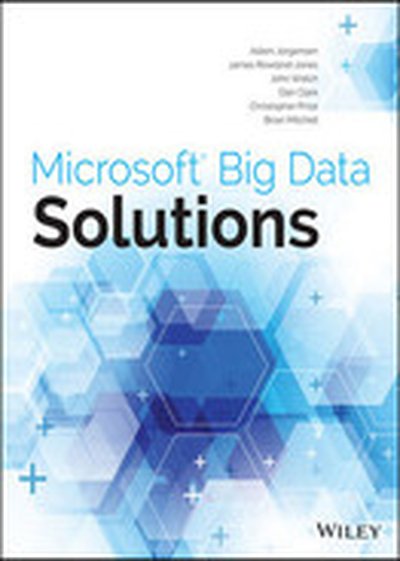
Microsoft Big Data Solutions

Tap the power of Big Data with Microsoft technologies Big Data is here, and Microsoft's new Big Data platform is a valuable tool to help your company get the very most out of it. This timely book shows you how to use HDInsight along with HortonWorks Data Platform for Windows to store, manage, analyze, and share Big Data throughout the enterprise. Focusing primarily on Microsoft and HortonWorks technologies but also covering open source tools, Microsoft Big Data Solutions explains best practices, covers on-premises and cloud-based solutions, and features valuable case studies. Best of all, it helps you integrate these new solutions with technologies you already know, such as SQL Server and Hadoop. Walks you through how to integrate Big Data solutions in your company using Microsoft's HDInsight Server, HortonWorks Data Platform for Windows, and open source tools Explores both on-premises and cloud-based solutions Shows how to store, manage, analyze, and share Big Data through the enterprise Covers topics such as Microsoft's approach to Big Data, installing and configuring HortonWorks Data Platform for Windows, integrating Big Data with SQL Server, visualizing data with Microsoft and HortonWorks BI tools, and more Helps you build and execute a Big Data plan Includes contributions from the Microsoft and HortonWorks Big Data product teams If you need a detailed roadmap for designing and implementing a fully deployed Big Data solution, you'll want Microsoft Big Data Solutions.

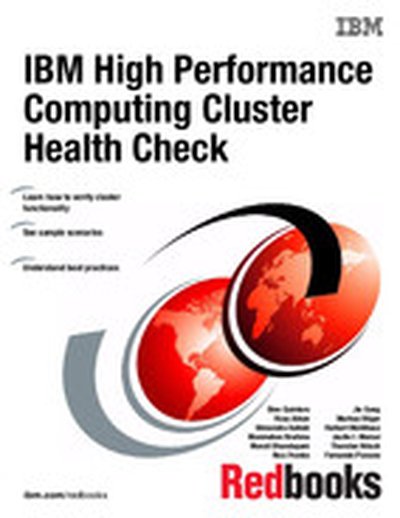
IBM High Performance Computing Cluster Health Check

This IBM® Redbooks® publication provides information about aspects of performing infrastructure health checks, such as checking the configuration and verifying the functionality of the common subsystems (nodes or servers, switch fabric, parallel file system, job management, problem areas, and so on). This IBM Redbooks publication documents how to monitor the overall health check of the cluster infrastructure, to deliver technical computing clients cost-effective, highly scalable, and robust solutions. This IBM Redbooks publication is targeted toward technical professionals (consultants, technical support staff, IT Architects, and IT Specialists) responsible for delivering cost-effective Technical Computing and IBM High Performance Computing (HPC) solutions to optimize business results, product development, and scientific discoveries. This book provides a broad understanding of a new architecture.

IBM Worklight Mobile Application Development Essentials

Discover how to develop robust mobile applications using IBM Worklight. This tutorial provides guided, hands-on practices to explore the capabilities of IBM Worklight and apply them to optimize your mobile development process. You will learn to leverage its tools for greater development efficiency and scalability. What this Book will help me do Understand the architecture and components of IBM Worklight. Learn to create and deploy mobile applications using IBM Worklight. Master techniques for optimizing the performance of your applications. Gain insights into integrating mobile applications with backend systems. Develop skills to troubleshoot and maintain mobile applications efficiently. Author(s) The author brings substantial technical expertise in mobile application development and a deep understanding of IBM Worklight. With years of experience teaching developers and working on cutting-edge projects, they have honed their ability to convey complex topics in an accessible manner. Their approach is practical, focusing on real-world application and problem-solving. Who is it for? If you are a developer or programmer looking to expand your skills into the mobile application domain, this book is for you. It's tailored for those with a basic programming background who want to learn IBM Worklight comprehensively. Whether you're an individual aiming to develop mobile apps for fun or a professional interested in integrating mobile solutions into your workplace, this book will meet your needs and boost your mobile development proficiency.

IBM XIV Storage System Copy Services and Migration

This IBM® Redbooks® publication provides a practical understanding of the IBM XIV® Storage System copy and migration functions. The XIV Storage System has a rich set of copy functions suited for various data protection scenarios, which enables clients to enhance their business continuance, data migration, and online backup solutions. These functions allow point-in-time copies, known as snapshots and full volume copies, and also include remote copy capabilities in either synchronous or asynchronous mode. These functions are included in the XIV software and all their features are available at no additional charge. The various copy functions are reviewed in separate chapters, which include detailed information about usage, and also practical illustrations. Finally, the book illustrates the use of IBM Tivoli® Storage Productivity Center for Replication to manage XIV Copy Services. This book is intended for anyone who needs a detailed and practical understanding of the XIV copy functions.

Optimizing Hadoop for MapReduce

"Optimizing Hadoop for MapReduce" is your comprehensive guide to getting the best performance out of your Hadoop-based big data processing jobs. With a focus on practical application rather than theory, this book delves into the nuances of MapReduce job design, execution, and optimization to help you harness the full power of this technology. What this Book will help me do Understand the internal workings of Hadoop MapReduce and how it executes jobs. Master key optimization techniques to improve Hadoop job efficiency and resource use. Learn advanced MapReduce programming concepts to handle complex data processing tasks. Analyze and monitor Hadoop job performance using practical tools and methods. Integrate best practices for scaling production workloads in a Hadoop cluster. Author(s) Khaled Tannir is a seasoned software engineer and an expert in distributed systems, big data, and cloud technologies. He has decades of experience designing and optimizing systems for high-performance data processing. Khaled's hands-on approach to explaining technical concepts ensures readers gain practical, applied knowledge that can be immediately implemented in real-world projects. Who is it for? This book is intended for developers, data engineers, and system architects who work with or are planning to work with Apache Hadoop. Ideal readers should have basic familiarity with Hadoop concepts and a foundational understanding of distributed systems. This book will benefit professionals looking to optimize their Hadoop-based applications or understand advanced usage of MapReduce. Whether you're aiming to improve your existing knowledge or implement high-performance data solutions, this book is tailored for you.

Mule in Action, Second Edition

Mule in Action, Second Edition is a totally-revised guide covering Mule 3 fundamentals and best practices. It starts with a quick ESB overview and then dives into rich examples covering core concepts like sending, receiving, routing, and transforming data. About the Technology An enterprise service bus is a way to integrate enterprise applications using a bus-like infrastructure. Mule is the leading open source Java ESB. It borrows from the Hohpe/Woolf patterns, is lightweight, can publish REST and SOAP services, integrates well with Spring, is customizable, scales well, and is cloud-ready. About the Book Mule in Action, Second Edition is a totally revised guide covering Mule 3 fundamentals and best practices. It starts with a quick ESB overview and then dives into rich examples covering core concepts like sending, receiving, routing, and transforming data. You'll get a close look at Mule's standard components and how to roll out custom ones. You'll also pick up techniques for testing, performance tuning, and BPM orchestration, and explore cloud API integration for SaaS applications. Written for developers, architects, and IT managers, this book requires familiarity with Java but no previous exposure to Mule or other ESBs. What's Inside Full coverage of Mule 3 Integration with cloud services Common transports, routers, and transformers Security, routing, orchestration, and transactions About the Reader Written for developers, architects, and IT managers, this book requires familiarity with Java but no previous exposure to Mule or other ESBs. About the Authors David Dossot is a software architect and has created numerous modules and transports for Mule. John D'Emic is a principal solutions architect and Victor Romero a solutions architect, both at MuleSoft, Inc. Quotes Captures the essence of pragmatism that is the founding principle of Mule. - From the Foreword by Ross Mason, Creator of Mule A new, in-depth perspective. - Dan Barber, Penn Mutual Excellent topic coverage and code examples. - Davide Piazza, Thread Solutions srl, MuleSoft Partner This edition has grown, with more real-world examples and a thorough grounding in messaging. - Keith McAlister, CGI

Oracle ADF Enterprise Application Development Made Simple: Second Edition - Second Edition

Oracle ADF Enterprise Application Development Made Simple: Second Edition is a comprehensive guide for developers looking to harness the power of Oracle Application Development Framework (ADF) for building enterprise-grade applications. Throughout the book, you'll explore foundational concepts and advanced techniques, enabling you to create efficient, secure, and user-friendly applications tailored to your organization. What this Book will help me do Create ADF applications based on database tables and utilize a wide range of ADF user interface components effectively. Implement development templates and framework classes for efficient and flexible application development. Adapt applications to specific user requirements and expectations, ensuring a customized experience. Plan and accurately estimate the development effort for building substantial ADF enterprise applications. Thoroughly test applications at various levels and secure them by assigning roles for specific functionalities. Author(s) Sten E Vesterli is a seasoned Oracle expert with years of experience in enterprise application development. He specializes in teaching developers how to effectively utilize Oracle technologies, particularly Oracle ADF, to create impactful business solutions. Sten's approach in writing is clear, pragmatic, and solution-oriented, ensuring readers can translate theory into practice seamlessly. Who is it for? This book is ideal for Oracle developers, software engineers, and IT professionals who want to deepen their skills in using Oracle ADF for enterprise application development. If you're familiar with Oracle databases and have a working knowledge of Java, this book will be of particular benefit. Readers aiming to build robust, secure, and user-friendly applications for organizational purposes will find it highly valuable. Whether you're just beginning with ADF or have prior experience, you'll gain skills to develop professional-grade enterprise applications.

Big Data

Big Data is defined as "a collection of data sets so large and complex that it becomes difficult to process using on-hand database management tools". The challenges include capture, storage, search, sharing, analysis, and visualization." Big Data has always been a major challenge in geoinformatics as geospatial databases are inherently very large. This book will integrate in one single volume techniques and technologies for storing and managing very large geospatial databases and help developing new geoinformatics software and systems that involve very large databases.

Pro Microsoft HDInsight: Hadoop on Windows

Pro Microsoft HDInsight is a complete guide to deploying and using Apache Hadoop on the Microsoft Windows Azure Platforms. The information in this book enables you to process enormous volumes of structured as well as non-structured data easily using HDInsight, which is Microsoft's own distribution of Apache Hadoop. Furthermore, the blend of Infrastructure as a Service (IaaS) and Platform as a Service (PaaS) offerings available through Windows Azure lets you take advantage of Hadoop's processing power without the worry of creating, configuring, maintaining, or managing your own cluster. With the data explosion that is soon to happen, the open source Apache Hadoop Framework is gaining traction, and it benefits from a huge ecosystem that has risen around the core functionalities of the Hadoop distributed file system (HDFS™) and Hadoop Map Reduce. Pro Microsoft HDInsight equips you with the knowledge, confidence, and technique to configure and manage this ecosystem on Windows Azure. The book is an excellent choice for anyone aspiring to be a data scientist or data engineer, putting you a step ahead in the data mining field. Guides you through installation and configuration of an HDInsight cluster on Windows Azure Provides clear examples of configuring and executing Map Reduce jobs Helps you consume data and diagnose errors from the Windows Azure HDInsight Service What you'll learn Create and Manage HDInsight clusters on Windows Azure Understand the different HDInsight services and configuration files Develop and run Map Reduce jobs using .NET and PowerShell Consume data from client applications like Microsoft Excel and Power View Monitor job executions and logs Troubleshoot common problems Who this book is for Pro Microsoft HDInsight: Hadoop on Windows is an excellent choice for developers in the field of business intelligence and predictive analysis who want that extra edge in technology on Microsoft Windows and Windows Azure platforms. The book is for people who love to slice and dice data, and identify trends and patterns through analysis of data to help in creative and intelligent decision making.

IBM SAN Volume Controller Enhanced Stretched Cluster with VMware

This IBM® Redbooks® publication describes the IBM storage area network (SAN) and IBM IBM System Storage® SAN Volume Controller enhanced stretched cluster solution VMware Metro vMotion for live migration of virtual machines A Layer 2 IP Network and storage networking infrastructure for high-performance traffic Data center interconnection

IBM DS8870 Architecture and Implementation

This IBM® Redbooks® publication describes the concepts, architecture, and implementation of the IBM DS8870. The book provides reference information to assist readers who need to plan for, install, and configure the DS8870. The IBM DS8870 is the most advanced model in the IBM DS8000® series and is equipped with IBM POWER7+™ based controllers. Various configuration options are available that scale from dual 2-core systems up to dual 16-core systems with up to 1 TB of cache. The DS8870 also features enhanced 8 Gbps device adapters and host adapters. Connectivity options, with up to 128 Fibre Channel/IBM FICON® ports for host connections, make the DS8870 suitable for multiple server environments in open systems and IBM System z® environments. The DS8870 supports advanced disaster recovery solutions, business continuity solutions, and thin provisioning. All disk drives in the DS8870 storage system have the Full Disk Encryption (FDE) feature. The DS8870 also can be integrated in a Lightweight Directory Access Protocol (LDAP) infrastructure. The DS8870 features high-density storage enclosures and can be equipped with flash drives. An all-flash drive configuration is also available. The DS8870 can automatically optimize the use of each storage tier, particularly flash drives, through the IBM Easy Tier® feature, which is available at no extra charge. Easy Tier is covered in separate publications: IBM DS8000 Easy Tier Concepts and Usage, REDP-4667; IBM System Storage DS8000 Easy Tier Server, REDP-5013; IBM System Storage DS8000 Easy Tier Application, REDP-5014; and IBM System Storage DS8000 Easy Tier Heat Map Transfer, REDP-5015.

IBM InfoSphere Streams: Accelerating Deployments with Analytic Accelerators

This IBM® Redbooks® publication describes visual development, visualization, adapters, analytics, and accelerators for IBM InfoSphere® Streams (V3), a key component of the IBM Big Data platform. Streams was designed to analyze data in motion, and can perform analysis on incredibly high volumes with high velocity, using a wide variety of analytic functions and data types. The Visual Development environment extends Streams Studio with drag-and-drop development, provides round tripping with existing text editors, and is ideal for rapid prototyping. Adapters facilitate getting data in and out of Streams, and V3 supports WebSphere MQ, Apache Hadoop Distributed File System, and IBM InfoSphere DataStage. Significant analytics include the native Streams Processing Language, SPSS Modeler analytics, Complex Event Processing, TimeSeries Toolkit for machine learning and predictive analytics, Geospatial Toolkit for location-based applications, and Annotation Query Language for natural language processing applications. Accelerators for Social Media Analysis and Telecommunications Event Data Analysis sample programs can be modified to build production level applications. Want to learn how to analyze high volumes of streaming data or implement systems requiring high performance across nodes in a cluster? Then this book is for you. Please note that the additional material referenced in the text is not available from IBM.

Oracle Database 12c PL/SQL Programming

Master Oracle Database 12 c PL/SQL Application Development Develop, debug, and administer robust database programs. Filled with detailed examples and expert strategies from an Oracle ACE, Oracle Database 12c PL/SQL Programming explains how to retrieve and process data, write PL/SQL statements, execute effective queries, incorporate PHP and Java, and work with dynamic SQL. Code testing, security, and object-oriented programming techniques are fully covered in this comprehensive Oracle Press guide. Explore new SQL and PL/SQL features in Oracle Database 12 c Build control structures, cursors, and loop statements Work with collections, varrays, tables, and associative array collections Locate and repair errors and employ exception handlers Execute black box, white box, and integration tests Configure and manage stored packages and libraries Handle security with authentication and encryption Use LOBs to store text and multimedia content Write and implement PL/SQL and Java triggers Extend functionality using dynamic SQL statements Understand object types, nested tables, and unnesting queries