talk-data.com talk-data.com

Topic

data-engineering

3395

tagged

Activity Trend

1 peak/qtr
2020-Q1 2026-Q1

Activities

3395 activities · Newest first

Blown to Bits: Your Life, Liberty, and Happiness After the Digital Explosion, First Edition

“If you want to understand the future before it happens, you’ll love this book. If you want to change the future before it happens to you, this book is required reading.” – Reed Hundt, former Chairman of the Federal Communications Commission “There is no simpler or clearer statement of the radical change that digital technologies will bring, nor any book that better prepares one for thinking about the next steps.” – Lawrence Lessig, Stanford Law School and Author of Code and Other Laws of Cyberspace “ Blown to Bits will blow you away. In highly accessible and always fun prose, it explores all the nooks and crannies of the digital universe, exploring not only how this exploding space works but also what it means.” – Debora Spar, President of Barnard College, Author of Ruling the Waves and The Baby Business “This is a wonderful book–probably the best since Hal Varian and Carl Schultz wrote Digital Rules. The authors are engineers, not economists. The result is a long, friendly talk with the genie, out of the lamp, and willing to help you avoid making the traditional mistake with that all-important third wish.” – David Warsh, Author of Knowledge and the Wealth of Nations “ Blown to Bits is one of the clearest expositions I’ve seen of the social and political issues arising from the Internet. Its remarkably clear explanations of how the Net actually works lets the hot air out of some seemingly endless debates. You’ve made explaining this stuff look easy. Congratulations!” – David Weinberger, Coauthor of The Cluetrain Manifesto and Author of Everything Is Miscellaneous: The Power of the New Digital Disorder. “ Blown to Bits is a timely, important, and very readable take on how information is produced and consumed today, and more important, on the approaching sea change in the way that we as a society deal with the consequences.” – Craig Silverstein, Director of Technology, Google, Inc. “This book gives an overview of the kinds of issues confronting society as we become increasingly dependent on the Internet and the World Wide Web. Every informed citizen should read this book and then form their own opinion on these and related issues. And after reading this book you will rethink how (and even whether) you use the Web to form your opinions…” – James S. Miller, Senior Director for Technology Policy and Strategy, Microsoft Corporation “Most writing about the digital world comes from techies writing about technical matter for other techies or from pundits whose turn of phrase greatly exceeds their technical knowledge. In Blown to Bits, experts in computer science address authoritatively the practical issues in which we all have keen interest.” – Howard Gardner, Hobbs Professor of Cognition and Education, Harvard Graduate School of Education, Author of Multiple Intelligences and Changing Minds “Regardless of your experience with computers, Blown to Bits provides a uniquely entertaining and informative perspective from the computing industry’s greatest minds. A fascinating, insightful and entertaining book that helps you understand computers and their impact on the world in a whole new way. This is a rare book that explains the impact of the digital explosion in a way that everyone can understand and, at the same time, challenges experts to think in new ways.” – Anne Margulies, Assistant Secretary for Information Technology and Chief Information Officer of the Commonwealth of Massachusetts “ Blown to Bits is fun and fundamental. What a pleasure to see real teachers offering such excellent framework for students in a digital age to explore and understand their digital environment, code and law, starting with the insight of Claude Shannon. I look forward to you teaching in an open online school.” – Professor Charles Nesson, Harvard Law School, Founder, Berkman Center for Internet and Society “To many of us, computers and the Internet are magic. We make stuff, send stuff, receive stuff, and buy stuff. It’s all pointing, clicking, copying, and pasting. But it’s all mysterious. This book explains in clear and comprehensive terms how all this gear on my desk works and why we should pay close attention to these revolutionary changes in our lives. It’s a brilliant and necessary work for consumers, citizens, and students of all ages.” – Siva Vaidhyanathan, cultural historian and media scholar at the University of Virginia and author of Copyrights and Copywrongs: The Rise of Intellectual Property and How it Threatens Creativity “The world has turned into the proverbial elephant and we the blind men. The old and the young among us risk being controlled by, rather than in control of, events and technologies. Blown to Bits is a remarkable and essential Rosetta Stone for beginning to figure out how all of the pieces of the new world we have just begun to enter–law, technology, culture, information–are going to fit together. Will life explode with new possibilities, or contract under pressure of new horrors? The precipice is both exhilarating and frightening. Hal Abelson, Ken Ledeen, and Harry Lewis, together, have ably managed to describe the elephant. Readers of this compact book describing the beginning stages of a vast human adventure will be one jump ahead, for they will have a framework on which to hang new pieces that will continue to appear with remarkable speed. To say that this is a ‘must read’ sounds trite, but, this time, it’s absolutely true.” – Harvey Silverglate, criminal defense and civil liberties lawyer and writer Every day, billions of photographs, news stories, songs, X-rays, TV shows, phone calls, and emails are being scattered around the world as sequences of zeroes and ones: bits. We can’t escape this explosion of digital information and few of us want to–the benefits are too seductive. The technology has enabled unprecedented innovation, collaboration, entertainment, and democratic participation. But the same engineering marvels are shattering centuries-old assumptions about privacy, identity, free expression, and personal control as more and more details of our lives are captured as digital data. Can you control who sees all that personal information about you? Can email be truly confidential, when nothing seems to be private? Shouldn’t the Internet be censored the way radio and TV are? Is it really a federal crime to download music? When you use Google or Yahoo! to search for something, how do they decide which sites to show you? Do you still have free speech in the digital world? Do you have a voice in shaping government or corporate policies about any of this? Blown to Bits offers provocative answers to these questions and tells intriguing real-life stories. This book is a wake-up call to the human consequences of the digital explosion. Preface xiii Chapter 1: Digital Explosion: Why Is It Happening, and What Is at Stake? 1 Chapter 2: Naked in the Sunlight: Privacy Lost, Privacy Abandoned 19 Chapter 3: Ghosts in the Machine: Secrets and Surprises of Electronic Documents 73 Chapter 4: Needles in the Haystack: Google and Other Brokers in the Bits Bazaar 109 Chapter 5: Secret Bits: How Codes Became Unbreakable 161 Chapter 6: Balance Toppled: Who Owns the Bits? 195 Chapter 7: You Can’t Say That on the Internet: Guarding the Frontiers of Digital Expression 229 Chapter 8: Bits in the Air: Old Metaphors, New Technologies, and Free Speech 259 Conclusion: After the Explosion 295 Appendix: The Internet as System and Spirit 301 Endnotes 317 Index 347
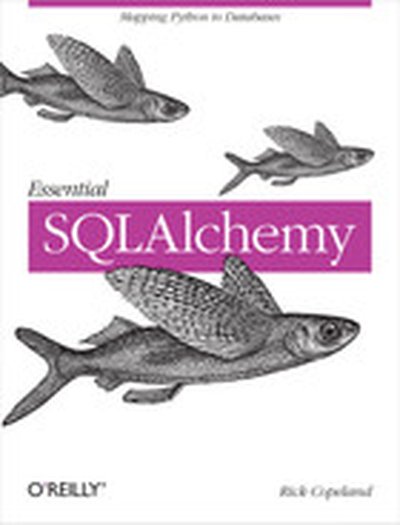
Essential SQLAlchemy

Essential SQLAlchemy introduces a high-level open-source code library that makes it easier for Python programmers to access relational databases such as Oracle, DB2, MySQL, PostgreSQL, and SQLite. SQLAlchemy has become increasingly popular since its release, but it still lacks good offline documentation. This practical book fills the gap, and because a developer wrote it, you get an objective look at SQLAlchemy's tools rather than an advocate's description of all the "cool" features. SQLAlchemy includes both a database server-independent SQL expression language and an object-relational mapper (ORM) that lets you map "plain old Python objects" (POPOs) to database tables without substantially changing your existing Python code. Essential SQLAlchemy demonstrates how to use the library to create a simple database application, walks you through simple queries, and explains how to use SQLAlchemy to connect to multiple databases simultaneously with the same Metadata. You also learn how to: Create custom types to be used in your schema, and when it's useful to use custom rather than built-in types Run queries, updates, and deletes with SQLAlchemy's SQL expression language Build an object mapper with SQLAlchemy, and understand the differences between this and active record patterns used in other ORMs Create objects, save them to a session, and flush them to the database Use SQLAlchemy to model object oriented inheritance Provide a declarative, active record pattern for use with SQLAlchemy using the Elixir extension Use the SQLSoup extension to provide an automatic metadata and object model based on database reflection In addition, you'll learn how and when to use other extensions to SQLAlchemy, including AssociationProxy, OrderingList, and more. Essential SQLAlchemy is the much-needed guide for every Python developer using this code library. Instead of a feature-by-feature documentation, this book takes an "essentials" approach that gives you exactly what you need to become productive with SQLAlchemy right away.

SQL: Visual QuickStart Guide, Third Edition

SQL is a standard interactive and programming language for querying and modifying data and managing databases. This task-based tutorial and reference guide takes the mystery out learning and applying SQL. After going over the relational database model and SQL syntax in the first few chapters, veteran author Chris Fehily immediately launches into the tasks that will get readers comfortable with SQL. In addition to covering all the SQL basics, this thoroughly updated reference contains a wealth of in-depth SQL knowledge and serves as an excellent reference for more experienced users.

Sams Teach Yourself SQL in 24 Hours, Fourth Edition

In just 24 lessons of one hour or less, you will learn professional techniques to design and build efficient databases and query them to extract useful information. Using a straightforward, step-by-step approach, each lesson builds on the previous one, allowing you to learn the essentials of ANSI SQL from the ground up. Example code demonstrates the authors’ professional techniques, while exercises written for MySQL offer the reader hands-on learning with an open-source database. Included are advanced techniques for using views, managing transactions, database administration, and extending SQL. Step-by-step instructions carefully walk you through the most common SQL tasks. Q&As, Quizzes, and Exercises at the end of each chapter help you test your knowledge. Notes and Tips point out shortcuts and solutions. New terms are clearly defined and explained. Learn how to… Use SQL-2003, the latest standard for the Structured Query Language Design and deploy efficient, secure databases Build advanced queries for information retrieval Sort, group, and summarize information for best presentation Tune databases and queries for maximum performance Understand database administration and security techniques For more than ten years the authors have studied, applied, and documented the SQL standard and its application to critical database systems. Ryan Stephens and Ron Plew are entrepreneurs, speakers, and cofounders of Perpetual Technologies, Inc. (PTI), a fast-growing IT management and consulting firm which specializes in database technologies. They taught database courses for Indiana University–Purdue University in Indianapolis for five years and have authored more than a dozen books on Oracle, SQL, database design, and the high availability of critical systems. Arie D. Jones is Senior SQL Server database administrator and analyst for PTI. He is a regular speaker at technical events and has authored several books and articles. Category: Database Covers: ANSI SQL User Level: Beginning–Intermediate Register your book at informit.com/title/9780672330186 for convenient access to updates and corrections as they become available.

IBM Tivoli Storage Manager Versions 5.4 and 5.5 Technical Guide

This IBM® Redbooks® publication provides details of changes, updates, and new functions in IBM Tivoli® Storage Manager Version 5.4, and Version 5.5. We cover all the new functions of Tivoli Storage Manager that have become available since the publication of IBM Tivoli Storage Manager Version 5.3 Technical Guide, SG24-6638. This book is for customers, consultants, IBM Business Partners, and IBM and Tivoli staff who are familiar with earlier releases of Tivoli Storage Manager and who want to understand what is new in Version 5.4 and Version 5.5. Hence, since we target an experienced audience, we use certain shortcuts to commands and concepts of Tivoli Storage Manager. If you want to learn more about Tivoli Storage Manager functionality, see IBM Tivoli Storage Management Concepts, SG24-4877, and IBM Tivoli Storage Manager Implementation Guide, SG24-5416. This publication should be used in conjunction with the manuals and readme files provided with the products and is not intended to replace any information contained therein.

Pro SQL Server 2008 XML

Knowledge and ability to apply XML are de rigueur in today's world, and SQL Server developers and administrators are no exception to that rule. Pro SQL Server 2008 XML is your key to unlocking the powerful XML feature set first introduced in SQL Server 2005 and since refined in SQL Server 2008. Author Michael Coles shows how to store XML using SQL Server's built-in XML data type. Learn to query and manipulate XML data using standard technologies such as XQuery and XSLT. No SQL Server database professional can afford to be without knowledge of the XML feature set. Pro SQL Server 2008 XML delivers on the knowledge that you need to remain competitive in your career. Shows how to store, query, and manipulate XML documents in SQL Server Provides step-by-step examples showing best practices and advanced features Accurately discusses how SQL Server's XML feature set stacks up against the ISO XML standards

OCA Oracle Database 11g Administration I Exam Guide (Exam 1Z0-052)

A Fully Integrated Study System for OCA Exam 1Z0-052 Prepare for the Oracle Certified Associate Oracle Database 11 g Administration I exam with help from this exclusive Oracle Press guide. In each chapter, you'll find challenging exercises, practice questions, a two-minute drill, and a chapter summary to highlight what you've learned. This authoritative guide will help you pass the test and serve as your essential on-the-job reference. Get complete coverage of all OCA objectives for exam 1Z0-052, including: Database architecture Creating an Oracle Database Managing the Oracle instance Configuring and managing the Oracle network Managing database storage structures Administering user security Managing schema objects, data and concurrency, and undo data Implementing Oracle Database security Database maintenance and performance management Backup and recovery Moving data Intelligent infrastructure enhancements On the CD-ROM: One full practice exam that simulates the actual OCA exam Detailed answers and explanations Score report performance assessment tool Complete electronic book Bonus exam available free with online registration

OCP Oracle Database 11g New Features for Administrators Exam Guide (Exam 1Z0-050)

A Fully Integrated Study System for OCP Exam 1Z0-050 Prepare for the Oracle Certified Professional Oracle Database 11 g New Features for Administrators exam with help from this exclusive Oracle Press guide. In each chapter, you'll find challenging exercises, practice questions, a two-minute drill, and a chapter summary to highlight what you've learned. This authoritative guide will help you pass the test, and serve as your essential on-the-job reference. Get complete coverage of all OCP objectives for exam 1Z0-050, including: Installation and upgrades Partitioning and storage Intelligent infrastructure Diagnostics and fault management Performance Oracle Recovery Manager and Oracle Flashback Security Oracle SQL Performance Analyzer SQL plan management Automatic SQL tuning On the CD-ROM: One full practice exam that simulates the actual OCP exam Detailed answers and explanations Score report performance assessment tool Complete electronic book Bonus exam available free with online registration

XSLT 2.0 and XPath 2.0 Programmer's Reference, 4th Edition

This book is primarily a practical reference book for professional XSLT developers. It assumes no previous knowledge of the language, and many developers have used it as their first introduction to XSLT; however, it is not structured as a tutorial, and there are other books on XSLT that provide a gentler approach for beginners. The book does assume a basic knowledge of XML, HTML, and the architecture of the Web, and it is written for experienced programmers. There's no assumption that you know any particular language such as Java or Visual Basic, just that you recognize the concepts that all programming languages have in common. The book is suitable both for XSLT 1.0 users upgrading to XSLT 2.0, and for newcomers to XSLT. The book is also equally suitable whether you work in the Java or .NET world. As befits a reference book, a key aim is that the coverage should be comprehensive and authoritative. It is designed to give you all the details, not just an overview of the 20 percent of the language that most people use 80 percent of the time. It's designed so that you will keep coming back to the book whenever you encounter new and challenging programming tasks, not as a book that you skim quickly and then leave on the shelf. If you like detail, you will enjoy this book; if not, you probably won't. But as well as giving the detail, this book aims to explain the concepts, in some depth. It's therefore a book for people who not only want to use the language but who also want to understand it at a deep level. The book aims to tell you everything you need to know about the XSLT 2.0 language. It gives equal weight to the things that are new in XSLT 2.0 and the things that were already present in version 1.0. The book is about the language, not about specific products. However, there are appendices about Saxon (the author's own implementation of XSLT 2.0), about the Altova XSLT 2.0 implementation, and about the Java and Microsoft APIs for controlling XSLT transformations, which will no doubt be upgraded to handle XSLT 2.0 as well as 1.0. A third XSLT 2.0 processor, Gestalt, was released shortly before the book went to press, too late to describe it in any detail. But the experience of XSLT 1.0 is that there has been a very high level of interoperability between different XSLT processors, and if you can use one of them, then you can use them all. In the previous edition we split XSLT 2.0 and XPath 2.0 into separate volumes. The idea was that some readers might be interested in XPath alone. However, many bought the XSLT 2.0 book without its XPath companion and were left confused as a result; so this time, the material is back together. The XPath reference information is in self-contained chapters, so it should still be accessible when you use XPath in contexts other than XSLT. The book does not cover XSL Formatting Objects, a big subject in its own right. Nor does it cover XML Schemas in any detail. If you want to use these important technologies in conjunction with XSLT, there are other books that do them justice. This book contains twenty chapters and eight appendixes (the last of which is a glossary) organized into four parts. The following section outlines what you can find in each part, chapter, and appendix. Part I: Foundations: The first part of the book covers essential concepts. You should read these before you start coding. If you ignore this advice, as most people do, then you read them when you get to that trough of despair when you find it impossible to make the language do anything but the most trivial tasks. XSLT is different from other languages, and to make it work for you, you need to understand how it was designed to be used. Chapter 1: XSLT in Context: This chapter explains how XSLT fits into the big picture: how the language came into being and how it sits alongside other technologies. It also has a few simple coding examples to keep you alert. Chapter 2: The XSLT Processing Model: This is about the architecture of an XSLT processor: the inputs, the outputs, and the data model. Understanding the data model is perhaps the most important thing that distinguishes an XSLT expert from an amateur; it may seem like information that you can't use immediately, but it's knowledge that will stop you making a lot of stupid mistakes. Chapter 3: Stylesheet Structure: XSLT development is about writing stylesheets, and this chapter takes a bird's eye view of what stylesheets look like. It explains the key concepts of rule-based programming using templates, and explains how to undertake programming-in-the-large by structuring your application using modules and pipelines. Chapter 4: Stylesheets and Schemas: A key innovation in XSLT 2.0 is that stylesheets can take advantage of knowledge about the structure of your input and output documents, provided in the form of an XML Schema. This chapter provides a quick overview of XML Schema to describe its impact on XSLT development. Not everyone uses schemas, and you can skip this chapter if you fall into that category. Chapter 5: The Type System: XPath 2.0 and XSLT 2.0 offer strong typing as an alternative to the weak typing approach of the 1.0 languages. This means that you can declare the types of your variables, functions, and parameters, and use this information to get early warning of programming errors. This chapter explains the data types available and the mechanisms for creating user-defined types. Part II: XSLT and XPath Reference: This section of the book contains reference material, organized in the hope that you can easily find what you need when you need it. It's not designed for sequential reading, though you might well want to leaf through the pages to discover what's there. Chapter 6: XSLT Elements: This monster chapter lists all the XSLT elements you can use in a stylesheet, in alphabetical order, giving detailed rules for the syntax and semantics of each element, advice on usage, and examples. This is probably the part of the book you will use most frequently as you become an expert XSLT user. It's a "no stone unturned" approach, based on the belief that as a professional developer you need to know what happens when the going gets tough, not just when the wind is in your direction. Chapter 7: XPath Fundamentals: This chapter explains the basics of XPath: the low-level constructs such as literals, variables, and function calls. It also explains the context rules, which describe how the evaluation of XPath expressions depends on the XSLT processing context in which they appear. Chapter 8: XPath: Operators on Items: XPath offers the usual range of operators for performing arithmetic, boolean comparison, and the like. However, these don't always behave exactly as you would expect, so it's worth reading this chapter to see what's available and how it differs from the last language that you used. Chapter 9: XPath: Path Expressions: Path expressions are what make XPath special; they enable you to navigate around the structure of an XML document. This chapter explains the syntax of path expressions, the 13 axes that you can use to locate the nodes that you need, and associated operators such as union, intersection, and difference. Chapter 10: XPath: Sequence Expressions: Unlike XPath 1.0, in version 2.0 all values are sequences (singletons are just a special case). Some of the most important operators in XPath 2.0 are those that manipulate sequences, notably the "for" expression, which translates one sequence into another by applying a mapping. Chapter 11: XPath: Type Expressions: The type system was explained in Chapter 5; this chapter explains the operations that you can use to take advantage of types. This includes the "cast" operation which is used to convert values from one type to another.A big part of this chapter is devoted to the detailed rules for how these conversions are done. Chapter 12: XSLT Patterns: This chapter returns from XPath to a subject that's specific to XSLT. Patterns are used to define template rules, the essence of XSLT's rule-based programming approach. The reason for explaining them now is that the syntax and semantics of patterns depends strongly on the corresponding rules for XPath expressions. Chapter 13: The Function Library: XPath 2.0 includes a library of functions that can be called from any XPath expression; XSLT 2.0 extends this with some additional functions that are available only when XPath is used within XSLT. The library has grown immensely since XPath 1.0. This chapter provides a single alphabetical reference for all these functions. Chapter 14: Regular Expressions: Processing of text is an area where XSLT 2.0 and XPath 2.0 are much more powerful than version 1.0, and this is largely through the use of constructs that exploit regular expressions. If you're familiar with regexes from languages such as Perl, this chapter tells you how XPath regular expressions differ. If you're new to the subject, it explains it from first principles. Chapter 15: Serialization: Serialization in XSLT means the ability to generate a textual XML document from the tree structure that's manipulated by a stylesheet. This isn't part of XSLT processing proper, so (following W3C's lead) it's separated it into its own chapter. You can control serialization from the stylesheet using an declaration, but many products also allow you to control it directly via an API. Part III: Exploitation: The final section of the book is advice and guidance on how to take advantage of XSLT to write real applications. It's intended to make you not just a competent XSLT coder, but a competent designer too. The best way of learning is by studying the work of others, so the emphasis here is on practical case studies. Chapter 16: Extensibility: This chapter describes the "hooks" provided in the XSLT specification to allow vendors and users to plug in extra functionality. The way this works will vary from one implementation to another, so we can't cover all possibilities, but one important aspect that the chapter does cover is how to use such extensions and still keep your code portable. Chapter 17: Stylesheet Design Patterns: This chapter explores a number of design and coding patterns for XSLT programming, starting with the simplest "fill-in-the-blanks" stylesheet, and extending to the full use of recursive programming in the functional programming style, which is needed to tackle problems of any computational complexity. This provides an opportunity to explain the thinking behind functional programming and the change in mindset needed to take full advantage of this style of development. Chapter 18: Case Study: XMLSpec: XSLT is often used for rendering documents, so where better to look for a case study than the stylesheets used by the W3C to render the XML and XSLT specifications, and others in the same family, for display on the web? The resulting stylesheets are typical of those you will find in any publishing organization that uses XML to develop a series of documents with a compatible look-and-feel. Chapter 19: Case Study: A Family Tree: Displaying a family tree is another typical XSLT application. This example with semi-structured data—a mixture of fairly complex data and narrative text—that can be presented in many different ways for different audiences. It also shows how to tackle another typical XSLT problem, conversion of the data into XML from a legacy text-based format. As it happens, this uses nearly all the important new XSLT 2.0 features in one short stylesheet. But another aim of this chapter is to show a collection of stylesheets doing different jobs as part of a complete application. Chapter 20: Case Study: Knight's Tour: Finding a route around a chessboard where a knight visits every square without ever retracing its steps might sound a fairly esoteric application for XSLT, but it's a good way of showing how even the most complex of algorithms are within the capabilities of the language. You may not need to tackle this particular problem, but if you want to construct an SVG diagram showing progress against your project plan, then the problems won't be that dissimilar. Part IV: Appendices: Appendix A: XPath 2.0 Syntax Summary: Collects the XPath grammar rules and operator precedences into one place for ease of reference. Appendix B: Error Codes: A list of all the error codes defined in the XSLT and XPath language specifications, with brief explanations to help you understand what's gone wrong. Appendix C: Backward Compatibility: The list of things you need to look out for when converting applications from XSLT 1.0. Appendix D: Microsoft XSLT Processors: Although the two Microsoft XSLT processors don't yet support XSLT 2.0, we thought many readers would find it useful to have a quick summary here of the main objects and methods used in their APIs. Appendix E: JAXP: the Java API for XML Processing: JAXP is an interface rather than a product. Again, it doesn't have explicit support yet for XSLT 2.0, but Java programmers will often be using it in XSLT 2.0 projects, so the book includes an overview of the classes and methods available. Appendix F: Saxon: At the time of writing Saxon (developed by the author of this book) provides the most comprehensive implementation of XSLT 2.0 and XPath 2.0, so its interfaces and extensions are covered in some detail. Appendix G: Altova: Altova, the developers of XML Spy, have an XSLT 2.0 processor that can be used either as part of the development environment or as a freestanding component. This appendix gives details of its interfaces. Appendix H: Glossary Note: CD-ROM/DVD and other supplementary materials are not included as part of eBook file.

Harnessing Hibernate

Harnessing Hibernate is an ideal introduction to the popular framework that lets Java developers work with information from a relational database easily and efficiently. Databases are a very different world than Java objects, and they often involve people with different skills and specializations. With Hibernate, bridging these two worlds is significantly easier, and with this book, you can get up to speed with Hibernate quickly. Rather than present you with another reference, Harnessing Hibernate lets you explore the system, from download and configuration through a series of projects that demonstrate how to accomplish a variety of practical goals. The new edition of this concise guide walks you through Hibernate's primary features, which include mapping from Java classes to database tables, and from Java data types to SQL data types. You will also learn about Hibernate's data query and retrieval facilities, and much more. By reading and following along with the examples, you can get your own Hibernate environment set up quickly and start using it for real-world tasks right away. Harnessing Hibernate teaches you how to: Perform Object/Relational mapping Work with persistent data from Java code Work with groups and relationships between objects Extend Hibernate's rich type support for your own needs Simplify query creation using criteria and examples Use the Hibernate Query Language (HQL) and understand how it differs from SQL Use Hibernate in conjunction with Spring Use Hibernate in conjunction with other packages, such as the Stripes web framework and the Eclipse IDE Once you're past the first few chapters, you can jump to topics that you find particularly interesting or relevant. All background material and explanations of how Hibernate works and why is in the service of a focused task. Source code can be downloaded from the book's website. If using SQL is an uncomfortable chore, Harnessing Hibernate offers you an effective and trouble-free method for working with the information you store in your applications.

Pro T-SQL 2008 Programmer's Guide

Discussing new and existing features, SQL Server designer and administrator Michael Coles takes you on an expert guided tour of Transact-SQL functionality in SQL Server 2008 in his book, Pro T-SQL 2008 Programmer's Guide. Fully functioning examples and downloadable source code bring Coles' technically accurate and engaging treatment of Transact-SQL into your own hands. Step-by-step explanations ensure clarity, and an advocacy of best-practices will steer you down the road to success. Pro T-SQL 2008 Programmer's Guide is every developer's key to making full use of SQL Server 2008's powerful, built-in Transact-SQL language. Transact-SQL is the language developers and DBAs use to interact with SQL Server. It's used for everything from querying data, to writing stored procedures, to managing the database. New features in SQL Server 2008 include a spatial data type, SQLCLR integration, the MERGE statement, a dramatically improved and market-leading XML feature set, and support for encryption—all of which are covered in this book

Oracle Database 11g PL/SQL Programming

Design Feature-Rich PL/SQL Applications Deliver dynamic, client/server PL/SQL applications with expert guidance from an Oracle programming professional. With full coverage of the latest features and tools, Oracle Database 11g PL/SQL Programming lays out each topic alongside detailed explanations, cut-and-paste syntax examples, and real-world case studies. Access and modify database information, construct powerful PL/SQL statements, execute effective queries, and deploy bulletproof security. You'll also learn how to implement C, C++, and Java procedures, Web-enable your database, cut development time, and optimize performance. Create, debug, and manage Oracle-driven PL/SQL programs Use PL/SQL structures, delimiters, operators, variables, and statements Identify and eliminate errors using PLSQL_WARNINGS and exception handlers Work with functions, procedures, packages, collections, and triggers Define and deploy varray, nested table, and associative array data types Handle external routines, object types, large objects, and secure files Communicate between parallel sessions using DBMS_ALERT and DBMS_PIPE Call external procedures through Oracle Net Services and PL/SQL wrappers Integrate internal and server-side Java class libraries using Oracle JVM Develop robust Web applications using PL/SQL Gateway and Web Toolkit

MySQL in a Nutshell, 2nd Edition

When you need to find the right SQL keyword or MySQL client command-line option right away, turn to this convenient reference, known for the same speed and flexibility as the system it covers so thoroughly. MySQL is packed with so many capabilities that the odds of remembering a particular function or statement at the right moment are pretty slim. With MySQL in a Nutshell, you get the details you need, day in and day out, in one concise and extremely well organized book. The new edition contains all the commands and programming information for version 5.1, including new features and language interfaces. It's ideal for anyone using MySQL, from novices who need to get up to speed to advanced users who want a handy reference. Like all O'Reilly Nutshell references, it's easy to use and highly authoritative, written by the editor of the MySQL Knowledge Base at MySQL AB, the creator and owner of MySQL. Inside, you'll find: A thorough reference to MySQL statements, functions, and administrative utilities Several tutorial chapters to help newcomers get started Programming language APIs for PHP, Perl, and C Brief tutorials at the beginning of each API chapter to help anyone, regardless of experience level, understand and master unfamiliar territory New chapters on replication, triggers, and stored procedures Plenty of new examples of how MySQL is used in practice Useful tips to help you get through the most difficult subjectsWhether you employ MySQL in a mission-critical, heavy-use environment or for applications that are more modest, this book puts a wealth of easy-to-find information at your fingertips, saving you hundreds of hours of trial and error and tedious online searching. If you're ready to take advantage of everything MySQL has to offer, MySQL in a Nutshell has precisely what it takes.

MCITP SQL Server 2005 Database Developer All-in-One Exam Guide (Exams 70-431, 70-441 & 70-442)

All-in-One is All You Need Get complete coverage of all three Microsoft Certified IT Professional database developer exams for SQL Server 2005 in this comprehensive volume. Written by a SQL Server expert and MCITP, this definitive exam guide features learning objectives at the beginning of each chapter, exam tips, practice questions, and in-depth explanations. Detailed and authoritative, the book serves as both a complete certification study guide and an essential on-the-job reference. Get full details on all exam topics including how to: Install and configure SQL Server 2005 Manage database design Use Transact-SQL and XML Work with functions, triggers, and CLR integration Optimize, monitor, and secure databases Create stored procedures Handle disaster recovery Work with Service Broker, Web Services, and MARS Use SQL Server Reporting Services and Notification Services Manage locks, deadlocks, and cursors Transfer data using Replication and SQL Server Integration Services The CD-ROM features: Six full practice exams-two for each exam: 70-431, 70-441, & 70-442 Scripts from the step-by-step exercises in the book Video training clips from the author Complete electronic book

SQL Bible, Second Edition

Combining theory with everyday practicality, this definitive volume is packed with the up-to-date information, new features, and explanations you need to get the very most out of SQL and its latest standard. The book is unique in that every chapter highlights how the new SQL standard applies to the three major databases, Oracle 11g, IBM DB2 9.5, and Microsoft SQL Server 2008. The result is a comprehensive, useful, and real-world reference for all SQL users, from beginners to experienced developers.

Google Maps Mashups with Google Mapplets

Have a Google Maps mashup that you'd like to expose to millions of users on maps.google.com? New to the mapping craze, but have an idea for a killer map–based application? Want to learn how to create GeoRSS and KML feeds with your geotagged content, exposing your customer to new ways of exploring and navigating your content? Google Maps Mashups with Google Mapplets Is the first book to cover Google's Mapplet technology Shows you how to create Google Maps–based applications and publish to maps.google.com Provides a single–source resource and practical guide to Mapplets and mashups Teaches you how to mash up Mapplets using location–specific data Includes examples of real–world applications

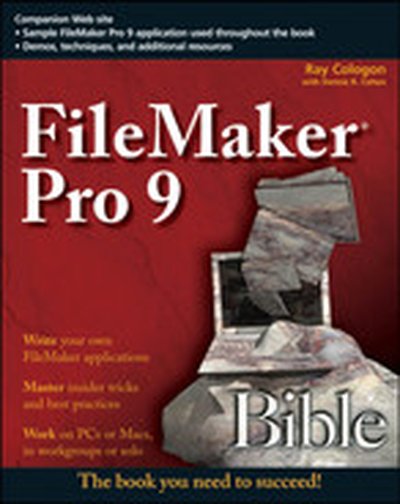
FileMaker® Pro 9 Bible

Refocused and completely rewritten with the needs of business users and FileMaker Pro developers in mind, FileMaker Pro 9 Bible shows you how to design an industrial-strength database, make it intuitive, and automate it with scripts and programming. From the fundamentals to data modeling to writing no-fail code, you'll find the clear, step-by-step procedures, solid techniques, and detailed explanations you need to master this powerful software and build the right solutions for your needs.

Ferret

With the introduction of Ferret, Ruby users now have one of the fastest and most flexible search libraries available. And it's surprisingly easy to use. This book will show you how to quickly get up and running with Ferret. You'll learn how to index different document types such as PDF, Microsoft Word, and HTML, as well as how to deal with foreign languages and different character encodings. Ferret describes the Ferret Query Language in detail along with the object-oriented approach to building queries. You will also be introduced to sorting, filtering, and highlighting your search results, with an explanation of exactly how you need to set up your index to perform these tasks. You will also learn how to optimize a Ferret index for lightning fast indexing and split-second query results.

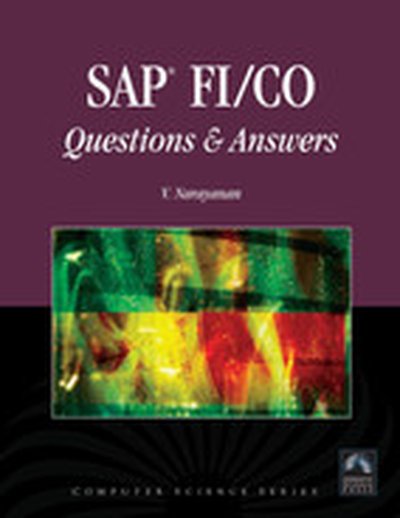
SAP® FI/CO Questions and Answers

This up-to-date “quick reference guide” is an easy, fast, and convenient way of learning SAP FI CO (including SAP R/3 4.70 Enterprise and SAP ERP(ECC)6.0); it also covers ABAP and Basis on the technical side, and MM, SD, and PP on the functional side to provide a thorough understanding of the SAP system. Separate sections on SAP Tables and SAP Transaction Codes guide you through the intricacies of the SAP modules and the 100-page section of SAP Terminology provides an excellent reference for mastering acronyms, codes, and definitions of the multiple components of this popular software.

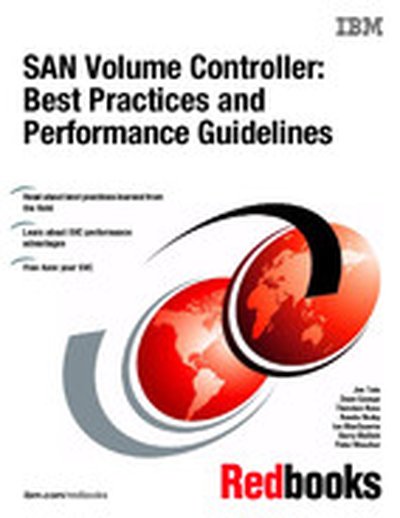
SAN Volume Controller: Best Practices and Performance Guidelines

This IBM® Redbook captures some of the best practices based on field experience and details the performance gains that can be achieved by implementing the IBM System Storage™ SAN Volume Controller. This book is intended for very experienced storage, SAN, and SVC administrators and technicians. Readers are expected to have an advanced knowledge of the SVC and SAN environment, and we recommend these books as background reading: IBM System Storage SAN Volume Controller, SG24-6423 Introduction to Storage Area Networks, SG24-5470 Using the SVC for Business Continuity, SG24-7371