talk-data.com talk-data.com

Topic

data-engineering

3395

tagged

Activity Trend

1 peak/qtr
2020-Q1 2026-Q1

Activities

3395 activities · Newest first

IBM DB2 Document Manager with IBM Records Manager Solution Guide

IBM DB2 Document Manager Version 8.3 is one of the newest members of the IBM Enterprise Content Management portfolio. Document Manager provides a secure and robust platform to manage the complete life cycle of business documents. It helps ensure accurate and up-to-date documents are available on demand. When configured with IBM DB2 Records Manager Version 4.1.2, the Document Manager solution also provide records management capability. Please note that the additional material referenced in the text is not available from IBM.

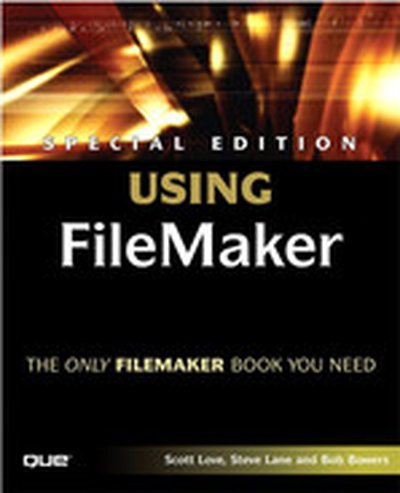
Special Edition Using FileMaker 8

If you’re looking for the inside scoop on the latest version of FileMaker, you’ve come to the right place. Authors Scott Love and Steve Lane are FileMaker experts who were involved in the development of FileMaker 8, and they bring that knowledge to you in Special Edition Using FileMaker 8. Frequent tips, case studies, and thorough examples show you how to avoid mistakes and save time in developing databases with FileMaker 8. This is the comprehensive reference that every database developer needs on their shelf.

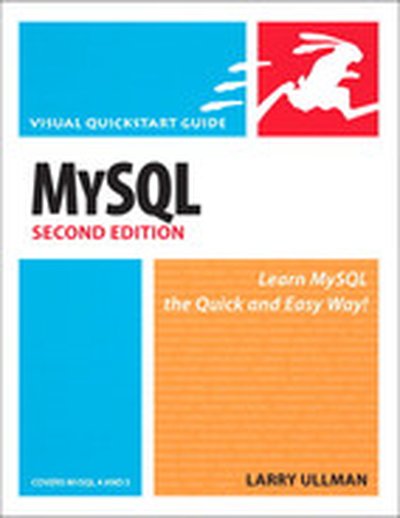
MySQL, Second Edition: Visual Quickstart Guide

Even if you've never used MySQL before, this Visual QuickStart Guide will have you up and running with the world’s most popular open source database application in no time. In this completely updated edition of our best-selling guide to MySQL, leading technology author Larry Ullman uses his trademark crystal-clear instructions and friendly prose to introduce you to everything that’s new in MySQL. Filled with step-by-step, task-based instructions and loads of visual aids, this book explains how to interact with MySQL using SQL, the language common to all databases. The interface examples show how to use MySQL’s own tools and how to use three popular programming languages (PHP, Perl, and Java). The book covers MySQL versions 3 and 4, as well as everything new in the eagerly anticipated version 5. Along the way, you'll find extensive coverage of MySQL installation, administration, database design, as well as its use with various programming languages, database programming techniques, utilities, advanced MySQL and SQL, and more! • Takes an easy, visual approach to teaching MySQL, using pictures to guide you through the software and show you what to do. • Works like a reference book—you look up what you need and then get straight to work. • No long-winded passages—concise, straightforward commentary explains what you need to know. • Affordably priced, because buying a computer book shouldn’t be an investment in itself. • Companion Web site at www.DMCInsights.com/mysql2 contains complete source code for examples in the book, online resources, extra scripts and tutorials, updates, a reader forum, and more.

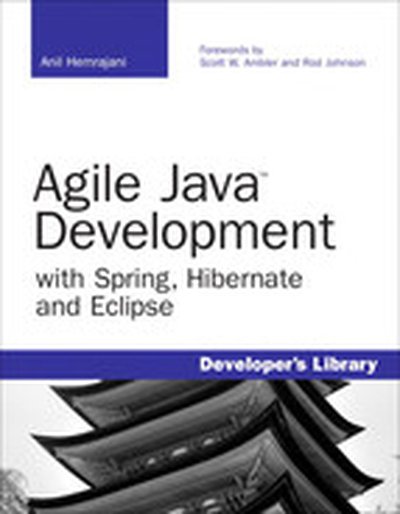
Agile Java Development with Spring, Hibernate and Eclipse

is a book about robust technologies and effective methods which help bring simplicity back into the world of enterprise Java development. The three key technologies covered in this book, the Spring Framework, Hibernate and Eclipse, help reduce the complexity of enterprise Java development significantly. Furthermore, these technologies enable plain old Java objects (POJOs) to be deployed in light-weight containers versus heavy-handed remote objects that require heavy EJB containers. This book also extensively covers technologies such as Ant, JUnit, JSP tag libraries and touches upon other areas such as such logging, GUI based debugging, monitoring using JMX, job scheduling, emailing, and more. Also, Extreme Programming (XP), Agile Model Driven Development (AMDD) and refactoring are methods that can expedite the software development projects by reducing the amount of up front requirements and design; hence these methods are embedded throughout the book but with just enough details and examples to not sidetrack the focus of this book. In addition, this book contains well separated, subjective material (opinion sidebars), comic illustrations, tips and tricks, all of which provide real-world and practical perspectives on relevant topics. Last but not least, this book demonstrates the complete lifecycle by building and following a sample application, chapter-by-chapter, starting from conceptualization to production using the technology and processes covered in this book. In summary, by using the technologies and methods covered in this book, the reader will be able to effectively develop enterprise-class Java applications, in an agile manner! Agile Java™ Development With Spring, Hibernate and Eclipse

A Deep Blue View of DB2 Performance: IBM Tivoli OMEGAMON XE for DB2 Performance Expert on z/OS

IBM Tivoli OMEGAMON XE for DB2 Performance Expert on z/OS represents the effort on converging OMEGAMON XE for DB2 and DB2 Performance Expert into one product that retains the best features of each. This new tool gives you a single, comprehensive tool to help assess the efficiency of and optimize performance from your DB2 Universal Database in the z/OS environment. It automates the analysis of your database performance in real time and also adds expert database analysis functions to help you maximize performance and enhance productivity.

A Developer’s Guide to SQL Server 2005

"I come from a T-SQL background, so when I first laid my eyes on SQL Server 2005, I was shocked--and then, I was scared! I didn't have a CLR or XML background and suddenly had an urgent need to learn it. SQL Server 2005 is too big of a release to learn from the books online. Fortunately, now there is a book for developers who need to go from SQL Server 2000 to SQL Server 2005 and to do it as painlessly as possible. Basically, it's one-stop shopping for serious developers who have to get up to speed quickly. I'll keep this one on my desk--not on my bookshelf. Well done, Bob and Dan!" --Dr. Tom Moreau SQL Server MVP and Monthly Columnist SQL Server Professional, Brockman Moreau Consulting Inc. "A SQL book truly for developers, from two authorities on the subject. I'll be turning to this book first when I need to understand a component of SQL Server 2005." --Matt Milner Instructor Pluralsight "An excellent book for those of us who need to get up to speed on what's new in SQL Server 2005. The authors made sure this book includes the final information for the release version of the product. Most other books out now are based on beta versions. It covers key areas from XML and SQLCLR to Notification Services. Although the wide variety of information is great, my favorite part was the advice given on when to use what, and how performance is affected." --Laura Blood Senior Software Developer Blue Note Computing, Inc. "SQL Server 2005 is a massive release with a large number of new features. Many of these features were designed to make SQL Server a great application development platform. This book provides comprehensive information about the SQL Server features of most interest to application developers. The lucid text and wealth of examples will give a developer a clear understanding of how to use SQL Server 2005 to a whole new class of database applications. It should be on every SQL Server developer's bookshelf." --Roger Wolter Solutions Architect Microsoft Corporation "While there will be a lot of good books on SQL Server 2005 development, when people refer to the 'bible,' they'll be talking about this book." --Dr. Greg Low Senior Consultant Readify Pty Ltd "SQL Server 2005 is loaded with new features and getting a good overview is essential to understand how you can benefit from SQL Server 2005's features as a developer. Bob and Dan's book goes beyond enumerating the new SQL Server 2005 features, and will provide you with lots of good examples. They did a good job striking a balance between overview and substance." --Michiel Wories Senior Program Manager, SQL Server Microsoft Corporation Few technologies have been as eagerly anticipated as Microsoft SQL Server 2005. Now, two SQL Server insiders deliver the definitive hands-on guide--accurate, comprehensive, and packed with examples. starts where Microsoft's documentation, white papers, and Web articles leave off, showing developers how to take full advantage of SQL Server 2005's key innovations. It draws on exceptional cooperation from Microsoft's SQL Server developers and the authors' extensive access to SQL Server 2005 since its earliest alpha releases. A Developer's Guide to SQL Server 2005 You'll find practical explanations of the new SQL Server 2005 data model, built-in .NET hosting, improved programmability, SQL:1999 compliance, and much more. Virtually every key concept is illuminated via sample code that has been fully updated for and tested with the shipping version of the product. Key coverage includes Using SQL Server 2005 as a .NET runtime host: extending the server while enhancing security, reliability, and performance Writing procedures, functions, triggers, and types in .NET languages Exploiting enhancements to T-SQL for robust error-handling, efficient queries, and improved syntax Effectively using the XML data type and XML queries Implementing native SQL Server 2005 Web Services Writing efficient, robust clients for SQL Server 2005 using ADO.NET, classic ADO, and other APIs Taking full advantage of user-defined types (UDTs), query notifications, promotable transactions, and multiple active result sets (MARS) Using SQL Management Objects (SMO), SQL Service Broker, and SQL Server Notification Services to build integrated applications

MySQL® Administrator’s Guide and Language Reference

<>Written by the creators of MySQL and edited by one of the most highly respected MySQL authors, the MySQL Administrator's Guide and Language Reference is the official guide to installing MySQL, to setting up and administering MySQL databases, and to storing and retrieving data in these databases. This new edition combines into one book the MySQL Language Reference (on CD) with the practical information of the MySQL Administrator's Guide book.

Learning SQL on SQL Server 2005

Anyone who interacts with today's modern databases needs to know SQL (Structured Query Language), the standard language for generating, manipulating, and retrieving database information. In recent years, the dramatic rise in the popularity of relational databases and multi-user databases has fueled a healthy demand for application developers and others who can write SQL code efficiently and correctly. If you're new to databases, or need a SQL refresher, Learning SQL on SQL Server 2005 is an ideal step-by-step introduction to this database query tool, with everything you need for programming SQL using Microsoft's SQL Server 2005-one of the most powerful and popular database engines used today. Plenty of books explain database theory. This guide lets you apply the theory as you learn SQL. You don't need prior database knowledge, or even prior computer knowledge. Based on a popular university-level course designed by authors Sikha Saha Bagui and Richard Walsh Earp, Learning SQL on SQL Server 2005 starts with very simple SQL concepts, and slowly builds into more complex query development. Every topic, concept, and idea comes with examples of code and output, along with exercises to help you gain proficiency in SQL and SQL Server 2005. With this book, you'll learn: Beginning SQL commands, such as how and where to type an SQL query, and how to create, populate, alter and delete tables How to customize SQL Server 2005's settings and about SQL Server 2005's functions About joins, a common database mechanism for combining tables Query development, the use of views and other derived structures, and simple set operations Subqueries, aggregate functions and correlated subqueries, as well as indexes and constraints that can be added to tables in SQL Server 2005 Whether you're an undergraduate computer science or MIS student, a self-learner who has access to the new Microsoft database, or work for your company's IT department, Learning SQL on SQL Server 2005 will get you up to speed on SQL in no time.

IBM Workplace Managed Client 2.6 on Linux

With IBM Workplace Managed Client Release 2.6 on Linux, IBM offers a strategic end-to-end Linux solution that provides both the benefits of Linux and IBM Workplace Collaboration Services. This IBM Redbooks publication provides a technical overview of IBM Workplace Managed Client and examines why it is a smart, strategic choice. In addition, we provide a detailed description and best practices for deploying, installing and configuring the product. We focus on the following topics: Please note that the additional material referenced in the text is not available from IBM.

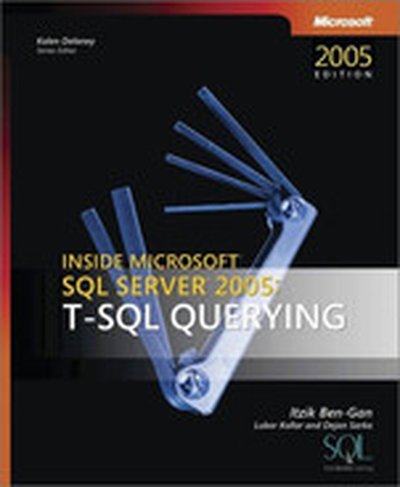
Inside Microsoft® SQL Server™ 2005: T-SQL Querying

This thorough, hands-on reference for database developers and administrators delivers expert guidance on sophisticated uses of Transact-SQL (T-SQL)—one of the most familiar and powerful programming languages for SQL Server. Written by a T-SQL guru, this guide focuses on advanced querying techniques and how queries are interpreted and processed by the SQL Server execution engine. You’ll get in-depth coverage of the sophisticated uses of T-SQL, including the differences between logical and physical processing, nesting of queries, and much more. The book explains and compares solutions to database-development problems in both SQL Server 2000 and SQL Server 2005, discussing the new T-SQL programming features added to SQL Server 2005 in detail. Includes extensive code samples, table examples, and logic puzzles to help database developers and administrators understand the intricacies and help promote mastery of T-SQL

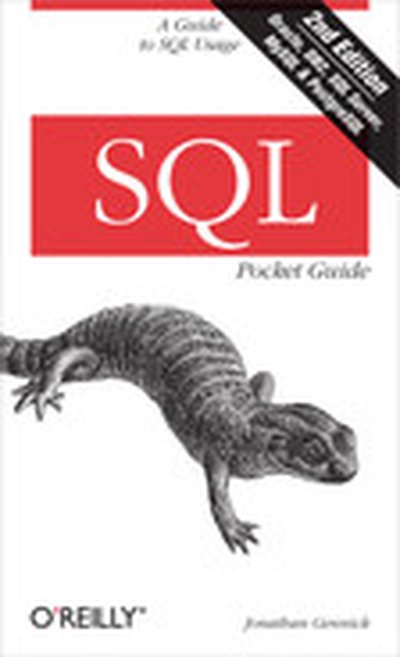
SQL Pocket Guide, 2nd Edition

SQL is the language of databases. It's used to create and maintain database objects, place data into those objects, query the data, modify the data, and, finally, delete data that is no longer needed. Databases lie at the heart of many, if not most business applications. Chances are very good that if you're involved with software development, you're using SQL to some degree. And if you're using SQL, you should own a good reference or two. Now available in an updated second edition, our very popular SQL Pocket Guide is a major help to programmers, database administrators, and everyone who uses SQL in their day-to-day work. The SQL Pocket Guide is a concise reference to frequently used SQL statements and commonly used SQL functions. Not just an endless collection of syntax diagrams, this portable guide addresses the language's complexity head on and leads by example. The information in this edition has been updated to reflect the latest versions of the most commonly used SQL variants including: Oracle Database 10g, Release 2 (includingthe free Oracle Database 10g Express Edition (XE)) Microsoft SQL Server 2005 MySQL 5 IBM DB2 8.2 PostreSQL 8.1 database

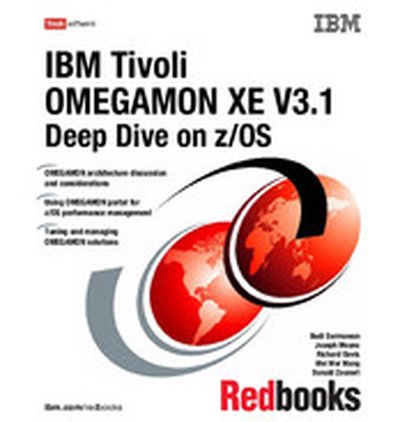
IBM Tivoli OMEGAMON XE V3.1 Deep Dive on z/OS

This IBM Redbooks publication describes the IBM Tivoli OMEGAMON XE product family, Version 3.1.0, that runs on z/OS. We start by providing the product history over time and the terminology convention that we will use in the book, which should be noted carefully because the products are in transition from Candle terminology to the new terminology related to IBM Tivoli Monitoring Version 6.1. We conform to IBM Tivoli Monitoring V6.1 terminology as much as possible, although for some direct references to screen shots, we use the terminology that is shown in the figure. The product is installed using the IBM Configuration Tool. This is explained for new users who want to install IBM Tivoli OMEGAMON XE, because the process is somewhat different from standard IBM products that are installed on z/OS. The concept of runtime environment is explained here as well. On the operation side of IBM Tivoli OMEGAMON XE, we discuss problem determination and tracing concepts and facilities that are available for IBM Tivoli OMEGAMON XE, as well as performance considerations. As IBM Tivoli OMEGAMON XE is meant to monitor performance of the system, its overhead should not affect overall system performance. Last but not least, we offer sample usage scenarios of performance management using IBM Tivoli OMEGAMON XE products.

Google™ Search and Tools in a Snap

These days, nobody really wants to learn everything there is about a product like Google Tools. And even if you did, who has the time to endlessly tinker and play with it until you figure everything out? You just want a book that will quickly show you how to do things with Google Tools, like perform power searches, find pictures with Google Images, find online bargains with Froogle, use the Google Toolbar, and discover the world with Google Earth. Google Search and Tools in a Snap does just that. Organized into a series of well-organized, bite-sized, quickly accomplished tasks, the book lets you zero right in on the one particular task you want to accomplish, quickly figure out what to do, do it, and then get back to using the plethora of Google Tools.

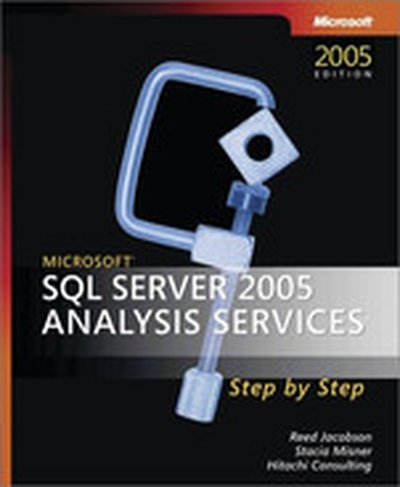
Microsoft® SQL Server™ 2005 Analysis Services Step by Step

Your hands-on guide to learning Microsoft SQL Server Analysis Services, Microsoft’s customizable analysis solution for business data modeling and interpretation. Analysis Services is a powerful tool for business intelligence, so understanding the essentials—how to create a cube, as well as how to deploy, customize, and extend the basic calculations—is critical to harnessing the full benefits of SQL Server. This step-by-step tutorial shows you how to get started, how to build scalable analytical applications, and how to use and administer advanced features. Interactivity features (enhanced in SQL Server 2005), data translation, and security are also covered in detail. With STEP BY STEP, you work at your own pace through hands-on, learn-by-doing exercises. Whether you’re a beginning programmer or new to this version of the technology, you’ll understand the fundamental techniques for using Analysis Services. A companion CD includes data sets and sample code.

MySQL Stored Procedure Programming

The implementation of stored procedures in MySQL 5.0 a hugemilestone -- one that is expected to lead to widespread enterprise adoption ofthe already extremely popular MySQL database. If you are serious aboutbuilding the web-based database applications of the future, you need toget up to speed quickly on how stored procedures work -- and how tobuild them the right way. This book, destined to be the bible of storedprocedure development, is a resource that no real MySQL programmer canafford to do without. In the decade since MySQL burst on the scene, it has become thedominant open source database, with capabilities and performancerivaling those of commercial RDBMS offerings like Oracle and SQLServer. Along with Linux and PHP, MySQL is at the heart of millions ofapplications. And now, with support for stored procedures, functions,and triggers in MySQL 5.0, MySQL offers the programming power neededfor true enterprise use. MySQL's new procedural language has a straightforward syntax, making iteasy to write simple programs. But it's not so easy to write secure,easily maintained, high-performance, and bug-free programs. Few in theMySQL world have substantial experience yet with stored procedures, butGuy Harrison and Steven Feuerstein have decades of combined expertise. In MySQL Stored Procedure Programming, they putthat hard-won experience to good use. Packed with code examples and coveringeverything from language basics to application building to advancedtuning and best practices, this highly readable book is the one-stopguide to MySQL development. It consists of four major sections: MySQL stored programming fundamentals -- tutorial, basicstatements, SQL in stored programs, and error handling Building MySQL stored programs -- transaction handling,built-in functions, stored functions, and triggers MySQL stored programs in applications -- using storedprograms with PHP, Java, Perl, Python, and .NET (C# and VB.NET) Optimizing MySQL stored programs -- security, basic andadvanced SQL tuning, optimizing stored program code, and programmingbest practices A companion web site contains many thousands of lines of code, that youcan put to use immediately. Guy Harrison is Chief Architect of Database Solutions at Quest Softwareand a frequent speaker and writer on MySQL topics. Steven Feuerstein isthe author of Oracle PL/SQL Programming, the classic reference for Oracle stored programming for more than ten years. Both have decades of experience as database developers, and between them they have authored a dozen books.

XAML in a Nutshell

When Microsoft releases Windows Vista, the new operating system will support applications that employ graphics now used by computer games--clear, stunning, and active. The cornerstone for building these new user interfaces is XAML ("Zammel"), the XML-based markup language that works with Windows Presentation Foundation (WPF), Vista's new graphics subsystem. An acronym for Extensible Application Markup Language, XAML offers a wealth of new controls and elements with exciting capabilities, including animation and rendering of 3D graphics. Windows developers are already jazzed by the possibilities of using XAML for fixed and flow format documents like PDF and HTML, 2D and 3D vector-based graphics, form development, animation, audio and video, transparent layering, and a lot more. Many feel that XAML will eliminate the need for multiple file formats or plug-ins (read: Flash), while lowering development costs and reducing time to market. The problem is, most developers don't know XAML. While it is fairly easy to understand, you still need a quick guide to bring you up to speed before Vista's release, and that's where this book's simple, no nonsense approach comes in. XAML in a Nutshell covers everything necessary to design user interfaces and .NET applications that take advantage of WPF. Prerequisites such as Microsoft's new unified build system, MSBuild, and core XAML constructs and syntax--including shortcuts--are all presented with plenty of examples to get you started. The Core XAML Reference section lets you dig even deeper into syntax rules and attributes for all XAML elements with a series of quick-reference chapters. This section divides XAML elements into logical categories of elements, controls, shapes and geometry, layout, animations, and transformations for easy reference. XAML in a Nutshell helps you learn, firsthand, how to use this XML-based markup language to implement the new generation of user interface graphics. As one reviewer noted, "Strong code examples and an efficient, conversational style take the tedium out of learning XAML and make the subject understandable--even interesting."

DB2 Performance Expert for Multiplatforms V2.2, 2nd Edition

DB2 Performance Expert (PE) for Multiplatforms V2.2 is a workstation-based performance analysis and tuning tool for managing a heterogeneous mix of DB2 systems with a single end-user interface. DB2 PE simplifies DB2 performance management by providing you with the ability to monitor applications, system statistics, and system parameters using a single tool. This IBM Redbooks publication provides an overview of the architecture of DB2 Performance Expert. We highlight key considerations in planning DB2 PE V2.2 for your environment and provide a step-by-step installation and configuration guide We discuss, in detail, the DB2 PE V2.2 functions and features. Recommendations and tips for DB2 performance tuning are also introduced. Finally, we discuss some of the commonly encountered problems faced by a DBA when managing a DB2 environment, and describe how the tool can be used to diagnose and resolve these performance problems.

Microsoft® SQL Server 2005 Reporting Services

SQL Server Reporting enables the creation, management, and delivery of both traditional, paper-oriented reports and interactive, Web-based reports. An integrated part of the Microsoft business intelligence framework, Reporting Services combines the data management capabilities of SQL Server and Microsoft Windows Server with familiar and powerful Microsoft Office System applications to deliver real-time information to support daily operations and drive decisions. Microsoft SQL Server 2005 Reporting Services will help you understand Reporting Services from various perspectives: How it fits business scenarios How to install and configure Reporting Services Reporting Services components Developing reports As you progress to advanced user status, you will enjoy the chapter about accessing Reporting Services programmatically and extending Reporting Services, and you will be able to use this book as a convenient reference.