talk-data.com talk-data.com

Topic

data-engineering

3395

tagged

Activity Trend

1 peak/qtr
2020-Q1 2026-Q1

Activities

3395 activities · Newest first

Learning Neo4j

Dive into the exciting world of graph databases with "Learning Neo4j". This book introduces you to the Neo4j graph database system, showing how graph theory can unlock new ways of organizing and querying complex datasets. Through practical examples, you will explore Neo4j's capabilities and learn to implement real-world applications using graph data models. What this Book will help me do Understand the fundamentals of graph theory and how it relates to databases. Install and set up the Neo4j graph database on local and cloud platforms. Model complex data for use in Neo4j and import various datasets into it. Implement real-world use cases, such as recommendation systems and social networks. Explore visualization tools and resources for enhancing graph database applications. Author(s) The author, None Van Bruggen, is a seasoned expert in data systems with extensive hands-on experience with Neo4j. Drawing from real-world expertise, they provide practical guidance, bridging theoretical concepts to practical utility seamlessly. None Van Bruggen's accessible writing style makes navigating the complexities of graph databases achievable and rewarding for learners. Who is it for? This book is ideal for IT professionals, database administrators, and data analysts looking to harness the power of graph databases. Readers should have a basic understanding of relational databases and data modeling concepts. Whether you're starting with Neo4j or seeking to deepen your knowledge, this book provides the guidance you need. It is particularly great for anyone interested in implementing graph data solutions in real-world scenarios.
Mastering DynamoDB

"Mastering DynamoDB" will guide you through the advanced usage and operational subtleties of DynamoDB, Amazon's fully managed NoSQL database solution. By mastering the topics in this book, readers will unlock the tools to efficiently build scalable and high-performance applications using DynamoDB, leveraging its unique architecture and features. What this Book will help me do Gain a deep understanding of DynamoDB's data model and how it supports scalable performance. Master advanced DynamoDB architecture concepts for reliability and data handling. Learn to integrate DynamoDB securely with other AWS services to build a comprehensive ecosystem. Use tools and libraries to automate processes like autoscaling, testing, and data backups for DynamoDB. Develop mobile and web applications using DynamoDB as a backend, ensuring high availability and speedy operations. Author(s) None Deshpande, the author of "Mastering DynamoDB", is an experienced cloud computing and database professional. With a strong background in AWS technologies and particular expertise in DynamoDB, None brings hands-on knowledge to the forefront. The author is dedicated to making complex concepts accessible and practical for learners, aiding in their professional growth. Who is it for? This book is ideal for developers and IT professionals who want to deepen their expertise in cloud-based NoSQL databases. Readers should ideally have intermediate experience with programming, AWS services, and an interest in enhancing their skills around scalable database systems. Those seeking practical insights for advanced database integration and application development will benefit the most. If you aim to build robust, high-performance applications, "Mastering DynamoDB" is for you.

ABCs of IBM z/OS System Programming Volume 1

The ABCs of IBM® z/OS® System Programming is a 13-volume collection that provides an introduction to the z/OS operating system and the hardware architecture. Whether you are a beginner or an experienced system programmer, the ABCs collection provides the information that you need to start your research into z/OS and related subjects. Whether you want to become more familiar with z/OS in your current environment, or you are evaluating platforms to consolidate your online business applications, the ABCs collection will serve as a powerful technical tool. Volume 1 provides an updated understanding of the software and IBM zSeries architecture, and explains how it is used together with the z/OS operating system. This includes the main components of z/OS needed to customize and install the z/OS operating system. This edition has been significantly updated and revised. The other volumes contain the following content: Volume 2: z/OS implementation and daily maintenance, defining subsystems, IBM Job Entry Subsystem 2 (JES2) and JES3, link pack area (LPA), LNKLST, authorized libraries, System Modification Program/Extended (SMP/E), IBM Language Environment® Volume 3: Introduction to Data Facility Storage Management Subsystem (DFSMS), data set basics, storage management hardware and software, catalogs, and DFSMS Transactional Virtual Storage Access Method (VSAM), or DFSMStvs Volume 4: z/OS Communications Server, Transmission Control Protocol/Internet Protocol (TCP/IP), and IBM Virtual Telecommunications Access Method (IBM VTAM®) Volume 5: Base and IBM Parallel Sysplex®, z/OS System Logger, Resource Recovery Services (RRS), Global Resource Serialization (GRS), z/OS system operations, z/OS Automatic Restart Manager (ARM), IBM Geographically Dispersed Parallel Sysplex™ (IBM GDPS®) Volume 6: Introduction to security, IBM Resource Access Control Facility (IBM RACF®), Digital certificates and public key infrastructure (PKI), Kerberos, cryptography and IBM eServer™ z990 integrated cryptography, zSeries firewall technologies, Lightweight Directory Access Protocol (LDAP), and Enterprise Identity Mapping (EIM) Volume 7: Printing in a z/OS environment, Infoprint Server, and Infoprint Central Volume 8: An introduction to z/OS problem diagnosis Volume 9: z/OS UNIX System Services Volume 10: Introduction to IBM z/Architecture®, zSeries processor design, zSeries connectivity, LPAR concepts, HCD, and IBM DS8000® Volume 11: Capacity planning, IBM Performance Management, z/OS Workload Manager (WLM), IBM Resource Management Facility (IBM RMF™), and IBM System Management Facility (SMF) Volume 12: WLM Volume 13: JES2 and JES3 System Display and Search Facility (SDSF)

Bitemporal Data

Bitemporal data has always been important. But it was not until 2011 that the ISO released a SQL standard that supported it. Currently, among major DBMS vendors, Oracle, IBM and Teradata now provide at least some bitemporal functionality in their flagship products. But to use these products effectively, someone in your IT organization needs to know more than how to code bitemporal SQL statements. Perhaps, in your organization, that person is you. To correctly interpret business requests for temporal data, to correctly specify requirements to your IT development staff, and to correctly design bitemporal databases and applications, someone in your enterprise needs a deep understanding of both the theory and the practice of managing bitemporal data. Someone also needs to understand what the future may bring in the way of additional temporal functionality, so their enterprise can plan for it. Perhaps, in your organization, that person is you. This is the book that will show the do-it-yourself IT professional how to design and build bitemporal databases and how to write bitemporal transactions and queries, and will show those who will direct the use of vendor-provided bitemporal DBMSs exactly what is going on "under the covers" of that software. Explains the business value of bitemporal data in terms of the information that can be provided by bitemporal tables and not by any other form of temporal data, including history tables, version tables, snapshot tables, or slowly-changing dimensions Provides an integrated account of the mathematics, logic, ontology and semantics of relational theory and relational databases, in terms of which current relational theory and practice can be seen as unnecessarily constrained to the management of nontemporal and incompletely temporal data Explains how bitemporal tables can provide the time-variance and nonvolatility hitherto lacking in Inmon historical data warehouses Explains how bitemporal dimensions can replace slowly-changing dimensions in Kimball star schemas, and why they should do so Describes several extensions to the current theory and practice of bitemporal data, including the use of episodes, "whenever" temporal transactions and queries, and future transaction time Points out a basic error in the ISO’s bitemporal SQL standard, and warns practitioners against the use of that faulty functionality. Recommends six extensions to the ISO standard which will increase the business value of bitemporal data Points towards a tritemporal future for bitemporal data, in which an Aristotelian ontology and a speech-act semantics support the direct management of the statements inscribed in the rows of relational tables, and add the ability to track the provenance of database content to existing bitemporal databases This book also provides the background needed to become a business ontologist, and explains why an IT data management person, deeply familiar with corporate databases, is best suited to play that role. Perhaps, in your organization, that person is you

IBM ProtecTIER Implementation and Best Practices Guide

This IBM® Redbooks® publication provides best practice guidance for planning, installing, and configuring the IBM System Storage® TS7600 ProtecTIER® family of products. This guide provides the current best practices for using ProtecTIER software version physical general availability (pGA) 3.3 and the revolutionary and patented IBM HyperFactor® deduplication engine, along with other data storage efficiency techniques, such as compression and defragmentation. The System Storage TS7650G ProtecTIER Deduplication Gateway and the System Storage TS7620 ProtecTIER Deduplication Appliance Express are disk-based data storage systems that are configured for three available interfaces: The Virtual Tape Library (VTL) interface is the foundation of ProtecTIER and emulates traditional automated tape libraries. The OpenStorage (OST) application programming interface (API) can be integrated with Symantec NetBackup to provide backup-to-disk without having to emulate traditional tape libraries. The File System Interface (FSI) supports Common Internet File System (CIFS) and Network File System (NFS) as backup targets. When you build a ProtecTIER data deduplication environment, this guide helps your IT architects and solution designers plan for the best options and scenarios for data deduplication for their environments. This guide helps you optimize your deduplication ratio, and at the same time reduce the hardware, power and cooling, and management costs. This guide provides expertise that was gained from the IBM ProtecTIER Field Technical Sales Support (FTSS) group, development, and quality assurance (QA) teams.

Leaflet.js Essentials

Leaflet.js Essentials is a practical guide designed to help web developers create engaging, mobile-friendly map applications using the Leaflet.js library. Through clear step-by-step tutorials, you will gain the skills to integrate interactive mapping features into your web projects. What this Book will help me do Build web maps integrating Tile Layers and Web Mapping Services. Develop interactive maps using Leaflet.js and JavaScript. Add GeoJSON data and create custom map markers. Create advanced visualizations such as heatmaps and choropleth maps. Enhance maps using third-party plugins and additional tools. Author(s) Paul Crickard III is an experienced software developer and an expert in geospatial technologies. With a passion for teaching complex topics in an accessible way, Paul has helped many developers integrate geospatial functionalities into their projects. His practical approach to Leaflet in this book equips developers with actionable knowledge. Who is it for? This book is ideal for web developers with a basic knowledge of JavaScript looking to enhance their projects with interactive maps. It suits both beginners to geospatial technologies and those familiar with mapping concepts. If you're aiming to create engaging maps or want to leverage Leaflet for app development, this is the right book for you.

IBM Tivoli Storage Manager as a Data Protection Solution

When you hear IBM® Tivoli® Storage Manager, the first thing that you typically think of is data backup. Tivoli Storage Manager is the premier storage management solution for mixed platform environments. Businesses face a tidal wave of information and data that seems to increase daily. The ability to successfully and efficiently manage information and data has become imperative. The Tivoli Storage Manager family of products helps businesses successfully gain better control and efficiently manage the information tidal wave through significant enhancements in multiple facets of data protection. Tivoli Storage Manager is a highly scalable and available data protection solution. It takes data protection scalability to the next level with a relational database, which is based on IBM DB2® technology. Greater availability is delivered through enhancements such as online, automated database reorganization. This IBM Redbooks® publication describes the evolving set of data-protection challenges and how capabilities in Tivoli Storage Manager can best be used to address those challenges. This book is more than merely a description of new and changed functions in Tivoli Storage Manager; it is a guide to use for your overall data protection solution.

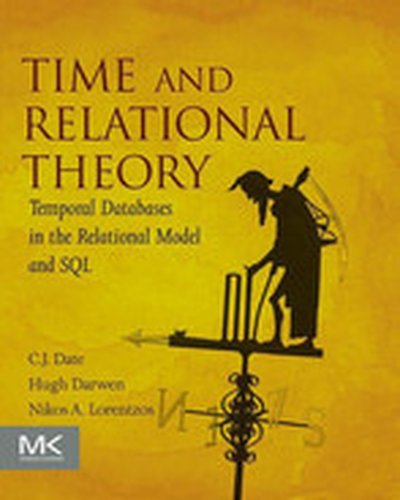
Time and Relational Theory, 2nd Edition

Time and Relational Theory provides an in-depth description of temporal database systems, which provide special facilities for storing, querying, and updating historical and future data. Traditionally, database management systems provide little or no special support for temporal data at all. This situation is changing because: Cheap storage enables retention of large volumes of historical data in data warehouses Users are now faced with temporal data problems, and need solutions Temporal features have recently been incorporated into the SQL standard, and vendors have begun to add temporal support to their DBMS products Based on the groundbreaking text Temporal Data & the Relational Model (Morgan Kaufmann, 2002) and new research led by the authors, Time and Relational Theory is the only book to offer a complete overview of the functionality of a temporal DBMS. Expert authors Nikos Lorentzos, Hugh Darwen, and Chris Date describe an approach to temporal database management that is firmly rooted in classical relational theory and will stand the test of time. This book covers the SQL:2011 temporal extensions in depth and identifies and discusses the temporal functionality still missing from SQL. Understand how the relational model provides an ideal basis for taming the complexities of temporal databases Learn how to analyze and evaluate commercial temporal products with this timely and important information Be able to use sound principles in designing and using temporal databases Understand the temporal support recently added to SQL with coverage of the new SQL features in this unique, accurate, and authoritative reference Appreciate the benefits of a truly relational approach to the problem with this clear, user friendly presentation

ABCs of IBM z/OS System Programming Volume 6

The ABCs of IBM® z/OS® System Programming is an 11-volume collection that provides an introduction to the z/OS operating system and the hardware architecture. Whether you are a beginner or an experienced system programmer, the ABCs collection provides the information that you need to start your research into z/OS and related subjects. If you want to become more familiar with z/OS in your current environment or if you are evaluating platforms to consolidate your e-business applications, the ABCs collection can serve as a powerful technical tool. Following are the contents of the volumes: Volume 1: Introduction to z/OS and storage concepts, TSO/E, ISPF, JCL, SDSF, and z/OS delivery and installation Volume 2: z/OS implementation and daily maintenance, defining subsystems, JES2 and JES3, LPA, LNKLST, authorized libraries, IBM Language Environment®, and SMP/E Volume 3: Introduction to DFSMS, data set basics, storage management hardware and software, VSAM, System-managed storage, catalogs, and DFSMStvs Volume 4: Communication Server, TCP/IP, and IBM VTAM® Volume 5: Base and IBM Parallel Sysplex®, System Logger, Resource Recovery Services (RRS), global resource serialization (GRS), z/OS system operations, automatic restart management (ARM), and IBM Geographically Dispersed Parallel Sysplex™ (IBM GDPS®) Volume 6: Introduction to security, IBM RACF®, digital certificates and public key infrastructure (PKI), Kerberos, cryptography and IBM z9® integrated cryptography, Lightweight Directory Access Protocol (LDAP), and Enterprise Identity Mapping (EIM) Volume 7: Printing in a z/OS environment, Infoprint Server, and Infoprint Central Volume 8: An introduction to z/OS problem diagnosis Volume 9: z/OS UNIX System Services Volume 10: Introduction to IBM z/Architecture®, IBM System z® processor design, System z connectivity, logical partition (LPAR) concepts, hardware configuration definition (HCD), and Hardware Management Console (HMC) Volume 11: Capacity planning, performance management, Workload Manager (WLM), IBM Resource Measurement Facility™ (RMF™), and System Management Facilities (SMF)

GDPS Family: An Introduction to Concepts and Capabilities

This IBM® Redbooks® publication presents an overview of the IBM Geographically Dispersed Parallel Sysplex™ (IBM GDPS®) family of offerings and the role they play in delivering a business IT resilience solution. The book begins with general concepts of business IT resilience and disaster recovery, along with issues related to high application availability, data integrity, and performance. These topics are considered within the framework of government regulation, increasing application and infrastructure complexity, and the competitive and rapidly changing modern business environment. Next, it describes the GDPS family of offerings with specific reference to how they can help you achieve your defined goals for disaster recovery and high availability. Also covered are the features that simplify and enhance data replication activities, the prerequisites for implementing each offering, and hints for planning for the future and immediate business requirements. Tables provide easy-to-use summaries and comparisons of the offerings, and the additional planning and implementation services available from IBM are explained. Finally, several practical client scenarios and requirements are described, along with the most suitable GDPS solution for each case. The introductory chapters of this publication are intended for a broad technical audience including IT System Architects, Availability Managers, Technical IT Managers, Operations Managers, System Programmers, and Disaster Recovery Planners. The subsequent chapters provide more technical details about the GDPS offerings, and each can be read in isolation for those readers who are interested. Therefore, if you do read all the chapters, be aware that some information is repeated.

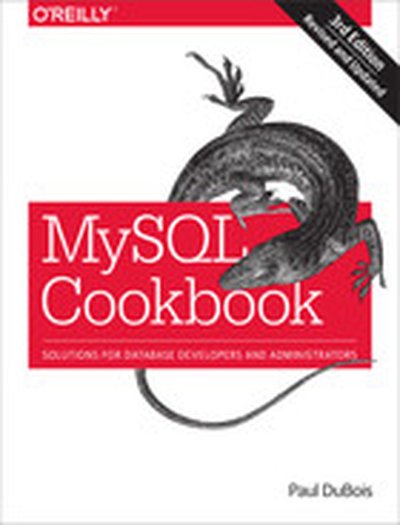
MySQL Cookbook, 3rd Edition

MySQLâ??s popularity has brought a flood of questions about how to solve specific problems, and thatâ??s where this cookbook is essential. When you need quick solutions or techniques, this handy resource provides scores of short, focused pieces of code, hundreds of worked-out examples, and clear, concise explanations for programmers who donâ??t have the time (or expertise) to solve MySQL problems from scratch. Ideal for beginners and professional database and web developers, this updated third edition covers powerful features in MySQL 5.6 (and some in 5.7). The book focuses on programming APIs in Python, PHP, Java, Perl, and Ruby. With more than 200+ recipes, youâ??ll learn how to: Use the mysql client and write MySQL-based programs Create, populate, and select data from tables Store, retrieve, and manipulate strings Work with dates and times Sort query results and generate summaries Use stored routines, triggers, and scheduled events Import, export, validate, and reformat data Perform transactions and work with statistics Process web input, and generate web content from query results Use MySQL-based web session management Provide security and server administration

Predictive Analytics Using Oracle Data Miner

Build Next-Generation In-Database Predictive Analytics Applications with Oracle Data Miner “If you have an Oracle Database and want to leverage that data to discover new insights, make predictions, and generate actionable insights, this book is a must read for you! In Predictive Analytics Using Oracle Data Miner: Develop & Use Oracle Data Mining Models in Oracle Data Miner, SQL & PL/SQL, Brendan Tierney, Oracle ACE Director and data mining expert, guides you through the basic concepts of data mining and offers step-by-step instructions for solving data-driven problems using SQL Developer’s Oracle Data Mining extension. Brendan takes it full circle by showing you how to deploy advanced analytical methodologies and predictive models immediately into enterprise-wide production environments using the in-database SQL and PL/SQL functionality. Definitely a must read for any Oracle data professional!” --Charlie Berger, Senior Director Product Management, Oracle Data Mining and Advanced Analytics Perform in-database data mining to unlock hidden insights in data. Written by an Oracle ACE Director, Predictive Analytics Using Oracle Data Miner shows you how to use this powerful tool to create and deploy advanced data mining models. Covering topics for the data scientist, Oracle developer, and Oracle database administrator, this Oracle Press guide shows you how to get started with Oracle Data Miner and build Oracle Data Miner models using SQL and PL/SQL packages. You'll get best practices for integrating your Oracle Data Miner models into applications to automate the discovery and distribution of business intelligence predictions throughout the enterprise. Install and configure Oracle Data Miner for Oracle Database 11 g Release 11.2 and Oracle Database 12 c Create Oracle Data Miner projects and workflows Prepare data for data mining Develop data mining models using association rule analysis, classification, clustering, regression, and anomaly detection Use data dictionary views and prepare your data using in-database transformations Build and use data mining models using SQL and PL/SQL packages Migrate your Oracle Data Miner models, integrate them into dashboards and applications, and run them in parallel Build transient data mining models with the Predictive Queries feature in Oracle Database 12 c

The Complete Guide to CICS Transaction Gateway Volume 1 Configuration and Administration

In this IBM® Redbooks® publication, you will gain an appreciation of the IBM CICS® Transaction Gateway (CICS TG) product suite, based on key criteria, such as capabilities, scalability, platform, CICS server support, application language support, and licensing model. Matching the requirements to available infrastructure and hardware choices requires an appreciation of the choices available. In this book, you will gain an understanding of those choices, and will be capable of choosing the appropriate CICS connection protocol, APIs for the applications, and security options. You will understand the services available to the application developer when using a chosen protocol. You will then learn about how to implement CICS TG solutions, taking advantage of the latest capabilities, such as IPIC connectivity, high availability, and Dynamic Server Selection. Specific scenarios illustrate the usage of CICS TG for IBM z/OS®, and CICS TG for Multiplatforms, with CICS Transaction Server for z/OS and IBM WebSphere® Application Server, including connections in CICS, configuring simple end-to-end connectivity (all platforms) with verification for remote and local mode applications, and adding security, XA support, and high availability.

Britain and the EU: In or Out?

Britain has had an ambivalent attitude to the European Union ever since it joined 40 years ago. So what does prime minister David Cameron's promise to hold a referendum on whether the UK should stay in the union mean? What would a "Brexit" entail for Britain, Europe, and the world? These are the questions answered in Britain and the EU, an ebook of 10,000 words, compiled from news and comment published in the Financial Times, the global business newspaper which combines expert UK political coverage with unrivalled reporting on the European Union. The ebook's publication in April 2013 comes less than a year after the runaway success of the FT's first ebook, If Greece goes.... which looked at the consequences of Athens' feared expulsion from the eurozone.

Transportation Management with SAP TM 9.0

"The implementation of a TMS solution is a highly complex and mission critical project. If executed correctly a good TMS can deliver a number of benefits to the organization in terms of optimization, greater efficiency, reduced errors and improved revenue through accurate invoicing. However a number of projects fail to realize these benefits for a host of reasons such as an incorrect product selection, over customization of the system and lack of detailed processes. The evaluation and selection of the right transportation management system is a very critical step in the successful implementation of a TMS product as well as ensuring that the organization is able to realize the benefits expected from the system. Transportation Management with SAP TM 9 is a guide for CIO/CXOs evaluating options for various transportation management solutions available in the market and helps inappropriate decision making before committing investment. A proven evaluation framework and guidance provided in the book can help decision makers with product selection and help to create a business case for management approval and design a future roadmap for the organization. The book provides a comprehensive understanding of what SAP transportation management is and is useful for teams involved in TM Implementation and roll outs to ensure preparedness. The book explains end-to-end freight life cycle processes, functional system landscape, implementation challenges and post go-live precautions required to optimize investments in SAP TM. Transportation Management with SAP TM 9 also acts as a step by step implementation guide with details of configuration required to set up a TM9 system. This book also covers the upgrade of SAP TM8 to SAP TM9 which will be useful for existing clients who are on TM 8. Nonavailability of SAP TM skilled resources is a major challenge faced by organizations and the book provides a detailed competency building plan along with skill set requirements to create a competent and trained workforce to manage-transformation.The current book available in the market on SAP TM is based on Version 6 release which does not cover air freight processes. Our book covers end-to-end air freight configuration scenarios for logistic companies."

IBM System Storage N series Software Guide

Corporate workgroups, distributed enterprises, and small to medium-sized companies are increasingly seeking to network and consolidate storage to improve availability, share information, reduce costs, and protect and secure information. These organizations require enterprise-class solutions capable of addressing immediate storage needs cost-effectively, while providing an upgrade path for future requirements. IBM® System Storage® N series storage systems and their software capabilities are designed to meet these requirements. IBM System Storage N series storage systems offer an excellent solution for a broad range of deployment scenarios. IBM System Storage N series storage systems function as a multiprotocol storage device that is designed to allow you to simultaneously serve both file and block-level data across a single network. These activities are demanding procedures that, for some solutions, require multiple, separately managed systems. The flexibility of IBM System Storage N series storage systems, however, allows them to address the storage needs of a wide range of organizations, including distributed enterprises and data centers for midrange enterprises. IBM System Storage N series storage systems also support sites with computer and data-intensive enterprise applications, such as database, data warehousing, workgroup collaboration, and messaging. This IBM Redbooks® publication explains the software features of the IBM System Storage N series storage systems. This book also covers topics such as installation, setup, and administration of those software features from the IBM System Storage N series storage systems and clients and provides example scenarios.

Implementing the IBM System Storage SAN Volume Controller V7.2

This IBM® Redbooks® publication is a detailed technical guide to the IBM System Storage® SAN Volume Controller Version 7.2. SAN Volume Controller is a virtualization appliance solution, which maps virtualized volumes that are visible to hosts and applications to physical volumes on storage devices. Each server within the storage area network (SAN) has its own set of virtual storage addresses that are mapped to physical addresses. If the physical addresses change, the server continues running by using the same virtual addresses that it had before. Therefore, volumes or storage can be added or moved while the server is still running. The IBM virtualization technology improves the management of information at the “block” level in a network, which enables applications and servers to share storage devices on a network. This book is intended for readers who must implement the SAN Volume Controller at a 7.2 release level with minimal effort.

Data Classification

Research on the problem of classification tends to be fragmented across such areas as pattern recognition, database, data mining, and machine learning. Addressing the work of these different communities in a unified way, this book explores the underlying algorithms of classification as well as applications of classification in a variety of problem domains, including text, multimedia, social network, and biological data. It presents core methods in data classification, covers recent problem domains, and discusses advanced methods for enhancing the quality of the underlying classification results.

Scaling Apache Solr

Become an expert in implementing high-performance, scalable search solutions with Apache Solr in 'Scaling Apache Solr'. This detailed guide teaches you how to architect and manage top-tier search functionalities tailored for different enterprise environments. What this Book will help me do Understand the Apache Solr ecosystem and its core functionality. Apply techniques for scaling and optimizing search for enterprise environments. Implement sharding, replication, and fault tolerance for robust searches. Integrate Solr with various systems and infrastructure to enhance capability. Optimize data indexing and retrieval for high-performance applications. Author(s) Vijay Karambelkar is an experienced software architect with extensive expertise in search technologies, including Solr and Lucene. He has worked on numerous enterprise applications where scalable and efficient search was critical. Vijay's writing is informed by his real-world implementations and is structured to provide practical knowledge to help readers tackle similar challenges. Who is it for? This book is ideal for software developers, architects, and IT professionals who manage or create enterprise search solutions. It's suitable for readers with basic programming knowledge but no experience with Apache Solr. This detailed guide will also benefit those looking to improve performance and scalability in their applications using cutting-edge technology. If scalability, integration, and cloud search solutions are topics you want to master, this book is tailored for you.