talk-data.com talk-data.com

Topic

data-science-tasks

794

tagged

Activity Trend

1 peak/qtr
2020-Q1 2026-Q1

Activities

Showing filtered results

Filtering by: O'Reilly Data Science Books ×
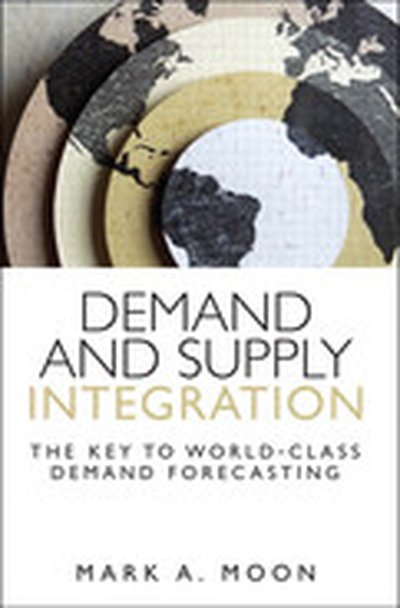
Demand and Supply Integration: The Key to World-Class Demand Forecasting

Supply chain professionals: master pioneering techniques for integrating demand and supply, and create demand forecasts that are far more accurate and useful! In Demand and Supply Integration, Dr. Mark Moon presents the specific design characteristics of a world-class demand forecasting management process, showing how to effectively integrate demand forecasting within a comprehensive Demand and Supply Integration (DSI) process. Writing for supply chain professionals in any business, government agency, or military procurement organization, Moon explains what DSI is, how it differs from approaches such as SandOP, and how to recognize the symptoms of failures to sufficiently integrate demand and supply. He outlines the key characteristics of successful DSI implementations, shows how to approach Demand Forecasting as a management process, and guides you through understanding, selecting, and applying the best available qualitative and quantitative forecasting techniques. You'll learn how to thoroughly reflect market intelligence in your forecasts; measure your forecasting performance; implement state-of-the-art demand forecasting systems; manage Demand Reviews, and much more. For wide audiences of supply chain, logistics, and operations management professionals at all levels, from analyst and manager to Director, Vice President, and Chief Supply Chain Officer; and for researchers and graduate students in the field.
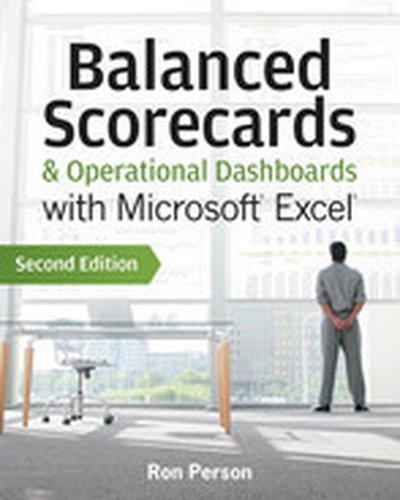
Balanced Scorecards and Operational Dashboards with Microsoft Excel, 2nd Edition

Learn to maintain and update scorecards and dashboards with Excel Balanced Scorecards and operational dashboards measure organizational performance and Microsoft Excel is the tool used worldwide to create these scorecards and dashboards. This book covers time-proven step-by-step processes on how to guide executive teams and managers in creating scorecards and dashboards. It then shows Excel developers how to create those scorecards and dashboards. This is the only book that converts theory into practice. The author addresses the people and processes you need to identify strategy and operational metrics and then implement them in dashboards in three versions of Excel. You'll learn how balanced scorecards help organizations translate strategy into action and the ways that performance dashboards enable managers monitor operations. Covers Excel 2010 back to Excel 2003 Shows how to develop consensus on strategy and operational plans with the executive teams Details steps in creating tactical action plans Gives step-by-step guidance in creating the most powerful management dashboards Puts over ten years of experience in one book Balanced Scorecards & Operational Dashboards with Microsoft Excel, Second Edition is the ultimate resource for enhancing your strategic and operational performance.

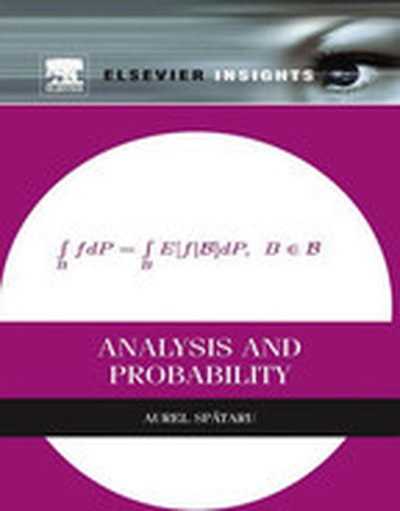
Analysis and Probability

Probability theory is a rapidly expanding field and is used in many areas of science and technology. Beginning from a basis of abstract analysis, this mathematics book develops the knowledge needed for advanced students to develop a complex understanding of probability. The first part of the book systematically presents concepts and results from analysis before embarking on the study of probability theory. The initial section will also be useful for those interested in topology, measure theory, real analysis and functional analysis. The second part of the book presents the concepts, methodology and fundamental results of probability theory. Exercises are included throughout the text, not just at the end, to teach each concept fully as it is explained, including presentations of interesting extensions of the theory. The complete and detailed nature of the book makes it ideal as a reference book or for self-study in probability and related fields. Covers a wide range of subjects including f-expansions, Fuk-Nagaev inequalities and Markov triples. Provides multiple clearly worked exercises with complete proofs. Guides readers through examples so they can understand and write research papers independently.

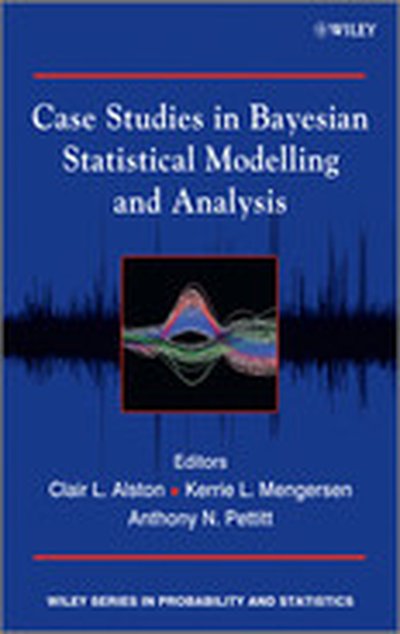
Case Studies in Bayesian Statistical Modelling and Analysis

Provides an accessible foundation to Bayesian analysis using real world models This book aims to present an introduction to Bayesian modelling and computation, by considering real case studies drawn from diverse fields spanning ecology, health, genetics and finance. Each chapter comprises a description of the problem, the corresponding model, the computational method, results and inferences as well as the issues that arise in the implementation of these approaches. Case Studies in Bayesian Statistical Modelling and Analysis: Illustrates how to do Bayesian analysis in a clear and concise manner using real-world problems. Each chapter focuses on a real-world problem and describes the way in which the problem may be analysed using Bayesian methods. Features approaches that can be used in a wide area of application, such as, health, the environment, genetics, information science, medicine, biology, industry and remote sensing. Case Studies in Bayesian Statistical Modelling and Analysis is aimed at statisticians, researchers and practitioners who have some expertise in statistical modelling and analysis, and some understanding of the basics of Bayesian statistics, but little experience in its application. Graduate students of statistics and biostatistics will also find this book beneficial.

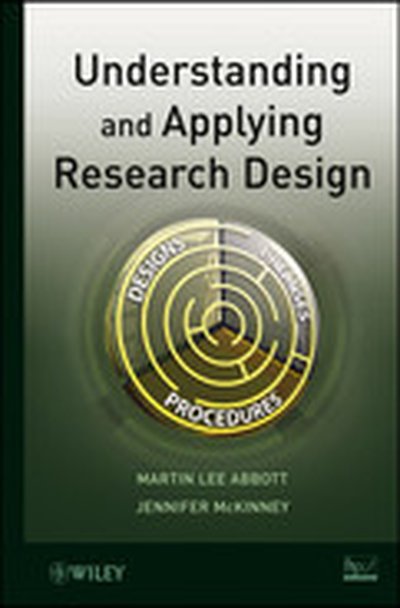
Understanding and Applying Research Design

A fresh approach to bridging research design with statistical analysis While good social science requires both research design and statistical analysis, most books treat these two areas separately. Understanding and Applying Research Design introduces an accessible approach to integrating design and statistics, focusing on the processes of posing, testing, and interpreting research questions in the social sciences. The authors analyze real-world data using SPSS software, guiding readers on the overall process of science, focusing on premises, procedures, and designs of social scientific research. Three clearly organized sections move seamlessly from theoretical topics to statistical techniques at the heart of research procedures, and finally, to practical application of research design: Premises of Research introduces the research process and the capabilities of SPSS, with coverage of ethics, Empirical Generalization, and Chi Square and Contingency Table Analysis Procedures of Research explores key quantitative methods in research design including measurement, correlation, regression, and causation Designs of Research outlines various design frameworks, with discussion of survey research, aggregate research, and experiments Throughout the book, SPSS software is used to showcase the discussed techniques, and detailed appendices provide guidance on key statistical procedures and tips for data management. Numerous exercises allow readers to test their comprehension of the presented material, and a related website features additional data sets and SPSS code. Understanding and Applying Research Design is an excellent book for social sciences and education courses on research methods at the upper-undergraduate level. The book is also an insightful reference for professionals who would like to learn how to pose, test, and interpret research questions with confidence.

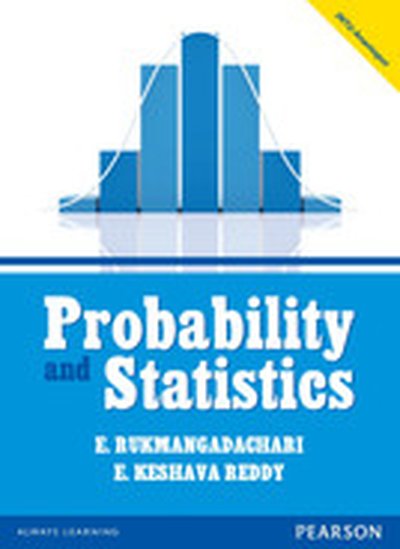
Probability and Statistics by Pearson

This book is designed for engineering students studying the core paper on probability and statistics during their second or third years. It includes detailed explanation of theory with numerous examples and exercises, as well as relevant references to engineering applications. Each also has numerous objective type questions and answers and hints are provided for all the exercise problems and objective type questions.

Book Contents –

  1. Probability
  2. Probability Distribution
  3. Special Distribution
  4. Sampling Distributions
  5. Estimation Theory
  6. Inferences Concerning Means and Proportions
  7. Tests of Significance
  8. Curve Fitting: Regression and Correlation Analysis
  9. Analysis of Variance
  10. Statistical Quality Control
  11. Queueing Theory Appendix A: Test Based on Normal Distributions Appendix B: Statistical Tables Appendix C: Basic Results Additional Solved Problems Index
Data Insights

Data Insights: New Ways to Visualize and Make Sense of Data offers thought-provoking insights into how visualization can foster a clearer and more comprehensive understanding of data. The book offers perspectives from people with different backgrounds, including data scientists, statisticians, painters, and writers. It argues that all data is useless, or misleading, if we do not know what it means.Organized into seven chapters, the book explores some of the ways that data visualization and other emerging approaches can make data meaningful and therefore useful. It also discusses some fundamental ideas and basic questions in the data lifecycle; the process of interactions between people, data, and displays that lead to better questions and more useful answers; and the fundamentals, origins, and purposes of the basic building blocks that are used in data visualization. The reader is introduced to tried and true approaches to understanding users in the context of user interface design, how communications can get distorted, and how data visualization is related to thinking machines. Finally, the book looks at the future of data visualization by assessing its strengths and weaknesses. Case studies from business analytics, healthcare, network monitoring, security, and games, among others, as well as illustrations, thought-provoking quotes, and real-world examples are included.This book will prove useful to computer professionals, technical marketing professionals, content strategists, Web and product designers, and researchers. Demonstrates, with a variety of case studies, how visualizations can foster a clearer and more comprehensive understanding of data Answers the question, "How can data visualization help me?" with discussions of how it fits into a wide array of purposes and situations Makes the case that data visualization is not just about technology; it also involves a deeply human process

Bayesian Methods in Health Economics

Health economics is concerned with the study of the cost-effectiveness of health care interventions. This book provides an overview of Bayesian methods for the analysis of health economic data. After an introduction to the basic economic concepts and methods of evaluation, it presents Bayesian statistics using accessible mathematics. The next chapters describe the theory and practice of cost-effectiveness analysis from a statistical viewpoint, and Bayesian computation, notably MCMC. The final chapter presents three detailed case studies covering cost-effectiveness analyses using individual data from clinical trials, evidence synthesis and hierarchical models and Markov models. The text uses WinBUGS and JAGS with datasets and code available online.

Statistics for Economics

Statistics is the branch of mathematics that deals with real-life problems. As such, it is an essential tool for economists. Unfortunately, the way you and many other economists learn the concept of statistics is not compatible with the way economists think and learn. The problem is worsened by the use of mathematical jargon and complex derivations. Here’s a book that proves none of this is necessary. All the examples and exercises in this book are constructed within the field of economics, thus eliminating the difficulty of learning statistics with examples from fields that have no relation to business, politics, or policy. Statistics is, in fact, not more difficult than economics. Anyone who can comprehend economics can understand and use statistics successfully within this field, including you! This book utilizes Microsoft Excel to obtain statistical results, as well as to perform additional necessary computations. Microsoft Excel is not the software of choice for performing sophisticated statistical analysis. However, it is widely available, and almost everyone has some degree of familiarity with it. Using Excel will eliminate the need for students and readers to buy and learn new software, the need that itself would prove to be another impediment to learning and using statistics.

Statistics in a Nutshell, 2nd Edition

Need to learn statistics for your job? Want help passing a statistics course? Statistics in a Nutshell is a clear and concise introduction and reference for anyone new to the subject. Thoroughly revised and expanded, this edition helps you gain a solid understanding of statistics without the numbing complexity of many college texts. Each chapter presents easy-to-follow descriptions, along with graphics, formulas, solved examples, and hands-on exercises. If you want to perform common statistical analyses and learn a wide range of techniques without getting in over your head, this is your book. Learn basic concepts of measurement and probability theory, data management, and research design Discover basic statistical procedures, including correlation, the t-test, the chi-square and Fisher’s exact tests, and techniques for analyzing nonparametric data Learn advanced techniques based on the general linear model, including ANOVA, ANCOVA, multiple linear regression, and logistic regression Use and interpret statistics for business and quality improvement, medical and public health, and education and psychology Communicate with statistics and critique statistical information presented by others

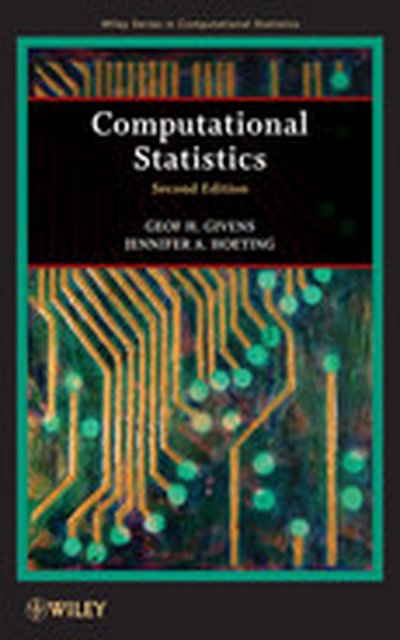
Computational Statistics, 2nd Edition

This new edition continues to serve as a comprehensive guide to modern and classical methods of statistical computing. The book is comprised of four main parts spanning the field: Optimization Integration and Simulation Bootstrapping Density Estimation and Smoothing Within these sections, each chapter includes a comprehensive introduction and step-by-step implementation summaries to accompany the explanations of key methods. The new edition includes updated coverage and existing topics as well as new topics such as adaptive MCMC and bootstrapping for correlated data. The book website now includes comprehensive R code for the entire book. There are extensive exercises, real examples, and helpful insights about how to use the methods in practice. Note: The ebook version does not provide access to the companion files.

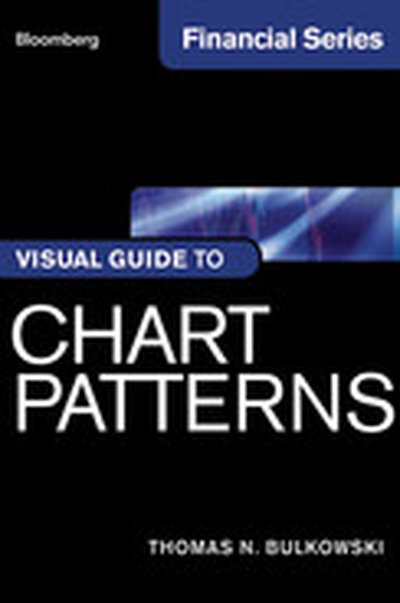
Visual Guide to Chart Patterns

The step-by-step visual guide to spotting potential price movements and improving returns Bloomberg Visual Guide to Chart Patterns is a concise and accessible visual guide to identifying, understanding, and using chart patterns to predict the direction and extent of price moves. Packed with visual learning enhancements and exercises, this innovative book helps savvy investors and professionals alike master the essential skills of chart pattern recognition. Follow along as chart pattern expert Thomas Bulkowski teaches you to recognize important peaks and valleys that form patterns—footprints of the smart money. Nearly 200 color charts assist in providing a step-by-step approach to finding those footprints, interpreting them, and following them. Popular patterns such as head-and-shoulders, double tops and bottoms, triangles, gaps, flags, and pennants are just a few of the many patterns explored throughout the book. For the sophisticated trader or investor, the book also provides statistical research to support the claims of pattern behavior, trading signals, and setups, in an easy to understand way. Discusses chart pattern identification guidelines, psychology, variations, failures, and buy and sell signals Covers the most popular and common chart patterns as well as lesser-known ones like throwbacks, pullbacks, and busted patterns Incorporates quizzes, step-by-step exercises, enhanced graphics and video tutorials to immerse the reader in the world of chart patterns Designed for use by investors and traders, from beginners to experts looking for a practical, easy-to-use guide, comprehensive reference, Bloomberg Visual Guide to Chart Patterns provides a sophisticated introduction to the world of chart patterns.

Data Clean-Up and Management

Data use in the library has specific characteristics and common problems. Data Clean-up and Management addresses these, and provides methods to clean up frequently-occurring data problems using readily-available applications. The authors highlight the importance and methods of data analysis and presentation, and offer guidelines and recommendations for a data quality policy. The book gives step-by-step how-to directions for common dirty data issues. Focused towards libraries and practicing librarians Deals with practical, real-life issues and addresses common problems that all libraries face Offers cradle-to-grave treatment for preparing and using data, including download, clean-up, management, analysis and presentation

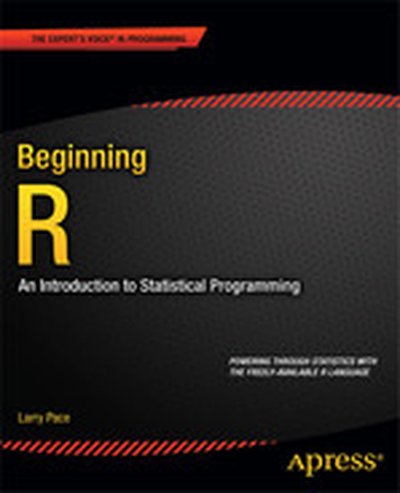
Beginning R: An Introduction to Statistical Programming

Beginning R: An Introduction to Statistical Programming is a hands-on book showing how to use the R language, write and save R scripts, build and import data files, and write your own custom statistical functions. R is a powerful open-source implementation of the statistical language S, which was developed by AT&T. R has eclipsed S and the commercially-available S-Plus language, and has become the de facto standard for doing, teaching, and learning computational statistics. R is both an object-oriented language and a functional language that is easy to learn, easy to use, and completely free. A large community of dedicated R users and programmers provides an excellent source of R code, functions, and data sets. R is also becoming adopted into commercial tools such as Oracle Database. Your investment in learning R is sure to pay off in the long term as R continues to grow into the go to language for statistical exploration and research. Covers the freely-available R language for statistics Shows the use of R in specific uses case such as simulations, discrete probability solutions, one-way ANOVA analysis, and more Takes a hands-on and example-based approach incorporating best practices with clear explanations of the statistics being done What you'll learn Acquire and install R Import and export data and scripts Generate basic statistics and graphics Program in R to write custom functions Use R for interactive statistical explorations Implement simulations and other advanced techniques Who this book is for Beginning R: An Introduction to Statistical Programming is an easy-to-read book that serves as an instruction manual and reference for working professionals, professors, and students who want to learn and use R for basic statistics. It is the perfect book for anyone needing a free, capable, and powerful tool for exploring statistics and automating their use.

Service-Oriented Distributed Knowledge Discovery

A new approach to distributed large-scale data mining, service-oriented knowledge discovery extracts useful knowledge from often unmanageable volumes of data by exploiting data mining and machine learning distributed models and techniques in service-oriented infrastructures. Service-Oriented Distributed Knowledge Discovery presents techniques, algorithms, and systems based on the service-oriented paradigm. It explains how to design services for data analytics, describes real systems for implementing distributed knowledge discovery applications, and explores mobile data mining models.

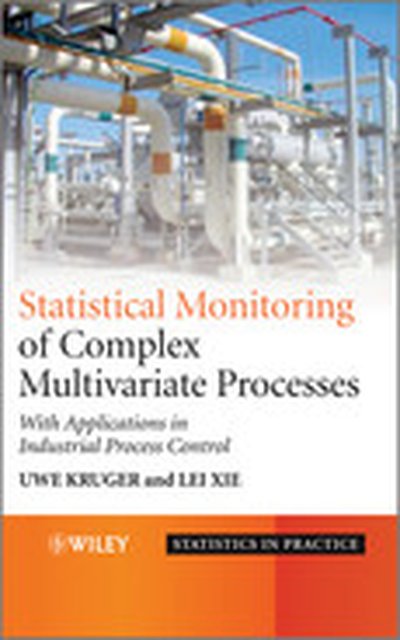
Statistical Monitoring of Complex Multivariate Processes: With Applications in Industrial Process Control

The development and application of multivariate statistical techniques in process monitoring has gained substantial interest over the past two decades in academia and industry alike. Initially developed for monitoring and fault diagnosis in complex systems, such techniques have been refined and applied in various engineering areas, for example mechanical and manufacturing, chemical, electrical and electronic, and power engineering. The recipe for the tremendous interest in multivariate statistical techniques lies in its simplicity and adaptability for developing monitoring applications. In contrast, competitive model, signal or knowledge based techniques showed their potential only whenever cost-benefit economics have justified the required effort in developing applications. Statistical Monitoring of Complex Multivariate Processes presents recent advances in statistics based process monitoring, explaining how these processes can now be used in areas such as mechanical and manufacturing engineering for example, in addition to the traditional chemical industry. This book: Contains a detailed theoretical background of the component technology. Brings together a large body of work to address the field's drawbacks, and develops methods for their improvement. Details cross-disciplinary utilization, exemplified by examples in chemical, mechanical and manufacturing engineering. Presents real life industrial applications, outlining deficiencies in the methodology and how to address them. Includes numerous examples, tutorial questions and homework assignments in the form of individual and team-based projects, to enhance the learning experience. Features a supplementary website including Matlab algorithms and data sets. This book provides a timely reference text to the rapidly evolving area of multivariate statistical analysis for academics, advanced level students, and practitioners alike.

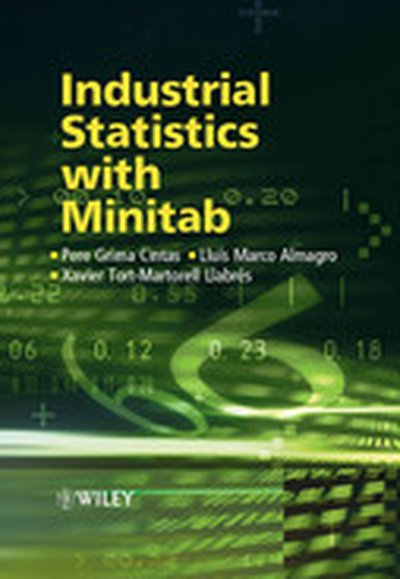
Industrial Statistics with Minitab

Industrial Statistics with MINITAB demonstrates the use of MINITAB as a tool for performing statistical analysis in an industrial context. This book covers introductory industrial statistics, exploring the most commonly used techniques alongside those that serve to give an overview of more complex issues. A plethora of examples in MINITAB are featured along with case studies for each of the statistical techniques presented. Industrial Statistics with MINITAB: Provides comprehensive coverage of user-friendly practical guidance to the essential statistical methods applied in industry. Explores statistical techniques and how they can be used effectively with the help of MINITAB 16. Contains extensive illustrative examples and case studies throughout and assumes no previous statistical knowledge. Emphasises data graphics and visualization, and the most used industrial statistical tools, such as Statistical Process Control and Design of Experiments. Is supported by an accompanying website featuring case studies and the corresponding datasets. Six Sigma Green Belts and Black Belts will find explanations and examples of the most relevant techniques in DMAIC projects. The book can also be used as quick reference enabling the reader to be confident enough to explore other MINITAB capabilities.

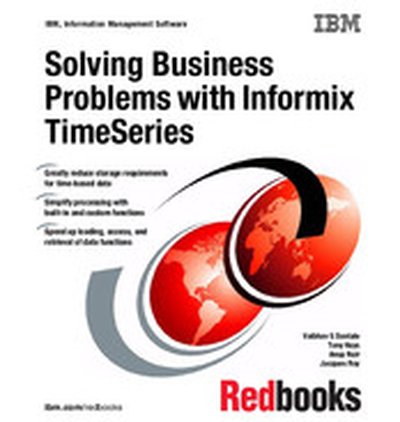
Solving Business Problems with Informix TimeSeries

The world is becoming more and more instrumented, interconnected, and intelligent in what IBM® terms a smarter planet, with more and more data being collected for analysis. In trade magazines, this trend is called big data. As part of this trend, the following types of time-based information are collected: Large data centers support a corporation or provide cloud services. These data centers need to collect temperature, humidity, and other types of Utility meters (referred to as smart meters) allow utility companies to collect information over a wireless network and to collect more data than ever before. IBM Informix® TimeSeries is optimized for the processing of time-based data and can provide the following benefits: Storage savings: Storage can be optimized when you know the characteristics of your time-based data. Informix TimeSeries often uses one third of the storage space that is required by a standard relational database. Query performance: Informix TimeSeries takes into consideration the type of data to optimize its organization on disk and eliminates the need for some large indexes and additional sorting. For these reasons and more, some queries can easily have an order of magnitude performance improvement compared to standard relational. Simpler queries: Informix TimeSeries includes a large set of specialized functions that allow you to better express the processing that you want to execute. It even provides a toolkit so that you can add proprietary algoritms to the library. This IBM Redbooks® publication is for people who want to implement a solution that revolves around time-based data. It gives you the information that you need to get started and be productive with Informix TimeSeries.

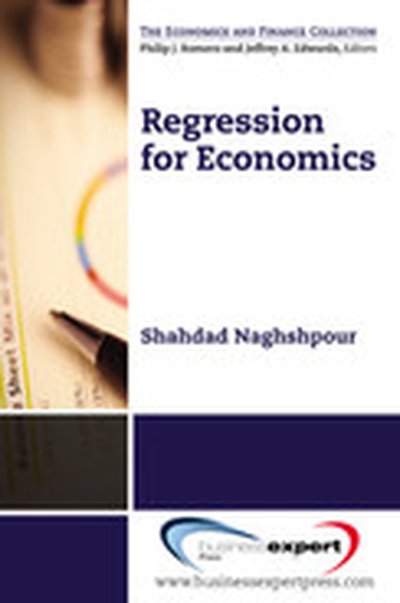
Regression for Economics

Regression analysis is the most commonly used statistical method in the world. Although few would characterize this technique as simple, regression is in fact both simple and elegant. The complexity that many attribute to regression analysis is often a reflection of their lack of familiarity with the language of mathematics. But regression analysis can be understood even without a mastery of sophisticated mathematical concepts. This book provides the foundation and will help demystify regression analysis using examples from economics and with real data to show the applications of the method. The concepts related to regression analysis are explained in a way that is comprehensible to those whose mathematical skills are not matching that of the expert level, and uses Microsoft Excel to obtain regression results. What hinders peoples’ comprehension of regression analysis is the difficulty many have in understanding mathematical symbols and derivations. By removing this obstacle, this book enables the logical reader to learn regression without possessing superior mathematical skills.