talk-data.com talk-data.com

Topic

data-science-tasks

794

tagged

Activity Trend

1 peak/qtr
2020-Q1 2026-Q1

Activities

Showing filtered results

Filtering by: O'Reilly Data Science Books ×
Head First Statistics

Wouldn't it be great if there were a statistics book that made histograms, probability distributions, and chi square analysis more enjoyable than going to the dentist? Head First Statistics brings this typically dry subject to life, teaching you everything you want and need to know about statistics through engaging, interactive, and thought-provoking material, full of puzzles, stories, quizzes, visual aids, and real-world examples. Whether you're a student, a professional, or just curious about statistical analysis, Head First's brain-friendly formula helps you get a firm grasp of statistics so you can understand key points and actually use them. Learn to present data visually with charts and plots; discover the difference between taking the average with mean, median, and mode, and why it's important; learn how to calculate probability and expectation; and much more. Head First Statistics is ideal for high school and college students taking statistics and satisfies the requirements for passing the College Board's Advanced Placement (AP) Statistics Exam. With this book, you'll: Study the full range of topics covered in first-year statistics Tackle tough statistical concepts using Head First's dynamic, visually rich format proven to stimulate learning and help you retain knowledge Explore real-world scenarios, ranging from casino gambling to prescription drug testing, to bring statistical principles to life Discover how to measure spread, calculate odds through probability, and understand the normal, binomial, geometric, and Poisson distributions Conduct sampling, use correlation and regression, do hypothesis testing, perform chi square analysis, and more Before you know it, you'll not only have mastered statistics, you'll also see how they work in the real world. Head First Statistics will help you pass your statistics course, and give you a firm understanding of the subject so you can apply the knowledge throughout your life.
Statistics in a Nutshell

Need to learn statistics as part of your job, or want some help passing a statistics course? Statistics in a Nutshell is a clear and concise introduction and reference that's perfect for anyone with no previous background in the subject. This book gives you a solid understanding of statistics without being too simple, yet without the numbing complexity of most college texts. You get a firm grasp of the fundamentals and a hands-on understanding of how to apply them before moving on to the more advanced material that follows. Each chapter presents you with easy-to-follow descriptions illustrated by graphics, formulas, and plenty of solved examples. Before you know it, you'll learn to apply statistical reasoning and statistical techniques, from basic concepts of probability and hypothesis testing to multivariate analysis. Organized into four distinct sections, Statistics in a Nutshell offers you: Introductory material: Different ways to think about statistics Basic concepts of measurement and probability theory Data management for statistical analysis Research design and experimental design How to critique statistics presented by others Basic inferential statistics: Basic concepts of inferential statistics The concept of correlation, when it is and is not an appropriate measure of association Dichotomous and categorical data The distinction between parametric and nonparametric statistics Advanced inferential techniques: The General Linear Model Analysis of Variance (ANOVA) and MANOVA Multiple linear regression Specialized techniques: Business and quality improvement statistics Medical and public health statistics Educational and psychological statistics Unlike many introductory books on the subject, Statistics in a Nutshell doesn't omit important material in an effort to dumb it down. And this book is far more practical than most college texts, which tend to over-emphasize calculation without teaching you when and how to apply different statistical tests. With Statistics in a Nutshell, you learn how to perform most common statistical analyses, and understand statistical techniques presented in research articles. If you need to know how to use a wide range of statistical techniques without getting in over your head, this is the book you want.

Mind Mapping For a Business Advantage

Today's information environment demands that we all save time, improve efficiency, and be more creative in our thinking. Mind Mapping is an essential business tool you can add to your intellectual armory. This Infoline will introduce you to the concept of Mind Mapping. You will learn how to read and create Mind Maps, use Mind Maps for common business and training processes, and increase your creativity and effectiveness by using Mind Maps. Trainers can more specifically use Mind Maps to outline prospective courses or programs, illustrate a business case for new projects or funding, organize training program content, l generate ideas during meetings and training sessions, andl draw connections between business needs and developmental efforts.

Time Series Analysis: Forecasting and Control, Fourth Edition

A modernized new edition of one of the most trusted books on time series analysis. Since publication of the first edition in 1970, Time Series Analysis has served as one of the most influential and prominent works on the subject. This new edition maintains its balanced presentation of the tools for modeling and analyzing time series and also introduces the latest developments that have occurred n the field over the past decade through applications from areas such as business, finance, and engineering. The Fourth Edition provides a clearly written exploration of the key methods for building, classifying, testing, and analyzing stochastic models for time series as well as their use in five important areas of application: forecasting; determining the transfer function of a system; modeling the effects of intervention events; developing multivariate dynamic models; and designing simple control schemes. Along with these classical uses, modern topics are introduced through the book's new features, which include: A new chapter on multivariate time series analysis, including a discussion of the challenge that arise with their modeling and an outline of the necessary analytical tools New coverage of forecasting in the design of feedback and feedforward control schemes A new chapter on nonlinear and long memory models, which explores additional models for application such as heteroscedastic time series, nonlinear time series models, and models for long memory processes Coverage of structural component models for the modeling, forecasting, and seasonal adjustment of time series A review of the maximum likelihood estimation for ARMA models with missing values Numerous illustrations and detailed appendices supplement the book,while extensive references and discussion questions at the end of each chapter facilitate an in-depth understanding of both time-tested and modern concepts. With its focus on practical, rather than heavily mathematical, techniques, time Series Analysis, Fourth Edition is the upper-undergraduate and graduate levels. this book is also an invaluable reference for applied statisticians, engineers, and financial analysts.

Applied Survival Analysis: Regression Modeling of Time to Event Data, 2nd Edition

THE MOST PRACTICAL, UP-TO-DATE GUIDE TO MODELLING AND ANALYZING TIME-TO-EVENT DATA—NOW IN A VALUABLE NEW EDITION Since publication of the first edition nearly a decade ago, analyses using time-to-event methods have increase considerably in all areas of scientific inquiry mainly as a result of model-building methods available in modern statistical software packages. However, there has been minimal coverage in the available literature to9 guide researchers, practitioners, and students who wish to apply these methods to health-related areas of study. Applied Survival Analysis, Second Edition provides a comprehensive and up-to-date introduction to regression modeling for time-to-event data in medical, epidemiological, biostatistical, and other health-related research. This book places a unique emphasis on the practical and contemporary applications of regression modeling rather than the mathematical theory. It offers a clear and accessible presentation of modern modeling techniques supplemented with real-world examples and case studies. Key topics covered include: variable selection, identification of the scale of continuous covariates, the role of interactions in the model, assessment of fit and model assumptions, regression diagnostics, recurrent event models, frailty models, additive models, competing risk models, and missing data. Features of the Second Edition include: Expanded coverage of interactions and the covariate-adjusted survival functions The use of the Worchester Heart Attack Study as the main modeling data set for illustrating discussed concepts and techniques New discussion of variable selection with multivariable fractional polynomials Further exploration of time-varying covariates, complex with examples Additional treatment of the exponential, Weibull, and log-logistic parametric regression models Increased emphasis on interpreting and using results as well as utilizing multiple imputation methods to analyze data with missing values New examples and exercises at the end of each chapter Analyses throughout the text are performed using Stata® Version 9, and an accompanying FTP site contains the data sets used in the book. Applied Survival Analysis, Second Edition is an ideal book for graduate-level courses in biostatistics, statistics, and epidemiologic methods. It also serves as a valuable reference for practitioners and researchers in any health-related field or for professionals in insurance and government.

Excel® 2007 Dashboards & Reports For Dummies®

What’s the use of putting out reports that no one reads? Properly created dashboards are graphical representations that put data in a context for your audience, and they look really cool! How cool? You’ll find out when you see the dazzling examples in Excel 2007 Dashboards & Reports For Dummies. And, before long, everyone’s eyes will be riveted to your dashboards and reports too! This revolutionary guide shows you how to turn Excel into your own personal Business Intelligence tool. You’ll learn the fundamentals of using Excel 2007 to go beyond simple tables to creating dashboard-studded reports that wow management. Get ready to catch dashboard fever as you find out how to use basic analysis techniques, build advanced dashboard components, implement advanced reporting techniques, and import external date into your Excel reports. Discover how to: Unleash the power of Excel as a business intelligence tool Create dashboards that communicate and get noticed Think about your data in a new way Present data more effectively and increase the value of your reports Create dynamic labels that support visualization Represent time and seasonal trending Group and bucket data Display and measure values versus goals Implement macro-charged reporting Using Excel 2007 as a BI tool is the most cost-efficient way for organizations of any size create powerful and insightful reports and distribute throughout the enterprise. And Excel 2007 Dashboards and Reports for Dummies is the fastest you for you to catch dashboard fever!

Deployment Guide Series: ITCAM for Response Time V6.2

This IBM® Redbooks® publication is written as part of the deployment guide series. This book provides a step-by-step guide for deploying ITCAM for Response Time V6.2. This deployment guide can help an IBM or business partner service person plan and perform the deployment of the product. The discussion of ITCAM for Response Time includes the explanation of product architecture and its components. We discuss planning and sizing considerations before you implement the product and some guidelines on setting up service engagement for the product. The deployment explained in the book would fit for a demonstration or a small deployment system, although the information is highly relevant for larger deployment engagements. This book also explains some usage scenario that can be performed for demonstrating the product.

Special Edition Using Microsoft® Office Visio® 2007

THE ONLY VISIO 2007 BOOK YOU NEED “This book makes Visio as much fun as a video game.” Bob and Joy Schwabach, “On Computers,” Universal Press Syndicate We crafted this book to grow with you, providing the reference material you need as you move toward Visio® 2007 proficiency and the use of more advanced features. If you buy only one book on Visio® 2007, Special Edition Using Microsoft Office Visio® 2007 is the only book you need. • Working with shapes, stencils, and themes • Using the Data Graphics feature for extra customization • Importing content from Microsoft Excel and Microsoft Project • Displaying data as text, data bars, icons, and color-coding using Data Graphics • Creating custom stencils, icons, and templates • Storing and displaying employee information in organization charts • Customizing the layout of organization charts • Creating database models, flowcharts, and Gantt charts • Connecting shapes in network drawings • Using digital ink and animation • Creating macros • Handling guides and rulers • Working with layers • Getting the most from ShapeSheets

JMP® Start Statistics: A Guide to Statistics and Data Analysis Using JMP®, 4th Edition

JMP Start Statistics: A Guide to Statistics and Data Analysis Using JMP, Fourth Edition, is a complete and orderly introduction to analyzing data using JMP statistical discovery software from SAS. A mix of software manual and statistics text, this book provides hands-on tutorials with just the right amount of conceptual and motivational material to illustrate how to use JMP's intuitive interface for data analysis. Each chapter features concept-specific tutorials, examples, brief reviews of concepts, step-by-step illustrations, and exercises. Written by John Sall, Lee Creighton, and Ann Lehman, this book is a great tool for statistics students or practitioners needing a software-related statistics review.

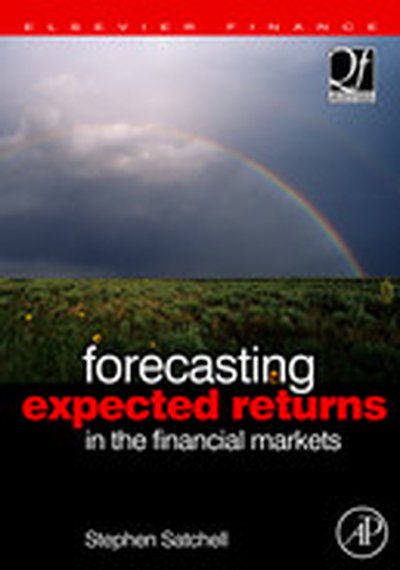
Forecasting Expected Returns in the Financial Markets

Forecasting returns is as important as forecasting volatility in multiple areas of finance. This topic, essential to practitioners, is also studied by academics. In this new book, Dr Stephen Satchell brings together a collection of leading thinkers and practitioners from around the world who address this complex problem using the latest quantitative techniques. Forecasting expected returns is an essential aspect of finance and highly technical The first collection of papers to present new and developing techniques *International authors present both academic and practitioner perspectives

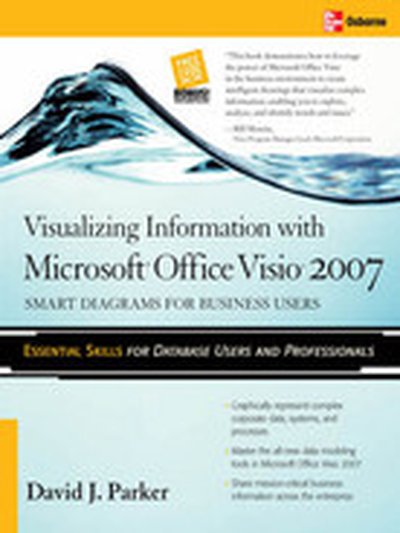
Visualizing Information with Microsoft® Office Visio® 2007

Create and distribute data-connected Microsoft Office Visio diagrams and reports Get full details on the powerful features of Microsoft Office Visio 2007 inside this comprehensive volume. Written by Visio expert David Parker, Visualizing Information with Microsoft Office Visio 2007 demonstrates how to effectively visualize, explore, and communicate complex business information. Learn to use PivotDiagrams, Data Graphics, and Smart Tags, as well as link data to shapes and create meaningful Visio documents and reports. Plus, you'll get vital security information, time-saving tips, troubleshooting techniques, and downloadable macros and code samples. Essential Skills for Database Users and Professionals Create shapes and link them to data Summarize and analyze information using PivotDiagrams Use Data Graphics, Smart Tags, and SmartShapes to reinforce information Generate robust Excel, HTML, and XML reports Create custom, reusable templates, stencils, and masters Update and enhance diagrams with Reviewer's comments and markups Integrate Visio diagrams with other Windows applications Publish and securely distribute Visio documents and summaries Extend functionality using VBA macros, add-ins, and wrapper applications

Forecasting Oracle Performance

What makes seasoned IT professionals run for cover? Answer: Forecasting Oracle Performance! Craig Shallahamer is an Oracle performance expert with over 18 years of experience. His book is the first to focus not on the problem of solving today's problem, but squarely on the problem of forecasting the future performance of an Oracle database. Other Oracle performance books are good for putting out fires; Craig's book helps you avoid all the heat in the first place. If you’re an IT practioner who appreciates application over mathematical proofs than you’ll be pleasantly surprised! Each chapter is filled with examples to transform the theory, mathematics, and methods into something you can practically apply. Craig's goal is to teach you about real-word Oracle performance forecasting. Period. There is no hidden agenda. This book is a kind of training course. After reading, studying, and practicing the material covered in this book, you to be able to confidently, responsibly, and professionally forecast performance and system capacity in a wide variety of real-life situations. If you are more management-minded (or want to be), you will be delighted with the service level management focus. Forecasting makes good business sense because it maximizes the return on IT investment and minimizes unplanned down time. To those who think forecasting is a waste of money: well...obviously, they’ve never been on the evening news because their company lost millions of dollars in revenue and brand destruction because of poorly performing or unavailable systems. Without a doubt, you will be equipped to deal with the realities of forecasting Oracle performance. But this book gives you more. Not only will you receive a technical and mathematical perspective, but also a communication, a presentation, and a management perspective. This is career building stuff and immensely satisfying! What you'll learn This book is a “how-to” book filled with examples to transform theory and mathematics into something you can practically apply. You will learn how to use a variety of forecasting models, which will enable you to methodically: Help manage service levels from a business value perspective Identify the risk of over utilized resources Predict what component of an architecture is at risk Predict when a system will be at risk Develop multiple risk mitigating strategies to ensure service levels are maintained Characterize a complex Oracle workload Who this book is for IT professionals who must ensure their production Oracle systems are meeting service levels, in part, through forecasting performance, identifying risk, and developing solutions to ensure systems are available without wasting budget. Readers include database administrators, IT managers, developers, capacity planners, systems architects, systems integrators.

Visio® 2007 Bible

Whether you're designing a network, a business plan, or an office building, Visio 2007 can transform your vision into sophisticated diagrams and drawings and this comprehensive reference shows you how. You'll discover how to use Visio for IT, architecture, engineering, and business projects; explore the new features of Visio 2007; learn to publish Visio diagrams to the Web; and much more. If you want to develop your skills in Visio, this is the book you need to succeed.

Webbots, Spiders, and Screen Scrapers

The Internet is bigger and better than what a mere browser allows. Webbots, Spiders, and Screen Scrapers is for programmers and businesspeople who want to take full advantage of the vast resources available on the Web. There's no reason to let browsers limit your online experience-especially when you can easily automate online tasks to suit your individual needs. Learn how to write webbots and spiders that do all this and more: Programmatically download entire websites Effectively parse data from web pages Manage cookies Decode encrypted files Automate form submissions Send and receive email Send SMS alerts to your cell phone Unlock password-protected websites Automatically bid in online auctions Exchange data with FTP and NNTP servers Sample projects using standard code libraries reinforce these new skills. You'll learn how to create your own webbots and spiders that track online prices, aggregate different data sources into a single web page, and archive the online data you just can't live without. You'll learn inside information from an experienced webbot developer on how and when to write stealthy webbots that mimic human behavior, tips for developing fault-tolerant designs, and various methods for launching and scheduling webbots. You'll also get advice on how to write webbots and spiders that respect website owner property rights, plus techniques for shielding websites from unwanted robots. As a bonus, visit the author's website to test your webbots on sample target pages, and to download the scripts and code libraries used in the book. Some tasks are just too tedious-or too important!- to leave to humans. Once you've automated your online life, you'll never let a browser limit the way you use the Internet again.

QuickBase: The Missing Manual

Ready to put Intuit's QuickBase to work? Our new Missing Manual shows you how to capture, modify, share, and manage data and documents with this web-based data-sharing program quickly and easily. No longer do you have to coordinate your team through a blizzard of emails or play frustrating games of "guess which document is the right one." QuickBase saves your organization time and money, letting you manage and share the information that makes your business tick: sales figures, project timelines, drafts of documents, purchase or work requests--whatever information you need to keep business flowing smoothly. QuickBase: The Missing Manual shows you how to choose among QuickBase's dozens of ready-made applications (mini-databases, essentially) and how to customize one to fit your needs exactly. You'll also learn to assign people different roles within the application. The guide also shows you how to: Capture and modify data: Whatever kind of data you need to store--sales leads, catalog listings, project milestones, workflow checklists--you can use QuickBase's forms to record and organize that data so it makes sense to you. Filter, sort, and group data: Easily find the records that match your criteria, and then sort those records into groups that make their relationships clear. Display your data: QuickBase uses different views (Table, Grid Edit, Summary/Crosstab, Calendar, Chart, and Timeline) to display and summarize data. Switching between them is easy, like taking tasks listed in a table and displaying them as a timeline. Create reports: Print out a hard copy, embed charts in the annual report, or email this month's sales numbers. Because Intuit frequently introduces new features to QuickBase, you'll find updates to this book at our Missing Manual web site so you can benefit from the latest technology and user suggestions right away.

Pharmaceutical Statistics Using SAS

Pharmaceutical Statistics Using SAS: A Practical Guide offers extensive coverage of cutting-edge biostatistical methodology used in drug development and the practical problems facing today's drug developers. Written by well-known experts in the pharmaceutical industry Alex Dmitrienko, Christy Chuang-Stein, and Ralph D'Agostino, it provides relevant tutorial material and SAS examples to help readers new to a certain area of drug development quickly understand and learn popular data analysis methods and apply them to real-life problems. Step-by-step, the book introduces a wide range of data analysis problems encountered in drug development and illustrates them using a wealth of case studies from actual pre-clinical experiments and clinical studies. The book also provides SAS code for solving the problems. Among the topics addressed are these:

drug discovery experiments to identify promising chemical compounds animal studies to assess the toxicological profile of these compounds clinical pharmacology studies to examine the properties of new drugs in healthy human subjects Phase II and Phase III clinical trials to establish therapeutic benefits of experimental drugs.

Additional features include a discussion of methodological issues, practical advice from subject-matter experts, and review of relevant regulatory guidelines. Most chapters are self-contained and include a fair amount of high-level introductory material to make them accessible to a broad audience of pharmaceutical scientists. This book will also serve as a useful reference for regulatory scientists as well as academic researchers and graduate students.

This book is part of the SAS Press program.