talk-data.com talk-data.com

Topic

data-science-tasks

849

tagged

Activity Trend

1 peak/qtr
2020-Q1 2026-Q1

Activities

849 activities · Newest first

Mathematical Statistics with Resampling and R

This book bridges the latest software applications with the benefits of modern resampling techniques Resampling helps students understand the meaning of sampling distributions, sampling variability, P-values, hypothesis tests, and confidence intervals. This groundbreaking book shows how to apply modern resampling techniques to mathematical statistics. Extensively class-tested to ensure an accessible presentation, Mathematical Statistics with Resampling and R utilizes the powerful and flexible computer language R to underscore the significance and benefits of modern resampling techniques. The book begins by introducing permutation tests and bootstrap methods, motivating classical inference methods. Striking a balance between theory, computing, and applications, the authors explore additional topics such as: Exploratory data analysis Calculation of sampling distributions The Central Limit Theorem Monte Carlo sampling Maximum likelihood estimation and properties of estimators Confidence intervals and hypothesis tests Regression Bayesian methods Throughout the book, case studies on diverse subjects such as flight delays, birth weights of babies, and telephone company repair times illustrate the relevance of the real-world applications of the discussed material. Key definitions and theorems of important probability distributions are collected at the end of the book, and a related website is also available, featuring additional material including data sets, R scripts, and helpful teaching hints. Mathematical Statistics with Resampling and R is an excellent book for courses on mathematical statistics at the upper-undergraduate and graduate levels. It also serves as a valuable reference for applied statisticians working in the areas of business, economics, biostatistics, and public health who utilize resampling methods in their everyday work.
Introduction to Stochastic Analysis: Integrals and Differential Equations

This is an introduction to stochastic integration and stochastic differential equations written in an understandable way for a wide audience, from students of mathematics to practitioners in biology, chemistry, physics, and finances. The presentation is based on the naïve stochastic integration, rather than on abstract theories of measure and stochastic processes. The proofs are rather simple for practitioners and, at the same time, rather rigorous for mathematicians. Detailed application examples in natural sciences and finance are presented. Much attention is paid to simulation diffusion processes. The topics covered include Brownian motion; motivation of stochastic models with Brownian motion; Itô and Stratonovich stochastic integrals, Itô's formula; stochastic differential equations (SDEs); solutions of SDEs as Markov processes; application examples in physical sciences and finance; simulation of solutions of SDEs (strong and weak approximations). Exercises with hints and/or solutions are also provided.

Statistical Methods for Quality Improvement, Third Edition

Praise for the Second Edition "As a comprehensive statistics reference book for quality improvement, it certainly is one of the best books available." — Technometrics This new edition continues to provide the most current, proven statistical methods for quality control and quality improvement The use of quantitative methods offers numerous benefits in the fields of industry and business, both through identifying existing trouble spots and alerting management and technical personnel to potential problems. Statistical Methods for Quality Improvement, Third Edition guides readers through a broad range of tools and techniques that make it possible to quickly identify and resolve both current and potential trouble spots within almost any manufacturing or nonmanufacturing process. The book provides detailed coverage of the application of control charts, while also exploring critical topics such as regression, design of experiments, and Taguchi methods. In this new edition, the author continues to explain how to combine the many statistical methods explored in the book in order to optimize quality control and improvement. The book has been thoroughly revised and updated to reflect the latest research and practices in statistical methods and quality control, and new features include: Updated coverage of control charts, with newly added tools The latest research on the monitoring of linear profiles and other types of profiles Sections on generalized likelihood ratio charts and the effects of parameter estimation on the properties of CUSUM and EWMA procedures New discussions on design of experiments that include conditional effects and fraction of design space plots New material on Lean Six Sigma and Six Sigma programs and training Incorporating the latest software applications, the author has added coverage on how to use Minitab software to obtain probability limits for attribute charts. new exercises have been added throughout the book, allowing readers to put the latest statistical methods into practice. Updated references are also provided, shedding light on the current literature and providing resources for further study of the topic. Statistical Methods for Quality Improvement, Third Edition is an excellent book for courses on quality control and design of experiments at the upper-undergraduate and graduate levels. the book also serves as a valuable reference for practicing statisticians, engineers, and physical scientists interested in statistical quality improvement.

Statistical Analysis for Business Using JMP(R): A Student's Guide

A complete and thorough introduction to business statistics using JMP. While the book is designed for introductory business statistics courses at the undergraduate or MBA level, industry professionals wanting to brush up on their knowledge of statistics and those wanting an introduction to using JMP for statistical analysis will also find it useful.

Visualize This: The FlowingData Guide to Design, Visualization, and Statistics

Practical data design tips from a data visualization expert of the modern age Data doesn't decrease; it is ever-increasing and can be overwhelming to organize in a way that makes sense to its intended audience. Wouldn't it be wonderful if we could actually visualize data in such a way that we could maximize its potential and tell a story in a clear, concise manner? Thanks to the creative genius of Nathan Yau, we can. With this full-color book, data visualization guru and author Nathan Yau uses step-by-step tutorials to show you how to visualize and tell stories with data. He explains how to gather, parse, and format data and then design high quality graphics that help you explore and present patterns, outliers, and relationships. Presents a unique approach to visualizing and telling stories with data, from a data visualization expert and the creator of flowingdata.com, Nathan Yau Offers step-by-step tutorials and practical design tips for creating statistical graphics, geographical maps, and information design to find meaning in the numbers Details tools that can be used to visualize data-native graphics for the Web, such as ActionScript, Flash libraries, PHP, and JavaScript and tools to design graphics for print, such as R and Illustrator Contains numerous examples and descriptions of patterns and outliers and explains how to show them Visualize This demonstrates how to explain data visually so that you can present your information in a way that is easy to understand and appealing.

Exposure and Understanding the Histogram

What does a histogram tell you about contrast, dynamic range, underexposure, and overexposure? Why does exposure differ for digital photography versus film photography? What happens when the exposure is wrong? The exposure triangle: ISO, aperture, and shutter speed Differences between exposing for raw files and JPEG files Exposing to the right to obtain an optimum raw file Shooting in automatic mode–when to do so and how to use exposure compensation Shooting in manual mode–when to do so and how to adjust exposure

Forecasting and Management of Technology, Second Edition

Published in 1991, the first edition of Forecasting and Management of Technology was one of the leading handful of books to deal with the topic of forecasting of technology and technology management as this discipline was emerging. The new, revised edition of this book will build on this knowledge in the context of business organizations that now place a greater emphasis on technology to stay on the cutting edge of development. The scope of this edition has broadened to include management of technology content that is relevant to now to executives in organizations while updating and strengthening the technology forecasting and analysis content that the first edition is reputed for. Updated by the original author team, plus new author Scott Cunningham, the book takes into account what the authors see as the innovations to technology management in the last 17 years: the Internet; the greater focus on group decision-making including process management and mechanism design; and desktop software that has transformed the analytical capabilities of technology managers. Included in this book will be 5 case studies from various industries that show how technology management is applied in the real world.

A Career in Statistics: Beyond the Numbers

A valuable guide to a successful career as a statistician A Career in Statistics: Beyond the Numbers prepares readers for careers in statistics by emphasizing essential concepts and practices beyond the technical tools provided in standard courses and texts. This insider's guide from internationally recognized applied statisticians helps readers decide whether a career in statistics is right for them, provides hands-on guidance on how to prepare for such a career, and shows how to succeed on the job. The book provides non-technical guidance for a successful career. The authors' extensive industrial experience is supplemented by insights from contributing authors from government and academia, Carol Joyce Blumberg, Leonard M. Gaines, Lynne B. Hare, William Q. Meeker, and Josef Schmee. Following an introductory chapter that provides an overview of the field, the authors discuss the various dimensions of a career in applied statistics in three succinct parts: The Work of a Statistician describes the day-to-day activities of applied statisticians in business and industry, official government, and various other application areas, highlighting the work environment and major on-the-job challenges Preparing for a Successful Career in Statistics describes the personal traits that characterize successful statisticians, the education that they need to acquire, and approaches for securing the right job Building a Successful Career as a Statistician offers practical guidance for addressing key challenges that statisticians face on the job, such as project initiation and execution, effective communication, publicizing successes, ethical considerations, and gathering good data; alternative career paths are also described The book concludes with an in-depth examination of careers for statisticians in academia as well as tips to help them stay on top of their field throughout their careers. Each chapter includes thought-provoking discussion questions and a Major Takeaways section that outlines key concepts. Real-world examples illustrate key points, and an FTP site provides additional information on selected topics. A Career in Statistics is an invaluable guide for individuals who are considering or have decided on a career in statistics as well as for statisticians already on the job who want to accelerate their path to success. It also serves as a suitable book for courses on statistical consulting, statistical practice, and statistics in the workplace at the undergraduate and graduate levels.

Smoothing Splines

With many real-world examples, this book shows how to apply the powerful methods of smoothing splines in practice. It covers basic smoothing spline models as well as more advanced models, such as spline smoothing with correlated random errors. It also presents methods for model selection and inference. The author makes the advanced smoothing spline methodology based on reproducing kernel Hilbert space (RKHS) accessible to practitioners and students by keeping theory to a minimum. R is used throughout to implement the methods, with code available for download on the book's web page.

Data Mining: Concepts and Techniques, 3rd Edition

Data Mining: Concepts and Techniques provides the concepts and techniques in processing gathered data or information, which will be used in various applications. Specifically, it explains data mining and the tools used in discovering knowledge from the collected data. This book is referred as the knowledge discovery from data (KDD). It focuses on the feasibility, usefulness, effectiveness, and scalability of techniques of large data sets. After describing data mining, this edition explains the methods of knowing, preprocessing, processing, and warehousing data. It then presents information about data warehouses, online analytical processing (OLAP), and data cube technology. Then, the methods involved in mining frequent patterns, associations, and correlations for large data sets are described. The book details the methods for data classification and introduces the concepts and methods for data clustering. The remaining chapters discuss the outlier detection and the trends, applications, and research frontiers in data mining. This book is intended for Computer Science students, application developers, business professionals, and researchers who seek information on data mining. Presents dozens of algorithms and implementation examples, all in pseudo-code and suitable for use in real-world, large-scale data mining projects Addresses advanced topics such as mining object-relational databases, spatial databases, multimedia databases, time-series databases, text databases, the World Wide Web, and applications in several fields Provides a comprehensive, practical look at the concepts and techniques you need to get the most out of your data

Using Microsoft® Visio® 2010

Using Microsoft Visio 2010 is a customized, media-rich learning experience designed to help new users master Microsoft Visio 2010 quickly, and get the most out of it, fast! It starts with a concise, friendly, straight-to-the-point guide to Microsoft Visio 2010. This exceptional book is fully integrated with an unprecedented collection of online learning resources: online video, screencasts, podcasts, and additional web content, all designed to reinforce key concepts and help users achieve real mastery. The book and online content work together to teach everything mainstream Microsoft Visio 2010 users need to know. This practical, approachable coverage guides readers through all facets of working with Visio 2010, and adds coverage on new features and capabilities including: Visio's brand-new Ribbon interface, Live Preview, Auto size, align and adjust, Containers, status bar navigation tools, and data graphics legends. The 2010 edition also includes coverage on Visio services, processes management tools, new diagram types, and much more. Practical, approachable coverage that completely flattens the Microsoft Visio 2010 learning curve Tightly integrated with online video, screencast tutorials, podcasts, and more: the total learning experience for new Microsoft Visio 2010 users Companion website offers supplemental media including video, screencast tutorials, podcasts, and much more

Numeric Data Services and Sources for the General Reference Librarian

The proliferation of online access to social science statistical and numeric data sources, such as the U.S. Census Bureau’s American Fact Finder, has lead to an increased interest in supporting these sources in academic libraries. Many large libraries have been able to devote staff to data services for years, and recently smaller academic libraries have recognized the need to provide numeric data services and support. This guidebook serves as a primer to developing and supporting social science statistical and numerical data sources in the academic library. It provides strategies for the establishment of data services and offers short descriptions of the essential sources of free and commercial social science statistical and numeric data. Finally, it discusses the future of numeric data services, including the integration of statistics and data into library instruction and the use of Web 2.0 tools to visualize data. Written for a general reference audience with little knowledge of data services and sources who would like to incorporate support into their general reference practice Combines information on establishing data services with an introduction to available statistical and numeric data sources Provides insight into the integration of statistics and data into library instruction and the social science research process

SAP BusinessObjects Dashboards 4.0 Cookbook

Discover how to create compelling, interactive dashboards efficiently using SAP BusinessObjects Dashboards 4.0 (formerly Xcelsius). In this comprehensive cookbook, learn step-by-step recipes that guide you through practical tasks leveraging the tool's advanced features like dynamic visibility and live data connections. What this Book will help me do Master the use of Dashboard Design's spreadsheet and data-driven components to efficiently create professional dashboards. Learn various data visualization techniques to present data clearly and effectively within your dashboards. Implement dynamic interactivity and control logic using features like Dynamic Visibility to enhance dashboard usability. Understand how to connect dashboards to live data sources for up-to-date and real-time business insights. Explore and utilize additional Dashboard Design features and add-ons to customize and extend the capabilities of your dashboards. Author(s) The author(s) of this book are seasoned professionals in SAP BusinessObjects Dashboards and enterprise dashboard design. With years of experience in teaching and applying these tools in practical settings, they aim to demystify complex dashboarding concepts and empower professionals to build impactful visualizations. Who is it for? This book is targeted at developers and business professionals who wish to sharpen their skills in dashboard creation using SAP BusinessObjects Dashboards 4.0. Readers should have a basic understanding of dashboards and some experience with Excel to benefit from this content. It's ideal for those new to SAP Dashboard Design seeking a comprehensive and practical guide.

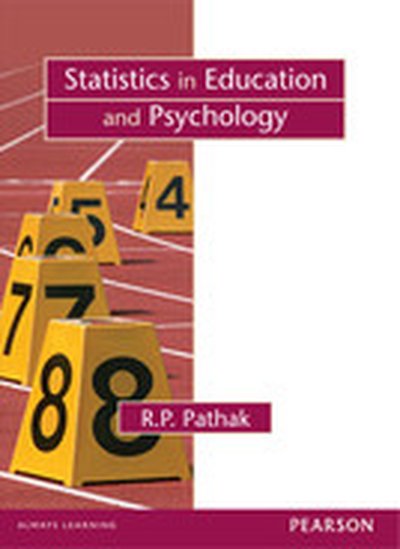
Statistics in Education and Psychology

Statistics in Education and Psychology aims to develop a coherent, logical and comprehensive outlook towards statistics. The subject involves a wide range of observations, measurements, tools, techniques and data analysis. This book covers diverse topics like measures of central tendency, measures of variability, the correlation method, normal probability curve (NPC), significance of difference of means, analysis of variance, non-parametric chi-square, standard score and T-score.

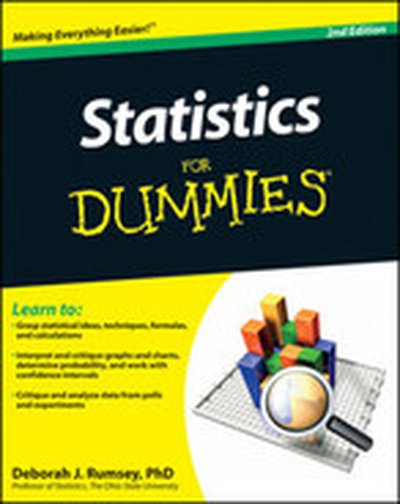
Statistics For Dummies®, 2nd Edition

The fun and easy way to get down to business with statistics Stymied by statistics? No fear ? this friendly guide offers clear, practical explanations of statistical ideas, techniques, formulas, and calculations, with lots of examples that show you how these concepts apply to your everyday life. Statistics For Dummies shows you how to interpret and critique graphs and charts, determine the odds with probability, guesstimate with confidence using confidence intervals, set up and carry out a hypothesis test, compute statistical formulas, and more. Tracks to a typical first semester statistics course Updated examples resonate with today's students Explanations mirror teaching methods and classroom protocol Packed with practical advice and real-world problems, Statistics For Dummies gives you everything you need to analyze and interpret data for improved classroom or on-the-job performance.

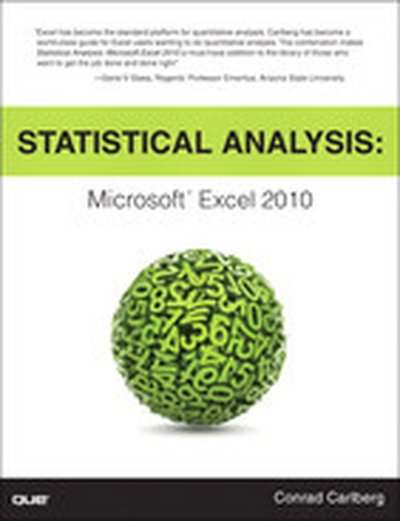
Statistical Analysis: Microsoft® Excel 2010, Video Enhanced Edition

Statistical Analysis: Microsoft Excel 2010 “Excel has become the standard platform for quantitative analysis. Carlberg has become a world-class guide for Excel users wanting to do quantitative analysis. The combination makes Statistical Analysis: Microsoft Excel 2010 a must-have addition to the library of those who want to get the job done and done right.” —Gene V Glass, Regents’ Professor Emeritus, Arizona State University Use Excel 2010’s statistical tools to transform your data into knowledge Use Excel 2010’s powerful statistical tools to gain a deeper understanding of your data, Top Excel guru Conrad Carlberg shows how to use Excel 2010 to perform the core statistical tasks every business professional, student, and researcher should master. Using real-world examples, Carlberg helps you choose the right technique for each problem and get the most out of Excel’s statistical features, including its new consistency functions. Along the way, you discover the most effective ways to use correlation and regression and analysis of variance and covariance. You see how to use Excel to test statistical hypotheses using the normal, binomial, t and F distributions. Becoming an expert with Excel statistics has never been easier! You’ll find crystal-clear instructions, insider insights, and complete step-by-step projects—all complemented by an extensive set of web-based resources. • Master Excel’s most useful descriptive and inferential statistical tools • Tell the truth with statistics, and recognize when others don’t • Accurately summarize sets of values • View how values cluster and disperse • Infer a population’s characteristics from a sample’s frequency distribution • Explore correlation and regression to learn how variables move in tandem • Understand Excel’s new consistency functions • Test differences between two means using z tests, t tests, and Excel’s • Use ANOVA and ANCOVA to test differences between more than two means • Explore statistical power by manipulating mean differences, standard errors, directionality, and alpha

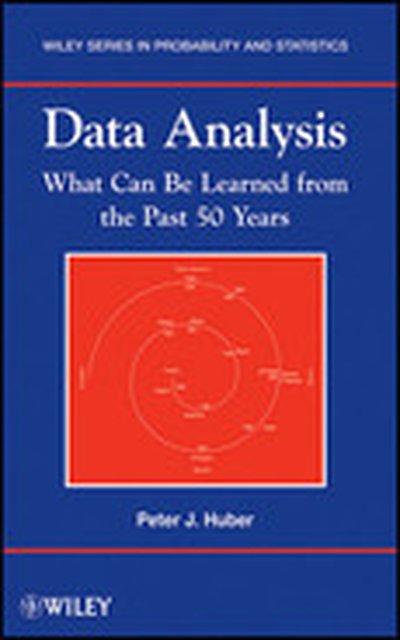
Data Analysis: What Can Be Learned From the Past 50 Years

This book explores the many provocative questions concerning the fundamentals of data analysis. It is based on the time-tested experience of one of the gurus of the subject matter. Why should one study data analysis? How should it be taught? What techniques work best, and for whom? How valid are the results? How much data should be tested? Which machine languages should be used, if used at all? Emphasis on apprenticeship (through hands-on case studies) and anecdotes (through real-life applications) are the tools that Peter J. Huber uses in this volume. Concern with specific statistical techniques is not of immediate value; rather, questions of strategy – when to use which technique – are employed. Central to the discussion is an understanding of the significance of massive (or robust) data sets, the implementation of languages, and the use of models. Each is sprinkled with an ample number of examples and case studies. Personal practices, various pitfalls, and existing controversies are presented when applicable. The book serves as an excellent philosophical and historical companion to any present-day text in data analysis, robust statistics, data mining, statistical learning, or computational statistics.

Microsoft® Visio® 2010: Step by Step

Experience learning made easy—and quickly teach yourself how to create professional-looking business and technical diagrams with Visio 2010. With Step by Step, you set the pace—building and practicing the skills you need, just when you need them! Build a variety of charts and diagrams with Visio templates Draw organization charts, floor plans, flowcharts, and more Apply color, text, and themes to your Visio diagrams Use Visio shapes to link to, store, and visualize data Collaborate on diagrams with Microsoft SharePoint 2010 Create custom diagrams with your own shapes and templates Your Step by Step digital content includes: All the book's practice files—ready to download and put to work. Fully searchable online edition of this book—with unlimited access on the Web. Free online account required.