talk-data.com talk-data.com

Topic

data-science-tasks

849

tagged

Activity Trend

1 peak/qtr
2020-Q1 2026-Q1

Activities

849 activities · Newest first

Head First Statistics for Data Analysis

What will you learn from this book? Do you need to analyze data but feel lost in a sea of numbers? Your guide is here—without the dry, academic jargon. This hands-on, visually rich book introduces key statistical concepts and shows you how to apply them using Excel. Whether you're a data analyst, a business professional, or just someone who wants to make better decisions with data, you'll gain the practical skills needed to extract meaningful insights. From probability and confidence intervals to regression and forecasting, this book makes statistics approachable, relevant, and—even better—understandable. What's so special about this book? If you've read a Head First book before, you know what to expect: a uniquely engaging, brain-friendly approach that helps you truly learn instead of struggling through dense theory. Through clear explanations, hands-on exercises, and interactive visuals, you'll develop the skills to confidently analyze data and make informed decisions. No more guesswork—just real statistical insights at your fingertips.

Causal Inference with Bayesian Networks

Leverage the power of graphical models for probabilistic and causal inference to build knowledge-based system applications and to address causal effect queries with observational data for decision aiding and policy making. Key Features Gain a firm understanding of Bayesian networks and structured algorithms for probabilistic inference Acquire a comprehensive understanding of graphical models and their applications in causal inference Gain insights into real-world applications of causal models in multiple domains Enhance your coding skills in R and Python through hands-on examples of causal inference Book Description This is a practical guide that explores the theory and application of Bayesian networks (BN) for probabilistic and causal inference. The book provides step-by-step explanations of graphical models of BN and their structural properties; the causal interpretations of BN and the notion of conditioning by intervention; and the mathematical model of structural equations and the representation in structured causal models (SCM). For probabilistic inference in Bayesian networks, you will learn methods of variable elimination and tree clustering. For causal inference you will learn the computational framework of Pearl's do-calculus for the identification and estimation of causal effects with causal models. In the context of causal inference with observational data, you will be introduced to the potential outcomes framework and explore various classes of meta-learning algorithms that are used to estimate the conditional average treatment effect in causal inference. The book includes practical exercises using R and Python for you to engage in and solidify your understanding of different approaches to probabilistic and causal inference. By the end of this book, you will be able to build and deploy your own causal inference application. You will learn from causal inference sample use cases for diagnosis, epidemiology, social sciences, economics, and finance. What you will learn Representation of knowledge with Bayesian networks Interpretation of conditional independence assumptions Interpretation of causality assumptions in graphical models Probabilistic inference with Bayesian networks Causal effect identification and estimation Machine learning methods for causal inference Coding in R and Python for probabilistic and causal inference Who this book is for This book will serve as a valuable resource for a wide range of professionals including data scientists, software engineers, policy analysts, decision-makers, information technology professionals involved in developing expert systems or knowledge-based applications that deal with uncertainty, as well as researchers across diverse disciplines seeking insights into causal analysis and estimating treatment effects in randomized studies. The book will enable readers to leverage libraries in R and Python and build software prototypes for their own applications.

Practical Statistics for Data Scientists, 3rd Edition

Statistical methods are a key part of data science, yet few data scientists have formal statistical training. Courses and books on basic statistics rarely cover the topic from a data science perspective. And many data science resources incorporate statistical methods but lack a deeper statistical perspective. If you're familiar with the R or Python programming languages and have some exposure to statistics, this quick reference bridges the gap in an accessible, readable format.

Learn D3.js - Second Edition

Master data visualization with D3.js v7 using modern web standards and real-world projects to build interactive charts, maps, and visual narratives Key Features Build dynamic, data-driven visualizations using D3.js v7 and ES2015+ Create bar, scatter, and network charts, geographic maps, and more Learn through step-by-step tutorials backed by hundreds of downloadable examples Purchase of the print or Kindle book includes a free PDF eBook Book Description Learn D3.js, Second Edition, is a fully updated guide to building interactive, standards-compliant web visualizations using D3.js v7 and modern JavaScript. Whether you're a developer, designer, data journalist, or analyst, this book will help you master the core techniques for transforming data into compelling, meaningful visuals. Starting with fundamentals like selections, data binding, and SVG, the book progressively covers scales, axes, animations, hierarchical data, and geographical maps. Each chapter includes short examples and a full hands-on project with downloadable code you can run, modify, and use in your own work. This new edition introduces improved chapter structure, updated code samples using ES2015 standards, and better formatting for readability. There’s also a dedicated chapter that focuses on integrating D3 with modern frameworks like React and Vue, along with performance, accessibility, and deployment strategies. For those migrating from older versions of D3, a detailed appendix is included at the end. With thoughtful pedagogy and a practical approach, this book remains one of the most thorough and respected resources for learning D3.js and help you truly leverage data visualisation. What you will learn Bind data to DOM elements and apply transitions and styles Build bar, line, pie, scatter, tree, and network charts Create animated, interactive behaviours with zoom, drag, and tooltips Visualize hierarchical data, flows, and maps using D3 layouts and projections Use D3 with HTML5 Canvas for high-performance rendering Develop accessible and responsive D3 apps for all screen sizes Integrate D3 with frameworks like React and Vue Migrate older D3 codebases to version 7 Who this book is for This book is for web developers, data journalists, designers, analysts, and anyone who wants to create interactive, web-based data visualizations. A basic understanding of HTML, CSS, and JavaScript is recommended. No prior knowledge of SVG or D3 is required.

Modern Time Series with R

Gain expertise in modern time series forecasting and causal inference in R to solve real-world business problems with reproducible, high-quality code Key Features Explore forecasting and causal inference with practical R examples Build reproducible, high-quality time series workflows using tidyverse and modern R packages Apply models to real-world business scenarios with step-by-step guidance Purchase of the print or Kindle book includes a free PDF eBook Book Description Modern Time Series Analysis with R is a comprehensive, hands-on guide to mastering the art of time series analysis using the R programming language. Written by leading experts in applied statistics and econometrics, this book helps data scientists, analysts, and developers bridge the gap between traditional statistical theory and practical business applications. Starting with the foundations of R and tidyverse, you’ll explore the core components of time series data, data wrangling, and visualization techniques. The chapters then guide you through key modeling approaches, ranging from classical methods like ARIMA and exponential smoothing to advanced computational techniques, such as machine learning, deep learning, and ensemble forecasting. Beyond forecasting, you’ll discover how time series can be applied to causal inference, anomaly detection, change point analysis, and multiple time series modeling. Practical examples and reproducible code will empower you to assess business problems, choose optimal solutions, and communicate results effectively through dynamic R-based reporting. By the end of this book, you’ll be confident in applying modern time series methods to real-world data, delivering actionable insights for strategic decision-making in business, finance, technology, and beyond. What you will learn Understand core concepts and components of time series data Wrangle and visualize time series with tidyverse and R packages Apply ARIMA, exponential smoothing, and machine learning methods Explore deep learning and ensemble forecasting approaches Conduct causal inference with interrupted time series analysis Detect anomalies, structural changes, and perform change point analysis Analyze multiple time series using hierarchical and grouped models Automate reproducible reporting with RStudio and dynamic documents Who this book is for This book is for data scientists, analysts, and developers who want to master time series analysis using R. It is ideal for professionals in finance, retail, technology, and research, as well as students seeking practical, business-oriented approaches to forecasting and causal inference. Basic knowledge of R is assumed, but no advanced mathematics is required.

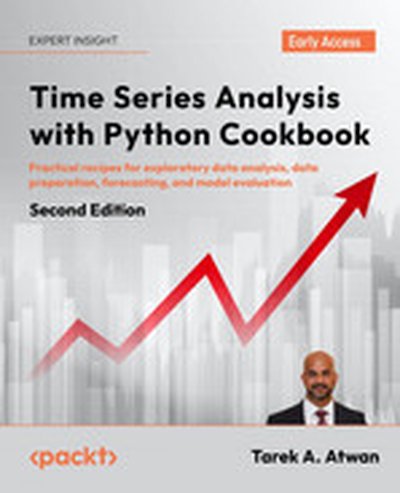
Time Series Analysis with Python Cookbook - Second Edition

Perform time series analysis and forecasting confidently with this Python code bank and reference manual Purchase of the print or Kindle book includes a free PDF eBook Key Features Explore up-to-date forecasting and anomaly detection techniques using statistical, machine learning, and deep learning algorithms Learn different techniques for evaluating, diagnosing, and optimizing your models Work with a variety of complex data with trends, multiple seasonal patterns, and irregularities Book Description To use time series data to your advantage, you need to be well-versed in data preparation, analysis, and forecasting. This fully updated second edition includes chapters on probabilistic models and signal processing techniques, as well as new content on transformers. Additionally, you will leverage popular libraries and their latest releases covering Pandas, Polars, Sktime, stats models, stats forecast, Darts, and Prophet for time series with new and relevant examples. You'll start by ingesting time series data from various sources and formats, and learn strategies for handling missing data, dealing with time zones and custom business days, and detecting anomalies using intuitive statistical methods. Further, you'll explore forecasting using classical statistical models (Holt-Winters, SARIMA, and VAR). Learn practical techniques for handling non-stationary data, using power transforms, ACF and PACF plots, and decomposing time series data with multiple seasonal patterns. Then we will move into more advanced topics such as building ML and DL models using TensorFlow and PyTorch, and explore probabilistic modeling techniques. In this part, you’ll also learn how to evaluate, compare, and optimize models, making sure that you finish this book well-versed in wrangling data with Python. What you will learn Understand what makes time series data different from other data Apply imputation and interpolation strategies to handle missing data Implement an array of models for univariate and multivariate time series Plot interactive time series visualizations using hvPlot Explore state-space models and the unobserved components model (UCM) Detect anomalies using statistical and machine learning methods Forecast complex time series with multiple seasonal patterns Use conformal prediction for constructing prediction intervals for time series Who this book is for This book is for data analysts, business analysts, data scientists, data engineers, and Python developers who want practical Python recipes for time series analysis and forecasting techniques. Fundamental knowledge of Python programming is a prerequisite. Prior experience working with time series data to solve business problems will also help you to better utilize and apply the different recipes in this book.

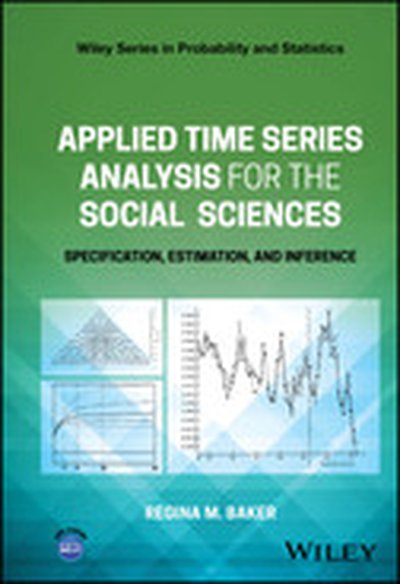
Applied Time Series Analysis for the Social Sciences

EXPLORE THIS INDISPENSABLE AND COMPREHENSIVE GUIDE TO TIME SERIES ANALYSIS FOR STUDENTS AND PRACTITIONERS IN A WIDE VARIETY OF DISCIPLINES Applied Time Series Analysis for the Social Sciences: Specification, Estimation, and Inference delivers an accessible guide to time series analysis that includes both theory and practice. The coverage spans developments from ARIMA intervention models and generalized least squares to the London School of Economics (LSE) approach and vector autoregression. Designed to break difficult concepts into manageable pieces while offering plenty of examples and exercises, the author demonstrates the use of lag operator algebra throughout to provide a better understanding of dynamic specification and the connections between model specifications that appear to be more different than they are. The book is ideal for those with minimal mathematical experience, intended to follow a course in multiple regression, and includes exercises designed to build general skills such as mathematical expectation calculations to derive means and variances. Readers will also benefit from the inclusion of: A focus on social science applications and a mix of theory and detailed examples provided throughout An accompanying website with data sets and examples in Stata, SAS and R A simplified unit root testing strategy based on recent developments An examination of various uses and interpretations of lagged dependent variables and the common pitfalls students and researchers face in this area An introduction to LSE methodology such as the COMFAC critique, general-to-specific modeling, and the use of forecasting to evaluate and test models Perfect for students and professional researchers in the political sciences, public policy, sociology, and economics, Applied Time Series Analysis for the Social Sciences: Specification, Estimation, and Inference will also earn a place in the libraries of post graduate students and researchers in public health, public administration and policy, and education.

Graph Theory for Computer Science

This book is a vital resource for anyone looking to understand the essential role of graph theory as the unifying thread that connects and provides innovative solutions across a wide spectrum of modern computer science disciplines. Graph theory is a traditional mathematical discipline that has evolved as a basic tool for modeling and analyzing the complex relationships between different technological landscapes. Graph theory helps explain the semantic and syntactic relationships in natural language processing, a technology behind many businesses. Disciplinary and industry developments are seeing a major transition towards more interconnected and data-driven decision-making, and the application of graph theory will facilitate this transition. Disciplines such as parallel and distributive computing will gain insights into how graph theory can help with resource optimization and job scheduling, creating considerable change in the design and development of scalable systems. This book provides comprehensive coverage of how graph theory acts as the thread that connects different areas of computer science to create innovative solutions to modern technological problems. Using a multi-faceted approach, the book explores the fundamentals and role of graph theory in molding complex computational processes across a wide spectrum of computer science.

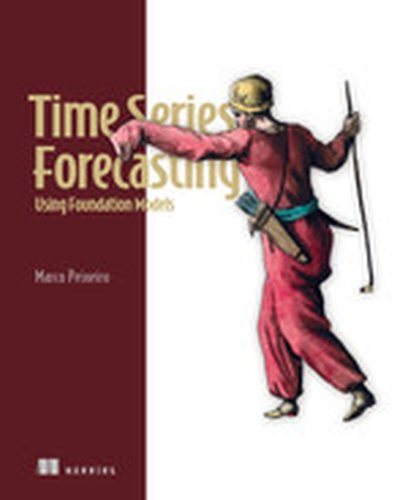
Time Series Forecasting Using Foundation Models

Make accurate time series predictions with powerful pretrained foundation models! You don’t need to spend weeks—or even months—coding and training your own models for time series forecasting. Time Series Forecasting Using Foundation Models shows you how to make accurate predictions using flexible pretrained models. In Time Series Forecasting Using Foundation Models you will discover: The inner workings of large time models Zero-shot forecasting on custom datasets Fine-tuning foundation forecasting models Evaluating large time models Time Series Forecasting Using Foundation Models teaches you how to do efficient forecasting using powerful time series models that have already been pretrained on billions of data points. You’ll appreciate the hands-on examples that show you what you can accomplish with these amazing models. Along the way, you’ll learn how time series foundation models work, how to fine-tune them, and how to use them with your own data. About the Technology Time-series forecasting is the art of analyzing historical, time-stamped data to predict future outcomes. Foundational time series models like TimeGPT and Chronos, pre-trained on billions of data points, can now effectively augment or replace painstakingly-built custom time-series models. About the Book Time Series Forecasting Using Foundation Models explores the architecture of large time models and shows you how to use them to generate fast, accurate predictions. You’ll learn to fine-tune time models on your own data, execute zero-shot probabilistic forecasting, point forecasting, and more. You’ll even find out how to reprogram an LLM into a time series forecaster—all following examples that will run on an ordinary laptop. What's Inside How large time models work Zero-shot forecasting on custom datasets Fine-tuning and evaluating foundation models About the Reader For data scientists and machine learning engineers familiar with the basics of time series forecasting theory. Examples in Python. About the Author Marco Peixeiro builds cutting-edge open-source forecasting Python libraries at Nixtla. He is the author of Time Series Forecasting in Python. Quotes Clear and hands-on, featuring both theory and easy-to-follow examples. - Eryk Lewinson, Author of Python for Finance Cookbook Bridges the gap between classical forecasting methods and the new developments in the foundational models. A fantastic resource. - Juan Orduz, PyMC Labs A foundational guide to forecasting’s next chapter. - Tyler Blume, daybreak An immensely practical introduction to forecasting using foundation models. - Stephan Kolassa, SAP Switzerland

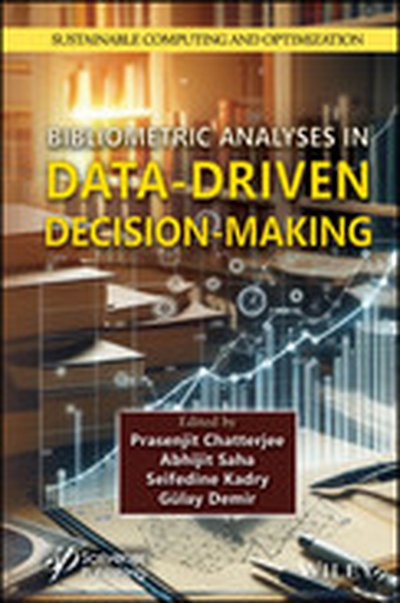
Bibliometric Analyses in Data-Driven Decision-Making

The book provides essential insights and practical tools needed to effectively navigate the evolving landscape of scholarly research, helping enhance the understanding of publication trends, citation impacts, and collaboration networks across multiple fields. Bibliometric Analyses in Data-Driven Decision-Making offers a comprehensive guide to researchers, academics, and practitioners interested in utilizing bibliometric analysis to understand and navigate the dynamic landscape of the increasingly vital field of data-driven decision-making and its applications across many areas. It provides insights into growth, impact, and trends within the field, using bibliometric tools and methodologies. This volume adopts a pragmatic approach, balancing theoretical concepts with practical applications of data-driven decision-making models through the perspectives of bibliometric analyses using real-world examples, case studies, and step-by-step guides. The reader will find the book: Gives practical guidance on conducting bibliometric analyses across a range of applications for data-driven decision-making; Illustrates the application of bibliometric tools in the field with real-world case studies; Provides in-depth coverage of various bibliometric indicators and metrics; Explores emerging trends and challenges in bibliometric analysis; Provides a comprehensive overview of software and tools available for bibliometric research. Audience Librarians and Information professionals involved in research management, knowledge discovery, and the evaluation of scholarly communication, as well as professionals in industries reliant on cutting-edge research and development, technology assessment, and innovation. Also, a range of researchers and scholars seeking how to apply bibliometric analysis to assess the impact of their work, and advanced insights into bibliometric metrics, collaboration networks, and research trends.

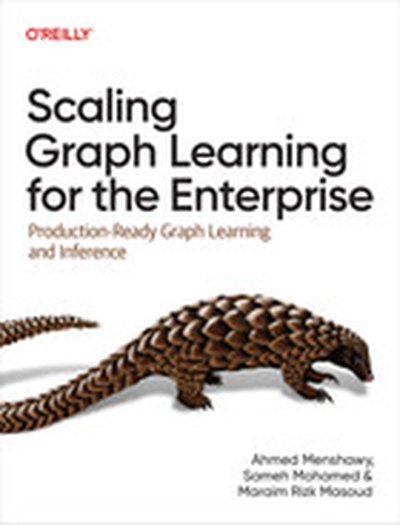
Scaling Graph Learning for the Enterprise

Tackle the core challenges related to enterprise-ready graph representation and learning. With this hands-on guide, applied data scientists, machine learning engineers, and practitioners will learn how to build an E2E graph learning pipeline. You'll explore core challenges at each pipeline stage, from data acquisition and representation to real-time inference and feedback loop retraining. Drawing on their experience building scalable and production-ready graph learning pipelines, the authors take you through the process of building robust graph learning systems in a world of dynamic and evolving graphs. Understand the importance of graph learning for boosting enterprise-grade applications Navigate the challenges surrounding the development and deployment of enterprise-ready graph learning and inference pipelines Use traditional and advanced graph learning techniques to tackle graph use cases Use and contribute to PyGraf, an open source graph learning library, to help embed best practices while building graph applications Design and implement a graph learning algorithm using publicly available and syntactic data Apply privacy-preserving techniques to the graph learning process

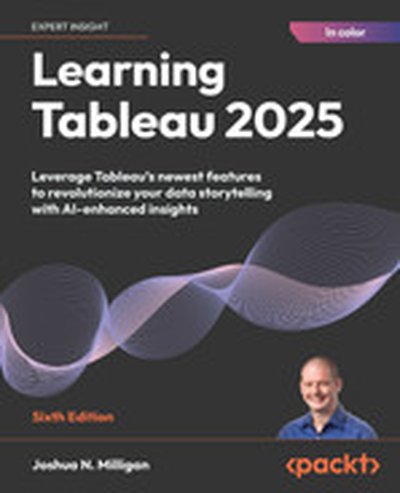
Learning Tableau 2025 - Sixth Edition

"Learning Tableau 2025" provides a comprehensive guide to mastering Tableau's latest features, including advanced AI capabilities like Tableau Pulse and Agent. This book, authored by Tableau expert Joshua N. Milligan, will equip you with the tools to transform complex data into actionable insights and interactive dashboards. What this Book will help me do Learn to use Tableau's advanced AI features, including Tableau Agent and Pulse, to streamline data analysis and automate insights. Develop skills to create and customize dynamic dashboards tailored to interactive data storytelling. Understand and utilize new geospatial functions within Tableau for advanced mapping and analytics. Master Tableau Prep's enhanced data preparation capabilities for efficient data modeling and structuring. Learn to effectively integrate and analyze data from multiple sources, enhancing your ability to extract meaningful insights. Author(s) Joshua N. Milligan, a Tableau Zen Master and Visionary, has years of experience in the field of data visualization and analytics. With a hands-on approach, Joshua combines his expertise and passion for Tableau to make complex topics accessible and engaging. His teaching method ensures that readers gain practical, actionable knowledge. Who is it for? This book is ideal for aspiring business intelligence developers, data analysts, data scientists, and professionals seeking to enhance their data visualization skills. It's suitable for both beginners looking to get started with Tableau and experienced users eager to explore its new features. A Tableau license or access to a 14-day trial is recommended.

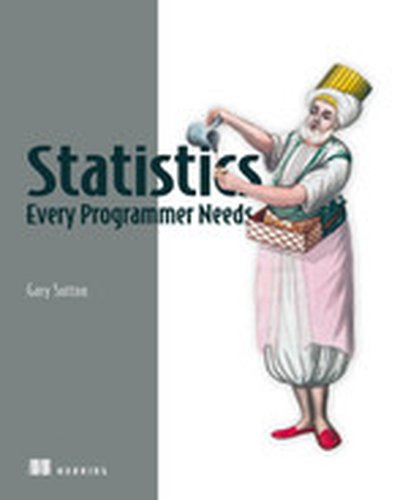
Statistics Every Programmer Needs

Put statistics into practice with Python! Data-driven decisions rely on statistics. Statistics Every Programmer Needs introduces the statistical and quantitative methods that will help you go beyond “gut feeling” for tasks like predicting stock prices or assessing quality control, with examples using the rich tools of the Python ecosystem. Statistics Every Programmer Needs will teach you how to: Apply foundational and advanced statistical techniques Build predictive models and simulations Optimize decisions under constraints Interpret and validate results with statistical rigor Implement quantitative methods using Python In this hands-on guide, stats expert Gary Sutton blends the theory behind these statistical techniques with practical Python-based applications, offering structured, reproducible, and defensible methods for tackling complex decisions. Well-annotated and reusable Python code listings illustrate each method, with examples you can follow to practice your new skills. About the Technology Whether you’re analyzing application performance metrics, creating relevant dashboards and reports, or immersing yourself in a numbers-heavy coding project, every programmer needs to know how to turn raw data into actionable insight. Statistics and quantitative analysis are the essential tools every programmer needs to clarify uncertainty, optimize outcomes, and make informed choices. About the Book Statistics Every Programmer Needs teaches you how to apply statistics to the everyday problems you’ll face as a software developer. Each chapter is a new tutorial. You’ll predict ultramarathon times using linear regression, forecast stock prices with time series models, analyze system reliability using Markov chains, and much more. The book emphasizes a balance between theory and hands-on Python implementation, with annotated code and real-world examples to ensure practical understanding and adaptability across industries. What's Inside Probability basics and distributions Random variables Regression Decision trees and random forests Time series analysis Linear programming Monte Carlo and Markov methods and much more About the Reader Examples are in Python. About the Author Gary Sutton is a business intelligence and analytics leader and the author of Statistics Slam Dunk: Statistical analysis with R on real NBA data. Quotes A well-organized tour of the statistical, machine learning and optimization tools every data science programmer needs. - Peter Bruce, Author of Statistics for Data Science and Analytics Turns statistics from a stumbling block into a superpower. Clear, relevant, and written with a coder’s mindset! - Mahima Bansod, LogicMonitor Essential! Stats and modeling with an emphasis on real-world system design. - Anupam Samanta, Google A great blend of theory and practice. - Ariel Andres, Scotia Global Asset Management

From Chaos to Clarity

A radical wake up call for world overloaded with data and how data visualisation could be the answer In From Chaos to Clarity: How Data Visualisation Can Save the World, celebrated data visualisation creator James Eagle reveals how our data-saturated age harbours hidden dangers that places humanity in peril. He looks at how masterful visual storytelling might be our salvation. Through vivid examples and profound insights, James Eagle exposes the data pollution clouding modern life, whilst demonstrating how thoughtful, human-centred data visuals can cut through the noise, sharpen our collective understanding and light the path toward a more discerning future. Inside the book: How to unlock the human side of data visualisation by using empathy and storytelling Understanding our brain's deep connection to pictures and stories, and why this matters in this digital age Ways data visualisation can restore our human understanding of this world and tackle misinformation This is a must-read urgent message on how data visualisation is needed to confront data overload and misuse. From Chaos to Clarity is perfect for professionals in finance, engineering, science, mathematics and health, as well as journalists, writers, data scientists, and anyone interested in visual storytelling, reclaiming truth and sharpening our collective thinking to tackling some of the biggest challenges we face in this world.

Tableau Certified Data Analyst Study Guide

In today's data-driven world, earning the Tableau Certified Data Analyst credential signals your ability to connect, analyze, and communicate insights using one of the industry's leading visualization platforms. This study guide offers practical and comprehensive preparation for the certification exam, with walk-throughs, best practices, vocabulary, and example questions to help you build both confidence and competence in Tableau. Written by Christopher Gardner, business intelligence analyst and lead Tableau developer at the University of Michigan, this guide supports first-time test-takers and seasoned users alike. You'll begin with foundational skills in Tableau Prep Builder and Tableau Desktop—connecting, combining, and preparing data—before progressing to building effective visualizations, performing calculations, and applying advanced tools like level-of-detail expressions, parameters, forecasts, and predictive analytics. Read, manipulate, and prepare data for analysis Navigate Tableau's tools to build impactful visualizations Write calculations and functions to enhance your dashboards Share your work responsibly with secure publishing options

Next-Level A/B Testing

The better the tools you have in your experimentation toolkit, the better off teams will be shipping and evaluating new features on a product. Learn how to create robust A/B testing strategies that evolve with your product and engineering needs. See how to run experiments quickly, efficiently, and at less cost with the overarching goal of improving your product experience and your company's bottom line. The long-term success of any product hinges on a company’s ability to experiment quickly and effectively. The more a company evolves and grows, the more demand there is on the experimentation platform. To continue to meet testing demands and empower teams to leverage A/B testing in their product development life cycle, it’s vital to incorporate techniques to improve testing velocity, cost, and quality. Learn how to create an A/B testing environment for the long term that lets you quickly construct, run, and analyze tests and enables the business to explore and exploit new features in a cost-effective and controlled way. Know when to use techniques — stratified random sampling, interleaving, and metric sensitivity analysis — that let you work faster, more accurately, and more cost-effectively. With practical strategies and hands-on engineering tasks oriented around improving the rate and quality of testing on a product, you can apply what you’ve learned to optimize your experimentation practices. A/B testing is vital to product development. It's time to create the tools and environment that let you run these tests easily, affordably, and reliably.

Tableau Cookbook for Experienced Professionals

This book takes an advanced dive into using Tableau for professional data visualization and analytics. You will learn techniques for crafting highly interactive dashboards, optimizing their performance, and leveraging Tableau's APIs and server features. With a focus on real-world applications, this resource serves as a guide for professionals aiming to master advanced Tableau skills. What this Book will help me do Build robust, high-performing Tableau data models for enterprise analytics. Use advanced geospatial techniques to create dynamic, data-rich mapping visualizations. Leverage APIs and developer tools to integrate Tableau with other platforms. Optimize Tableau dashboards for performance and interactivity. Apply best practices for content management and data security in Tableau implementations. Author(s) Pablo Sáenz de Tejada and Daria Kirilenko are seasoned Tableau experts with vast professional experience in implementing advanced analytics solutions. Pablo specializes in enterprise-level dashboard design and has trained numerous professionals globally. Daria focuses on integrating Tableau into complex data ecosystems, bringing a practical and innovative approach to analytics. Who is it for? This book is tailored for professionals such as Tableau developers, data analysts, and BI consultants who already have a foundational knowledge of Tableau. It is ideal for those seeking to deepen their skills and gain expertise in tackling advanced data visualization challenges. Whether you work in corporate analytics or enjoy exploring data in your own projects, this book will enhance your Tableau proficiency.

An Introduction to Self-Report Measurement

This book covers the science of measuring the invisible building blocks of thought processes that are useful for understanding humans, including technology users, media consumers, and consumers of goods and services. It provides: An explanation of what self-report measurement entails for beginners; A clear set of assumptions needed in order for self-report measures to yield valuable information; A mindset that needs to be adopted when using self-report measurement in the contexts of surveys and experiments; Guidance for extracting opinion from social media text content and integrating AI; A roadmap for quantifying the errors associated with self-report measurement.