talk-data.com talk-data.com

Topic

data-science-tasks

849

tagged

Activity Trend

1 peak/qtr
2020-Q1 2026-Q1

Activities

849 activities · Newest first

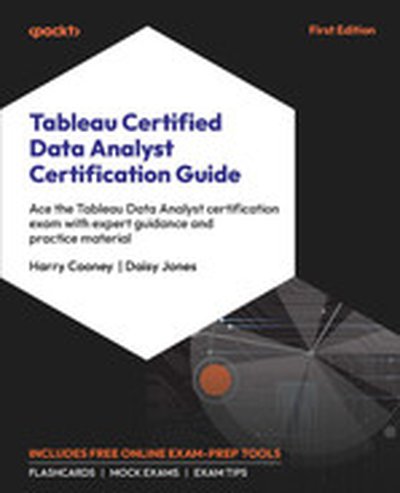
Tableau Certified Data Analyst Certification Guide

The 'Tableau Certified Data Analyst Certification Guide' is your essential roadmap to mastering Tableau and excelling in the Tableau Data Analyst certification exam. From fundamentals to advanced techniques, you'll solidify your Tableau skills with clear explanations, practical exercises, and realistic mock exams. After reading, you'll be ready to take the next step in your data analytics career. What this Book will help me do Gain the ability to connect, clean, and transform data effectively using Tableau. Master Tableau's diverse calculation types for data analysis, ranging from basic to advanced. Develop skills to create visually impactful dashboards and data stories. Learn to publish and manage insights on Tableau Cloud for broader collaboration. Acquire the necessary competencies to confidently pass the Tableau Data Analyst certification exam. Author(s) Authors Harry Cooney and Daisy Jones bring a wealth of Tableau and data analytics experience. Harry is a certified Tableau expert with years of teaching and consulting, while Daisy applies her data analysis expertise across industries. Together, they combine practical insights and a supportive approach to guide you through Tableau mastery and certification. Who is it for? This book is ideal for aspiring and practicing data analysts eager to master Tableau. Beginners will appreciate the accessible approach to foundational concepts, while experienced users can deepen their expertise. If you're preparing for the Tableau Certified Data Analyst exam or looking to enhance your visual analytics capabilities, this book is for you.
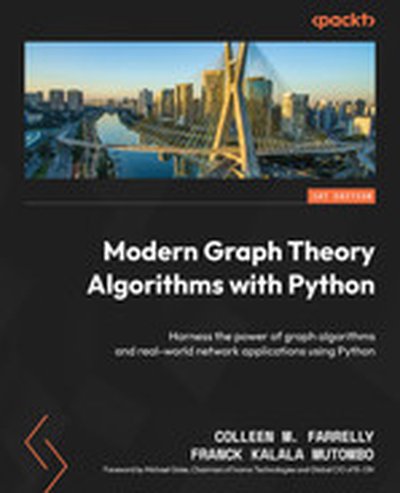
Modern Graph Theory Algorithms with Python

Dive into the fascinating world of graph theory and its applications with 'Modern Graph Theory Algorithms with Python.' Through Python programming and real-world case studies, this book equips you with the tools to transform data into graph structures, apply algorithms, and uncover insights, enabling effective solutions in diverse domains such as finance, epidemiology, and social networks. What this Book will help me do Understand how to wrangle a variety of data types into network formats suitable for analysis. Learn to use graph theory algorithms and toolkits such as NetworkX and igraph in Python. Apply network theory to predict and analyze trends, from epidemics to stock market dynamics. Explore the intersection of machine learning and graph theory through advanced neural network techniques. Gain expertise in database solutions with graph database querying and applications. Author(s) Colleen M. Farrelly, an experienced data scientist, and Franck Kalala Mutombo, a seasoned software engineer, bring years of expertise in network science and Python programming to every page of this book. Their professional experience includes working on cutting-edge problems in data analytics, graph theory, and scalable solutions for real-world issues. Combining their practical know-how, they deliver a resource aimed at both learning and applying techniques effectively. Who is it for? This book is tailored for data scientists, researchers, and analysts with an interest in using graph-based approaches for solving complex data problems. Ideal for those with a basic Python knowledge and familiarity with libraries like pandas and NumPy, the content bridges the gap between theory and application. It also provides insights into broad fields where network science can be impactful, contributing value to both students and professionals.

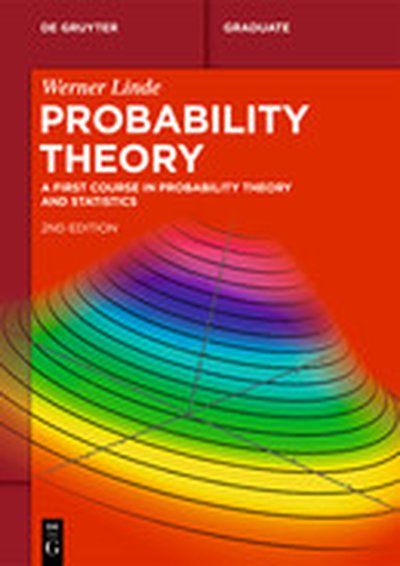
Probability Theory, 2nd Edition

This book is intended as an introduction to Probability Theory and Mathematical Statistics for students in mathematics, the physical sciences, engineering, and related fields. It is based on the author’s 25 years of experience teaching probability and is squarely aimed at helping students overcome common difficulties in learning the subject. The focus of the book is an explanation of the theory, mainly by the use of many examples. Whenever possible, proofs of stated results are provided. All sections conclude with a short list of problems. The book also includes several optional sections on more advanced topics. This textbook would be ideal for use in a first course in Probability Theory. Contents: Probabilities Conditional Probabilities and Independence Random Variables and Their Distribution Operations on Random Variables Expected Value, Variance, and Covariance Normally Distributed Random Vectors Limit Theorems Introduction to Stochastic Processes Mathematical Statistics Appendix Bibliography Index

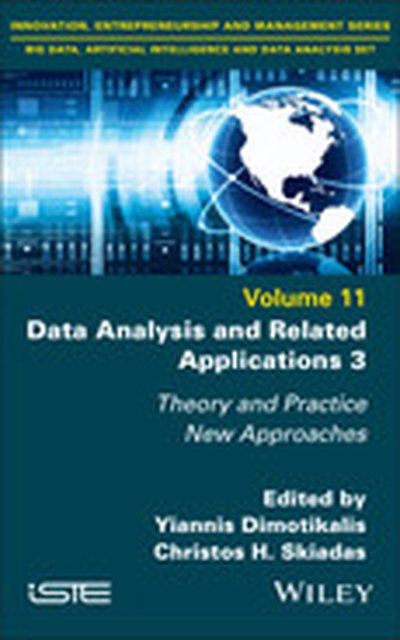
Data Analysis and Related Applications 3

The book is a collective work by a number of leading scientists, analysts, engineers, mathematicians and statisticians who have been working at the forefront of data analysis and related applications, arising from data science, operations research, engineering, machine learning or statistics. The chapters of this collaborative work represent a cross-section of current research interests in the above scientific areas. The collected material has been divided into appropriate sections to provide the reader with both theoretical and applied information on data analysis methods, models and techniques, along with appropriate applications. The published data analysis methodology includes the updated state-of-the-art rapidly developed theory and applications of data expansion, both of which go through outstanding changes nowadays. New approaches are expected to deliver and have been developed, including Artificial Intelligence.

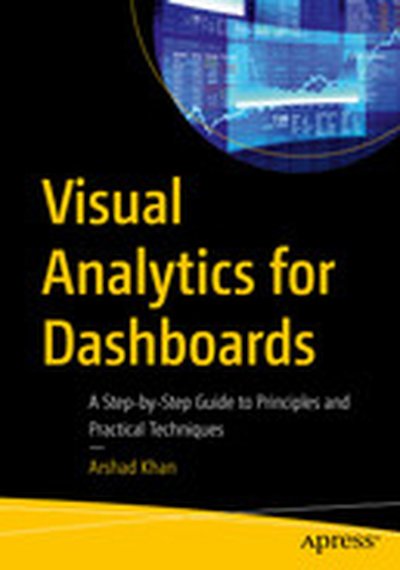
Visual Analytics for Dashboards: A Step-by-Step Guide to Principles and Practical Techniques

This book covers the key principles, best practices, and practical techniques for designing and implementing visually compelling dashboards. It explores the various stages of the dashboard development process, from understanding user needs and defining goals, to selecting appropriate visual encodings, designing effective layouts, and employing interactive elements. It also addresses the critical aspect of data storytelling, examining how narratives and context can be woven into dashboards to deliver impactful insights and engage audiences. Visual Analytics for Dashboards is designed to cater to a wide range of readers, from beginners looking to grasp the fundamentals of visual analytics, to seasoned professionals seeking to enhance their dashboard design skills. For different types of readers, such as a data analyst, BI professional, data scientist, or simply someone interested in data visualization, this book aims to equip them with the knowledge and tools necessary to create impactful dashboards. What you’ll learn The principles of data visualization How to create effective dashboards Meet all the requirements for visual analytics/data visualization/dashboard courses Deepen understanding of data presentation and analysis How to use different kinds of tools for data analysis, such as scorecards and key performance indicators Who This Book Is For Business analysts, data analysts, BI professionals, end-users, executives, developers, as well as students in dashboards, data visualizations, and visual analytics courses.

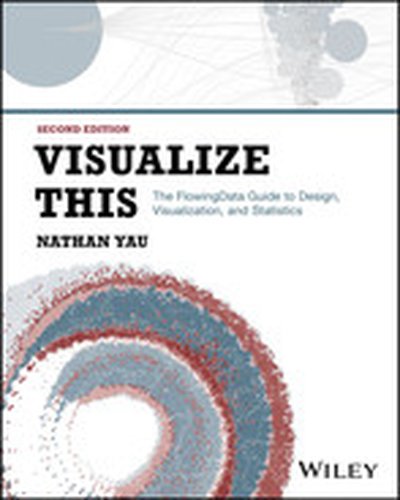
Visualize This, 2nd Edition

One of the most influential data visualization books—updated with new techniques, technologies, and examples Visualize This demonstrates how to explain data visually, so that you can present and communicate information in a way that is appealing and easy to understand. Today, there is a continuous flow of data available to answer almost any question. Thoughtful charts, maps, and analysis can help us make sense of this data. But the data does not speak for itself. As leading data expert Nathan Yau explains in this book, graphics provide little value unless they are built upon a firm understanding of the data behind them. Visualize This teaches you a data-first approach from a practical point of view. You'll start by exploring what your data has to say, and then you'll design visualizations that are both remarkable and meaningful. With this book, you'll discover what tools are available to you without becoming overwhelmed with options. You'll be exposed to a variety of software and code and jump right into real-world datasets so that you can learn visualization by doing. You'll learn to ask and answer questions with data, so that you can make charts that are both beautiful and useful. Visualize This also provides you with opportunities to apply what you learn to your own data. This completely updated, full-color second edition: Presents a unique approach to visualizing and telling stories with data, from data visualization expert Nathan Yau Offers step-by-step tutorials and practical design tips for creating statistical graphics, geographical maps, and information design Details tools that can be used to visualize data graphics for reports, presentations, and stories, for the web or for print, with major updates for the latest R packages, Python libraries, JavaScript libraries, illustration software, and point-and-click applications Contains numerous examples and descriptions of patterns and outliers and explains how to show them Information designers, analysts, journalists, statisticians, data scientists—as well as anyone studying for careers in these fields—will gain a valuable background in the concepts and techniques of data visualization, thanks to this legendary book.

Non-Stationary Stochastic Processes Estimation

The problem of forecasting future values of economic and physical processes, the problem of restoring lost information, cleaning signals or other data observations from noise, is magnified in an information-laden word. Methods of stochastic processes estimation depend on two main factors. The first factor is construction of a model of the process being investigated. The second factor is the available information about the structure of the process under consideration. In this book, we propose results of the investigation of the problem of mean square optimal estimation (extrapolation, interpolation, and filtering) of linear functionals depending on unobserved values of stochastic sequences and processes with periodically stationary and long memory multiplicative seasonal increments. Formulas for calculating the mean square errors and the spectral characteristics of the optimal estimates of the functionals are derived in the case of spectral certainty, where spectral structure of the considered sequences and processes are exactly known. In the case where spectral densities of the sequences and processes are not known exactly while some sets of admissible spectral densities are given, we apply the minimax-robust method of estimation.

Predictive Analytics for the Modern Enterprise

The surging predictive analytics market is expected to grow from $10.5 billion today to $28 billion by 2026. With the rise in automation across industries, the increase in data-driven decision-making, and the proliferation of IoT devices, predictive analytics has become an operational necessity in today's forward-thinking companies. If you're a data professional, you need to be aligned with your company's business activities more than ever before. This practical book provides the background, tools, and best practices necessary to help you design, implement, and operationalize predictive analytics on-premises or in the cloud. Explore ways that predictive analytics can provide direct input back to your business Understand mathematical tools commonly used in predictive analytics Learn the development frameworks used in predictive analytics applications Appreciate the role of predictive analytics in the machine learning process Examine industry implementations of predictive analytics Build, train, and retrain predictive models using Python and TensorFlow

Probability, Statistics and Random Processes, 1st Edition by Pearson

This book is designed to meet the requirements of students and is intended for beginners to help them understand the concepts from the first principles. Spread across 16 chapters, it discusses the theoretical aspects that have been refined and updated to reflect the current developments in the subjects. It expounds on theoretical concepts that have immense practical applications, giving adequate proofs to establish significant theorems.

Book Contents –

Chapter 1: Probability Chapter 2: Random Variables (Discrete and Continuous) Chapter 3: Mathematical Expectation Chapter 4: Standard Discrete Distributions Chapter 5: Standard Continuous Distributions Chapter 6: Sampling Theory and Distribution Chapter 7: Testing of Hypothesis (Large Samples) Chapter 8: Test of Hypothesis (Small Samples) Chapter 9: Estimation Chapter 10: Curve Fitting Chapter 11: Correlation Chapter 12: Regression Chapter 13: Queuing Theory Chapter 14: Design of Experiments Chapter 15: Random Process Chapter 16: Advanced Random Process Appendix A, Appendix B, Appendix C, Appendix D Index

Everyday Data Visualization

Radically improve the quality of your data visualizations by employing core principles of color, typography, chart types, data storytelling, and more. Everyday Data Visualization is a field guide for design techniques that will improve the charts, reports, and data dashboards you build every day. Everything you learn is tool-agnostic, with universal principles you can apply to any data stack. In Everyday Data Visualization you’ll learn important design principles for the most common data visualizations: Harness the power of perception to guide a user’s attention Bring data to life with color and typography Choose the best chart types for your data story Design for interactive visualizations Keep the user’s needs first throughout your projects This book gives you the tools you need to bring your data to life with clarity, precision, and flair. You’ll learn how human brains perceive and process information, wield modern accessibility standards, get the basics of color theory and typography, and more. About the Technology Even mundane presentations like charts, dashboards, and infographics can become engaging and inspiring data stories! This book shows you how to upgrade the visualizations you create every day by improving the layout, typography, color, and accessibility. You’ll discover timeless principles of design that help you highlight important features, compensate for missing information, and interact with live data flows. About the Book Everyday Data Visualization guides you through basic graphic design for the most common types of data visualization. You’ll learn how to enhance charts with color, encourage users to interact and explore data and create visualizations accessible to everyone. Along the way, you’ll practice each new skill as you take a dashboard project from research to publication. What's Inside Bring data to life with color and typography Choose the best chart types for your data story Design interactive visualizations About the Reader For readers experienced with data analysis tools. About the Author Desireé Abbott has over a decade of experience in product analytics, business intelligence, science, design, and software engineering. The technical editor on this book was Michael Petrey. Quotes A delightful blend of data viz principles, guidance, and design tips. The treasure trove of insights I wish I had years ago! - Alli Torban, Author of Chart Spark With vibrant enthusiasm and engaging conversational style, this book shines. - RJ Andrews, data storyteller Elegantly simplifies complex concepts, making them accessible even to beginners. An enlightening journey. - Renato Sinohara, Westwing Group SE Desiree’s approachable writing style makes it easy to dive straight into this book, and you’re in deep before you even know it. I guarantee you’ll learn plenty. - Neil Richards, 5xTableau Visionary, Author of Questions in Dataviz

Statistical Tableau

In today's data-driven world, understanding statistical models is crucial for effective analysis and decision making. Whether you're a beginner or an experienced user, this book equips you with the foundational knowledge to grasp and implement statistical models within Tableau. Gain the confidence to speak fluently about the models you employ, driving adoption of your insights and analysis across your organization. As AI continues to revolutionize industries, possessing the skills to leverage statistical models is no longer optional—it's a necessity. Stay ahead of the curve and harness the full potential of your data by mastering the ability to interpret and utilize the insights generated by these models. Whether you're a data enthusiast, analyst, or business professional, this book empowers you to navigate the ever-evolving landscape of data analytics with confidence and proficiency. Start your journey toward data mastery today. In this book, you will learn: The basics of foundational statistical modeling with Tableau How to prove your analysis is statistically significant How to calculate and interpret confidence intervals Best practices for incorporating statistics into data visualizations How to connect external analytics resources from Tableau using R and Python

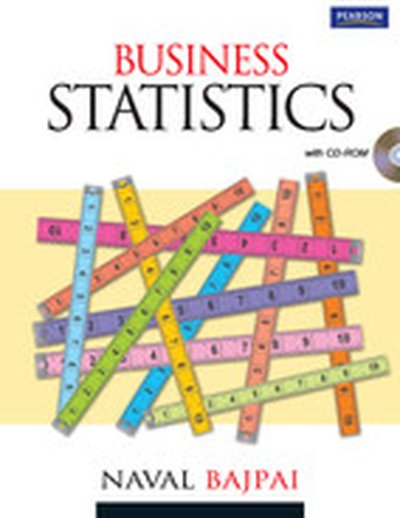
Business Statistics: An Applied Orientation

Business Statistics: An Applied Orientation provides with a conceptual framework of business, develops skills in applying concepts into decision situations, and helps understand the nitty-gritty of business statistics. This book will also be useful to professionals who would like to acquire basic knowledge of business statistics that would help them analyze and interpret data.

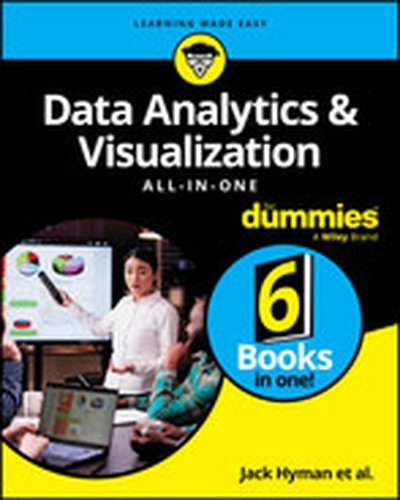
Data Analytics & Visualization All-in-One For Dummies

Install data analytics into your brain with this comprehensive introduction Data Analytics & Visualization All-in-One For Dummies collects the essential information on mining, organizing, and communicating data, all in one place. Clocking in at around 850 pages, this tome of a reference delivers eight books in one, so you can build a solid foundation of knowledge in data wrangling. Data analytics professionals are highly sought after these days, and this book will put you on the path to becoming one. You’ll learn all about sources of data like data lakes, and you’ll discover how to extract data using tools like Microsoft Power BI, organize the data in Microsoft Excel, and visually present the data in a way that makes sense using a Tableau. You’ll even get an intro to the Python, R, and SQL coding needed to take your data skills to a new level. With this Dummies guide, you’ll be well on your way to becoming a priceless data jockey. Mine data from data sources Organize and analyze data Use data to tell a story with Tableau Expand your know-how with Python and R New and novice data analysts will love this All-in-One reference on how to make sense of data. Get ready to watch as your career in data takes off.

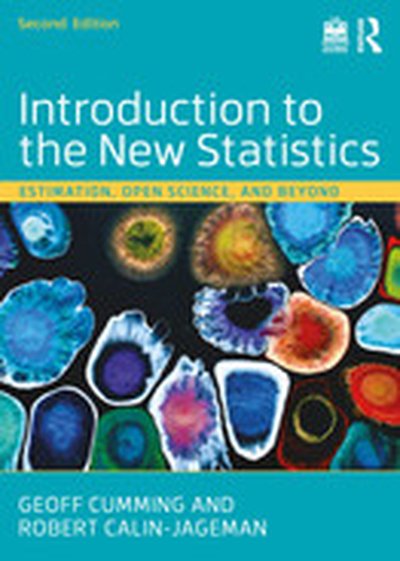
Introduction to the New Statistics, 2nd Edition

This fully updated second edition is an essential introduction to inferential statistics. It is the first introductory statistics text to use an estimation approach with meta-analysis from the start and also to explain the new and exciting Open Science practices, which encourage replication and enhance the trustworthiness of research.

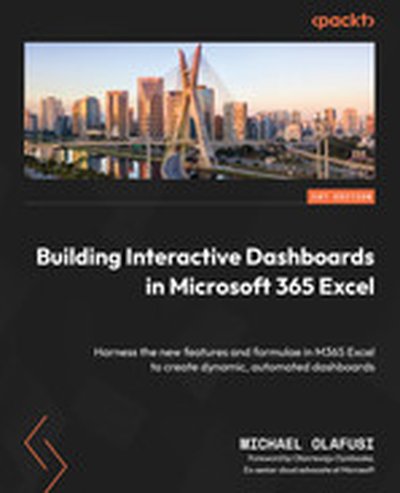
Building Interactive Dashboards in Microsoft 365 Excel

Microsoft 365 Excel introduces enhanced features that transform how business dashboards are built and maintained. This book guides you through creating dynamic, interactive dashboards that leverage these modern capabilities. From understanding the essential principles of effective dashboard design to mastering the latest tools like Power Query and dynamic array functions, you'll make the most of Excel's full potential. What this Book will help me do Understand the purpose and advantages of effective dashboards in business analytics. Use advanced Excel functions and tools such as Power Query and dynamic arrays to handle complex data workflows. Design visually engaging dashboards using charts and data visualizations that communicate key insights. Optimize dashboards for automation and real-time data updates, saving time and effort. Apply best practices and techniques for creating professional-grade Excel dashboards. Author(s) Michael Olafusi is a skilled data analyst and expert in Microsoft Excel, with years of experience leveraging Excel for business intelligence and analytics solutions. He enjoys teaching Excel users how to elevate their skills to create functional and visually impactful tools. Michael's approach combines clarity and practical advice, helping readers build proficiency and confidence. Who is it for? This book is perfect for Excel users who want to create professional dashboards for business decision support. It's especially useful for data analysts, financial analysts, business analysts, and those in similar roles. It requires a basic familiarity with Excel's interface and is ideal for those seeking to enhance their data presentation skills and automate repetitive reporting tasks.