talk-data.com talk-data.com

Topic

data

5765

tagged

Activity Trend

3 peak/qtr
2020-Q1 2026-Q1

Activities

5765 activities · Newest first

JMP 11 Design of Experiments Guide

The JMP 11 Design of Experiments Guide covers classic DOE designs (for example, full factorial, response surface, and mixture designs). Read about more flexible custom designs, which you generate to fit your particular experimental situation. And discover JMP's definitive screening designs, an efficient way to identify important factor interactions using fewer runs than required by traditional designs. The book also provides guidance on determining an appropriate sample size for your study.

JMP 11 Essential Graphing

Start with JMP 11 Essential Graphing to find the ideal graph for your data. The book begins with Graph Builder, a quick way to create graphs in a drag-and-drop window. Line charts, ellipses, box plots, and maps are just a few of the graphs available in Graph Builder. Find information about creating other types of plots: bubble plots, scatterplots, parallel plots, and more.

JMP 11 Profilers

JMP 11 Profilers covers the family of interactive profiling tools, which enable you to view cross-sections of any response surface. The book also includes details about plotting points and surfaces in a three-dimensional graph. JMP 11 Profilers covers the family of interactive profiling tools, which enable you to view cross-sections of any response surface. The book also includes details about plotting points and surfaces in a three-dimensional graph.

JMP 11 Quality and Process Methods

Quality and Process Methods describes tools for evaluating and improving processes. The book begins by discussing creating control charts, which let you visualize process measurements over time, quantify common cause variation, and identify special cause variation. Details about estimating your process capability based on measurement systems analysis studies are included. Lastly, the book discusses Pareto plots and cause-and-effect diagrams to identify root causes of variability.

JMP 11 Reliability and Survival Methods

JMP 11 Reliability and Survival Methods provides details about evaluating and improving reliability in a product or system and analyzing survival data for people and products. The book explains how to fit the best distribution to your time-to-event data or analyze destruction data. A few other topics include analyzing competing causes of failure, modeling reliability as improvements are made over time, and analyzing recurring events.

JMP 11 Specialized Models

JMP 11 Specialized Models provides details about modeling techniques such as partitioning, neural networks, nonlinear regression, and time series analysis. Topics include the Gaussian platform, which is useful in analyzing computer simulation experiments. The book also covers the Response Screening platform, which is useful in testing the effect of a predictor when you have many responses.

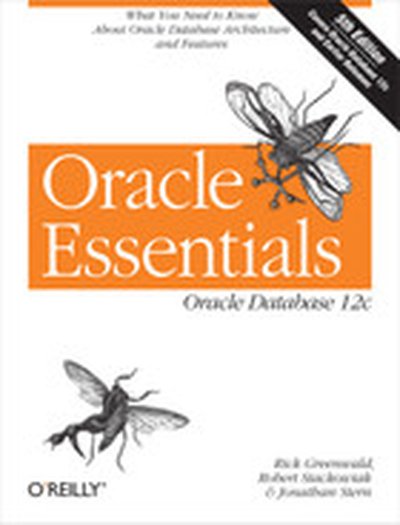
Oracle Essentials, 5th Edition

Written by Oracle insiders, this indispensable guide distills an enormous amount of information about the Oracle Database into one compact volume. Ideal for novice and experienced DBAs, developers, managers, and users, Oracle Essentials walks you through technologies and features in Oracle’s product line, including its architecture, data structures, networking, concurrency, and tuning. Complete with illustrations and helpful hints, this fifth edition provides a valuable one-stop overview of Oracle Database 12c, including an introduction to Oracle and cloud computing. Oracle Essentials provides the conceptual background you need to understand how Oracle truly works. Topics include: A complete overview of Oracle databases and data stores, and Fusion Middleware products and features Core concepts and structures in Oracle’s architecture, including pluggable databases Oracle objects and the various datatypes Oracle supports System and database management, including Oracle Enterprise Manager 12c Security options, basic auditing capabilities, and options for meeting compliance needs Performance characteristics of disk, memory, and CPU tuning Basic principles of multiuser concurrency Oracle’s online transaction processing (OLTP) Data warehouses, Big Data, and Oracle’s business intelligence tools Backup and recovery, and high availability and failover solutions

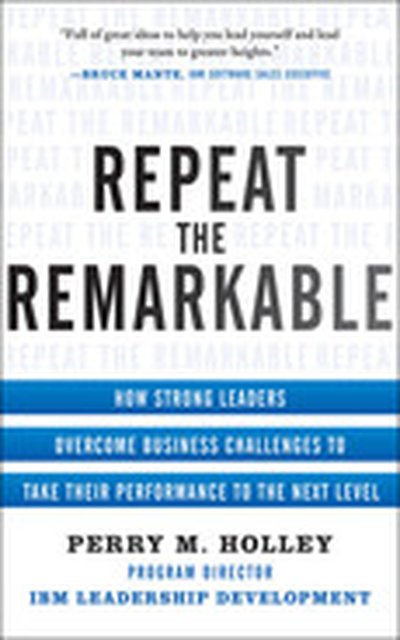
Repeat the Remarkable: How Strong Leaders Overcome Business Challenges to Take Their Performance to the Next Level

Learn how IBM has overcome its toughest challenges—and how you can replicate iconic company's success Over the past 100 years, the IBM Corporation has survived several recessions and innumerable twists and turns in the global technology market. And even in an economy of global recession, this icon continues to repeat remarkable performance after remarkable performance—reinventing the meaning of corporate sustainability, employee loyalty and value-added leadership—and followed by memorable customer service. Repeat the Remarkable reveals the leadership lessons of a top IBM leadership development trainer. In it, Holley gives you the tools to tap into your own personal success—so you can lead your company to remarkable and repeatable performances Perry Holley is program director, IBM Leadership Development.

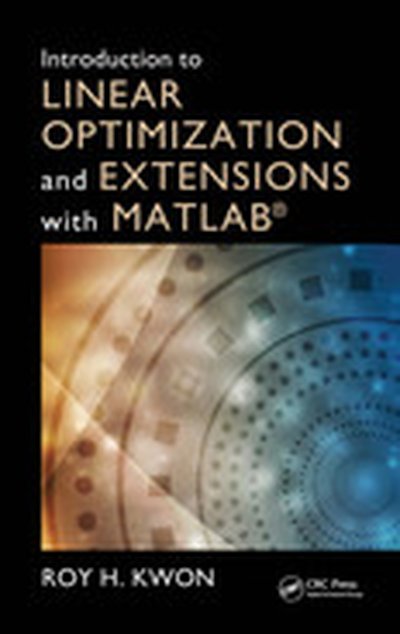
Introduction to Linear Optimization and Extensions with MATLAB®

Filling the need for an introductory book on linear programming that discusses the important ways to mitigate parameter uncertainty, Introduction to Linear Optimization and Extensions with MATLAB® provides a concrete and intuitive yet rigorous introduction to modern linear optimization. In addition to fundamental topics, the book discusses current linear optimization technologies such as predictor-path following interior point methods for both linear and quadratic optimization as well as the inclusion of linear optimization of uncertainty i.e. stochastic programming with recourse and robust optimization. The author introduces both stochastic programming and robust optimization as frameworks to deal with parameter uncertainty. The author’s unusual approach—developing these topics in an introductory book—highlights their importance. Since most applications require decisions to be made in the face of uncertainty, the early introduction of these topics facilitates decision making in real world environments. The author also includes applications and case studies from finance and supply chain management that involve the use of MATLAB. Even though there are several LP texts in the marketplace, most do not cover data uncertainty using stochastic programming and robust optimization techniques. Most emphasize the use of MS Excel, while this book uses MATLAB which is the primary tool of many engineers, including financial engineers. The book focuses on state-of-the-art methods for dealing with parameter uncertainty in linear programming, rigorously developing theory and methods. But more importantly, the author’s meticulous attention to developing intuition before presenting theory makes the material come alive.

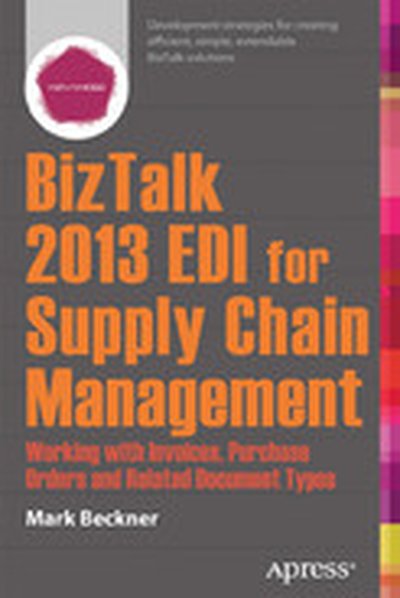
BizTalk 2013 EDI for Supply Chain Management: Working with Invoices, Purchase Orders and Related Document Types

Building a successful supply chain processing EDI implementation in BizTalk Server can be complex. Decisions must be made around how to extract and publish data, how to map to the various EDI standards, and how to appropriately batch and deliver data. If architected properly, your BizTalk solution can be highly efficient, simple, and something that can be managed and extended for years to come. The topics in this book include building complete inbound and outbound solutions for 810, 845, and 850 EDI document types, which will lay the groundwork for any document type you may be implementing. In addition, topics on how to set up FTP, SFTP, and AS2 protocols for document exchange, working with 997/999 acknowledgements, and creating custom applications for archiving and monitoring data are included. Covering mapping, architectural patterns, orchestrations, trading partner configurations, AS2, SFTP, FTP, usage of role links, and data routing, you will find that BizTalk 2013 EDI for Supply Chain Management gives you the detail and knowledge needed for success with your own implementations. What you'll learn Successfully create professional, industry-standard and compliant implementations Build fully operational inbound and outbound processes using AS2, SFTP, and FTP Integrate with SQL Server, .NET Libraries, and other platforms and technologies Develop maps, schemas, orchestrations and configure encrypted file delivery Configure role links to allow for shipment of outbound data to multiple parties Who this book is for BizTalk Developers, technical architects, and executives of manufacturing or supply companies looking to implement EDI on BizTalk

Making Sense of NoSQL

Making Sense of NoSQL clearly and concisely explains the concepts, features, benefits, potential, and limitations of NoSQL technologies. Using examples and use cases, illustrations, and plain, jargon-free writing, this guide shows how you can effectively assemble a NoSQL solution to replace or augment the traditional RDBMS you have now. About the Technology About the Book If you want to understand and perhaps start using the new data storage and analysis technologies that go beyond the SQL database model, this book is for you. Written in plain language suitable for technical managers and developers, and using many examples, use cases, and illustrations, this book explains the concepts, features, benefits, potential, and limitations of NoSQL. Making Sense of NoSQL starts by comparing familiar database concepts to the new NoSQL patterns that augment or replace them. Then, you'll explore case studies on big data, search, reliability, and business agility that apply these new patterns to today's business problems. You'll see how NoSQL systems can leverage the resources of modern cloud computing and multiple-CPU data centers. The final chapters show you how to choose the right NoSQL technologies for your own needs. What's Inside NoSQL data architecture patterns NoSQL for big data Search, high availability, and security Choosing an architecture About the Reader Managers and developers will welcome this lucid overview of the potential and capabilities of NoSQL technologies. About the Authors Dan McCreary and Ann Kelly lead an independent training and consultancy firm focused on NoSQL solutions and are cofounders of the NoSQL Now! Conference. Quotes Easily digestible, practical advice for technical managers, architects, and developers. - From the Foreword by Tony Shaw, CEO of DATAVERSITY Cuts through the jargon and gives you the information you need to know. - Craig Smith, Unbound DNA A concise yet thorough description of the many facets of NoSQL, from big data to search. - John Guthrie, Pivotal Brings common sense to the world of NoSQL. - Ignacio Lopez Vellon, Atos Worldgrid Get ahead of your peers ... fast-track to NoSQL now! - Ian Stirk, Stirk Consultancy, Ltd


Mondrian in Action

Mondrian in Action teaches business users and developers how to use Mondrian and related tools for strategic business analysis. You'll learn how to design and populate a data warehouse and present the data via a multidimensional model. You'll follow examples showing how to create a Mondrian schema and then expand it to add basic security based on the users' roles. About the Technology Mondrian is an open source, lightning-fast data analysis engine designed to help you explore your business data and perform speed-of-thought analysis. Mondrian can be integrated into a wide variety of business analysis applications and learning it requires no specialized technical knowledge. About the Book Mondrian in Action teaches you to use Mondrian for strategic business analysis. In it, you'll learn how to organize and present data in a multidimensional manner. You'll follow apt and thoroughly explained examples showing how to create a Mondrian schema and then expand it to add basic security based on users' roles. Developers will discover how to integrate Mondrian using its olap4j Java API and web service calls via XML for Analysis. What's Inside Mondrian from the ground up -- no experience required A primer on business analytics Using Mondrian with a variety of leading applications Optimizing and restricting business data for fast, secure analysis About the Reader Written for developers building data analysis solutions. Appropriate for tech-savvy business users and DBAs needing to query and report on data. About the Authors William D. Back is an Enterprise Architect and Director of Pentaho Services. Nicholas Goodman is a Business Intelligence pro who has authored training courses on OLAP and Mondrian. Julian Hyde founded Mondrian and is the project's lead developer. Quotes A wonderful introduction to Business Intelligence and Analytics. - Lorenzo De Leon, Authentify, Inc. A great overview of the Mondrian engine that guided me through all the technical details. - Alexander Helf, veenion GmbH A significant complement to the online documentation, and an excellent introduction to how to think about designing a data warehouse. - Mark Newman, Heads Up Analytics Comprehensive ... highly recommended. - Najib Coutya, IMD Group

SQL For Dummies, 8th Edition

Uncover the secrets of SQL and start building better relational databases today! This fun and friendly guide will help you demystify database management systems so you can create more powerful databases and access information with ease. Updated for the latest SQL functionality, SQL For Dummies, 8th Edition covers the core SQL language and shows you how to use SQL to structure a DBMS, implement a database design, secure your data, and retrieve information when you need it. Includes new enhancements of SQL:2011, including temporal data functionality which allows you to set valid times for transactions to occur and helps prevent database corruption Covers creating, accessing, manipulating, maintaining, and storing information in relational database management systems like Access, Oracle, SQL Server, and MySQL Provides tips for keeping your data safe from theft, accidental or malicious corruption, or loss due to equipment failures and advice on eliminating errors in your work Don't be daunted by database development anymore - get SQL For Dummies, 8th Edition, and you'll be on your way to SQL stardom.

The Heston Model and its Extensions in Matlab and C#, + Website

Tap into the power of the most popular stochastic volatility model for pricing equity derivatives Since its introduction in 1993, the Heston model has become a popular model for pricing equity derivatives, and the most popular stochastic volatility model in financial engineering. This vital resource provides a thorough derivation of the original model, and includes the most important extensions and refinements that have allowed the model to produce option prices that are more accurate and volatility surfaces that better reflect market conditions. The book's material is drawn from research papers and many of the models covered and the computer codes are unavailable from other sources. The book is light on theory and instead highlights the implementation of the models. All of the models found here have been coded in Matlab and C#. This reliable resource offers an understanding of how the original model was derived from Ricatti equations, and shows how to implement implied and local volatility, Fourier methods applied to the model, numerical integration schemes, parameter estimation, simulation schemes, American options, the Heston model with time-dependent parameters, finite difference methods for the Heston PDE, the Greeks, and the double Heston model. A groundbreaking book dedicated to the exploration of the Heston model—a popular model for pricing equity derivatives Includes a companion website, which explores the Heston model and its extensions all coded in Matlab and C# Written by Fabrice Douglas Rouah a quantitative analyst who specializes in financial modeling for derivatives for pricing and risk management Engaging and informative, this is the first book to deal exclusively with the Heston Model and includes code in Matlab and C# for pricing under the model, as well as code for parameter estimation, simulation, finite difference methods, American options, and more. Note: The ebook version does not provide access to the companion files.

SAS Macro Language Magic

SAS Macro Language Magic: Discovering Advanced Techniques pushes the SAS macro language to the limit. It explores how even common tools, when used to their full advantage, can transform into amazing applications. This book assumes a basic knowledge of the SAS macro language and then shows how to apply that knowledge in new and different ways.

This book enables you to find a technique that you like and then explore it to discover what works and what the possibilities are. You can experiment, focusing more on the application and less on the syntax, while at the same time visualizing the SAS program you want to generate.

Discover and develop powerful programming techniques down the path to demystifying MACROS. All the tricks and secrets are revealed, enabling you to write SAS macros that work like MAGIC.

This book is part of the SAS Press program.