talk-data.com talk-data.com

Topic

JSON

JavaScript Object Notation (JSON)

data_format lightweight web_development file_format

129

tagged

Activity Trend

9 peak/qtr
2020-Q1 2026-Q1

Activities

129 activities · Newest first

DB2 10.5 with BLU Acceleration

UPGRADE TO THE NEW GENERATION OF DATABASE SOFTWARE FOR THE ERA OF BIG DATA! If big data is an untapped natural resource, how do you find the gold hidden within? Leaders realize that big data means all data, and are moving quickly to extract more value from both structured and unstructured application data. However, analyzing this data can prove costly and complex, especially while protecting the availability, performance and reliability of essential business applications. In the new era of big data, businesses require data systems that can blend always-available transactions with speed-of-thought analytics. DB2 10.5 with BLU Acceleration provides this speed, simplicity, and affordability while making it easier to build next-generation applications with NoSQL features, such as a mongo-styled JSON document store, a graph store, and more. Dynamic in-memory columnar processing and other innovations deliver faster insights from more data, and enhanced pureScale clustering technology delivers high-availability transactions with application-transparent scalability for business continuity. With this book, you'll learn about the power and flexibility of multiworkload, multi-platform database software. Use the comprehensive knowledge from a team of DB2 developers and experts to get started with the latest DB2 trial version you can download at ibm.com/developerworks/downloads/im/db2/. Stay up to date on DB2 by visiting ibm.com/db2/.

Instant GSON

Explore the powerful features of the GSON library in this concise and practical book. "Instant GSON" provides a hands-on guide to efficiently handling JSON data using Google's GSON library. In this book, you'll learn essential techniques to convert Java objects to JSON and vice versa, utilize field exclusion strategies, and implement GSON in real-world applications. What this Book will help me do Convert Java objects into JSON format and retrieve Java objects from JSON data. Understand and work with GSON's handling of generic types and nested classes. Learn how to implement field exclusion strategies and write custom JSON converters. Gain knowledge on pretty-printing JSON and utilizing versioning support. Effectively use GSON in various practical Java-based applications, including web projects. Author(s) Sandeep Patel is an experienced software developer specializing in Java programming and JSON data interchange. With years of hands-on experience working with GSON, Sandeep has a deep understanding of its capabilities and nuances. His writing style is focused on practical examples and clear explanations, aimed at helping readers efficiently integrate advanced JSON management into their programming projects. Who is it for? If you are a Java developer who is new to the GSON library and keen to incorporate it into your projects, this book is for you. "Instant GSON" will appeal to software developers aiming to boost productivity and master JSON data handling. Readers should have a basic understanding of Java programming and an interest in JSON serialization and deserialization. This book provides guidance tailored to beginner and intermediate skill levels.

Developing with Couchbase Server

Today’s highly interactive websites pose a challenge for traditional SQL databases—the ability to scale rapidly and serve loads of concurrent users. With this concise guide, you’ll learn how to build web applications on top of Couchbase Server 2.0, a NoSQL database that can handle websites and social media where hundreds of thousands of users read and write large volumes of information. Using food recipe information as examples, this book demonstrates how to take advantage of Couchbase’s document-oriented database design, and how to store and query data with various CRUD operations. Discover why Couchbase is better than SQL databases with memcached tiers for managing data from the most interactive portions of your application. Learn about Couchbase Server’s cluster-based architecture and how it differs from SQL databases Choose a client library for Java, .NET, Ruby, Python, PHP, or C, and connect to a cluster Structure data in a variety of formats, from serialized objects, a stream of raw bytes, or as JSON documents Learn core storage and retrieval methods, including document IDs, expiry times, and concurrent updates Create views with map/reduce and learn Couchbase mechanisms for querying and selection

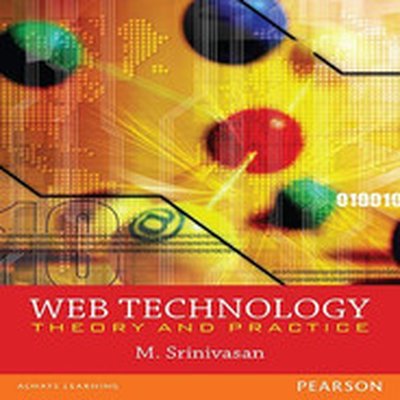
Web Technology, Theory and Practice

This book introduces the keyset technologies that are currently used to create applications on web. It explains the principal HTML concept, the client-side used JavaScript and the server-side used JSP with relevant coding examples. Emphasis is given on XML with examples including XML Transformations (XSTL). Apart from this, the book also dwells into the alternatives to XML such as the JSON.

Getting Started with CouchDB

CouchDB is a new breed of database for the Internet, geared to meet the needs of today’s dynamic web applications. With this concise introduction, you’ll learn how CouchDB’s simple model for storing, processing, and accessing data makes it ideal for the type of data and rapid response users now demand from your applications—and how easy CouchDB is to set up, deploy, maintain, and scale. The code-packed examples in this book will help you learn how to work with documents, populate a simple database, replicate data from one database to another, and a host of other tasks. Install CouchDB on Linux, Mac OS X, Windows, or (if you must) from the source code Interact with data through CouchDB’s RESTful API, and use standard HTTP operations, such as PUT, GET, POST, and DELETE Use Futon—CouchDB’s web-based interface— to manage databases and documents, and to configure replications Learn how to create, update, and delete documents in JSON format, and how to create and delete databases Work with design documents to get the formatting and indexing your application requires

MongoDB: The Definitive Guide

How does MongoDB help you manage a huMONGOus amount of data collected through your web application? With this authoritative introduction, you'll learn the many advantages of using document-oriented databases, and discover why MongoDB is a reliable, high-performance system that allows for almost infinite horizontal scalability. Written by engineers from 10gen, the company that develops and supports this open source database, MongoDB: The Definitive Guide provides guidance for database developers, advanced configuration for system administrators, and an overview of the concepts and use cases for other people on your project. Learn how easy it is to handle data as self-contained JSON-style documents, rather than as records in a relational database. Explore ways that document-oriented storage will work for your project Learn how MongoDB’s schema-free data model handles documents, collections, and multiple databases Execute basic write operations, and create complex queries to find data with any criteria Use indexes, aggregation tools, and other advanced query techniques Learn about monitoring, security and authentication, backup and repair, and more Set up master-slave and automatic failover replication in MongoDB Use sharding to scale MongoDB horizontally, and learn how it impacts applications Get example applications written in Java, PHP, Python, and Ruby

CouchDB: The Definitive Guide

Three of CouchDB's creators show you how to use this document-oriented database as a standalone application framework or with high-volume, distributed applications. With its simple model for storing, processing, and accessing data, CouchDB is ideal for web applications that handle huge amounts of loosely structured data. That alone would stretch the limits of a relational database, yet CouchDB offers an open source solution that's reliable, scales easily, and responds quickly. CouchDB works with self-contained data that has loose or ad-hoc connections. It's a model that fits many real-world items, such as contacts, invoices, and receipts, but you'll discover that this database can easily handle data of any kind. With this book, you'll learn how to work with CouchDB through its RESTful web interface, and become familiar with key features such as simple document CRUD (create, read, update, delete), advanced MapReduce, deployment tuning, and more. Understand the basics of document-oriented storage and manipulation Interact with CouchDB entirely though HTTP using its RESTful interface Model data as self-contained JSON documents Handle evolving data schemas naturally Query and aggregate data in CouchDB using MapReduce views Replicate data between nodes Tune CouchDB for increased performance and reliability

Understanding AJAX: Consuming the Sent Data with XML and JSON

Consuming the Sent Data with XML and JSON (Digital Short Cut) Joshua Eichorn ISBN 0132337932 There are two main ways that AJAX programmers can process the data received from an XMLHttpRequest object or one of the alternative fallback methods. One is known as the document-centric approach and involves parsing a Document Object Model (DOM) document. The other involves remote scripting using a subset of JavaScript called JavaScript Object Notation (JSON), which is the literal syntax for JavaScript objects. This Short Cut is a detailed examination of both techniques.

There are, by now, several well-established C++ JSON libraries. C++ developers can choose between DOM parsers, SAX parsers, and pull parsers. DOM parsers are by design slow and use a lot of memory, SAX parsers are clumsy to use, so pull parsers are the way to go. Our open-source JSON parser fills this gap between the existing parser libraries. It is a fully validating, fast, pull parser with O(1) memory usage. The key innovation lies in our API design. Unlike other parsers that solely validate JSON, ours enforces semantical constraints, requiring developers to define specific structures. This results in automatic error handling and simplifies code. You can also parse directly into your own data structures without any extra copies. This talk showcases our JSON parser API in action, comparing it with established counterparts. Additionally, we demonstrate elegant generic programming C++ techniques, making it accessible to both beginners and intermediate developers.