talk-data.com talk-data.com

Topic

JSON

JavaScript Object Notation (JSON)

data_format lightweight web_development file_format

129

tagged

Activity Trend

9 peak/qtr
2020-Q1 2026-Q1

Activities

129 activities · Newest first

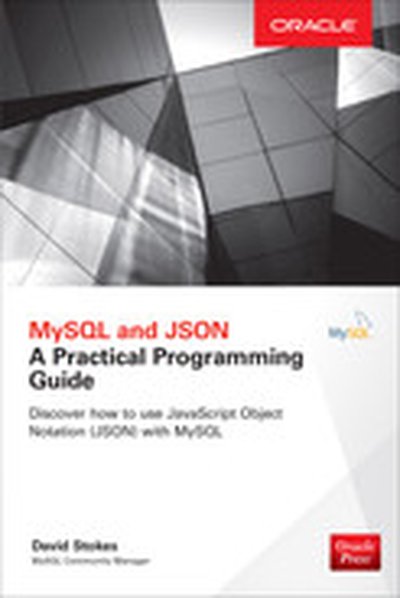
MySQL and JSON: A Practical Programming Guide

Practical instruction on using JavaScript Object Notation (JSON) with MySQL This hands-on guide teaches, step by step, how to use JavaScript Object Notation (JSON) with MySQL. Written by a MySQL Community Manager for Oracle , MySQL and JSON: A Practical Programming Guide shows how to quickly get started using JSON with MySQL and clearly explains the latest tools and functions. All content is based on the author’s years of interaction with MySQL professionals. Throughout, real-world examples and sample code guide you through the syntax and application of each method. You will get in-depth coverage of programming with the MySQL Document Store. •See how JavaScript Object Notation (JSON) works with MySQL •Use JSON as string data and JSON as a data type •Find the path, load data, and handle searches with REGEX •Work with JSON and non-JSON output •Build virtual generated columns and stored generated columns •Generate complex geometries using GeoJSON •Convert and manage data with JSON functions •Access JSON data, collections, and tables through MySQL Document Store

Summary

Using a multi-model database in your applications can greatly reduce the amount of infrastructure and complexity required. ArangoDB is a storage engine that supports documents, dey/value, and graph data formats, as well as being fast and scalable. In this episode Jan Steeman and Jan Stücke explain where Arango fits in the crowded database market, how it works under the hood, and how you can start working with it today.

Preamble

Hello and welcome to the Data Engineering Podcast, the show about modern data management When you’re ready to build your next pipeline you’ll need somewhere to deploy it, so check out Linode. With private networking, shared block storage, node balancers, and a 40Gbit network, all controlled by a brand new API you’ve got everything you need to run a bullet-proof data platform. Go to dataengineeringpodcast.com/linode to get a $20 credit and launch a new server in under a minute. Go to dataengineeringpodcast.com to subscribe to the show, sign up for the newsletter, read the show notes, and get in touch. Your host is Tobias Macey and today I’m interviewing Jan Stücke and Jan Steeman about ArangoDB, a multi-model distributed database for graph, document, and key/value storage.

Interview

Introduction How did you get involved in the area of data management? Can you give a high level description of what ArangoDB is and the motivation for creating it?

What is the story behind the name?

How is ArangoDB constructed?

How does the underlying engine store the data to allow for the different ways of viewing it?

What are some of the benefits of multi-model data storage?

When does it become problematic?

For users who are accustomed to a relational engine, how do they need to adjust their approach to data modeling when working with Arango? How does it compare to OrientDB? What are the options for scaling a running system?

What are the limitations in terms of network architecture or data volumes?

One of the unique aspects of ArangoDB is the Foxx framework for embedding microservices in the data layer. What benefits does that provide over a three tier architecture?

What mechanisms do you have in place to prevent data breaches from security vulnerabilities in the Foxx code? What are some of the most interesting or surprising uses of this functionality that you have seen?

What are some of the most challenging technical and business aspects of building and promoting ArangoDB? What do you have planned for the future of ArangoDB?

Contact Info

Jan Steemann

jsteemann on GitHub @steemann on Twitter

Parting Question

From your perspective, what is the biggest gap in the tooling or technology for data management today?

Links

ArangoDB Köln Multi-model Database Graph Algorithms Apache 2 C++ ArangoDB Foxx Raft Protocol Target Partners RocksDB AQL (ArangoDB Query Language) OrientDB PostGreSQL OrientDB Studio Google Spanner 3-Tier Architecture Thomson-Reuters Arango Search Dell EMC Google S2 Index ArangoDB Geographic Functionality JSON Schema

The intro and outro music is from The Hug by The Freak Fandango Orchestra / CC BY-SA Support Data Engineering Podcast

Data Science Fundamentals for Python and MongoDB

Build the foundational data science skills necessary to work with and better understand complex data science algorithms. This example-driven book provides complete Python coding examples to complement and clarify data science concepts, and enrich the learning experience. Coding examples include visualizations whenever appropriate. The book is a necessary precursor to applying and implementing machine learning algorithms. The book is self-contained. All of the math, statistics, stochastic, and programming skills required to master the content are covered. In-depth knowledge of object-oriented programming isn’t required because complete examples are provided and explained. Data Science Fundamentals with Python and MongoDB is an excellent starting point for those interested in pursuing a career in data science. Like any science, the fundamentals of data science are a prerequisite to competency. Without proficiency in mathematics, statistics, data manipulation, and coding, the path to success is “rocky” at best. The coding examples in this book are concise, accurate, and complete, and perfectly complement the data science concepts introduced. What You'll Learn Prepare for a career in data science Work with complex data structures in Python Simulate with Monte Carlo and Stochastic algorithms Apply linear algebra using vectors and matrices Utilize complex algorithms such as gradient descent and principal component analysis Wrangle, cleanse, visualize, and problem solve with data Use MongoDB and JSON to work with data Who This Book Is For The novice yearning to break into the data science world, and the enthusiast looking to enrich, deepen, and develop data science skills through mastering the underlying fundamentalsthat are sometimes skipped over in the rush to be productive. Some knowledge of object-oriented programming will make learning easier.

JavaScript and JSON Essentials - Second Edition

Dive into "JavaScript and JSON Essentials" to discover how JSON works as a cornerstone in modern web development. Through hands-on examples and practical guidance, this book equips you with the knowledge to effectively use JSON with JavaScript for creating responsive, scalable, and capable web applications. What this Book will help me do Master JSON structures and utilize them in web development workflows. Integrate JSON data within Angular, Node.js, and other popular frameworks. Implement real-time JSON features using tools like Kafka and Socket.io. Understand BSON, GeoJSON, and JSON-LD formats for specialized applications. Develop efficient JSON handling for distributed and scalable systems. Author(s) None Joseph D'mello and Sai S Sriparasa are seasoned software developers and educators with extensive experience in JavaScript. Their expertise in web application development and JSON usage shines through in this book. They take a clear and engaging approach, ensuring that complex concepts are demystified and actionable. Who is it for? This book is best suited for web developers familiar with JavaScript who want to enhance their abilities to use JSON for building fast, data-driven web applications. Whether you're looking to strengthen your backend skills or learn tools like Angular and Kafka in conjunction with JSON, this book is made for you.

SQL Server 2017 Developer???s Guide

"SQL Server 2017 Developer's Guide" provides a comprehensive approach to learning and utilizing the new features introduced in SQL Server 2017. From advanced Transact-SQL to integrating R and Python into your database projects, this book equips you with the knowledge to design and develop efficient database applications tailored to modern requirements. What this Book will help me do Master new features in SQL Server 2017 to enhance database application development. Implement In-Memory OLTP and columnstore indexes for optimal performance. Utilize JSON support in SQL Server to integrate modern data formats. Leverage R and Python integration to apply advanced data analytics and machine learning. Learn Linux and container deployment options to expand SQL Server usage scenarios. Author(s) The authors of "SQL Server 2017 Developer's Guide" are industry veterans with extensive experience in database design, business intelligence, and advanced analytics. They bring a practical, hands-on writing style that helps developers apply theoretical concepts effectively. Their commitment to teaching is evident in the clear and detailed guidance provided throughout the book. Who is it for? This book is ideal for database developers and solution architects aiming to build robust database applications with SQL Server 2017. It's a valuable resource for business intelligence developers or analysts seeking to harness SQL Server 2017's advanced features. Some familiarity with SQL Server and T-SQL is recommended to fully leverage the insights provided by this book.

Learning Elastic Stack 6.0

Learn how to harness the power of the Elastic Stack 6.0 to manage, analyze, and visualize data effectively. This book introduces you to Elasticsearch, Logstash, Kibana, and other components, helping you build scalable, real-time data processing solutions from scratch. By reading this guide, you'll gain practical insights into the platform's components, including tips for production deployment. What this Book will help me do Understand and utilize the core components of Elastic Stack 6.0, including Elasticsearch, Logstash, and Kibana. Set up scalable data pipelines for ingesting and processing vast amounts of data. Craft real-time data visualizations and analytics using Kibana. Secure and monitor Elastic Stack deployments with X-Pack and other related tools. Deploy Elastic Stack applications effectively in cloud or on-premise production environments. Author(s) Pranav Shukla and Sharath Kumar are experienced professionals with deep knowledge in distributed data systems and the Elastic Stack ecosystem. They are passionate about data analytics and visualization and bring their hands-on experience in building real-world Elastic Stack applications into this book. Their practical approach and explanatory style make complex concepts accessible to readers at all levels. Who is it for? This book is perfect for data professionals who want to analyze large datasets or create effective real-time visualizations. It is suited for those new to Elastic Stack or looking to understand its capabilities. Basic JSON knowledge is recommended, but no prior expertise with Elastic Stack is required to benefit from this practical guide.

XML and JSON Recipes for SQL Server: A Problem-Solution Approach

Quickly find solutions to dozens of common problems encountered while using XML and JSON features that are built into SQL Server. Content is presented in the popular problem-solution format. Look up the problem that you want to solve. Read the solution. Apply the solution directly in your own code. Problem solved! This book shows how to take advantage of XML and JSON to share data and automate tasks. JSON is commonly used to move data back and forth between the database and front-end applications, often running in a browser. This book shows all you need to know about transforming query results into JSON format, and back again. Also covered are the processes and techniques for moving data into and out of XML format for business intelligence and other purposes, such as when transferring data from a reporting system into a data warehouse, or between different database brands such as between SQL Server and Oracle. Microsoft intensively implements XML in SQL Server, and in many related products. Execution plans are generated in XML format, and this book shows you how to parse those plans and automate the detection of performance problems. The relatively new Extended Events feature writes tracing data into XML files, and the recipes in this book help in parsing those files. XML is also used in SQL Server's BI tool set, including in SSIS, SSR, and SSAS. XML is used in many configuration files, and is even behind the construction of DDL triggers. In reading this book you’ll dive deeply into the features that allow you to build and parse XML, and also JSON, which is a specific format of XML used to transmit objects in a web-friendly format between a database and its front-end applications. What You Will Learn Build XML and JSON objects in support of automation and data transfer Import and parse XML and JSON from operating system files Build appropriate indexes on XML objects to improve query performance Move data from query result sets into JSON format, and back again Automate the detection of database performance problems by querying and parsing the database’s own execution plans Replace external and manual JSON processes with SQL Server's internal, JSON functionality Who This Book Is For Database administrators, .NET developers, business intelligence developers, and other professionals who want a deep and detailed skill set around working with XML and JSON in a SQL Server database environment. Web developers will particularly find the book useful for its coverage of transforming database result sets into JSON text that can be transmitted to front-end web applications.

Summary

To process your data you need to know what shape it has, which is why schemas are important. When you are processing that data in multiple systems it can be difficult to ensure that they all have an accurate representation of that schema, which is why Confluent has built a schema registry that plugs into Kafka. In this episode Ewen Cheslack-Postava explains what the schema registry is, how it can be used, and how they built it. He also discusses how it can be extended for other deployment targets and use cases, and additional features that are planned for future releases.

Preamble

Hello and welcome to the Data Engineering Podcast, the show about modern data infrastructure When you’re ready to launch your next project you’ll need somewhere to deploy it. Check out Linode at dataengineeringpodcast.com/linode and get a $20 credit to try out their fast and reliable Linux virtual servers for running your data pipelines or trying out the tools you hear about on the show. Continuous delivery lets you get new features in front of your users as fast as possible without introducing bugs or breaking production and GoCD is the open source platform made by the people at Thoughtworks who wrote the book about it. Go to dataengineeringpodcast.com/gocd to download and launch it today. Enterprise add-ons and professional support are available for added peace of mind. Go to dataengineeringpodcast.com to subscribe to the show, sign up for the newsletter, read the show notes, and get in touch. You can help support the show by checking out the Patreon page which is linked from the site. To help other people find the show you can leave a review on iTunes, or Google Play Music, and tell your friends and co-workers Your host is Tobias Macey and today I’m interviewing Ewen Cheslack-Postava about the Confluent Schema Registry

Interview

Introduction How did you get involved in the area of data engineering? What is the schema registry and what was the motivating factor for building it? If you are using Avro, what benefits does the schema registry provide over and above the capabilities of Avro’s built in schemas? How did you settle on Avro as the format to support and what would be involved in expanding that support to other serialization options? Conversely, what would be involved in using a storage backend other than Kafka? What are some of the alternative technologies available for people who aren’t using Kafka in their infrastructure? What are some of the biggest challenges that you faced while designing and building the schema registry? What is the tipping point in terms of system scale or complexity when it makes sense to invest in a shared schema registry and what are the alternatives for smaller organizations? What are some of the features or enhancements that you have in mind for future work?

Contact Info

ewencp on GitHub Website @ewencp on Twitter

Parting Question

From your perspective, what is the biggest gap in the tooling or technology for data management today?

Links

Kafka Confluent Schema Registry Second Life Eve Online Yes, Virginia, You Really Do Need a Schema Registry JSON-Schema Parquet Avro Thrift Protocol Buffers Zookeeper Kafka Connect

The intro and outro music is from The Hug by The Freak Fandango Orchestra / CC BY-SA Support Data Engineering Podcast
Learn FileMaker Pro 16: The Comprehensive Guide to Building Custom Databases

Extend FileMaker's built-in functionality and totally customize your data management environment with specialized functions and menus to super-charge the results and create a truly unique and focused experience. This book includes everything a beginner needs to get started building databases with FileMaker and contains advanced tips and techniques that the most seasoned professionals will appreciate. Written by a long time FileMaker developer, this book contains material for developers of every skill level. FileMaker Pro 16 is a powerful database development application used by millions of people in diverse industries to simplify data management tasks, leverage their business information in new ways and automate many mundane tasks. A custom solution built with FileMaker can quickly tap into a powerful set of capabilities and technologies to offer users an intuitive and pleasing environment in which to achieve new levels of efficiency and professionalism. What You’ll learn Create SQL queries to build fast and efficient formulas Discover new features of version 16 such as JSON functions, Cards, Layout Object window, SortValues, UniqueValues, using variables in Data Sources Write calculations using built-in and creating your own custom functions Discover the importance of a good approach to interface and technical design Apply best practices for naming conventions and usage standards Explore advanced topics about designing professional, open-ended solutions and using advanced techniques Who This Book Is For Casual programmers, full time consultants and IT professionals.

Essentials of Cloud Application Development on IBM Bluemix

Abstract This IBM® Redbooks® publication is based on the Presentations Guide of the course Essentials of Cloud Application Development on IBM Bluemix that was developed by the IBM Redbooks team in partnership with IBM Skills Academy Program. This course is designed to teach university students the basic skills that are required to develop, deploy, and test cloud-based applications that use the IBM Bluemix® cloud services. The primary target audience for this course is university students in undergraduate computer science and computer engineer programs with no previous experience working in cloud environments. However, anyone new to cloud computing can also benefit from this course. After completing this course, you should be able to accomplish the following tasks: Define cloud computing Describe the factors that lead to the adoption of cloud computing Describe the choices that developers have when creating cloud applications Describe infrastructure as a service, platform as a service, and software as a service Describe IBM Bluemix and its architecture Identify the runtimes and services that IBM Bluemix offers Describe IBM Bluemix infrastructure types Create an application in IBM Bluemix Describe the IBM Bluemix dashboard, catalog, and documentation features Explain how the application route is used to test an application from the browser Create services in IBM Bluemix Describe how to bind services to an application in IBM Bluemix Describe the environment variables that are used with IBM Bluemix services Explain what are IBM Bluemix organizations, domains, spaces, and users Describe how to create an IBM SDK for Node.js application that runs on IBM Bluemix Explain how to manage your IBM Bluemix account with the Cloud Foundry CLI Describe how to set up and use the IBM Bluemix plug-in for Eclipse Describe the role of Node.js for server-side scripting Describe IBM Bluemix DevOps Services and the capabilities of IBM DevOps Services Identify the Web IDE features in IBM Bluemix DevOps Describe how to connect a Git repository client to Bluemix DevOps Services project Explain the pipeline build and deploy processes that IBM Bluemix DevOps Services use Describe how IBM Bluemix DevOps Services integrate with the IBM Bluemix cloud Describe the agile planning tools in IBM Bluemix Describe the characteristics of REST APIs Explain the advantages of the JSON data format Describe an example of REST APIs using Watson Describe the main types of data services in IBM Bluemix Describe the benefits of IBM Cloudant® Explain how Cloudant databases and documents are accessed from IBM Bluemix Describe how to use REST APIs to interact with Cloudant database Describe Bluemix mobile backend as a service (MBaaS) and the MBaaS architecture Describe the Push Notifications service Describe the App ID service Describe the Kinetise service Describe how to create Bluemix Mobile applications by using MobileFirst Services Starter Boilerplate The workshop materials were created in June 2017. Therefore, all IBM Bluemix features that are described in this Presentations Guide and IBM Bluemix user interfaces that are used in the examples are current as of June 2017.

Apache Spark 2.x for Java Developers

Delve into mastering big data processing with 'Apache Spark 2.x for Java Developers.' This book provides a practical guide to implementing Apache Spark using the Java APIs, offering a unique opportunity for Java developers to leverage Spark's powerful framework without transitioning to Scala. What this Book will help me do Learn how to process data from formats like XML, JSON, CSV using Spark Core. Implement real-time analytics using Spark Streaming and third-party tools like Kafka. Understand data querying with Spark SQL and master SQL schema processing. Apply machine learning techniques with Spark MLlib to real-world scenarios. Explore graph processing and analytics using Spark GraphX. Author(s) None Kumar and None Gulati, experienced professionals in Java development and big data, bring their wealth of practical experience and passion for teaching to this book. With a clear and concise writing style, they aim to simplify Spark for Java developers, making big data approachable. Who is it for? This book is perfect for Java developers who are eager to expand their skillset into big data processing with Apache Spark. Whether you are a seasoned Spark user or first diving into big data concepts, this book meets you at your level. With practical examples and straightforward explanations, you can unlock the potential of Spark in real-world scenarios.

JSON at Work

JSON is becoming the backbone for meaningful data interchange over the internet. This format is now supported by an entire ecosystem of standards, tools, and technologies for building truly elegant, useful, and efficient applications. With this hands-on guide, author and architect Tom Marrs shows you how to build enterprise-class applications and services by leveraging JSON tooling and message/document design. JSON at Work provides application architects and developers with guidelines, best practices, and use cases, along with lots of real-world examples and code samples. You’ll start with a comprehensive JSON overview, explore the JSON ecosystem, and then dive into JSON’s use in the enterprise. Get acquainted with JSON basics and learn how to model JSON data Learn how to use JSON with Node.js, Ruby on Rails, and Java Structure JSON documents with JSON Schema to design and test APIs Search the contents of JSON documents with JSON Search tools Convert JSON documents to other data formats with JSON Transform tools Compare JSON-based hypermedia formats, including HAL and jsonapi Leverage MongoDB to store and access JSON documents Use Apache Kafka to exchange JSON-based messages between services

Summary

Yelp needs to be able to consume and process all of the user interactions that happen in their platform in as close to real-time as possible. To achieve that goal they embarked on a journey to refactor their monolithic architecture to be more modular and modern, and then they open sourced it! In this episode Justin Cunningham joins me to discuss the decisions they made and the lessons they learned in the process, including what worked, what didn’t, and what he would do differently if he was starting over today.

Preamble

Hello and welcome to the Data Engineering Podcast, the show about modern data infrastructure When you’re ready to launch your next project you’ll need somewhere to deploy it. Check out Linode at www.dataengineeringpodcast.com/linode?utm_source=rss&utm_medium=rss and get a $20 credit to try out their fast and reliable Linux virtual servers for running your data pipelines or trying out the tools you hear about on the show. Go to dataengineeringpodcast.com to subscribe to the show, sign up for the newsletter, read the show notes, and get in touch. You can help support the show by checking out the Patreon page which is linked from the site. To help other people find the show you can leave a review on iTunes, or Google Play Music, and tell your friends and co-workers Your host is Tobias Macey and today I’m interviewing Justin Cunningham about Yelp’s data pipeline

Interview with Justin Cunningham

Introduction How did you get involved in the area of data engineering? Can you start by giving an overview of your pipeline and the type of workload that you are optimizing for? What are some of the dead ends that you experienced while designing and implementing your pipeline? As you were picking the components for your pipeline, how did you prioritize the build vs buy decisions and what are the pieces that you ended up building in-house? What are some of the failure modes that you have experienced in the various parts of your pipeline and how have you engineered around them? What are you using to automate deployment and maintenance of your various components and how do you monitor them for availability and accuracy? While you were re-architecting your monolithic application into a service oriented architecture and defining the flows of data, how were you able to make the switch while verifying that you were not introducing unintended mutations into the data being produced? Did you plan to open-source the work that you were doing from the start, or was that decision made after the project was completed? What were some of the challenges associated with making sure that it was properly structured to be amenable to making it public? What advice would you give to anyone who is starting a brand new project and how would that advice differ for someone who is trying to retrofit a data management architecture onto an existing project?

Keep in touch

Yelp Engineering Blog Email

Links

Kafka Redshift ETL Business Intelligence Change Data Capture LinkedIn Data Bus Apache Storm Apache Flink Confluent Apache Avro Game Days Chaos Monkey Simian Army PaaSta Apache Mesos Marathon SignalFX Sensu Thrift Protocol Buffers JSON Schema Debezium Kafka Connect Apache Beam

The intro and outro music is from The Hug by The Freak Fandango Orchestra / CC BY-SA Support Data Engineering Podcast
Preparing Data for Analysis with JMP

Access and clean up data easily using JMP®! Data acquisition and preparation commonly consume approximately 75% of the effort and time of total data analysis. JMP provides many visual, intuitive, and even innovative data-preparation capabilities that enable you to make the most of your organization's data. Preparing Data for Analysis with JMP® is organized within a framework of statistical investigations and model-building and illustrates the new data-handling features in JMP, such as the Query Builder. Useful to students and programmers with little or no JMP experience, or those looking to learn the new data-management features and techniques, it uses a practical approach to getting started with plenty of examples. Using step-by-step demonstrations and screenshots, this book walks you through the most commonly used data-management techniques that also include lots of tips on how to avoid common problems. With this book, you will learn how to: Manage database operations using the JMP Query Builder Get data into JMP from other formats, such as Excel, csv, SAS, HTML, JSON, and the web Identify and avoid problems with the help of JMP’s visual and automated data-exploration tools Consolidate data from multiple sources with Query Builder for tables Deal with common issues and repairs that include the following tasks: reshaping tables (stack/unstack) managing missing data with techniques such as imputation and Principal Components Analysis cleaning and correcting dirty data computing new variables transforming variables for modelling reconciling time and date Subset and filter your data Save data tables for exchange with other platforms

Exam Ref 70-761 Querying Data with Transact-SQL, 1st Edition

Prepare for Microsoft Exam 70-761–and help demonstrate your real-world mastery of SQL Server 2016 Transact-SQL data management, queries, and database programming. Designed for experienced IT professionals ready to advance their status, Exam Ref focuses on the critical-thinking and decision-making acumen needed for success at the MCSA level. Focus on the expertise measured by these objectives: Filter, sort, join, aggregate, and modify data Use subqueries, table expressions, grouping sets, and pivoting Query temporal and non-relational data, and output XML or JSON Create views, user-defined functions, and stored procedures Implement error handling, transactions, data types, and nulls This Microsoft Exam Ref: Organizes its coverage by exam objectives Features strategic, what-if scenarios to challenge you Assumes you have experience working with SQL Server as a database administrator, system engineer, or developer Includes downloadable sample database and code for SQL Server 2016 SP1 (or later) and Azure SQL Database Querying Data with Transact-SQL About the Exam Exam 70-761 focuses on the skills and knowledge necessary to manage and query data and to program databases with Transact-SQL in SQL Server 2016. About Microsoft Certification Passing this exam earns you credit toward a Microsoft Certified Solutions Associate (MCSA) certification that demonstrates your mastery of essential skills for building and implementing on-premises and cloud-based databases across organizations. Exam 70-762 (Developing SQL Databases) is also required for MCSA: SQL 2016 Database Development certification. See full details at: microsoft.com/learning

R: Predictive Analysis

Master the art of predictive modeling About This Book Load, wrangle, and analyze your data using the world's most powerful statistical programming language Familiarize yourself with the most common data mining tools of R, such as k-means, hierarchical regression, linear regression, Naïve Bayes, decision trees, text mining and so on. We emphasize important concepts, such as the bias-variance trade-off and over-fitting, which are pervasive in predictive modeling Who This Book Is For If you work with data and want to become an expert in predictive analysis and modeling, then this Learning Path will serve you well. It is intended for budding and seasoned practitioners of predictive modeling alike. You should have basic knowledge of the use of R, although it’s not necessary to put this Learning Path to great use. What You Will Learn Get to know the basics of R’s syntax and major data structures Write functions, load data, and install packages Use different data sources in R and know how to interface with databases, and request and load JSON and XML Identify the challenges and apply your knowledge about data analysis in R to imperfect real-world data Predict the future with reasonably simple algorithms Understand key data visualization and predictive analytic skills using R Understand the language of models and the predictive modeling process In Detail Predictive analytics is a field that uses data to build models that predict a future outcome of interest. It can be applied to a range of business strategies and has been a key player in search advertising and recommendation engines. The power and domain-specificity of R allows the user to express complex analytics easily, quickly, and succinctly. R offers a free and open source environment that is perfect for both learning and deploying predictive modeling solutions in the real world. This Learning Path will provide you with all the steps you need to master the art of predictive modeling with R. We start with an introduction to data analysis with R, and then gradually you’ll get your feet wet with predictive modeling. You will get to grips with the fundamentals of applied statistics and build on this knowledge to perform sophisticated and powerful analytics. You will be able to solve the difficulties relating to performing data analysis in practice and find solutions to working with “messy data”, large data, communicating results, and facilitating reproducibility. You will then perform key predictive analytics tasks using R, such as train and test predictive models for classification and regression tasks, score new data sets and so on. By the end of this Learning Path, you will have explored and tested the most popular modeling techniques in use on real-world data sets and mastered a diverse range of techniques in predictive analytics. This Learning Path combines some of the best that Packt has to offer in one complete, curated package. It includes content from the following Packt products: Data Analysis with R, Tony Fischetti Learning Predictive Analytics with R, Eric Mayor Mastering Predictive Analytics with R, Rui Miguel Forte Style and approach Learn data analysis using engaging examples and fun exercises, and with a gentle and friendly but comprehensive "learn-by-doing" approach. This is a practical course, which analyzes compelling data about life, health, and death with the help of tutorials. It offers you a useful way of interpreting the data that’s specific to this course, but that can also be applied to any other data. This course is designed to be both a guide and a reference for moving beyond the basics of predictive modeling. Downloading the example code for this book. You can download the example code files for all Packt books you have purchased from your account at http://www.PacktPub.com. If you purchased this book elsewhere, you can visit http://www.PacktPub.com/support and register to have the code file.

SQL Server 2016 Developer's Guide

SQL Server 2016 Developer's Guide provides an in-depth overview of the new features and enhancements introduced in SQL Server 2016 that can significantly improve your development process. This book covers robust techniques for building high-performance, secure database applications while leveraging cutting-edge functionalities such as Stretch Database, temporal tables, and enhanced In-Memory OLTP capabilities. What this Book will help me do Master the new development features introduced in SQL Server 2016 and understand their applications. Use In-Memory OLTP enhancements to significantly boost application performance. Efficiently manage and analyze data using temporal tables and JSON integration. Explore SQL Server security enhancements to ensure data safety and access control. Gain insights into integrating R with SQL Server 2016 for advanced analytics. Author(s) None Radivojević, Dejan Sarka, and William Durkin are experienced database developers and architects with a strong focus on SQL Server technologies. They bring years of practical experience and a clear, insightful approach to teaching complex concepts. Their expertise shines in this comprehensive guide, providing readers with both foundational knowledge and advanced techniques. Who is it for? This guide is perfect for database developers and solution architects looking to harness the full potential of SQL Server 2016's new features. It's intended for professionals with prior experience in SQL Server or similar platforms who aim to develop efficient, high-performance applications. You'll benefit from this book if you are keen to master SQL Server 2016 and elevate your development skills.

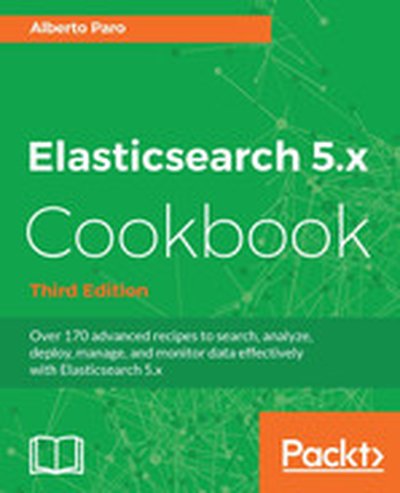
Elasticsearch 5.x Cookbook - Third Edition

Elasticsearch 5.x Cookbook is a comprehensive guide that teaches you how to leverage the full power of Elasticsearch for high-performance search and analytics. Through step-by-step recipes, you'll explore deployment, query building, plugin integration, and advanced analytics, ensuring you can manage and scale Elasticsearch like a pro. What this Book will help me do Understand and deploy complex Elasticsearch cluster topologies for optimal performance. Create tailored mappings to gain finer control over data indexing and retrieval. Design and execute advanced queries and analytics using Elasticsearch capabilities. Integrate Elasticsearch with popular programming languages and big data platforms. Monitor and improve Elasticsearch cluster health using the best practices and tools. Author(s) Alberto Paro is a seasoned software engineer and data scientist with extensive experience in distributed systems and search technologies. Having worked on numerous search-related projects, he brings practical, real-world insights to his writing. Alberto is passionate about teaching and simplifying complex concepts, making this book both approachable and expertly detailed. Who is it for? This book is ideal for developers or data engineers seeking to utilize Elasticsearch for advanced search and analytics tasks. If you have some prior knowledge of JSON and programming concepts, particularly Java, you will benefit most from this material. Whether you're looking to integrate Elasticsearch into your systems or to optimize its usage, this book caters to your needs.

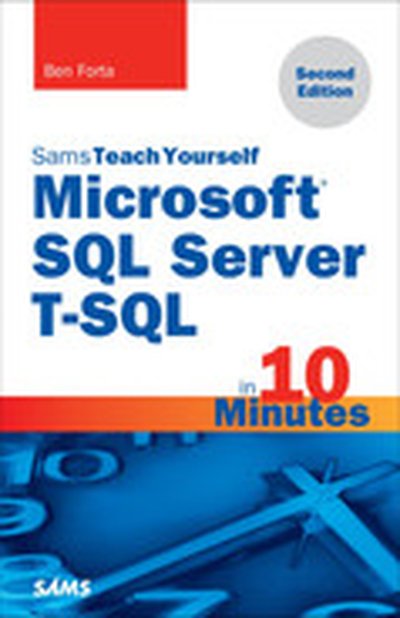
Sams Teach Yourself Microsoft® SQL Server T-SQL in 10 Minutes, Second Edition

Sams Teach Yourself Microsoft SQL Server T-SQL in 10 Minutes offers straightforward, practical answers when you need fast results. By working through the book’s 30 lessons of 10 minutes or less, you’ll learn what you need to know to take advantage of Microsoft SQL Server’s T-SQL language. This handy pocket guide starts with simple data retrieval and moves on to more complex topics, including the use of joins, subqueries, full text-based searches, functions and stored procedures, cursors, triggers, table constraints, XML, JSON, and much more. Learn how to… Use T-SQL in the Microsoft SQL Server environment Construct complex T-SQL statements using multiple clauses and operators Filter data so you get the information you need quickly Retrieve, sort, and format database contents Join two or more related tables Make SQL Server work for you with globalization and localization Create subqueries to pinpoint your data Automate your workload with triggers Create and alter database tables Work with views, stored procedures, and more Contents at a Glance 1 Understanding SQL 2 Introducing SQL Server 3 Working with SQL Server 4 Retrieving Data 5 Sorting Retrieved Data 6 Filtering Data 7 Advanced Data Filtering 8 Using Wildcard Filtering 9 Creating Calculated Fields 10 Using Data Manipulation Functions 11 Summarizing Data 12 Grouping Data 13 Working with Subqueries 14 Joining Tables 15 Creating Advanced Joins 16 Combining Queries 17 Full-Text Searching 18 Inserting Data 19 Updating and Deleting Data 20 Creating and Manipulating Tables 21 Using Views 22 Programming with T-SQL 23 Working with Stored Procedures 24 Using Cursors 25 Using Triggers 26 Managing Transaction Processing 27 Working with XML and JSON 28 Globalization and Localization 29 Managing Security 30 Improving Performance A The Example Tables B T-SQL Statement Syntax C T-SQL Datatypes D T-SQL Reserved Words

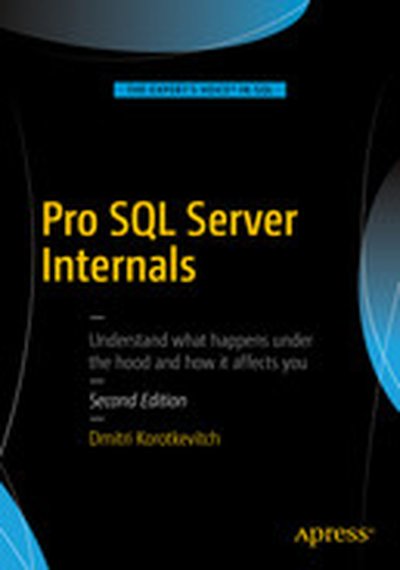
Pro SQL Server Internals, Second Edition

Improve your ability to develop, manage, and troubleshoot SQL Server solutions by learning how different components work "under the hood," and how they communicate with each other. The detailed knowledge helps in implementing and maintaining high-throughput databases critical to your business and its customers. You'll learn how to identify the root cause of each problem and understand how different design and implementation decisions affect performance of your systems. New in this second edition is coverage of SQL Server 2016 Internals, including In-Memory OLTP, columnstore enhancements, Operational Analytics support, Query Store, JSON, temporal tables, stretch databases, security features, and other improvements in the new SQL Server version. The knowledge also can be applied to Microsoft Azure SQL Databases that share the same code with SQL Server 2016. Pro SQL Server Internals is a book for developers and database administrators, and it covers multiple SQL Server versions starting with SQL Server 2005 and going all the way up to the recently released SQL Server 2016. The book provides a solid road map for understanding the depth and power of the SQL Server database server and teaches how to get the most from the platform and keep your databases running at the level needed to support your business. The book: Provides detailed knowledge of new SQL Server 2016 features and enhancements Includes revamped coverage of columnstore indexes and In-Memory OLTP Covers indexing and transaction strategies Shows how various database objects and technologies are implemented internally, and when they should or should not be used Demonstrates how SQL Server executes queries and works with data and transaction log What You Will Learn Design and develop database solutions with SQL Server. Troubleshoot design, concurrency, and performance issues. Choose the right database objects and technologies for the job. Reduce costs and improve availability and manageability. Design disaster recovery and high-availability strategies. Improve performance of OLTP and data warehouse systems through in-memory OLTP and Columnstore indexes. Who This Book Is For Developers and database administrators who want to design, develop, and maintain systems in a way that gets the most from SQL Server. This book is an excellent choice for people who prefer to understand and fix the root cause of a problem rather than applying a 'band aid' to it.