talk-data.com talk-data.com

Topic

Linux

operating_system open_source unix_like

200

tagged

Activity Trend

20 peak/qtr
2020-Q1 2026-Q1

Activities

Showing filtered results

Filtering by: O'Reilly Data Engineering Books ×
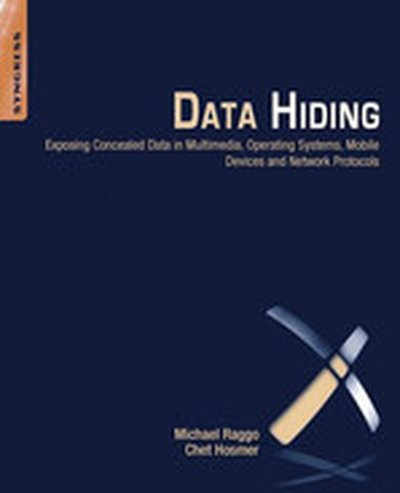
Data Hiding

As data hiding detection and forensic techniques have matured, people are creating more advanced stealth methods for spying, corporate espionage, terrorism, and cyber warfare all to avoid detection. Data Hiding provides an exploration into the present day and next generation of tools and techniques used in covert communications, advanced malware methods and data concealment tactics. The hiding techniques outlined include the latest technologies including mobile devices, multimedia, virtualization and others. These concepts provide corporate, goverment and military personnel with the knowledge to investigate and defend against insider threats, spy techniques, espionage, advanced malware and secret communications. By understanding the plethora of threats, you will gain an understanding of the methods to defend oneself from these threats through detection, investigation, mitigation and prevention. Provides many real-world examples of data concealment on the latest technologies including iOS, Android, VMware, MacOS X, Linux and Windows 7 Dives deep into the less known approaches to data hiding, covert communications, and advanced malware Includes never before published information about next generation methods of data hiding Outlines a well-defined methodology for countering threats Looks ahead at future predictions for data hiding
POWER7 and POWER7+ Optimization and Tuning Guide

This IBM® Redbooks® publication provides advice and technical information about optimizing and tuning application code to run on systems that are based on the IBM POWER7® and POWER7+™ processors. This advice is drawn from application optimization efforts across many different types of code that runs under the IBM AIX® and Linux operating systems, focusing on the more pervasive performance opportunities that are identified, and how to capitalize on them. The technical information was developed by a set of domain experts at IBM. The focus of this book is to gather the right technical information, and lay out simple guidance for optimizing code performance on the IBM POWER7 and POWER7+ systems that run the AIX or Linux operating systems. This book contains a large amount of straightforward performance optimization that can be performed with minimal effort and without previous experience or in-depth knowledge. This optimization work can: Improve the performance of the application that is being optimized for the POWER7 system Carry over improvements to systems that are based on related processor chips Improve performance on other platforms The audience of this book is those personnel who are responsible for performing migration and implementation activities on IBM POWER7-based servers, which includes system administrators, system architects, network administrators, information architects, and database administrators (DBAs).

Implementing Systems Management of IBM PureFlex System

To meet today's complex and ever-changing business demands, you need a solid foundation of compute, storage, networking, and software resources. This system must be simple to deploy, and be able to quickly and automatically adapt to changing conditions. You also need to be able to take advantage of broad expertise and proven guidelines in systems management, applications, industry solutions, and more. IBM® PureFlex™ System combines no-compromise system designs along with built-in expertise, and integrates them into complete, optimized scalable solutions. With IBM Flex System™ Manager, multiple solution components that include compute nodes, network and storage infrastructures, storage systems, and heterogeneous virtualization environments can be managed from a single panel. This IBM Redbooks® publication introduces IBM PureFlex System and its management devices and appliances. It provides implementation guidelines for managing Linux KVM, IBM PowerVM®, VMware vSphere and Microsoft Hyper-V virtualization environments. This book is intended for the IT community of clients, Business Partners, and IBM employees who are interested in planning and implementing systems management of the IBM PureFlex System.

DB2 10 for Linux on System z Using z/VM v6.2, Single System Image Clusters and Live Guest Relocation

IBM® z/VM® 6.2 introduced significant changes to z/VM with a multi-system clustering technology that allows up to four z/VM instances in a single system image (SSI) cluster. This technology is important because it offers you an attractive alternative to vertical growth by adding new z/VM systems. In the past, this capability required duplicate efforts to install, maintain, and manage each system. With SSI, these duplicate efforts are reduced or eliminated. Support for live guest relocation (LGR) allows you to move Linux virtual servers without disrupting your business or incurring loss of service, thus reducing planned outages. The z/VM systems are aware of each other and take advantage of their combined resources. LGR enables you to relocate guests from a system requiring maintenance to a system that will remain active during maintenance. A major advantage for DB2 v10 customers is that using z/VM 6.2 does not require any changes to existing DB2 structures. This remarkable benefit is due to the fact that DB2 v10 is installed as part of the LInux guest on z/VM and is fully integrated into LGR. This allows you to smoothly move DB2 v10 when you move Linux virtual servers, without interrupting either DB2 v10 or z/VM operations and services. This IBM Redbooks® publication will help you understand how DB2 10 on Linux for System z® behaves while running on a z/VM that is being relocated using z/VM’s 6.2 Live Guest Relocation feature. In this book, we explore memory management, the DB2 Self-tuning memory manager feature, time synchronization, networking, and storage and performance considerations with regards to relocation. We also offer some best practices found during a live guest relocation for DB2 v10.

IBM Power Systems 775 for AIX and Linux HPC Solution

This IBM® Redbooks® publication contains information about the IBM Power Systems™ 775 Supercomputer solution for AIX® and Linux HPC customers. This publication provides details about how to plan, configure, maintain, and run HPC workloads in this environment. This IBM Redbooks document is targeted to current and future users of the IBM Power Systems 775 Supercomputer (consultants, IT architects, support staff, and IT specialists) responsible for delivering and implementing IBM Power Systems 775 clustering solutions for their enterprise high-performance computing applications.

Delivering Continuity and Extreme Capacity with the IBM DB2 pureScale Feature

The IBM® DB2® pureScale® feature offers clustering technology that helps deliver high availability and exceptional scalability transparent to applications. The DB2 pureScale feature helps you to meet your business needs around availability and scalability, and is also easy to configure and administer. This IBM Redbooks® publication addresses the DB2 pureScale feature that is available in IBM DB2 10.1 for Linux, UNIX, and Windows operating systems. It can help you build skills and deploy the DB2 pureScale feature. This book bundles all the information necessary for a in-depth analysis into the functions of the DB2 pureScale feature, including the actual hardware requirements. It includes validated step-by-step hardware and software installation instructions. In addition, this book provides detailed examples about how to work effectively with a DB2 pureScale cluster and how to plan and run an upgrade for all DB2 related components to DB2 10.1. This book is intended for database administrators (DBAs) who use IBM DB2 10.1 for Linux, UNIX, and Windows operating systems who want to explore and get started with the DB2 pureScale feature.

Unleashing DB2 10 for Linux, UNIX, and Windows

This IBM® Redbooks® publication provides a broad understanding of the key features in IBM DB2® 10 and how to use these features to get more value from business applications. It includes information about the following features: Time Travel Query, which you use to store and retrieve time-based data by using capability built into DB2 10, without needing to build your own solution Adaptive compression, an enhanced compression technology that adapts to changing data patterns, yielding extremely high compression ratios Multi-temperature storage, which you may use to optimize storage costs by identifying and managing data based on its “temperature” or access requirements Row and column access control, which offers security access enforcement on your data, at the row or column level, or both Availability enhancements, which provide different DB2 availability features for different enterprise needs; high availability disaster recovery (HADR) multiple-standby databases provide availability and data recovery in one technology, and the IBM DB2 pureScale® Feature provides continuous availability and scalability that is transparent to applications Oracle compatibility, which allows many applications written for Oracle to run on DB2, virtually unchanged Ingest utility, a feature-rich data movement utility that allows queries to run concurrently with minimal impact on data availability

IBM Flex System p260 and p460 Planning and Implementation Guide

To meet today’s complex and ever-changing business demands, you need a solid foundation of compute, storage, networking, and software resources that is simple to deploy and can quickly and automatically adapt to changing conditions. You also need to be able to take advantage of broad expertise and proven preferred practices in systems management, applications, hardware maintenance, and more. The IBM® Flex System™ p260 and p460 Compute Nodes are IBM Power Systems™ servers optimized for virtualization, performance, and efficiency. The nodes support IBM AIX®, IBM i, or Linux operating environments, and are designed to run various workloads in IBM PureFlex™ System. This IBM Redbooks® publication is a comprehensive guide to IBM PureFlex System and the Power Systems compute nodes. We introduce the offerings and describe the compute nodes in detail. We then describe planning and implementation steps and go through some of the key the management features of the IBM Flex System Manager management node. This book is for customers, IBM Business Partners, and IBM technical specialists that want to understand the new offerings and to plan and implement an IBM Flex System installation that involves the Power Systems compute nodes.

Seven Databases in Seven Weeks

Data is getting bigger and more complex by the day, and so are the choices in handling that data. As a modern application developer you need to understand the emerging field of data management, both RDBMS and NoSQL. Seven Databases in Seven Weeks takes you on a tour of some of the hottest open source databases today. In the tradition of Bruce A. Tate's Seven Languages in Seven Weeks, this book goes beyond your basic tutorial to explore the essential concepts at the core each technology. Redis, Neo4J, CouchDB, MongoDB, HBase, Riak and Postgres. With each database, you'll tackle a real-world data problem that highlights the concepts and features that make it shine. You'll explore the five data models employed by these databases-relational, key/value, columnar, document and graph-and which kinds of problems are best suited to each. You'll learn how MongoDB and CouchDB are strikingly different, and discover the Dynamo heritage at the heart of Riak. Make your applications faster with Redis and more connected with Neo4J. Use MapReduce to solve Big Data problems. Build clusters of servers using scalable services like Amazon's Elastic Compute Cloud (EC2). Discover the CAP theorem and its implications for your distributed data. Understand the tradeoffs between consistency and availability, and when you can use them to your advantage. Use multiple databases in concert to create a platform that's more than the sum of its parts, or find one that meets all your needs at once. Seven Databases in Seven Weeks will take you on a deep dive into each of the databases, their strengths and weaknesses, and how to choose the ones that fit your needs. What You Need: To get the most of of this book you'll have to follow along, and that means you'll need a *nix shell (Mac OSX or Linux preferred, Windows users will need Cygwin), and Java 6 (or greater) and Ruby 1.8.7 (or greater). Each chapter will list the downloads required for that database.

PHP & MySQL: Novice to Ninja, 5th Edition

PHP & MySQL: Novice to Ninja is a practical hands-on guide to learning all the tools, principles and techniques needed to build a fully-functional database-driven web site using PHP & MySQL. This book covers everything from installing PHP & MySQL under Windows, Linux, and Mac through to building a live web-based content management system. While this is essentially a beginner's book, it also covers more advanced topics such as the storage of binary data in MySQL, and cookies and sessions in PHP. It comes complete with a set of handy reference guides for PHP & MySQL that include: MySQL syntax MySQL functions MysQL column types PHP functions for working with MySQL

Advanced Networking Concepts Applied Using Linux on IBM System z

This IBM® Redbooks® publication describes important networking concepts and industry standards that are used to support high availability on IBM System z®. Some of the networking standards described here are VLANs, VLAN trunking, link aggregation, virtual switches, VNICs, and load-balancing. We examine the various aspects of network setups and introduce the main Linux on System z networking commands and configuration files. We describe the management of network interface parameters, assignment of addresses to a network interface, and usage of the ifconfig command to configure network interfaces. We provide an overview of connectivity options available on the System z platform. We also describe high availability concepts and building a high availability solution using IBM Tivoli® System Automation. We also provide the implementation steps necessary to build a redundant network connections set up between an IBM z/VM® system and the external network switches using two Open Systems Adapter-Express 3 (OSA-Express 3) adapters with 10 Gb Ethernet ports. We describe the tests performed in our lab environment. The objectives of these tests were to gather information about performance and failover from the perspective of a real scenario, where the concepts of described in this book were applied. This book is focused on information that is practical and useful for readers with experience in network analysis and engineering networks, System z and Linux systems administrators, especially for readers that administer networks in their day-to-day activities. For additional reading: A Technote is availalble that explains changes to using channel bonding interfaces introduced with SLES 11 SP 2. It can be found at: http://www.redbooks.ibm.com/abstracts/tips1000.html?Open

Getting Started with CouchDB

CouchDB is a new breed of database for the Internet, geared to meet the needs of today’s dynamic web applications. With this concise introduction, you’ll learn how CouchDB’s simple model for storing, processing, and accessing data makes it ideal for the type of data and rapid response users now demand from your applications—and how easy CouchDB is to set up, deploy, maintain, and scale. The code-packed examples in this book will help you learn how to work with documents, populate a simple database, replicate data from one database to another, and a host of other tasks. Install CouchDB on Linux, Mac OS X, Windows, or (if you must) from the source code Interact with data through CouchDB’s RESTful API, and use standard HTTP operations, such as PUT, GET, POST, and DELETE Use Futon—CouchDB’s web-based interface— to manage databases and documents, and to configure replications Learn how to create, update, and delete documents in JSON format, and how to create and delete databases Work with design documents to get the formatting and indexing your application requires

SAP Applications on IBM PowerVM

IBM® invented the virtualization technology starting in the 1960s on the mainframe, and the functionalities evolved and were ported to other platforms and improved the reliability, availability, and serviceability (RAS) features. With virtualization, you achieve better asset utilization, reduced operating costs, and faster responsiveness to changing business demands. Every technology vendor in the SAP ecosystem understands virtualization as slightly different capabilities on different levels (storage and server hardware, processor, memory, I/O resources or the application, and so on). It is important to understand exactly what functionality is offered and how it supports the client’s business requirements. In this IBM Redbooks® publication we focus on server virtualization technologies in the IBM Power Systems™ hardware, AIX®, IBM i, and Linux space and what they mean specifically for SAP applications running on this platform. SAP clients can leverage the technology that the IBM Power Systems platform offers. In this book, we describe the technologies and functions, what they mean, and how they apply to the SAP system landscape.

IBM zEnterprise 114 Technical Guide

The popularity of the Internet and the affordability of IT hardware and software have resulted in an explosion of applications, architectures, and platforms. Workloads have changed. Many applications, including mission-critical ones, are deployed on a variety of platforms, and the System z® design has adapted to this change. It takes into account a wide range of factors, including compatibility and investment protection, to match the IT requirements of an enterprise. This IBM® Redbooks® publication discusses the IBM zEnterprise System, an IBM scalable mainframe server. IBM is taking a revolutionary approach by integrating separate platforms under the well-proven System z hardware management capabilities, while extending System z qualities of service to those platforms. The zEnterprise System consists of the IBM zEnterprise 114 central processor complex, the IBM zEnterprise Unified Resource Manager, and the IBM zEnterprise BladeCenter® Extension. The z114 is designed with improved scalability, performance, security, resiliency, availability, and virtualization. The z114 provides up to 18% improvement in uniprocessor speed and up to a 12% increase in total system capacity for z/OS®, z/VM®, and Linux on System z over the z10™ Business Class (BC). The zBX infrastructure works with the z114 to enhance System z virtualization and management through an integrated hardware platform that spans mainframe, POWER7™, and System x technologies. The federated capacity from multiple architectures of the zEnterprise System is managed as a single pool of resources, integrating system and workload management across the environment through the Unified Resource Manager. This book provides an overview of the zEnterprise System and its functions, features, and associated software support. Greater detail is offered in areas relevant to technical planning. This book is intended for systems engineers, consultants, planners, and anyone wanting to understand the zEnterprise System functions and plan for their usage. It is not intended as an introduction to mainframes. Readers are expected to be generally familiar with existing IBM System z technology and terminology.

Implementing the IBM General Parallel File System (GPFS) in a Cross Platform Environment

This IBM® Redbooks® publication provides a documented deployment model for IBM GPFS™ in a cross-platform environment with IBM Power Systems™, Linux, and Windows servers. With IBM GPFS, customers can have a planned foundation for file systems management for cross-platform access solutions. This book examines the functional, integration, simplification, and usability changes with GPFS v3.4. It can help the technical teams provide file system management solutions and technical support with GPFS, based on Power Systems virtualized environments for cross-platform file systems management. The book provides answers to your complex file systems management requirements, helps you maximize file system availability, and provides expert-level documentation to transfer the how-to skills to the worldwide support teams. The audience for this book is the technical professional (IT consultants, technical support staff, IT architects, and IT specialists) who is responsible for providing file system management solutions and support for cross-platform environments that are based primarily on Power Systems.

Sybase to DB2 Conversion Guide

IBM® DB2® for Linux®, UNIX®, and Windows® has long been known for its technology leadership. The IBM DB2 SQL Skin feature for applications that are compatible with Sybase ASE (IBM DB2 SSacSA), offered in DB2 9.7, provides a revolutionary approach to switch to DB2. The IBM DB2 SSacSA feature is an enablement technology that immediately equips most Sybase ASE applications to run against DB2, usually with little to no up front conversion work required. This approach minimizes the costs and risks of a traditional migration. In this IBM Redbooks® publication, we discuss the considerations and methodology for transitioning from Sybase to DB2 for Linux, UNIX, and Windows, addressing the basic topic areas of data, applications, and administration. We also describe the IBM DB2 SSacSA architecture and give information about the no charge IBM Data Movement Tool that helps you move database objects and data from Sybase to DB2. This book is for anyone who is interested or will be involved in Sybase to DB2 conversion. It contains application enablement and database performance tuning considerations and tips. With this information, you can plan your transition and its requirements in an orderly and cost effective manner.

Oracle Database Administration for Microsoft SQL Server DBAs

Apply Your SQL Server DBA Skills to Oracle Database Administration Use your SQL Server experience to set up and maintain a high-performance Oracle Database environment. Written by a DBA with expertise in both platforms, Oracle Database Administration for Microsoft SQL Server DBAs illustrates each technique with clear explanations, examples, and comparison tables. Get full details on Oracle Database intervals, creation assistants, management techniques, and query tools. High availability, disaster recovery, and security procedures are also extensively covered in this comprehensive Oracle Press guide. Install and configure Oracle Database on Windows or Linux systems Administer and monitor databases from Oracle Enterprise Manager Implement robust security using roles, permissions, and privileges Back up and restore databases with Oracle Recovery Manager Use the Oracle cost-based optimizer to tune performance Write, debug, and execute PL/SQL queries using Oracle SQL Developer Maximize availability with Oracle Real Application Clusters Build standby and failover servers using Oracle Data Guard

Pro Oracle Database 11g RAC on Linux

Pro Oracle Database 11g RAC on Linux provides full-life-cycle guidance on implementing Oracle Real Application Clusters in a Linux environment. Real Application Clusters, commonly abbreviated as RAC, is Oracle's industry-leading architecture for scalable and fault-tolerant databases. RAC allows you to scale up and down by simply adding and subtracting inexpensive Linux servers. Redundancy provided by those multiple, inexpensive servers is the basis for the failover and other fault-tolerance features that RAC provides. Written by authors well-known for their talent with RAC, Pro Oracle Database 11g RAC on Linux gives you a rock-solid and technically flawless foundation on which to build your RAC-management skills. Authors Julian Dyke and Steve Shaw share their hard-won experience in building RAC clusters, showing you how to build for success using the very latest Oracle technologies, such as Automatic Storage Management (ASM) and Oracle Clusterware. You'll learn to troubleshoot performance and other problems. You'll even learn how to correctly deploy RAC in a virtual-machine environment based upon Oracle VM, which is the only virtualization solution supported by Oracle Corporation. RAC is a complex and powerful technology. It demands expertise in its deployment. You can't just "wing it" in creating a RAC solution. Julian and Steve have earned the right to term themselves expert—in Pro Oracle Database 11g RAC on Linux, they offer a rigorous and technically-correct treatment of RAC that helps you build a solid foundation of expertise and achieve success. Rigorous and technically accurate content Complete coverage of RAC, from planning to implementation to rollout to ongoing maintenance and troubleshooting Up-to-date with the very latest RAC features

High Availability MySQL Cookbook

High Availability MySQL Cookbook is a practical guide to achieving superior reliability and redundancy in your MySQL databases. Through over 60 specific, hands-on recipes, this book skillfully navigates topics from configuring MySQL Clusters to mastering high availability using replication and storage technologies. What this Book will help me do Master the configuration of MySQL Clusters for scalability and reliability. Gain proficiency in backup and recovery techniques for MySQL. Learn the setup and maintenance of MySQL Replication for high availability. Understand the use of shared storage solutions with MySQL. Optimize MySQL performance effectively with tuning strategies. Author(s) Alexander Davies is a seasoned MySQL practitioner with extensive experience designing and implementing high availability database solutions. His hands-on expertise allows him to convey complex topics in an accessible and engaging manner. Davies brings his deep knowledge to this book, ensuring readers can confidently apply concepts to their own systems. Who is it for? This book is ideal for system administrators and database professionals familiar with Linux and basic MySQL usage. If you are looking to strengthen your database's reliability and explore high availability solutions, this book provides practical, actionable recipes. Perfect for those managing business-critical data and aiming to minimize downtime while ensuring system integrity.

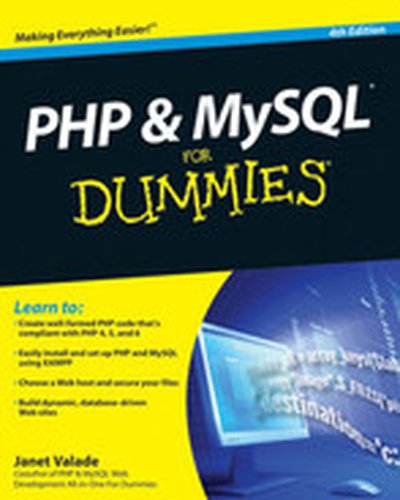
PHP and MySQL® For Dummies®, 4th Edition

Here's what Web designers need to know to create dynamic, database-driven Web sites To be on the cutting edge, Web sites need to serve up HTML, CSS, and products specific to the needs of different customers using different browsers. An effective e-commerce site gathers information about users and provides information they need to get the desired result. PHP scripting language with a MySQL back-end database offers an effective way to design sites that meet these requirements. This full updated 4th Edition of PHP & MySQL For Dummies gets you quickly up to speed, even if your experience is limited. Explains the easy way to install and set up PHP and MySQL using XAMPP, so it works the same on Linux, Mac, and Windows Shows you how to secure files on a Web host and how to write secure code Packed with useful and understandable code examples for Web site creators who are not professional programmers Fully updated to ensure your code will be compliant based on PHP 5.3 and MySQL 5.1.31 Provides clear, accurate code examples PHP & MySQL For Dummies, 4th Edition provides what you need to know to create sites that get results.