talk-data.com talk-data.com

Topic

LLM

Large Language Models (LLM)

nlp ai machine_learning

1405

tagged

Activity Trend

158 peak/qtr
2020-Q1 2026-Q1

Activities

1405 activities · Newest first

Benchmarking 2000+ Cloud Servers for GBM Model Training and LLM Inference Speed

Spare Cores is a Python-based, open-source, and vendor-independent ecosystem collecting, generating, and standardizing comprehensive data on cloud server pricing and performance. In our latest project, we started 2000+ server types across five cloud vendors to evaluate their suitability for serving Large Language Models from 135M to 70B parameters. We tested how efficiently models can be loaded into memory of VRAM, and measured inference speed across varying token lengths for prompt processing and text generation. The published data can help you find the optimal instance type for your LLM serving needs, and we will also share our experiences and challenges with the data collection and insights into general patterns.

Automating Content Creation with LLMs: A Journey from Manual to AI-Driven Excellence

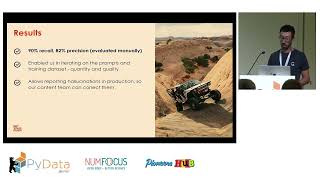
In the fast-paced realm of travel experiences, GetYourGuide encountered the challenge of maintaining consistent, high-quality content across its global marketplace. Manual content creation by suppliers often resulted in inconsistencies and errors, negatively impacting conversion rates. To address this, we leveraged large language models (LLMs) to automate content generation, ensuring uniformity and accuracy. This talk will explore our innovative approach, including the development of fine-tuned models for generating key text sections and the use of Function Calling GPT API for structured data. A pivotal aspect of our solution was the creation of an LLM evaluator to detect and correct hallucinations, thereby improving factual accuracy. Through A/B testing, we demonstrated that AI-driven content led to fewer defects and increased bookings. Attendees will gain insights into training data refinement, prompt engineering, and deploying AI at scale, offering valuable lessons for automating content creation across industries.

Welcome to DataFramed Industry Roundups! In this series of episodes, we sit down to discuss the latest and greatest in data & AI.  In this episode, with special guest, DataCamp Editor Alex, we touch upon the launch of GPT-5, scaling limits in AI, Meta’s leaked chatbot guidelines, trust in AI tools from the Stack Overflow survey, why OpenAI and Anthropic are giving models away to the US government, AI safety concerns around reasoning, and much more. Links Mentioned in the Show: GPT-5 Is an Evolution, Not a RevolutionMeta’s AI rules have let bots hold ‘sensual’ chats with kids, offer false medical infoAI | 2025 Stack Overflow Developer SurveyOpenAI, Anthropic, both giving AI to federal workers for $1/agency New to DataCamp? Learn on the go using the DataCamp mobile appEmpower your business with world-class data and AI skills with DataCamp for business

AI Agents in Practice

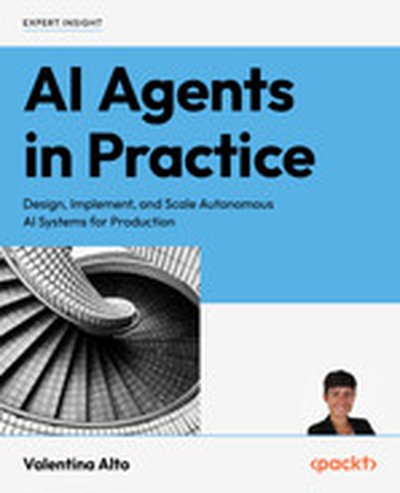
Discover how to build autonomous AI agents tailored for real-world tasks with 'AI Agents in Practice.' This book guides you through creating and deploying AI systems that go beyond chatbots to solve complex problems, using leading frameworks and practical design patterns. What this Book will help me do Understand and implement core components of AI agents, such as memory, tool integration, and context management. Develop production-ready AI agents for diverse applications using frameworks like LangChain. Design and implement multi-agent systems to enable advanced collaboration and problem-solving. Apply ethical and responsible AI techniques, including monitoring and human oversight, in agent development. Optimize performance and scalability of AI agents for production use cases. Author(s) Valentina Alto is an accomplished AI engineer with years of experience in AI systems design and implementation. Valentina specializes in developing practical solutions utilizing large language models and contemporary frameworks for real-world applications. Through her writing, she conveys complex ideas in an accessible manner, and her goal is to empower AI developers and enthusiasts with the skills to create meaningful solutions. Who is it for? This book is perfect for AI engineers, data scientists, and software developers ready to go beyond foundational knowledge of large language models to implement advanced AI agents. It caters to professionals looking to build scalable solutions and those interested in ethical considerations of AI usage. Readers with a background in machine learning and Python will benefit most from the technical insights provided.

We’ll explore the subtle yet significant ways in which reliance on AI tools—particularly large language models (LLMs) can change the way developers think. Drawing from personal experiences and broader industry trends, the talk examines the dangers of vibe coding: an intuition-driven, unstructured approach that LLMs often encourage, where solutions are stitched together based on plausibility rather than understanding. We'll consider how over-reliance on these tools leads to cognitive offloading, potentially dulling critical thinking, weakening foundational skills, and diluting the craftsmanship that once defined great code. Rather than rejecting AI assistants outright, this talk invites a more mindful, deliberate engagement, where tools support, but do not substitute, human judgment and creativity. The goal is to challenge developers to rethink their relationship with AI, reclaim ownership of their cognitive processes, and rediscover the joy of making things well, not just fast.

Summary In this episode of the Data Engineering Podcast Professor Paul Groth, from the University of Amsterdam, talks about his research on knowledge graphs and data engineering. Paul shares his background in AI and data management, discussing the evolution of data provenance and lineage, as well as the challenges of data integration. He explores the impact of large language models (LLMs) on data engineering, highlighting their potential to simplify knowledge graph construction and enhance data integration. The conversation covers the evolving landscape of data architectures, managing semantics and access control, and the interplay between industry and academia in advancing data engineering practices, with Paul also sharing insights into his work with the intelligent data engineering lab and the importance of human-AI collaboration in data engineering pipelines.

Announcements Hello and welcome to the Data Engineering Podcast, the show about modern data managementData migrations are brutal. They drag on for months—sometimes years—burning through resources and crushing team morale. Datafold's AI-powered Migration Agent changes all that. Their unique combination of AI code translation and automated data validation has helped companies complete migrations up to 10 times faster than manual approaches. And they're so confident in their solution, they'll actually guarantee your timeline in writing. Ready to turn your year-long migration into weeks? Visit dataengineeringpodcast.com/datafold today for the details.Your host is Tobias Macey and today I'm interviewing Paul Groth about his research on knowledge graphs and data engineeringInterview IntroductionHow did you get involved in the area of data management?Can you start by describing the focus and scope of your academic efforts?Given your focus on data management for machine learning as part of the INDELab, what are some of the developing trends that practitioners should be aware of?ML architectures / systems changing (matteo interlandi) GPUs for data mangementYou have spent a large portion of your career working with knowledge graphs, which have largely been a niche area until recently. What are some of the notable changes in the knowledge graph ecosystem that have resulted from the introduction of LLMs?What are some of the other ways that you are seeing LLMs change the methods of data engineering?There are numerous vague and anecdotal references to the power of LLMs to unlock value from unstructured data. What are some of the realitites that you are seeing in your research?A majority of the conversations in this podcast are focused on data engineering in the context of a business organization. What are some of the ways that management of research data is disjoint from the methods and constraints that are present in business contexts?What are the most interesting, innovative, or unexpected ways that you have seen LLM used in data management?What are the most interesting, unexpected, or challenging lessons that you have learned while working on data engineering research?What do you have planned for the future of your research in the context of data engineering, knowledge graphs, and AI?Contact Info WebsiteemailParting Question From your perspective, what is the biggest gap in the tooling or technology for data management today?Closing Announcements Thank you for listening! Don't forget to check out our other shows. Podcast.init covers the Python language, its community, and the innovative ways it is being used. The AI Engineering Podcast is your guide to the fast-moving world of building AI systems.Visit the site to subscribe to the show, sign up for the mailing list, and read the show notes.If you've learned something or tried out a project from the show then tell us about it! Email [email protected] with your story.Links INDELabData ProvenanceElsevierSIGMOD 2025Digital TwinKnowledge GraphWikiDataKuzuDBPodcast Episodedata.worldPodcast EpisodeGraphRAGSPARQLSemantic WebGQL == Graph Query LanguageCypherAmazon NeptuneRDF == Resource Description FrameworkSwellDBFlockMTLDuckDBPodcast EpisodeMatteo InterlandiPaolo PapottiNeuromorphic ComputingPoint CloudsLongform.aiBASIL DBThe intro and outro music is from The Hug by The Freak Fandango Orchestra / CC BY-SA

This session introduces Dana, a local-first agent programming language designed for building AI agents. Get a working expert agent in minutes. Features include long running, multi-step agent workflows on a single line; built-in concurrency for parallel LLM calls with zero async keywords; and deterministic execution with learning loops to improve reliability over time. Ideal for sensitive data, air-gapped environments, or cloud API limitations.

This session introduces Dana, a local-first agent programming language designed for building AI agents. Learn how to build expert AI agents locally with long running, multi-step workflows on a single line, built-in concurrency for parallel LLM calls with zero async keywords, and deterministic execution with learning loops that improve reliability over time.

This session introduces Dana, a local-first agent programming language designed for building AI agents. Get a working expert agent in minutes:\n- Long running, multi-step agent workflows on a single line: step1 | step2 | [step3a, step3b, step3c] | step4\n- Built-in concurrency for parallel LLM calls with zero async keywords\n- Deterministic execution with learning loops that improve reliability over time\n\nWhether you're dealing with sensitive data, air-gapped requirements, or cloud API limitations—come see what agent development looks like when everything runs locally.

The release of Kimi K2 mixture-of-expert (MoE) models has firmly established them as the leading architecture of large language models (LLMs) at the intelligence frontier. Due to their massive size (+1 trillion parameters) and sparse computation pattern, selectively activating parameter subsets rather than the entire model for each token, MoE-style LLMs present significant challenges for inference workloads, significantly altering the underlying inference economics. With the ever-growing consumer demand for AI models, as well as the internal need of AGI companies to generate trillions of tokens of synthetic data, the \"cost per token\" is becoming an even more important factor, determining the profit margins and the cost of capex required for internal reinforcment learning (RL) training rollouts. In this talk we will go through the details of the cost structure of generating a \"DeepSeek token,\" we will discuss the tradeoffs between latency/throughput and cost, and we will try to estimate the optimal setup to run it.\n\nIf you want to join this event, please sign up on our Luma page: https://lu.ma/2ae8czbn\n​⚠️ Registration is free, but required due to building security.\n\nSpeakers:\n\n* Piotr Mazurek (https://x.com/tugot17), Senior AI Inference Engineer

Feeling behind on your data journey? Don't worry. Today, I'll list down the 13 signs that prove you're actually ahead (even if you're actually doing just some of these). ✨ Try Julius today at https://landadatajob.com/Julius-YT 💌 Join 10k+ aspiring data analysts & get my tips in your inbox weekly 👉 https://www.datacareerjumpstart.com/newsletter 🆘 Feeling stuck in your data journey? Come to my next free "How to Land Your First Data Job" training 👉 https://www.datacareerjumpstart.com/training 👩‍💻 Want to land a data job in less than 90 days? 👉 https://www.datacareerjumpstart.com/daa 👔 Ace The Interview with Confidence 👉 https://www.datacareerjumpstart.com/interviewsimulator ⌚ TIMESTAMPS 00:00 Introduction 00:05 #1 You can analyze data in Excel without panicking 00:52 #2 You know how to write basic SQL queries 01:17 #3 You can build a bar chart and scatter plot in Tableau or Power BI 01:59 #4 You can Google (or ChatGPT) your way through any error 02:45 #5 You can send me one portfolio project right now 03:45 #6 You talk about your data journey with friends and family regularly 05:50 #7 You’re actually applying to jobs (not just watching tutorials) 07:03 #8 You’ve joined a data community 07:48 #9 Your resume now includes (lots of) the right keywords 10:11 #10 You’ve optimized your LinkedIn for data roles 10:45 #11 A recruiter reaches out to you on LinkedIn 11:58 #12 You’ve had at least one real interview 12:52 #13 You’re comfortable not knowing everything (yet) 🔗 CONNECT WITH AVERY 🎥 YouTube Channel: https://www.youtube.com/@averysmith 🤝 LinkedIn: https://www.linkedin.com/in/averyjsmith/ 📸 Instagram: https://instagram.com/datacareerjumpstart 🎵 TikTok: https://www.tiktok.com/@verydata 💻 Website: https://www.datacareerjumpstart.com/ Mentioned in this episode: Join the last cohort of 2025! The LAST cohort of The Data Analytics Accelerator for 2025 kicks off on Monday, December 8th and enrollment is officially open!

To celebrate the end of the year, we’re running a special End-of-Year Sale, where you’ll get: ✅ A discount on your enrollment 🎁 6 bonus gifts, including job listings, interview prep, AI tools + more

If your goal is to land a data job in 2026, this is your chance to get ahead of the competition and start strong.

👉 Join the December Cohort & Claim Your Bonuses: https://DataCareerJumpstart.com/daa https://www.datacareerjumpstart.com/daa

Combining LLMs with enterprise knowledge bases is creating powerful new agents that can transform business operations. These systems are dramatically improving on traditional chatbots by understanding context, following conversations naturally, and accessing up-to-date information. But how do you effectively manage the knowledge that powers these agents? What governance structures need to be in place before deployment? And as we look toward a future with physical AI and robotics, what fundamental computing challenges must we solve to ensure these technologies enhance rather than complicate our lives? Jun Qian is an accomplished technology leader with extensive experience in artificial intelligence and machine learning. Currently serving as Vice President of Generative AI Services at Oracle since May 2020, Jun founded and leads the Engineering and Science group, focusing on the creation and enhancement of Generative AI services and AI Agents. Previously held roles include Vice President of AI Science and Development at Oracle, Head of AI and Machine Learning at Sift, and Principal Group Engineering Manager at Microsoft, where Jun co-founded Microsoft Power Virtual Agents. Jun's career also includes significant contributions as the Founding Manager of Amazon Machine Learning at AWS and as a Principal Investigator at Verizon. In the episode, Richie and Jun explore the evolution of AI agents, the unique features of ChatGPT, the challenges and advancements in chatbot technology, the importance of data management and security in AI, and the future of AI in computing and robotics, and much more. Links Mentioned in the Show: OracleConnect with JunCourse: Introduction to AI AgentsJun at DataCamp RADARRelated Episode: A Framework for GenAI App and Agent Development with Jerry Liu, CEO at LlamaIndexRewatch RADAR AI  New to DataCamp? Learn on the go using the DataCamp mobile appEmpower your business with world-class data and AI skills with DataCamp for business

Is AI the silver bullet for modernizing our aging software systems, or is it a fast track to creating the next generation of unmaintainable "slopware"?In this episode, I sit down with Marianne Bellotti, author of the amazing book "Kill It With Fire," to discuss the complex reality of legacy system modernization in the age of AI. We explore why understanding the cultural and human history of a codebase is critical, and how the current AI hype cycle isn't a silver bullet for legacy IT modernization efforts.Marianne breaks down a recent disastrous "vibe coding" experiment, the risk of replacing simple human errors with catastrophic automated ones, and the massive disconnect between the promises of AI agents and the daily reality of a practitioner just trying to get a service account from IT.Join us for a pragmatic and no-BS conversation about the real challenges in software, the practical ways to leverage LLMs as an expert partner, and why good old-fashioned systems thinking is more important than ever.Find Marianne Bellotti:Socials: @BellmarWebsite: https://belladotte.tech/Book, "Kill It With Fire": https://nostarch.com/kill-it-fire

Está no ar, o Data Hackers News !! Os assuntos mais quentes da semana, com as principais notícias da área de Dados, IA e Tecnologia, que você também encontra na nossa Newsletter semanal, agora no Podcast do Data Hackers !! Aperte o play e ouça agora, o Data Hackers News dessa semana ! Para saber tudo sobre o que está acontecendo na área de dados, se inscreva na Newsletter semanal: ⁠⁠⁠⁠⁠⁠⁠⁠⁠⁠⁠⁠⁠⁠⁠⁠⁠⁠⁠⁠⁠⁠⁠⁠⁠⁠⁠⁠⁠⁠⁠⁠https://www.datahackers.news/⁠⁠⁠⁠⁠⁠⁠⁠⁠⁠⁠⁠⁠⁠⁠⁠⁠⁠⁠⁠⁠⁠⁠⁠⁠⁠⁠⁠⁠⁠⁠⁠ Acesse os links: ⁠Inscrições do Data Hackers Challenge 2025⁠ ⁠Live Zoho: Decisões Baseadas em Dados: Aplicando Machine Learning com o Zoho Analytics Conheça nossos comentaristas do Data Hackers News: ⁠⁠⁠⁠⁠⁠⁠⁠⁠⁠⁠⁠⁠⁠⁠⁠⁠⁠⁠⁠⁠⁠⁠⁠⁠⁠⁠⁠Monique Femme⁠⁠⁠⁠⁠⁠⁠⁠⁠⁠⁠⁠⁠⁠⁠⁠⁠⁠⁠⁠⁠⁠⁠⁠⁠⁠⁠⁠⁠ ⁠Matérias/assuntos comentados: Live finalistas do Data Hackers Challenge 2025; Evento Mettup Itaú Matéria lançamento ChatGpt5; Matéria Elon Musk libera Grok grátis nos EUA. Demais canais do Data Hackers: ⁠⁠⁠⁠⁠⁠⁠⁠⁠⁠⁠⁠⁠⁠⁠⁠⁠⁠⁠⁠⁠⁠⁠⁠⁠⁠⁠⁠⁠⁠⁠⁠Site⁠⁠⁠⁠⁠⁠⁠⁠⁠⁠⁠⁠⁠⁠⁠⁠⁠⁠⁠⁠⁠⁠⁠⁠⁠⁠⁠⁠⁠⁠⁠⁠ ⁠⁠⁠⁠⁠⁠⁠⁠⁠⁠⁠⁠⁠⁠⁠⁠⁠⁠⁠⁠⁠⁠⁠⁠⁠⁠⁠⁠⁠⁠⁠⁠Linkedin⁠⁠⁠⁠⁠⁠⁠⁠⁠⁠⁠⁠⁠⁠⁠⁠⁠⁠⁠⁠⁠⁠⁠⁠⁠⁠⁠⁠⁠⁠⁠⁠ ⁠⁠⁠⁠⁠⁠⁠⁠⁠⁠⁠⁠⁠⁠⁠⁠⁠⁠⁠⁠⁠⁠⁠⁠⁠⁠⁠⁠⁠⁠⁠⁠Instagram⁠⁠⁠⁠⁠⁠⁠⁠⁠⁠⁠⁠⁠⁠⁠⁠⁠⁠⁠⁠⁠⁠⁠⁠⁠⁠⁠⁠⁠⁠⁠⁠ ⁠⁠⁠⁠⁠⁠⁠⁠⁠⁠⁠⁠⁠⁠⁠⁠⁠⁠⁠⁠⁠⁠⁠⁠⁠⁠⁠⁠⁠⁠⁠⁠Tik Tok⁠⁠⁠⁠⁠⁠⁠⁠⁠⁠⁠⁠⁠⁠⁠⁠⁠⁠⁠⁠⁠⁠⁠⁠⁠⁠⁠⁠⁠⁠⁠⁠ ⁠⁠⁠⁠⁠⁠⁠⁠⁠⁠⁠⁠⁠⁠⁠⁠⁠⁠⁠⁠⁠⁠⁠⁠⁠⁠⁠⁠⁠⁠⁠⁠You Tube⁠⁠⁠⁠⁠⁠⁠⁠⁠⁠⁠⁠⁠⁠⁠⁠⁠⁠⁠⁠⁠⁠⁠⁠⁠⁠⁠⁠⁠⁠⁠

Description: Join Mukundan Sankar as he explores the challenges of delivering an effective elevator pitch and how AI can assist in crafting one. Mukundan shares personal anecdotes and demonstrates AI-generated pitches tailored for different career stages. Key Takeaways: The importance of a well-crafted elevator pitch How AI can personalize pitches for different roles Real-life examples of AI-generated pitches Resources: 1]Elevator Pitch AI Code Mukundan's Blog Post: https://substack.com/home/post/p-170400977 2] Thinking about starting a podcast but worried it’ll take forever to grow? Here’s the thing — you don’t need a huge audience to get started or to earn money. I run my show on RSS.com, and it’s the simplest way to get your podcast live on Spotify, Apple, Amazon, YouTube, iHeartRadio, Deezer, and more — all in one step. Their analytics tell me exactly where my listeners are tuning in from, so I know what’s working. And here’s the best part — with their paid plan, you can start earning revenue through ads with as little as 10 downloads a month. That’s right — you don’t need to wait for thousands of listeners to start monetizing. Start your podcast for free today at RSS.com. (Affiliate link — I may earn a commission at no extra cost to you.) 3] 💡 Sider.ai– Your AI Copilot for Productivity: Sider.ai is the all-in-one AI assistant that works inside your browser, letting you research, write, summarize, and brainstorm without switching tabs. Whether you’re prepping for an interview, drafting your next pitch, or refining your business plan, Sider.ai can supercharge your productivity. It’s like having GPT-4 on standby, ready to help you think faster and write better. Try Sider.ai today and see how much more you can accomplish in less time. (Affiliate link — I may earn a commission if you sign up.)

Summary In this episode of the Data Engineering Podcast Lucas Thelosen and Drew Gilson from Gravity talk about their development of Orion, an autonomous data analyst that bridges the gap between data availability and business decision-making. Lucas and Drew share their backgrounds in data analytics and how their experiences have shaped their approach to leveraging AI for data analysis, emphasizing the potential of AI to democratize data insights and make sophisticated analysis accessible to companies of all sizes. They discuss the technical aspects of Orion, a multi-agent system designed to automate data analysis and provide actionable insights, highlighting the importance of integrating AI into existing workflows with accuracy and trustworthiness in mind. The conversation also explores how AI can free data analysts from routine tasks, enabling them to focus on strategic decision-making and stakeholder management, as they discuss the future of AI in data analytics and its transformative impact on businesses.

Announcements Hello and welcome to the Data Engineering Podcast, the show about modern data managementData migrations are brutal. They drag on for months—sometimes years—burning through resources and crushing team morale. Datafold's AI-powered Migration Agent changes all that. Their unique combination of AI code translation and automated data validation has helped companies complete migrations up to 10 times faster than manual approaches. And they're so confident in their solution, they'll actually guarantee your timeline in writing. Ready to turn your year-long migration into weeks? Visit dataengineeringpodcast.com/datafold today for the details.Your host is Tobias Macey and today I'm interviewing Lucas Thelosen and Drew Gilson about the engineering and impact of building an autonomous data analystInterview IntroductionHow did you get involved in the area of data management?Can you describe what Orion is and the story behind it?How do you envision the role of an agentic analyst in an organizational context?There have been several attempts at building LLM-powered data analysis, many of which are essentially a text-to-SQL interface. How have the capabilities and architectural patterns grown in the past ~2 years to enable a more capable system?One of the key success factors for a data analyst is their ability to translate business questions into technical representations. How can an autonomous AI-powered system understand the complex nuance of the business to build effective analyses?Many agentic approaches to analytics require a substantial investment in data architecture, documentation, and semantic models to be effective. What are the gradations of effectiveness for autonomous analytics for companies who are at different points on their journey to technical maturity?Beyond raw capability, there is also a significant need to invest in user experience design for an agentic analyst to be useful. What are the key interaction patterns that you have found to be helpful as you have developed your system?How does the introduction of a system like Orion shift the workload for data teams?Can you describe the overall system design and technical architecture of Orion?How has that changed as you gained further experience and understanding of the problem space?What are the most interesting, innovative, or unexpected ways that you have seen Orion used?What are the most interesting, unexpected, or challenging lessons that you have learned while working on Orion?When is Orion/agentic analytics the wrong choice?What do you have planned for the future of Orion?Contact Info LucasLinkedInDrewLinkedInParting Question From your perspective, what is the biggest gap in the tooling or technology for data management today?Closing Announcements Thank you for listening! Don't forget to check out our other shows. Podcast.init covers the Python language, its community, and the innovative ways it is being used. The AI Engineering Podcast is your guide to the fast-moving world of building AI systems.Visit the site to subscribe to the show, sign up for the mailing list, and read the show notes.If you've learned something or tried out a project from the show then tell us about it! Email [email protected] with your story.Links OrionLookerGravityVBA == Visual Basic for ApplicationsText-To-SQLOne-shotLookMLData GrainLLM As A JudgeGoogle Large Time Series ModelThe intro and outro music is from The Hug by The Freak Fandango Orchestra / CC BY-SA