See how LLMs inside Alteryx can instantly convert complex documents into clean, tabular data that’s ready for analysis.
 talk-data.com
Topic
LLM
Large Language Models (LLM)
nlp
ai
machine_learning
1405
tagged
Activity Trend
158
peak/qtr
2020-Q1
2026-Q2
Top Events
AI innovation shouldn’t be gated by pipeline delays or data migrations. This session shows how federated data products deliver instant, trusted access—fueling chatbots, agents, and multi-agent workflows that solve real business problems.
We’ll walk through examples of a semantic layer built with data products that power both BI and AI. You’ll see how data products ensure more accurate AI results, simplify governance, and support experimentation with any LLM or agent framework.
Real-world use cases will include:
* A 1-day chatbot business project for answering questions with governed data
* An autonomous agent driving decisions from live sources
* A multi-agent workflow delivering dynamic, real-time insights
Leave with a practical blueprint to accelerate AI—no warehouse rewrites, no delays, just results.
As AI systems evolve, the need for robust infrastructure increases. Enter Dapr Agents: an open-source framework for creating production-grade AI agent systems. Built on top of the Dapr framework, Dapr Agents empowers developers to build intelligent agents capable of collaborating in complex workflows - leveraging Large Language Models (LLMs), durable state, built-in observability, and resilient execution patterns. This workshop will walk through the framework’s core components and through practical examples demonstrate how it solves real-world challenges.
This talk explores the disconnect between MLOps fundamental principles and their practical application in designing, operating and maintaining machine learning pipelines. We’ll break down these principles, examine their influence on pipeline architecture, and conclude with a straightforward, vendor-agnostic mind-map, offering a roadmap to build resilient MLOps systems for any project or technology stack. Despite the surge in tools and platforms, many teams still struggle with the same underlying issues: brittle data dependencies, poor observability, unclear ownership, and pipelines that silently break once deployed. Architecture alone isn't the answer; systems thinking is.
Topics covered include:
- Modular design: feature, training, inference
- Built-in observability, versioning, reuse
- Orchestration across batch, real-time, LLMs
- Platform-agnostic patterns that scale
Stuck in endless AI conversations? Learn real-life tips to break through. Get materials to improve human-in-the-loop AI and automate pipelines that lead to decisions—not just dashboards.
Stuck in endless AI chats? Get real tips to break through, improve human-in-the-loop AI, and automate pipelines that drive decisions.
Most enterprise AI initiatives don’t fail because of bad models. They fail because of bad data. As organizations rush to integrate LLMs and advanced analytics into production, they often hit a roadblock: datasets that are messy, constantly evolving, and nearly impossible to manage at scale.
This session reveals why data is the Achilles’ heel of enterprise AI and how data version control can turn that weakness into a strength. You’ll learn how data version control transforms the way teams manage training datasets, track ML experiments, and ensure reproducibility across complex, distributed systems.
We’ll cover the fundamentals of data versioning, its role in modern enterprise AI architecture, and real-world examples of teams using it to build scalable, trustworthy AI systems.
Whether you’re an ML engineer, data architect, or AI leader, this talk will help you identify critical data challenges before they stall your roadmap, and provide you with a proven framework to overcome them.
Large Language Models (LLMs) are unlocking transformative capabilities — but integrating them into complex, real-world applications remains a major challenge. Simple prompting isn’t enough when dynamic interaction with tools, structured data, and live context is required. This workshop introduces the Model Context Protocol (MCP), an emerging open standard designed to simplify and standardise this integration. Aimed at forward-thinking developers and technologists, this hands-on session will equip participants with practical skills to build intelligent, modular, and extensible LLM-native applications using MCP.
Graph-based Retrieval-Augmented Generation (GraphRAG) enhances large language models (LLMs) by grounding their responses in structured knowledge graphs, offering more accurate, domain-specific, and explainable outputs. However, many of the graphs used in these pipelines are automatically generated or loosely assembled, and often lack the semantic structure, consistency, and clarity required for reliable grounding. The result is misleading retrieval, vague or incomplete answers, and hallucinations that are difficult to trace or fix.
This hands-on tutorial introduces a practical approach to evaluating and improving knowledge graph quality in GraphRAG applications. We’ll explore common failure patterns, walk through real-world examples, and share a reusable checklist of features that make a graph “AI-ready.” Participants will learn methods for identifying gaps, inconsistencies, and modeling issues that prevent knowledge graphs from effectively supporting LLMs, and apply simple fixes to improve grounding and retrieval performance in their own projects.
Large Language Models (LLMs) are transformative, but static knowledge and hallucinations limit their direct enterprise use. Retrieval-Augmented Generation (RAG) is the standard solution, yet moving from prototype to production is fraught with challenges in data quality, scalability, and evaluation.
This talk argues the future of intelligent retrieval lies not in better models, but in a unified, data-first platform. We'll demonstrate how the Databricks Data Intelligence Platform, built on a Lakehouse architecture with integrated tools like Mosaic AI Vector Search, provides the foundation for production-grade RAG.
Looking ahead, we'll explore the evolution beyond standard RAG to advanced architectures like GraphRAG, which enable deeper reasoning within Compound AI Systems. Finally, we'll show how the end-to-end Mosaic AI Agent Framework provides the tools to build, govern, and evaluate the intelligent agents of the future, capable of reasoning across the entire enterprise.
Espresso AI uses two main techniques to run Snowflake workloads faster and cheaper: ML-based job scheduling and LLM-based query optimization. This talk will dive into the details behind both approaches.
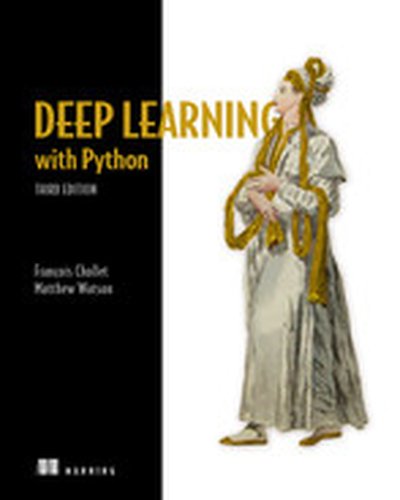
The bestselling book on Python deep learning, now covering generative AI, Keras 3, PyTorch, and JAX! Deep Learning with Python, Third Edition puts the power of deep learning in your hands. This new edition includes the latest Keras and TensorFlow features, generative AI models, and added coverage of PyTorch and JAX. Learn directly from the creator of Keras and step confidently into the world of deep learning with Python. In Deep Learning with Python, Third Edition you’ll discover: Deep learning from first principles The latest features of Keras 3 A primer on JAX, PyTorch, and TensorFlow Image classification and image segmentation Time series forecasting Large Language models Text classification and machine translation Text and image generation—build your own GPT and diffusion models! Scaling and tuning models With over 100,000 copies sold, Deep Learning with Python makes it possible for developers, data scientists, and machine learning enthusiasts to put deep learning into action. In this expanded and updated third edition, Keras creator François Chollet offers insights for both novice and experienced machine learning practitioners. You'll master state-of-the-art deep learning tools and techniques, from the latest features of Keras 3 to building AI models that can generate text and images. About the Technology In less than a decade, deep learning has changed the world—twice. First, Python-based libraries like Keras, TensorFlow, and PyTorch elevated neural networks from lab experiments to high-performance production systems deployed at scale. And now, through Large Language Models and other generative AI tools, deep learning is again transforming business and society. In this new edition, Keras creator François Chollet invites you into this amazing subject in the fluid, mentoring style of a true insider. About the Book Deep Learning with Python, Third Edition makes the concepts behind deep learning and generative AI understandable and approachable. This complete rewrite of the bestselling original includes fresh chapters on transformers, building your own GPT-like LLM, and generating images with diffusion models. Each chapter introduces practical projects and code examples that build your understanding of deep learning, layer by layer. What's Inside Hands-on, code-first learning Comprehensive, from basics to generative AI Intuitive and easy math explanations Examples in Keras, PyTorch, JAX, and TensorFlow About the Reader For readers with intermediate Python skills. No previous experience with machine learning or linear algebra required. About the Authors François Chollet is the co-founder of Ndea and the creator of Keras. Matthew Watson is a software engineer at Google working on Gemini and a core maintainer of Keras. Quotes Perfect for anyone interested in learning by doing from one of the industry greats. - Anthony Goldbloom, Founder of Kaggle A sharp, deeply practical guide that teaches you how to think from first principles to build models that actually work. - Santiago Valdarrama, Founder of ml.school The most up-to-date and complete guide to deep learning you’ll find today! - Aran Komatsuzaki, EleutherAI Masterfully conveys the true essence of neural networks. A rare case in recent years of outstanding technical writing. - Salvatore Sanfilippo, Creator of Redis
SRE gets many customer tickets, some of which are answered in the many go links we have on our page that no one will read. RAG trains an LLm on our codebase, internal documentation, forums, issues queries, etc. These contextual resources help the customer get better answers to their questions faster, freeing up time on both the customer, dev, and SRE side. Additionally, this helps train our team more efficiently as well.
A session exploring the cutting-edge realm of Agentic AI. Hari Prasad Renganathan will present a custom outline focused on advanced applications and techniques with LLMs.
What if the future of leadership wasn't explained by another CEO, but by an AI? In this special episode of Hub & Spoken, hosted by Jason Foster, CEO & Founder of Cynozure, the guest isn't a data or business leader. It's ChatGPT. Together, they explore one of the most pressing questions for organisations today: What does leadership mean in the age of artificial intelligence? The discussion contrasts the logical view of leadership, vision, decision-making and orchestration, with the uniquely human qualities that machines can't replicate: courage under pressure, conviction, vulnerability, and trust. The result is a fascinating tension. AI can support with logic, speed, and analysis. But leadership is still defined by what makes us human. 🎧 Tune in for this experiment in leadership dialogue. **** Cynozure is a leading data, analytics and AI company that helps organisations to reach their data potential. It works with clients on data and AI strategy, data management, data architecture and engineering, analytics and AI, data culture and literacy, and data leadership. The company was named one of The Sunday Times' fastest-growing private companies in both 2022 and 2023 and recognised as The Best Place to Work in Data by DataIQ in 2023 and 2024. Cynozure is a certified B Corporation.
Summary In this episode of the AI Engineering Podcast Mark Brooker, VP and Distinguished Engineer at AWS, talks about how agentic workflows are transforming database usage and infrastructure design. He discusses the evolving role of data in AI systems, from traditional models to more modern approaches like vectors, RAG, and relational databases. Mark explains why agents require serverless, elastic, and operationally simple databases, and how AWS solutions like Aurora and DSQL address these needs with features such as rapid provisioning, automated patching, geodistribution, and spiky usage. The conversation covers topics including tool calling, improved model capabilities, state in agents versus stateless LLM calls, and the role of Lambda and AgentCore for long-running, session-isolated agents. Mark also touches on the shift from local MCP tools to secure, remote endpoints, the rise of object storage as a durable backplane, and the need for better identity and authorization models. The episode highlights real-world patterns like agent-driven SQL fuzzing and plan analysis, while identifying gaps in simplifying data access, hardening ops for autonomous systems, and evolving serverless database ergonomics to keep pace with agentic development.
Announcements Hello and welcome to the Data Engineering Podcast, the show about modern data managementData teams everywhere face the same problem: they're forcing ML models, streaming data, and real-time processing through orchestration tools built for simple ETL. The result? Inflexible infrastructure that can't adapt to different workloads. That's why Cash App and Cisco rely on Prefect. Cash App's fraud detection team got what they needed - flexible compute options, isolated environments for custom packages, and seamless data exchange between workflows. Each model runs on the right infrastructure, whether that's high-memory machines or distributed compute. Orchestration is the foundation that determines whether your data team ships or struggles. ETL, ML model training, AI Engineering, Streaming - Prefect runs it all from ingestion to activation in one platform. Whoop and 1Password also trust Prefect for their data operations. If these industry leaders use Prefect for critical workflows, see what it can do for you at dataengineeringpodcast.com/prefect.Data migrations are brutal. They drag on for months—sometimes years—burning through resources and crushing team morale. Datafold's AI-powered Migration Agent changes all that. Their unique combination of AI code translation and automated data validation has helped companies complete migrations up to 10 times faster than manual approaches. And they're so confident in their solution, they'll actually guarantee your timeline in writing. Ready to turn your year-long migration into weeks? Visit dataengineeringpodcast.com/datafold today for the details.Your host is Tobias Macey and today I'm interviewing Marc Brooker about the impact of agentic workflows on database usage patterns and how they change the architectural requirements for databasesInterview IntroductionHow did you get involved in the area of data management?Can you describe what the role of the database is in agentic workflows?There are numerous types of databases, with relational being the most prevalent. How does the type and purpose of an agent inform the type of database that should be used?Anecdotally I have heard about how agentic workloads have become the predominant "customers" of services like Neon and Fly.io. How would you characterize the different patterns of scale for agentic AI applications? (e.g. proliferation of agents, monolithic agents, multi-agent, etc.)What are some of the most significant impacts on workload and access patterns for data storage and retrieval that agents introduce?What are the categorical differences in that behavior as compared to programmatic/automated systems?You have spent a substantial amount of time on Lambda at AWS. Given that LLMs are effectively stateless, how does the added ephemerality of serverless functions impact design and performance considerations around having to "re-hydrate" context when interacting with agents?What are the most interesting, innovative, or unexpected ways that you have seen serverless and database systems used for agentic workloads?What are the most interesting, unexpected, or challenging lessons that you have learned while working on technologies that are supporting agentic applications?Contact Info BlogLinkedInParting Question From your perspective, what is the biggest gap in the tooling or technology for data management today?Closing Announcements Thank you for listening! Don't forget to check out our other shows. Podcast.init covers the Python language, its community, and the innovative ways it is being used. The AI Engineering Podcast is your guide to the fast-moving world of building AI systems.Visit the site to subscribe to the show, sign up for the mailing list, and read the show notes.If you've learned something or tried out a project from the show then tell us about it! Email [email protected] with your story.Links AWS Aurora DSQLAWS LambdaThree Tier ArchitectureVector DatabaseGraph DatabaseRelational DatabaseVector EmbeddingRAG == Retrieval Augmented GenerationAI Engineering Podcast EpisodeGraphRAGAI Engineering Podcast EpisodeLLM Tool CallingMCP == Model Context ProtocolA2A == Agent 2 Agent ProtocolAWS Bedrock AgentCoreStrandsLangChainKiroThe intro and outro music is from The Hug by The Freak Fandango Orchestra / CC BY-SA
The rapid growth of generative AI, driven by models like OpenAI's GPT-4.1, GPT-4.5, o3, and DeepSeek’s R1, has captured the attention of consumers, businesses, and executives worldwide. These powerful language models rely heavily on the quality of input prompts, making prompt engineering a vital skill for unlocking their full potential. In this interactive, demo-driven session, participants will explore essential and advanced techniques in prompt design, including: • What is Prompt Engineering? • Advanced Prompting Techniques • Few-shot Prompting (guiding responses with examples) • Chain-of-Thought (CoT) Prompting (step-by-step reasoning) • Instruction Fine-tuning (enforcing specific constraints) • Persona-based Prompting (customizing for roles) • Multi-step Prompting (iterative output refinement) • Debugging & Refining AI Responses • Leveraging reasoning models like o3 • Prompt Engineering Best Practices Attendees will depart with a clear framework and practical suggestions for crafting effective prompts and maximizing the value of AI tools.
Plain-English agents, not hype: plan, use tools, add guardrails—then dry-run a calendar + inbox agent that saves hours. You’ve heard “AI agent” everywhere, but definitions vary. In this episode, Mukundan explains—in plain, practical language—what a real agent is and when to use one. We’ll contrast agents with chatbots and simple automations, walk through the five pillars (goal, plan, tools, memory, feedback), and strip the tooling of buzzwords. Then we run a live dry-run: two 90-minute deep-work blocks, one 45-minute admin sweep, and a 30-minute workout that avoids your existing commitments. We finish by triaging sample emails into reply/delegate/archive/read-later and drafting five concise replies with one clear next step each. Safety first: drafts-only, tentative calendar holds, approval gates, and fallbacks if tools fail. Copy the templates from the show notes and ship your v0.5 tonight. Lightning Round: True/False (answers in the episode) An AI agent is just a chatbot.Remove a tool and it still makes progress → probably a real agent.Clear success criteria matter less than good prompts.Chatbots reply; agents execute across steps.Fixed automations are best when inputs rarely change.If a tool disconnect breaks everything, it’s a brittle macro.Links & Resources AI Agent Copy-Paste Templates (run these in ChatGPT): Get your free copyRecording Partner: Riverside → Sign up here (affiliate)Host Your Podcast: RSS.com (affiliate )Research Tools: Sider.ai (affiliate)Join the Newsletter: Free Email Newsletter to receive practical AI tools weekly.Join the Discussion (comments hub): https://mukundansankar.substack.com/notes🔗 Connect with Me:Website: Data & AI with MukundanTwitter/X: @sankarmukund475LinkedIn: Mukundan SankarYouTube: Subscribe
by
Kacper Łukawski
(Qdrant)
,
Filip Makraduli
(Superlinked)
,
Brian Goldin
(Voyager Search)
,
André Charton
(Kleinanzeigen)
,
Manish Gill
(ClickHouse)
,
Atita Arora
At Berlin Buzzwords, industry voices highlighted how search is evolving with AI and LLMs.
- Kacper Łukawski (Qdrant) stressed hybrid search (semantic + keyword) as core for RAG systems and promoted efficient embedding models for smaller-scale use.
- Manish Gill (ClickHouse) discussed auto-scaling OLAP databases on Kubernetes, combining infrastructure and database knowledge.
- André Charton (Kleinanzeigen) reflected on scaling search for millions of classifieds, moving from Solr/Elasticsearch toward vector search, while returning to a hands-on technical role.
- Filip Makraduli (Superlinked) introduced a vector-first framework that fuses multiple encoders into one representation for nuanced e-commerce and recommendation search.
- Brian Goldin (Voyager Search) emphasized spatial context in retrieval, combining geospatial data with AI enrichment to add the “where” to search.
- Atita Arora (Voyager Search) highlighted geospatial AI models, the renewed importance of retrieval in RAG, and the cautious but promising rise of AI agents.
Together, their perspectives show a common thread: search is regaining center stage in AI—scaling, hybridization, multimodality, and domain-specific enrichment are shaping the next generation of retrieval systems.
Kacper Łukawski Senior Developer Advocate at Qdrant, he educates users on vector and hybrid search. He highlighted Qdrant’s support for dense and sparse vectors, the role of search with LLMs, and his interest in cost-effective models like static embeddings for smaller companies and edge apps. Connect: https://www.linkedin.com/in/kacperlukawski/
Manish Gill
Engineering Manager at ClickHouse, he spoke about running ClickHouse on Kubernetes, tackling auto-scaling and stateful sets. His team focuses on making ClickHouse scale automatically in the cloud. He credited its speed to careful engineering and reflected on the shift from IC to manager.
Connect: https://www.linkedin.com/in/manishgill/
André Charton
Head of Search at Kleinanzeigen, he discussed shaping the company’s search tech—moving from Solr to Elasticsearch and now vector search with Vespa. Kleinanzeigen handles 60M items, 1M new listings daily, and 50k requests/sec. André explained his career shift back to hands-on engineering.
Connect: https://www.linkedin.com/in/andrecharton/
Filip Makraduli
Founding ML DevRel engineer at Superlinked, an open-source framework for AI search and recommendations. Its vector-first approach fuses multiple encoders (text, images, structured fields) into composite vectors for single-shot retrieval. His Berlin Buzzwords demo showed e-commerce search with natural-language queries and filters.
Connect: https://www.linkedin.com/in/filipmakraduli/
Brian Goldin
Founder and CEO of Voyager Search, which began with geospatial search and expanded into documents and metadata enrichment. Voyager indexes spatial data and enriches pipelines with NLP, OCR, and AI models to detect entities like oil spills or windmills. He stressed adding spatial context (“the where”) as critical for search and highlighted Voyager’s 12 years of enterprise experience.
Connect: https://www.linkedin.com/in/brian-goldin-04170a1/
Atita Arora
Director of AI at Voyager Search, with nearly 20 years in retrieval systems, now focused on geospatial AI for Earth observation data. At Berlin Buzzwords she hosted sessions, attended talks on Lucene, GPUs, and Solr, and emphasized retrieval quality in RAG systems. She is cautiously optimistic about AI agents and values the event as both learning hub and professional reunion.
Connect: https://www.linkedin.com/in/atitaarora/